REVIEW · FLORENCE
The Best of Florence Private Walking Tour with a Local Guide
Book on Viator →Operated by FlorencePass · Bookable on Viator
Florence can be a lot at first glance. This private walking tour gets you oriented fast, using a local guide to connect the big Renaissance landmarks with the people and power behind them. I love the flexible pacing that keeps the route feeling personal instead of like a stamp-collecting parade.
You’ll also leave with real context, not just names—think Medici influence and the Michelangelo-era glow you’ll recognize once you see the key squares in order. One drawback to consider: it’s only about 2 hours, so it’s built for highlights and smart viewpoints, not for long museum time or deep ticketed interiors.
In This Review
- Key Highlights You’ll Actually Feel During the Walk
- Getting Your Florence Bearings Fast (Without the Map Brain)
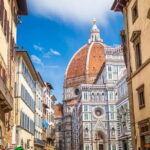
- Piazza del Duomo: Baptistery, Cathedral, and Giotto’s Bell Tower
- Medieval Towers and Narrow Lanes: How Florence Used to Feel
- Piazza della Repubblica: The Roman Past Meets Modern Florence
- Orsanmichele: When a Marketplace Became a Workers’ Church
- Piazza della Signoria to the Uffizi Area: Politics, Power, and 16th-Century Statues
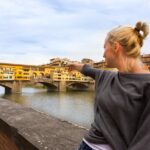
- Ponte Vecchio and the Vasari Corridor: The Bridge That Medici Control Built
- Palazzo Pitti Area: Medici Residence and the End of an Era
- What the Local Guide Adds (Beyond Facts on a Plaque)
- Price and Value: Is $161.34 Worth It?
- Timing, Walking Comfort, and How to Make It Shine
- Should You Book This Private Walking Tour?
- FAQ
- How long is the Best of Florence private walking tour?
- Where does the tour start and end?
- Is this tour private?
- What are some of the main sights included?
- Do I need to bring paper tickets?
- How far in advance is this tour commonly booked?
- What is the cancellation policy?
Key Highlights You’ll Actually Feel During the Walk
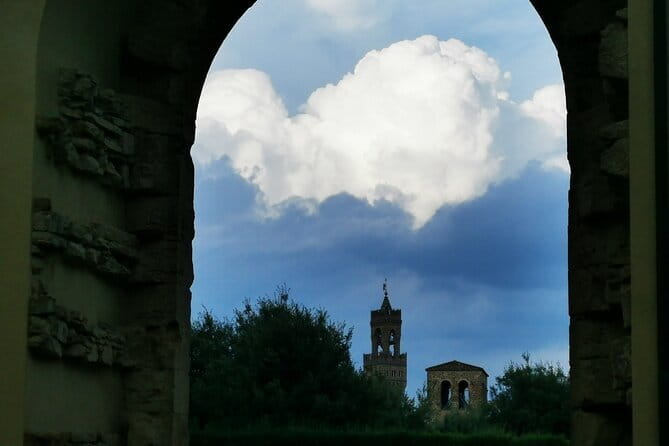
- A top-sights overview in a tight 2-hour circuit designed for first-day orientation
- Duomo complex photo-stops focused on Baptistery, Cathedral, and Giotto’s bell tower
- Piazza della Signoria to the Arno with the Medici political story running underneath it all
- Ponte Vecchio plus the Vasari Corridor explained in plain, readable terms
- Orsanmichele’s worker-church transformation told through its role in the city
- Food and shopping intel from a local guide who knows what’s worth your time
Getting Your Florence Bearings Fast (Without the Map Brain)
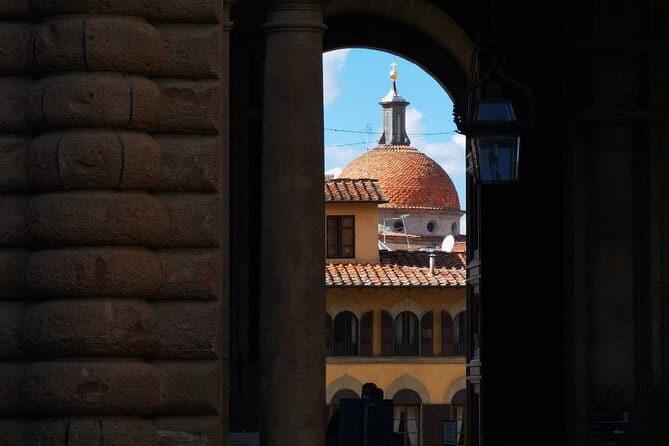
Florence is compact, but it’s not simple. Streets kink, squares feel like theaters, and key buildings overlap across centuries—so a self-guided walk can turn into a lot of staring and not much understanding. This tour keeps you moving through the city’s core areas in a logical flow, so you start seeing patterns instead of isolated sights.
The biggest practical win is that it’s private. That means you can match the pace to your group—slow down for questions, speed up when you’re on a roll, and stop to look closely when something catches your eye. And because the stops are largely set up as walk-and-look moments, you can spend your time on comprehension rather than ticket logistics.
Price-wise, at $161.34 per person, you’re paying for a local guide’s time plus a curated route that hits the most important landmarks efficiently. The value isn’t just the buildings—it’s the way your guide ties them together, plus the extra guidance on where to eat and shop so you’re not guessing later.
You can also read our reviews of more walking tours in Florence
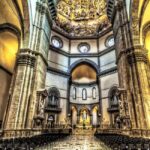
Piazza del Duomo: Baptistery, Cathedral, and Giotto’s Bell Tower
You start at Piazza di San Giovanni, 14R, with the Duomo area as your first anchor. This is smart. Once you understand how this place functions—religion, civic pride, and artistic ambition—all the other squares make more sense.
At Piazza del Duomo, the route focuses on three headline stops that define Florence’s look:
- St. John’s Baptistery, famous for its bronze doors (a major reason people come here)
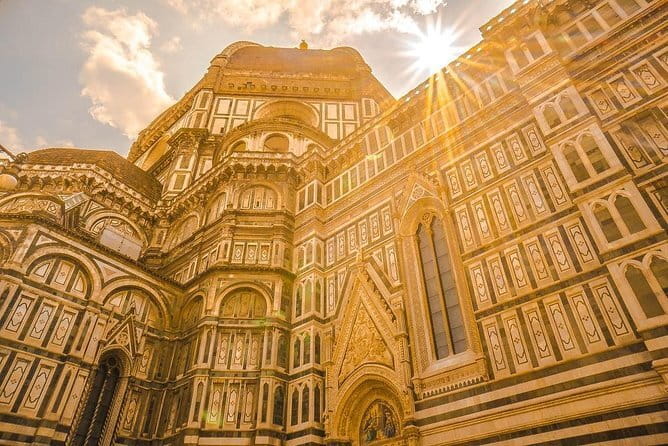
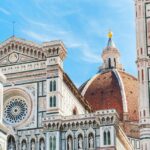
- Santa Maria del Fiore Cathedral, with its famous marble decoration and the dome that dominates the skyline
- Giotto’s belltower, described as an open-air museum of sculpture
Even when you’re not going inside, you’ll benefit from a guided explanation of what you’re seeing. Your guide helps you notice details you’d likely miss while rushing for photos—like how the Cathedral and Baptistery sit in a shared visual story and why Giotto’s tower feels like it’s part of the same grand statement.
This is also where the tour sets its tone: the guide doesn’t just list dates. They connect buildings to the people who wanted Florence to look powerful, modern, and historically important all at once.
Medieval Towers and Narrow Lanes: How Florence Used to Feel
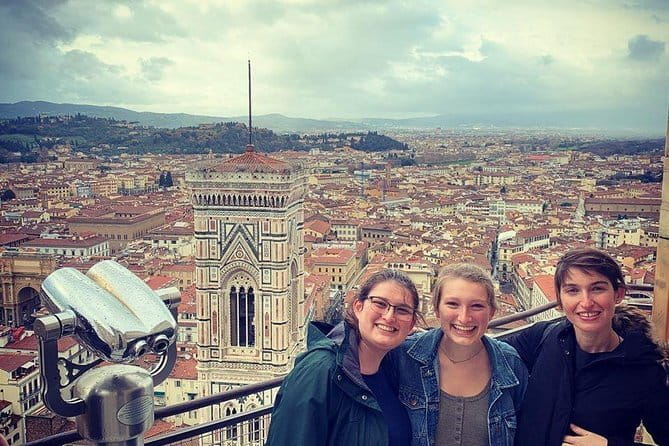
Right after the Duomo centerpiece, you move into the older street fabric—narrow lanes and very old towers that act like time capsules. This is one of those parts that can sound minor in a brochure, but it matters because Florence’s medieval life isn’t just in museums. It’s in the way the city was built to feel close, defensive, and vertical.
Expect a short walk that helps you shift from “wow” (Duomo) to “ah” (why Florence looks like it does). It’s the kind of stroll that makes later stops land better, because you start understanding how power and wealth shaped architecture block by block.
If you like cities that reward attention—textures, proportions, street geometry—this section is a quiet win.
Piazza della Repubblica: The Roman Past Meets Modern Florence
Next up is Piazza della Repubblica, where you’ll see a mix of modern buildings alongside the bigger historic message. The square is known for cafés, luxury shops, hotels, and even a carousel, but the story you’ll hear is the important part: the triumphal arch celebrates this area as the ancient center, founded by Romans about two thousand years ago.
This stop is useful because it shows how Florence keeps stacking eras. You’re not being forced into a single time period. Instead, your guide points out how the Roman foundation doesn’t vanish—it just gets translated into later styles and urban life.
If you’re tired of only seeing what’s old, this square offers a pleasant change of pace. It’s lively, easy to pause, and it gives you a sense of modern Florence without losing the historical thread.
Orsanmichele: When a Marketplace Became a Workers’ Church
The tour then turns to Orsanmichele, an unusual building with a standout exterior. What makes this stop interesting isn’t just the look. It’s the transformation: it was originally a huge marketplace, then reshaped into the church of all Florentine workers.
Your guide’s explanation also highlights its reputation for sculpture—at one time, it’s described as holding the richest collection of Renaissance statues. Even if you don’t go far into interior viewing during this short segment, the guided context helps you understand why the building matters to Florence’s civic identity.
This is one of those places that proves Florence isn’t only about rulers and masterpieces in palaces. It also reflects the social world: tradespeople, institutions, and the way artistic patronage extended beyond the famous names.
You can also read our reviews of more guided tours in Florence
- The Best tour in Florence: Renaissance & Medici Tales – guided by a STORYTELLER
★ 5.0 · 12,316 reviews
Piazza della Signoria to the Uffizi Area: Politics, Power, and 16th-Century Statues
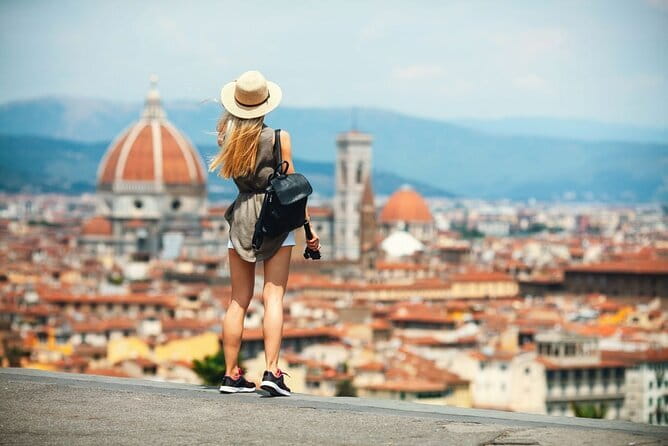
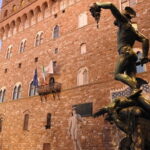
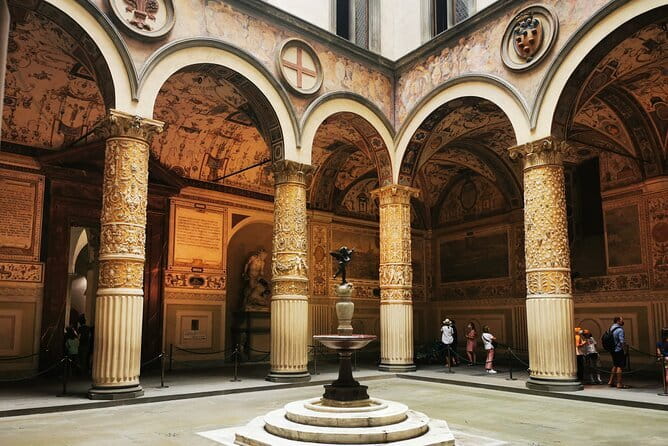
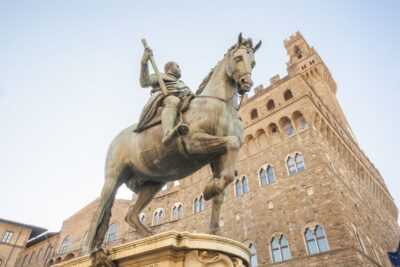
At Piazza della Signoria, the atmosphere changes. This square is described as Florence’s political center, with Palazzo Vecchio still hosting the city council meetings. That continuity matters. You’re looking at power in stone that’s not purely ceremonial.
From here, your guide points out:
- the Palazzo Vecchio look that feels fortress-like
- world-famous 16th-century statues positioned around the square
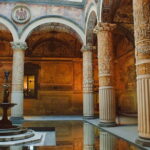
- the richly decorated courtyard connection to the period when the Medici family lived there
Then the walk shifts toward the Arno via the Piazzale degli Uffizi. This part connects bureaucracy to art. Your guide explains that the area served as the seat of Florence’s bureaucracy during the time of the Medici grand-dukes and was later transformed into what’s identified as the most important Italian painting gallery.
Even if you’re not stepping into the Uffizi, you’ll get why the view matters and why this area feels like the city is running on ambition. It’s Florence’s habit of turning administration into architecture—and architecture into cultural authority.
Ponte Vecchio and the Vasari Corridor: The Bridge That Medici Control Built
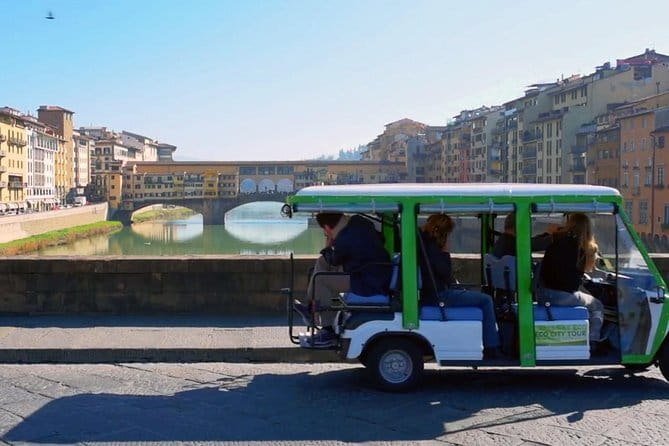
No Florence walk is complete without crossing Ponte Vecchio, and this tour doesn’t treat it like a single photo stop. You get the rhythm of the bridge and the story behind what made it special.
As you cross, you’ll see the goldsmith shop windows lined along the bridge. The tour also frames Ponte Vecchio as a medieval structure built in the 1340s, which gives you a sense of how long this place has been trading, gathering, and showcasing wealth.
Then your guide adds the detail that turns the bridge into a chapter of power: the Vasari Corridor, described as an overhead passageway constructed in 1565 for Cosimo de’ Medici. You’ll understand why this corridor exists—not as an abstract curiosity, but as a tool for moving and controlling access in a city where visibility mattered.
If you only know Ponte Vecchio as a pretty bridge, this explanation upgrades it. You’ll start seeing it as infrastructure tied directly to Renaissance politics.
Palazzo Pitti Area: Medici Residence and the End of an Era
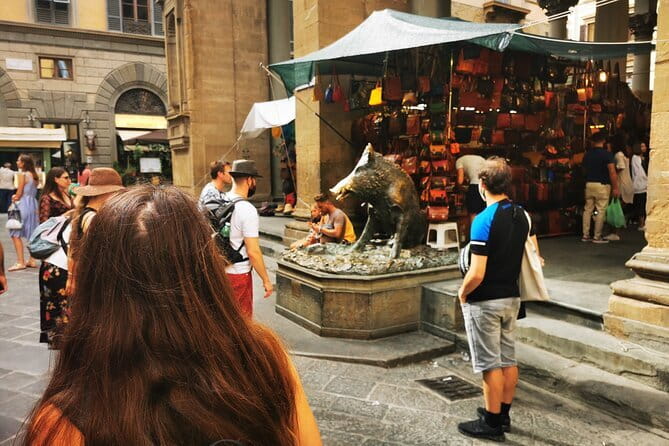
The tour concludes in the Ponte Vecchio area, ending with a final stop near Palazzo Pitti. You’ll get a view onto the Pitti Palace, described as the Medici residence until the family became extinct in 1737.
This ending is clever because it lets you close the loop. The earlier stops set up how the Medici shaped Florence’s public face—political spaces, art institutions, and dominant architecture. Ending near Pitti gives you a final sense of scale: this wasn’t casual influence. This was residence-sized power.
Also, ending near Ponte Vecchio puts you in a convenient spot for continuing on your own—whether you want dinner nearby, a gelato pause, or just more river views.
What the Local Guide Adds (Beyond Facts on a Plaque)
The strength of FlorencePass, based on the guide styles you’ll likely encounter, is that the explanations focus on how buildings work and why people cared. Names that show up in prior experiences include Maurizio, with the note that he’s a born-and-raised Florentine, and guides like Roberta Fiorentina DOC and Claudio, described as exceptional, well-versed, and thorough on architecture and history.
Even when the details differ by guide, the goal stays the same: you should walk away understanding Florence as a system—religious ambition at the Duomo, political theater in Piazza della Signoria, commerce and craft in Orsanmichele and the bridge economy, and Medici control threading through it all.
That’s why the tour is not only about what you see. It’s about how you see. And that’s the difference between a photo-heavy day and a memorable one.
Price and Value: Is $161.34 Worth It?
At $161.34 per person, you’re paying for three things:
- A private local guide for about 2 hours
- A high-efficiency route that hits Florence’s central icons in a short window
- Extra practical help with where to eat and shop, based on the guide’s inside knowledge
If you’re visiting Florence for the first time and you’re short on hours, this can be a strong deal. A self-guided walk can cost less, sure—but you’ll miss the connections that make the city click. And once you understand the layout and the key themes, the rest of your day gets easier and cheaper (because you spend less time hunting and more time choosing well).
If you already know Florence well or you want a schedule packed with museum entries, this might feel narrow. This tour is designed for the highlights and the story flow—not a full-day museum pass.
Timing, Walking Comfort, and How to Make It Shine
This route is set up as quick segments—think roughly 15 minutes at the Duomo area, smaller stops around the squares, and short walking transitions between them. That structure helps you keep momentum, but it also means you’ll want to be ready to move.
Here’s how to make it smoother:
- Wear comfortable shoes. Old-town streets can be uneven, and you’ll be on your feet most of the time.
- Bring a water bottle if it’s warm. The itinerary is mostly outdoor viewpoints.
- If there’s a specific topic you care about—Medici power, Renaissance art, church history—tell your guide early so they can steer a bit during the walk.
The flexible nature of a private tour is what you’ll notice most if you ask questions. Your guide can slow down when something matters to you and speed up when you’re just ready for the next scene.
Should You Book This Private Walking Tour?
I’d book it if you want a smart first pass through Florence—a focused introduction to the Renaissance big hitters, with the Medici and Michelangelo stories woven in so you don’t just recognize buildings, you understand them. It’s also a good choice if you value local guidance for dining and shopping, because that’s where many “sight-only” days fall short.
I’d skip or reconsider if you’re hunting for a long, ticket-heavy museum day. This tour is built for orientation, architecture viewing, and street-level storytelling—not for spending hours inside major venues.
If you’re coming in with limited time and you’d rather spend it understanding the city than figuring out where to start, this private route is an excellent use of your day.
FAQ
How long is the Best of Florence private walking tour?
The tour is approximately 2 hours.
Where does the tour start and end?
It starts at Piazza di San Giovanni, 14R, 50129 Firenze FI, Italy, and it ends in the area of Ponte Vecchio, with the ending point listed as 46R, 50125 Firenze FI, Italy.
Is this tour private?
Yes. It’s a private tour/activity, and only your group participates.
What are some of the main sights included?
The route includes Piazza del Duomo (with St. John’s Baptistery, Santa Maria del Fiore Cathedral, and Giotto’s belltower), Piazza della Repubblica, Orsanmichele, Piazza della Signoria (Palazzo Vecchio area), Ponte Vecchio, and the Palazzo Pitti area.
Do I need to bring paper tickets?
No. The tour uses a mobile ticket.
How far in advance is this tour commonly booked?
On average, it’s booked 97 days in advance.
What is the cancellation policy?
You can cancel for free up to 24 hours in advance for a full refund. If you cancel less than 24 hours before the start time, the amount paid is not refunded.
You Might Also Enjoy

More Walking Tours in Florence
More Tours in Florence
- The Best tour in Florence: Renaissance & Medici Tales – guided by a STORYTELLER
★ 5.0 · 12,316 reviews

More Tour Reviews in Florence
- Tuscany Day Trip from Florence: Siena, San Gimignano, Pisa and Lunch at a Winery
★ 5.0 · 21,634 reviews - The Best tour in Florence: Renaissance & Medici Tales – guided by a STORYTELLER
★ 5.0 · 12,316 reviews