REVIEW · FLORENCE
The Best Tour in Florence: Renaissance and Medici Tales
Book on Viator →Operated by All Around Florence · Bookable on Viator
Florence clicks into place when you hear the Medici story. This 2-hour Renaissance walk links major sights with the personal power plays behind them, from San Lorenzo to Piazza della Signoria. I especially like the way the route stays focused—so you get context fast—and the guide commentary turns stone and statues into real people and real motives.
My other big plus: you’re on foot, which means you get the city’s rhythm as you go. That said, it is a compact walk with many stops in a short window, so plan for steady walking and a bit of standing time at each location.
In This Review
- Key highlights at a glance
- Why This Medici and Renaissance Walk Works So Well
- Starting at San Lorenzo: Your Florence “Opening Scene”
- Basilica di San Lorenzo: Medici Power in a Church Setting
- Palazzo Medici Riccardi: Banking Money Turned Architecture
- Baptistery of San Giovanni: One of Florence’s Oldest Frames
- The Duomo Area: Florence Cathedral and the Cupola Mystery
- Giotto’s Campanile and the View Logic
- Brunelleschi’s Cupola: Why It’s Still a Big Deal
- Casa di Dante: Turning a Writer into a Place
- Piazza della Signoria: The Walk’s Social Center
- Palazzo Vecchio and the Michelangelo David Connection
- Uffizi-Adjacent Finale: Knowing Where to Go Next
- Price and Value: A Budget-Friendly Start with Pay-What-You-Wish Spirit
- Timing, Pacing, and Who This Tour Fits Best
- Best for
- Less ideal for
- Practical Tips to Get the Most from the Walk
- Should You Book This Medici and Renaissance Tour?
- FAQ
- How long is the Renaissance and Medici Tales tour?
- Where does the tour start and end?
- Is the tour offered in English?
- Are tickets included for all stops?
- Do I need a printout, or can I use my phone?
- Is this tour weather-dependent?
Key highlights at a glance
- Medici tales in the exact places where they mattered, not in the abstract
- A tight route that covers San Lorenzo, the Duomo complex area, and the Signoria zone
- Real Florence wayfinding by landmarks, so you can navigate later on your own
- Stop-by-stop art and architecture framing, including Brunelleschi’s cupola and the David connection
- Small group size (max 30), which helps keep the storytelling audible and interactive
Why This Medici and Renaissance Walk Works So Well
If you only have a couple hours in Florence, this tour is built for that reality. It doesn’t try to cover everything. Instead, it focuses on the spine of the city: church power, banking power, and the cultural power that followed.
The Medici theme matters because Florence isn’t just a museum city. It’s a city of decisions—who funded what, who protected artists, and who used buildings as political messaging. When your guide ties those threads to specific landmarks, the places stop feeling random. You start to recognize patterns: patronage, prestige, and propaganda, all written in marble and brick.
You also get a practical benefit: you leave with a mental map. By the time you reach Piazza della Signoria, you know where you are relative to the Duomo area and where the Uffizi fits into the story. That makes your next hours easier, whether you go straight into a ticketed museum or just wander without getting lost.
One more value point: the tour is donation-based at the end. So you’re paying a base price up front, then you decide what the guide’s time and expertise were worth. If you care about good guiding, that system often rewards it.
You can also read our reviews of more tours and experiences in Florence.
- Tuscany Day Trip from Florence: Siena, San Gimignano, Pisa and Lunch at a Winery
★ 5.0 · 21,634 reviews
Starting at San Lorenzo: Your Florence “Opening Scene”
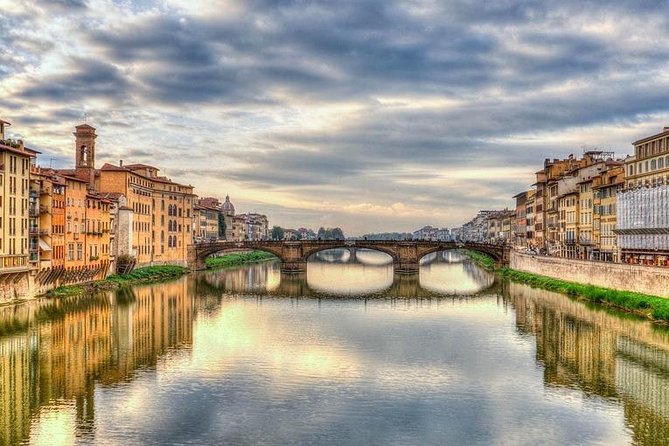
The walk begins in the heart of the city at Piazza di San Lorenzo, right by Basilica di San Lorenzo. Your meeting point is listed at Piazza di San Lorenzo, 35R, and the guide meets you next to a statue of Giovanni de’ Medici sitting on a throne.
That start is smart. San Lorenzo sits right in the market district area, so you’re not easing into Florence from a quiet edge. You’re stepping into the real center—where daily life and big history have always been side by side.
From here, the tour’s tone becomes clear: you’re not just reading plaques. You’re getting the human reasons behind the architecture. You’ll also be introduced to the Medici family and how they shaped Renaissance Florence, which sets up every following stop.
What to watch for: the group meets in a busy area. Give yourself a little extra time so you’re not sprinting up to a landmark while others are already matching with their guide.
Basilica di San Lorenzo: Medici Power in a Church Setting
At Basilica di San Lorenzo, you’re seeing one of Florence’s biggest church statements—and, crucially, a family statement. The basilica is described as a central Florence landmark and the burial place of principal Medici family members, from Cosimo il Vecchio to Cosimo III.
This stop works even if you’re not a “church person,” because the story is about control and legacy. A tomb in a major religious building isn’t just spiritual. It’s a message: we belong here, and we will be remembered.
Also, note the practical detail: the tour lists admission ticket not included for this stop. That doesn’t mean you won’t look around; it just means you shouldn’t plan on this being the one location where everything is automatically accessible without a separate ticket.
Palazzo Medici Riccardi: Banking Money Turned Architecture
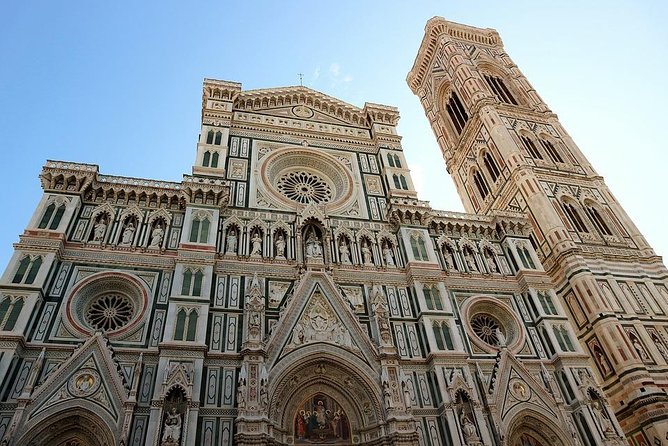
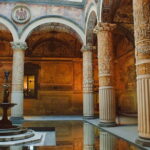
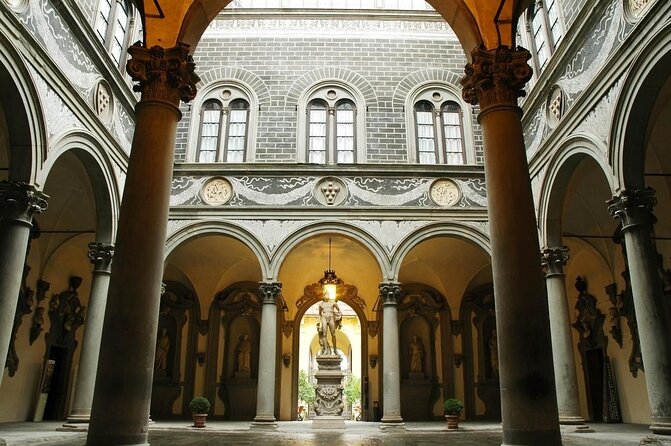
Next up is Palazzo Medici Riccardi, built between 1444 and 1484 and designed for Cosimo de’ Medici, head of the Medici banking family. This is where the tour’s theme becomes obvious in a hurry. The Medici didn’t just fund art. They built prestige into their surroundings.
A palazzo like this is the Renaissance equivalent of branding, just with stone. The building’s presence tells you that money, influence, and culture were tightly linked. Standing near it with your guide’s commentary makes the Renaissance feel less like a distant “art period” and more like a political business model.
The stop is listed as admission ticket not included, so your time here may be mostly about orientation and exterior viewing, depending on the day’s flow and access.
Baptistery of San Giovanni: One of Florence’s Oldest Frames
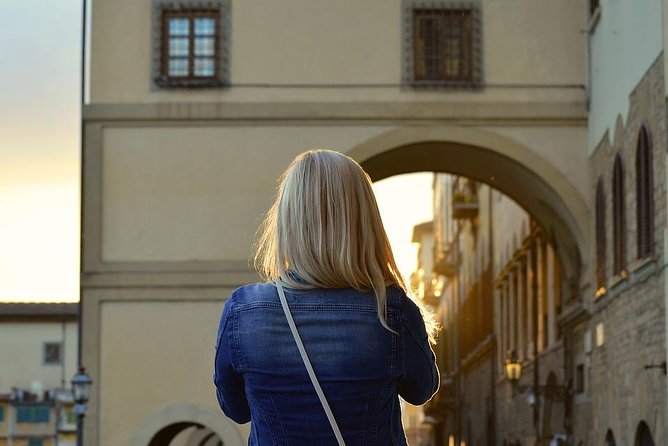
Then you’ll reach the Florence Baptistery (Battistero di San Giovanni), one of the oldest buildings in the city, constructed between 1059 and 1128 in the Florentine Romanesque style.
Even if you’ve seen photos of the Baptistery, this stop is useful because the guide connects age and style to the city’s longer timeline. Florence didn’t spring into Renaissance taste overnight. It evolved through earlier eras, and those earlier structures remained part of what made the city feel like Florence.
Again, this stop is listed as admission ticket not included. So treat it as a story stop—learning how to “read” the building and why it matters—rather than a guaranteed inside visit.
- The Best tour in Florence: Renaissance & Medici Tales – guided by a STORYTELLER
★ 5.0 · 12,316 reviews




The Duomo Area: Florence Cathedral and the Cupola Mystery
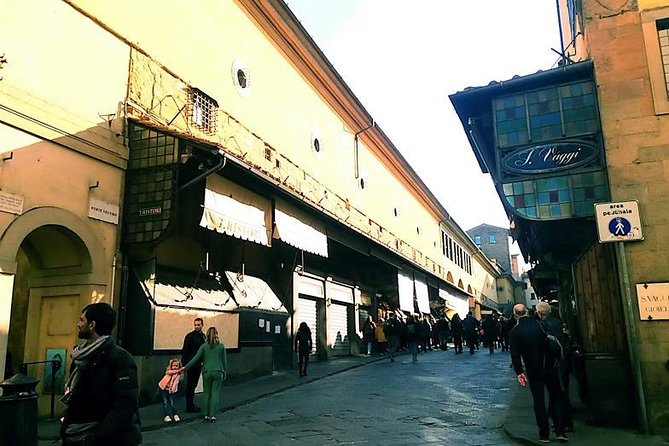
The tour moves to the Duomo (Cattedrale di Santa Maria del Fiore) and the surrounding cathedral complex area. You’ll also hear about the Gothic beginning in 1296 by a design attributed to Arnolfo di Cambio, and you’ll get the UNESCO World Heritage context for the historic center.
Here’s where the tour gives you a practical win: the Duomo complex is iconic, but without a guide, it can feel like a pile of big names. With the commentary, you understand the relationships between the buildings—cathedral, Baptistery, and Giotto’s Campanile—like parts of one coordinated statement.
The itinerary lists the Duomo as free for admission, which is a nice advantage on a budget day. Still, expect lines or restricted access depending on the day. That’s true in Florence generally, not just for this stop.
Giotto’s Campanile and the View Logic
You then pass by Giotto’s Campanile, adjacent to the Duomo complex. It’s presented as a showpiece of Florentine Gothic architecture, with sculptural decorations and polychrome marble encrustations.
This stop is less about “facts for facts’ sake” and more about training your eyes. Once you’ve seen Campanile’s look described clearly, other buildings start to make more sense in your mind while you wander.
Admission here is listed as not included—so consider it an outside framing moment and a chance to connect the tower visually to the rest of the complex.
Brunelleschi’s Cupola: Why It’s Still a Big Deal
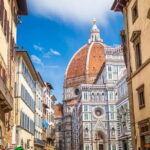
The tour next highlights the Cupola del Brunelleschi, calling it a “mystery” in art and architecture and noting it was the largest brick dome ever constructed and remains the largest of its kind.
This is the kind of stop that helps you appreciate why Renaissance engineering and artistic ambition were inseparable. The dome isn’t just a pretty top on a church. It represents a breakthrough and a technical confidence.
Admission is listed as not included, so your best bet is to watch the dome from the angles you’re given, then use what you learned to spot the structure’s shape when you pass it later.
Casa di Dante: Turning a Writer into a Place
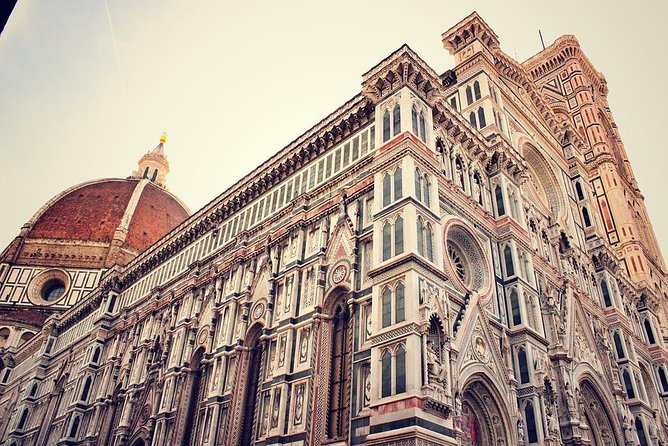
Next the tour goes to Museo Casa di Dante, associated with Dante Alighieri and his writing of the Divine Comedy. The museum and birthplace focus helps the story widen beyond visual art into literature.
This is a smart pivot because it reminds you that the Renaissance wasn’t only painters and sculptors. Writers shaped ideas too. When you see Dante’s presence tied to Florence in a tangible way, it makes later reading and references feel more immediate.
This stop is listed as free admission, which is a rare win in a city where museums often charge. It’s also a good pause moment: your brain gets a break from churches and palazzi and shifts to ideas and words.
Piazza della Signoria: The Walk’s Social Center
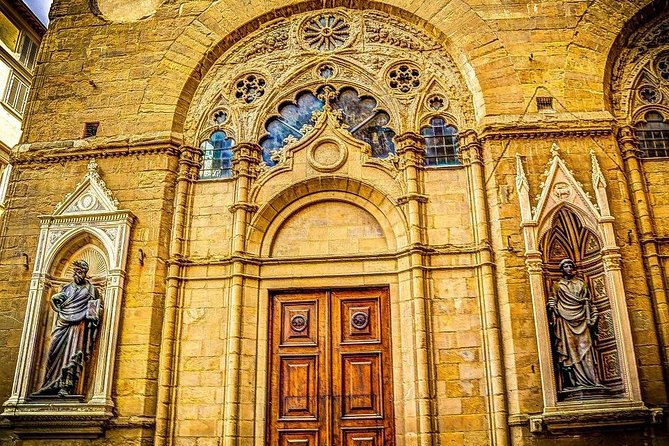
The tour then arrives at Piazza della Signoria, the L-shaped square in front of Palazzo Vecchio and the meeting place of Florentines as well as tourists. It also serves as a gateway toward the Uffizi Gallery.
If you’ve only walked in cities with one “main square,” this will feel like more. The Signoria area has layers: civic power, art power, and street-level daily life all meeting in one place.
You’ll also see it labeled as convenient for orienting yourself toward the Uffizi. And since this tour ends near here, it’s a good landing zone for your remaining time—grab coffee, decide on tickets, then head out with confidence.
Admission here is listed as free—but the real value is the perspective. You’re learning where the big sights sit relative to each other, so you can build your own route after the guide leaves.
Palazzo Vecchio and the Michelangelo David Connection
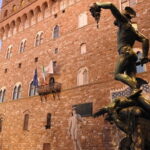
Your next stop is Palazzo Vecchio, Florence’s town hall. It’s described as a fortress-palace and one of Tuscany’s most impressive town halls. It overlooks the square and is tied to art via its display of a copy of Michelangelo’s David as well as the gallery of statues in the adjacent Loggia dei Lanzi.
This stop helps you connect two ways Florence shows power: governance (town hall) and art messaging (David’s presence). Even if you’ve seen David in photos, the placement matters. It turns a single statue into a symbol the city chose to stage in public view.
The itinerary lists admission ticket not included here, so think of this more as a context stop—learning what you’re looking at and why it’s placed there—than a guaranteed inside museum visit.
Uffizi-Adjacent Finale: Knowing Where to Go Next
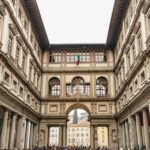
The tour’s last major named stop is Gallerie degli Uffizi, the art museum adjacent to Piazza della Signoria. It’s noted as one of Italy’s most important and most visited museums, housing priceless Renaissance works. The Uffizi complex began with Giorgio Vasari in 1560 for Cosimo I de’ Medici so it could accommodate magistrates’ offices, which is how it got its name, uffizi, meaning offices.
Even though admission is listed as not included, ending near the Uffizi is a huge practical move. You’re finishing exactly where your next decision likely is: do you want to book a museum ticket now, later, or skip it and do something else?
This is also the tour’s quiet strategy: it gives you the Renaissance context you’ll need to make Uffizi art easier to recognize. Instead of walking in cold, you arrive knowing how Medici influence connects to the museum’s origin story.
Price and Value: A Budget-Friendly Start with Pay-What-You-Wish Spirit
The listed price is $3.62 per person, and the tour is described as budget-friendly. That’s the headline.
But the real value idea here is how the payment structure works. The tour is made possible by donations, and at the end you decide what amount to compensate the guide based on expertise and professionalism. The base price gets you the guided walking experience; the donation part rewards quality.
So how should you think about cost? If you want the Duomo area and Medici story explained in one tight walk, this is often a cost-effective way to turn “I saw it” into “I understand what I saw.” You also avoid spending half a day trying to piece together history from guidebooks while you’re tired.
The practical caution: because it’s very short (about 2 hours), the guide packs a lot of meaning into a fast rhythm. If you want slow museum time or deep interior visits, you’ll likely treat this as your starter course, then go deeper later on your own.
Timing, Pacing, and Who This Tour Fits Best
This walking tour is about 2 hours and is offered in English with a mobile ticket. It’s typically booked around 25 days in advance, and the group is max 30 travelers.
That duration and group size are part of why it’s so popular as a first Florence activity. You get structure without locking yourself into a long schedule. And because the stops are fixed landmarks, you can use the tour to plan the rest of your day.
Best for
- First-timers who want a fast history map
- People who like architecture and art when it comes with stories
- Travelers who want to leave with a route they can repeat or expand
Less ideal for
- Anyone who hates standing still during photo-and-story breaks
- People who need a lot of inside-entry time at multiple museums in one go
Also, it’s listed as requiring good weather. If Florence is rainy or rough, you might need to switch dates or accept a refund depending on how it’s handled.
Practical Tips to Get the Most from the Walk
Bring comfortable shoes. The tour is built on walking Florence’s key zones, and the time per stop is tight.
Try to arrive a few minutes early at Piazza di San Lorenzo so you can find your guide easily. Meeting next to the Giovanni de’ Medici statue helps, but the square area can still be busy.
If you plan to enter any buildings on your own afterward—especially anything near the Uffizi—this tour is a good “prep lesson.” You’ll likely feel less overwhelmed by crowds and signage once you’ve already learned the relationships between places.
Finally, if the donation system matters to you, it’s worth thinking ahead. Decide what you’d be comfortable giving based on the value you felt. The guide’s compensation is tied to that choice, and that’s part of the tour’s spirit.
Should You Book This Medici and Renaissance Tour?
I recommend booking this if you want an efficient, story-led introduction to Florence that connects power, art, and architecture in a realistic walking route. It’s especially good as your first or second day, because it helps you navigate the city afterward with less second-guessing.
Skip it if your main goal is slow museum time with lots of inside access, since many stops list admission not included and the tour is timed tightly. In that case, you may still do the sights, but you might want a longer format tour.
If you’re deciding between doing “major landmarks only” versus learning what ties them together, this is the choice that makes the city start speaking back to you.
FAQ
How long is the Renaissance and Medici Tales tour?
It’s listed as about 2 hours.
Where does the tour start and end?
The tour starts at Piazza di San Lorenzo, 35R, 50123 Firenze FI, Italy and ends near Piazza della Signoria, 50122 Firenze FI, Italy. The exact endpoint can vary slightly in the area.
Is the tour offered in English?
Yes, it’s offered in English.
Are tickets included for all stops?
No. Some stops list admission ticket not included. The Duomo and Museo Casa di Dante are listed as free, while other locations like the palaces, baptistery, and Uffizi are not listed as having admission included.
Do I need a printout, or can I use my phone?
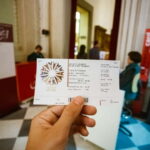
A mobile ticket is included.
Is this tour weather-dependent?
Yes. It’s listed as requiring good weather, and if it’s canceled due to poor weather, you’ll be offered another date or a full refund.
You Might Also Enjoy

More Tours in Florence
- The Best tour in Florence: Renaissance & Medici Tales – guided by a STORYTELLER
★ 5.0 · 12,316 reviews



More Tour Reviews in Florence
- Tuscany Day Trip from Florence: Siena, San Gimignano, Pisa and Lunch at a Winery
★ 5.0 · 21,634 reviews - The Best tour in Florence: Renaissance & Medici Tales – guided by a STORYTELLER
★ 5.0 · 12,316 reviews