REVIEW · FLORENCE
Florence Sightseeing Walking Tour with a Local Guide
Book on Viator →Operated by Raphael Tours & Events · Bookable on Viator
Florence clicks after a short guided loop. This walk hits the big “you-are-here” landmarks fast: a Santa Croce to Duomo arc and real-time city orientation from a local guide. You may meet guides such as Stefania, Aurora, Glenda, or Giulio, and they’re praised for making the stories stick, from Renaissance power players to the bridge you’ll photograph anyway.
A possible drawback to plan for: Uffizi Gallery entrance isn’t included, so you may still want to buy tickets if you want to go inside. It’s also outdoors with a moderate walking pace, plus lots of curbs and street crossing, so comfortable shoes really matter.
In This Review
- Key highlights worth your attention
- Why this 2-hour Florence walk is a smart first move
- Meeting at Piazza di Santa Croce: the “map in motion” moment
- Santa Croce outside: why these tomb names matter
- Piazza dei Peruzzi and the Bargello Palace: a spot many miss
- Porcellino market and Ponte Vecchio: history with a photo plan
- Piazza della Signoria: where Florence’s civic life gets explained
- Piazza del Duomo: your fastest path to the right details
- San Lorenzo ending: a smart landing zone for markets and lunch
- Price and value: what you’re paying for at $228.08 per person
- Who this tour suits best (and who should look elsewhere)
- How to get the most out of your guide (practical tips)
- Should you book this Florence sightseeing walking tour?
- FAQ
- How long is the Florence sightseeing walking tour?
- Where does the tour start and end?
- Is the tour in English?
- How big is the group?
- Are Uffizi Gallery tickets included?
- What fitness level is needed?
- Can children join?
- What happens if the weather is poor or you need to cancel?
- Are service animals allowed?
Key highlights worth your attention
- Start where Florence feels unmistakable: Piazza di Santa Croce as your launch point
- Uffizi views without the ticket stress: you get the context and location cues, even if entry is extra
- Ponte Vecchio through the details: you stop on the route for photos and history, not just a quick pass
- Piazza Signoria explains power: Palazzo Vecchio and the political heart of the city
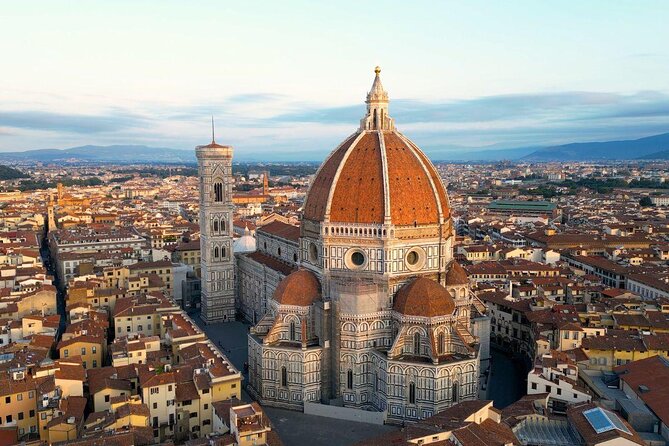
- Duomo Square is a visual checklist: dome, bell tower, and Baptistery landmarks in one stop
- Easy follow-on time at San Lorenzo: you finish by the market area, so lunch and wandering are simple
Why this 2-hour Florence walk is a smart first move
Florence can feel like one long museum. The trick is learning how the city connects, so you don’t waste your first day zigzagging blindly.
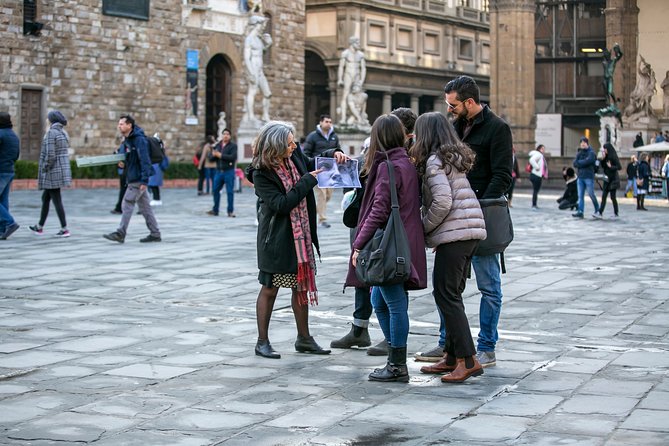
This tour is built for that. In about two hours, you cover a high-impact route that ties together religion (Santa Croce), commerce and craftsmanship (Porcellino area), government (Piazza della Signoria), and civic identity (the Duomo complex). You also get a guide’s perspective on what to notice, not just what to see.
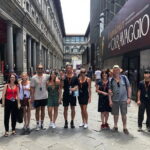
It’s also a practical format: small-group size (up to 15) and the private setup means you’re not stuck listening to a crowd mic. In several experiences on this route, the group has been very small, which helps you ask questions and move at a pace that works for you.
You can also read our reviews of more walking tours in Florence
Meeting at Piazza di Santa Croce: the “map in motion” moment
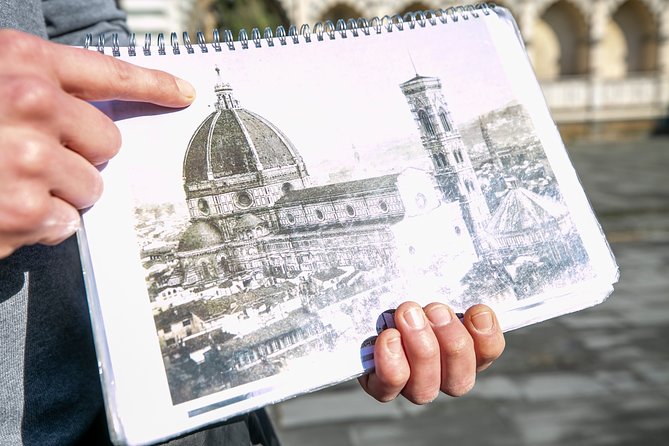
Your tour begins at Piazza di Santa Croce, right in the center of the action. The advantage of starting here is simple: you’re starting from a place that anchors Florence’s Renaissance identity in one glance. It sets the tone for what comes next, so later stops don’t feel random.
You’ll be with your local guide and a small group. Multiple start times are offered, which is useful in Florence where your day can easily get chopped up by church hours, lines, and the lure of gelato.
If you like photos, this start also helps. Santa Croce gives you a clean “baseline viewpoint” for understanding how the city is laid out before you move on to tighter, older streets.
Santa Croce outside: why these tomb names matter
The first major stop is the Church of Santa Croce. Even if you’re just viewing it from the outside, it’s a strong opener because the guide connects the building to key figures tied to Florence’s cultural prestige.
You’ll learn about what’s going on with the Franciscan church and why Santa Croce is one of Florence’s headline sites. The tour specifically highlights that major people are buried here, including Michelangelo, Rossini, and Machiavelli. That matters because it frames the rest of the walk: Florence wasn’t just art on walls. It was politics, music, philosophy, and power, all stitched together.
Practical note: this is largely an orientation stop. If you were hoping for a long interior visit, manage expectations. Think of Santa Croce as your story starter.
Piazza dei Peruzzi and the Bargello Palace: a spot many miss
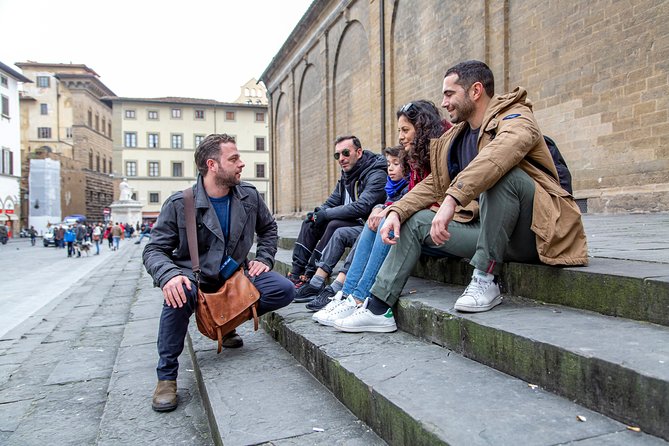
Next you head toward Piazza dei Peruzzi and the Bargello Palace. This is the kind of stop that feels like a gift on a first trip because it’s not always at the top of every visitor’s list.
The Bargello Palace is medieval and visually striking, and the tour uses the location to teach you how older Florence’s identity shows up in the present-day city. You also get a sense of how neighborhoods shift from grand civic sites to the more human, street-level scenes.
From a value point of view, this works well. If you only had time to “hit the famous ones,” you might skip Bargello. But the walk makes it easier to understand why it belongs in your Florence photo set and your mental map.
Porcellino market and Ponte Vecchio: history with a photo plan
After Bargello, the route flows toward the Porcellino market area. You’ll get guided context in a spot that’s often more about strolling than “must-see ticket attractions.”
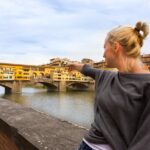
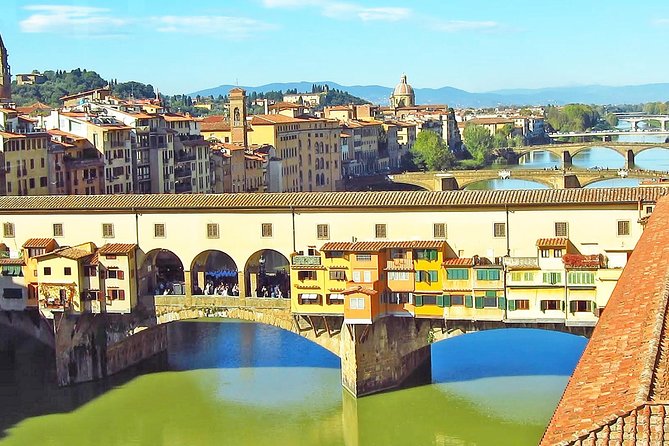
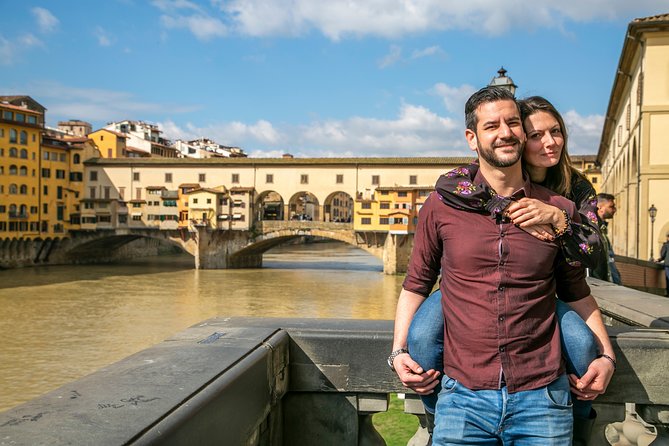
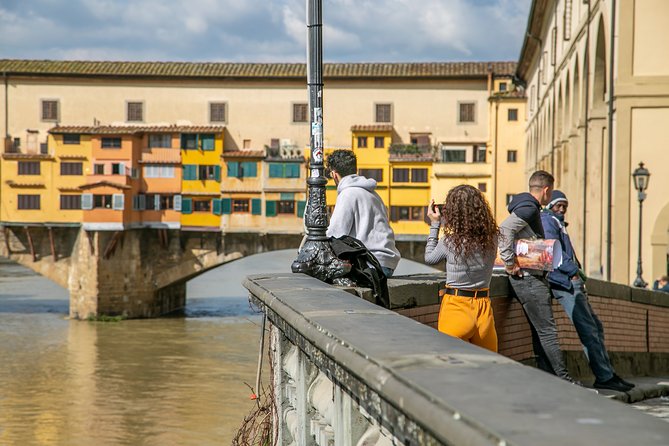
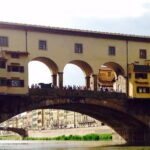
Then comes the stop near Ponte Vecchio, Florence’s oldest bridge dating to the 14th century. This is one of those sites where you might think you already know it because you’ve seen it in postcards. The guide’s job is to make the bridge feel specific—what it was for, why it lasted, and how it fits into Florence’s changing priorities.
This is also where the tour’s pacing helps. You pass through lively market surroundings, then pause for photos on the bridge. You’re not stuck rushing past; you get a chance to frame your shots while the history is fresh in your head.
If you’re visiting in peak season, this kind of stop is still manageable because you’re moving as a group with guidance on where to stand and what to focus on.
You can also read our reviews of more guided tours in Florence
- The Best tour in Florence: Renaissance & Medici Tales – guided by a STORYTELLER
★ 5.0 · 12,316 reviews
Piazza della Signoria: where Florence’s civic life gets explained
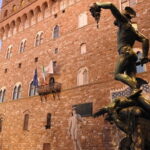
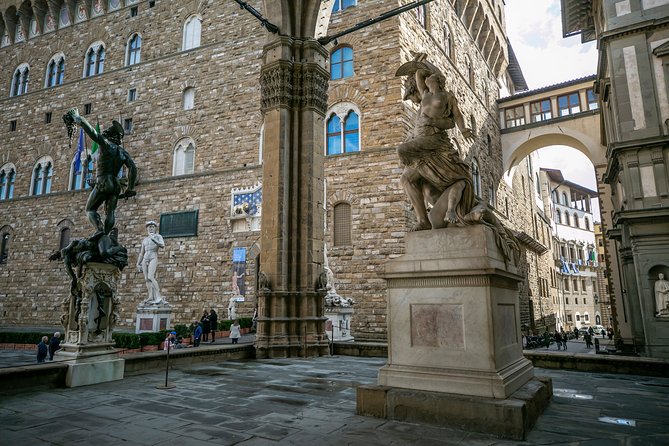
From the bridge and market zone, you shift to the political heart: Piazza della Signoria. The feel changes here. Instead of shopping streets and artisan energy, you get the sense of authority.
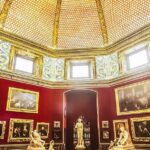
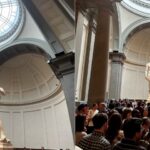
In this stop, the tour points out key landmarks tied to Florence’s government—especially Palazzo Vecchio. You’ll also get impressive views toward the Uffizi Gallery, so you understand where it fits in the skyline and the city’s logic.
This matters even if you never buy an Uffizi ticket on the same day. Knowing the relationship between Piazza della Signoria and the Uffizi area helps you plan future visits more efficiently. It also helps when you’re just wandering: you’ll recognize what you’re looking at instead of guessing.
The best part of this stop is how it turns architecture into storytelling. You’re not just standing in a square. You’re learning why the square exists and what it symbolized.
Piazza del Duomo: your fastest path to the right details
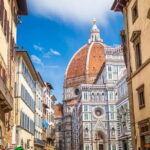
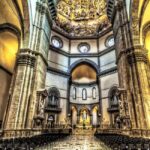
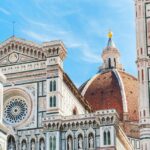
Now you arrive at Piazza del Duomo, often the “final boss” of Florence sightseeing. This part of the tour is built around recognition.
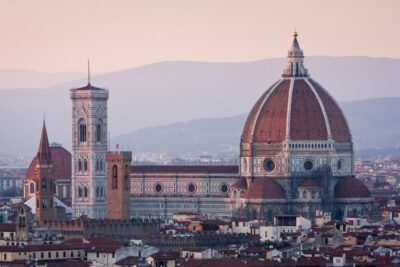
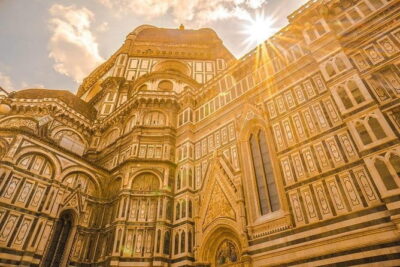
You’ll marvel at the Florence Cathedral and key architectural landmarks that make this area famous:
- Brunelleschi’s Dome
- Giotto’s bell tower
- The Baptistery, including a focus on the Baptistery’s Paradise Door
The guide helps you see how these pieces work together as a single civic stage, not separate tourist stops. If you’ve ever felt overwhelmed looking up at the Duomo complex, this is the antidote. Instead of random details, you get a checklist you can actually remember.
A realistic consideration: this is a popular area, so give yourself a mental buffer for crowds. The tour is short, but you can still enjoy the moment if you stay flexible about where you pause and how long you linger.
San Lorenzo ending: a smart landing zone for markets and lunch
The tour ends at the Church of San Lorenzo. That’s a very practical finish because the area around San Lorenzo is geared for continuing exploration.
Once your guide time is done, you can keep going on your own and head into nearby markets. If lunch is next on your list, this stop also makes it easier to pick a nearby restaurant without trekking across town.
I like ending in a neighborhood that still feels alive and walkable rather than dropping you back at a far-off transport hub. San Lorenzo is a good “wrap-up and wander” zone.
Price and value: what you’re paying for at $228.08 per person
At $228.08 per person, this isn’t a budget walking tour. So you should ask: what’s the value?
You’re paying for three big things:
- A local guide who can connect monuments into a readable story
- A time-efficient route that hits major stops in about two hours
- A small-group / private setup that supports questions and pacing
Where the math can work best is if you’re a pair, a small group, or you prefer learning your way through a first visit. The tour gives you the kind of orientation that often prevents “regret wandering,” where you end up backtracking because you didn’t understand the city layout.
One “value catch” to remember: the Uffizi Gallery entrance is not included. You may still want it, and if you do, budget for that extra ticket cost and plan your time. If you’re happy with the guided viewpoints and context, you can still get a lot out of the walk without paying for another timed entry that day.
Who this tour suits best (and who should look elsewhere)
This works especially well if:
- You’re in Florence for the first time and want a tight first-day route
- You like learning the “why” behind landmarks (not just the where)
- You want a guide to help with pacing and practical street awareness
- You prefer a small group where you can ask questions
You might consider another option if:
- You want long interior church or gallery time inside the Uffizi specifically during this same session
- You need a mostly off-the-street experience, since the tour is described as a walking tour across central Florence
If you’re the type who enjoys snapping photos, stopping to read the streets, and asking questions, this route is a strong match.
How to get the most out of your guide (practical tips)
Because the tour is short, small choices can make it feel much better:
- Wear shoes you trust. Curbs and uneven moments come with walking in central Florence, and the guide may remind you where to step.
- Bring a question or two. A guide can tailor explanations based on what you care about, from art to politics to how the city evolved.
- Have your photo stance ready. Stops at Ponte Vecchio and in major squares are where you’ll want to quickly find your angle.
- Plan your follow-up at San Lorenzo. If you want markets or lunch, treat the ending point as your cue to stay in the area instead of rushing off.
On guides like Giulio or Aurora, the pace can adjust to how you walk and how much you pause for photos. That’s not guaranteed, but it’s a common payoff of a small-group format.
Should you book this Florence sightseeing walking tour?
If you want a first-day framework for Florence, I think this tour is worth booking. It’s efficient, it covers the big iconic spaces you’ll see anyway, and it gives you the connective tissue—why Santa Croce matters, what Piazza Signoria symbolizes, and how the Duomo complex functions as Florence’s civic identity.
Book it if you:
- want a guided orientation route across central Florence in about two hours
- like learning from a local guide with strong communication, including guides such as Stefania, Glenda, Aurora, and Giulio
- are okay with Uffizi being a viewpoint moment rather than an included entry
Skip or swap it if you:
- need a longer, ticket-heavy gallery day on the same schedule
- have low tolerance for outdoor walking and street-level movement
Overall: this is the kind of tour that helps you stop guessing and start exploring with confidence.
FAQ
How long is the Florence sightseeing walking tour?
The tour is approximately 2 hours.
Where does the tour start and end?
It starts at Piazza di Santa Croce, 50122 Firenze FI, Italy and ends at Piazza di San Lorenzo, 50123 Firenze FI, Italy.
Is the tour in English?
Yes, the tour is offered in English.
How big is the group?
The tour is for a small group of up to 15 people, and it is described as a private tour/activity for your group.
Are Uffizi Gallery tickets included?
No. The Uffizi Gallery is mentioned as a highlight, but entrance is not included.
What fitness level is needed?
Travelers should have a moderate physical fitness level.
Can children join?
Yes, children must be accompanied by an adult.
What happens if the weather is poor or you need to cancel?
The experience requires good weather. If it’s canceled due to poor weather, you’ll be offered a different date or a full refund. You can cancel for a full refund up to 24 hours in advance.
Are service animals allowed?
Yes, service animals are allowed.
You Might Also Enjoy

More Walking Tours in Florence
More Tours in Florence
- The Best tour in Florence: Renaissance & Medici Tales – guided by a STORYTELLER
★ 5.0 · 12,316 reviews


More Tour Reviews in Florence
- Tuscany Day Trip from Florence: Siena, San Gimignano, Pisa and Lunch at a Winery
★ 5.0 · 21,634 reviews - The Best tour in Florence: Renaissance & Medici Tales – guided by a STORYTELLER
★ 5.0 · 12,316 reviews