REVIEW · FLORENCE
Royal Paths of Florence: Explore the Boboli Gardens
Book on Viator →Operated by Star Florence · Bookable on Viator
Boboli rewards slow feet and good eyes. This guided walk turns Florence’s biggest garden sights into a clear route, with radio audio and reserved entry so you spend your time looking instead of figuring out where to go. I especially loved how the tour hits the most sculptural parts first, right as you start climbing from the Pitti Palace courtyard, and how the guide points out the garden’s big design moves.
What makes this one feel worth it is the Boboli Garden admission ticket built into the price, plus the radio system so you can actually hear your guide on steps, slopes, and busy viewpoints. I also liked that the pace is described as leisurely enough for most people, not a power-walk.
My main caution is physical: Boboli is a garden on a hill, and even with a relaxed pace you’ll still be on gentle slopes and steps, often in hot sun. On the rare day equipment or audio isn’t perfect, you’ll need to tell the guide quickly so the explanation keeps working for you.
In This Review
- Key points to know before you go
- Walking up from Palazzo Pitti to Boboli’s first wow (and why it works)
- The garden’s design lesson: fountains as waypoints on a single story
- Neptune, Abundance, and The Ocean: seeing Giambologna’s signature moments
- The downhill “Viottolone” walk: views, rhythm, and manageable pace
- The final stops: Michelangelo’s Giardino del Cavaliere, the Kaffeehaus, and Buontalenti Grotto
- Price and value: what you’re really paying for in $54.19
- Who your guide is can change the day (and how to make it count)
- Timing, start point, and walking smart around Boboli’s hill
- Should you book this Boboli Gardens tour?
- FAQ
- How long is the Boboli Gardens Royal Paths tour?
- What’s included in the price?
- Where do we meet for the tour?
- Is food or drinks included?
- What happens if it’s raining?
- What if I arrive late?
Key points to know before you go
- Reserved Boboli entry is included, so you’re not juggling ticket lines while the day moves on.
- Radio headsets help you follow the story, even when you’re spread out on the paths.
- You’ll see the route’s set-piece fountains and sculptures in about an hour, from the early climb to the final grotto.
- The uphill sections matter more than you expect, so wear solid shoes and plan on some stamina.
- Small group size (up to 15) makes it easier to keep track of your guide and the route.
- Weather can pause the gardens, so have a flexible mindset if conditions are rough.
Walking up from Palazzo Pitti to Boboli’s first wow (and why it works)
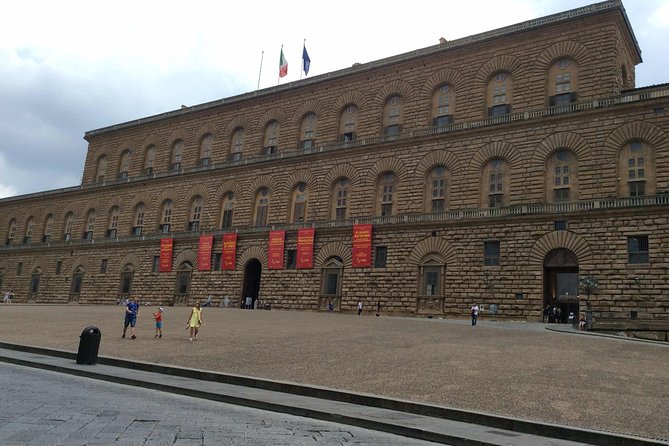
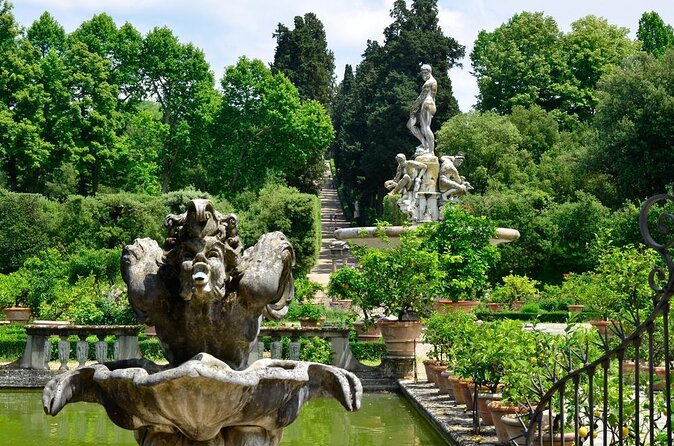
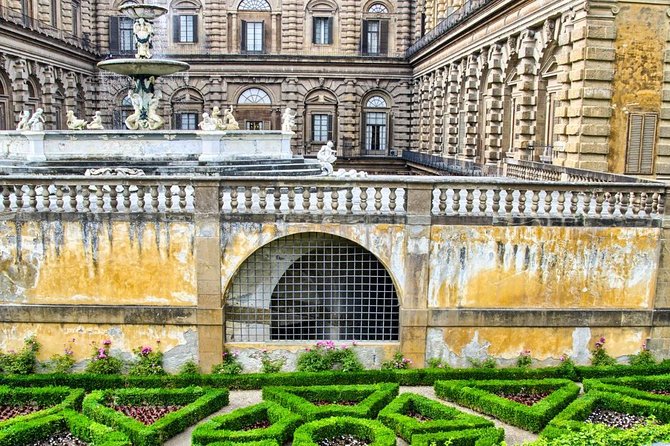
The tour starts at Piazza de’ Pitti, right at the meeting point near the Palazzo Pitti entrance area. Your guide leads you through the palace courtyard and up toward the first big landmark: the artichoke fountain, an octagonal basin packed with statues and crowned by a bronze lily.
This opening matters. If you go into Boboli on your own, you can get lost in the garden’s sheer size and end up wandering past the best focal points without realizing how they connect. With a guide, you get an order that makes the hills and sightlines feel intentional instead of random.
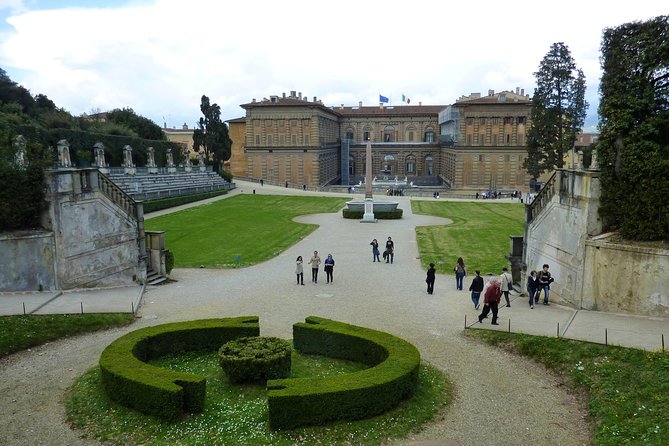
From the artichoke fountain area, you also look out toward the Amphitheatre adjoined to the hill behind the palace. The guide explains how the garden’s early creation was designed, which gives you a mental map as the walk starts to climb.
If you want a tip that pays off fast: keep your eyes up while you walk. The sculptures aren’t only “in the garden,” they’re placed to shape what you see as you move between levels.
You can also read our reviews of more tours and experiences in Florence.
- Tuscany Day Trip from Florence: Siena, San Gimignano, Pisa and Lunch at a Winery
★ 5.0 · 21,634 reviews


The garden’s design lesson: fountains as waypoints on a single story
Once you start climbing, the tour becomes more than a checklist of sights. It’s a tour of how Boboli guides your attention. You’ll pass through named areas and connect them to the next view, so each stop feels like the next page in a garden “text.”
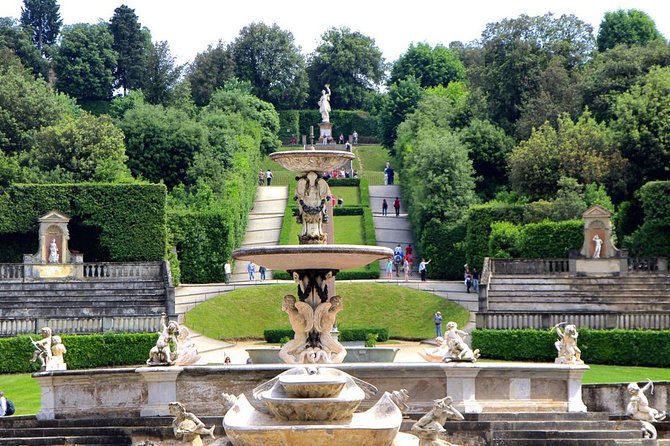
One of the first named fountains you reach is Neptune’s fountain. The top of this hill section brings you to the large statue of Abundance, created by Giambologna. These are not just pretty things to photograph. The way your guide links them to the garden’s layout helps you understand why you’re standing there at that moment.
After that high point, the route shifts. You’ll be led back down through a steep sloping avenue, then toward a broader main axis called the Viottolone, with cypresses and statuettes. This part is important because the Viottolone acts like a spine for the garden: you can feel the direction of the space as you head back down.
Finally, the walk ends the main hill-and-view sequence at the Isolotto pond. From there, you reach an admirable fountain known as The Ocean, also created by Giambologna.
If you like structure—like the kind that keeps you from skipping the best areas—this flow is the heart of the experience.
Neptune, Abundance, and The Ocean: seeing Giambologna’s signature moments
Boboli’s most memorable pieces are sculptural and theatrical. That’s why the route focuses on the fountains and statues tied to a few standout creators.
At Neptune’s fountain, you get an anchor figure on the climb. It sets the tone: Boboli isn’t a quiet park. It’s a planned environment where water features, statuary, and views work like stage sets.
Then comes Abundance by Giambologna at the top. Even if you’re not an art-nerd, it helps to have a guide explain what you’re looking at while you’re still in motion—so the statue becomes part of the story of the hill, not just a photo at the summit.
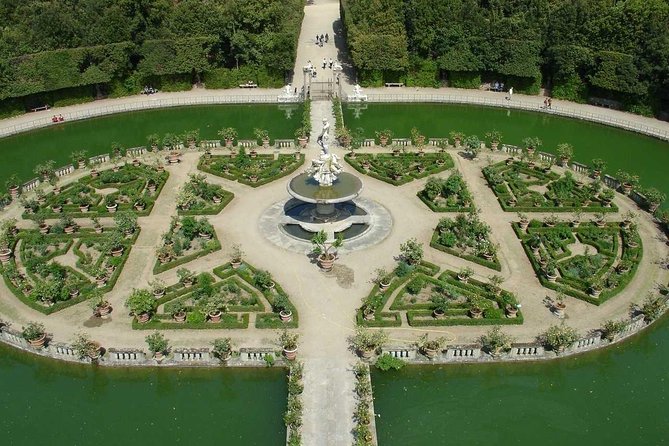
The final Giambologna reference in the main sequence is The Ocean fountain at the Isolotto. Ending the core route here is smart because it gives you contrast: after open vistas and the strong vertical climb, the pond and fountain create a different kind of atmosphere, one that feels more contained and reflective.
A practical note: the tour lasts about 1 hour, so you won’t linger forever at every sculpture. That’s not a bad thing. It means you can absorb the big ideas quickly, then return on your own afterward to spend extra time where you want it.
The downhill “Viottolone” walk: views, rhythm, and manageable pace
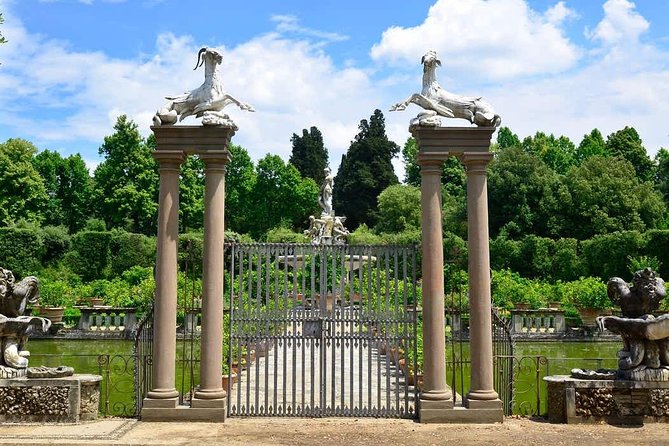
The route down from the top is where Boboli often clicks for first-timers. The Viottolone is a long avenue, lined with cypresses and statuettes, and it leads you all the way toward the Isolotto. Compared with the steeper climb, this stretch can feel more rhythmic, almost like the garden is letting your legs recover while your eyes keep working.
The tour is described as a leisurely pace suited for most people. That said, you’re still walking outdoors on uneven garden paths. I’d treat the pace as: you won’t be sprinting, but you also shouldn’t assume it’s stroller-flat.
This is where the radio system becomes especially valuable. Boboli paths can separate people slightly, particularly in narrower sections. With headsets, you can keep hearing your guide’s commentary even when you’re momentarily behind or moving at your own speed.
One detail I’d take seriously: keep your group timing in mind. Arriving after the start time means you can’t join and won’t be refunded, so be ready to step in when the tour begins.
The final stops: Michelangelo’s Giardino del Cavaliere, the Kaffeehaus, and Buontalenti Grotto
After the core fountain-and-sculpture sequence, the tour finishes with a set of stops that feel more like character sections of a story. These are the areas that make Boboli feel layered—less like one single viewpoint and more like a chain of distinct garden moments.
First is the Giardino del Cavaliere, built by Michelangelo. This stop is a shift in feel from the more central water-and-view elements. Even if you don’t know the name ahead of time, it’s the kind of place where your guide’s explanation can help you notice what’s different about the space.
Next comes the Kaffeehaus. The name alone pulls curiosity, and the guide’s commentary ties it into the broader logic of the garden.
Then you reach the Buontalenti Grotto, created by Buontalenti from materials described as limestone concrete stalactites, shells, and terracotta reliefs. Water runs down the walls, adding motion and brightness as you stand close enough to feel the coolness of the environment.
This is one of the most “you have to be there” parts. A grotto with staged textures doesn’t translate the same way in a distant photo. With an hour-long tour, this final section is also a good payoff: you finish with something sensory rather than purely visual.
And because the tour ends back at the meeting point, you can keep exploring afterward. That’s a big deal in Boboli: you’ll want to return to whichever area hits you most.
- The Best tour in Florence: Renaissance & Medici Tales – guided by a STORYTELLER
★ 5.0 · 12,316 reviews






Price and value: what you’re really paying for in $54.19
At $54.19 per person for about 1 hour, you’re not paying for a long museum experience. You’re paying for a focused hit of Boboli’s highlights with three built-in pieces of value:
- Admission ticket with reservation included
- An official certified guide to connect sights to design and meaning
- A radio system so you don’t lose the explanation on the move
If you’ve tried to “self-tour” Boboli without a plan, you know how easy it is to waste time walking through areas that don’t end up being your top memories. This tour’s big strength is compression: it packages the essential named sculptures and zones into a route that keeps you moving toward payoff.
Small group size helps too, capped at 15 travelers. That usually makes it easier to follow along and harder for you to get stuck behind someone or miss the guide’s directions when the route turns.
Where this price can feel less satisfying is when you want lots of unstructured time. If you’re the type who likes sitting for long rests or meandering for hours, you might prefer solo entry after you’ve gathered the “greatest hits” first.
Who your guide is can change the day (and how to make it count)
The tour depends on the guide’s storytelling and the group’s ability to hear instructions. From the guide praise in the available feedback, names like Iliria, Matteo, and Francesca come up often with the same pattern: friendly, patient, and good at putting Boboli into context while also keeping the walk enjoyable.
Here’s how to tilt the odds further in your favor:
- When you receive the headset, confirm audio right away. If it crackles or drops out, tell the guide quickly rather than waiting.
- Position yourself where you can see the guide’s face when they stop. One common problem in group tours is missing cues if you can’t see body language.
- If you’re sensitive to accent or pronunciation differences, use the headset as your safety net and keep your volume moderate so you don’t strain yourself.
The tour’s whole design assumes you’ll hear commentary clearly. Most of the time that works, but it only works if you speak up fast when something feels off.
Timing, start point, and walking smart around Boboli’s hill
Meeting point is Piazza de’ Pitti, and the tour ends back there. That makes the day easy to plug into the rest of your Florence plans because you’re not committing to a long transfer or complicated drop-off.
One instruction you should treat like a hard rule: if you arrive after the tour starts, you can’t join and you won’t be refunded. That’s worth planning for, especially if you’re bouncing between sights earlier in the day.
Also remember: Boboli may not operate on days with heavy rain. If weather is questionable, go in with a “small plan B” mindset.
Finally, pack for comfort. Even if the pace is described as gentle, you’re going uphill and down again. Wear shoes with grip. Bring water if you expect heat. And don’t be shy about resting. The route is built to see highlights, but it doesn’t reward rushing.
Should you book this Boboli Gardens tour?
Book it if:
- You want a clear route through Boboli’s top fountains and sculpture zones in about one hour
- You value reserved entry, a certified guide, and radio support to keep the story audible
- You like structured walks where the guide helps you “see the design” rather than just pass by attractions
Skip it or pair it differently if:
- You want hours of slow wandering with no stop-and-start rhythm
- You’re traveling when rain is common and you don’t want to deal with potential rescheduling
- You’re extremely sensitive to hills and steps, even gentle ones
My best advice: treat this as your orientation tour. Do it early or mid-day, then return later on your own to linger where you felt the strongest pull—whether that’s around the Isolotto pond, the Buontalenti Grotto, or the Giambologna sculpture moments at the top and bottom of the main hill route.
FAQ
How long is the Boboli Gardens Royal Paths tour?
It runs for about 1 hour.
What’s included in the price?
You get an official certified guide, a radio system to hear commentary clearly, and a Boboli Garden ticket with reservation.
Where do we meet for the tour?
The meeting point is Piazza de’ Pitti, 50125 Firenze FI, Italy. The tour also ends back at the meeting point.
Is food or drinks included?
No. Food and drinks aren’t included.
What happens if it’s raining?
The gardens do not operate on days with heavy rain. If the tour is canceled due to poor weather, you’ll be offered an alternative date or a full refund.
What if I arrive late?
If you arrive after the tour start time, you won’t be able to join and won’t be refunded.
You Might Also Enjoy

More Tour Reviews in Florence
- Tuscany Day Trip from Florence: Siena, San Gimignano, Pisa and Lunch at a Winery
★ 5.0 · 21,634 reviews - The Best tour in Florence: Renaissance & Medici Tales – guided by a STORYTELLER
★ 5.0 · 12,316 reviews