REVIEW · FLORENCE
Duomo Square Tour in Florence
Book on Viator →Operated by Star Florence · Bookable on Viator
Florence’s Duomo Square is pure gravity. On this 90-minute walk, I love the radio headset for clear commentary and the small-group feel that keeps you from feeling like a number. One watch-out: the schedule is tight, and arriving late means you can’t join and you won’t get a refund.
This is a guided route built around the key sights in the Piazza del Duomo area, plus two indoor stops that explain what you’re looking at—without needing to be an art historian. You start in the historic center where the city’s most famous landmark dominates every angle, then move into the museum that helps protect the dome itself.
If you’re planning a first trip to Florence (or you’ve visited before and want the “what am I really seeing?” version), this tour is a strong use of time. The main consideration is simple: you’ll be walking and there’s no elevator access on parts of the visit, so plan accordingly.
In This Review
- Key Highlights You’ll Feel Right Away
- Why the Duomo Square Tour Feels Different Than Wandering
- Meeting Point and the 90-Minute Pace That Actually Works
- Stop 1: Piazza del Duomo and How the Area Tells Its Own Story
- Stop 2: Museo dell’Opera del Duomo and the Dome Conservation Angle
- Stop 3: Baptistery of Saint John, the Red Dome, Giotto’s Tower, and More
- Radio Headsets and Small-Group Structure: The Real Learning Advantage
- Cathedral Area Rules: Dress Code, Shoes, No Elevators, and No Pets
- Using Your Cathedral Tickets After the Tour (72 Hours Is a Big Deal)
- Optional Cupola Climb: The Fastest Way to Earn Your Florence View
- Price and Value: What You’re Really Paying For
- Who Should Book This Tour (and Who Might Skip It)
- Should You Book the Duomo Square Tour?
- FAQ
- How long is the Duomo Square tour?
- What’s included in the tour price?
- Do I need a ticket to enter the cathedral?
- What is the dress code for the cathedral area?
- Is climbing Brunelleschi’s Dome included?
- How big is the group?
- Are elevators or pets allowed?
Key Highlights You’ll Feel Right Away
- Radio headsets so you can actually hear the guide in a busy piazza
- Small-group pacing with guided stops inside the Duomo complex area
- Museo dell’Opera del Duomo focus on conservation and major Renaissance names
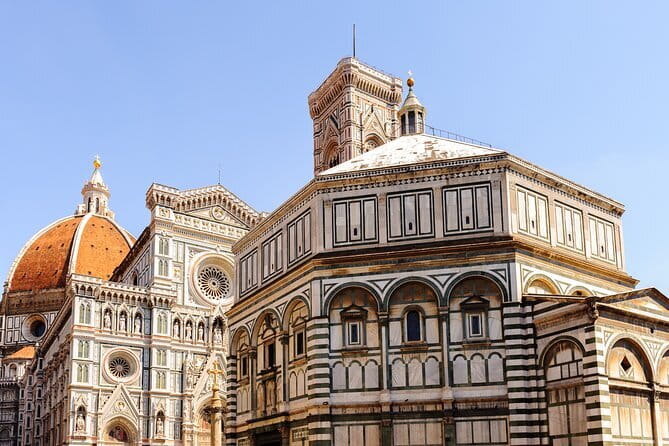
- Baptistery + exterior architecture walk around the red dome and Giotto’s Bell Tower
- Cathedral access after the tour with a ticket valid for 72 hours (for several nearby sites)
- Optional Brunelleschi’s Dome (Cupola) tickets if you want the climb
Why the Duomo Square Tour Feels Different Than Wandering
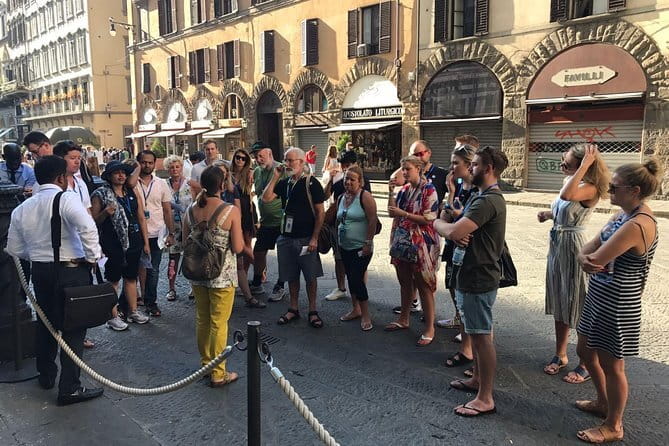
Piazza del Duomo is one of those places where it’s easy to stare, take photos, and still leave with unanswered questions. The guide fixes that fast. You get someone to point out what matters: the design logic, the historical timeline, and why certain buildings look the way they do.
I also like how the tour is structured like a guided storyline instead of random stops. You begin right in front of the cathedral area, then you step into the Museo dell’Opera del Duomo, then you finish with the Baptistery and the surrounding architecture. Each segment supports the next, so the whole area starts to make sense instead of just looking impressive.
Finally, the small group plus a radio headset is a practical win. The piazza can get loud, and it’s easy to miss details if you’re trying to keep up visually. With the headset, you’ll catch the guide’s explanations without craning your neck or giving up listening.
You can also read our reviews of more tours and experiences in Florence.
- Tuscany Day Trip from Florence: Siena, San Gimignano, Pisa and Lunch at a Winery
★ 5.0 · 21,634 reviews
Meeting Point and the 90-Minute Pace That Actually Works
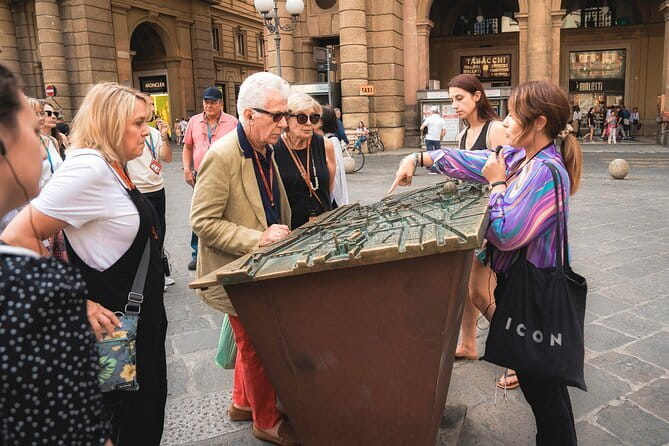
This tour meets at the Lindt Chocolate Shop Firenze Duomo, at Piazza del Duomo 15R. It runs about 1 hour 30 minutes, and the visit is planned with three main segments (about 30 minutes each).
Here’s what that timing means for you. You’re not stuck for half a day, and you also don’t feel rushed through the important stuff. The schedule is built around the Duomo Square highlights, plus time inside the Museo dell’Opera del Duomo and the Baptistery of Saint John.
Two practical notes to plan around:
- If you arrive after the tour start time, you can’t join, and you won’t be refunded or rescheduled.
- The tour requires a minimum of two guests to run, and it can be canceled if that threshold isn’t met.
Stop 1: Piazza del Duomo and How the Area Tells Its Own Story
You start right at Piazza del Duomo, in the heart of Florence’s historic center. This is the most visited area of the city, so you’ll quickly notice how the Duomo complex dominates the space. That matters, because your brain needs reference points before you go inside museums or smaller buildings.
The first part is about orientation and context. From the meeting point, the guide gives you history and perspective while you’re standing in front of what you came to see. It’s not just “look at the building.” It’s more like: here’s what this part is, here’s what it’s for, and here’s how people understood it when it was new.
This is also a great moment to watch how people move through the square. Even if you’re not climbing anything today, the guide will help you understand where to look next.
Stop 2: Museo dell’Opera del Duomo and the Dome Conservation Angle
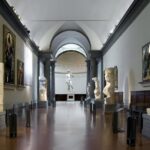
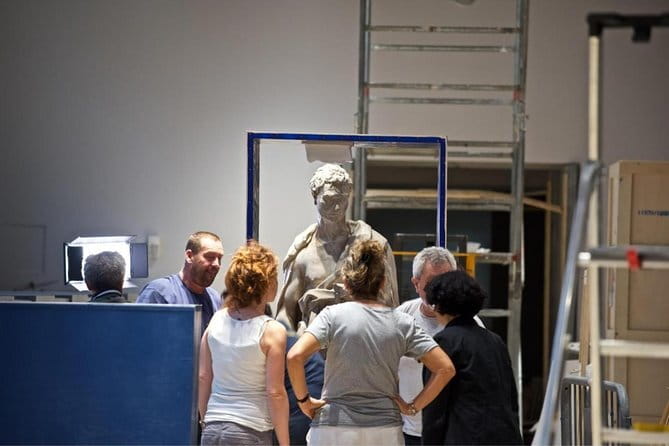
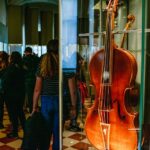
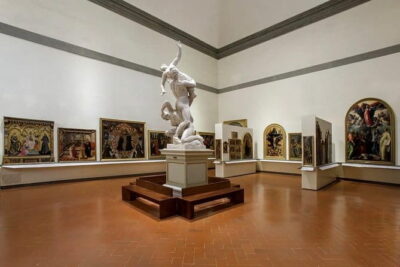
Next you head to the Museo dell’Opera del Duomo, where conservation is the theme. Instead of treating the dome as a finished object, the museum explains the long effort behind protecting it and its masterpieces.
The guide talks you through why the museum exists and what it guards. You’ll hear about major names tied to this creative world, including Michelangelo, Donatello, Lorenzo Ghiberti, Luca Della Robbia, and Arnolfo di Cambio. Those names don’t show up randomly here; they help you connect the Duomo complex to the wider Florence art scene.
This stop is especially valuable if you like your sightseeing to come with reasons. You’re not just seeing objects—you’re learning why they’re preserved and how that connects back to the dome you see from the square.
If you tend to skim museum exhibits on your own, this guided format helps. The guide can pull out what matters most, so you don’t waste time hunting for meaning in a big indoor space.
Stop 3: Baptistery of Saint John, the Red Dome, Giotto’s Tower, and More
After the museum, you stay in the Piazza area and shift to architecture and symbolism.
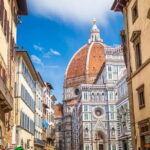
You’ll catch glimpses of the red dome completed in 1436 by Filippo Brunelleschi. That date isn’t just trivia—it’s a key clue for understanding the slow, complex shift in design thinking during the period. The dome also acts like a visual anchor as you walk, so the space stops feeling like a flat postcard.
The tour also brings in Giotto’s Bell Tower, standing adjacent to the Basilica of Santa Maria del Fiore. You’ll learn how the Gothic elements around you fit into the broader look of Florence, not just as decoration but as identity.
Then comes the Baptistery of Saint John. You’ll enter through the Gates of Paradise, and the guide explains the Baptistery with a technical and artistic lens. This is a smart way to visit, because the Baptistery is easy to dismiss as “another beautiful building” if you don’t have someone translating the design choices.
As you go, you’ll also walk around the exterior of the Loggia del Bigallo, a late Gothic building with its own historical detail. It’s the kind of side stop that makes a guided tour feel richer than a straight photo run.
- The Best tour in Florence: Renaissance & Medici Tales – guided by a STORYTELLER
★ 5.0 · 12,316 reviews

Radio Headsets and Small-Group Structure: The Real Learning Advantage
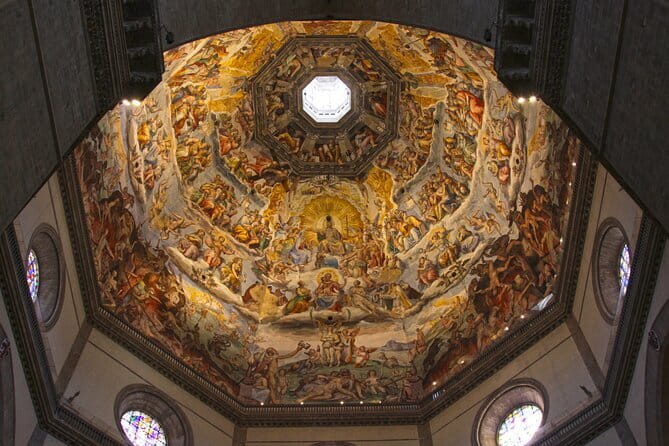
The standout practical feature here is the radio headset. In a crowded, echoing square, it’s common for guides to get drowned out. With headsets provided, you hear the guide clearly without stretching your voice or your neck.
That changes how you experience the tour. Instead of just “keeping up,” you can actually listen while you look. You’ll get explanations at the exact moment you’re seeing the object, and that’s when the information sticks.
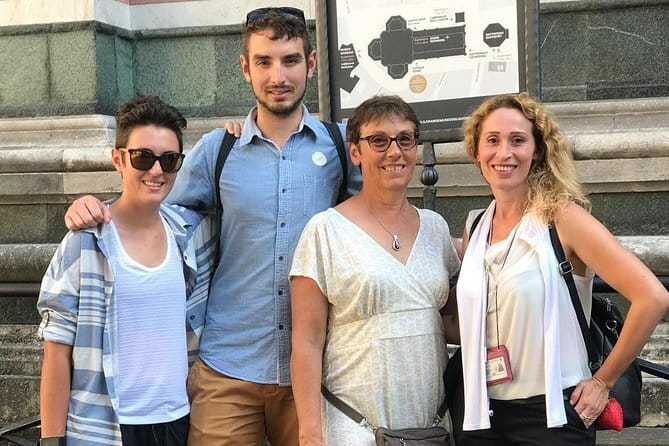
The group size matters too—this tour has a maximum of 18 travelers. That’s big enough to keep the energy up, but small enough that you’re less likely to feel invisible.
And based on what I’d look for in a Florence guide experience, this tour’s structure rewards people who ask questions or who like to understand context. If you’re the type who wants the story behind the postcard views, the radio headset helps you catch every step of it.
Cathedral Area Rules: Dress Code, Shoes, No Elevators, and No Pets

This part is not optional, because it affects whether you can comfortably enjoy the indoor sections.
You’ll want to respect the dress code when visiting cathedral-area interiors:
- No skimpy tops, spaghetti straps, or bare midriffs.
- Shorts and skirts should be knee length to cover the knees.
- If you’re unsure, bring a light shawl or long sleeve top to wrap around.
- Caps and hats should not be worn inside.
Also note these practical rules:
- No elevators are available for parts of the experience.
- No pets are allowed.
Plan your shoes accordingly. Even when the time feels short, the terrain and walking in the square add up.
One more timing rule: the tour requires you to be present at the start. If you miss it, you can’t jump in mid-stream.
Using Your Cathedral Tickets After the Tour (72 Hours Is a Big Deal)
One reason I like this tour for first-timers is the “stickiness” of the ticketing. You get entrance tickets tied to the cathedral complex area so you can visit on your own after the guided portion.
The key detail: after the first validation, the ticket is valid for 72 hours. That means you can come back and use that time to visit places listed under the same ticket on your schedule, including the Bell-tower, the Museum, and the crypt inside the cathedral.
This is a smart value feature because it lets you shape the day around your energy levels. Do you want to revisit for different light? Want to add time to a specific interior that hooked you on the tour? The 72-hour window gives you that flexibility without forcing you into a second guided tour.
Also, you don’t need a ticket to enter the cathedral; you can enter any time before or after the tour. So you can pair the guided explanation with self-paced cathedral time.
Optional Cupola Climb: The Fastest Way to Earn Your Florence View
If you pick the Cupola Tickets option, you can climb Brunelleschi’s Dome (Cupola) on your own after the guided tour ends. The tour itself doesn’t include a guided climb.
How the timing works: with your timed reserved tickets, you can climb the Cupola 30 minutes after the Duomo Square guided tour ends. That sequencing is helpful, because it lets you finish the walking and indoor stops first, then focus on the climb.
A few restrictions are important to know ahead of time:
- Suitcases, backpacks, parcels, containers, and large/medium-sized bags aren’t permitted inside the dome.
- Umbrellas, canes (unless used to assist walking), tripods, and film cameras aren’t allowed inside.
- Knives, scissors, and metal tools that could be dangerous also aren’t permitted.
This option also isn’t for everyone. It’s noted as not recommended for participants with back problems, those not physically fit to climb steps, vertigo, claustrophobia, heart problems, and pregnant women.
If you’re deciding whether to add this, I’d treat it as a separate commitment. The payoff is the dome experience, but you need to be confident you’ll enjoy (and handle) the climb.
Price and Value: What You’re Really Paying For
At $50.57 per person for about 90 minutes, the price is in the “serious sightseeing” range for Florence. But it’s not just paying for access—it’s paying for interpretation.
You’re getting:
- a certified guide
- a radio system to hear clearly
- guided visits inside the Museo dell’Opera del Duomo and the Baptistery of Saint John
- entrance tickets that support cathedral-area follow-up visits
If you were to DIY it, you’d still see the same buildings, but you’d likely spend time figuring out what you’re looking at while trying to keep up with signage and lines. Here, you trade some independence for clarity and timing.
The museum and Baptistery explain what your eyes might miss. That’s the best argument for the cost: you’re buying understanding, not just admission.
Also, this tour is commonly booked about 83 days in advance on average, so if your dates are firm, it’s wise to book ahead rather than gamble.
Who Should Book This Tour (and Who Might Skip It)
This tour is a strong fit if you:
- want a guided “Duomo Square 101” that turns landmarks into stories
- like learning about art and architecture with context
- want to add the museum and Baptistery without spending your time sorting it out alone
- appreciate practical tools like the radio headset
It might be less ideal if you:
- hate walking in a high-traffic area
- need lots of slow, unstructured time without a schedule
- have mobility limitations that make stairs or walking difficult (and remember there are no elevators)
If you’re unsure where to place it in your Florence trip, I’d put it early. The orientation you get helps you enjoy the cathedral area more for the rest of your stay.
Should You Book the Duomo Square Tour?
I’d book it if you value guided explanations at the exact moment you’re looking at the Duomo complex. The radio headset plus the museum-and-Baptistery structure makes it a good “use of time” tour, especially on a first visit.
I’d think twice only if you strongly prefer a totally self-paced day, or if the indoor dress rules and walking pace are a hassle for you. In most cases, though, this is a practical way to leave Florence’s most famous square with actual understanding, not just photos.
FAQ
How long is the Duomo Square tour?
It runs about 1 hour 30 minutes.
What’s included in the tour price?
You get a guided walking tour around Duomo Square, guided visits inside the Museo dell’Opera del Duomo and the Baptistery of Saint John, an official certified guide, and a radio system. You also receive entrance tickets to visit the cathedral on your own.
Do I need a ticket to enter the cathedral?
No. You can enter the cathedral at any time before or after the tour.
What is the dress code for the cathedral area?
No skimpy tops, spaghetti straps, or bare midriffs. Shorts and skirts should be knee length. Caps and hats should not be worn inside. If needed, bring a light shawl or long sleeve top.
Is climbing Brunelleschi’s Dome included?
Not automatically. There is an optional Cupola Tickets option. If you choose it, you get pre-timed reserved tickets to climb on your own 30 minutes after the guided tour ends.
How big is the group?
This tour has a maximum of 18 travelers.
Are elevators or pets allowed?
No elevators are allowed, and pets are not allowed.
You Might Also Enjoy

More Tours in Florence
- The Best tour in Florence: Renaissance & Medici Tales – guided by a STORYTELLER
★ 5.0 · 12,316 reviews


More Tour Reviews in Florence
- Tuscany Day Trip from Florence: Siena, San Gimignano, Pisa and Lunch at a Winery
★ 5.0 · 21,634 reviews - The Best tour in Florence: Renaissance & Medici Tales – guided by a STORYTELLER
★ 5.0 · 12,316 reviews