REVIEW · FLORENCE
the Medici family in Florence: Palazzo Medici and Medici Chapels
Book on Viator →Operated by Florence Tours by Made of Tuscany · Bookable on Viator
Florence has a way of making power feel like art. This Medici tour connects the family’s palaces to the chapels where they’re remembered, from Palazzo Medici Riccardi to Michelangelo’s New Sacristy. I especially love how the visit mixes big-name masterpieces with real decoration details, and how guides like Rossana and Paola (mentioned by name in past feedback) tend to tell the story in a way that makes the whole Medici machine click. One thing to keep in mind: because it’s a 3-hour experience, pace can feel a bit quick if your guide is rushing or if you want extra time at a single room.
The timing works well for a day in Florence when you want meaning, not just looking. You’ll see grand Renaissance rooms, frescoes, and intricate Florentine mosaics, then shift to the Medici chapels—built later as an extension of San Lorenzo—where Michelangelo’s influence shows up in a very specific, emotional way. The chapels stop also gives you a concrete sense of how burial, politics, and art were tied together.
Here’s the practical upside: it’s a private tour, so your group only shares the experience with your own party. That usually makes it easier to ask questions and get direct answers, as long as the guide keeps enough breathing room in the schedule.
In This Review
- Key things to know before you go
- Where the Medici story becomes real art
- Palazzo Medici Riccardi: Renaissance rooms you can read
- Piazza di San Lorenzo: a short breather between worlds
- Cappelle Medicee: Michelangelo’s New Sacristy and the family’s afterlife
- What makes the tour feel private (and not scripted)
- Tickets, time, and value: is $267.35 per person a good deal?
- Where you start and end matters for the rest of your day
- Who should book this tour?
- Should you book? My honest take
- FAQ
- How long is the Medici Palace and Chapels tour?
- Where does the tour start and end?
- Is the tour private?
- What language is the tour offered in?
- Are admission tickets included?
- What’s the main highlight at the Medici Chapels?
- When should I book?
Key things to know before you go
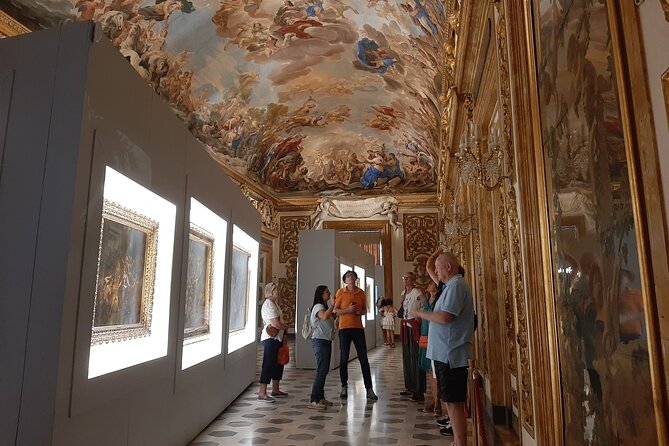
- Palazzo Medici Riccardi sets the scene for Cosimo il Vecchio and Lorenzo il Magnifico, with artists like Donatello and Botticelli linked to the palace world.
- You’ll focus on decoration, not just names, including frescoes and Florentine mosaics.
- Michelangelo’s Sagrestia Nuova is the star inside the Medici Chapels complex.
- The chapels are an extension of San Lorenzo, created as a Medici burial space and later used as a state museum area.
- Private, English-guided pacing makes it easier to steer toward what you care about, within a roughly 3-hour visit.
Where the Medici story becomes real art
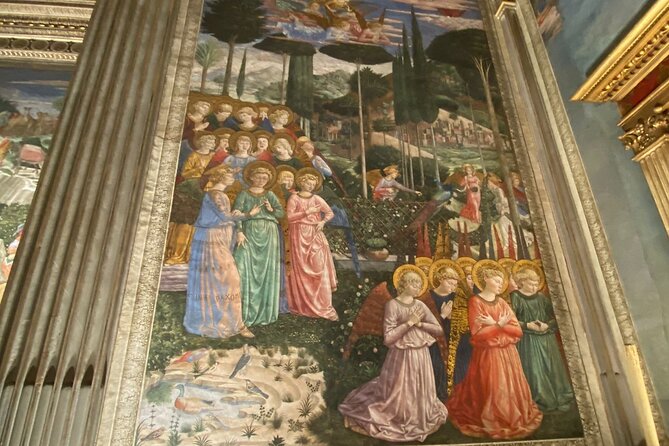
The Medici weren’t only patrons who paid for paintings and sculptures. They helped shape what Florence valued—and then they had the good sense to build that idea into places you can still walk into. That’s what makes this tour worth your time: you move through the Medici sphere from a palace setting to the chapels where their legacy was literally set in stone.
In Palazzo Medici Riccardi, you’re stepping into a world connected with Cosimo il Vecchio and Lorenzo il Magnifico, but also with working artists such as Donatello, Michelangelo, Paolo Uccello, Benozzo Gozzoli, and Botticelli. Even if you don’t know every name at first, seeing the space the Medici used helps you understand why Florence became so good at turning money into masterpiece-level results.
Then the mood changes. The Medici Chapels shift from political display to curated remembrance. Built between the 16th and 17th centuries as an extension of the Basilica of San Lorenzo, the chapels were designed as a burial place and today operate as a state museum area. That blend—private family intent with public art—creates a more layered experience than a quick museum stop.
You can also read our reviews of more tours and experiences in Florence.
- Tuscany Day Trip from Florence: Siena, San Gimignano, Pisa and Lunch at a Winery
★ 5.0 · 21,634 reviews
Palazzo Medici Riccardi: Renaissance rooms you can read
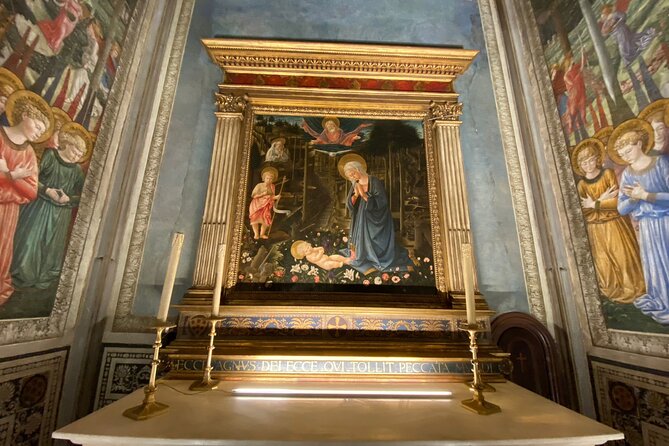
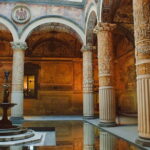
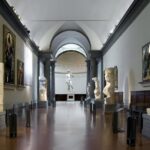
Your first major stop is Palazzo Medici Riccardi, often described as the first Medici palace connected to key family leaders. The building matters because it’s not just a backdrop. It’s part of the story of how Florence organized culture: powerful families, top artists, and the rooms they made special for status, planning, and display.
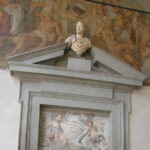
You’ll spend about an hour here, and the focus is on the grand Renaissance interiors. This is where the tour’s decoration emphasis pays off. Frescoes get treated as more than wallpaper; you learn how they were meant to signal taste, learning, and influence. The same goes for the intricate Florentine mosaics mentioned as a highlight—details that reward slow looking.
What I like about this approach is that it teaches you how to look. If you’ve ever felt like museum art is just names on a wall, this style helps you connect the visuals to purpose. And if you’re a person who likes to ask questions, the private format makes it easier to pin down what you’re seeing rather than just rushing forward with the crowd.
One practical note: Renaissance palaces can vary in how tight or warm the rooms feel, and you’ll be moving through multiple spaces in a short time. If you prefer long pauses in one location, plan to treat Palazzo Medici Riccardi as a “read the room” stop rather than a “stand and stare forever” stop.
Piazza di San Lorenzo: a short breather between worlds
Next comes Piazza di San Lorenzo—a quick, about-30-minute break that still matters. Yes, it’s a city square with the Basilica of San Lorenzo at the center, but think of it as a reset. You step out of palace interiors, get your bearings, and bring your senses back for the transition into the chapels complex.
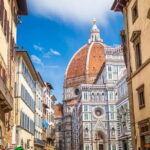
Even in that short window, it helps to notice how the square anchors the area. The basilica sits there like the older spine of the neighborhood, and the Medici chapels later expand from that same sacred footprint. That connection is exactly what you’ll appreciate when you enter the chapel spaces.
If you want to use this break well, take a moment to look up and around so you’re not only thinking about art. You’re also absorbing Florence’s layering: older religious architecture, later Medici additions, and the city’s constant habit of reusing and reshaping important sites.
Cappelle Medicee: Michelangelo’s New Sacristy and the family’s afterlife
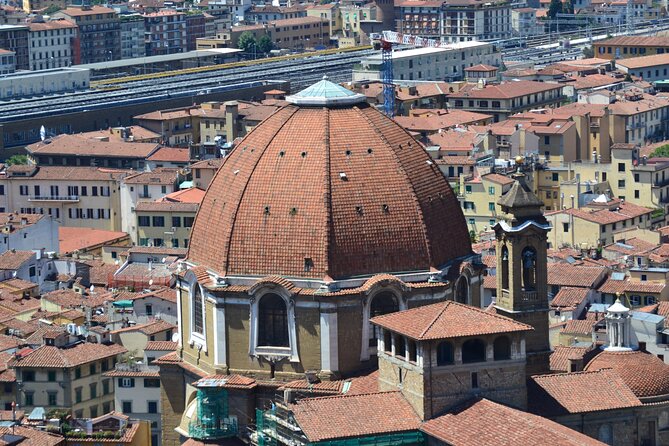
The heart of the tour is Cappelle Medicee, the Medici Chapels. This is where the experience becomes more intense. These chapels were built as a burial place for the Medici family and, over time, sections became part of a state museum presence connected to areas obtained from the Basilica of San Lorenzo.
You’ll have about an hour here, which is enough time to see the key spaces without feeling like you’re sprinting—again, assuming the guide keeps the pace reasonable. The two standout parts are the Sagrestia Nuova, designed by Michelangelo, and the larger Cappella dei Principi, described as a collaboration between the Medici family and architects.
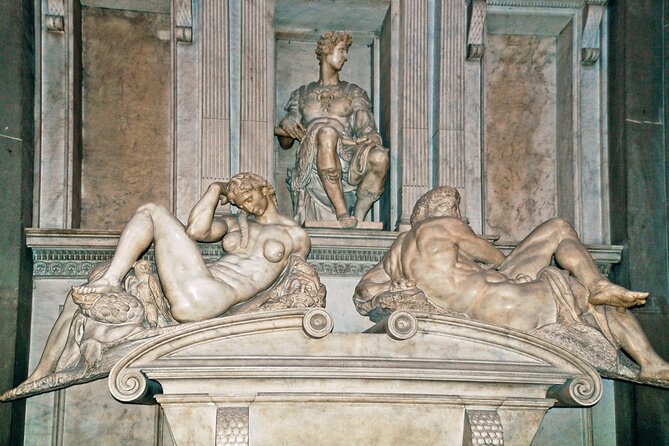
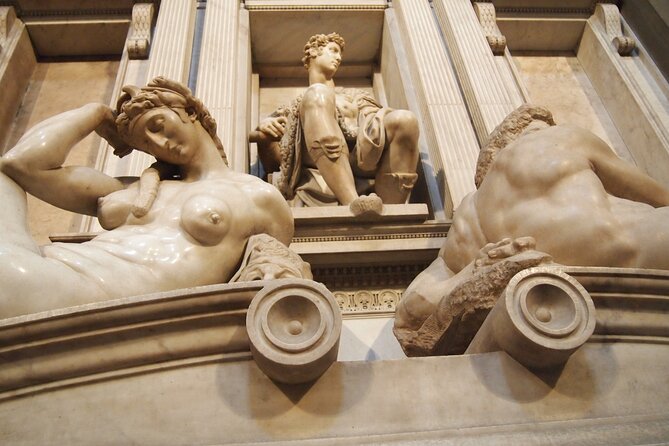
Michelangelo’s presence in the Sagrestia Nuova is the big draw. The tour highlights it as New Sacristy work, and that matters because this isn’t a generic “famous sculptor” stop. It’s the kind of space where the design and storytelling are tied together: you’re meant to experience the Medici claim to memory in built form.
Why this is valuable for you: it turns “who was Michelangelo” into “how Michelangelo designed meaning.” When you connect the chapel layout and decoration choices to the Medici burial purpose, the visit stops being a checklist and becomes a clear narrative about legacy.
The chapels also reward people who like composition. Even when you’re not chasing every technical term, you can still feel how the space guides your eyes and emotions. It’s one of those art experiences where the scale isn’t always about size—it’s about intention.
What makes the tour feel private (and not scripted)
This is a private tour/activity, which changes the feel fast. Instead of being swept along by a mass of people, you’re touring with only your group. That matters in two ways.
First, you get more natural conversation. In past feedback, multiple guides were praised for storytelling and for answering questions clearly. Names like Susanne and Rossana show up in positive notes for being informative and friendly, and for making history feel lived-in rather than read-off.
Second, private format helps you match the visit to your interests. You might want more time on the palace art details. Or you might care more about Michelangelo and want to focus your questions on how the New Sacristy works. With a tight 3-hour window, the ability to steer is a real benefit.
Now, the one caution: since the visit is time-limited, your enjoyment depends on pace. One negative note mentioned a guide showing up late and rushing, with questions not answered. That’s not the norm in the positive feedback, but it’s still a reminder: if you hate feeling rushed, communicate early—ask for a bit more time for your top priority when you meet your guide.
- The Best tour in Florence: Renaissance & Medici Tales – guided by a STORYTELLER
★ 5.0 · 12,316 reviews


Tickets, time, and value: is $267.35 per person a good deal?
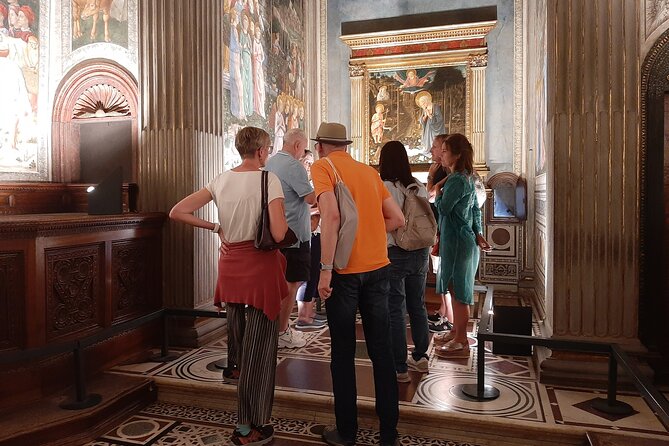
The price is $267.35 per person for about 3 hours. That’s not cheap, so you should judge the value by what’s included and what you avoid.
Here’s the value logic I like:
- Admission tickets are included for Palazzo Medici Riccardi and for the Medici Chapels.
- Piazza di San Lorenzo is free anyway, so you’re not paying to walk around a public square.
- You’re getting an English-guided experience with a private-group format, which often reduces wasted time and makes the art make more sense.
If you were planning this as a self-guided day, you’d still pay to enter the palace and the chapels. The difference is that here you’re paying for interpretation—someone helps you connect the frescoes, mosaics, and Michelangelo elements into one story.
Booking tends to happen in advance, with an average of 60 days. That suggests two things: demand is real, and schedules can fill. If you’re traveling in peak season or around weekends, it’s smarter to lock it in earlier rather than hoping.
One more practical benefit: you’ll have a mobile ticket, and the meeting points are near public transportation, so you don’t need a car to do this well.
Where you start and end matters for the rest of your day
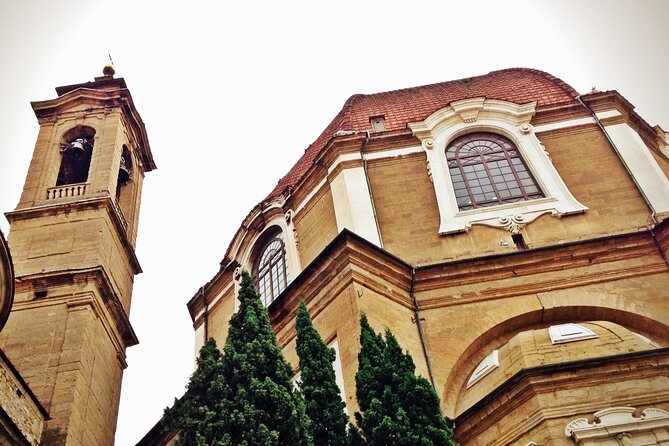
You meet at Medici Riccardi Palace, Via Camillo Cavour, 3, 50129 Firenze FI, Italy. You end at Cappelle Medicee, Piazza di Madonna degli Aldobrandini, 6, 50123 Firenze FI.
That end point is helpful because it places you right near the San Lorenzo area, where you can keep exploring without backtracking. Think of the tour as a structured route that takes you from the Medici palace world into the chapel complex—then leaves you in a good position to continue on your own.
If you like to plan your day with minimal stress, schedule your next activity with a little buffer right after the tour. Cappelle Medicee can make you want to linger, especially if you’re connecting to the story and want another look before you move on.
Who should book this tour?
Book it if:
- You want Florence Medici power explained through real spaces, not just museum labels.
- You care about frescoes, Florentine mosaics, and the idea of art as political messaging.
- You’re excited to see Michelangelo’s Sagrestia Nuova as part of a focused, guided route.
Skip it (or at least consider a lighter plan) if:
- You dislike time-pressured tours and prefer to spend long hours in one room.
- You’re the kind of traveler who wants zero structure and would rather wander freely without interpretation.
If you’re in the middle—curious, art-minded, and short on time—this is a strong match.
Should you book? My honest take
Yes, I’d book this. The price hurts a little until you remember what you’re buying: timed access to the Medici palace interiors, admission included where it counts, and a guided connection from family power to Michelangelo’s chapel work. The private format is a practical advantage, especially if you like asking questions and tuning the visit to what you care about.
Just choose your approach based on your pace preference. If you want to linger, be ready to say so. If you’re happy with a focused route that keeps momentum, this tour does exactly that—and it helps you see Florence’s Medici legacy as something you can still feel in the architecture and decoration.
FAQ
How long is the Medici Palace and Chapels tour?
It runs for about 3 hours.
Where does the tour start and end?
It starts at Medici Riccardi Palace, Via Camillo Cavour, 3, 50129 Firenze FI, Italy and ends at Cappelle Medicee, Piazza di Madonna degli Aldobrandini, 6, 50123 Firenze FI.
Is the tour private?
Yes. It’s a private tour/activity, so only your group participates.
What language is the tour offered in?
The tour is offered in English.
Are admission tickets included?
Yes. Admission tickets are included for Palazzo Medici Riccardi and for Cappelle Medicee. Piazza di San Lorenzo is free.
What’s the main highlight at the Medici Chapels?
The tour highlights Michelangelo’s work in the Medici Chapels’ New Sacristy (Sagrestia Nuova).
When should I book?
On average, this tour is booked about 60 days in advance.
You Might Also Enjoy
More Tour Reviews in Florence
- Tuscany Day Trip from Florence: Siena, San Gimignano, Pisa and Lunch at a Winery
★ 5.0 · 21,634 reviews - The Best tour in Florence: Renaissance & Medici Tales – guided by a STORYTELLER
★ 5.0 · 12,316 reviews