REVIEW · FLORENCE
The Three Tenors at Santa Croce
Book on Viator →Operated by Opera in Roma - Firenze · Bookable on Viator
Opera in Florence, close enough to feel it.
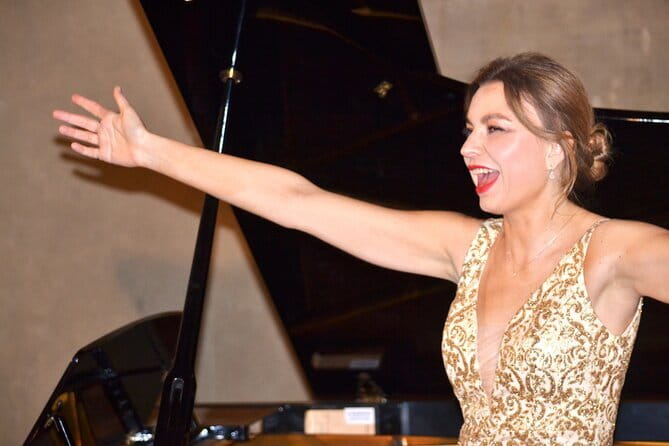
This night pairs three leading tenors with a chamber ensemble and dancers, so you get that big-voice drama plus sing-along familiar Neapolitan hits. I love the intimate oratory setting, because the sound lands fast and the emotion feels direct, not filtered through a big hall.
You’ll also like the smart mix of material: major opera moments from La Traviata, Rigoletto, and Tosca sit right next to classics like O sole mio, Funiculì Funiculà, and Torna a Surriento. One thing to consider: the venue is described as a smaller church space, and it can run warm, especially since there’s no mention of air movement.
This concert starts in the evening at 8:30 pm, and it’s easy to build around your Florence day. The ticket pickup and location are near Piazza Santa Croce on Via di S. Giuseppe, so you’re not dealing with a remote drive or complicated directions.
In This Review
- Key things I think you’ll notice right away
- The venue: Santa Croce area, but in the right church
- What you actually hear: the opera arias + Neapolitan song mix
- Meet the performers: Mattia Nebbiai, Claudio Sassetti, and Leonardo Sgroi
- The choreography and staging: dancers in a church setting
- Why the chamber ensemble changes the experience
- Timing and logistics: planning a comfortable 2-hour night
- Price and value: what about $29 gets you
- Who this show is for (and who might want to skip)
- Should you book The Three Tenors at Santa Croce?
- FAQ
- Where does the concert take place in Florence?
- What time does the show start, and how long is it?
- What music will you hear?
- Who performs in the show?
- Is dinner included with the ticket?
- Can I cancel and get a full refund?
Key things I think you’ll notice right away
- A small oratory, not the big Santa Croce Basilica: you’ll go to the former oratory of Santa Maria Vergine della Croce al Tempio.
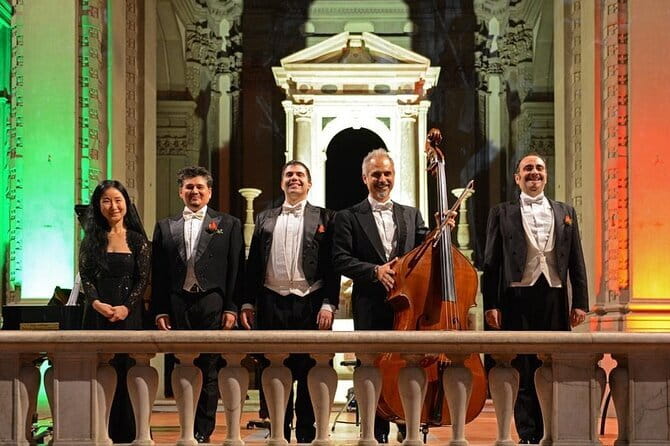
- Close-up chamber sound: mandolin, double bass, and piano keep the accompaniment tight and clear.
- Real opera + real Neapolitan favorites: classic arias trade places with beloved songs from Naples.
- Dancers integrated into the performance: it’s not only singing—movement adds story and rhythm.
- Named performers you can look up: tenors Mattia Nebbiai, Claudio Sassetti, and Leonardo Sgroi headline the show.
The venue: Santa Croce area, but in the right church
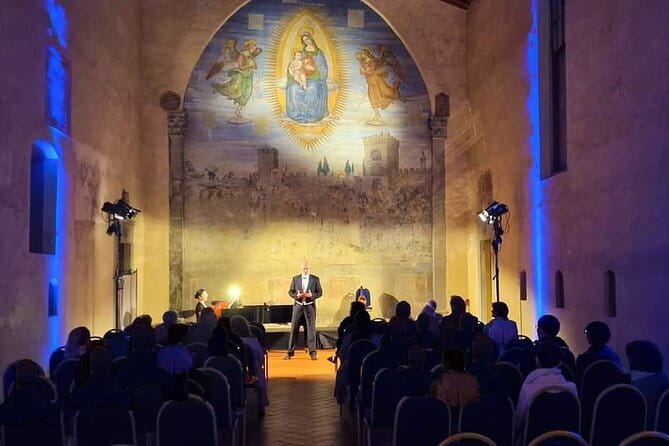
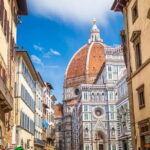
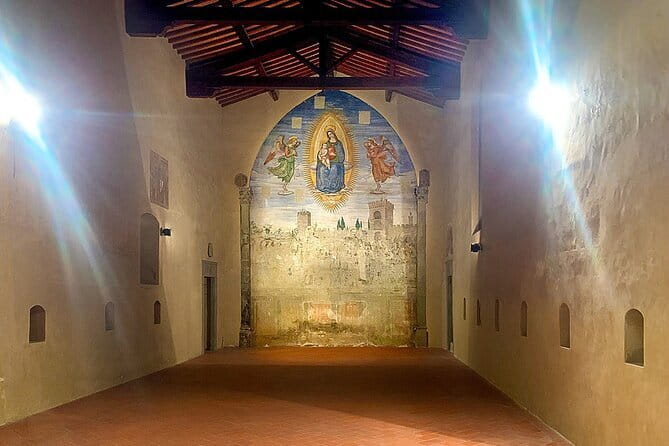
Florence can be confusing at night, because you’ll see posters for one famous landmark and then realize the actual show is in a quieter side building. Here, the key is that the concert isn’t inside the Basilica of Santa Croce. Instead, it takes place in the former oratory of Santa Maria Vergine della Croce al Tempio, a smaller, historic space in the Santa Croce area.
The address you want is Via di S. Giuseppe, 50122 Florence. That puts you in walking distance of the square itself, but it also means you should plan to arrive with a little buffer time to confirm you’re in the right doorway and seating area. A short walk can still feel longer when you’re searching in the dark or with a group.
Once you’re inside, the whole vibe shifts. Smaller churches change how you hear everything: voices feel more immediate, and the ensemble sounds less distant. If you’ve ever stood near the front row of a theater, this is that feeling—just in a church setting.
You can also read our reviews of more tours and experiences in Florence.
- Tuscany Day Trip from Florence: Siena, San Gimignano, Pisa and Lunch at a Winery
★ 5.0 · 21,634 reviews
What you actually hear: the opera arias + Neapolitan song mix
The show is built as a program that alternates between famous opera arias and traditional songs from Naples. That matters for your enjoyment because it creates two kinds of satisfaction in one night: dramatic vocal moments for opera fans, and instant-recognition melodies for everyone else.
On the opera side, you’re in the world of Verdi and Puccini-adjacent favorites through selections associated with:
- La Traviata
- Rigoletto
- Tosca
On the Neapolitan side, expect tunes many people know even if they’re not opera regulars, including:
- O sole mio
- Funiculì Funiculà
- Torna a Surriento
This pairing is a clever choice for Florence. You don’t need years of opera listening to follow what’s happening. The Neapolitan songs act like familiar anchors, while the opera selections bring the spotlight back to pure technique and emotional storytelling.
Also, because the ensemble is small and chamber-like, you’re not just hearing singers over a wall of sound. The accompaniment is meant to support the voices with texture—particularly with mandolin and double bass.
Meet the performers: Mattia Nebbiai, Claudio Sassetti, and Leonardo Sgroi
The headline voices are the three tenors: Mattia Nebbiai, Claudio Sassetti, and Leonardo Sgroi. Having three distinct voices in one program helps keep the pacing lively, and it gives you variety in tone from aria to aria.
Supporting them, you get a chamber ensemble designed for this kind of intimate church performance:
- Mandolin: Andrea Benucci
- Double bass: Antonio Lipari
- Grand piano: Jin Heui Kang
Antonio Lipari is also credited as director, which is a useful detail. It suggests the staging and flow are handled by someone directly involved in the performance side, not just a separate planning team. When a director is also in the ensemble, you often get a tighter sense of timing—especially when singers switch quickly between different styles of music.
If you like to connect names to sounds, you can look these performers up before you go. Even without doing research, the structure is easy to follow because the show itself is built like a set: arias first impression, then recognizable Neapolitan songs, then back to opera.
The choreography and staging: dancers in a church setting
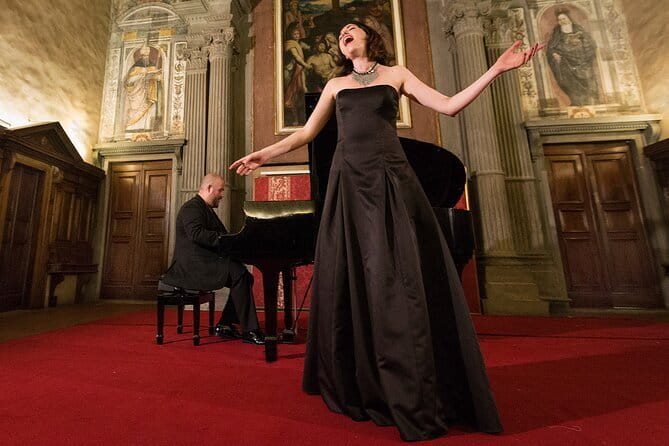
You’re not just watching singers stand and deliver. The performance includes dancers—Martina Maiani and Fernando Ferrandino—with choreography by Donatella Cantagallo. Set design is credited to Antonio Lipari.
This matters because dancing in a small oratory is a different challenge than dancing on a theater stage. There’s less room, and the audience is closer. So you tend to see movement that’s meant to frame the vocalists and add emphasis to the story rather than fill huge space.
From a viewer perspective, it’s a good way to keep your attention engaged, particularly if you’re new to opera. The singers carry the melody and emotion, but the dancers help translate that emotion into physical storytelling—so you don’t feel stuck waiting for the next musical highlight.
Why the chamber ensemble changes the experience
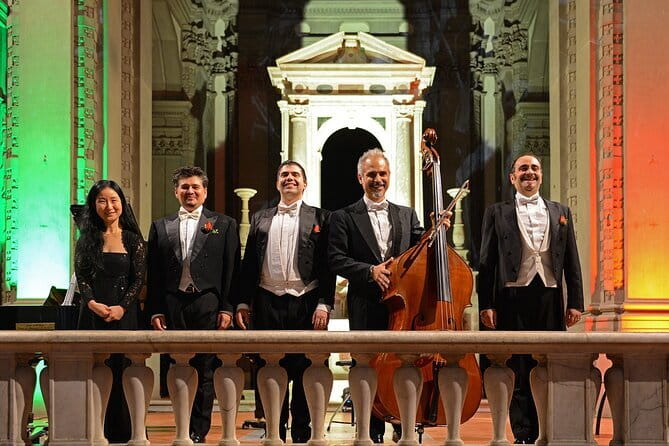
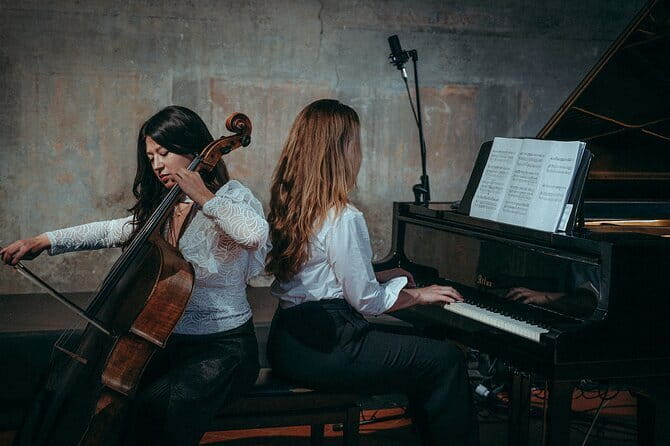
Most concerts use either a full orchestra or a simple piano setup. This show takes a different road: it uses mandolin, double bass, and piano, which gives the music a specific color.
- The mandolin brings bright, quick attacks and a lively rhythm feel.
- The double bass anchors the low end with warmth instead of heaviness.
- The grand piano ties everything together and keeps harmonies crisp.
That combination fits the alternation between opera arias and Neapolitan songs. The opera material benefits from a controlled, expressive accompaniment, while the Neapolitan songs benefit from the rhythmic energy and folk-leaning timbres.
The payoff is that you can hear details. In a smaller venue, even subtle changes in articulation feel audible. The best part is when the singers lean into dynamics—quiet passages suddenly feel close, and louder moments don’t turn into mud.
- The Best tour in Florence: Renaissance & Medici Tales – guided by a STORYTELLER
★ 5.0 · 12,316 reviews

Timing and logistics: planning a comfortable 2-hour night
The concert starts at 8:30 pm and runs about 2 hours. That’s a sweet spot for Florence because it’s late enough to enjoy your afternoon and early evening, but not so late that you’re scrambling for transportation at midnight.
Ticket pickup is at Via di San Giuseppe (listed as Via di San Giuseppe / Via di S. Giuseppe, 50122 Firenze FI, Italy). If you can, arrive a bit early and give yourself time to confirm the venue entrance. The Santa Croce area has a lot of foot traffic, and it’s easy to assume you’re at the main basilica when you’re actually at a smaller oratory.
A practical note from the comfort side: one of the trade-offs of intimate historic spaces is climate. The venue has been described as warm with limited airflow. If you’re the type who gets distracted when you’re uncomfortable, wear light layers and plan to hydrate before you arrive.
And since dinner isn’t included, think of this concert as the main event. If you want a meal first, grab it before you head over, then enjoy the walk back after the show.
Price and value: what about $29 gets you
At about $29 for a two-hour concert, the value comes from three things you rarely get together.
First, you’re paying for live performers: three tenors and a chamber ensemble. That’s not a background soundtrack; it’s a staged program with singing, dance, and coordinated musicianship.
Second, you’re getting the setting. A small oratory can make you feel like the performance is happening at arm’s length, which is hard to replicate in big venues where sound disperses. In other words, the venue isn’t just a backdrop—it’s part of the product.
Third, the program appeals to more than one kind of music listener. Opera fans get recognizable titles from La Traviata, Rigoletto, and Tosca. If opera is new to you, the Neapolitan standards help you settle in quickly. That broad appeal helps you feel like you didn’t take a gamble on a niche night.
So the math isn’t just price per hour. It’s price per closeness, price per variety, and price per chance to hear high-level voices in a room where you can actually make out the details.
Who this show is for (and who might want to skip)
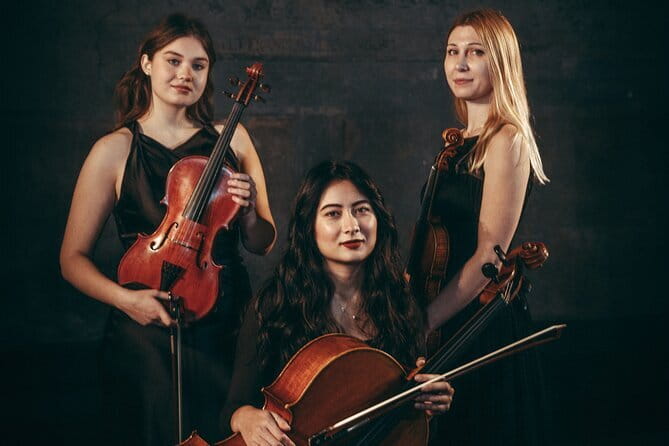
This concert is a strong fit if you:
- Want a Florence night plan that’s artistic without being museum-only.
- Like classical singing but also want familiar songs.
- Prefer intimate spaces where you feel connected to the performers.
- Enjoy performances that include choreography, not just standing vocalists.
You might not love it as much if you:
- Need lots of personal space and quiet.
- Are very sensitive to heat in enclosed venues.
- Expect a massive production scale like you’d see in a big theater with a large orchestra.
For everyone else, it’s a smart, low-stress way to sample Italian opera culture in a format that doesn’t require deep prior knowledge. You can show up curious and still leave feeling like you understood the emotional arc.
Should you book The Three Tenors at Santa Croce?
Yes—if you want a memorable Florence night that blends serious vocal performance with songs you’ll likely recognize. The small oratory setting is the main reason I’d book this over a larger concert hall option, because it turns the sound into something personal.
I’d especially recommend it if you’re traveling with someone who’s split between opera curiosity and wanting an enjoyable, melodic evening. The alternation of opera arias and Neapolitan classics is built to cross that gap.
Just plan for one practical reality: arrive early enough to find the correct smaller church, and dress for possible warmth inside.
FAQ
Where does the concert take place in Florence?
The concert is held in the former oratory of Santa Maria Vergine della Croce al Tempio, in the Santa Croce area near Piazza Santa Croce, with the address listed as Via di S. Giuseppe / Via di S. Giuseppe, 50122 Firenze FI, Italy.
What time does the show start, and how long is it?
It starts at 8:30 pm and lasts about 2 hours.
What music will you hear?
The program alternates opera arias from La Traviata, Rigoletto, and Tosca with traditional Neapolitan songs including O sole mio, Funiculì Funiculà, and Torna a Surriento.
Who performs in the show?
The three tenors are Mattia Nebbiai, Claudio Sassetti, and Leonardo Sgroi. They are accompanied by mandolin Andrea Benucci, double bass Antonio Lipari, grand piano Jin Heui Kang, with dancers Martina Maiani and Fernando Ferrandino. Antonio Lipari is also credited as director.
Is dinner included with the ticket?
No. The concert ticket is included, but dinner is not included.
Can I cancel and get a full refund?
Yes. Free cancellation is available up to 24 hours in advance for a full refund. If you cancel less than 24 hours before the start time, the amount paid is not refunded.
You Might Also Enjoy
More Tour Reviews in Florence
- Tuscany Day Trip from Florence: Siena, San Gimignano, Pisa and Lunch at a Winery
★ 5.0 · 21,634 reviews - The Best tour in Florence: Renaissance & Medici Tales – guided by a STORYTELLER
★ 5.0 · 12,316 reviews