REVIEW · FLORENCE
Private Renaissance Discovery Tour of Florence
Book on Viator →Operated by Ciao Florence Tours Srl · Bookable on Viator
Florence moves faster when someone tells the story. This private walking tour takes you through the Renaissance heart of the city in about 3 hours, with an expert guide and the option of morning or afternoon starts.
I especially like two things: the stop-by-stop flow that hits the big sights without feeling chaotic, and the way the tour links art to power, including Ponte Vecchio and the Vasari Corridor.
One thing to keep in mind: most of what you see is from the streets and viewpoints, and entry tickets for churches or major landmarks are not included.
In This Review
- Key highlights and why they matter
- How This 3-Hour Private Walk Fits Florence Time
- Starting at Your Hotel: Less Stress, More City
- Piazza della Signoria and the Loggia dei Lanzi: Where Power Looks Like Art
- Uffizi Colonnade, Goldsmith Shops, and the Vasari Corridor Story
- Piazza San Giovanni and the Duomo Cluster: Big-Name Florence Without the Confusion
- Piazza della Repubblica: From Civic Heart to Café Life
- Porcellino and Ponte Vecchio: The Two Stops You’ll Keep Referring Back To
- Optional Extension: Pitti Square and the Oltrarno Shift
- Price and Value: When $348.85 Makes Sense
- What Makes This Tour Feel Different From a Basic Sightseeing Walk
- Tips for Getting the Most Out of Your 3 Hours
- Who This Private Renaissance Tour Is Best For
- Should You Book This Private Renaissance Discovery Tour of Florence?
- FAQ
- How long is the Private Renaissance Discovery Tour of Florence?
- How many people are in a group?
- Is the tour available in English?
- Do I get hotel pickup?
- What time options do I have?
- Are tickets to churches or landmarks included?
- What landmarks does the tour include?
- Is the tour walking-only?
- Can I cancel for free?
Key highlights and why they matter
- Hotel meeting point in the historic centre means you start fast and avoid hunting for a bus or a group meeting spot.
- Loggia dei Lanzi open-air sculpture time lets you see major works by Cellini and Giambologna without the pressure of museum logistics.
- Uffizi Gallery colonnade pass-by gives you the wow-factor of Renaissance art geography while staying on a walkable route.
- Vasari Corridor context explains how Medici rulers moved discretely between palaces across the Arno.
- Duomo cluster focus at Piazza San Giovanni centers Brunelleschi’s dome with the Baptistery and Giotto’s bell tower nearby.
- Porcellino good-luck ritual adds a fun local moment before the bridge views and the Arno scenery.
How This 3-Hour Private Walk Fits Florence Time
This tour is built for the reality of Florence: you want the key places, but you don’t want to spend half your day figuring out directions. With a duration of about 3 hours and a private group size capped at up to 10, you get a guided route that stays tight enough to cover major landmarks while still leaving room for your guide to answer questions.
The pricing is also structured for groups. It’s listed as $348.85 per group, not per person, so if you’re traveling with family or friends, the per-head cost can drop quickly compared with single-person tours. That’s the main reason to consider it if you’re not a solo traveler.
You also get a practical scheduling perk: morning and afternoon departure times. Pick the one that matches your day plan. If you’re trying to see the Duomo area with fewer crowds, an earlier start often helps your photos and your walking pace.
You can also read our reviews of more private tours in Florence

Starting at Your Hotel: Less Stress, More City
The biggest day-to-day win here is the meeting style. Your guide meets you directly outside your accommodation in Florence if you’re located in the historic centre. That small detail matters because Florence’s best sights are compact, but navigating side streets and finding a meeting point can waste time.
Pickup is also offered. If you’re in a private home or apartment outside the historic centre, you can request pickup service at that address. It’s not a massive vehicle tour, though. This is still a walking tour, so even with pickup, you’ll be on foot for the experience.
Your guide also has flexibility to set the pace based on your interests. That’s especially useful if you want more architecture talk at the Duomo cluster, more art history around the Uffizi area, or more Medici politics while you’re crossing the river.
Piazza della Signoria and the Loggia dei Lanzi: Where Power Looks Like Art
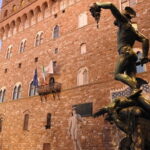
The tour starts in Florence’s historic heart, with the focal point being Piazza della Signoria. This square is one of those places where stone feels like it has a résumé. It’s presided over by Palazzo Vecchio, and even if you’ve seen photos of the facades before, standing there with a guide helps you understand what you’re looking at and why it mattered.
From there, you’ll reach the Loggia dei Lanzi, an open-air sculpture space that functions like a compact art gallery. The value of this stop is that you learn while you’re still outside in the open air. The statuary includes major names tied to Florentine sculpture traditions, including Cellini and Giambologna.
Practical note: open-air stops are great for photos, but they can be exposed. Wear something comfortable and be ready for sun or breeze, depending on the season. If you’re visiting in warmer months, bringing a small bottle of water pays off.
A possible drawback: if you’re expecting a deep museum-style lecture with long time inside major buildings, this won’t feel that way. The design favors outdoor viewing and street-level context, which is great for momentum, but it’s less ideal if you want long indoor explanations.
Uffizi Colonnade, Goldsmith Shops, and the Vasari Corridor Story

Next comes an important transition: you move from public squares into the edges of Renaissance institutions. You’ll pass through the colonnade connected with the Uffizi Gallery area. Even if you don’t go inside, you get a guided sense of how this place fits into Florence’s artistic ecosystem.
This is also where the tour leans into atmosphere. You’ll have time to browse goldsmiths’ shops along the way. That’s not just window shopping. It’s a chance to connect the city’s reputation for fine craft with what you’re seeing in major art collections nearby.
Then the tour delivers one of its most distinctive story beats: the Vasari Corridor. This is described as a mysterious passageway once used by Medici rulers to travel discretely between Palazzo Vecchio and Pitti Palace across the Arno. Even from street distance, the guide’s context turns the corridor from a trivia fact into a real idea about control, privacy, and authority.
If you love history that has human behavior behind it, this is the kind of moment that sticks. It’s not just architecture for architecture’s sake. It’s power moving quietly through the city.
Piazza San Giovanni and the Duomo Cluster: Big-Name Florence Without the Confusion

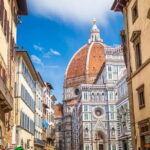
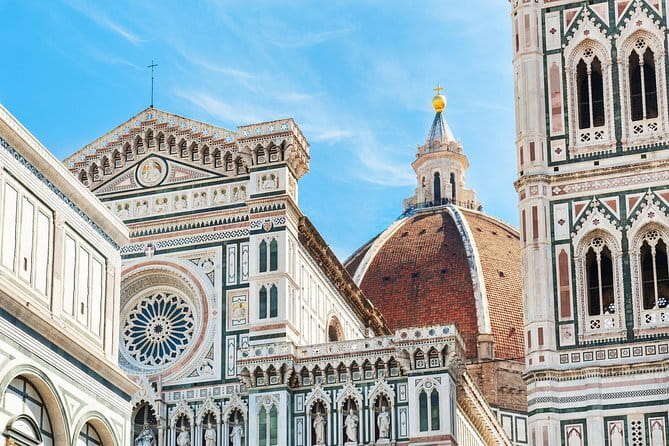
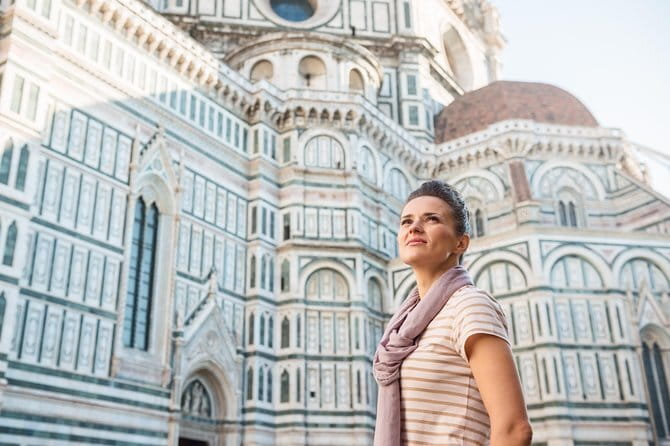
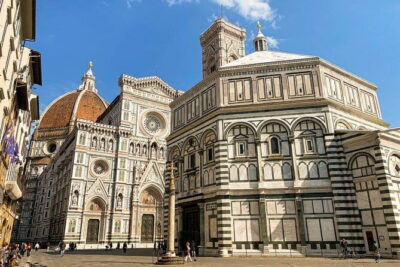
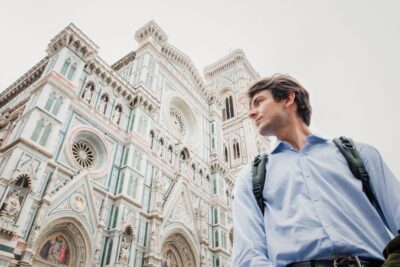
At Piazza San Giovanni, you’ll get the classic Florence postcard view—but with guidance that makes the cluster actually make sense. This stop is all about the buildings grouped around the square: Santa Maria del Fiore Cathedral (the Duomo), St. John’s Baptistery, and Giotto’s Bell Tower, all framed around the dominance of Brunelleschi’s dome.
The color and marble pattern are part of the wow-factor here. The Duomo complex is known for the white, pink, and green marble decoration, and you’ll get a chance to take a couple of quick photos once you’re oriented.
The tour’s strength at this stop is that you’re not wandering. You get a walking explanation of how the square developed from a single building into the architectural masterpiece it is today. You also get local stories, so the site starts to feel alive rather than like a checklist.
What to consider: entrance to churches or major interiors is not included. So if you want to go inside St. John’s Baptistery or the cathedral, you’ll need to plan separate entry tickets. The tour is still valuable without interiors, but your experience will change if interior access is your priority.
- The Best tour in Florence: Renaissance & Medici Tales – guided by a STORYTELLER
★ 5.0 · 12,316 reviews




Piazza della Repubblica: From Civic Heart to Café Life
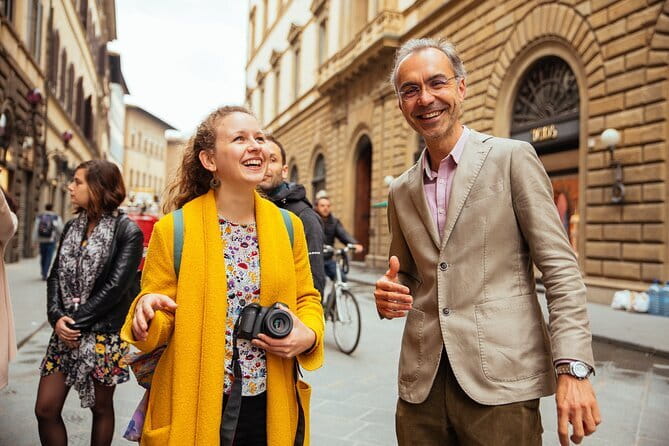
You’ll then move to Piazza della Repubblica, right around the Duomo area. The square has served as a civic center for Florence for centuries, and the guide walks you through that evolution: imagine the grounds as a marketplace in earlier eras, then look at what’s there now—luxury shops and elegant cafés.
This stop works well because it balances the monumental architecture stops with something more everyday. When you’re in Florence for a short time, that mix matters. It keeps the tour from turning into only stone and statues.
Time on this stop is about 30 minutes, which is enough for orientation and a bit of atmosphere without dragging your schedule. If you’re the type who likes to know where people used to gather before the tourists arrived, you’ll appreciate the way your guide frames the square.
Porcellino and Ponte Vecchio: The Two Stops You’ll Keep Referring Back To
After the Duomo-area focus, the tour heads toward the Loggia del Mercato Nuovo area to meet Porcellino, the piglet statue. This is one of those small stops that can feel silly until your guide explains the tradition. In Florence, it’s good luck to rub the nose of the baby pig, and there are enough legends around it that it turns into a quick local ritual.
This stop is also helpful for keeping energy up. The piglet moment breaks the pace between bigger monuments, and it gives you a reason to slow down briefly on a busy street.
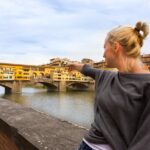
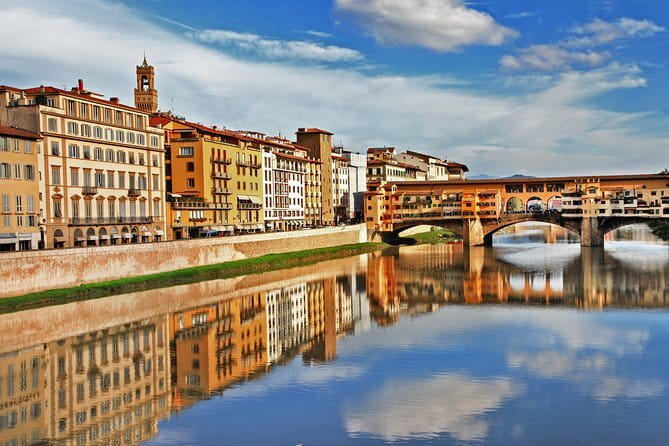
Then you move to Ponte Vecchio, one of Florence’s undisputed symbols. Today it’s famous for luxury jewelry shops, but the guide will tell you the earlier story: for years, it was home to the city’s meat markets. You’ll also hear why it survived the bombings of World War 2 when other bridges were hit.
This is where the tour earns its reputation for giving you context fast. By the time you reach the bridge, you’re not just seeing a landmark. You’re seeing how the city changed what it sold, who controlled it, and what it chose to preserve.
If you care about photo timing, ask your guide where to stand for the best view of the Arno from Ponte Vecchio. Even a one-minute reposition can make a big difference in what you capture.
Optional Extension: Pitti Square and the Oltrarno Shift
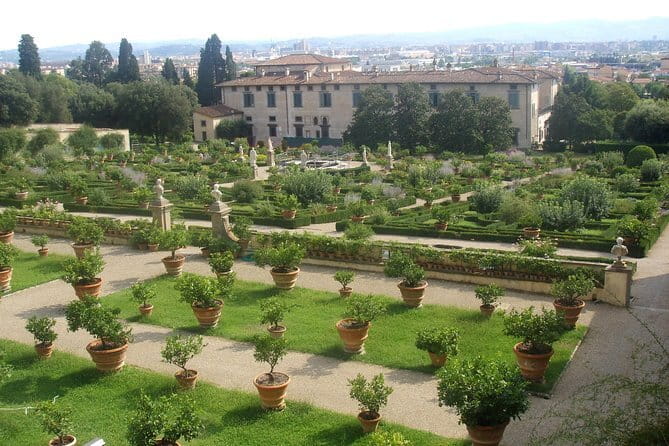
The base tour includes an optional extension if you want more. You can ask your guide to extend the experience to Pitti Square, with additional time for panoramic views along the Arno River into the Oltrarno district. This part is not included in the standard tour, but it’s an easy way to take Florence beyond its most crowded core.
At Pitti Square, you’ll see Palazzo Pitti, associated with Luca Pitti and later expanded by the powerful Medici family. Behind it, the tour notes the slopes and the connection to Boboli Gardens. Even without deep garden time, this stop adds scale and shows how Medici power wasn’t just about one palace.
Then, if you request it, you can head into Oltrarno. The key idea here is “other side of the Arno,” with a more local feel—local stores, restaurants, cafes, and markets. You’ll get a chance to step away from the densest tourist flow and see Florence as people live it.
This optional add-on works especially well if you’re the kind of traveler who likes to end a big sightseeing day with food, a calmer street, or a slower pace. It’s also a nice match if your group wants fewer scripted moments and more flexible wandering guided by someone who knows the area.
Price and Value: When $348.85 Makes Sense
Let’s talk value honestly. At $348.85 per group up to 10, this isn’t a bargain if you’re a solo traveler. But it can be a smart buy if you’re traveling with even two or three people, because you’re essentially paying for one expert guide experience shared by the group.
What you’re paying for is not just access to famous landmarks. It’s the private guide format: you get personalized attention, and the guide can tailor the pacing and emphasis to your interests. Based on the way guides on this tour have been described (including history experts like Manuel and Laura), the best-case scenario is a clear story connecting the art, the buildings, and the Medici political setting.
Now for the drawback to keep it real. There’s also a possibility that the tour could feel too general if your guide doesn’t land the narrative you want. One critique in the provided feedback notes a sense of disjointed fun facts and not enough context for Florence’s larger significance. Translation for your planning: if you care about a structured historical storyline, tell your guide early what you want, like Medici politics, Renaissance art, or architecture timelines.
Also remember: entry tickets are not included. Since so many of Florence’s best moments happen inside, you may spend extra if you decide you want interior access for major churches or landmark sites. If you want only exterior viewing with guided explanations, this price is more likely to feel perfect.
Finally, timing matters. The tour is booked on average about 86 days in advance, which is a sign that it can sell out around popular travel windows. If your dates are fixed, don’t wait.
What Makes This Tour Feel Different From a Basic Sightseeing Walk
Lots of Florence walks hit the same famous names. This one stands out because it connects those names to a few specific themes:
You get architectural orientation around the Duomo cluster so the cathedral area becomes legible, not just photogenic.
You also get the Medici thread through places linked to Palazzo Vecchio, Pitti, and the idea of the Vasari Corridor as a discreet route. That kind of political storytelling helps you understand why Florence’s buildings are so theatrical and why the city still feels like it runs on reputation and rivalry.
And you get those small texture stops—Porcellino for luck, goldsmith shops for craft, piazzas that show how civic life used to work. That’s what turns a list of sights into a lived city.
If you’re traveling with limited time, the pace is a strength. If you’re trying to slow down and absorb like a museum visitor, the 3-hour limit can feel short. That’s when the optional Pitti and Oltrarno add-on can balance your day.
Tips for Getting the Most Out of Your 3 Hours
Here are a few practical moves that fit this specific route and format.
Wear shoes you can handle on stone streets. Florence walking adds up fast, even when the tour is well planned.
Bring a camera, but also a charged phone. You’ll want quick photos at Piazza San Giovanni and Ponte Vecchio.
At the start, ask your guide how they want to pace the Duomo area and whether you’re focusing on outside viewing only. Since church entry tickets aren’t included, it helps to decide early if you want to add any interior time on your own.
If you’re the type who likes closure, end by asking what to do next after the tour. Several guides have been described as offering good suggestions, which can help you turn the walk into a full, satisfying day.
Who This Private Renaissance Tour Is Best For
This tour is a strong match if you want:
- A private guide and a walkable route that hits top Renaissance locations efficiently
- A balance of major landmarks and smaller story stops like Porcellino
- Clear explanations around the Duomo area and Medici-linked sights
It’s also a decent fit for travelers with limited mobility needs, at least in the sense that a guide can gauge your situation and adjust the pace. Still, because it’s a walking tour, you’ll want to confirm any movement limits with the operator before you go.
If you’re traveling solo and you love the idea of paying for a guide who can tailor the experience, it could be worth it for the quality of attention. But financially, the group pricing makes it easiest when you’re sharing the cost.
If you only want museum interiors and long indoor visits, you may find the value better from a tour that includes tickets and entry time.
Should You Book This Private Renaissance Discovery Tour of Florence?
Book it if you want a well-paced Renaissance primer with a private local guide, hotel-style meeting convenience, and storytelling that connects the city’s art to the Medici power network. The route through Piazza della Signoria, Loggia dei Lanzi, the Vasari Corridor story, the Duomo cluster at Piazza San Giovanni, and the Ponte Vecchio bridge history is a smart way to make Florence feel coherent.
Pass or consider alternatives if you mainly want to go inside buildings. Since entry tickets to churches or landmarks aren’t included, you’ll likely pay more later if you decide you want interiors. Also, if your guide doesn’t build a clear narrative for you, the tour can feel more like separate highlights than one big story—so speak up early about what you want most.
FAQ
How long is the Private Renaissance Discovery Tour of Florence?
The tour lasts about 3 hours.
How many people are in a group?
It’s a private tour, and the group size is up to 10.
Is the tour available in English?
Yes, it’s offered in English.
Do I get hotel pickup?
Pickup is offered. Your guide meets you directly outside your accommodation in Florence if you’re located in the historic centre, and pickup can also be arranged for private homes and apartments.
What time options do I have?
You can choose between morning and afternoon departure times.
Are tickets to churches or landmarks included?
No. Entry tickets to churches or landmarks are not included.
What landmarks does the tour include?
You’ll visit major Florence landmarks such as Piazza della Signoria, Ponte Vecchio, and the Duomo area cluster around Piazza San Giovanni, along with other key stops like Loggia dei Lanzi, the Vasari Corridor area, Piazza della Repubblica, and Porcellino.
Is the tour walking-only?
Yes, it’s a private walking tour on foot.
Can I cancel for free?
Yes. Free cancellation is available, and you can cancel up to 24 hours in advance for a full refund.
You Might Also Enjoy
More Private Tours in Florence


More Tours in Florence
- The Best tour in Florence: Renaissance & Medici Tales – guided by a STORYTELLER
★ 5.0 · 12,316 reviews


More Tour Reviews in Florence
- Tuscany Day Trip from Florence: Siena, San Gimignano, Pisa and Lunch at a Winery
★ 5.0 · 21,634 reviews - The Best tour in Florence: Renaissance & Medici Tales – guided by a STORYTELLER
★ 5.0 · 12,316 reviews