REVIEW · FLORENCE
Private Accademia Gallery Guided Tour in Florence
Book on Viator →Operated by Star Florence · Bookable on Viator
A one-hour Accademia tour can feel like a fast win. You get a private, David-centered visit to Florence’s Galleria dell’Accademia, with skip-the-line entry that’s designed to keep your day moving.
I especially like the built-in radio system with headphones, so you actually hear the guide clearly instead of craning your neck. And the tour includes a reserved entry time and your admission ticket, which matters a lot when Florence is busy.
One possible drawback: the museum timeline can affect you if you’re late or if your start time is close to closing, and late arrivals can’t join the tour and won’t be refunded or rescheduled.
In This Review
- Key highlights I’d prioritize
- Private Accademia Gallery Guided Tour in Florence: what it really gives you
- Getting to Via Ricasoli and starting with a time advantage
- Stop 1: Galleria dell’Accademia rooms built around Michelangelo’s world
- Stop 1 pacing tip: why 30 minutes can be enough
- Stop 2: the Tribune, David’s statue, and the plaster-cast Gipsoteca
- Why the Gipsoteca part is a smart add-on
- What the private guide adds (and what to ask for)
- Price of $170.34 per person: is it worth it?
- How long you really have—and what to do after
- Who this tour suits best
- Should you book this private Accademia gallery tour?
- FAQ
- What’s the meeting point for the tour?
- How long is the private tour?
- Is the tour offered in English?
- Does the price include admission to the Accademia?
- Are skip-the-line privileges included?
- Will I be able to hear the guide clearly?
- What should I do if I arrive late?
- Is hotel pickup or drop-off included?
- Is free cancellation available?
Key highlights I’d prioritize
- Guaranteed skip-the-line access in peak season to help you beat long entry lines
- Headsets and a radio system so the guide’s explanations stay audible
- A private guide for your group only, with attention you can actually ask questions about
- Two targeted segments inside the same museum, so you cover the big works without feeling rushed
- A David-and-context focus, including Michelangelo’s unfinished figures and the Tribune area
- Gipsoteca Bartolini plaster casts to round out what you’re seeing in stone
Private Accademia Gallery Guided Tour in Florence: what it really gives you
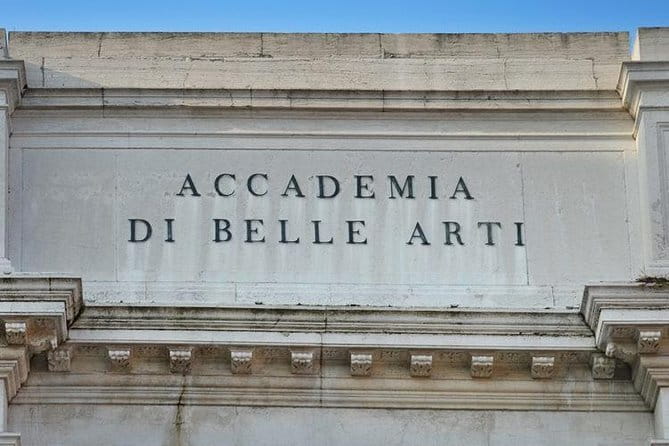
If you’re going to Florence for art, the Accademia can be a make-or-break stop. It’s not huge, but it’s also not the place where you want to spend half your day waiting at the door or wandering without a clue. This private tour is built to solve both problems.
What I like is that it’s short—about an hour—but still structured. You’re not getting a vague walk-through. You’re guided through key rooms and key works, with time set aside for the explanations that make the sculptures click.
Another practical win: you get reserved entry plus skip-the-line privileges guaranteed even in peak season (with the one obvious exception: museum delays or strikes). That combination matters because Accademia queues can turn your “quick museum stop” into an all-day project.
If you’re the type who hates rushing, the length can feel tight. But the flip side is you’re not trying to absorb everything in one visit and then leave overwhelmed. You come out with a clear sense of what matters most, and you can return afterward to look longer at what caught your eye.
You can also read our reviews of more guided tours in Florence
- The Best tour in Florence: Renaissance & Medici Tales – guided by a STORYTELLER
★ 5.0 · 12,316 reviews
Getting to Via Ricasoli and starting with a time advantage
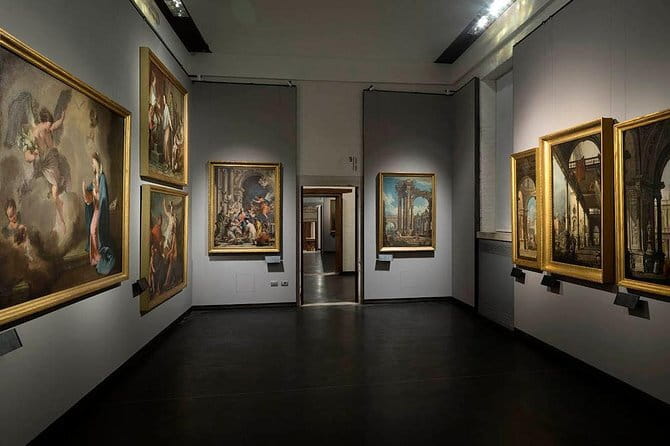
The tour meets at Via Ricasoli, 57, 50121 Firenze FI. It ends back at the same meeting point, so you don’t need to plan a complicated meetup or transit plan mid-tour.
The key detail here is the reserved entry time tied to your tickets. In real terms, that means you’re not “hoping” you’ll get in. You have a slot, and the tour includes entrance ticket with reservation plus skip-the-line access. That’s one of the main reasons this is worth paying extra for instead of just buying admission and going solo.
Timing is the one area where you need to be disciplined. If you arrive after the tour start time, you won’t be able to join and you won’t be refunded or rescheduled. And if you book a late slot—some start times can run up against museum closing, which can shorten what you can see.
My advice: aim to arrive early enough that you’re not thinking about the clock. It’s not just about getting in—it’s about letting your brain switch into museum mode instead of stress mode.
Stop 1: Galleria dell’Accademia rooms built around Michelangelo’s world
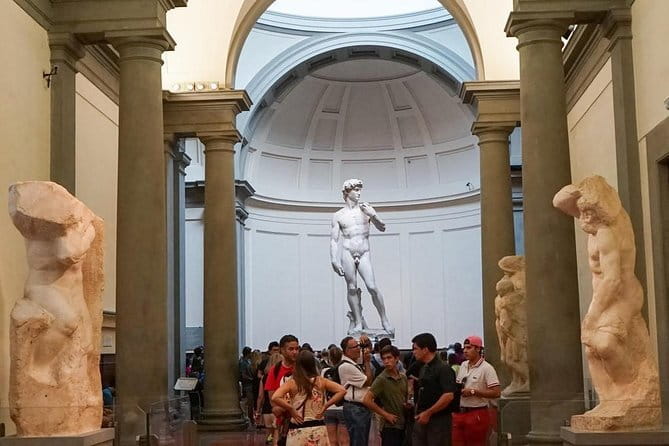
Your first stop is at Galleria dell’Accademia, where the locally qualified private guide sets the stage. The focus isn’t random. It’s aimed at the museum’s major themes, especially the sculptural story around David and Michelangelo’s circle.
You’ll start with an introduction that frames the secrets about David and the other masterpieces housed here. That opening matters because it gives you a mental map before you start bouncing between rooms.
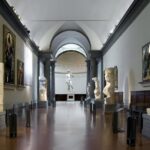
From there, the guide leads you through a set of rooms that build context, not just sightseeing. You’ll move through the Hall of the Colossus to see works including:
- Giambologna’s Rape of the Sabines
- Cassone Adimari
- Domenico Ghirlandaio’s St. Stephen between St. James and St. Peter
Then you’ll shift into the Hall of the Prisoners, where the emphasis turns to Michelangelo’s unfinished statues, often called the Slaves. This is one of those moments where a guide’s explanations can change how you see what you’re looking at—because unfinished works can feel frustrating if you don’t know what to look for.
The guide also connects the sculptures to the wider artistic conversation, including friendship and mutual influence with artists such as Fra’ Bartolomeo, Pontormo, and Granacci. You’re not just being told names; you’re getting a way to understand how ideas travel in the workshop world.
You spend about 30 minutes here, and the “quick detour” style works well. You’ll likely notice more than you expect because you’re guided room-to-room instead of wandering.
Stop 1 pacing tip: why 30 minutes can be enough
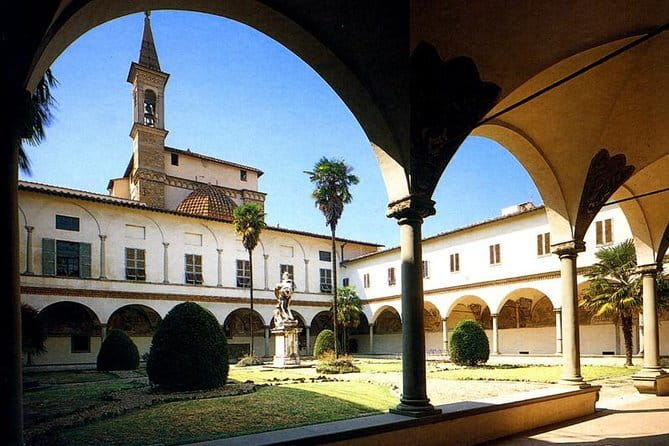
A lot of museum tours try to do too much. This one doesn’t. The first 30 minutes gives you momentum: you hit big works, key rooms, and the Michelangelo thread early.
If you’re a slower reader or you like to stand and stare, you might still want more time. That said, the structure is designed so you don’t lose the main thread. When you later move into the Tribune area, you’ll know what questions to ask because the guide already gave you the scaffolding.
Stop 2: the Tribune, David’s statue, and the plaster-cast Gipsoteca
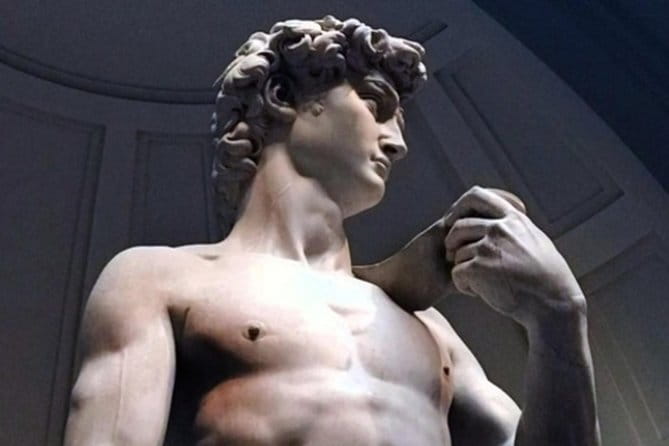
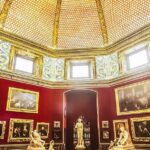
After the first segment, you go back into the highlights again—this time with the Tribune area and the museum’s famous centerpiece front and center.
The guide spends time at the Tribune, focusing on:
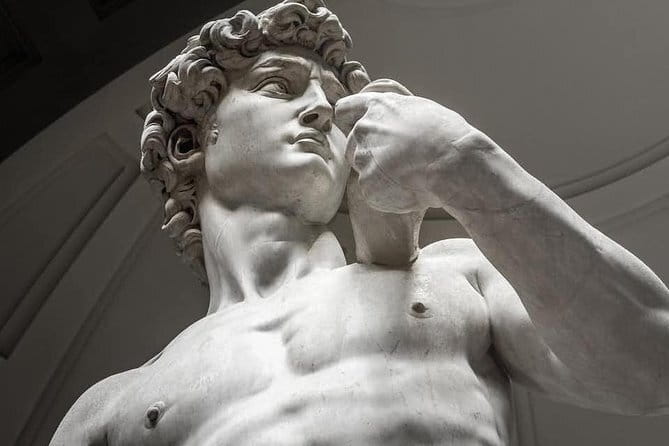
- the world-famous statue of Michelangelo, David
- the Tribune left wing, Allori’s Coronation of the Virgin Mary
This is the part where the tour can feel especially worthwhile. A David-only visit can turn into a quick photo stop. With a guide, you get the context and the pointers that help you look beyond the first impression.
Then you move to the Gipsoteca Bartolini. This is the plaster casts section, and it includes casts such as:
- the Reclining Venus
- Arnolfo
- Brunelleschi
- Lorenzo Monaco
It also includes a documentation center on the first floor. Even if you don’t spend long there, it adds a helpful layer: you’re not just looking at final stone works—you’re seeing how artists’ forms were studied and translated.
This second part also runs about 30 minutes, and it’s paced so you cover the key things without feeling like you’ve been in one room all day.
You can also read our reviews of more private tours in Florence




Why the Gipsoteca part is a smart add-on
The plaster casts can feel secondary at first, especially if you’re focused on David. But it’s a valuable stop because it changes the angle of your visit. Instead of only seeing finished masterpieces, you also see forms represented in a way that supports study.
And practically, it’s a nice reset. After standing up close to the museum’s star attraction, the casts give you something different to focus on—often with less pressure than the most crowded viewpoints.
What the private guide adds (and what to ask for)
This is a private tour, so your group is the only group in the tour. That single detail can make a big difference. You can ask questions without whispering, and the guide can adjust if something holds your attention.
In fact, one of the standout points from real experiences with this tour is the guide experience itself. A guide named Pamela was praised as excellent: on time, prepared, patient, and strongly informative. If you’re the type who likes clear explanations (and not just “look here”), that kind of guide performance is exactly what you want to pay for.
Because you have headsets and a radio system, you don’t have to stand in the perfect spot to catch every word. You can move a bit and still follow the story.
If you book this, here are the kinds of questions that fit the tour’s strengths:
- What should I notice first about David before I zoom in for photos?
- How do the unfinished works in the Hall of the Prisoners change the story?
- What’s the connection between the Tribune area and the rest of what we saw?
- Why are the plaster casts useful if the originals are in other forms?
You’ll get the most out of the hour if you engage like that. The guide can steer the conversation toward what you care about.
Price of $170.34 per person: is it worth it?
At $170.34 per person, this isn’t a budget add-on. But for Florence in season, the price is mainly buying three things:
1) Guaranteed skip-the-line privileges in peak season (again, with the museum’s own exceptions).
2) A reserved entry ticket tied to your time, which keeps your schedule intact.
3) A private certified guide plus radio system, so you get high-quality explanations without losing hearing or time.
If you were paying separately for a guided audio device or trying to “DIY” your way through the same rooms, you’d lose the benefit of the structured route. You’d also likely waste time figuring out what to focus on once you’re inside.
So this price starts to make sense if:
- you care a lot about David and Michelangelo
- you want an efficient museum experience without the stress of crowd logistics
- you like questions and guided interpretation
- you’re visiting at a busy time and value your time
If you prefer slow wandering with no schedule and no guidance, you may find you’re paying for direction you don’t need.
How long you really have—and what to do after
The tour runs about one hour. The design is built to hit the highlights without overwhelming you.
You should also know that the tour is not a one-and-done stop. You can return to anything you want to see again, including David, after the guided portion ends. That’s a smart way to handle the tradeoff between an efficient tour and personal museum pace.
If you’re doing other things the same day, this format helps. You get a strong first pass, then you can spend your remaining energy based on what you liked most—unfinished sculpture, the Tribune area, or the plaster casts.
Who this tour suits best
This is a great match if you:
- want a museum route that makes sense quickly
- like clear explanations of what you’re seeing
- value skip-the-line access rather than gambling with lines
- are traveling with a small group and want private attention
It also works well if you’re a fan of Michelangelo’s sculpture, because the tour structure explicitly points you toward the David area, the Hall of the Prisoners, and related artistic influence.
If you’re traveling solo and want maximum value per hour, you may still find it worthwhile, especially for the headset and reserved entry. The one-hour format is also a plus if your schedule is tight.
Should you book this private Accademia gallery tour?
I’d book it if you want a focused, efficient Accademia visit and you care about understanding what you’re looking at. The big reasons are the radio system, the structured room-to-room path, and the guaranteed skip-the-line access designed for peak season.
I would think twice if you’re comfortable DIY-ing museums, you don’t like set time blocks, or you’re likely to arrive late. The hour is tight, and arriving after the start time means you miss the tour entirely.
If you’re aiming for a high-impact museum stop without the usual Florence crowd headache, this one is a strong bet.
FAQ
What’s the meeting point for the tour?
The tour meets at Via Ricasoli, 57, 50121 Firenze FI, Italy, and it ends back at the same meeting point.
How long is the private tour?
The tour runs for about 1 hour.
Is the tour offered in English?
Yes, it’s offered in English.
Does the price include admission to the Accademia?
Yes. The entrance ticket with reservation to the Academia Gallery is included.
Are skip-the-line privileges included?
Yes. Skip-the-line access is guaranteed even during peak season, except in the event of delays or strikes by the museum management.
Will I be able to hear the guide clearly?
Yes. A radio system and headphones are included so you can hear the guide clearly.
What should I do if I arrive late?
If you arrive after the tour start time, you will not be able to join and you will not be refunded or have your tour rescheduled.
Is hotel pickup or drop-off included?
No. Hotel pickup and drop-off are not included.
Is free cancellation available?
Yes. You can cancel up to 24 hours in advance for a full refund.
You Might Also Enjoy
More Guided Tours in Florence
- The Best tour in Florence: Renaissance & Medici Tales – guided by a STORYTELLER
★ 5.0 · 12,316 reviews
More Tours in Florence
- The Best tour in Florence: Renaissance & Medici Tales – guided by a STORYTELLER
★ 5.0 · 12,316 reviews




More Tour Reviews in Florence
- Tuscany Day Trip from Florence: Siena, San Gimignano, Pisa and Lunch at a Winery
★ 5.0 · 21,634 reviews - The Best tour in Florence: Renaissance & Medici Tales – guided by a STORYTELLER
★ 5.0 · 12,316 reviews