REVIEW · FLORENCE
Medici Mile Walking Tour along the path of Medici Residences
Book on Viator →Operated by CAF Tour and Travel · Bookable on Viator
Florence’s Medici Mile turns streets into a story. This 2-hour guided walk follows the Medici residences path and helps you connect major sights—from Basilica di San Lorenzo to the Duomo area—under one Renaissance theme: power, patronage, and control.
I like how the route is practical: you get a professional guide plus free-entry stops (listed for the early landmarks), so you spend your time walking and looking instead of juggling tickets. I also like the upgrade options that bundle skip-the-line entry to Palazzo Pitti or Boboli Gardens, with specific museum access included.
One thing to consider: the plan moves through squares and busy city corners, so you’ll want comfortable shoes and a little patience if crowds slow your pace. Also, double-check your chosen upgrade so you don’t end up without the entrance you expected.
In This Review
- Key things to know before you go
- Why the Medici Mile makes Florence click
- Walking Logistics: Via de’ Martelli start, Palazzo Pitti finish
- Stop 1 to 3: San Lorenzo, the Medici mausoleum, and the first palace home
- Piazza San Giovanni: the Duomo skyline moment
- Piazza della Signoria to Santa Felicita: Palazzo Vecchio and the corridor route
- Ponte Vecchio: the “oldest bridge” pause that frames the river
- Boboli Gardens upgrade: Porcelain Museum and Bardini Gardens included
- Palazzo Pitti upgrade: what your skip-the-line ticket really covers
- Price and value: is $100 fair for what you get?
- Language and guide quality: what to watch during your walk
- Who should book this Medici Mile walk?
- Should you book the Medici Mile Walking Tour?
- FAQ
- Is the Medici Mile tour in Florence a walking tour?
- How long is the tour?
- Where does the tour start and end?
- What’s included in the tour price?
- Are skip-the-line tickets included?
- What does the Palazzo Pitti ticket include?
- What does the Boboli Gardens ticket include?
- Is the tour language always English?
- How many people are in the group?
- What should I wear?
Key things to know before you go
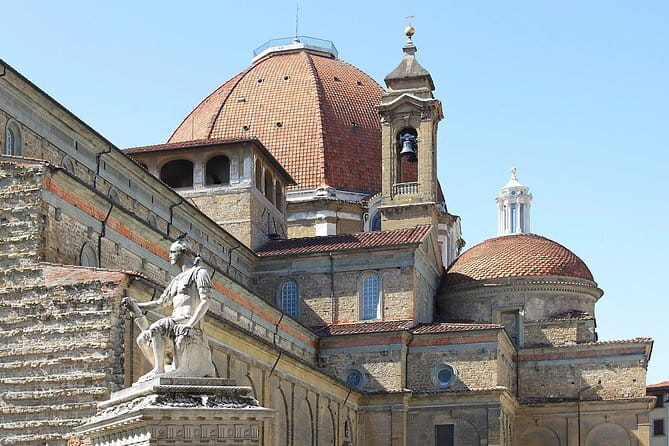
- Medici Mile logic: the stops follow the family’s changing centers of power, not random sightseeing.
- Vasari Corridor access is exterior: you track the corridor’s route through the city from visible points, not from inside.
- Duomo views are a highlight: Piazza San Giovanni sets up a classic skyline with Brunelleschi’s dome and Giotto’s bell tower.
- Small-group feel: the tour caps at 20 travelers, which makes questions easier.
- Upgrade = real museum time: Boboli (with extra garden/museum access) and Palazzo Pitti add substantial guided-day value.
- Pace runs through the sights: it’s not a slow “sit and admire” stroll.
Why the Medici Mile makes Florence click
The Medicis didn’t just commission art. They used buildings, churches, and even circulation through the city to shape who mattered—and who stayed in the shadows. That’s why this walk feels smarter than a typical monument hop: each stop answers a “why here?” question.
You start anchored in Medici identity at San Lorenzo and the Medici chapels, then move toward civic power around Piazza della Signoria. After that, the route points toward their grand-ducal world: the bridge (Ponte Vecchio) and the gardens and palaces that helped define Florence’s Renaissance image.
If you’re a first-timer, you’ll get your bearings fast. If you’re a returning Florence lover, you’ll see familiar places in a new storyline—especially when you understand how the corridor system was meant to keep rulers moving while keeping “normal” citizens out of the loop.
You can also read our reviews of more walking tours in Florence
Walking Logistics: Via de’ Martelli start, Palazzo Pitti finish
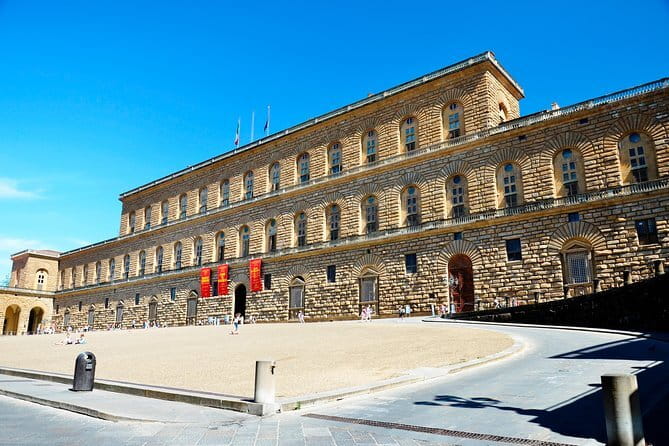
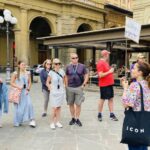
This is designed as a point-to-point experience. You meet at Via de’ Martelli, 50 (Firenze), then finish at Palazzo Pitti, Piazza de’ Pitti, 1. That matters because it changes how you plan the rest of your day—your next stop after the tour is already on the Pitti side of town.
Base tour time is listed at about 2 hours, but the full day picture depends on your add-ons. Boboli and Palazzo Pitti come with included entrance options and are allotted 1 hour each on the schedule, so if you choose both, plan for a longer outing than the walking-only version.
You’ll get a mobile ticket, and there’s assistance at the meeting point. The tour is also capped at max 20 travelers, which helps with group flow in crowded areas.
My practical advice: arrive a few minutes early, keep your meeting-point landmarks in mind, and wear shoes that can handle stone streets and slick square cobbles if the weather turns.
Stop 1 to 3: San Lorenzo, the Medici mausoleum, and the first palace home
You begin at Basilica di San Lorenzo, described as the church of the Medici family. This is a strong opening because it frames the Medicis as religious patrons and political players at the same time. Even if you’re not chasing every detail inside, the guide’s job here is to set the theme: why Florence’s ruling family needed both devotion and visibility.
Next comes Cappelle Medicee, the Medici mausoleum. This is where the story shifts from public influence to legacy—who gets remembered, where the family places its permanent mark, and how funerary spaces also signal authority.
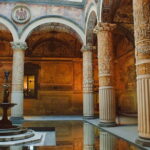
Then you arrive at Palazzo Medici Riccardi, the Medicis’ first residence in the San Lorenzo district. This stop is useful because it shows the early stage of their rise. It’s the kind of building that helps you understand that Renaissance power wasn’t built overnight—it moved like a long strategy, site by site.
Note: these first stops are listed with free admission tickets, which helps the experience feel efficient. You’re not paying extra just to stand in front of the right façade at the right time.
Piazza San Giovanni: the Duomo skyline moment

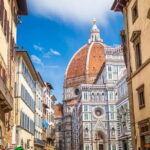
At Piazza San Giovanni, you get one of the classic Florence compositions: the Cathedral (with Brunelleschi’s Dome), Giotto’s bell tower, and the Baptistery. This is a “look up” moment, and it’s timed well because the open square gives your eyes room to take it in.
What I like about this stop is the mix of scales. The dome isn’t just an architectural feature—it’s part of the Renaissance story: ambitious engineering meant to project confidence. When you’re hearing about the Medicis around the route, it also makes you think about patronage as a kind of branding. The Medicis were living inside a city that treated art and architecture as political language.
At this stage, keep an eye out for where the guide points. The guide’s job is to connect what you see in the square to what’s coming next along the power axis toward civic Florence.
Piazza della Signoria to Santa Felicita: Palazzo Vecchio and the corridor route
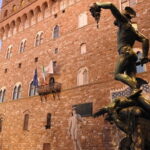
Next is Piazza della Signoria, where you’ll spot Palazzo Vecchio—called the second Medici residence in this route. This location matters because it sits in the civic spotlight. If San Lorenzo and the chapels are identity and legacy, Palazzo Vecchio represents the public machinery of government.
Then you reach Church of Santa Felicita. Here’s the clever part: you’re able to track the Vasari Corridor through the city via what you can see from this area. The corridor is described as a secret, comfortable passageway used by the Medici grand dukes to move between Palazzo Pitti and their offices in Palazzo Vecchio without being seen by citizens.
That’s the kind of detail that changes how you read the city. Suddenly, streets and rooftops feel connected by intent. You’re not just looking at buildings—you’re following a hidden logic of movement.
A tip for this stop: stand where the guide directs you before the crowd pressure grows. Santa Felicita area viewpoints can get tight, and if you’re trying to understand the corridor’s line, you’ll benefit from a stable position and a clear angle.
- The Best tour in Florence: Renaissance & Medici Tales – guided by a STORYTELLER
★ 5.0 · 12,316 reviews





Ponte Vecchio: the “oldest bridge” pause that frames the river
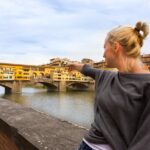
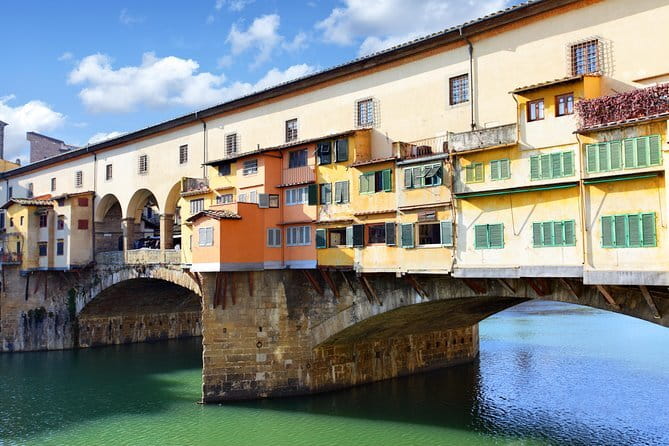
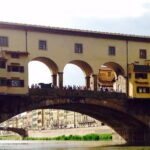
Ponte Vecchio is next, described as both the oldest bridge in Florence and also its most famous. Bridges are more than crossings here. They’re control points, meeting points, and viewsheds.
What makes this stop useful on the Medici Mile theme is perspective. This bridge sits between political centers and the palatial side of the city. It acts like a visual bridge between “public Florence” and Medici residence space.
When you pause at the right moment, you can start to connect river geography to the corridor idea—routes that reduce visibility and increase control. Even if the bridge is crowded, use the pause to look both ways and notice how the city’s layout supports the family’s navigation choices.
Boboli Gardens upgrade: Porcelain Museum and Bardini Gardens included
If you choose the upgrade, Giardino di Boboli comes with skip-the-line entrance and you’ll get access that’s specifically listed as including the Porcelain Museum and Bardini Gardens. The schedule allows about 1 hour here.
Boboli is more than “pretty gardens.” It’s described as the historical park and the grand-ducal garden of Palazzo Pitti. In other words, it’s part of the Medici power package: a place for leisure that still reinforces status.
Since your entrance is included, you avoid the usual snag of buying separate tickets later and trying to fit everything into a tight travel day. Still, one practical thought: one hour can feel fast in a garden complex, especially when you’re also trying to read placards and snap photos. If you’re a slow gallery-style walker, focus on the areas that the guide suggests first, then wander only if you still have time.
Palazzo Pitti upgrade: what your skip-the-line ticket really covers
Your other upgrade stop is Palazzo Pitti, described as the last Florentine residence of the Medici. Your entrance ticket includes the Palatine Gallery, Gallery of Modern Art, Museum of Fashion and Costume, and Treasure of the Grand Dukes.
That list is the value. You’re not just buying access to big rooms—you’re getting options across different types of collections. It’s a smart way to handle taste differences in a group: not everyone wants the same wing first.
The schedule allocates about 1 hour for your self-guided visit. Here’s how to make that time work: decide in advance whether you want one “main event” (for example, the gallery spaces) or whether you’ll do a quick loop that samples a couple collections. With an hour, trying to do everything usually turns into rushing, and rushing is how museum time turns sour.
Skip-the-line helps, because it protects your schedule from last-minute ticket bottlenecks. It also makes this upgrade feel like part of the tour plan instead of an extra chore after the walk.
Price and value: is $100 fair for what you get?
At $100, this tour is priced like a guided Florence experience that bundles multiple site stops. The value comes from three places:
First, you get a local professional guide for the walk portion (about 2 hours) plus assistance at the meeting point and a mobile ticket. That makes the experience easier to follow than trying to replicate the Medici route on your own.
Second, the early stops (San Lorenzo, Cappelle Medicee, Palazzo Medici Riccardi, the Duomo-area square, Piazza della Signoria, Santa Felicita, and Ponte Vecchio) are listed with free admission tickets. Even if you don’t use every moment to enter deeply, the tour reduces friction.
Third, your upgrade options add real “paid access” value. If you select Pitti or Boboli, your ticket is listed as skip-the-line and includes specific collection access. That’s often where DIY plans run into time and ticket friction.
The one caution for value: don’t treat upgrades as automatic. If you want those entrances, make sure they’re included in what you booked. There’s enough moving parts here that it’s worth double-checking before you show up.
Language and guide quality: what to watch during your walk
The tour language is season-dependent. From April to October, it’s listed as a monolingual guided visit. From November 1st, 2024 to March 31st, 2025, Spanish is confirmed with a minimum of 4 participants.
If you’re traveling outside peak months, this matters. If Spanish is essential to you, plan around that window. If you need English or another language, check the exact language listed for your date before you commit.
The other “quality” variable is guide delivery. A strong guide helps you see patterns: how the Medicis built legitimacy at church spaces, then shifted toward civic power, then used their corridor system for private movement between Palazzo Pitti and offices at Palazzo Vecchio.
Some guides are praised for keeping storytelling clear and answering questions well. Others have been called out for speaking too fast or being hard to follow in crowds. That’s not something you can control, but you can control your position: stay near the guide, don’t drift into side conversations, and if you’re losing the thread, stop and ask for clarification.
Also, remember the group cap of 20 travelers. If the group stays smaller, you get a better chance at a real conversation instead of a lecture with no connection.
Who should book this Medici Mile walk?
This is a great fit if:
- You want Florence that makes sense, not just a photo checklist.
- You like Renaissance politics and the way rulers used art, architecture, and movement to manage image.
- You’re comfortable walking between squares and major landmarks.
- You want optional museum time without having to plan tickets from scratch.
It might feel less perfect if:
- You’re hoping for long inside visits at every stop (the early highlights are more about route and key landmarks).
- You strongly prefer slow, sit-down museum pacing during the walk portion.
- You get frustrated when crowds make it harder to see details from the best angle.
Should you book the Medici Mile Walking Tour?
Yes, if you like the idea of a guided route that connects multiple famous places into one Medici storyline, with efficient early stops and optional museum upgrades.
Book it especially if you plan to do both Boboli and Palazzo Pitti. Those upgrades turn the tour from a “good walk” into a fuller day of Medici-linked experiences, with skip-the-line value and named museum access.
Before you book, do three quick checks:
- Confirm whether your booking includes Pitti and/or Boboli tickets.
- Plan your day so the end at Palazzo Pitti is convenient for your next move.
- Bring comfortable shoes and arrive on time so you’re not chasing the group through Florence’s busiest corners.
FAQ
Is the Medici Mile tour in Florence a walking tour?
Yes. It’s a guided walking experience along the route of the Medici residences, starting in Via de’ Martelli and ending at Palazzo Pitti.
How long is the tour?
The guided visit is listed at about 2 hours. If you choose the upgrades, the schedule includes time at Boboli Gardens and Palazzo Pitti.
Where does the tour start and end?
It starts at Via de’ Martelli, 50, 50122 Firenze FI, Italy and ends at Palazzo Pitti, Piazza de’ Pitti, 1, 50125 Firenze FI, Italy.
What’s included in the tour price?
You get a guided visit with a local professional guide, assistance at the meeting point, and a mobile ticket. Early stops in the walking portion are listed with free admission.
Are skip-the-line tickets included?
Skip-the-line entrance tickets are included if you select the options for Pitti Palace and/or Boboli Gardens.
What does the Palazzo Pitti ticket include?
The Palazzo Pitti ticket allows you to visit on your own the Palatine Gallery, Gallery of Modern Art, the Museum of Fashion and Costume, and the Treasure of the Grand Dukes.
What does the Boboli Gardens ticket include?
The Boboli Gardens ticket includes entrance at the Porcelain Museum and Bardini Gardens.
Is the tour language always English?
Language depends on the season. From April to October, it’s listed as a monolingual guided visit. From November 1st, 2024 to March 31st, 2025, Spanish is confirmed with at least 4 participants.
How many people are in the group?
The tour has a maximum of 20 travelers.
What should I wear?
Comfortable walking shoes are recommended since it’s a walking tour through Florence.
You Might Also Enjoy


More Walking Tours in Florence
More Tours in Florence
- The Best tour in Florence: Renaissance & Medici Tales – guided by a STORYTELLER
★ 5.0 · 12,316 reviews


More Tour Reviews in Florence
- Tuscany Day Trip from Florence: Siena, San Gimignano, Pisa and Lunch at a Winery
★ 5.0 · 21,634 reviews - The Best tour in Florence: Renaissance & Medici Tales – guided by a STORYTELLER
★ 5.0 · 12,316 reviews