REVIEW · FLORENCE
Michelangelo’s David & More: Early Entry Guided Tour
Book on GetYourGuide →Operated by BellaVita tour · Bookable on GetYourGuide
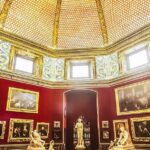
David is bigger than you expect. And it’s better before the crowds. This early entry Michelangelo’s David & More tour pairs a licensed guide with an exclusive small group so you can actually ask questions and take in the story behind the art. I also like that the tour isn’t just about one statue—it includes Michelangelo’s unfinished Prisoners, Giambologna’s Rape of the Sabine Women in plaster, and Renaissance paintings. One thing to consider: it’s only 1 hour, so you’ll want to decide in advance what you’re most excited to linger on.
You start the morning at Piazza delle Belle Arti and head straight into the Accademia Gallery experience with skip-the-line access. The guide keeps the pace thoughtful, not rushed, and brings the work to life through the genius of Michelangelo and the influence of the Medici family.
Logistics are simple but strict. Arrive 15 minutes early, and keep your packing light because backpacks and large bags aren’t allowed inside the museum.
In This Review
- Key Highlights You’ll Feel Right Away
- Why Accademia Looks Better Before the Crowds
- Getting There: Piazza delle Belle Arti Meeting Point and Sign Search
- Skip the Ticket Line and Get a Real Guide, Not Just a Label
- Michelangelo’s David Up Close: What the Guide Helps You See
- The Prisoners: How Seeing Unfinished Work Adds Meaning
- Giambologna’s Rape of the Sabine Women in Plaster and the Medici Thread
- Renaissance Paintings: Why They Fit After David
- Price and Value for a 1-Hour Small Group
- Rules That Actually Affect Your Day: Bags, Bottles, Photos
- Who This Early Entry Tour Suits Best
- Should You Book Michelangelo’s David & More Early Entry Tour?
- FAQ
- How long is the early entry guided tour?
- How much does it cost?
- Where do I meet the guide?
- Is there an option to skip the ticket line?
- Is the tour in English?
- Are backpacks or large bags allowed inside?
Key Highlights You’ll Feel Right Away
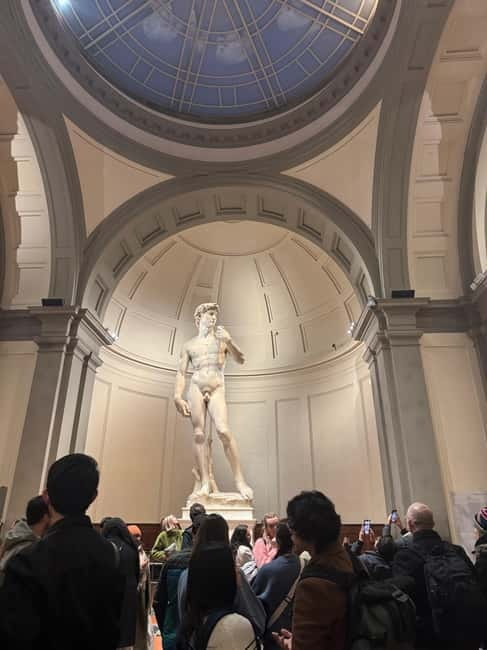
- Early access at Accademia so you can see Michelangelo’s David with fewer people around
- Licensed English guide who turns the artwork into a story you can follow
- Michelangelo’s unfinished Prisoners for a rare look at process, not just the final result
- Giambologna’s Rape of the Sabine Women in plaster, which adds texture beyond the headline names
- Renaissance paintings that connect the sculpture to the broader artistic world of the era
- Small group format that makes questions and slower viewing actually possible
Why Accademia Looks Better Before the Crowds
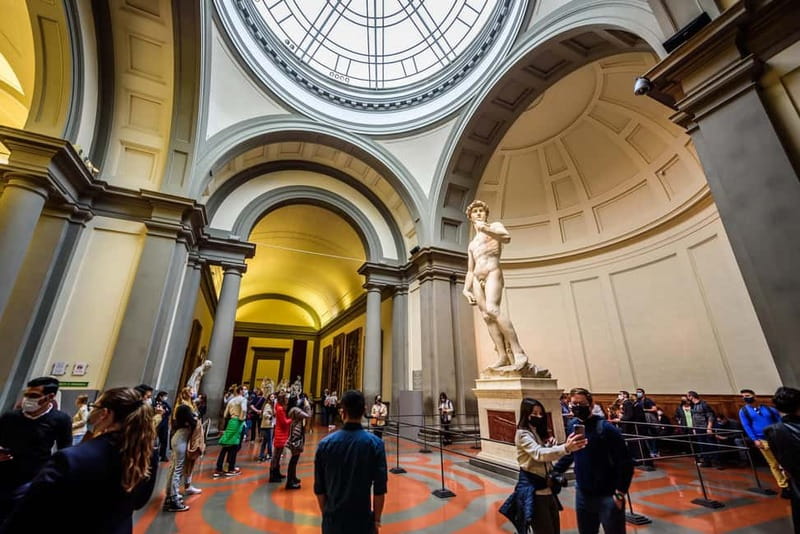
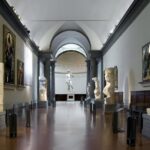
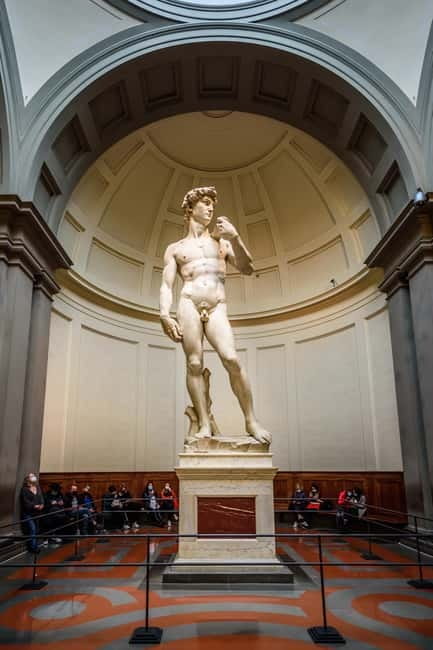
Accademia is famous for a reason, but the downside of that fame is time pressure. With early entry, you get your first look at the gallery while the room still feels manageable. That matters because Michelangelo’s David isn’t the kind of thing you skim in passing.
I love that this tour is built around getting there early, not just “standing in a line earlier.” Fewer people means you can look longer, stop when something catches your eye, and ask a question without feeling like you’re holding up everyone behind you.
You’ll also get a better feel for how the art relates to each other. When you’re not fighting for space, the tour can do its real job: connect Michelangelo’s work to the wider Renaissance setting of Florence and its patrons.
You can also read our reviews of more guided tours in Florence
- The Best tour in Florence: Renaissance & Medici Tales – guided by a STORYTELLER
★ 5.0 · 12,316 reviews
Getting There: Piazza delle Belle Arti Meeting Point and Sign Search
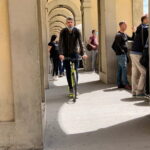
The meeting point is Piazza delle Belle Arti, and the guide meets you in front of Piazza Delle Belle Arti with a sign that says BellaVita tour. There’s no hotel pickup, so plan on arriving under your own steam.
Arrive 15 minutes before the start time. That’s not “nice to have” advice. It’s what lets you find the correct entrance, get settled with the group, and avoid the annoying scramble when your tour is already starting.
If you’re traveling light, this part is easy. If you’re coming with a big bag, it’s the moment to adjust. The tour rules are strict about what you can bring into the gallery.
Skip the Ticket Line and Get a Real Guide, Not Just a Label
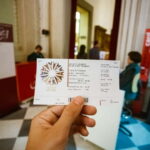
One of the most practical benefits here is skip the ticket line. In a museum like Accademia, that saves you from losing your morning to slow-moving entry flow.
This is also a live guided tour in English, led by a licensed guide. The point of a licensed guide isn’t just credential bragging—it’s that you’ll hear the story behind the works in a coherent order, instead of bouncing around trying to piece things together yourself.
In feedback, the sound system setup has been reliable, including the microphone and headset working smoothly. That’s worth caring about because it directly affects whether you can hear explanations while you’re standing close to the sculptures.
Michelangelo’s David Up Close: What the Guide Helps You See
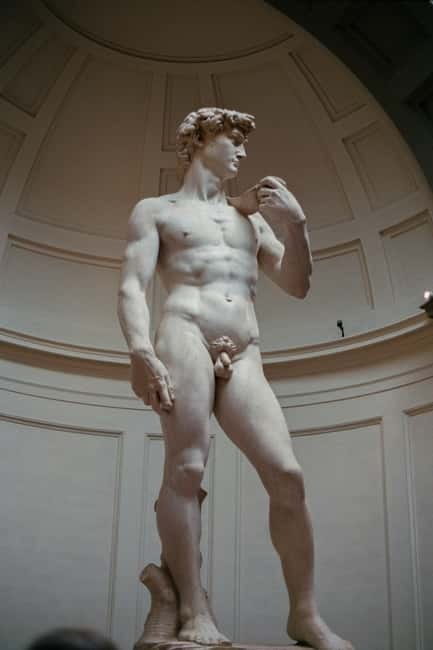
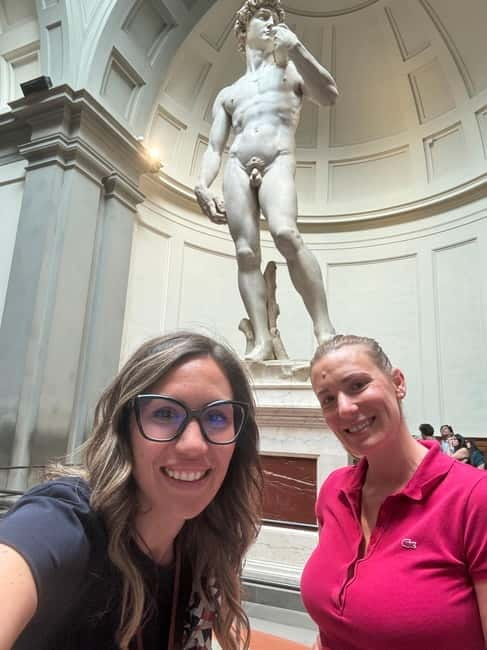
The headline is, obviously, Michelangelo’s David. This is the sculpture people travel for, and the early access gives you the chance to experience it without a wall of shoulders between you and the statue.
What I like about this tour is that it doesn’t treat David like a photo stop. You’ll get context on what makes it one of the most celebrated works of art in history, plus the story behind it—why it mattered, and why it changed how people thought about art.
You’ll also hear the explanation in a way that supports how you’re viewing it. With time and fewer people, your questions don’t have to be “one quick thing” before the guide moves you along. You can ask for clarification when something feels confusing or when you want to understand the intention.
And yes, the tour emphasizes David as a monumental figure and an enduring symbol of strength and beauty. That line can sound like marketing until you’re actually standing there looking at how imposing and present the sculpture feels.
The Prisoners: How Seeing Unfinished Work Adds Meaning
The next major attraction is Michelangelo’s unfinished Prisoners. This is the kind of stop that often gets overlooked because it’s not as famous as David, but it’s one of the most rewarding parts of the whole experience.
Unfinished sculpture changes the way you look. Instead of treating the work as a completed product, you can see the thinking process—the forms in progress, the raw energy of what’s not yet finished, and the way the artist is shaping ideas in stone.
In a guided hour, this stop does more than entertain you. It helps you understand why Michelangelo’s genius is more than the final masterpiece. The “unfinished” quality makes the art feel human and urgent, like you’re witnessing decision-making in real time.
For you, that means your experience becomes more than a checklist. It becomes a chance to compare how Michelangelo arrives at a finished icon like David and how the same mind works through earlier stages.
- The Best tour in Florence: Renaissance & Medici Tales – guided by a STORYTELLER
★ 5.0 · 12,316 reviews



Giambologna’s Rape of the Sabine Women in Plaster and the Medici Thread
Then you’ll see Giambologna’s Rape of the Sabine Women in plaster. This matters because it broadens the tour beyond “one artist, one statue.” Even within the Renaissance story, you’re looking at another approach and another artistic personality.
Plaster versions can feel a bit different from completed stone or bronze, and that difference is useful. It helps you notice how sculpture can live in steps—models and forms that communicate the plan and motion before the final work.
Right alongside this, the guide is connecting what you see to the bigger Florence context, including the Medici family’s influence. You’ll hear how patrons shaped what got made and how artists built reputations in that cultural environment.
This is where the tour earns its “and more” part. Without this context, David can feel like an isolated superstar. With the Medici thread and the broader collection, it feels like the product of an entire system: artists, patrons, and the city pushing new ideas.
Renaissance Paintings: Why They Fit After David
The tour also includes Renaissance paintings, which might sound like an odd pairing at first. But it works because your guide isn’t just showing you objects—your guide is helping you understand the era.
After standing in front of famous sculpture, it’s easy to think art history is only about one medium at a time. The paintings help reset that thinking. You start seeing Renaissance art as a wider creative world, where different forms of art share themes and audience expectations.
You’ll also hear stories about artists, patrons, and Florence itself—basically how the city helped create the artistic momentum of the period. For many people, that makes the experience feel more grounded. You’re not just staring at famous work. You’re placing it in the environment that produced it.
Price and Value for a 1-Hour Small Group
The price is $78 per person, and the value comes from a few concrete pieces:
- Skip the ticket line, which saves time and stress
- A licensed English guide, not audio-only explanations
- An exclusive small group format, which usually means better interaction and less rushing
- Access to major works in a focused package: David, unfinished Prisoners, Giambologna plaster, and Renaissance paintings
The tradeoff is the obvious one: the tour runs about 1 hour. If you love art and you’re the type who wants to sit and stare, that can feel short. If you’re okay with a high-impact introduction, it’s a strong use of time.
Also note what’s not included: no food and drinks. Plan to grab a coffee or snack either before the meeting or after you finish. The museum rules also affect what you bring in, so think about timing.
Rules That Actually Affect Your Day: Bags, Bottles, Photos
This tour is smooth, but the Accademia rules are strict, and this experience follows them. Here’s what you need to know:
- No oversize luggage and no luggage or large bags
- No backpacks inside the gallery
- No flash photography
- No plastic bottles
- In the museum, you’re only allowed water
So bring a small day bag if you must, but keep it realistic. If you’re the kind of traveler who shows up with a backpack the size of a carry-on, you’ll want to rethink that for this stop.
There’s also an ID rule for younger visitors: kids and children under 18 need to show an ID, and ID pictures are OK. If you’re traveling with teens, throw that document into your day bag ahead of time.
On the good-news side, the tour is wheelchair accessible. If mobility access is part of your planning, this one is built with that in mind.
Who This Early Entry Tour Suits Best
This is a great match if you:
- Want the best chance to see David without wrestling crowds
- Like art explanations with context, not just labels
- Prefer a guided flow where you can ask questions
- Have limited time in Florence and want a concentrated “David and more” morning
It’s also good for first-timers. David is the anchor, and the rest of the collection widens your view instead of sending you in random directions on your own.
If you’re traveling with kids, it can work well as long as you’re ready with the required ID. And because the tour is only 1 hour, it’s easier to manage attention than longer museum marathons.
Should You Book Michelangelo’s David & More Early Entry Tour?
Yes—if your priority is seeing David in a calmer setting with a real guide. The early access and small group angle is the heart of the value, and the lineup (David, unfinished Prisoners, Giambologna plaster, Renaissance paintings) gives you a well-rounded Florence art snapshot in just one hour.
Skip it only if you know you want to spend a lot longer than an hour at any single artwork. This is an efficient, guided hit, not a leisurely browse. Also, be honest about your packing: if you don’t want to deal with the bag rules, travel lighter.
If you’re aiming for a smart morning in Florence—start with this. It’s one of those experiences where time and pacing really change what you take home.
FAQ
How long is the early entry guided tour?
The tour duration is 1 hour.
How much does it cost?
The price is $78 per person.
Where do I meet the guide?
Meet the guide in front of Piazza Delle Belle Arti. Look for the sign BellaVita tour.
Is there an option to skip the ticket line?
Yes, skip the ticket line is included.
Is the tour in English?
Yes, the live tour guide speaks English.
Are backpacks or large bags allowed inside?
No. Backpacks are not allowed, and luggage or large bags are not allowed inside the gallery. Only water is allowed in the museum, and plastic bottles aren’t allowed.
You Might Also Enjoy


More Guided Tours in Florence
- The Best tour in Florence: Renaissance & Medici Tales – guided by a STORYTELLER
★ 5.0 · 12,316 reviews
More Tours in Florence
- The Best tour in Florence: Renaissance & Medici Tales – guided by a STORYTELLER
★ 5.0 · 12,316 reviews



More Tour Reviews in Florence
- Tuscany Day Trip from Florence: Siena, San Gimignano, Pisa and Lunch at a Winery
★ 5.0 · 21,634 reviews - The Best tour in Florence: Renaissance & Medici Tales – guided by a STORYTELLER
★ 5.0 · 12,316 reviews