REVIEW · FLORENCE
BEST OF FLORENCE Private Walking Tour
Book on Viator →Operated by Irina in Florence · Bookable on Viator
Florence makes more sense with a guide. This private 1.5-hour walking tour strings together the city’s must-sees from the Baptistery to Ponte Vecchio, with a licensed guide and headsets so you can hear every detail without craning your neck.
I especially like two things. First, the explanations are grounded in the landmarks themselves, from Michelangelo’s link to the Baptistery doors to the engineering talk around Brunelleschi’s dome. Second, the pacing is built for real sightseeing: you get short, efficient stop times plus clear guidance on where to look and what to photograph.
One consideration: admission tickets are not included for some stops, and getting into the Duomo interior depends on lines. If you’re visiting on a peak day, it helps to accept that outside views may be your plan B at one or two points.
In This Review
- Key highlights at a glance
- A Smart 90-Minute Way to Get Oriented in Florence
- Meeting Point to Ponte Vecchio: How the Walk Feels on the Ground
- Battistero di San Giovanni: Michelangelo’s Doors First
- Duomo (Santa Maria del Fiore): Dome Power and Line Reality
- Museo Casa di Dante: A Short Walk Through Dante’s World
- Orsanmichele: When a Market Became a Church
- Piazza della Signoria: Florence’s Open-Air Political Theater
- Palazzo Vecchio: A Quick Government Fortress Shot
- Uffizi Square Glance and the Lead-In to Ponte Vecchio
- Ponte Vecchio: Finishing at the Arno’s Icon
- Price, Value, and What $114.74 Buys You
- Who Should Book This Private Florence Walk
- Tips to Make the Most of Your Duomo-and-Bridge Day
- Should You Book Best of Florence Private Walking Tour?
- FAQ
- Is the tour offered in English?
- How long is the Best of Florence private walking tour?
- Is this a private tour?
- Do I need to buy admission tickets for the stops?
- Where does the tour start and end?
- What happens if weather is bad?
Key highlights at a glance
- Headsets included: you’ll hear your guide clearly even in busy squares and near crowds
- Private group only: just your party, not a big mixed group
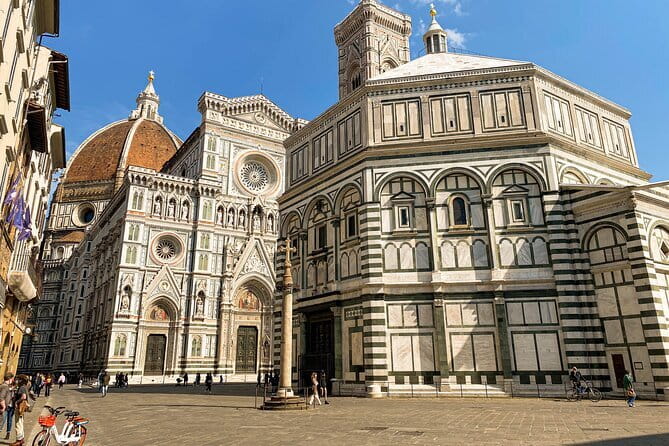
- Duomo dome perspective: you’ll see Santa Maria del Fiore from the outside, and possibly the interior if lines allow
- Dante + church connections: a quick walk through Dante’s area and the story behind Orsanmichele
- Finish at Ponte Vecchio: end at the Arno’s oldest bridge when it’s easiest to keep exploring
A Smart 90-Minute Way to Get Oriented in Florence
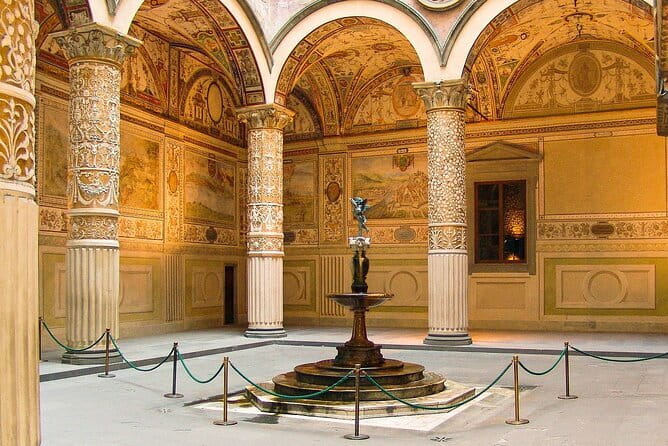
If you only have a day (or even half a day) in Florence, this kind of tour does something simple and useful: it gives you a mental map. You’re not just ticking boxes. You’re learning how the city’s religious power, civic power, and wealthy merchant influence all show up in the same compact area.
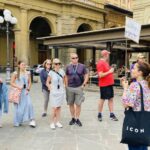
This is also a practical tour format for real travelers. It’s private, so you can move at a pace that fits your group. And the guide uses headsets, which matters in Florence when you’re constantly passing through noisy streets and crowded open-air spaces.
You’ll likely appreciate that the whole route is designed to build toward the iconic finale at Ponte Vecchio. By the time you arrive, you’ll understand why the bridge became famous and why the shops over the water are more than just a cute postcard detail.
You can also read our reviews of more walking tours in Florence
Meeting Point to Ponte Vecchio: How the Walk Feels on the Ground
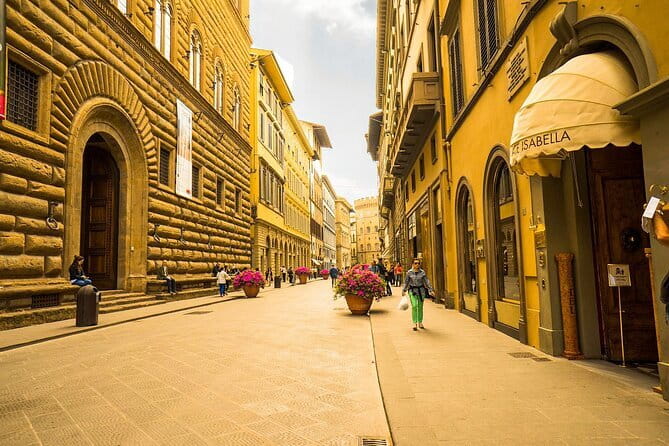
The tour starts at Caffè Scudieri Firenze on Piazza di San Giovanni (San Giovanni area). That’s a good choice because it puts you right in the center of older Florence, where the Baptistery and the Duomo Complex dominate the skyline and the street layout makes sense quickly.
You’ll finish at Ponte Vecchio, which saves you from the usual problem: ending your sightseeing day somewhere random and needing to “figure out the bridge later.” Ending here is a clean transition to whatever you do next—wandering the river, grabbing a drink, or walking further into the Old Town.
Even though the route includes several stops, the total time is about 1 hour 30 minutes. That means you should expect quick context at each site, not long museum-style visits. If you want deep museum time, you’ll need to pair this with separate entry tickets later.
Battistero di San Giovanni: Michelangelo’s Doors First
You begin at the Baptistery of St. John, a major anchor for Florence’s earliest religious identity. The timing is short—about 20 minutes—so your guide’s job is to point out what you should focus on fast.
The Baptistery is famous for its doors, which Michelangelo famously called Gates of Paradise. Your guide’s explanations make those doors feel less like decoration and more like a statement: this is where artistry, faith, and political status meet.
Admission is not included here, so you’ll want to decide in advance whether you plan to buy a ticket. The good news is that even without entry, the square is still a strong start. You’ll get a sense of scale right away, and your photos will look better because you’re orienting yourself from the beginning.
Duomo (Santa Maria del Fiore): Dome Power and Line Reality
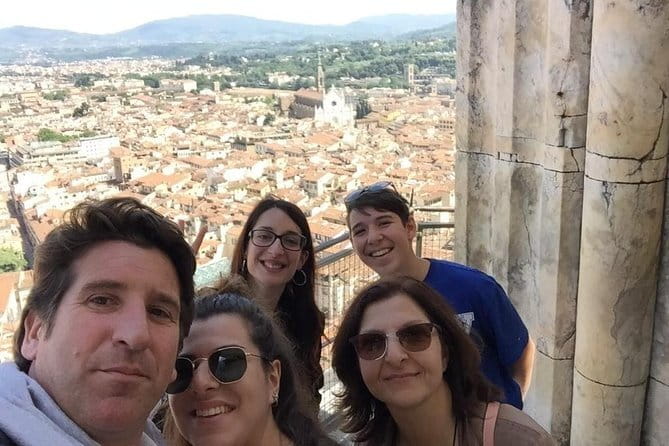
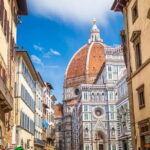
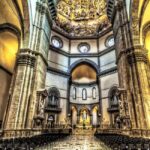
Next comes the Duomo—Cattedrale di Santa Maria del Fiore. This is one of the world’s great cathedral sights, and it has a specific “how did they do that?” reputation because of Brunelleschi’s dome. Your guide will explain the dome as a feat of masonry and design, not just a pretty roof.
You’ll spend about 15 minutes on this stop. The plan usually includes seeing the Duomo from the outside. If there’s no line, you may also see the interior. That line-dependent detail is important because it changes the experience.
Also note the admissions situation: the Duomo interior is listed as free in this tour flow. Practically, that means your main obstacle is usually not the ticket cost—it’s timing and queue length. I’d go in with flexible expectations. If you can’t get inside, outside viewpoints still let you understand the structure and significance.
Museo Casa di Dante: A Short Walk Through Dante’s World
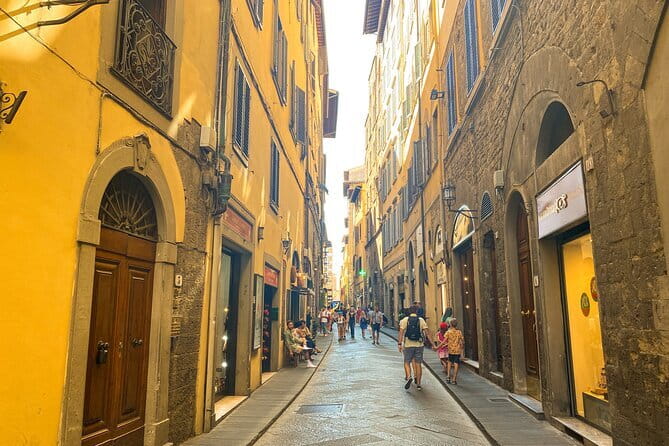
After the Duomo area, the tour moves into Dante’s district. This part is ideal if you like seeing how literature connects to real neighborhoods. You’ll take about 15 minutes to look at Dante’s tower-house from the outside, then step into a very old church linked to his family and life.
The stop highlights mention the 1000-year-old church where Dante’s father met the love and muse of his life. That’s the kind of story your guide can connect to the setting, so the streets don’t feel generic—they feel specific.
Admission is free for this stop, which is a nice break if you’re trying to keep costs predictable. The downside is time: the stop is short, so don’t expect a slow, standalone visit. You’ll want to note what you’d like to see more of so you can follow up later at your own speed.
You can also read our reviews of more private tours in Florence



Orsanmichele: When a Market Became a Church
Then you’ll visit Orsanmichele, described as a distinctly Florentine church. The key point for this stop is the transformation story: your guide will explain why a market space became a church.
You’ll have about 10 minutes here. That’s not a lot, but it’s enough to understand the big idea: Florence’s institutions weren’t separate categories. Civic life, commerce, and religion overlapped in real buildings.
Admissions for this stop are listed as free. If you’re trying to stretch your day’s budget, that’s a win. And it also balances the heavier, more ceremonial feeling of the Duomo with a place that grew out of everyday city needs.
Piazza della Signoria: Florence’s Open-Air Political Theater
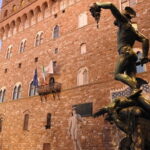
Piazza della Signoria is next—about 15 minutes. This is Florence’s political center, and it’s set up like an open-air museum. You’ll see original sculptures created by Renaissance artists, arranged in a way that makes the square feel like a stage for power and culture.
The trick here is that a plaza can look like just another pretty square unless someone gives you the context. Your guide’s job is to connect the artwork to who commissioned it and what it signaled.
After this stop, the tour keeps moving quickly. That’s a benefit for most people because you don’t get stuck in one place. It’s also a drawback if you’re the type who likes to study sculpture for long periods—this is a “see and understand” approach, not a “slow art seminar” pace.
Palazzo Vecchio: A Quick Government Fortress Shot
You’ll get a brief look at Palazzo Vecchio, with about 5 minutes dedicated to the medieval fortress feel. The standout details here are the government-residence function and the prison for dangerous criminals.
Because the time is short and admissions are not included, this is more of a viewpoint stop than a deep visit. Still, it’s a helpful bridge between earlier religious symbolism and later civic identity. Florence’s power structures show up in stone, and this gives you one quick reference point.
If you’re fascinated by how rulers lived and punished inside the same walls, you might want to consider a separate palace visit later with a dedicated ticket and longer time.
Uffizi Square Glance and the Lead-In to Ponte Vecchio
Near the end, you’ll take a look at the Uffizi Gallery area and stroll through the Uffizi square. This is not positioned as a full museum visit in the tour flow, but it helps you connect the walk to one of the biggest art destinations in the world.
Think of it as a “corridor of expectation.” Once you’ve covered the Duomo, Dante’s district, civic squares, and Orsanmichele, the Uffizi area feels like the natural next stop for anyone who wants to go from stories in the streets to masterpieces in galleries.
The tour then moves you into the finale zone: the Old Bridge.
Ponte Vecchio: Finishing at the Arno’s Icon
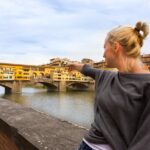
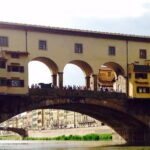
You end at Ponte Vecchio, about 10 minutes. This bridge is Florence’s symbol and described as the oldest bridge in town. The famous jewelers’ shops hanging over the Arno river are the reason the bridge became a magnet for both locals and visitors.
Admission is listed as free for this stop, which is perfect for the final segment. You don’t need to decide anything about tickets; you just get to enjoy the view and soak up the atmosphere as you reach the end of the tour.
If you like photographs, this is the moment to slow down a touch. Your guide’s explanations make the scene more meaningful, but your best shots come from taking a few extra seconds to look at how the shops, arches, and river reflections line up.
Price, Value, and What $114.74 Buys You
The price is $114.74 per person for about 1 hour 30 minutes. That can sound steep if you’re used to self-guided walking. But value in Florence often comes down to one thing: time and context.
Here, you’re paying for a licensed guide, headsets, and a route that hits multiple key sites without you needing to piece together logic on your own. The guide’s job isn’t just to describe what you see—it’s to connect those landmarks into a clearer Florence story.
Also, private format matters. In a shared group, you might lose track or get fewer chances to ask questions. In a private setup, you’re more likely to get the pacing and explanation style that fits your group.
There are also practical cost notes built into the structure. Some stops involve admission tickets not included, while others are listed as free. I treat that as a planning tool: I’d budget a little for any paid entry I want, then use the free stops as a way to keep total day costs under control.
One more value angle: the tour is popular. It’s typically booked around 71 days in advance on average, so reserving earlier can be the difference between having a guide on your preferred day versus settling for whatever time is left.
Who Should Book This Private Florence Walk
This tour fits best if you want a fast, high-impact orientation to the center of Florence. If you’re arriving for the first time and feel overwhelmed by the sheer number of churches and squares, a guided loop like this is a smart shortcut.
It’s also a great choice if you care about stories, names, and connections—Michelangelo, Brunelleschi, Dante, and the civic art world of Piazza della Signoria. The guide approach here seems geared to make the city feel understandable, not just impressive.
If you’re traveling with limited time, the 90-minute format is friendly. If you’re traveling with mobility limitations or simply don’t want long museum queues, the short stop times and headset setup help.
What I’d avoid: if you want a deep dive into any single site (for example, a long Duomo interior visit or a full Uffizi museum day), this is probably not enough on its own.
Tips to Make the Most of Your Duomo-and-Bridge Day
Wear shoes you can walk in for the full route. Even with short stops, you’ll move between several distinct areas, and Florence streets have their own rhythm.
Keep one rule in mind: plan to be flexible about lines at the Duomo interior. The tour’s flow anticipates that. If lines are heavy, you’ll still get exterior views and the key context your guide provides.
When the guide points out photo angles, take them. The best photos here aren’t just about standing in front of a landmark; they’re about capturing the right relationship between architecture, placement, and light. A guide can save you from taking 30 random shots that all look the same.
Finally, use the end of the tour as a start, not a finish line. Ponte Vecchio is a perfect place to continue walking along the Arno, because you’ll already understand what you’re seeing and why it matters.
Should You Book Best of Florence Private Walking Tour?
Yes—if you want a guided “greatest hits with real meaning” walk that ends where you’ll want to keep exploring. The strongest reason to book is the combination of private pacing, headsets, and a guide who explains not just facts but connections—Michelangelo and the Baptistery doors, Brunelleschi and the dome, Dante’s district, Orsanmichele’s transformation, and the civic identity of Piazza della Signoria.
Book it with a small expectation adjustment: this is not a long museum day. A few stops are quick, and some entries require your own tickets. If you’re okay with that and you like learning as you walk, it’s a solid way to get your bearings fast and enjoy Florence without feeling lost.
If you’re the type who can spend hours in one place (Duomo interior, Uffizi galleries), think of this tour as the warm-up act. Then schedule your longer entries on separate time blocks.
FAQ
Is the tour offered in English?
Yes. The tour is offered in English.
How long is the Best of Florence private walking tour?
It runs about 1 hour 30 minutes.
Is this a private tour?
Yes. It’s private, meaning only your group participates.
Do I need to buy admission tickets for the stops?
Some admissions are not included (for example the Baptistery of St. John and Palazzo Vecchio). Other stops are listed as free (including the Duomo stop in the tour flow and stops like Museo Casa di Dante, Orsanmichele, and Piazza della Signoria).
Where does the tour start and end?
It starts at Caffè Scudieri Firenze, Piazza di San Giovanni, 19R, 50123 Florence. It ends at Ponte Vecchio, 50125 Florence.
What happens if weather is bad?
The tour requires good weather. If it’s canceled due to poor weather, you’ll be offered a different date or a full refund.
You Might Also Enjoy

More Walking Tours in Florence
More Tours in Florence
- The Best tour in Florence: Renaissance & Medici Tales – guided by a STORYTELLER
★ 5.0 · 12,316 reviews

More Tour Reviews in Florence
- Tuscany Day Trip from Florence: Siena, San Gimignano, Pisa and Lunch at a Winery
★ 5.0 · 21,634 reviews - The Best tour in Florence: Renaissance & Medici Tales – guided by a STORYTELLER
★ 5.0 · 12,316 reviews