REVIEW · FLORENCE
Florence Walking Tour with Audioguide on Your Smartphone
Book on Viator →Operated by TouringBee · Bookable on Viator
Florence is better when you can pause. This self-guided smartphone walk strings together Santa Maria Novella, the Duomo area, Medici palaces, and Ponte Vecchio, with 30 audio tracks recorded by a professional historian and simple landmark illustrations.
I like that it keeps you moving at your pace, and the offline map with GPS navigation helps you keep your bearings without hunting for signs. One caution: you’ll need to download the app, bring headphones, and the GPS directions can be unreliable in dense spots, so give yourself a little buffer.
In This Review
- Key things I’d zoom in on
- How the Florence smartphone audioguide route really feels
- Santa Maria Novella: starting with a Gothic façade and real art details
- San Lorenzo and the Medici power story you can walk through
- Duomo time: Santa Maria del Fiore and Giotto’s Bell Tower
- Piazza della Repubblica and Palazzo Strozzi: Renaissance elegance at street level
- Palazzo di Parte Guelfa and Mercato Nuovo: politics and lunch vibes
- Palazzo Vecchio, Loggia dei Lanzi, and Casa Museo di Dante: Florence as a story
- Santa Croce, Museo Galileo, and Uffizi: choose your intensity level
- Ponte Vecchio and the Medici secret passage idea
- Villa Bardini and Forte Belvedere: viewpoints without the big-name crowd
- Price and value: $7.14 for self-guided Florence time
- Should you book this Florence audio walk?
- FAQ
- What is included in the Florence walking tour?
- Is this tour self-guided or do I meet a person?
- Do I need headphones?
- Where does the tour start and where does it end?
- How long does the tour take?
- Are entrance tickets included?
- What language is the audio available in?
- What devices does the audio guide app support?
- Can I cancel for free?
- How many travelers are allowed for this experience?
Key things I’d zoom in on

- 30 historian-recorded audio tracks across major sights, so you can read the city out loud (with your own headphones)
- Offline route map with GPS navigation, which is handy when Wi-Fi fails or you’re moving quickly
- Illustrations to spot each landmark, so you’re not guessing which door or façade you’re supposed to be looking at
- A tight loop from Santa Maria Novella back to itself, built for a roughly 2.5-hour outing
- No human guide on-site, meaning you control the pace, but you also own the tech setup
- Audio app works on iPhone and Android and stays available for 1 year after purchase
How the Florence smartphone audioguide route really feels
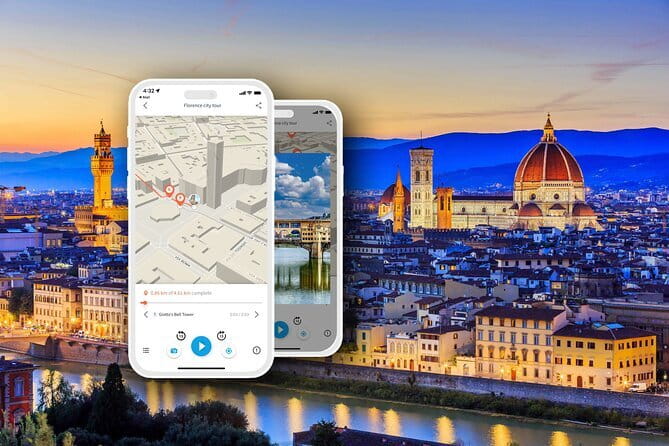
This is a classic “walk and listen” experience. You arrive at the starting point, download the app, activate your purchase, and then follow the route on the in-app map. There’s no guide waiting to herd you along, which is exactly why this works so well in Florence: you can slow down when a façade grabs you, and you can walk on when the crowds thicken.
The audio is built around real landmarks, with illustrations that help you visually confirm you’re at the right place. That matters more than people think. In central Florence, there are plenty of gorgeous doors, arches, and street-corner views. The illustrations keep you from wandering around the right neighborhood for the wrong stop.
Timing is also a big part of the vibe. The overall duration is about 2 hours 30 minutes, but the experience includes both exterior viewing and optional “how much do you want to climb” moments. If you treat this like a relaxed walk with quick looks in each spot, you’ll likely stay close to the schedule. If you plan to do multiple stair climbs and full museum-length detours, you’ll stretch the time.
You can also read our reviews of more walking tours in Florence
Santa Maria Novella: starting with a Gothic façade and real art details

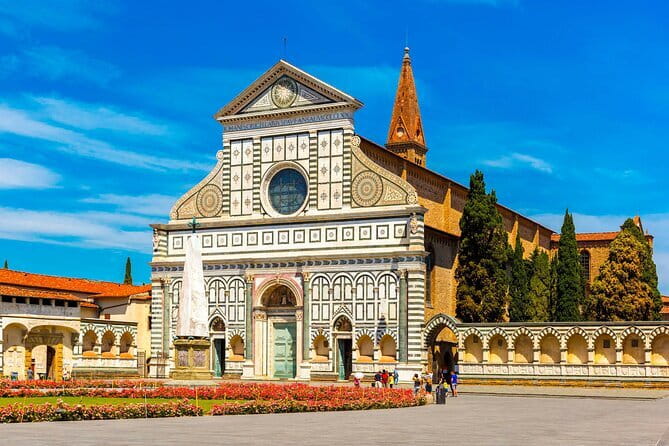
You begin at the Basilica of Santa Maria Novella, and the audio sets the tone right away. This church is a star example of Gothic architecture in Florence, famous for its striking façade and its rose window. The best part of an audio guide here is that it gives you something specific to look for rather than just saying this is old.
Inside, the audio points you toward major artworks associated with the church experience, including pieces by artists like Masaccio and Ghirlandaio. There’s also mention of the cloisters and a chapel dedicated to the Virgin Mary. Even if you’re not the type to read every label in a museum, this kind of guided attention helps you catch details you’d otherwise miss.
Practical tip: because Santa Maria Novella sits right in the center of things, it’s a good starting move if you want to beat the day’s heaviest flow. You also get an early “sense check” for the rest of the route—after this first stop, it’s easier to stay oriented.
San Lorenzo and the Medici power story you can walk through
From Santa Maria Novella, the route heads toward San Lorenzo, one of Florence’s key churches, with major Renaissance connections. The audio frames San Lorenzo as a blend of old foundations and later redesign—founded in the 4th century and remodeled in the 15th century under Filippo Brunelleschi.
You’ll spend time looking at the church’s proportions and columns, then the tour zooms in on the artistic highlights. One of the standout topics is Michelangelo’s work in the Medici Chapels, tied directly to the burial and legacy of the Medici family. If you’ve heard the name Medici before, this is where it stops being abstract and becomes tangible.
Then you move to Palazzo Medici, the opulent Medici residence. The audio describes the rusticated stonework and grand arches outside, and then the focus shifts inward to frescoed rooms and lavish décor. The star mention is the Chapel of the Magi, presented as a smaller but memorable stop.
How to use this part of the route: if you’re short on time, don’t try to “finish” every room. Let the audio tell you where to aim your eyes—façade details first, then one or two interiors you genuinely want to see.
Duomo time: Santa Maria del Fiore and Giotto’s Bell Tower
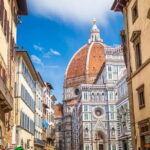
The route brings you to the Cathedral of Santa Maria del Fiore, Florence’s most famous landmark. The audio leans into what makes this place so iconic: the massive scale of the cathedral, its Gothic architecture, and the famously engineered dome by Brunelleschi—called out as the largest brick dome in the world.
Even if you only do a quick interior glance, the guide helps you focus on what’s visually central: the façade’s colored marble and sculptures, and the interior’s stained glass and frescoes. There’s also a specific reminder that this is a “don’t just look, but look hard” kind of stop.
Then you head to Giotto’s Bell Tower, with the audio highlighting the campanile’s height and style, and pointing out that it’s worth the climb for the city views. You’re also told what you’re signing up for: 414 steps to reach the top. If you’re planning to climb, start early in the walk rather than saving it for later when your energy is lower.
Reality check: the route includes multiple major sites. The Duomo-and-bell-tower combo is a lot. If you don’t want to climb, keep the exterior and façades as your goal and use the audio to guide your viewing.
Piazza della Repubblica and Palazzo Strozzi: Renaissance elegance at street level
Next up is Piazza della Repubblica, introduced by the audio as a place with layered identity—originally connected to a Roman forum, now surrounded by cafés and shops. The guide also points you to a modern feature that helps you understand how the square’s shape came together.
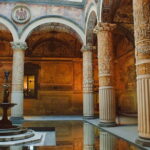
From there, you reach Palazzo Strozzi, a Renaissance statement built for the influential Strozzi family. The audio emphasizes the palace’s façade harmony and courtyard design. It also notes that Palazzo Strozzi functions today as a cultural center, hosting rotating exhibitions.
A good way to do this stop: even if an exhibit inside isn’t in your travel plan, the exterior and courtyard proportions are part of the experience. Use the audio to learn what to notice—symmetry, rhythm, and how Renaissance design reads when you’re standing in the right spot.
You can also read our reviews of more tours and experiences in Florence



Palazzo di Parte Guelfa and Mercato Nuovo: politics and lunch vibes
The route continues with Palazzo di Parte Guelfa, tied to medieval politics. The audio frames it as a seat of the Guelf faction, a powerful political group during the Middle Ages. You’ll also hear about the building’s architectural features, including a courtyard and frescoes.
This is one of those stops where audio matters because the building is less “instant-famous” than the Duomo, but it’s the kind of place that explains why Florence evolved the way it did. If you like history that comes from real walls and real power structures, this is satisfying.
Then you’re at Mercato Nuovo (Nuovo Mercato), and the audio shifts from politics to food life. The description focuses on a modern-market setting with fresh produce, local specialties, artisan cheeses, and prepared counters. It’s a useful moment to do a snack break so the rest of the route doesn’t feel like one long sightseeing push.
Quick practical advice: if you’re hungry, this is the kind of stop where you can eat something simple and local without needing a reservation. If you’re not hungry, still browse—food markets are a great way to reset your brain between “big name” monuments.
Palazzo Vecchio, Loggia dei Lanzi, and Casa Museo di Dante: Florence as a story
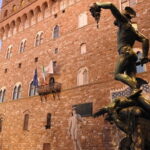
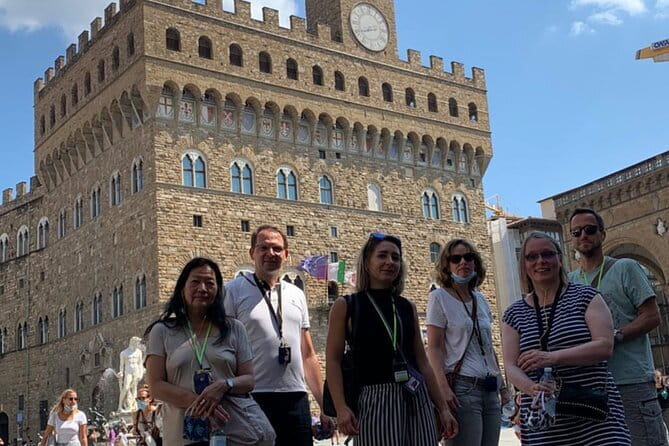
Palazzo Vecchio is next, and the audio treats it like what it is: a fortress-like centerpiece of Florence’s political life. It points out that the building served as the seat of government, then focuses on what you’ll likely notice from the outside and around the square.
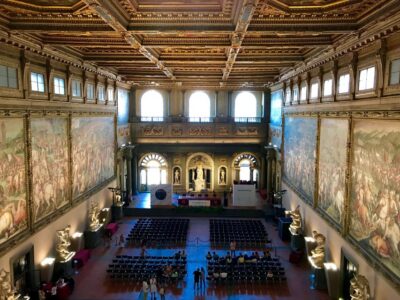
You’ll hear about the tower and the façade, then the audio steers your attention toward key interior decorations like the Salone dei Cinquecento. There’s also mention of the views from the tower—again, another “do I want to climb?” question. If you decide to climb, do it with realistic expectations: stairs add up fast on a self-guided loop.
Then you hit the Loggia dei Lanzi, described as an open-air gallery. The audio calls out specific sculptures, including Cellini’s Perseus and Giambologna’s Rape of the Sabine Women. For me, this is one of the most enjoyable stops on any Florence walk because you can learn what to look at without needing to pay museum pricing.
The route also includes the Casa Museo di Dante, a smaller museum experience dedicated to Dante Alighieri. The audio highlights exhibits connected to manuscripts, drawings, and artifacts tied to Dante’s life and legacy, plus his influence on Italian literature.
Tip for this section: keep your pace light. This area is packed with sightlines and sculpture-heavy details. Audio helps, but only if you stop often enough to let the explanations stick.
Santa Croce, Museo Galileo, and Uffizi: choose your intensity level
The route then swings to Basilica di Santa Croce, presented in the guide as a major church and known as the Temple of the Italian Glories. The audio calls out the final resting places of famous figures such as Michelangelo, Galileo, and Machiavelli. It also points you to frescoes associated with artists like Giotto, plus details about the cloisters and chapels.
After that, you’re at Museo Galileo, where the focus shifts from art to science. The audio describes it as a place with scientific instruments and artifacts tied to the Renaissance and beyond, connecting you to Galileo’s impact on astronomy and physics. This museum format is especially friendly if you want something different from Florence’s nonstop art stops.
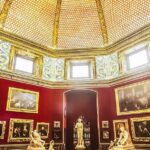
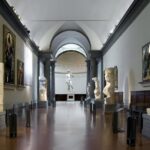
Then comes the Uffizi Gallery, which the audio introduces as one of the world’s most celebrated art museums. The big names listed in the audio include Botticelli, Michelangelo, Leonardo da Vinci, and Caravaggio, plus iconic works like The Birth of Venus and Primavera.
Here’s the practical part: Uffizi is a time-sink. Since entrance tickets aren’t included in this experience, I’d treat the Uffizi mention as either (1) an audio “orientation” stop if you’re just viewing from the outside and learning context, or (2) the anchor for a separate ticketed museum visit on a different day.
So, how do you decide? If you’re the type who can handle one museum well, pick Uffizi for your schedule. If you’re trying to fit a lot into 2.5 hours, prioritize the outdoor and nearby indoor stops that you can do quickly.
Ponte Vecchio and the Medici secret passage idea
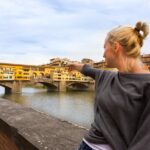
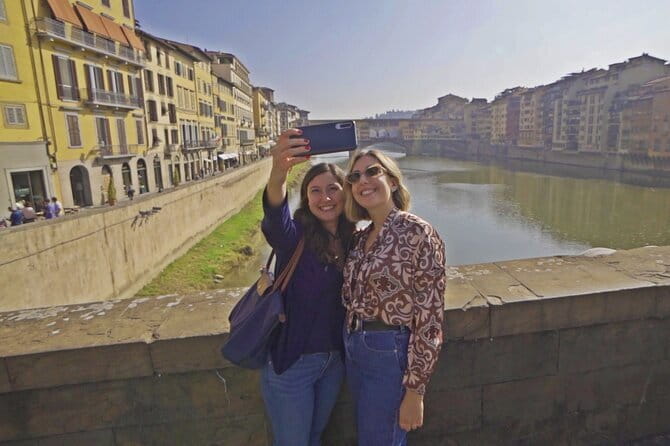
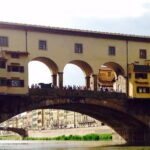
Next you cross Ponte Vecchio, described as Florence’s oldest bridge and famous for boutiques and views over the Arno River. The audio points you to the bridge’s medieval stone architecture and the historic goldsmith shops along the sides.
Then it adds a fascinating twist: the route references the Vasari Corridor, an elevated passageway that connects Palazzo Vecchio to Palazzo Pitti, letting the Medici family move discreetly around the city. Even if you can’t access the corridor itself on your schedule, the idea explains a lot about how the Medici shaped Florence—not only through buildings, but through control of movement and privacy.
This segment is also great for photos. You’re moving slowly enough to notice details, but you still have a clear sense of direction.
Villa Bardini and Forte Belvedere: viewpoints without the big-name crowd
The route continues to La Casa di Galileo Galilei, described as Galileo’s birthplace museum. The audio frames it as an intimate look at his life and science, with mentions of interactive exhibits and items like a telescope and celestial maps.
After that, you get to Villa Bardini, described as a less obvious cultural stop with gardens and terrace views over Florence. The audio highlights art exhibitions and the blend of classic-and-contemporary shows, plus the hillside setting.
Then the walk ends with Forte di Belvedere (also referred to as San Giorgio Firenze in the experience info). This fortress viewpoint is presented as a late 16th-century stronghold and royal residence under Medici rule, with a defensive layout and open areas for scanning the city. The audio notes it often hosts art exhibitions and events.
Stair-and-view fatigue is real by this point. If your legs are tired, use the audio here as your guide to what to look for in the skyline rather than forcing another “big climb” just because the app suggests a lot.
Price and value: $7.14 for self-guided Florence time
At $7.14 per person, this is priced for value, especially if you consider what you’re buying: a curated walk connecting major Florence landmarks with historian-recorded audio, plus illustrations and a built-in offline GPS route map.
The real “cost” isn’t the ticket price. It’s the setup: you’ll bring your own smartphone and headphones, and you’ll want the phone charged. You’ll also be responsible for any entrances you choose to make on your own, since entrance fees aren’t included.
If you like flexible sightseeing, this kind of audio walk can be one of the cheapest ways to get narrative context across a whole swath of Florence. If you want a human guide who answers questions and handles tickets, this won’t replace that.
Should you book this Florence audio walk?
Book it if you want:
- A 2.5-hour self-guided loop that covers major landmarks without waiting for a group
- Story-driven context while you walk, especially for Medici, Dante, and Galileo topics
- Help spotting stops via illustrations and staying oriented via an offline GPS map
Skip it (or pair it with a different plan) if:
- You hate app setup or you rely on phone directions for everything
- Your dream day is a deep, ticketed museum marathon (Uffizi, for example) rather than a walk-and-learn overview
- You can’t bring headphones or don’t want to manage downloads and offline navigation
If you go into it with a little tech patience and an honest sense of time, this is a smart way to get real Florence details without paying for a guide.
FAQ
What is included in the Florence walking tour?
You get a mobile ticket, an audio guide app for iPhone and Android, 30 audio recordings narrated by a professional historian, illustrations to identify landmarks, and offline map navigation. You also have access to the tour for 1 year in your preferred language.
Is this tour self-guided or do I meet a person?
It’s self-guided. There’s no human guide at the meeting point, and you follow the route using the mobile app map.
Do I need headphones?
Yes. Smartphones and headphones are not included, so you’ll need to bring your own headphones.
Where does the tour start and where does it end?
It starts at the Basilica of Santa Maria Novella on Piazza di Santa Maria Novella, 18, 50123 Firenze FI, Italy. The activity ends back at the meeting point.
How long does the tour take?
It’s listed at about 2 hours 30 minutes.
Are entrance tickets included?
No. Entrance fees/tickets are not included. Some stops are marked as admission ticket free in the experience info, but the tour doesn’t include site entry costs overall.
What language is the audio available in?
The audio guide is offered in English.
What devices does the audio guide app support?
The app works on iPhone and Android.
Can I cancel for free?
Yes. You can cancel up to 24 hours in advance for a full refund.
How many travelers are allowed for this experience?
The experience has a maximum of 20 travelers.
You Might Also Enjoy


More Walking Tours in Florence
More Tours in Florence
- The Best tour in Florence: Renaissance & Medici Tales – guided by a STORYTELLER
★ 5.0 · 12,316 reviews




More Tour Reviews in Florence
- Tuscany Day Trip from Florence: Siena, San Gimignano, Pisa and Lunch at a Winery
★ 5.0 · 21,634 reviews - The Best tour in Florence: Renaissance & Medici Tales – guided by a STORYTELLER
★ 5.0 · 12,316 reviews