REVIEW · FLORENCE
Florence: Michelangelo’s David Entrance Ticket and Audio App
Book on GetYourGuide →Operated by Tours And Tours · Bookable on GetYourGuide
One statue can change your day. With timed Accademia entry and an audio app, you get straight to Michelangelo’s David and then keep moving through Renaissance, medieval, and sculptor’s tools. I like that the setup is built to save you from long ticket lines, and I love that you can go at your own speed with the audio app. One thing to weigh: it’s timed entry, so if you’re late you may not get in.
In the galleries, you’re not just looking at David. You’ll also see plaster models in the Gipsoteca and original instruments tied to the Medici collection, before ending with medieval altarpieces on the top floor. My caution is practical: the museum can run crowded, and waiting can still happen even with a skip-the-line plan.
In This Review
- Key Highlights to Know Before You Go
- Timed Entry at the Accademia: What the Skip-the-Line Really Means
- Pickup at Carrefour Express and the White-Flag Meeting Point
- Pop Guide Audio App: How to Make It Work Without Headaches
- David in the Main Hall: First Look, What to Notice, Why It Hits
- Gipsoteca and Medici Instruments: The Stuff Most People Rush
- Painting Galleries and Top-Floor Medieval Altarpieces
- How Much Time You’ll Really Need (3 Hours With a Timed Slot)
- Price and Value: Is $38 Worth It?
- Who This Experience Fits Best (and Who Might Want More)
- Quick Must-Know Notes for Families and Timing
- Should You Book This Accademia David Ticket With Audio?
- FAQ
- How do I get my ticket?
- What’s included with the ticket?
- Is the entry time fixed?
- What should I bring?
- Are bags or luggage allowed?
- Is it wheelchair accessible?
Key Highlights to Know Before You Go
- Separate entrance for timed entry, designed to reduce queue time
- David up close in the main hall, plus unfinished works that show the sculptor’s process
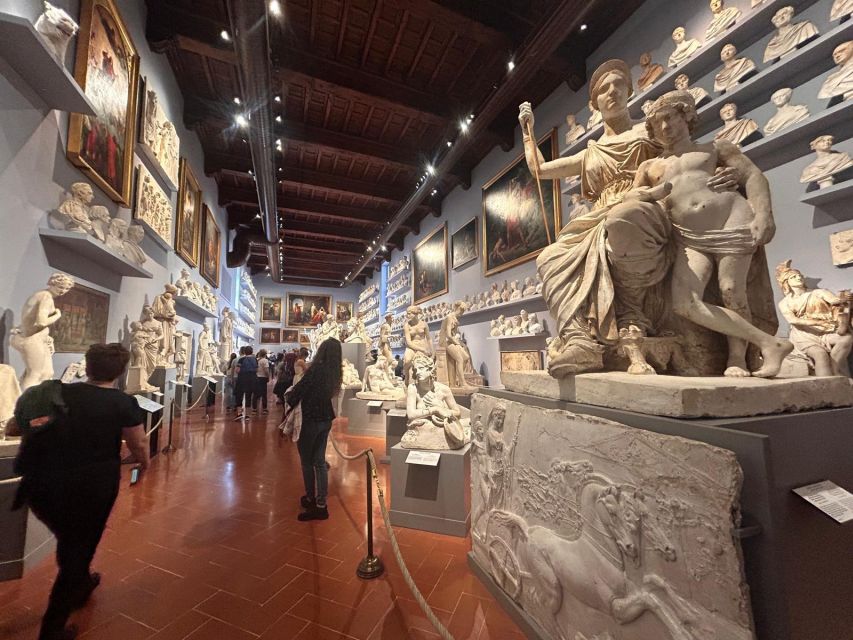
- Gipsoteca plaster models made by 19th-century Florentine sculptors
- Medici collection instruments, including 3 by Stradivarius
- Pop Guide audio app for self-paced museum wandering
- Top-floor medieval altarpieces to close out the visit
Timed Entry at the Accademia: What the Skip-the-Line Really Means
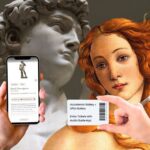
This ticket is about one thing: getting you into the Galleria dell’Accademia on your schedule. You’re not waiting through the usual long ticket crush at the main desk, because you exchange your voucher for a physical ticket with the activity provider and then enter through a special entrance.
That said, timed entry isn’t magic. The museum may delay entry if there are large numbers of visitors inside, and you can still hit a waiting window of about 15–20 minutes (and sometimes longer due to organizational issues at the gallery). Think of this as a fast-track to the right line, not a guarantee that you’ll walk in instantly.
If you want a low-stress visit, this approach is a strong fit. You arrive, you’re processed, and you get to start seeing art while the rest of the line is still stuck outside.
You can also read our reviews of more tours and experiences in Florence

Pickup at Carrefour Express and the White-Flag Meeting Point
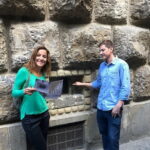
Your meeting point is right by local foot traffic, which is exactly what you want in Florence. Meet the activity provider’s representative in front of the Carrefour Express Supermarket, and look for someone holding a white flag that says ENJOY ROME.
When you meet up, you exchange your voucher for a physical entry ticket. After that, you follow the group flow into the timed entrance queue, using your scheduled access time as the anchor.
Practical tip: build a little buffer. Even if everything is well organized, crowds in the museum area can slow down walking and line movement. Also, don’t plan to arrive two minutes before the slot. Late comers aren’t guaranteed entry, and the ticket has a strict timed window.
Pop Guide Audio App: How to Make It Work Without Headaches
The experience includes an audio guide app, using Pop Guide. The key part is that you’ll download it ahead of time, and at the meeting point you’ll receive login credentials. You’ll also need your own headset, so bring something you trust, and make sure your smartphone is charged.
Once you’re in, you scan to get audio and follow along freely. The appeal is obvious: you get useful context without being locked to a group pace. That works well when you want to linger over David’s details or move quickly through the less-central galleries.
Two caution notes based on real-world behavior in the museum:
- Some people found the audio guide helpful but not perfectly aligned with every artwork, so you might occasionally hunt a bit to find the exact spot the audio refers to.
- A small number of visitors reported app issues. If you’re relying on the audio heavily, it’s worth testing that the app loads and the sound works while you’re still outside or during early entry moments.
David in the Main Hall: First Look, What to Notice, Why It Hits
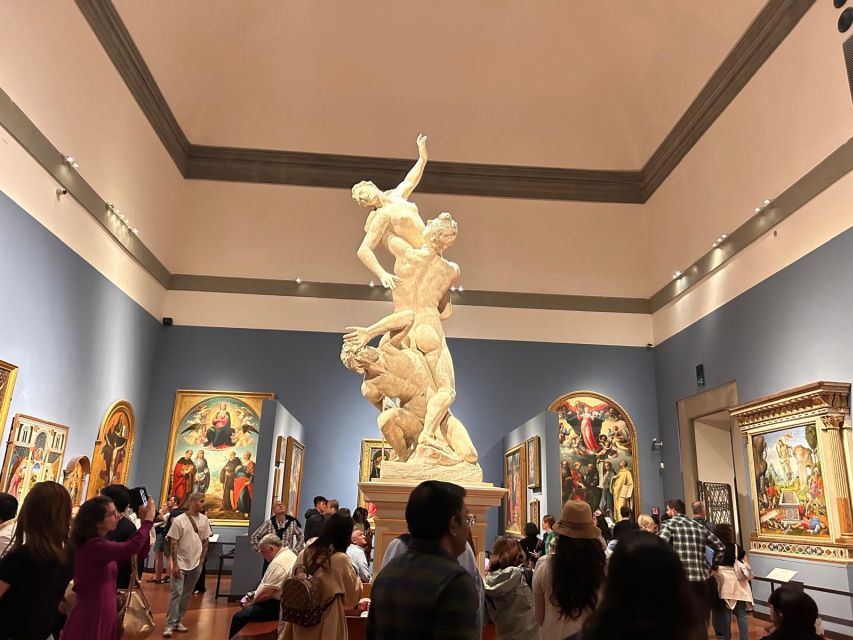
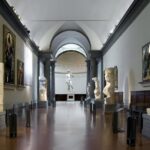
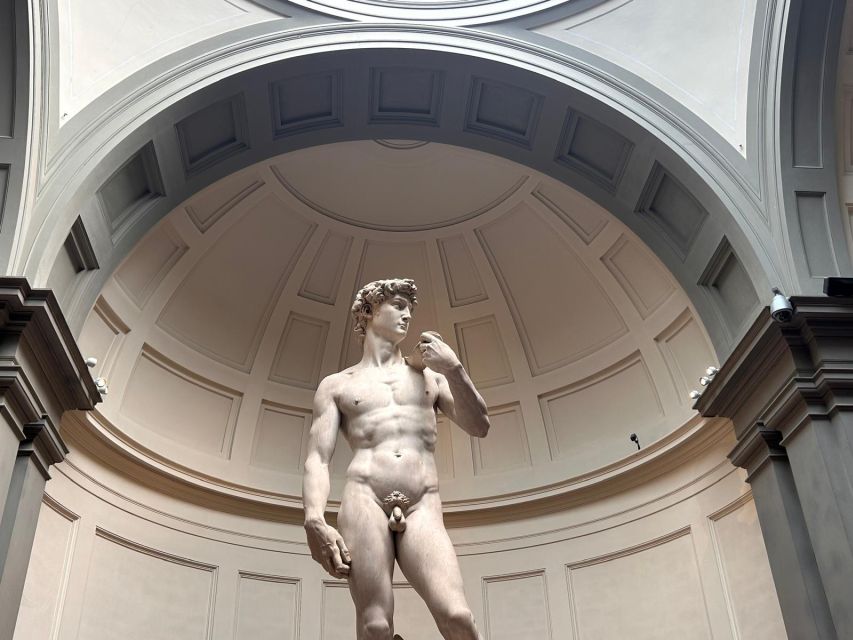
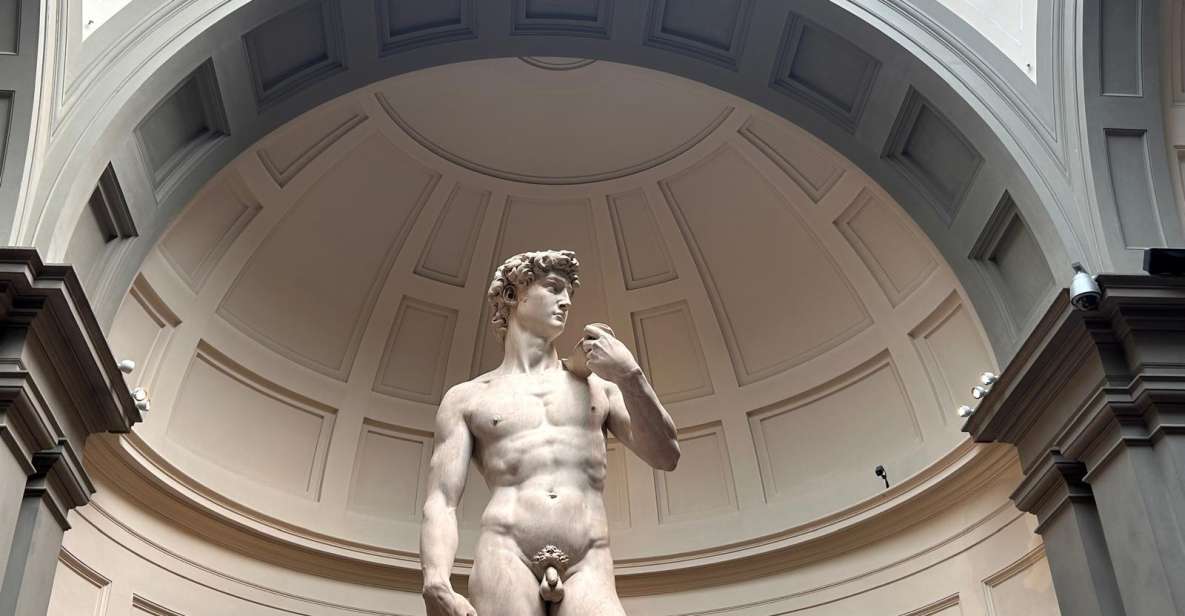
Michelangelo’s David is the headline for a reason. In the main hall, you’ll stand in front of a statue that feels unreal in scale and craftsmanship. If you’ve only ever seen David in photos, the real thing changes your sense of proportion fast.
The visit also includes Michelangelo’s presence beyond the final masterpiece. You’ll be able to see some of his incomplete works, which is one of the most interesting ways to understand what you’re looking at. In photos, you get the finished story. In person, you get hints of the carving path—how the form takes shape and how the work evolves.
Expect crowds. This is one of the most photographed sculptures in Italy, so the lines inside are part of the show. Still, the timed entry plan helps you start the visit earlier relative to people who are waiting in the standard queues, so you’re less likely to get squeezed by a total bottleneck right at the beginning.
If you’re short on time, prioritize two things:
- Give yourself a real pause in front of David.
- Look for the carving cues and the way the statue handles movement in the body and the head.
Gipsoteca and Medici Instruments: The Stuff Most People Rush
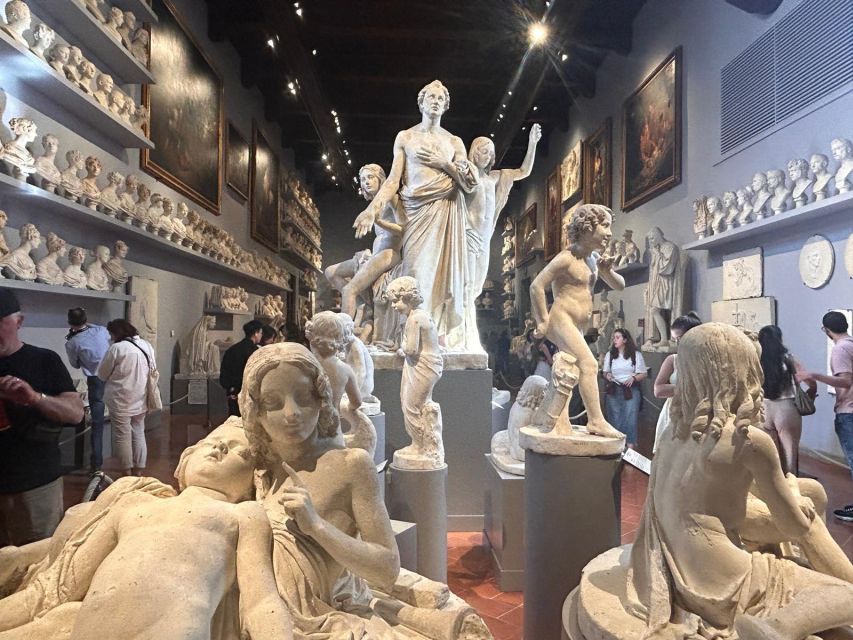
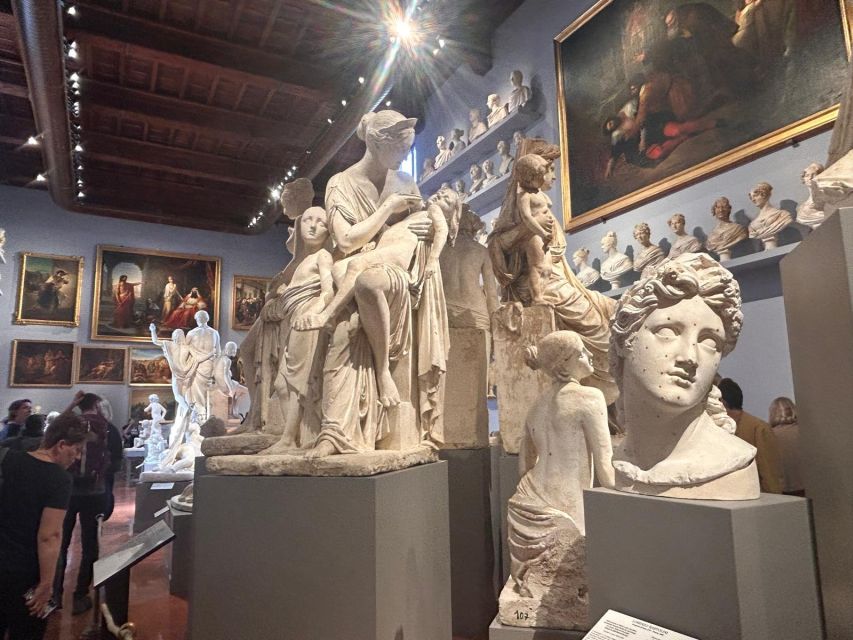
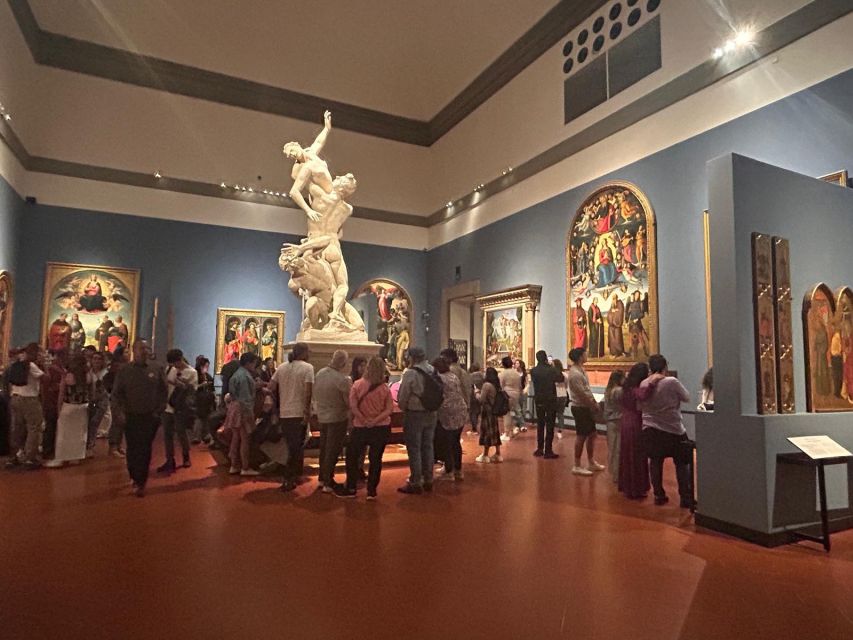
David is the obvious goal, but the experience becomes more rewarding when you spend time in the supporting rooms. The route takes you through the Gipsoteca, where you can see original plaster models made by 19th-century Florentine sculptors. These are the kind of objects that make you appreciate the “in-between” work that leads to final bronze or stone.
Why this matters: when you understand how artists model and test ideas first, David stops being just an icon. It becomes a process you can partially trace with your eyes. Even if you only skim the room, the plaster models add a layer of respect for the craft.
Then you head toward original musical instruments from the Medici collection, including three by Stradivarius. That surprises a lot of people at first glance. You came for sculpture, but the museum also shows how elite collections included music and instruments alongside art.
If you’re the type who likes variety, you’ll enjoy this shift of pace. It breaks the museum experience into sections rather than having it feel like one long statue marathon.
You can also read our reviews of more tours and experiences in Florence



Painting Galleries and Top-Floor Medieval Altarpieces
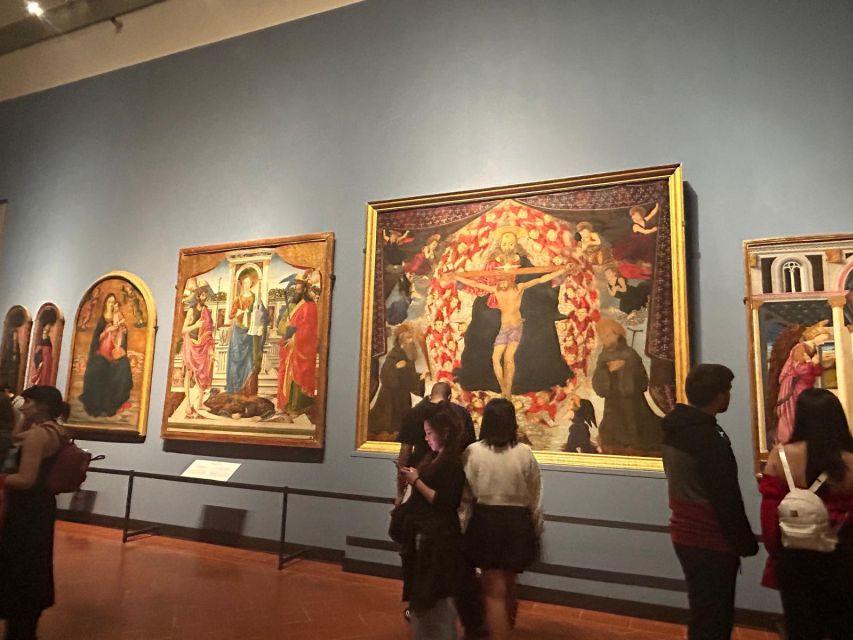
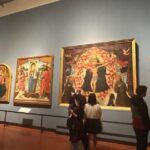
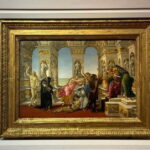
After the sculptural focus, you’ll move through the museum’s painting galleries, where you’ll see works by medieval and Renaissance artists. This section is useful because it broadens the story. Michelangelo’s world didn’t live in a vacuum, and the museum layout helps you connect the dots between sculpture and painting.
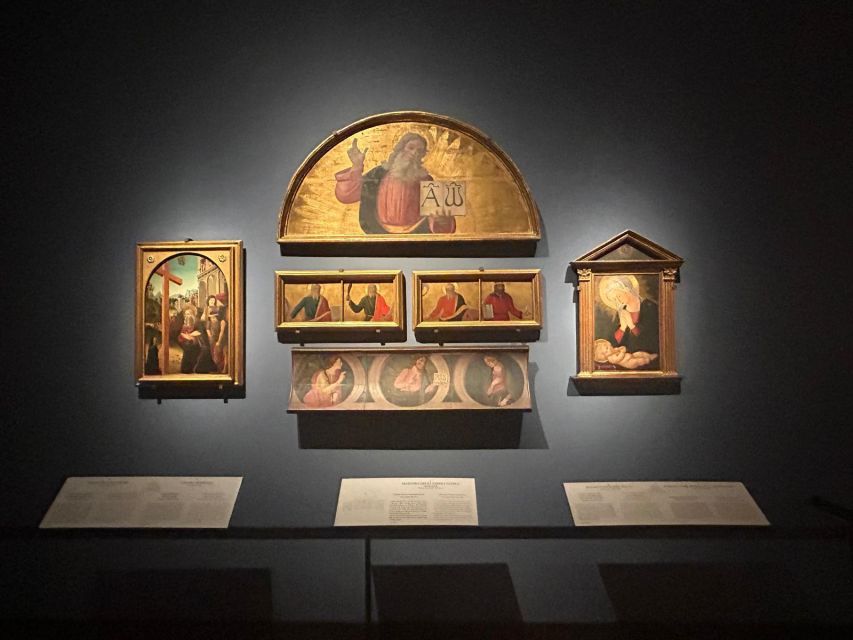
Finally, the route brings you to the top floor for medieval altarpieces. Ending with these is a clever contrast. Instead of leaving with the Renaissance high note only, you finish with older sacred art that feels quieter, more formal, and more icon-like.
Practical approach: don’t try to “collect everything” in 3 hours. Pick your targets, give David the attention it needs, then let the painting section be more about seeing the range—medieval to Renaissance—rather than reading every label.
How Much Time You’ll Really Need (3 Hours With a Timed Slot)
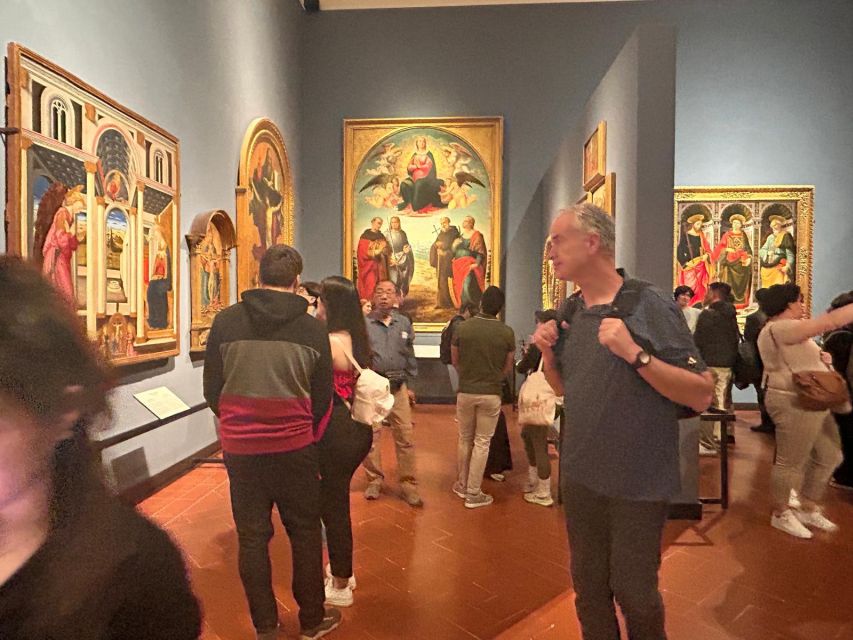
The duration is set at about 3 hours, and that’s honestly a good length for the Accademia. It’s long enough for a meaningful look at David, a walk through the Gipsoteca, and a decent pass through paintings and altarpieces.
But timing is personal. If you stop a lot for photos and you also like reading labels, you might feel rushed by the end. If you’re more of a “look, compare, move” visitor, you’ll finish with a sense of what the museum does well without feeling like you sprinted the whole time.
Aim for a simple rhythm:
- Start strong in the main hall with David.
- Spend enough time in Gipsoteca to feel the difference between plaster models and finished work.
- Treat the instrument displays as a quick reset, then keep going.
- Save your calm attention for the top-floor medieval altarpieces, since those can be easy to miss if you’re trying to cover everything.
Price and Value: Is $38 Worth It?
At $38 per person, the value depends on what you hate most: lines, uncertainty, or missing key highlights. Here, you’re paying for timed entry plus the audio app, not a live guided lecture.
That’s why this can be a smart buy. One of the best value arguments in the reviews is that people often chose this option because the museum’s own tickets for their date were sold out, or because they wanted an easier way in on a busy day. In a couple of cases, the pricing was only a few euros higher than a basic museum ticket, with the audio included.
So who gets the best deal?
- You’ll enjoy it most if you want to see David and the main galleries without waiting in a long, slow queue.
- You’ll likely feel the value if you plan to use the audio app, since it’s included and encourages a smoother self-guided route.
Where value drops a bit:
- If the audio app doesn’t work well for you, you still have the ticket, but you lose the “extra layer” you paid for.
- If you’re a slow museum walker who needs every label, the timed nature can feel like pressure. The experience is self-paced, but the entry slot still sets the clock.
Who This Experience Fits Best (and Who Might Want More)
This ticket is ideal if you want:
- Timed, low-friction entry to the Accademia
- A self-guided visit with English audio support
- A clear path through David, sculptural displays, and the medieval altarpieces
It’s also a reasonable pick for wheelchair users, since the experience is described as wheelchair accessible.
You might want to consider a live guide or a different style of tour if you know you want deep context on every room and every artwork. This option gives you audio, but it does not include a live guide. For some people, that’s perfect freedom. For others, it’s the difference between a good visit and a truly meaning-packed one.
Quick Must-Know Notes for Families and Timing
- Entry is timed, and late arrival isn’t guaranteed for entrance or refund.
- There can be waiting inside the museum on busy days, and waiting might extend if the gallery needs to manage crowds.
- No pets, and no luggage or large bags/bags are allowed, so pack light.
- For youth tickets: ages 6–17 need a valid photo ID showing date of birth for the discounted ticket; otherwise the child must buy the full adult ticket.
- Bring headphones and a charged smartphone, since you’ll rely on the Pop Guide app.
Should You Book This Accademia David Ticket With Audio?
Book it if your priority is to see Michelangelo’s David with the best shot at a smooth entry and a self-guided plan that doesn’t depend on finding space in a timed museum line. The ticket is priced fairly for what you get: access to the highlights plus audio context, and a real reduction in front-of-museum waiting.
Skip or reconsider if you know you’ll arrive late, hate any app-based experience, or you’re determined to have a live educator in the room. Also, if you’re the kind of visitor who wants every minute explained out loud, an audio-only setup may feel too thin.
If you’re flexible and you can show up on time with headphones ready, this is a practical way to experience the Accademia’s biggest moments without turning your day into a queue test.
FAQ
How do I get my ticket?
Meet a representative in front of the Carrefour Express Supermarket, look for a white flag with ENJOY ROME, and exchange your voucher for a physical entry ticket.
What’s included with the ticket?
You get a timed Accademia Gallery entrance ticket and an audio guide app (Pop Guide). A live guide is not included.
Is the entry time fixed?
Yes. It’s a timed ticket with a scheduled entrance time, and late comers aren’t guaranteed entry or a refund.
What should I bring?
Bring headphones, a charged smartphone, and for children ages 6–17, a valid photo ID that shows date of birth.
Are bags or luggage allowed?
No. Pets are not allowed, and luggage or large bags/bags are not allowed.
Is it wheelchair accessible?
Yes, the experience is described as wheelchair accessible.
If you want, tell me your visit date and approximate arrival time, and I’ll help you plan a smart order for David, Gipsoteca, instruments, and the medieval altarpieces within the 3-hour window.
You Might Also Enjoy



More Self-Guided Tours in Florence

More Tickets in Florence


More Tour Reviews in Florence
- Tuscany Day Trip from Florence: Siena, San Gimignano, Pisa and Lunch at a Winery
★ 5.0 · 21,634 reviews - The Best tour in Florence: Renaissance & Medici Tales – guided by a STORYTELLER
★ 5.0 · 12,316 reviews