REVIEW · FLORENCE
Florence: Uffizi Gallery Small-Group Guided Tour with Ticket
Book on GetYourGuide →Operated by THINGS TO DO IN · Bookable on GetYourGuide
Art at the Uffizi never feels far away. In 1.5 hours, this small-group guided tour threads major Renaissance and Baroque works into a story you can follow, with priority entrance that helps when lines snake around the museum. I like that the tour keeps it interactive, so you can ask questions and slow down if something catches your eye.
Two things I especially like: the headsets (so you can hear clearly even inside crowds) and the guide focus on standout masterpieces such as The Birth of Venus and Leonardo’s Annunciation. Guides I’ve seen mentioned by name include Pam, Irina, Anna, Vicky, Pam, and Bruce, and many center Florence’s art around the Medici world. The main drawback: in a short time, you’ll see the highlights—not every room and every painting—so plan to explore on your own afterward if you’re the type who wants everything.
In This Review
- Key things that make this Uffizi tour worth your time
- Meeting at Nicola Pisano: a smooth start before the museum maze
- Priority entrance in the real world: what you gain in 90 minutes
- How the 1.5-hour guided route works once you’re inside
- Stop 1: Orientation through the Uffizi space
- Botticelli focus: Birth of Venus and Primavera
- Leonardo’s Annunciation: why small details suddenly matter
- Michelangelo’s presence: the emotional punch of Tondo Doni
- Sculptures and the gallery’s “sense of theater”
- The guide factor: how you should use the Q&A time
- Headsets and pacing: the difference between a tour and a slog
- What you miss (and how to fix it after the tour)
- Price and value: is $76 worth it?
- Best matches: who should book this Uffizi tour
- Quick practical notes to keep your visit smooth
- Should you book this Uffizi small-group guided tour?
- FAQ
- Where do I meet the guide?
- What time should I arrive?
- How long is the tour?
- Is a ticket included?
- Does this tour help you avoid the line?
- What’s included besides the guide?
- What languages are available?
- Is it wheelchair accessible?
- What can’t I bring or do?
- Can I cancel and get a refund?
Key things that make this Uffizi tour worth your time
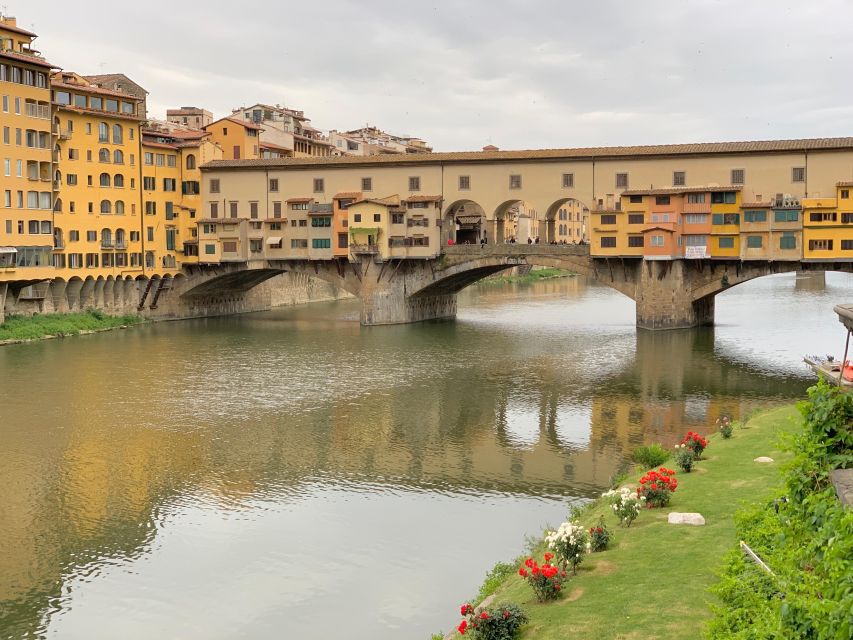
- Priority entrance + skip-the-line access to beat the slow shuffle at the door
- Headsets included, which makes a huge difference in a loud, crowded museum
- A tight highlight route built around major works like Birth of Venus and Primavera
- A live guide with room-by-room context, not just a list of titles
- Time to ask questions, so the art lands with meaning, not just names
- Multiple languages offered, including English, Spanish, French, German, Italian, Russian, and Portuguese
Meeting at Nicola Pisano: a smooth start before the museum maze
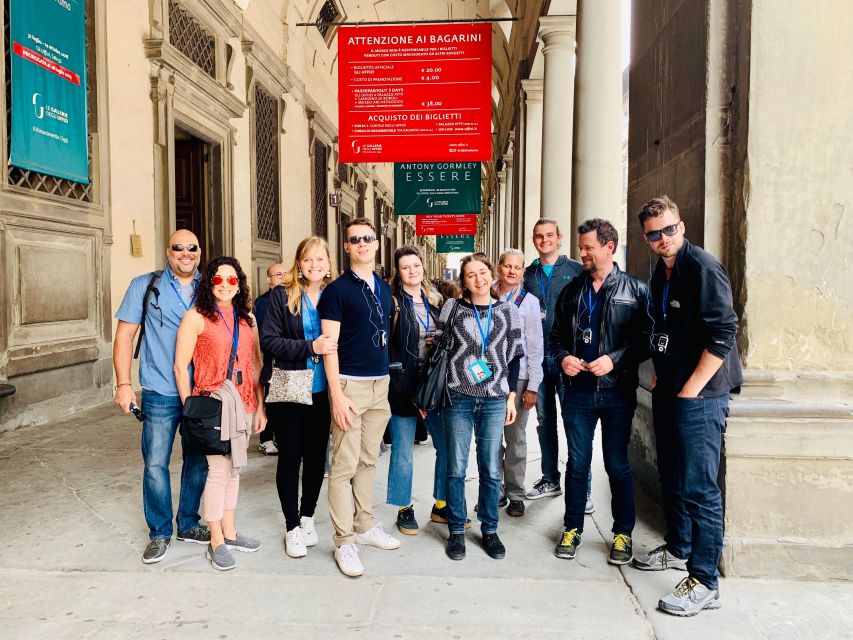
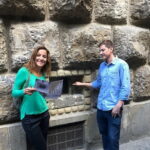
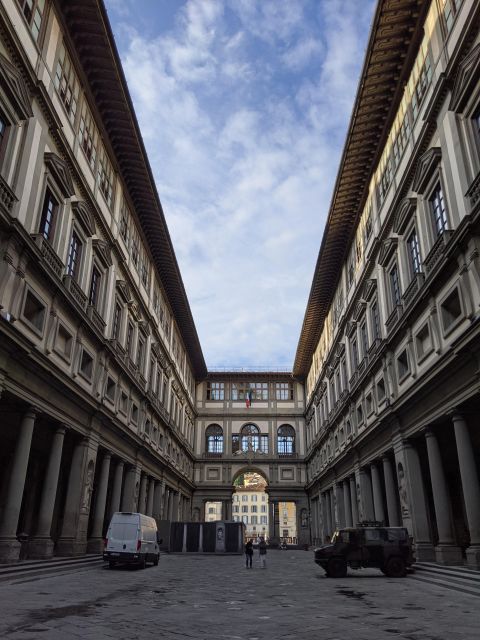
Your tour starts outside the Uffizi area, in front of the Statue of Nicola Pisano at Piazzale Degli Uffizi 6 (near the Uffizi info point). This matters more than you might think: the museum district is a bit of a puzzle, and getting anchored at the right spot keeps your first minutes stress-free.
Plan to be there 15 minutes early, and come with ID if you’re traveling with children (a passport or ID card). Also expect the usual Uffizi security rhythm: everyone goes through a metal detector, so don’t show up right as the group is moving.
You can also read our reviews of more tours and experiences in Florence
Priority entrance in the real world: what you gain in 90 minutes
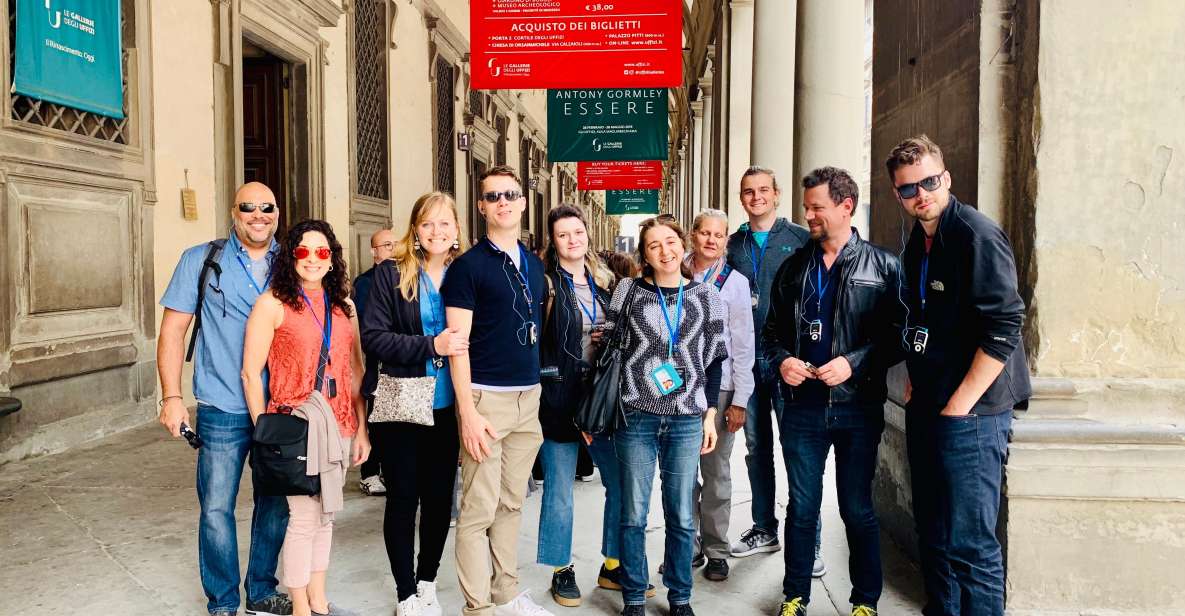
The big practical win here is that you get priority entrance and effectively skip the ticket line. The Uffizi can be packed, and when the queue is wrapped and slow, your “museum time” can shrink fast—especially on a tight schedule.
A guided group also gives you a plan. Instead of guessing which rooms to hit first, you follow a route designed to hit the big targets without getting lost in the building’s scale. Reviews mention that early tours can reduce crowd pressure, and the guide’s pacing helps you keep momentum without feeling rushed.
How the 1.5-hour guided route works once you’re inside
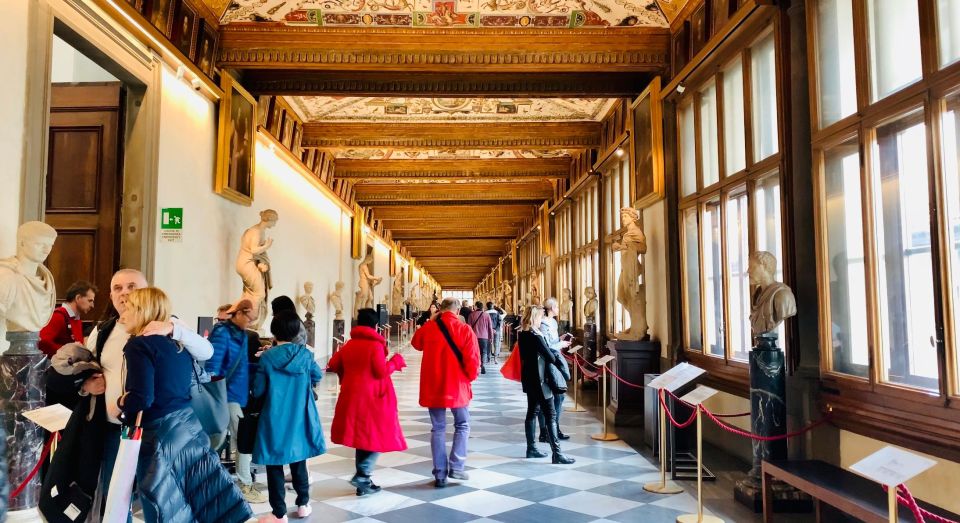
The tour is designed for about 1 hour 30 minutes once you start the museum portion. You’ll move through the collection with a guide who points out what to look at and why it mattered, covering both paintings and sculptures and often touching on the building itself—ornate ceilings, grand corridors, and the feeling of moving through a palace of art.
This format is ideal if you want to understand what you’re seeing fast. It’s less ideal if your goal is to stare at one painting for a long time and trace every tiny detail across the full gallery.
Stop 1: Orientation through the Uffizi space
Even before the famous rooms feel like a target list, the early part of the visit helps you “read” the museum. Guides often start by framing how the Uffizi became what it is and how patrons shaped what ended up on these walls. Some guides, like Bruce (mentioned in feedback), also connect the Medici family to the collection and the era.
That context makes a difference once you’re staring at Renaissance masterpieces. Without it, it’s easy to enjoy the art and still miss the point—who commissioned it, what ideas it carried, and how style changed over time.
Botticelli focus: Birth of Venus and Primavera
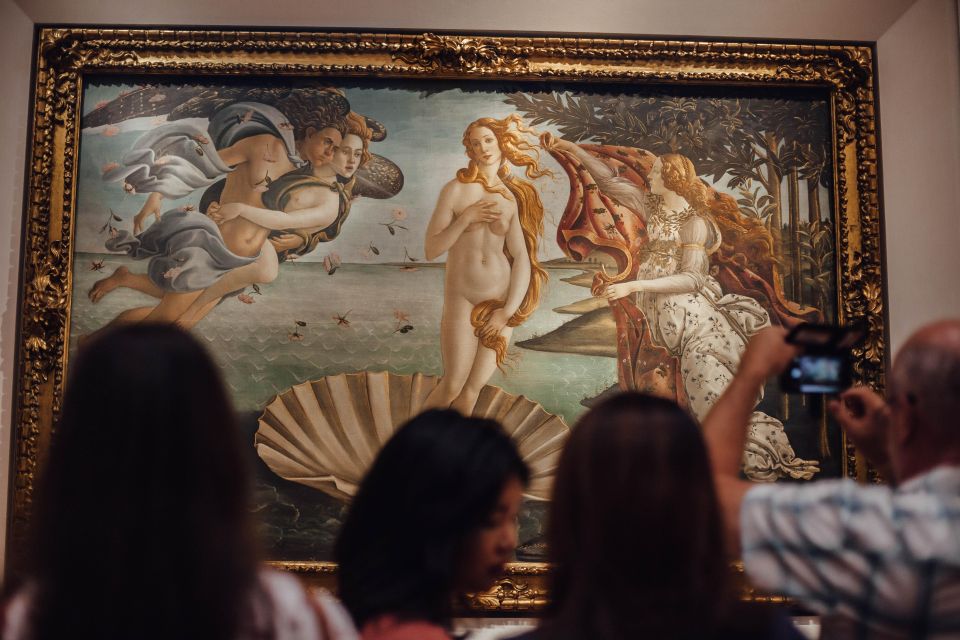
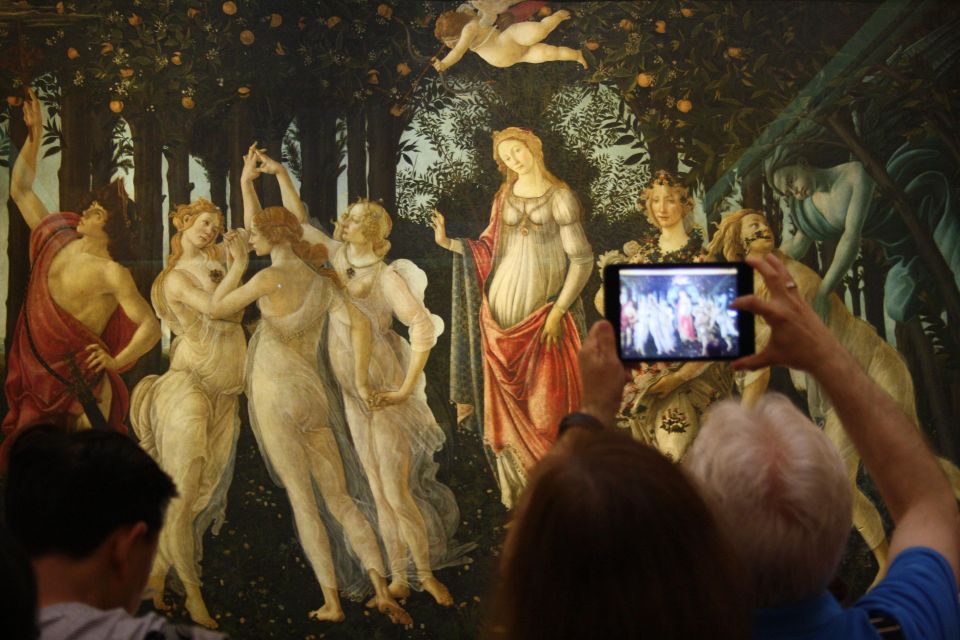
Two of the strongest reasons people book this tour are Botticelli’s most famous works. You’ll spend time on The Birth of Venus, and you’ll also encounter Primavera.
Here’s what to watch for when the guide points things out. In both works, the mood isn’t random. You’ll hear explanations tied to symbolism—myth, power, beauty standards, and how Renaissance viewers thought about antiquity. If you love art history, the guide’s job is to connect the mythic imagery to the world that made it fashionable.
A good hint: don’t treat these as “pretty paintings.” Treat them as arguments about culture. When you understand what the imagery is doing, the famous faces stop being just recognizable and start being meaningful.
You can also read our reviews of more guided tours in Florence
- The Best tour in Florence: Renaissance & Medici Tales – guided by a STORYTELLER
★ 5.0 · 12,316 reviews

Leonardo’s Annunciation: why small details suddenly matter
Leonardo da Vinci shows up on this route with the Annunciation. This is where the tour style really pays off: instead of standing in front of a giant masterpiece and trying to interpret it on your own, you get help spotting what makes Leonardo Leonardo.
Expect the guide to talk about composition and how the work communicates the moment—how characters are arranged, how gestures and attention shift, and how the painting’s structure guides your eyes. The best part is that once you learn what to look for, you’ll start seeing the same kinds of choices in other Renaissance works you pass next.
Michelangelo’s presence: the emotional punch of Tondo Doni
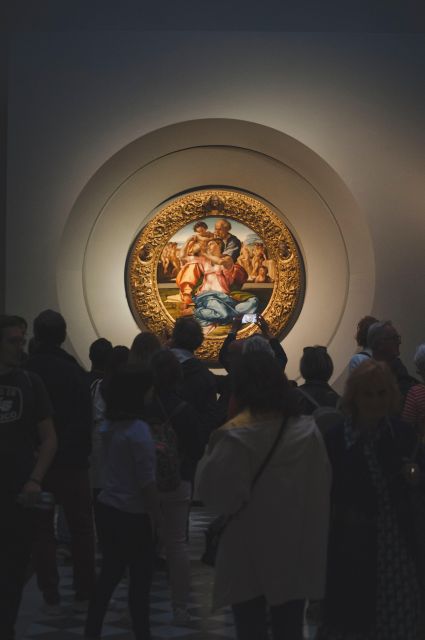
Michelangelo’s work is highlighted with the Tondo Doni. This piece is a reminder that the Renaissance wasn’t only about elegance and myth—it was also about force, form, and emotional intensity.
On a short tour, you don’t have time to compare every work side-by-side. But you do get the guide’s framework: how the style shifts, how figures carry weight, and why this era’s art can feel so alive even when it’s centuries old. Feedback also mentions that some guides explain the progression of Italian painting styles, helping you feel where Michelangelo fits in the bigger timeline.
Sculptures and the gallery’s “sense of theater”
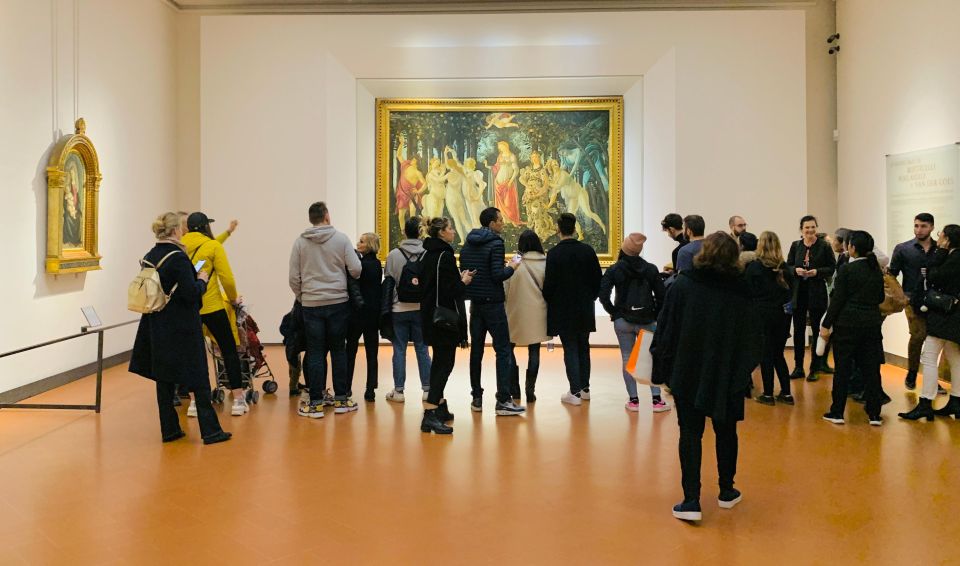
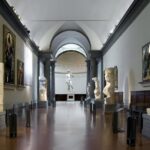
You’re not only dealing with paintings. The route includes sculptures and other highlights, plus the museum’s dramatic interior design. Those ornate ceilings and long corridors aren’t just background. They help you understand why the Uffizi experience can feel like moving through curated space rather than a storage room of art.
A practical note: plan to wear shoes you can stand in for a while. Even when the pace is smart, Uffizi floors and stairways take up more energy than people expect.
The guide factor: how you should use the Q&A time
This tour works best when you treat the guide as a translator, not just a lecturer. The tour is built for questions and discussion, and headsets let you do that without awkward mic-forcing.
Some guides in feedback are praised for going beyond titles—connecting Florence, the Medici, and the artists’ choices. Others focus on what to look for first, so you’re not overwhelmed. If your group includes different art levels, you’ll usually be able to find a middle path: the highlights stay front and center, while the explanations can be as simple or as detailed as you want.
Headsets and pacing: the difference between a tour and a slog
Included headsets are a small line item that can completely change your experience. Inside a crowded museum, voices get swallowed fast. With headsets, you can focus on the art instead of straining to hear a guide over footsteps and other groups.
Pacing is the other half of the equation. Feedback includes experiences where the line was long, yet the guide didn’t rush and still made sure the core works were covered. That’s the ideal balance: you want momentum, but you don’t want to feel like you’re being marched past your favorite pieces.
What you miss (and how to fix it after the tour)
Because this is a short, highlight-driven visit, you won’t see everything. That’s not a problem—it’s the trade. If you only have one trip to Florence or you’re short on time, you’ll feel grateful for the focus. If you’re the type who wants to “live” in museums, you’ll likely want more.
So here’s my advice: do this guided route first, then come back for your personal favorites. The tour helps you learn what matters and how to interpret it, which makes solo exploring afterward far more rewarding.
Price and value: is $76 worth it?
At $76 per person for 1.5 hours, the value depends on what you hate most: lines, confusion, or standing around without context.
You’re paying for three practical things:
- Priority entrance / skip the ticket line (time is money here)
- A live guide + headsets, so you actually understand what you’re looking at
- A highlight route that prevents decision fatigue in a huge museum
If you enjoy self-guided museum strolling, you can cut costs by skipping a guide. But if you want a structured hit list with meaning—especially for works like Birth of Venus and Leonardo’s Annunciation—this price often feels fair.
Best matches: who should book this Uffizi tour
This is a smart choice for:
- First-time Uffizi visitors who want the major masterpieces without wasting time
- Art-history fans who still appreciate a clear timeline and context
- Families or mixed-interest groups who benefit from a guide selecting what to prioritize
- Anyone who likes to ask questions and hear explanations in multiple languages
If you already know Renaissance art deeply and you’re chasing every last corner, you might feel impatient with the short duration. But even then, the skip-the-line access and headset setup can still be worth it.
Quick practical notes to keep your visit smooth
The tour doesn’t include hotel pickup or drop-off, and it doesn’t include food or drinks. You’ll also want to respect museum rules: no flash photography, no oversize luggage, and no weapons or sharp objects. Inside the museum area, food and drinks are not allowed in the vehicle (so keep it simple and follow on-site rules).
Also remember: the meeting point is outside, so your timing depends on whether you’re already in that neighborhood. Build a little buffer, especially on busy days.
Should you book this Uffizi small-group guided tour?
If you have limited time in Florence and you want your Uffizi visit to feel understandable and efficient, I’d book it. The combination of priority entrance, headsets, and a route built around the biggest names is exactly what turns the Uffizi from a chaotic wall of masterpieces into a story you can follow.
Skip this only if you know you want to linger in front of art for long stretches and you’re comfortable navigating the museum without guided help. For most people—especially first-timers—the short guided hit plus the chance to explore afterward is the best way to get maximum satisfaction per hour.
FAQ
Where do I meet the guide?
Meet in front of the Statue of Nicola Pisano, Piazzale Degli Uffizi, 6, Florence (close to the Uffizi info point).
What time should I arrive?
Please arrive 15 minutes before the tour starts, and make sure you’re ready for security checks.
How long is the tour?
The guided portion is 1.5 hours.
Is a ticket included?
Yes. The price includes entry tickets to the Uffizi Gallery.
Does this tour help you avoid the line?
Yes. It includes priority entrance and you can skip the ticket line.
What’s included besides the guide?
You get a live guided tour, Uffizi entry tickets, headsets to hear clearly, and assistance at the meeting point.
What languages are available?
The tour is offered in Portuguese, Spanish, English, French, Italian, German, Russian.
Is it wheelchair accessible?
Yes, the tour is listed as wheelchair accessible.
What can’t I bring or do?
Flash photography is not allowed, oversize luggage is not allowed, and weapons or sharp objects are not allowed. Food and drinks are not allowed in the vehicle.
Can I cancel and get a refund?
Yes. You can cancel up to 24 hours in advance for a full refund.
You Might Also Enjoy



More Tickets in Florence


More Tours in Florence
- The Best tour in Florence: Renaissance & Medici Tales – guided by a STORYTELLER
★ 5.0 · 12,316 reviews



More Tour Reviews in Florence
- Tuscany Day Trip from Florence: Siena, San Gimignano, Pisa and Lunch at a Winery
★ 5.0 · 21,634 reviews - The Best tour in Florence: Renaissance & Medici Tales – guided by a STORYTELLER
★ 5.0 · 12,316 reviews