REVIEW · FLORENCE
Florence Guided Tour with Accademia, Uffizi and Optional Lunch
Book on Viator →Operated by CAF Tour and Travel · Bookable on Viator
Florence can feel like a blur of art—this helps it click. What I like most is pairing Accademia’s David with Uffizi’s painting highlights in one tight plan, plus a walking route that shows how the city’s power centers shaped daily life. One thing to consider: even with a listed 6 hours 15 minutes, the day can run longer once you factor in museum time and the pace of an on-foot route.
The Accademia stop sets your mental map fast, because Michelangelo’s David isn’t just famous—it’s intense in a way photos can’t match. After that, you’ll get a practical mix: Duomo-area landmarks, the Medici setting around Piazza della Signoria, and the photo-and-stroll finish at Ponte Vecchio.
My only caution is logistics. This is a timed, guided format with a mandatory arrival window, so if you’re late—or your train schedule is tight—you’ll feel it.
In This Review
- Key highlights worth planning for
- A timed Florence route that actually makes sense
- Accademia Gallery: David first, so Florence has a face
- Piazza del Duomo and the cathedral complex in human scale
- Orsanmichele and the Porcellino: Florence feels lived-in here
- Piazza della Signoria: power, sculpture, and Medici territory
- Ponte Vecchio finish: the famous bridge, minus the chaos
- Uffizi Gallery: how to see more without missing the point
- Optional Tuscan lunch: a good break, not a detour
- Timing and pacing: the part that can make or break your day
- Is the $174.01 price a good deal?
- Who this tour suits best
- Should you book this Florence tour?
- FAQ
- Where does the tour start?
- What time does the tour begin?
- Which parts are included in the ticket price?
- Is the lunch included, and what about drinks?
- How long is the tour?
- Can the Uffizi ticket be used for another site?
Key highlights worth planning for
- Michelangelo’s David at the Accademia with other key works like the Prisoners and Palestrina Pietà
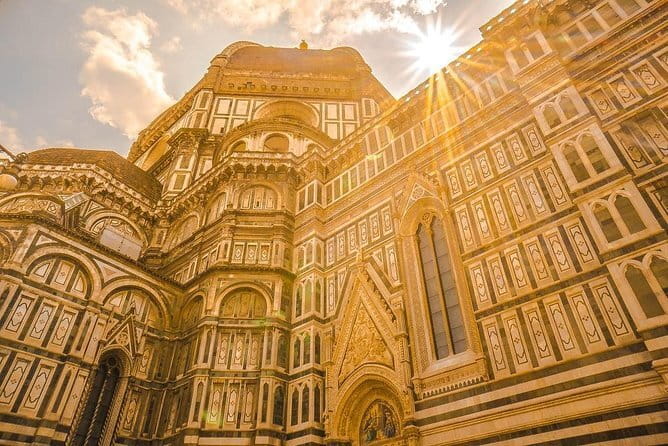
- Duomo complex viewpoint at Piazza del Duomo, with Brunelleschi’s dome, Baptistery gates, and Giotto’s bell tower
- Walking Florence through working landmarks like Orsanmichele and Mercato della Paglia, not just big-ticket squares
- Piazza della Signoria sculpture moments including the Fountain of Neptune and the Loggia dei Lanzi works
- Uffizi with earphones so you can keep up through galleries without craning your neck
- Optional Tuscan lunch as a built-in break, with drinks handled separately on the spot
A timed Florence route that actually makes sense
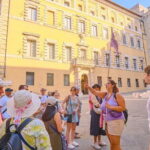
Florence is famous for art, but it’s also famous for crowding. This tour is built to keep you moving with a local guide and the right museum access. You’re not wandering alone trying to guess which rooms matter most. Instead, you get a guided sequence that links what you see in galleries to what you see on the streets—especially around the Duomo area and the political heart near the Medici.
The small-group size (maximum 20) matters. In a city where groups can feel like moving walls of people, a tighter group helps you hear the guide and keep pace at each stop. Earphones are included, which is a big deal in busy squares and inside museums where sound carries poorly.
One more practical point: the meeting point is Via Ricasoli, 68 (central Florence), and the walk ends at the Uffizi area, Piazzale degli Uffizi, 6. That means after you’re done, you’re already set up to continue exploring near one of the best concentrations of sights.
You can also read our reviews of more guided tours in Florence
- The Best tour in Florence: Renaissance & Medici Tales – guided by a STORYTELLER
★ 5.0 · 12,316 reviews
Accademia Gallery: David first, so Florence has a face
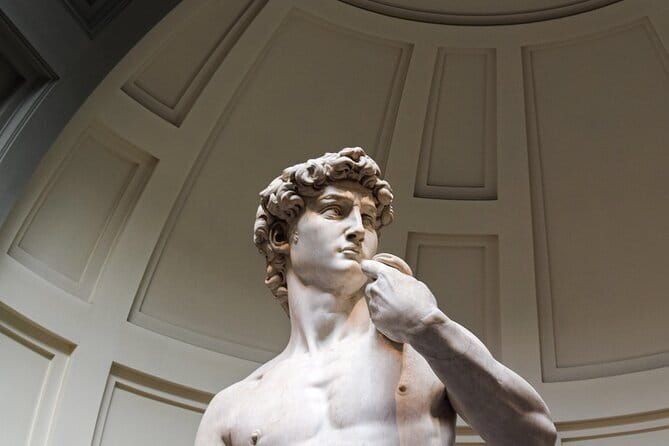
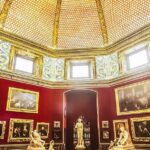
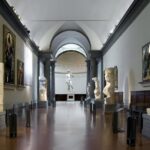
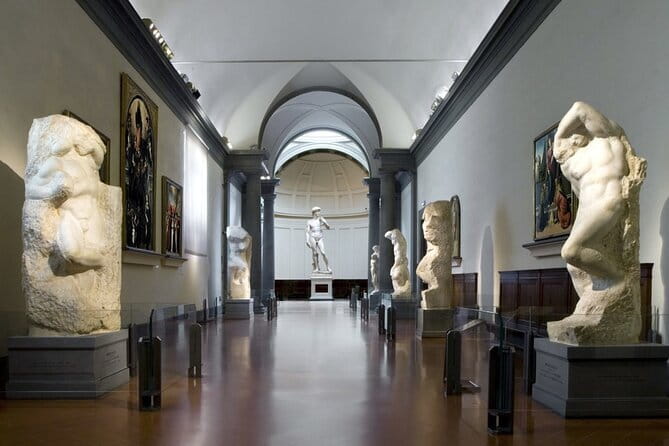
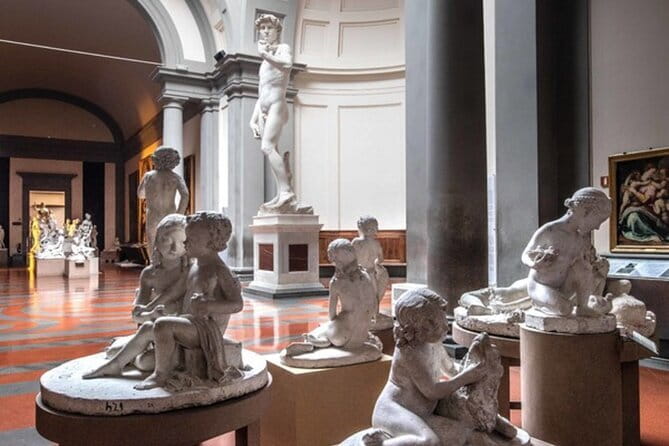
The day starts at the Galleria dell’Accademia, where the tour focuses on Michelangelo’s David as the anchor. This is the original statue, and the guide’s job is to help you understand why it was so symbolically charged—especially for the Florentine Republic. You’re meant to see David as more than an iconic silhouette. The emphasis is on the expression and what the figure communicated to the city.
You’ll also get time for other Michelangelo works, including I Prigioni (The Prisoners) and the Palestrina Pietà, plus additional pieces like San Matteo. Even if you’re not a diehard art nerd, these stops help you build a quick sense of Michelangelo’s style and themes—finished power versus trapped forms, the tension between stone and intention.
What makes this stop valuable is sequencing. By seeing David early, you start your Florence walk with a clear reference point. Later, when you’re looking at political spaces and religious landmarks, the guide can connect themes like authority, identity, and civic pride to the art you’ve already seen.
A small consideration: Accademia is a major stop, so expect some crowd energy even with reservations. The tour time allotment for Accademia is set at 1 hour, so you’ll move efficiently rather than lingering at every corner.
Piazza del Duomo and the cathedral complex in human scale
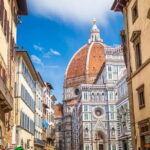
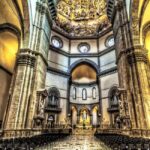
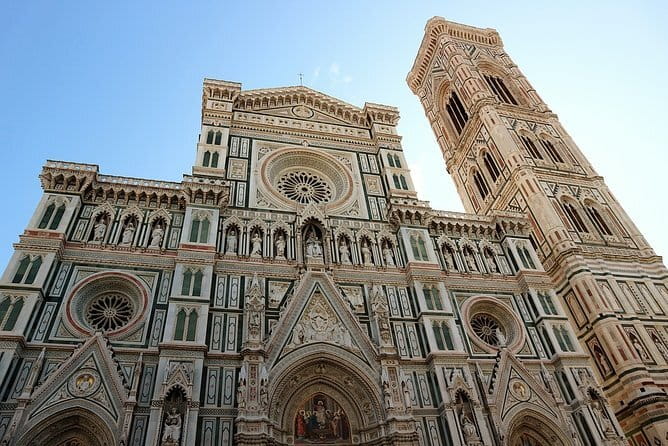
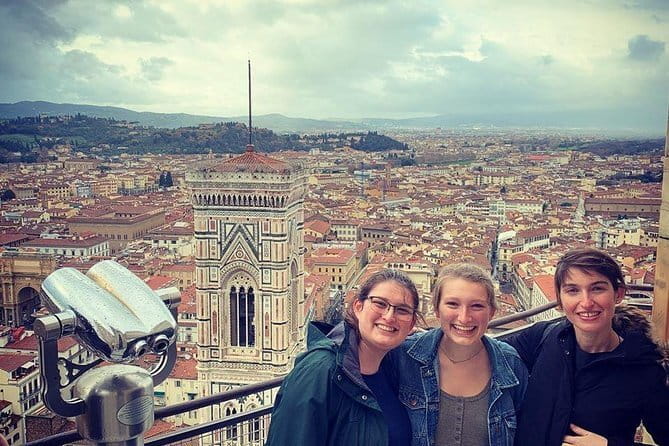
After Accademia, the route takes you to Piazza del Duomo, then through the wider monument group around Santa Maria del Fiore. This part is short on purpose, because the goal is to help you orient yourself: Brunelleschi’s famous red-tiled dome, the Baptistery of San Giovanni with its Porta del Paradiso (Gates of Paradise), and Giotto’s bell tower.
You’ll spend about 15 minutes at Piazza del Duomo, then move through additional stop moments (with short visits around 10 minutes each) that keep the pacing tight. You’re not stuck in one spot for long enough to lose focus. Instead, you get “look, learn, move” in a loop that helps you understand how these structures relate to each other on the ground.
One practical benefit: many visitors see the Duomo complex from one angle and call it done. A guided pass encourages you to notice details that are easy to miss when you’re rushing for photos—like the Baptistery’s role in the religious and civic story, not just its appearance.
Clothing note is real here. The tour info says you should dress appropriately for places of worship. Even if you’re not entering every space (some stops are viewpoint-focused), you’ll still feel better with shoulders and knees covered.
Orsanmichele and the Porcellino: Florence feels lived-in here
The walk continues past Orsanmichele, then toward the market area with the Fontana del Porcellino. This is where Florence stops feeling like museum wallpaper and starts feeling like a city.
Orsanmichele is described as a masterpiece of Florentine Gothic art, decorated with shrines and statues tied to powerful medieval trade guilds. That guild connection matters, because it explains why so many artistic details show up in civic buildings—Florence didn’t just commission art for art’s sake. It tied art to the identity and power of groups that ran the economy.
Then comes a classic stop: the bronze pig called the Porcellino. You rub its nose for luck and toss a coin into the fountain. It’s a tourist ritual, sure, but it also gives you a quick moment to pause and feel the rhythm of the area around Mercato della Paglia. This is one of those “small stop, big atmosphere” segments.
These market-and-gothic stops also break up the heavier art museum blocks. If you’re the type who gets museum fatigue, this mid-walk pacing helps you stay fresh for what comes next.
Piazza della Signoria: power, sculpture, and Medici territory
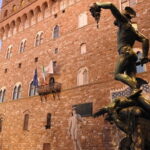
Next up is Piazza della Signoria, one of the most important public squares in Florence. This area is often called an outdoor museum because so much art is displayed in open air. The tour focuses on how the square functioned as a political center and how buildings around it relate to the Medici—especially Palazzo Vecchio, where the Medici once lived.
You’ll see the Fountain of Neptune and the sculptures displayed in the Loggia dei Lanzi. The guide highlights Cellini’s Perseus and Gianbologna’s Rape of the Sabines among the works here. Even if you’ve seen these names before, hearing them connected to place helps. It’s easier to remember a sculpture when you know what kind of street-level statement it was meant to make.
The practical side: this is also a high-traffic square. The earphones help keep the guide’s explanations audible while you’re moving between key points. And since the tour is small-group focused, you’re less likely to lose the group at each reposition.
You can also read our reviews of more tours and experiences in Florence
- Tuscany Day Trip from Florence: Siena, San Gimignano, Pisa and Lunch at a Winery
★ 5.0 · 21,634 reviews - Cooking Class and Lunch at a Tuscan Farmhouse with Local Market Tour from Florence
★ 5.0 · 4,831 reviews - San Gimignano, Siena, Monteriggioni, Chianti Day Trip with Lunch & Wine Tasting
★ 4.5 · 4,432 reviews



Ponte Vecchio finish: the famous bridge, minus the chaos

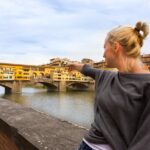
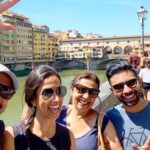
Your walking tour ends by arriving at Ponte Vecchio. It’s Florence’s oldest bridge, lined with gold and jewelry shops, and it’s the kind of sight that looks more interesting when you’re walking across or standing near it rather than just scanning from afar.
The tour ends here with a short stop (about 10 minutes). That timing works well because Ponte Vecchio can get packed. Rather than turning it into a long standstill, the tour gives you a clean final moment to absorb the view and then move on independently—often a relief if your feet are tired.
Uffizi Gallery: how to see more without missing the point
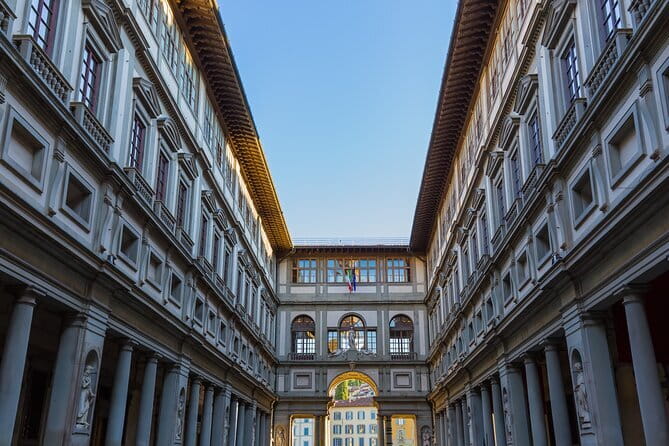
After the outdoor walking portion, the tour shifts into the Uffizi Gallery. This is where you’ll spend about 1 hour 30 minutes. It’s a manageable block of time for a huge museum, which means you’re not expected to see everything. You’re expected to see the big ideas and key works—and connect them to what came before.
The guide highlights works by artists you’ll recognize immediately, including Leonardo da Vinci, Raphael, Caravaggio, Cimabue, Masaccio, Michelangelo, and Botticelli. Botticelli’s Birth of Venus is described as a symbol painting, showing the sea goddess rising from her shell and representing ideal beauty. That kind of framing helps you avoid the feeling of staring at frames without context.
This is also where the earphones really earn their keep. Museums can be acoustically awkward, and Florence crowds add noise. With earphones included, you can follow the guide’s explanations without turning your head every two seconds.
Also worth noting: your Uffizi ticket is valid to access the Opificio delle Pietre Dure, though it’s currently closed for renewal. That doesn’t change your tour day, but it’s a useful tidbit if you’re planning additional museum time before it reopens.
Optional Tuscan lunch: a good break, not a detour
If you choose the lunch option, the tour includes a 3-course typical Tuscan lunch in a characteristic restaurant. This is the kind of add-on that’s often risky on tours—sometimes lunch ends up being rushed, or the restaurant is a tourist trap.
Here, lunch is integrated into the day as an option rather than an all-day stop, so it’s less likely to derail your schedule. Drinks are not included; if you want wine or other beverages, you’ll pay on the spot.
If you’re traveling with kids, the info says children 0–5 years old would need lunch to be paid on the spot. For many families, that’s a helpful heads-up before you book.
The bigger value of lunch is mental. After Accademia and the Duomo area, you’ll likely appreciate a structured meal time instead of searching for something on your own while everyone else in Florence crowds the same narrow streets.
Timing and pacing: the part that can make or break your day
The tour is listed at about 6 hours 15 minutes, but you should plan for longer in real life—especially if you’ve got reservations elsewhere or a hard train deadline. A tight schedule can be stressful on a route like this, because you’re moving between major landmarks and stepping into museum halls with set viewing times.
Also watch your meeting window. This tour requires you to arrive at the meeting point at the mentioned check-in time. If you miss the window, joining may not be possible and you wouldn’t get a refund or reschedule.
If your travel style is “I like to keep options open,” this tour still works, but you should avoid scheduling a late train immediately after. If you’re the kind of person who likes to linger in museums, remember that Uffizi time is fixed; you’ll likely want to return later if you’re serious about the collection.
Is the $174.01 price a good deal?
At $174.01 per person, you’re paying for three main things: guided interpretation, museum reservation access, and a structured route that covers multiple top sites without you coordinating ticket lines and timing yourself.
The included tickets and reservation fee for both Accademia and Uffizi are the foundation. On top of that, you’re getting a professional local guide plus earphones, which add real comfort and clarity—especially in museums and crowded squares. The small group size (max 20) also improves the value because you’re less likely to get lost in a big, loud mass.
The lunch option adds cost (not specified here), but when it’s included, you get a preplanned 3-course Tuscan meal rather than scrambling. If you like the idea of a reliable meal stop, it can be worth it—just remember drinks aren’t included.
So is it worth it? For most people who want “Florence highlights with actual context” and don’t want to build the day from scratch, this price looks reasonable. If you’re an ultra-independent traveler who wants to pick your own pace and linger freely, you might prefer buying museum tickets separately and going at your rhythm.
Who this tour suits best
This tour is a strong match if you want:
- A guided way to see David and Uffizi’s best-known works without wasting time figuring out routes
- A walking sequence that connects Florence’s civic and religious centers
- Earphones and a small group to keep things comfortable
- A plan that includes both outdoor landmarks and indoor museums
It’s less ideal if you:
- Have very strict timing constraints for trains right after the tour
- Prefer unscheduled, long museum wandering
- Get annoyed by timed, guided pacing
Should you book this Florence tour?
I’d book it if you want a guided day that hits Accademia, Uffizi, and the core historic landmarks without turning Florence into a ticket-line puzzle. The biggest strength here is the way the art and the streets support each other: David makes sense early, the Duomo complex helps you orient, and Piazza della Signoria gives the political context you’d otherwise miss.
Don’t book it if you’re racing a clock. This is structured and time-bound, and you’ll be happier if you give yourself breathing room after the tour—especially with the possibility that the day runs longer than the headline duration.
If you do book, wear comfortable shoes, dress respectfully for the worship spaces, and treat the meeting time as non-negotiable. That’s the recipe for a smooth, satisfying Florence highlight day.
FAQ
Where does the tour start?
The tour starts at Via Ricasoli, 68, 50122 Firenze FI, Italy.
What time does the tour begin?
The start time is 8:30 am.
Which parts are included in the ticket price?
You get entrance and reservation access for both the Accademia and Uffizi galleries, a local professional guide, earphones, and the guided visits. If you select the lunch option, a 3-course typical Tuscan lunch is included.
Is the lunch included, and what about drinks?
Lunch is only included if you select that option. Drinks are not included and must be paid on the spot.
How long is the tour?
The tour is listed at about 6 hours 15 minutes.
Can the Uffizi ticket be used for another site?
The Uffizi ticket is also valid to access Opificio delle Pietre Dure, though it is currently closed for renewal.
You Might Also Enjoy


More Guided Tours in Florence
- The Best tour in Florence: Renaissance & Medici Tales – guided by a STORYTELLER
★ 5.0 · 12,316 reviews
More Tours in Florence
- The Best tour in Florence: Renaissance & Medici Tales – guided by a STORYTELLER
★ 5.0 · 12,316 reviews

More Tour Reviews in Florence
- Tuscany Day Trip from Florence: Siena, San Gimignano, Pisa and Lunch at a Winery
★ 5.0 · 21,634 reviews - The Best tour in Florence: Renaissance & Medici Tales – guided by a STORYTELLER
★ 5.0 · 12,316 reviews