REVIEW · FLORENCE
Florence Jewish Quarter History Private Walking Tour
Book on GetYourGuide →Operated by Roso Travel · Bookable on GetYourGuide
Florence hides Jewish clues in plain sight. This Jewish Quarter walking tour tracks the story from first arrivals to World War II, using landmarks like the Cathedral and Santa Croce, plus symbolic details that most people walk past. I especially like how the guide turns Florence’s big monuments into a clear timeline, and how the tour calls out specific Jewish symbolism, like the Star of David on Santa Croce’s facade.
One consideration: what you see inside depends on your option and on worship schedules at the Great Synagogue, and the 2-hour tour does not include synagogue/museum interior visits.
In This Review
- Key highlights to look for
- Walking from the Florence Cathedral into Jewish Florence
- Piazza della Repubblica: the old market and the ghetto’s setting
- Piazza della Signoria and Medici power: trade, politics, and the “why”
- Santa Croce Basilica: Star of David symbolism you would likely miss
- The former Jewish Quarter: what changes, what remains
- Great Synagogue and Jewish Museum (3H option): skip-the-line, then learn with context
- Your guide’s role: a name you will actually remember
- Where to eat after: kosher lunch with local guidance
- Timing and pacing: how to fit 2–3 hours into your Florence day
- Who should book this Florence Jewish Quarter tour
- Should you book?
- FAQ
- FAQ
- Where does the tour start?
- How long is the Florence Jewish Quarter History Private Walking Tour?
- What is included in the 2-hour option?
- What do I get with the 3-hour option?
- Is the synagogue tour guaranteed?
- Do I need special clothing for the synagogue?
- What languages are available for the guide?
- Is this tour private and wheelchair accessible?
Key highlights to look for

- Expert local history guide: You get a licensed guide who ties Jewish Florence to the city’s main sights.
- Jewish symbolism in major churches: Expect pointed stops with specific visual details tied to Judaism.
- Ghetto story in the Old Town: You walk where trade and segregation shaped daily life.
- Holocaust education is included: You learn about arrests, deportations, and the Holocaust as part of the timeline.
- Optional skip-the-line entry (3H): If you choose 3 hours, you get immediate access to the Great Synagogue and Jewish Museum.
- A real food payoff after the tour: Your guide can recommend a kosher spot, including Balagan Café.
Walking from the Florence Cathedral into Jewish Florence
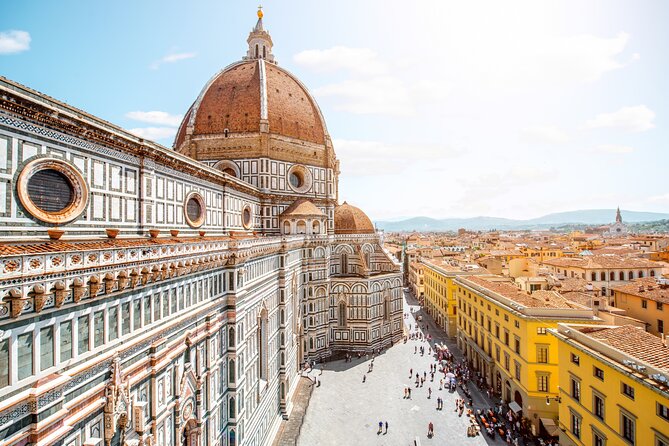
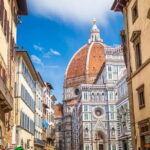
You start near Florence Cathedral, and that matters. The area around Santa Maria del Fiore is where you can easily “get your bearings” fast, because most of Florence’s major walking routes pass through this zone. From there, you follow a story line rather than a random list of stops.
A neat detail: the Cathedral has a Jewish inscription tied to the 10 Commandments. It is the kind of thing you would likely miss on your own because you are scanning for famous frescoes and domes. Here, the guide frames it as more than trivia. It becomes a clue to how visible and invisible Jewish presence could be in Florence, depending on the era.
This tour also leans into what I like most about city history tours: it connects the religious story to the street-level city layout. You are not just reading plaques. You are seeing how neighborhoods, markets, and power centers shaped real lives.
You can also read our reviews of more walking tours in Florence
Piazza della Repubblica: the old market and the ghetto’s setting
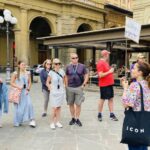
Next, the tour moves to Piazza della Repubblica, described here as the location of the Old Market. This is more than a pretty square for a coffee break. It is tied to commercial trade, and that link matters for understanding how Jewish communities lived in Florence.
From this part of the walk, the story shifts into the reality of how the ghetto was established. The tour connects commerce and community to the Medici era and to the systems that controlled where people could go, trade, and worship. You do not get a vague “sometime in history” feeling. You get cause and effect: markets pulled business in, and political decisions tightened boundaries.
If you like history that explains why things happened, this is a strong moment. Florence becomes a case study: economics, law, and faith colliding in the same streets.
Piazza della Signoria and Medici power: trade, politics, and the “why”
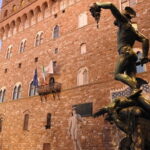
As you walk near Piazza della Signoria and toward Palazzo Vecchio, the guide brings the Medici family into the picture. You learn about the role Jewish people played in commerce and how that intersected with the powerful Medici circle.
This stop is valuable because it answers a question most people do not think to ask: why would a Jewish community be connected to court-level power at all? The tour uses Florence’s center of government as a backdrop for that explanation. So instead of treating Jewish history as something separate from “regular Florence,” you see it intertwined with the city’s engine.
Practical tip: pace yourself here. Piazza della Signoria is a classic photo spot, and it can tempt you to linger. On this tour, linger is fine, but keep an eye on the guide’s flow so you do not lose the narrative thread.
Santa Croce Basilica: Star of David symbolism you would likely miss
One of the most distinctive promises on this tour is the stop at Santa Croce Basilica, where the guide shows a hidden Star of David on the facade. That detail is exactly the kind of “only works with a guide” moment. Up close, churches and their surfaces can look like pure art and architecture. Here, you get a concrete reason to look again.
This is also where the tour does something smart: it treats symbolism and myths as part of the historical record. Even when a detail is subtle or easy to overlook, the guide makes it meaningful by connecting it to how communities signaled identity, belief, and memory.
I like that the tour does not turn it into a scavenger hunt. Instead, it uses the symbolism as a doorway into bigger themes: visibility, survival, and how history can stay “on the wall” long after people are gone.
The former Jewish Quarter: what changes, what remains
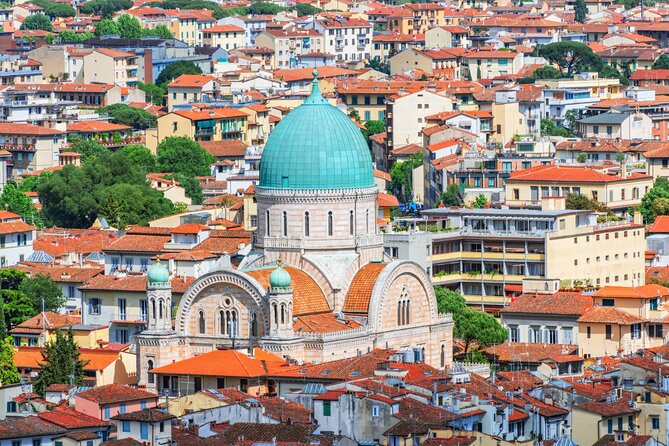
After the ghetto was demolished, many Jews moved to the former Jewish Quarter. The tour takes you through this transition, showing how neighborhoods can shift under pressure and policy.
You are walking the Old Town, but the guide’s job is to keep you oriented in time. In other words, you are not just moving from point A to point B. You are watching Florence change around a community that was repeatedly forced to adapt.
A good sign this tour is well-executed: it includes both the big turning points (arrivals, ghetto formation, World War II) and the everyday “where did people go next?” transitions. That balance helps the story feel grounded instead of abstract.
If you are sensitive to heavy subjects, note that the tour covers arrests, deportations, and the Holocaust. It is not a “pleasant walking tour only.” It is respectful, educational, and historically direct.
You can also read our reviews of more private tours in Florence



Great Synagogue and Jewish Museum (3H option): skip-the-line, then learn with context
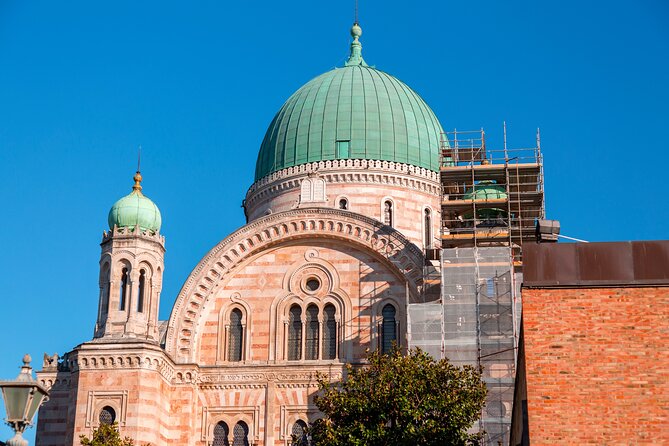
If you book the 3-hour option, you add a major anchor stop: the Great Synagogue and the Jewish Museum. Skip-the-line tickets are included for immediate entry at your booked time, so you are not wasting your Florence hours hovering by ticket lines.
What you can expect inside:
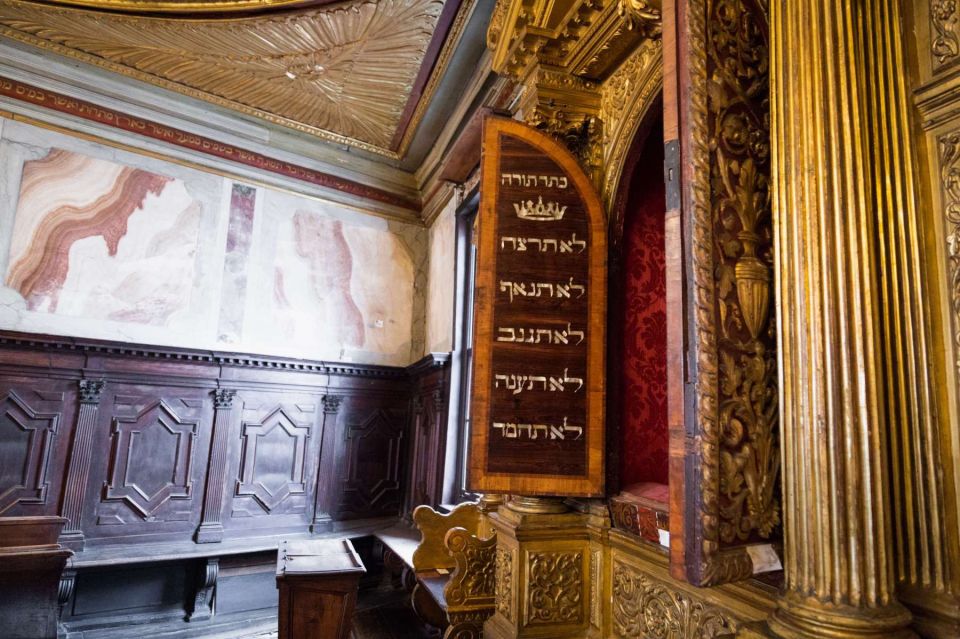
- The Great Synagogue is described as one of Europe’s most important synagogues from the age of Jewish emancipation.
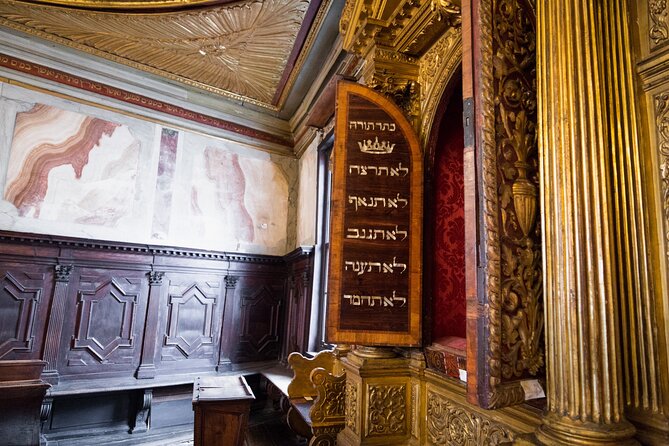
- The Jewish Museum displays religious items and clothing.
- There are exhibits that commemorate Holocaust victims.
This combination makes a lot of sense. Religious artifacts help you understand daily practice and identity. Then the museum’s commemorative material brings you into the historic trauma of the 20th century. Together, it keeps the narrative from becoming only political or only spiritual.
One practical reality: the Great Synagogue is an active place of worship. Interior access during events (like Sabbath/prayer times or concerts) can be limited. The tour info also says yarmulkes are available free of charge on site, and you should dress and act appropriately.
So the 3-hour option is the best choice if you want museum learning and commemoration time in addition to the street-level clues.
Your guide’s role: a name you will actually remember
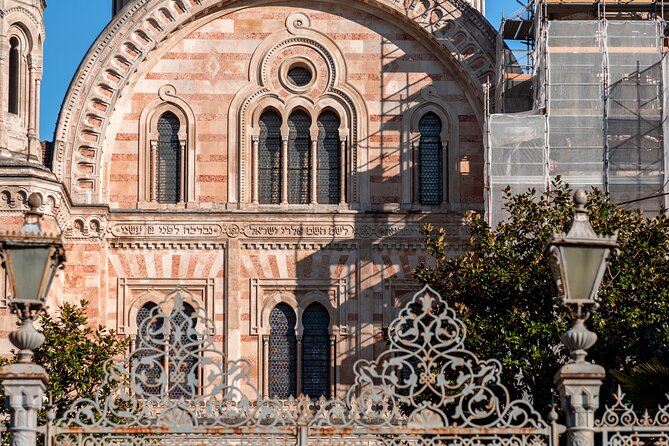
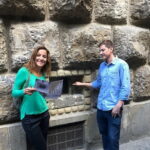
The experience is a private group tour with a licensed history expert. In a recent booking I’m basing my impressions on, the guide Daniela stood out for linking Jewish and Florence history in a way that felt clear, not stuffed with dates. The same guide also pointed out small details around the city center that can be easy to miss when you are just sightseeing.
That is the whole point of paying for this kind of guide: you want the “how to look” skill. You can read about synagogues and ghetto history later, but you cannot easily spot certain facades or inscriptions on your own without knowing where to look.
Group size is capped in a sensible way: there is best practice of 1 licensed guide per maximum of 25 guests, and if a group is larger (26–50), the provider adds a second licensed guide so you can ask questions and hear well.
Where to eat after: kosher lunch with local guidance
At the end of the walking tour, you can visit Balagan Café or another kosher restaurant recommended by your private guide. That matters because finding a kosher meal in an unfamiliar city can turn into extra searching time and guesswork.
A guided food recommendation is also a way to keep your day moving. Instead of trying to decode restaurant listings on the fly, you get a direct suggestion matched to the area you just walked through.
If you are on a tight schedule, plan a meal soon after the tour so you can keep the story fresh while you connect what you learned with how people live today.
Timing and pacing: how to fit 2–3 hours into your Florence day

This tour runs about 2–3 hours, depending on your option. The bigger difference is simple:
- The 2-hour option includes the walking story through Florence’s Jewish Quarter traces, with major highlights like Florence Cathedral and Santa Croce Basilica.
- The 3-hour option adds Great Synagogue & Jewish Museum entry with skip-the-line tickets.
So think about your travel style. If Florence is packed and you only have a short window, the 2-hour tour is a strong narrative sampler. If you want museum learning plus synagogue time, go for the 3-hour option even if it means tightening other plans.
Also, the meeting point can vary by option, but it is in the Old Town zone near the Cathedral area. The tour info provides coordinates (43.76726531982422, 11.257744789123535) as a reference point if you want to sanity-check your navigation app.
Practical tip: wear comfortable walking shoes. This is a city-center walk where you will be stopping often, looking closely, and standing for explanations.
Who should book this Florence Jewish Quarter tour
This is a great fit if you want:
- Street-level history that connects Jewish Florence to major landmarks (Cathedral, Santa Croce, Piazza della Signoria).
- A guide who can point out specific symbolic details and keep the story chronological.
- A serious, respectful look at arrests, deportations, and the Holocaust.
- The option to add synagogue and museum entry if you have time.
It may be less ideal if you prefer only light, purely scenic walking. This tour includes difficult historical material, and you should choose it because you are ready for that part of the story.
Wheelchair accessibility is included in the tour info, and the guide is available in multiple languages (English, French, Italian, Polish, Russian, Spanish). If language matters for your comfort, pick the option that matches what you can follow best.
Should you book?
If you care about seeing Florence with more depth than “art and gelato,” I think you should book this. The value is in the mix: street narrative plus specific symbolism plus the option for skip-the-line synagogue and Jewish Museum entry.
Choose the 2-hour option if you want the story arc across key Old Town landmarks without committing to the museum time. Choose the 3-hour option if you want the Great Synagogue and Jewish Museum experience, including exhibits connected to the Holocaust.
Only you can decide how much history you want in one sitting, but if you are open to a tour that treats Jewish Florence as real, complex, and woven into the city, this is the kind of guided experience that will stick with you long after you leave the streets.
FAQ
FAQ
Where does the tour start?
The meeting point is near Florence Cathedral, and the exact location can vary by option. The provided reference coordinates are 43.76726531982422, 11.257744789123535.
How long is the Florence Jewish Quarter History Private Walking Tour?
It is listed as 2 to 3 hours, depending on which option you choose.
What is included in the 2-hour option?
The tour includes the walking route and major highlights, but it does not include interior visits to the Great Synagogue and Jewish Museum.
What do I get with the 3-hour option?
The 3-hour option includes skip-the-line tickets for immediate entry to the Great Synagogue and Jewish Museum.
Is the synagogue tour guaranteed?
The Great Synagogue is an active place of worship, so interior access can be limited during scheduled events such as Sabbath, prayer times, concerts, and similar activities.
Do I need special clothing for the synagogue?
You should dress and act appropriately. Yarmulkes are available on site free of charge.
What languages are available for the guide?
The tour guide can be booked in English, French, Italian, Polish, Russian, or Spanish.
Is this tour private and wheelchair accessible?
Yes, it is a private group experience, and the tour is listed as wheelchair accessible.
You Might Also Enjoy


More Walking Tours in Florence
More Tours in Florence
- The Best tour in Florence: Renaissance & Medici Tales – guided by a STORYTELLER
★ 5.0 · 12,316 reviews



More Tour Reviews in Florence
- Tuscany Day Trip from Florence: Siena, San Gimignano, Pisa and Lunch at a Winery
★ 5.0 · 21,634 reviews - The Best tour in Florence: Renaissance & Medici Tales – guided by a STORYTELLER
★ 5.0 · 12,316 reviews