REVIEW · FLORENCE
Florence: Duomo Complex Guided Tour w/Cupola Entry Tickets
Book on GetYourGuide →Operated by StarFlorence · Bookable on GetYourGuide
463 steps, then Florence opens up. What makes this tour click is the timed Cupola entry paired with expert context around the Duomo complex, plus a real chance to see the art up close. I also like that you get a focused visit to the Opera del Duomo Museum instead of just passing through. The catch is obvious: the Cupola climb is steep and tight, and it is not a good fit for anyone with back problems, vertigo, claustrophobia, or heart issues.
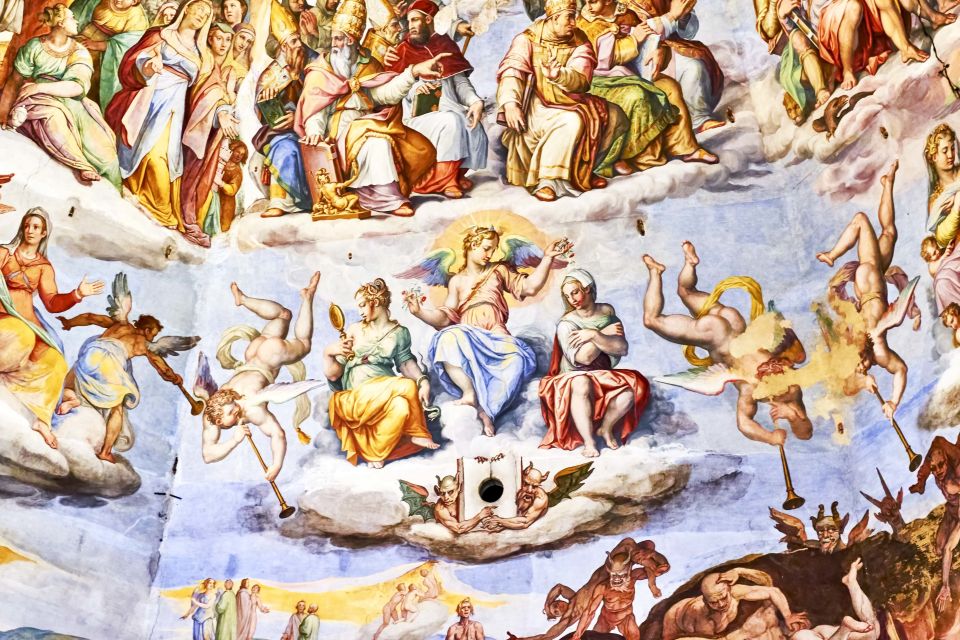
You’ll hear your guide through a radio system, which matters here because the area is busy and you don’t want to guess what you’re looking at. Inside the dome route, you’ll learn what you’re seeing—including Giorgio Vasari’s Last Judgment frescoes—and you’ll get that big, city-wide view from the top when the stairs stop.
In This Review
- Key Highlights Worth Your Attention
- Meet at Lindt Firenze Duomo: A Simple Start in a Busy Square
- Piazza del Duomo: Learn the Center, Then Look Like You Know It
- Baptistery of St. John: Golden Mosaics and the Gates of Paradise
- Opera del Duomo Museum: Originals, Not Just Copies
- Santa Maria del Fiore Cathedral and Santa Reparata Crypt: Layers Underfoot
- Giotto’s Bell Tower: A Separate Ticket You Should Actually Use
- Brunelleschi’s Cupola Climb: 463 Steps, No Elevator, Tight Corridors
- Timing and Pace: When Security and Crowds Can Make You Feel Rushed
- Optional Tuscan Wine Tasting: A Soft Landing After the Stairs
- Price and Value: Is $193 Reasonable?
- Who Should Book This Duomo + Cupola Tour (and Who Should Skip)
- Should You Book This Tour?
- FAQ
- Where do I meet the guide?
- How long is the tour?
- What’s included besides the Cupola climb?
- Is the Cupola Dome climb guided?
- Are there elevators to reach the top?
- How many steps are there?
- What clothing rules should I follow for the church sites?
- What items are not allowed inside the Dome?
- What languages are the guides offered in?
- Can I add wine tasting?
Key Highlights Worth Your Attention
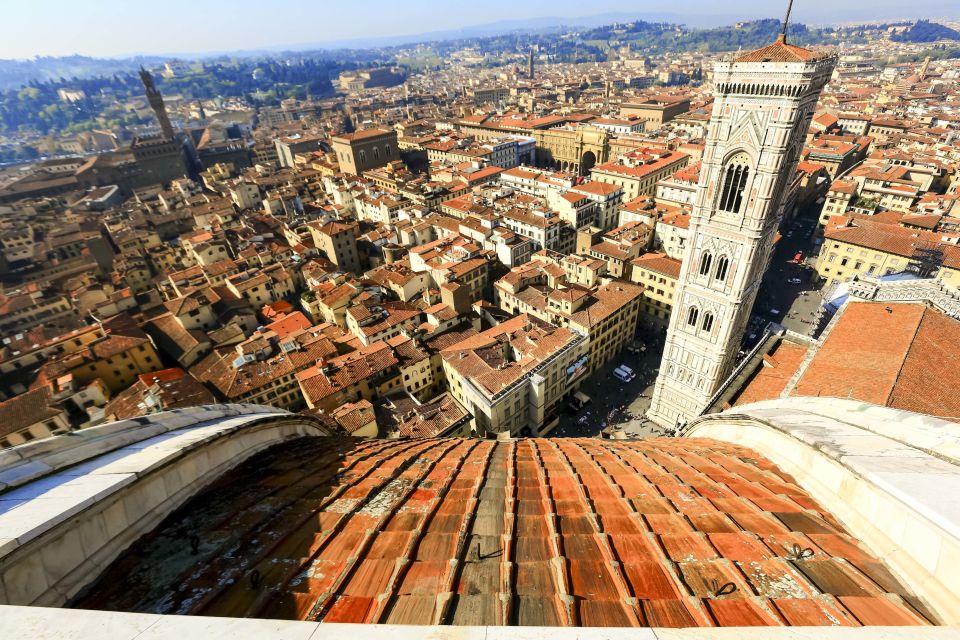
- Timed Brunelleschi Cupola tickets so you can plan your climb
- Baptistery St. John visit with the golden mosaic ceiling and bronze Gates of Paradise doors
- Opera del Duomo Museum access with original works tied to the cathedral
- Duomo complex sights before and after the climb (cathedral, crypt, and Giotto’s Bell Tower)
- Radio system included for clear narration while walking
- Optional Tuscan wine tasting with snacks for a slower finish
Meet at Lindt Firenze Duomo: A Simple Start in a Busy Square
Your tour starts in front of the Lindt Chocolate Shop Firenze Duomo. That’s a helpful anchor point in an area where streets and entrances can blur together, especially on hot days and during peak season.
Right away, the tour is set up for an orderly flow: you meet, get oriented, then head into Piazza del Duomo. Since your walking time is part of the experience (and part of how you get the backstory), arriving a few minutes early gives you calm, not stress.
You can also read our reviews of more tours and experiences in Florence
Piazza del Duomo: Learn the Center, Then Look Like You Know It
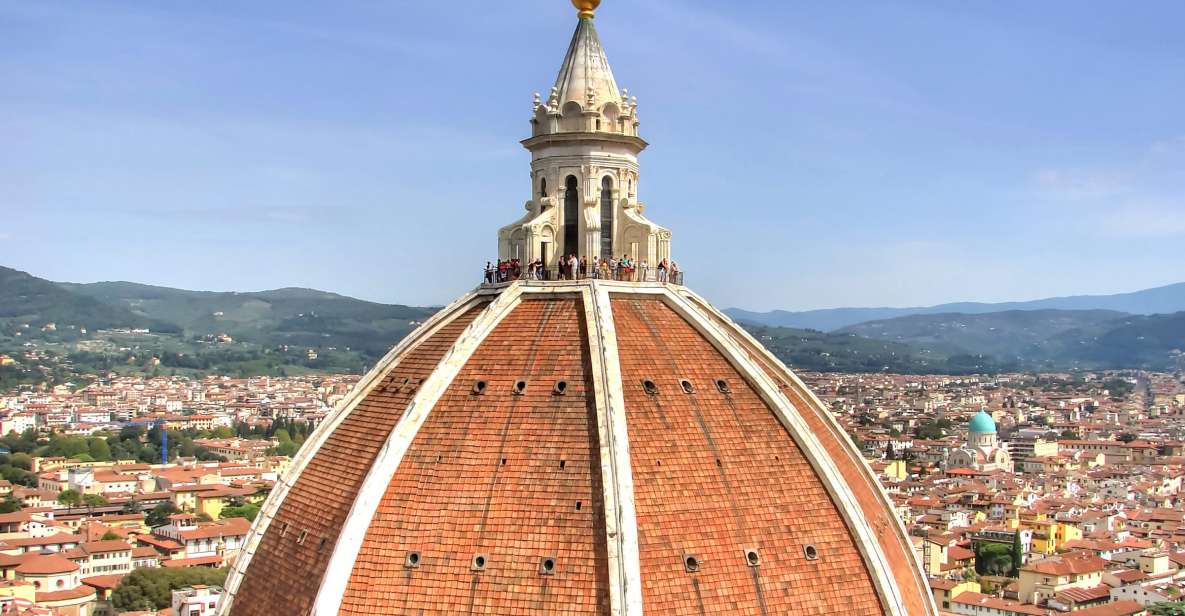
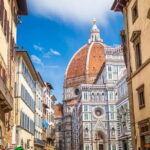
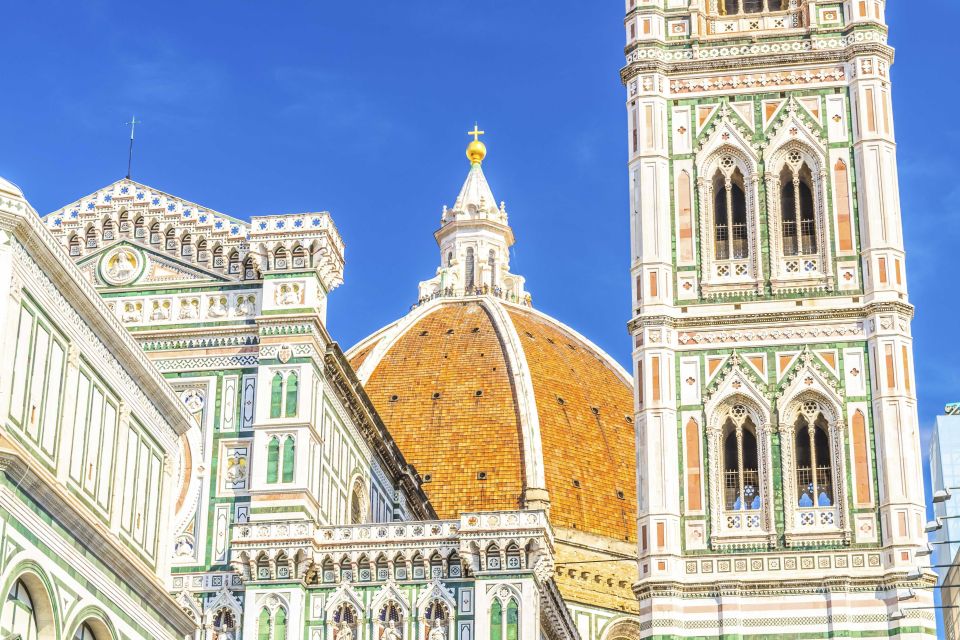
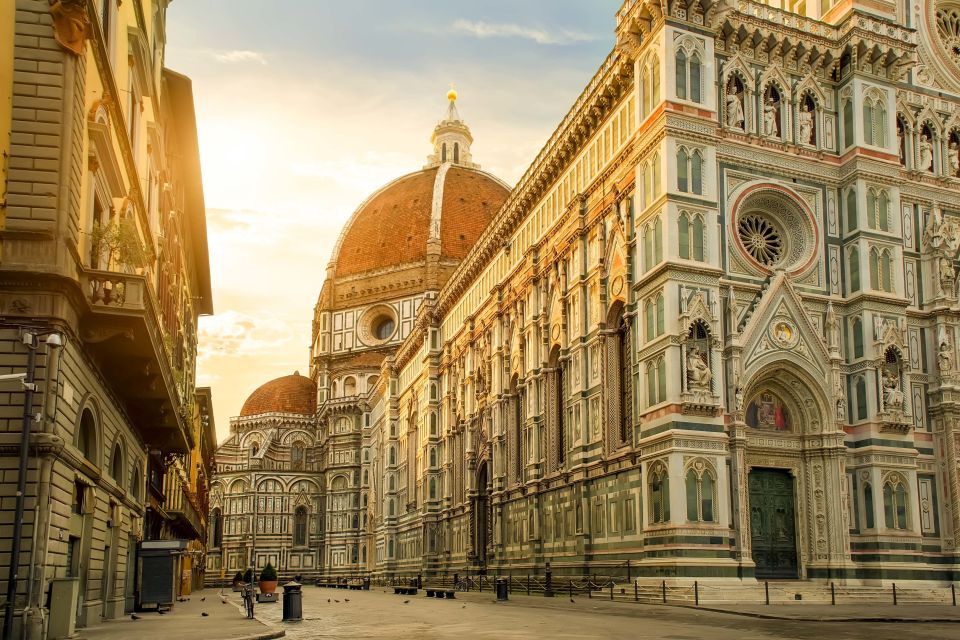
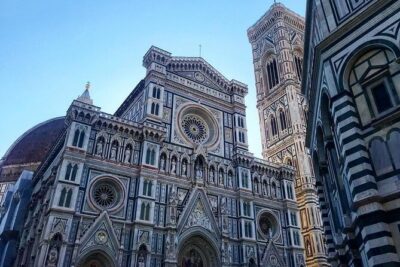
Piazza del Duomo is the stage, but your guide turns it into a lesson. You’ll see the cathedral complex from multiple angles in the square, and your guide explains how this religious center evolved—so the buildings stop looking like random “big things” and start looking like a plan.
Two practical reasons this matters:
- You get visual bearings fast, before you move into indoor spaces.
- The stories you hear later (Baptistery design, museum pieces, dome construction) make more sense once you’ve seen the whole layout in one place.
Baptistery of St. John: Golden Mosaics and the Gates of Paradise
Next up is the octagonal Baptistery of St. John in Florence, an essential stop if you care about how Renaissance-era Florence kept upgrading its artistic identity.
Inside, the Baptistery is known for its magnificent golden mosaic ceiling and its bronze doors called the Gates of Paradise. That combination is the reason this building stays famous. Even if parts of the interior are affected by restoration on some days, the core impact remains: you’re seeing a masterpiece-scale interior that is meant to feel like a glow.
A nice extra detail your guide can point out: the Baptistery isn’t just “pretty.” It’s a reference point for how Florence understood craft, sculpture, and devotional art—so it sets the tone for the museum pieces you’ll see right after.
Opera del Duomo Museum: Originals, Not Just Copies
After the Baptistery, you go to the Opera del Duomo Museum. This is where I think many visitors silently realize they paid for more than a skyline view. The museum houses over 700 Middle-Age and Renaissance masterpieces, and it’s the place where the Duomo complex becomes a story you can read.
What you’re likely to see includes major names and objects tied directly to the cathedral:
- Michelangelo’s Pietà Bandini
- Works connected to the Baptistery doors
- Donatello’s sculptures
- Even original dome-related elements, like wooden scaffoldings from the dome’s construction
Guided museum visits also tend to be where you start connecting dots. For example, architecture and sculpture stop being separate hobbies and start looking like the same language used by different artists. In past groups, guides such as Chiara, Hilary, and Elena have been praised for making that connection feel clear.
Santa Maria del Fiore Cathedral and Santa Reparata Crypt: Layers Underfoot
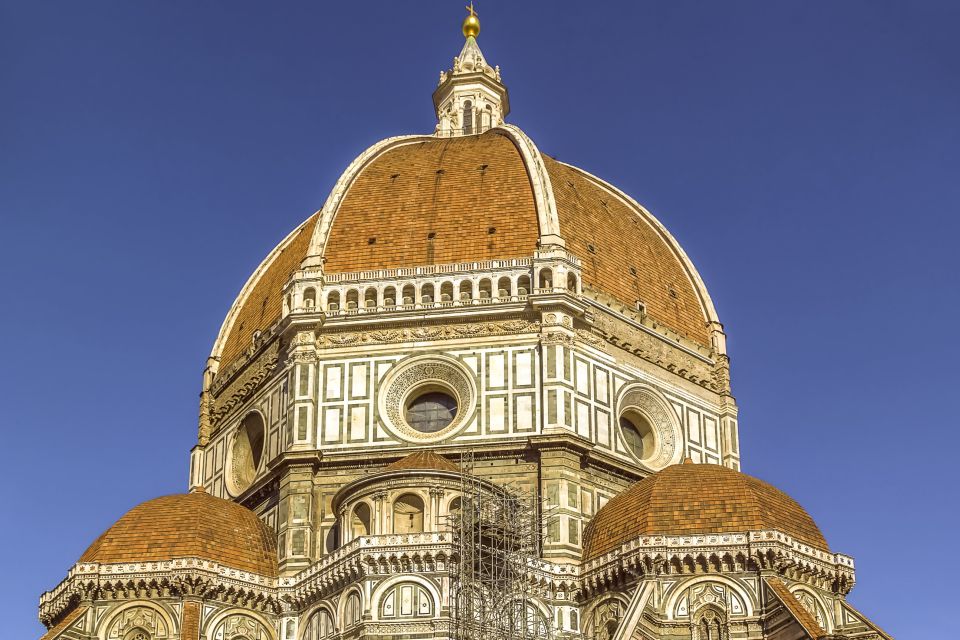
This tour includes tickets for the interior visit of the Duomo complex areas—Santa Maria del Fiore Cathedral and the crypt of Santa Reparata—along with time that lets you explore at your own pace after the climb.
Why this is valuable: the Cathedral (Santa Maria del Fiore) is the big headline, but the Santa Reparata crypt gives you a different kind of depth. It’s the “before” layer, where you can feel that Florence didn’t build one cathedral and stop. The site holds layers of earlier presence, and the contrast helps you understand why this place keeps rewriting itself.
Practical note: these are places of worship, so clothing rules are strict. If you show up “almost right,” you can still get turned away. That is one reason I always treat the first few minutes as part of the visit—check what you’re wearing before you join the line.
You can also read our reviews of more guided tours in Florence
- The Best tour in Florence: Renaissance & Medici Tales – guided by a STORYTELLER
★ 5.0 · 12,316 reviews
Giotto’s Bell Tower: A Separate Ticket You Should Actually Use
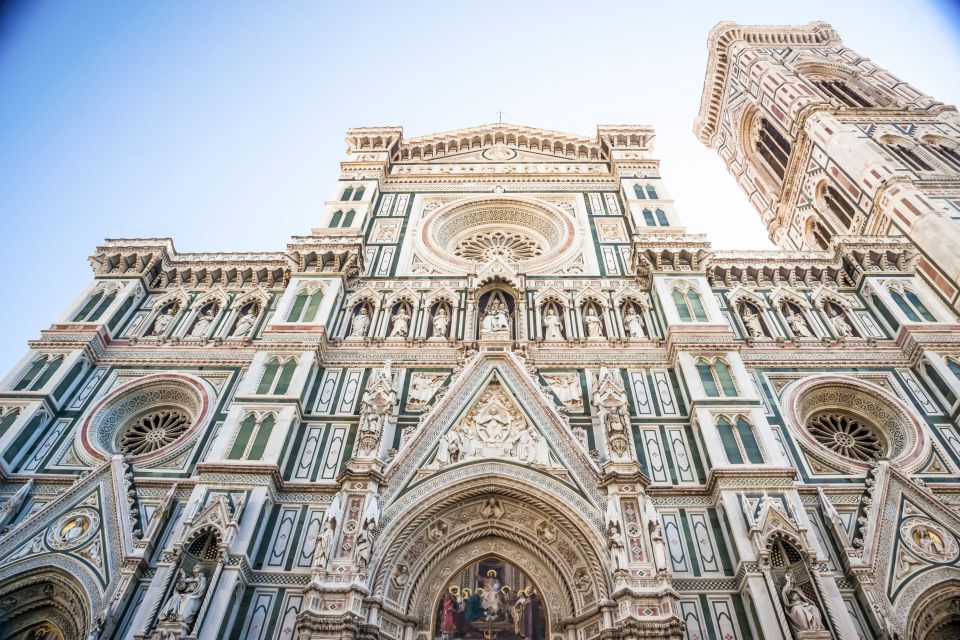
The tour also includes entry to Giotto’s Bell Tower. This is one of those add-ons that can get skipped if you assume the Dome is the only big view. Don’t do that.
Even if your time is tight, the bell tower gives another angle on the city and the Duomo complex geometry. And because it’s on your schedule after the Cupola climb, you can decide whether you want a shorter walk up or a slower look once your legs have made their point.
Brunelleschi’s Cupola Climb: 463 Steps, No Elevator, Tight Corridors
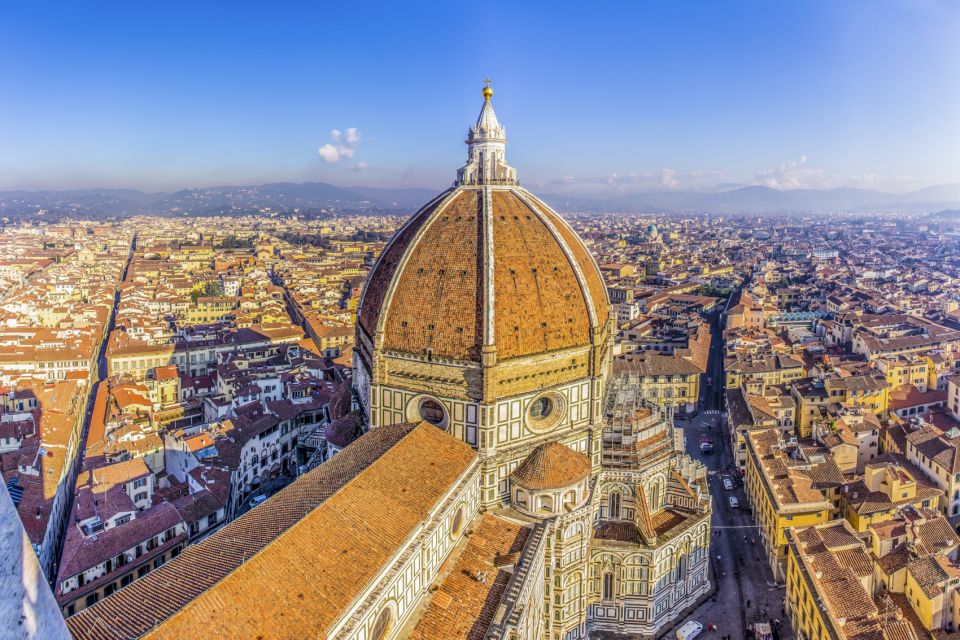
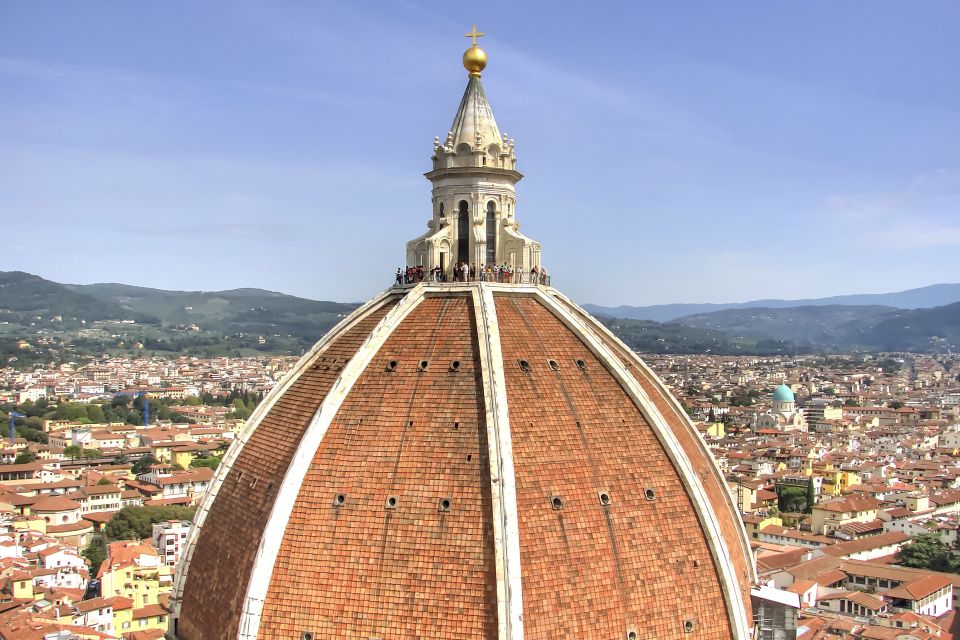
This is the showstopper. You get pre-reserved timed tickets to climb Brunelleschi’s Dome (the Cupola), and the climb itself is self-paced—not a guided talk inside.
Here’s what you’re signing up for:
- 463 steps
- No elevator
- tight corridors during parts of the ascent and descent
The tour explains why the corridors feel this way: maintenance workmen were never intended to be moving through the dome like modern visitors. So the stairwell can feel narrow and a bit exposed at moments—especially near the points where the path squeezes.
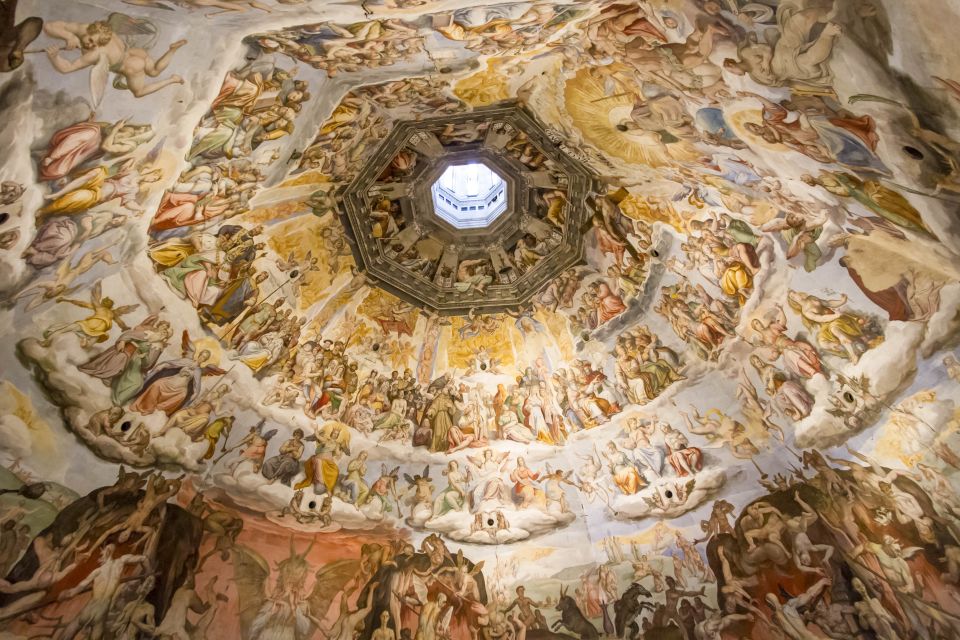
On the interior route, you’ll have a chance to see Giorgio Vasari’s frescoes of the Last Judgment up close, with explanations offered along the way. You’ll also learn about structural details, including:
- a balcony area added starting in 1507
- the fact that one of the eight sides was left unfinished, with other sides still showing rough brick
And then, the payoff: when you reach the top, you get panoramic views over Florence. This is the moment where all the stairs stop being punishment and start being proof.
Timing and Pace: When Security and Crowds Can Make You Feel Rushed
The tour is designed to keep you moving through the complex efficiently, but it still runs through a real-world bottleneck: security and site flow.
A few reviews noted that Duomo-area staff can keep things moving quickly once you arrive at certain points, which can feel a little rushed. If you’re easily stressed by tight schedules, it helps to know what to expect ahead of time:
- you may spend more time in lines than the headline “1.5 hours” suggests
- the stair route has narrow sections where you’ll have to squeeze past other climbers
If you’re booking this as your last major activity in Florence, I strongly suggest you plan buffer time around it. One group even described a situation where their scheduled access time shifted, and having the right order of visits mattered for fitting everything in.
Optional Tuscan Wine Tasting: A Soft Landing After the Stairs
If you want a calmer finale, the tour offers an optional wine tasting at Vino Tasting Global Srl with wine plus local snacks, for about 75 minutes.
This works well because the Cupola climb is physical and focused. A tasting gives you a different pace, plus a chance to slow down in a way that still feels tied to the region. If your day is already packed with museums, this add-on can be the “breathing room” you didn’t know you needed.
Price and Value: Is $193 Reasonable?
At $193 per person for about 1.5 hours, this isn’t a budget-only stop. But for many people, it’s good value because the tour bundles several hard-to-mix pieces into one visit:
- an official certified guide
- a radio system
- guided time inside the Baptistery and Opera del Duomo Museum
- entry tickets for multiple parts of the complex
- pre-timed reserved tickets for the Cupola climb (the part that sells out or becomes hard to schedule)
Also, you’re not just buying a viewpoint. You’re buying context: construction decisions, artistic choices, and how the parts of the complex connect. In reviews, guides like Tommaso, Guido, and Martina were praised for pacing and explanation on the climb and around the museum—exactly what you want when you’re spending a chunk of time with your head tilted up.
So, the value equation is simple:
- If you want the Cupola timing solved plus guided interpretation, the price starts making sense.
- If you’re happy to wander on your own with a flexible schedule and don’t care much about museum depth, you could probably do it cheaper. But you’d be giving up some certainty and structure.
Who Should Book This Duomo + Cupola Tour (and Who Should Skip)
This tour is best for people who:
- can handle stairs (and narrow spaces)
- want guided clarity for the Duomo complex rather than a hit-and-run checklist
- value timed entry for the Cupola climb
It’s not suitable for people who are:
- pregnant
- experiencing back problems
- dealing with vertigo or claustrophobia
- having heart problems
- using wheelchairs
- anyone who just knows stairs in tight corridors will be a bad time
If you fall anywhere on that line, I’d choose a different plan. Florence has plenty of viewpoints that don’t require climbing into a stairwell maze.
Should You Book This Tour?
Yes, if you want the Duomo complex to feel understandable, not just impressive. The combination of Baptistery + Opera del Duomo Museum with timed Cupola entry is what makes this tour feel efficient and worth the money.
Book with extra caution if you’re sensitive to heights, confined spaces, or physical strain. The Cupola climb is the core experience, and it’s not gentle.
If you’re planning a tight itinerary, also consider how your schedule will flow after the climb, since you’ll then have access to cathedral interior areas, the crypt, and Giotto’s Bell Tower at your own pace.
FAQ
Where do I meet the guide?
Meet your guide in front of the Lindt Chocolate Shop Firenze Duomo.
How long is the tour?
The tour duration is listed as 1.5 hours.
What’s included besides the Cupola climb?
You get an official certified guide, a radio system to hear the guide, guided visits to the Baptistery of St. John and the Opera del Duomo Museum, and entry tickets for the Baptistery, Opera del Duomo Museum, the Cathedral (Duomo), Giotto’s Bell Tower, and Santa Reparata.
Is the Cupola Dome climb guided?
No. You receive pre-timed reserved tickets to climb Brunelleschi’s Dome on your own.
Are there elevators to reach the top?
No elevators are available for the Cupola climb.
How many steps are there?
The Cupola climb is 463 steps.
What clothing rules should I follow for the church sites?
Appropriate clothing for a place of worship is required. The tour notes that access requires bare legs and shoulders, and it also says sandals, hats, and sunglasses are not permitted. You may be refused entry if you do not comply.
What items are not allowed inside the Dome?
The tour states that luggage or large bags are not permitted inside the Dome. It also lists restrictions on umbrellas, canes (when not assisting walking), tripods/film cameras, and metal tools like knives or scissors.
What languages are the guides offered in?
Guides are available in French, German, Italian, and Spanish.
Can I add wine tasting?
Yes. There is an optional wine tasting add-on at Vino Tasting Global Srl, including wine and local snacks, for about 75 minutes.
You Might Also Enjoy

More Tickets in Florence
More Tours in Florence
- The Best tour in Florence: Renaissance & Medici Tales – guided by a STORYTELLER
★ 5.0 · 12,316 reviews

More Tour Reviews in Florence
- Tuscany Day Trip from Florence: Siena, San Gimignano, Pisa and Lunch at a Winery
★ 5.0 · 21,634 reviews - The Best tour in Florence: Renaissance & Medici Tales – guided by a STORYTELLER
★ 5.0 · 12,316 reviews