Florence has a side that’s all about sculpture. This 1-hour Bargello Museum tour gives you a guided path through major works you’d miss if you wandered alone, with the added perk of headsets so you can actually hear every word. I like that it’s structured enough to keep you moving, but still short enough that you don’t feel like you’re sprinting room to room.
Two things I particularly like: you get guaranteed skip-the-line entry even in peak season, and the guide points out the big names in a way that makes their work feel connected instead of random. One drawback to plan around: part of the second floor can be closed for renovation, and that can affect what you get to see.
In This Review
- Key things you’ll notice
- Why the Bargello is perfect for a focused art hour
- Entering Bargello: the palace story and how the guide frames it
- Michelangelo highlights on the ground floor: Bacchus, Tondo Pitti, Brutus, David-Apollo
- More sculptors you’ll actually remember: Cellini, Ammannati, and Giambologna’s Flying Mercury
- The early Renaissance face-to-face stop: Donatello’s Saint George, Lion, and David
- Donatello meets Verrocchio: why it’s worth paying attention to the contrasts
- Second floor glazed terracotta: Andrea and Giovanni Della Robbia
- How long is the tour, and what you can do after it ends
- Price and value: is $58.87 worth it for a 1-hour guided hit?
- Who this tour suits best
- Should you book this face-to-face Bargello tour?
- FAQ
- How long is the Bargello Museum face-to-face tour?
- Where does the tour start?
- Is the tour offered in English?
- What’s included in the ticket price?
- Is skip-the-line entry really included?
- Are headsets provided?
- What happens if I arrive late?
- How big is the group?
- Is there free cancellation?
- Can I bring a service animal?
Key things you’ll notice
- Skip-the-line entry keeps your visit from getting stuck in museum lines
- Headsets and a radio system make the guide’s explanations easy to follow
- Michelangelo on the ground floor includes Bacchus, Tondo Pitti, Brutus, and David-Apollo
- Donatello and Verrocchio bring the early Renaissance to life with Saint George, the Lion, and the David
- Second-floor Della Robbia terracotta is a dedicated stop for Andrea and Giovanni Della Robbia
- Max 25 people helps keep the tour feeling manageable
Why the Bargello is perfect for a focused art hour
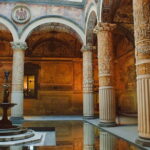
The Bargello Museum isn’t just a “paintings building.” It’s a former civic power center—once the headquarters of the Capitano del Popolo, later the Podesta, then used as a police residence and even a prison. That past matters because it changes how you feel walking through the rooms. You’re not just visiting art; you’re moving through a place that once ran the city.
This tour makes the museum manageable in a smart way. You cover both the ground floor and the second floor, but the pacing stays calm for a roughly one-hour visit. If you’re in Florence for a few days and you already have big-hitter sights on your list, this is a great “sculpture-first” counterweight.
You can also read our reviews of more museum experiences in Florence

Entering Bargello: the palace story and how the guide frames it
You start at Museo Nazionale del Bargello, Via del Proconsolo 4, 50122 Firenze. From the beginning, the guide sets the scene with the building’s history—how the palace went from political leadership to policing to a prison. Then you’re escorted through the collection as a curated walking lesson, not a random gallery shuffle.
Why that framing helps: sculpture can feel intimidating when you don’t know what to look for. The guide’s job here is to give you hooks—who made what, when it was made, and why it mattered—so your eyes start working faster. And because you’ll have a radio system, you don’t have to do the usual Florence thing where you lean in and still miss half the story.
Michelangelo highlights on the ground floor: Bacchus, Tondo Pitti, Brutus, David-Apollo
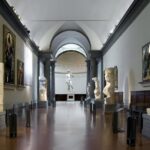
The ground floor is where the tour really gets your attention. It focuses on Tuscan works from the 16th century, and the guide gives special emphasis to four major Michelangelo works: Bacchus, the relief with a Madonna and Child (the Tondo Pitti), Brutus, and David-Apollo.
Even if Michelangelo is already on your radar, this is a useful way to see him in context. Instead of treating him like a single brand name, you start to notice the variety in subjects—myth and symbol, spiritual imagery, and political drama. A guided stop like this helps you look at the scale, the posture, and the emotional tone you might otherwise breeze past.
One practical bonus: the ground-floor rooms are where the tour’s narrative is strongest for first-timers. You’re building a foundation early, so when the guide moves into later Renaissance and early Renaissance works, the connections make more sense.
More sculptors you’ll actually remember: Cellini, Ammannati, and Giambologna’s Flying Mercury
After the Michelangelo focus, you continue through other major artists that round out the museum’s strength. The guide brings in names like Bartolomeo Ammannati, Benvenuto Cellini, and Giambologna, including his admirable Flying Mercury.
This is the part of the tour that turns a museum into a story about taste and technique—at least in the sense of what each artist was trying to achieve. You’ll also spend time on works enriched by the Carrand collection, which is where the material world of the Bargello becomes extra interesting.
The tour includes attention to precious ivories and bronzies, with examples from Roman and Byzantine traditions. That matters because it stops the visit from feeling like only marble and only Renaissance. Even if you’re mainly there for the famous sculptures, these objects help you understand why the Bargello feels like a cabinet of craft as well as art.
The early Renaissance face-to-face stop: Donatello’s Saint George, Lion, and David
Then comes the early Renaissance shift. This is where the tour leans hard into the famous sculptors: Donatello and Verrocchio. The guide highlights Donatello works including Saint George, the Lion, and the David.
What I like about this sequence is that it’s built for momentum. You’ve already seen high-profile Renaissance masters on the ground floor, so when Donatello appears, it reads like an evolution rather than a separate museum wing. If you’ve ever felt that Renaissance art history is just a list of names, this is the fix: you get a guided path that makes the changes feel real.
For you, this part works especially well if you’re the type who wants a few deep takeaways instead of scanning everything. Donatello’s figures are memorable, and having the guide point out the specific highlights keeps you from missing the main event while you’re trying to orient yourself in the rooms.
- The Best tour in Florence: Renaissance & Medici Tales – guided by a STORYTELLER
★ 5.0 · 12,316 reviews

Donatello meets Verrocchio: why it’s worth paying attention to the contrasts
The tour’s Verrocchio segment is brief, but it’s useful. The guide explains the masterpieces by Verrocchio right after the Donatello focus, so you can compare ideas without getting lost in the museum.
Even without technical detail you might learn elsewhere, you can still gain something important: you learn how to read sculpture as a set of choices—subject, mood, and how the figure presents itself. That comparison is the secret of a good guided museum tour: it trains your eye for meaning, not just for names.
Second floor glazed terracotta: Andrea and Giovanni Della Robbia
Next you head to the second floor, which the tour describes as dedicated to glazed terracotta by Andrea and Giovanni Della Robbia.
This stop changes the texture of your visit in a good way. Ground floor sculpture can pull you into the world of stone and metal-like permanence. The Della Robbia works shift you into color and surface—the kind of look where your eyes catch details fast, especially when you’re moving at a guided pace.
One thing to keep in mind: there is a real possibility that part of the second floor is closed for renovation. That showed up as a disappointment in at least one experience, so if Della Robbia is your top priority, consider confirming on the day of your visit that the wing you care about is open.
How long is the tour, and what you can do after it ends
The tour is about one hour, which is a sweet spot for the Bargello. It’s long enough for real context, but short enough that you won’t feel fried after.
And you’re not locked into leaving everything behind at the end. Once the tour finishes, you can return to see anything you want again. I think this is where independent travelers get real value. Go back to your favorite stop and let your eyes slow down now that you know what the guide already put on your radar.
Price and value: is $58.87 worth it for a 1-hour guided hit?
At $58.87 per person, you’re paying for three clear upgrades over a self-guided visit: an official certified guide, radio headsets, and skip-the-line entry with reservation.
Here’s how I’d judge the value for you:
- If you love art history and want a focused path, the guide helps you understand why each named work belongs in the same conversation.
- If you’re not sure what matters in the Bargello yet, the tour saves you from spending your whole time hunting for the highlights.
- If you’re the type who likes to wander slowly with zero structure, you might feel the group format is limiting. Still, even then, a short guided hit can be a better starting point than starting from scratch.
Also, this runs with a maximum of 25 travelers, which usually keeps the room dynamics from getting chaotic. And since headsets are provided, you’re not playing museum volume roulette.
Who this tour suits best
This is a strong pick if you:
- Want a sculpture-focused Florence visit without committing to a full half-day
- Prefer a guide who connects artists and time periods so the museum doesn’t feel like a random list
- Appreciate hearing explanations clearly through headsets, especially in tighter gallery spaces
- Like the idea of getting the highlights first, then having time to return on your own
It’s also a good fit for families, as long as everyone can handle a steady hour of museum walking. If you’re traveling with kids, the short duration can work in your favor because you’re less likely to reach the point where attention drops.
Should you book this face-to-face Bargello tour?
If your goal is to see Michelangelo, Donatello, and the Della Robbia terracotta without turning your Florence day into a scavenger hunt, I’d book it. The combination of skip-the-line entry, headsets, and a structured route is exactly what makes this kind of 1-hour tour worth the money.
I’d pause and think twice only if: (1) your top priority is the second-floor Della Robbia area and you’re worried about renovation closures, or (2) you strongly prefer unscripted wandering over guided context. Otherwise, this is one of the more practical ways to experience the Bargello for what it does best: sculpture, craft details, and a clear sense of how Florence’s artists link together.
FAQ
How long is the Bargello Museum face-to-face tour?
The tour runs for about 1 hour.
Where does the tour start?
It starts at Museo Nazionale del Bargello, Via del Proconsolo, 4, 50122 Firenze FI, Italy.
Is the tour offered in English?
Yes, it’s offered in English.
What’s included in the ticket price?
You get an official certified guide, a radio system/headsets to hear the guide, and an entrance ticket with reservation to Bargello Museum (skip-the-line access is guaranteed).
Is skip-the-line entry really included?
Yes. Skip-the-line access is guaranteed, including during peak season, except in cases of delays or strikes by the museum management.
Are headsets provided?
Yes. A radio system is provided so you can hear the guide clearly.
What happens if I arrive late?
If you arrive after the tour start time, you won’t be able to join, and it won’t be refunded or rescheduled.
How big is the group?
The tour has a maximum of 25 travelers.
Is there free cancellation?
Yes. You can cancel up to 24 hours in advance for a full refund.
Can I bring a service animal?
Yes, service animals are allowed.
You Might Also Enjoy

More Museum Experiences in Florence
More Tour Reviews in Florence
- Tuscany Day Trip from Florence: Siena, San Gimignano, Pisa and Lunch at a Winery
★ 5.0 · 21,634 reviews - The Best tour in Florence: Renaissance & Medici Tales – guided by a STORYTELLER
★ 5.0 · 12,316 reviews