REVIEW · FLORENCE
Renaissance & Medieval Florence Guided Walking Tour plus mobile App
Book on Viator →Operated by CAF Tour and Travel · Bookable on Viator
Florence history fits into 90 brisk minutes. You’ll get a guided walk that stitches together Medici power in San Lorenzo, then sweeps you past the Duomo Complex and into the river-and-palace sights that make Florence feel like a living museum.
I especially like the way the tour keeps facts tied to real places: Medici chapels, Brunelleschi’s cloister, Giotto’s bell tower, and the public art of Piazza della Signoria.
One watch-out: if your group is mixed-language, the pace can slow while the guide switches between languages, so plan to be patient in crowded spots.
In This Review
- Quick Hits: What Makes This Tour Worth Your Time
- A 90-Minute Florence Primer, Without Feeling Rushed
- San Lorenzo: Where the Medici Story Gets Real
- Brunelleschi’s Cloister: A Quiet Pause That Matters
- Duomo Complex: Dome, Baptistery, and Giotto’s Bell Tower
- Fontana del Porcellino: Luck, Tradition, and a Quick Real-World Break
- Piazza della Signoria: Open-Air Sculpture Energy
- Over to the River: Ponte Vecchio and the Vasari Corridor Line
- Pitti Palace and the Transition to Medieval Florence
- The VOX CITY App: Good Add-On or Paperweight?
- Price and Value: What $30.04 Buys in Florence
- Pacing, Languages, and Group Size: The Real-World Considerations
- Who This Tour Fits Best
- Should You Book This Walking Tour?
- FAQ
- How long is the Renaissance and Medieval Florence guided walking tour?
- How much does the tour cost?
- Where does the tour start and where does it end?
- What language is the guided portion offered in?
- Is entrance to attractions included?
- Do I need headphones for the app?
- What app is used for the self-guided part?
- How big is the group?
- Can I cancel for a full refund?
Quick Hits: What Makes This Tour Worth Your Time
- San Lorenzo first: you start in the neighborhood that explains Florence, not just photographs it.
- Medici-focused storytelling: the guide connects politics, patrons, and architecture to what you’re seeing.
- Icon stops in a smart loop: Duomo square, Piazza della Signoria, Ponte Vecchio, and Pitti area all get coverage.
- Brunelleschi’s cloister: a calmer pocket of art and design before the crowds return.
- Small-group feel: up to 20 people, which helps if you like asking questions.
- VOX CITY app after: you can keep the theme going on your own time.
A 90-Minute Florence Primer, Without Feeling Rushed
This is the kind of tour I like for a first day in town, when your brain is still sorting street names, landmarks, and who built what. It moves fast enough to cover a lot, but it’s not the frantic, “look and run” style. The goal is context. The guide gives you the why behind the big sights, so later, when you wander independently, you actually know what you’re looking at.
At about 1 hour 30 minutes, you’ll hit a strong mix: Medici sites in the San Lorenzo area, major symbols around the Duomo, and public art in central squares. Then you continue toward the river and the next layer of Florence—the medieval quarters.
The tour also ends in a convenient spot. You finish near Ponte Vecchio, which is great because it’s a natural launchpad for your next walk, coffee stop, or museum plan.
You can also read our reviews of more walking tours in Florence
San Lorenzo: Where the Medici Story Gets Real
The tour starts near the Via de’ Martelli area and heads into San Lorenzo, a neighborhood that’s equal parts historic and practical. This is where you’ll feel the daily rhythm of Florence—plus the artistic and political history that the Medici backed and shaped.
What I like here is that the Medici story isn’t treated like a distant textbook topic. You see it mapped onto the city:
- San Lorenzo Basilica area gives you the family connection.
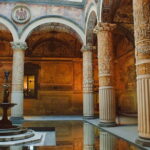
- The tour visits the Palazzo Medici Riccardi area, including its courtyard.
- You also get pointed attention to the Medici Chapels and what their design signals about power and taste.
If you’re the type who likes to understand who paid for the art and why, this part is the payoff. Florence can feel like it’s just stacked with masterpieces. The guide helps you see the patronage engine behind them—banking wealth turning into chapels, art, and architectural statements.
Brunelleschi’s Cloister: A Quiet Pause That Matters
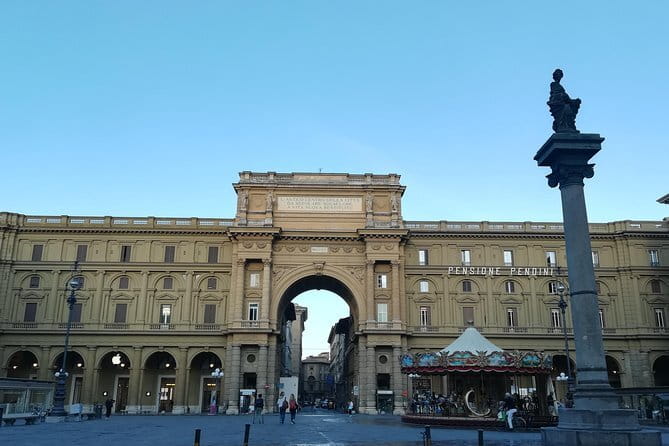
One highlight is the cloister connected with Brunelleschi’s design at the Basilica of San Lorenzo complex. It’s described as an elegant, peaceful pocket—very much the opposite of the loud square-energy you’ll get later.
Why this stop is worth your attention: cloisters are designed to control the experience. They’re not just pretty—they create a different mood with proportions, light, and rhythm. Even if you only spend a short time there, it helps you understand why Renaissance architecture wasn’t only about “big domes.” It was also about creating ordered, human-scaled spaces.
A practical tip: if you visit in cooler months, plan a layer. Several people noted that standing around for explanations can feel chilly, especially when you’re waiting in open areas.
Duomo Complex: Dome, Baptistery, and Giotto’s Bell Tower
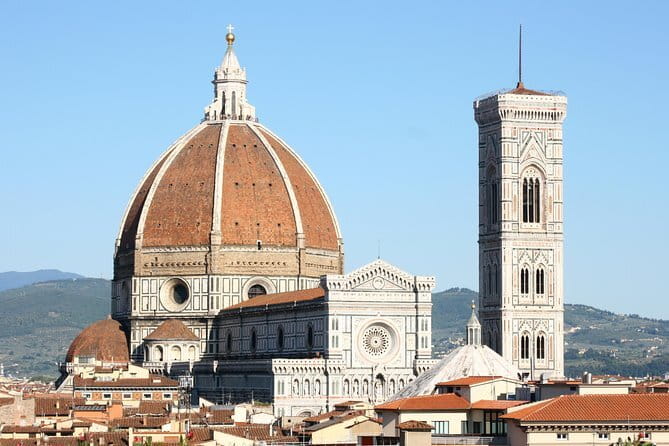
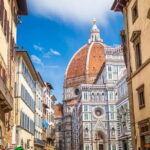
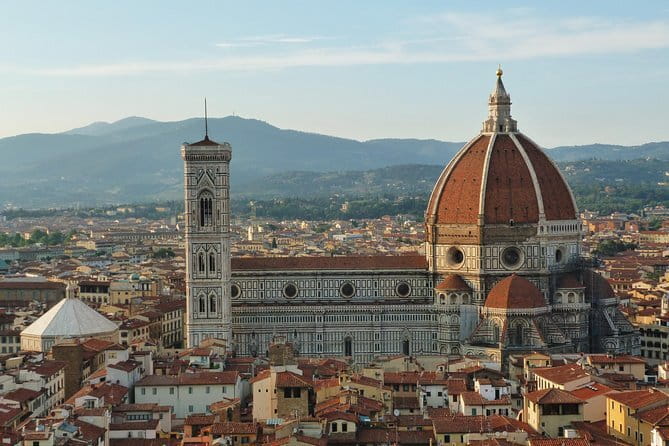
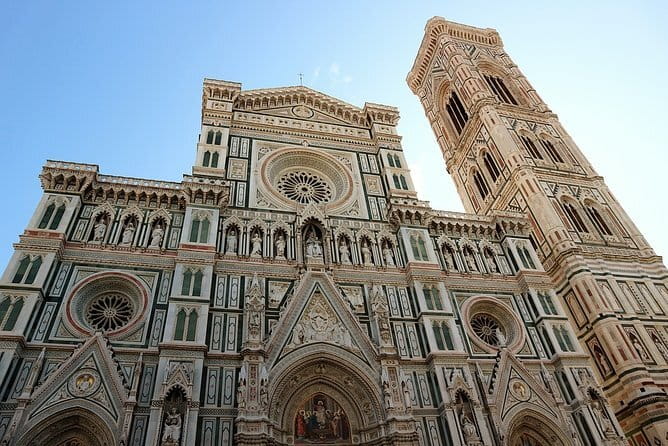
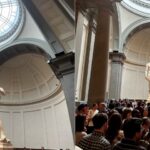
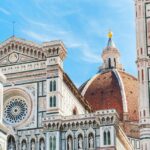
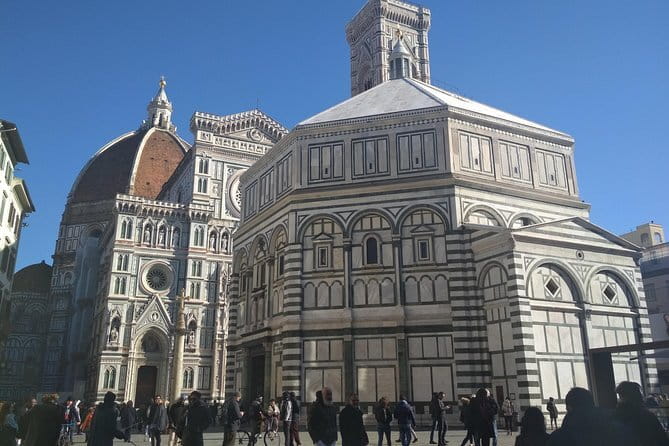
Next comes the Duomo area—Piazza del Duomo, with the Cathedral, Brunelleschi’s Dome, the Baptistery, and Giotto’s Bell Tower all around you. This is where Florence goes from “nice buildings” to “how did they do this?”
The guide’s angle here is architectural history. You’ll get the background for how the complex fits together, rather than just being told that it’s famous. I also like that the tour keeps the focus on what you can actually see from street level and plaza vantage points—useful if you don’t plan to buy tickets for every monument that day.
Also, don’t underestimate the crowd factor. The Duomo square is popular for a reason, and at stops like this, the timing and pace matter. If you’re hoping to take your own photos without waiting, bring the patience you’d bring to any major landmark hub.
Fontana del Porcellino: Luck, Tradition, and a Quick Real-World Break
Then you’ll reach Il Porcellino, the bronze piglet statue at the Mercato della Paglia (straw market) area. This stop is short, but it adds something different from the bigger monuments: it’s an everyday tradition you can try in the middle of all the grand Renaissance talk.
Think of it as a mental reset. After domes and chapels, it’s nice to have a quick, local-feeling moment where people actually interact with a landmark.
If you want to get a clear photo, aim for a little patience. Statues like this tend to gather a crowd because everyone wants the same angle and the same hand placement.
You can also read our reviews of more guided tours in Florence
- The Best tour in Florence: Renaissance & Medici Tales – guided by a STORYTELLER
★ 5.0 · 12,316 reviews
Piazza della Signoria: Open-Air Sculpture Energy

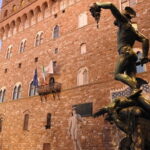
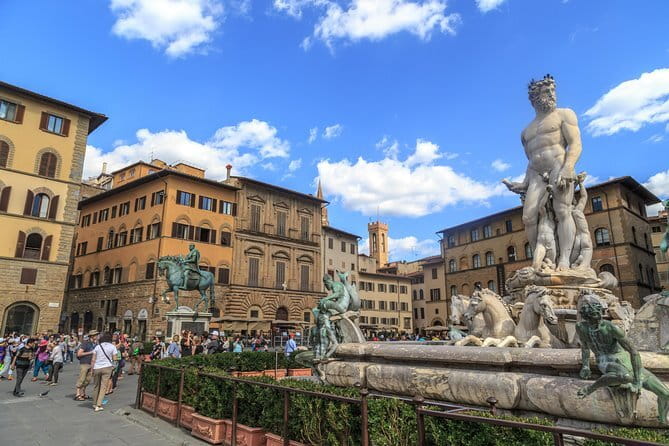
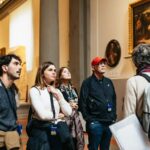
Piazza della Signoria is Florence’s “public stage.” Here you’ll see Palazzo Vecchio and a concentration of famous sculpture. The tour specifically highlights Giambologna’s Rape of the Sabine Women, which is one of those works that hits harder in person than it does in photos.
What’s valuable about this stop isn’t only the art—it’s the sense of how Florence used space. Squares weren’t empty backdrops. They were social and political places. Standing in front of Palazzo Vecchio while hearing the guide connect it to the surrounding symbols makes the whole square feel less random.
Also, this is the part of the tour where people often notice the crowd. It’s a good area for paying attention to the guide’s timing. If your group is switching languages here, expect more time standing in place.
Over to the River: Ponte Vecchio and the Vasari Corridor Line
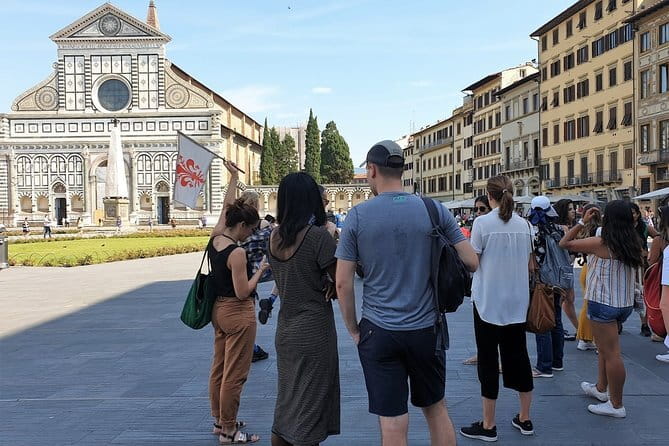
From Piazza della Signoria, the route continues toward the Ponte Vecchio area. You’ll also follow the outer line of the Vasari Corridor passing through key viewpoints, including the Uffizi courtyard area (from the outside).
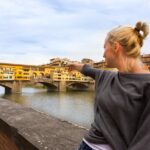
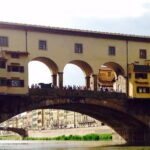
Then comes the famous bridge itself—the oldest bridge in Florence, known for the shops along it. This is where Florence turns scenic fast: river, architecture, and the sense that the city is layered on top of itself.
Why I like this stop for first-timers: it shows you where the city’s power and wealth were comfortable being seen. The bridge isn’t just a crossing. It’s a statement.
Note: the tour includes time walking across the historic river area and finishing in the Ponte Vecchio zone. If you want to linger after the tour, this is a good place to do it.
Pitti Palace and the Transition to Medieval Florence
The tour then reaches the Pitti Palace area, moving you from the “Renaissance spotlight” toward a broader sweep of Florentine identity. Even from the outside, Pitti signals something big: this is a different kind of influence than what you saw in the Medici chapels and ducal squares.
Finally, you move into the medieval quarters, where the pace and feel shift again. This is where the tour adds names you’ll recognize from literature and older civic life—like Dante Alighieri and the Badia Fiorentina area.
You also see Bargello Palace from the outside. It’s a reminder that Florence wasn’t only Renaissance polish. It has older civic roots, and that medieval structure shapes how the Renaissance looked when it arrived.
The VOX CITY App: Good Add-On or Paperweight?
You’re getting more than a walking guide—you also get access to a self-guided mobile city guide through the VOX CITY app. The tour includes multilingual audio commentary tied to the points of interest.
Here’s what you should plan for:
- Download VOX CITY before you start exploring.
- You’ll need your own phone.
- You’ll need your own headphones to use the app audio.
One key detail: you’ll receive app credentials from an assistant before the walk starts. So treat this like a warm-up step. Do it early, while you’re still fresh.
Is the app essential? Not strictly. But it’s a smart way to keep your understanding going after the tour—especially if you want to stop at one or two places for deeper time without losing the thread.
Price and Value: What $30.04 Buys in Florence
At $30.04 per person for about 1.5 hours, you’re paying for two things: expert local storytelling during a short route, plus a guided structure you can extend with the app afterward.
That’s decent value in Florence for a few reasons:
- You’re not just ticking off names. The route is designed to connect Medici influence and architectural history to specific landmarks.
- You end near a prime location (Ponte Vecchio), which helps you keep moving without backtracking.
- The app audio adds a second layer of interpretation when you’re exploring on your own.
What you’re not paying for: entrance tickets to attractions. The tour notes show some items with free-entry labels, but the package doesn’t include attraction entry as a rule. If you want to go inside major monuments, you’ll likely plan extra time and tickets yourself.
For many visitors, this tour works as a context-builder. Then you choose later which interiors are worth the extra money.
Pacing, Languages, and Group Size: The Real-World Considerations
This tour caps at 20 travelers, which is a big plus for Florence. Big cities make group tours awkward fast; smaller groups keep you from feeling like a moving traffic jam.
That said, language can affect the rhythm. Multiple people flagged that the tour runs in more than one language, and when it’s split, the guide needs extra time switching. In crowded places, that can mean waiting around longer than you hoped—especially if you’re only listening in English.
You also want to be aware of the “standing time” problem. Explanations happen at stops, and if you’re in cooler weather, you’ll feel it. Bring a layer, and don’t underestimate hand-warming needs when you’re posted in open plazas.
One more practical point: some people mentioned confusion about whether staff were clearly identified. In your case, fix this fast by arriving early and checking where the meeting point staff are gathering.
Who This Tour Fits Best
This is a strong match if you:
- Are in Florence for a short time and want a structured overview.
- Like the Medici story and want it tied to buildings and art.
- Prefer walking tours over bus tours because you like street-level context.
- Want to end near Ponte Vecchio so the rest of your afternoon becomes easy.
It’s less ideal if you:
- Need an English-only experience with zero language switching.
- Want lots of indoor time and ticketed monument entrances during the walk itself.
- Hate standing around in plazas while a guide talks.
Should You Book This Walking Tour?
I’d book it if you want a smart Florence intro that links major Renaissance and medieval sites into one coherent route. The best part is the way the guide ties Medici power, architectural design, and the city’s public spaces together—so the landmarks stop being random and start making sense.
If you’re sensitive to bilingual pacing, check the language setup for your date. Also, bring comfortable shoes and a layer. Florence’s charm is worth it, but the squares can be cold and crowded.
If your plan includes revisiting the Duomo area, Signoria, or the river later, this tour gives you the roadmap in your head before you spend time wandering.
FAQ
How long is the Renaissance and Medieval Florence guided walking tour?
It runs for about 1 hour 30 minutes.
How much does the tour cost?
The price is listed as $30.04 per person.
Where does the tour start and where does it end?
The meeting point is Via de’ Martelli, 50, 50122 Firenze FI, Italy, and the tour ends at Ponte Vecchio, 50125 Firenze FI, Italy.
What language is the guided portion offered in?
The tour is offered in English.
Is entrance to attractions included?
No. Entry to attractions is not included.
Do I need headphones for the app?
Yes. You need your own smartphone headphones to enjoy the app audio commentary after the guided tour.
What app is used for the self-guided part?
The app is VOX CITY, available on iOS and Android.
How big is the group?
The tour has a maximum of 20 travelers.
Can I cancel for a full refund?
Yes. You can cancel up to 24 hours in advance for a full refund. If you cancel less than 24 hours before the start time, the amount paid is not refunded.
If you want, tell me your travel month and whether you prefer museum interiors or outdoor wandering, and I’ll suggest a simple day plan that pairs well with this route.
You Might Also Enjoy
More Walking Tours in Florence
More Tours in Florence
- The Best tour in Florence: Renaissance & Medici Tales – guided by a STORYTELLER
★ 5.0 · 12,316 reviews




More Tour Reviews in Florence
- Tuscany Day Trip from Florence: Siena, San Gimignano, Pisa and Lunch at a Winery
★ 5.0 · 21,634 reviews - The Best tour in Florence: Renaissance & Medici Tales – guided by a STORYTELLER
★ 5.0 · 12,316 reviews