REVIEW · FLORENCE
Private Guided Tour of Florence Basilicas and Their Cloisters
Book on Viator →Operated by CAF Tour and Travel · Bookable on Viator
That first church-to-church walk is pure Florence. This private 3-hour tour strings together Santa Maria Novella, San Lorenzo, and Santa Croce with cloisters that most people skip. I like that you’re with a real guide for the slow look—pinpointing works like Giotto’s Crucifix and the Medici tombs—without turning it into a sprint. The one thing to consider: paid entry is not included for the basilicas, so plan for a ticket add-on on top of the tour price.
You start at the Basilica of Santa Maria Novella and end in Santa Croce, with the Duomo and Piazza della Signoria slotted in between. In the reviews I’ve read, guides named Alessandra and Gabrielle stood out for explaining what you’re seeing in plain language and keeping the pace comfortable—useful if your group includes kids or adults who don’t want to rush.
If you like big art moments more than “see everything,” this format fits. You’ll get a focused morning route, but it’s still a lot to absorb in about three hours, so you may want to return to your favorite basilica for a longer look afterward.
In This Review
- Key things I’d zero in on
- A morning route built around Florence’s Medici-to-Duomo story
- Basilica of Santa Maria Novella: Alberti’s façade, Giotto and Masaccio inside
- The Green Cloister at Santa Maria Novella: Paolo Uccello murals in green earth
- Basilica di San Lorenzo: Medici tombs, Old Sacristy by Brunelleschi, and the orange-tree cloister
- Piazza del Duomo and Piazza della Signoria: quick civic context without the full tour
- Basilica of Santa Croce: frescoes by Giotto and Gaddi, plus famous tombs
- Tickets and price: how $205.47 per person pencils out
- Pace, comfort, and who this private tour really fits
- Should you book this Florence basilicas and cloisters tour?
- FAQ
- How long is the tour?
- Where does the tour start?
- Where does the tour end?
- Is this tour private?
- Is the tour offered in English?
- Are tickets included?
- Which basilicas are included in the route?
- What’s included besides the guide?
- Does the tour operate on major holidays?
- Who can participate?
Key things I’d zero in on
- Private guide, small-group attention that makes the art make sense fast
- Cloisters with major fresco cycles, including the Green Cloister by Paolo Uccello
- Medici power in stone and orange tree symbolism at San Lorenzo’s cloister courtyard
- A smart hit of the Duomo and Piazza della Signoria for context without long waits
- Santa Croce as a finale: frescoes, the Crucifix and Annunciation, plus big-name tombs
A morning route built around Florence’s Medici-to-Duomo story
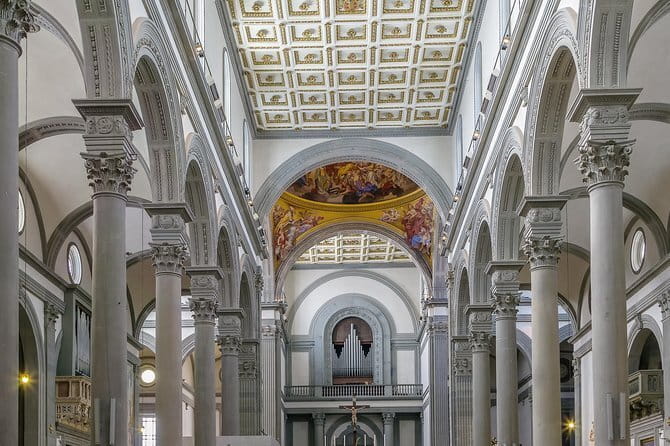
This tour works because it’s not just three churches on a checklist. It’s a guided storyline across Florence’s religious power centers, showing how the Medici shaped what you see—inside chapels, in cloister courtyards, and around civic squares.
I like the pacing more than I expected. The route moves in clear blocks—about an hour inside Santa Maria Novella, then nearly an hour for San Lorenzo and its cloister, then a brief walk through Piazza del Duomo and Piazza della Signoria, and finally about 50 minutes in Santa Croce. That “enough time to notice details” approach is a big deal in Florence, where time can disappear quickly.
The practical win for you: you won’t spend your energy figuring out what’s important once you’re inside. You’ll stand where the guide wants you to stand and get the story of why a specific painting, tomb, or architectural feature matters.
One more real-life tip: the basilicas you’ll visit have popular art and can get crowded. Going with a guide helps you time your looking—especially when you’re aiming for specific works like Giotto’s Crucifix, Masaccio’s Trinity, or the Medici funerary monuments.
You can also read our reviews of more guided tours in Florence
- The Best tour in Florence: Renaissance & Medici Tales – guided by a STORYTELLER
★ 5.0 · 12,316 reviews
Basilica of Santa Maria Novella: Alberti’s façade, Giotto and Masaccio inside
You meet your private guide outside the Basilica of Santa Maria Novella at Piazza di Santa Maria Novella, 18. Then you step into the church’s big Renaissance moment: the façade designed by Leon Battista Alberti, covered in white and green marble. Even before you’re inside, it sets up what you’ll see next—church art and architecture in conversation.
Inside, the time is about focused looking, not wandering. You’ll learn the setting: the basilica was founded by the Dominican Fathers at the start of the 1200s, and the guide explains the mendicant order of friars who have long been part of this church’s life. That matters because the church is not just a museum shell. It’s a working religious building with layers of meaning.
From an art-lover’s standpoint, this stop is strong because the highlights are the kind you can’t easily “guess” at without help:
- You’ll see Giotto’s Crucifix. If you’ve seen Giotto’s work before, you’ll recognize the weight of the figures and the way the scene lands emotionally.
- You’ll also encounter Masaccio’s Trinity, another landmark that represents a shift in how space and form are handled in Renaissance painting.
- The guide points out frescoes by Filippino Lippi and Ghirlandaio, which helps you connect names to styles instead of just collecting a list of titles.
Expect to walk slowly and take in both the art and the church setting. One thing to keep in mind: this is an approximately one-hour stop, so it’s the “most important works, carefully explained” version rather than the “sit and stare for hours” version.
The Green Cloister at Santa Maria Novella: Paolo Uccello murals in green earth
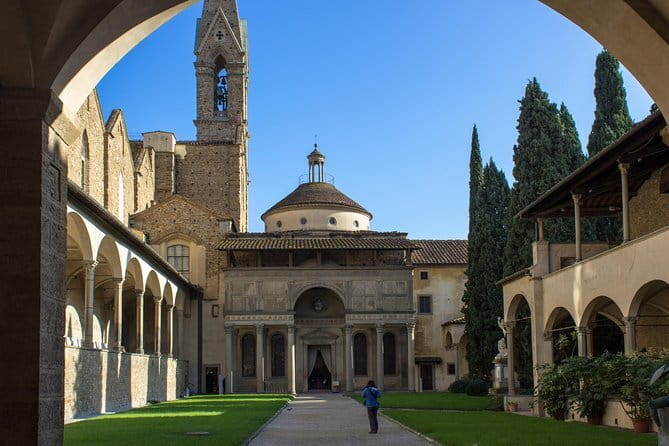
Your Santa Maria Novella visit ends in the Green Cloister, named for the look of the murals made with green earth pigment by Paolo Uccello. This is a standout moment on the route because cloisters change the feel of a visit. You’re no longer inside the main church space; you’re in a quieter courtyard-like setting where art blends into daily architectural rhythms.
What you’re doing here is learning how Florence likes to tell stories in layers. The cloister murals add a different kind of visual language—something you usually only catch if you know exactly where to look. With a guide, you get pointed to what matters instead of treating it like background decoration.
If you’re the kind of person who loves “small” spaces that suddenly turn meaningful, you’ll like this. It’s one of the best payoff points in the first part of the tour.
Basilica di San Lorenzo: Medici tombs, Old Sacristy by Brunelleschi, and the orange-tree cloister
Next you head into the Medici quarter, arriving at Basilica di San Lorenzo, Florence’s oldest church. The guide gives you the timeline: consecrated in 393, rebuilt in 1000, and later enlarged in 1400 by Brunelleschi at the behest of the Medici family, who chose it as their parish church.
This is the stop where the Medici story gets physical. The tour focuses on a cluster of places that make the Medici feel less like a name from a history book and more like patrons who shaped stone, art, and ritual.
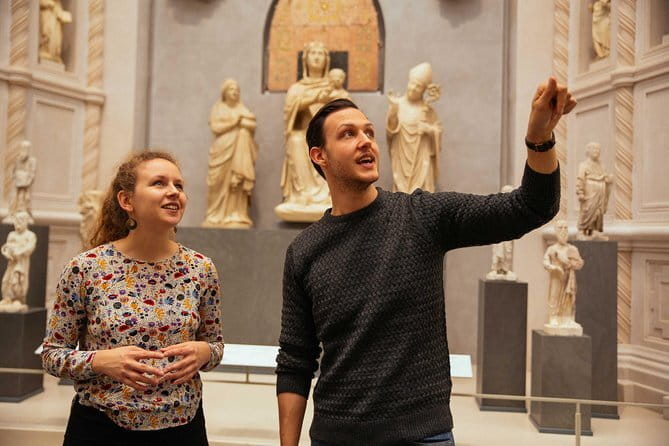
Inside, you’ll spend time in Brunelleschi’s Old Sacristy, where you’ll see Medici founders’ tombs and a set of major artists linked to the space, including Donatello and Bronzino (plus others you may hear named while inside). This is the kind of church room where details reward you for looking slowly—and having a guide helps you notice what you might otherwise miss.
Then you move into a cloister that adds symbolism you can actually picture. The tour includes the Cloister of the Canons, designed by Brunelleschi, centered on an imposing 16th-century orange tree. The guide explains why that tree mattered to the Medici family and became a kind of symbol of their dynasty. It’s a memorable image, and it’s also the kind of detail that makes the tour feel more grounded than “just famous sites.”
Time here is about 50 minutes, so again, it’s focused—enough to understand the core pieces without turning the morning into a marathon.
Piazza del Duomo and Piazza della Signoria: quick civic context without the full tour
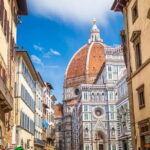
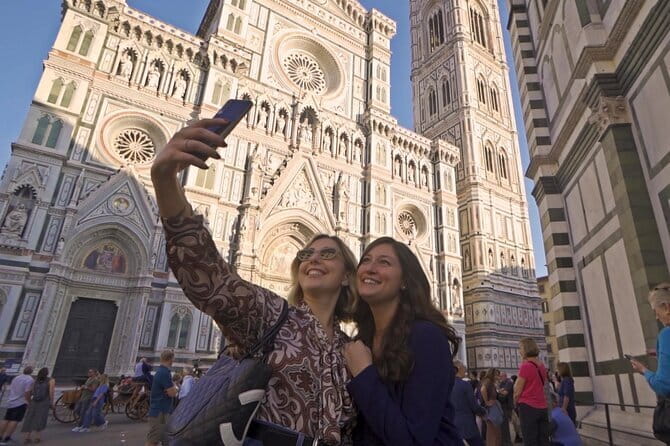
After San Lorenzo, you step into Piazza del Duomo, Florence’s religious center. Your time is brief—around ten minutes—but it’s still useful because the guide helps you orient yourself around the big shapes:
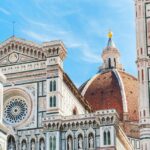
- the Cathedral and its famous dome
- the Baptistery
- Giotto’s Campanile (bell tower)
This part is about getting your bearings. When you later see these landmarks from different angles around the city, you’ll understand how they connect.
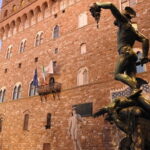
Then the route continues to Piazza della Signoria, another quick stop for context. Here you’ll get the sense of Florence as a civic stage, and the guide connects the story to the Medici family, explaining how their power was tied to the city for centuries. Even in ten minutes, the key is direction: where you’re standing, what you’re looking at, and why it mattered.
You can also read our reviews of more private tours in Florence


Basilica of Santa Croce: frescoes by Giotto and Gaddi, plus famous tombs
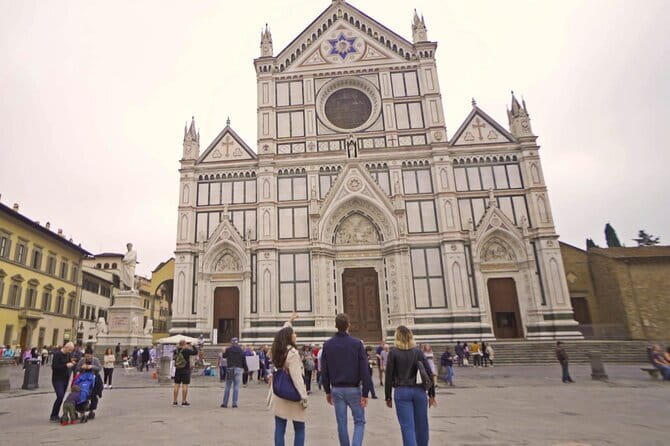
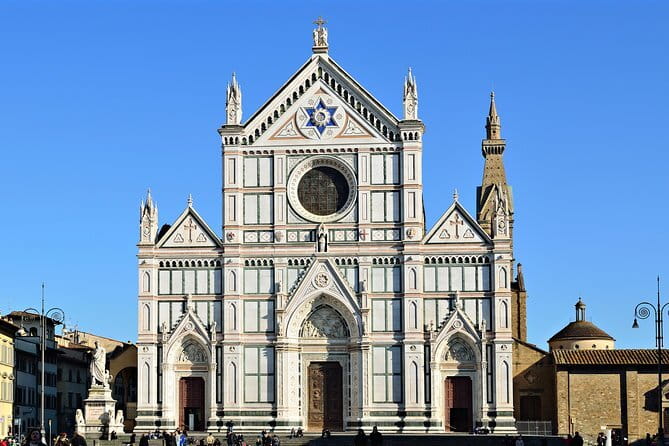
Your final stop is Basilica of Santa Croce, entered at Piazza di Santa Croce, 16. This church is known for its Gothic architecture and a façade clad in polychrome marble. The guide frames Santa Croce not just as art storage, but as a Franciscan setting that originally sat outside the city walls.
Inside, you’ll focus on the fresco and sculpture highlights that make the church famous:
- frescoes by Giotto and Agnolo Gaddi
- Donatello works such as the Crucifix and the Annunciation
- funerary monuments and tombs of major figures, including Michelangelo, Galileo, and Machiavelli
The effect of this finale is that the tour lands on a mix of visual drama and cultural influence. Santa Croce can feel like a greatest-hits museum if you go alone; with a guide, it feels more like a curated argument—this is why Florentines built and remembered these people here.
Time is about 50 minutes, so you’ll likely experience Santa Croce in “key works” mode. If you already know which tomb you want to see most, tell your guide at the start of this stop. You can usually steer where the attention goes inside the time limit.
After the church interior, you enter the Brunelleschi Cloister, then continue to the Ancient Cloister and the Pazzi Chapel. The Pazzi Chapel is described as a sublime example of Renaissance harmony, also associated with Brunelleschi’s work. This cloister sequence is a nice way to end: art on walls, then art in the architecture, then a calm feeling of symmetry before you head back out.
Tickets and price: how $205.47 per person pencils out
The tour price is $205.47 per person for about 3 hours. It’s private, meaning your group stays together and you don’t share the experience with strangers in the way large group tours do.
What you get for that price:
- a local professional guide at your side
- mobile ticketing
- earphones if your group is more than 7 participants
- the full route structure, from Santa Maria Novella to Santa Croce with Duomo and Piazza della Signoria context
What you pay separately:
- Santa Maria Novella Basilica ticket (adult €7.50, ages 11–16 €5, 10 and under free)
- San Lorenzo Basilica ticket (full price €6.00, free for children under 11)
- Santa Croce Basilica ticket (adult €8.00, ages 11–16 €8.00)
If you’re an adult paying full price tickets, you’re likely looking at roughly €21.50 in basilica entry fees on top of the tour price. That’s not unusual for Florence, but it matters when you’re comparing value.
Here’s how I’d judge the bargain:
- If your group includes art lovers or anyone who appreciates context, the guide can pay for itself in time saved and meaning gained.
- If your group wants a long, slow church-by-church experience with lots of free time for quiet wandering, 3 hours can feel tight—though the guide does a lot to make that time count.
One practical note: this tour isn’t offered on major holidays, so you’re not as likely to hit the worst congestion days. Still, basilicas are always popular, so I’d show up ready for short waits at entrances and keep your expectations realistic.
Pace, comfort, and who this private tour really fits
This is the kind of route that suits people who want a guided overview with memorable stop points. In the reviews tied to this experience, the consistent theme was that guides kept a comfortable pace and explained things in a way that worked for different ages. One guide—Alessandra—was highlighted for in-depth explanations of art, buildings, and the history behind what you’d see.
Another guide—Gabrielle—was praised for being born and raised in Florence and explaining details across painting, sculpture, crosses, and symbols in a way that made the churches feel like living places instead of formal monuments.
So who is this best for?
- You want a guided route that doesn’t require you to do research before you arrive.
- You care about the “why” behind major works, not just the fact that a famous artist was here.
- Your group includes mixed interests (architecture, painting, tombs) and you don’t want to split up.
Who might want something else?
- If you want to spend serious time in one basilica—especially if you’re planning to do a deep photo session—this route may feel like it moves on before you’re ready.
- If cloisters are your top priority, you’ll get them here, but only as part of the broader sweep, not as the main event for hours.
Should you book this Florence basilicas and cloisters tour?
I’d book it if you want a tight, high-impact morning that links three major basilicas and their cloisters into one clear story. The best payoff is the combination of key artworks (Giotto, Masaccio, Donatello) and architectural “meaning” (Brunelleschi, the Medici cloisters, and the orange tree).
Skip it if your idea of a great day in Florence is long, unstructured wandering in a single church or you don’t care about guided context. For that style, you can absolutely do it on your own—just know you’ll spend more time figuring out what to notice.
FAQ
How long is the tour?
The tour lasts about 3 hours.
Where does the tour start?
You meet outside the Basilica of Santa Maria Novella at Piazza di Santa Maria Novella, 18, 50123 Firenze FI, Italy. The start time is 10:00 am.
Where does the tour end?
The tour ends at the Basilica of Santa Croce in Florence, Piazza di Santa Croce, 16, 50122 Firenze FI, Italy.
Is this tour private?
Yes. This is a private tour/activity, and only your group participates.
Is the tour offered in English?
Yes, it’s offered in English.
Are tickets included?
No. Tickets for the basilicas are not included. You’ll pay on the spot for Santa Maria Novella, San Lorenzo, and Santa Croce.
Which basilicas are included in the route?
The route includes Basilica of Santa Maria Novella, Basilica di San Lorenzo, and Basilica of Santa Croce, plus short stops around Piazza del Duomo and Piazza della Signoria.
What’s included besides the guide?
The tour includes a local professional guide. If your group is more than 7 participants, earphones are provided. You also get a mobile ticket.
Does the tour operate on major holidays?
No, this tour does not operate on major holidays.
Who can participate?
The information says most travelers can participate. Confirmation is received at booking time.
You Might Also Enjoy
More Guided Tours in Florence
- The Best tour in Florence: Renaissance & Medici Tales – guided by a STORYTELLER
★ 5.0 · 12,316 reviews
More Tours in Florence
- The Best tour in Florence: Renaissance & Medici Tales – guided by a STORYTELLER
★ 5.0 · 12,316 reviews

More Tour Reviews in Florence
- Tuscany Day Trip from Florence: Siena, San Gimignano, Pisa and Lunch at a Winery
★ 5.0 · 21,634 reviews - The Best tour in Florence: Renaissance & Medici Tales – guided by a STORYTELLER
★ 5.0 · 12,316 reviews