REVIEW · FLORENCE
Private Florence San Marco Museum Tour with Skip-the-Line Entry
Book on Viator →Operated by CAF Tour and Travel · Bookable on Viator
San Marco feels more like walking into a working convent than a typical museum. This private tour gives you skip-the-line admission and a close-up, calm route through the Dominican spaces, where art, faith, and politics all share the same walls.
Two things I especially like: you get to focus on the big names in context—Fra Angelico (Beato Angelico), Fra Bartolomeo, and Domenico Ghirlandaio—and you also hear the darker backstory of Girolamo Savonarola, a monk executed in 1498. One possible drawback: the experience is about 2 hours, so if you want to linger in just one room for ages, you may feel a bit time-shaped.
In This Review
- Key points before you go
- San Marco’s convent feel, without the museum rush
- Skip-the-line entry: what it means for your time
- Cloister of St. Anthony: your “set the scene” start
- Fresco-painted doors and Beato Angelico’s route
- Great Refectory and the kitchen/service areas
- Small Refectory and Ghirlandaio’s Last Supper
- Monks’ cells: Beato Angelico’s showpiece experience
- Girolamo Savonarola’s cell and the 1498 story
- The Library and Medici manuscripts
- San Marco and Santissima Annunziata: the quick neighborhood add-on
- Practical value: price, duration, and what you’re buying
- Who should book this private San Marco tour
- Booking checklist and small details that matter
- Should you book this private San Marco Museum tour?
- FAQ
- How long is the private San Marco Museum tour?
- Where do I meet the guide?
- Is skip-the-line entry included?
- What will I see inside San Marco Museum?
- Is the tour private?
- What do I need to enter the museum?
Key points before you go
- Skip-the-line entry helps you start smoothly at the main museum entrance.
- The tour is built around the convent layout, not just a standard museum checklist.
- You’ll see the fresco-painted doors, the cloister spaces, and then move room to room in a logical flow.
- You get specific stops tied to major artists: Beato Angelico, Fra Bartolomeo, and Ghirlandaio.
- The visit ends with a short exterior look at Piazza San Marco and Piazza della Santissima Annunziata nearby.
San Marco’s convent feel, without the museum rush
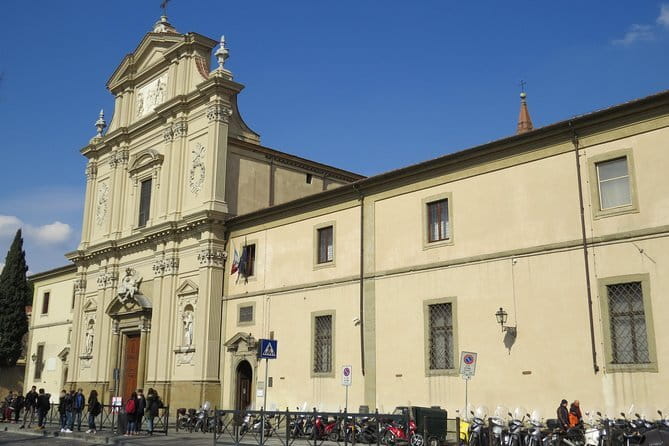
San Marco Museum sits inside a 15th-century Dominican convent, so the vibe is different from the grand, marble-heavy museums elsewhere in Florence. You meet your guide outside on Piazza San Marco (Piazza San Marco, 3), then you start by looking at the exterior and getting oriented to the architecture and how this place still connects to Dominican life today. That matters, because the art doesn’t feel like it was dropped into a gallery. It was made for a living community and its daily routine.
With a private format, your pace is more natural. You’re not scanning labels like a tourist speedrun. You can ask questions while you’re standing in front of the frescoes—right where the details and colors actually land.
One more practical win: the tour includes skip-the-line tickets, so you’re aiming to avoid the main entrance crush. You still need to follow museum entry rules like everyone else, but you’re not forced to spend your limited sightseeing time threading a line.
You can also read our reviews of more private tours in Florence


Skip-the-line entry: what it means for your time
Skip-the-line doesn’t mean instant access to every room the moment you arrive. It means you’re cutting the slowest part—getting through the main entrance area—so your tour time starts doing useful work right away.
Here’s how I think about it: Florence museums often turn into a timing game. If you’re going to spend money on a special tour, you want that money to buy back something you can feel—less waiting, less stress, and more time with the art. This one is designed for that, with skip-the-line admission built into the museum portion (about 1 hour 45 minutes).
Also, booking tends to sell out if you leave it late. This is the kind of experience that’s commonly reserved about a month ahead on average, so it’s smart to lock your date early.
Cloister of St. Anthony: your “set the scene” start
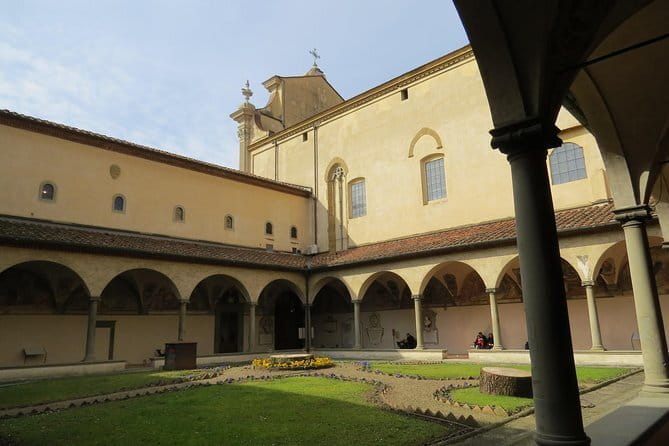
The tour begins in the Cloister of St. Anthony, and that’s a great way to start because it gives you the rhythm of the place. You’re not immediately hit with a wall of images; you get context first—how the convent spaces were shaped, and why the art fits the layout.
From here, you’ll notice the doors with fresco-painted lunettes that lead into the older halls. That sounds like a small detail, but it changes how you move. Instead of treating the museum as a sequence of rooms, you experience it as a building with transitions—thresholds and passages designed for everyday movement.
Your guide also connects the convent’s Renaissance credentials to the people behind the commission. Michelozzo is tied to the architectural work, and Cosimo I de’ Medici is part of the story of how this setting became a key artistic and religious space. Knowing that upfront makes the later fresco cycle feel less random and more intentional.
Fresco-painted doors and Beato Angelico’s route
A big reason to come to San Marco is the fresco work by Fra Angelico, also known as Beato Angelico. This tour keeps you from getting lost in the same way a self-guided museum visit can. You’ll move from cloister spaces to the main rooms where Beato Angelico’s works anchor the experience.
The special touch is that you’re not just seeing individual paintings. You’re stepping through the convent areas where the frescoes connect to the monastic environment. That’s what makes the museum feel like a place with logic rather than a warehouse of masterpieces.
If you love art history but hate art history lectures, this is where it helps. Your guide turns the frescoes into human-scale stories: where monks lived, what they used these spaces for, and how the art supported daily life.
Great Refectory and the kitchen/service areas
Next up is the Great Refectory, where you’ll see paintings by Fra Bartolomeo. The refectory is a smart stop because it ties artwork to a practical setting. Eating and communal routine weren’t separate from spiritual life—so the art belongs in the room where people gathered.
From there, you continue through adjacent areas including what’s described as the kitchen and service spaces. This matters because these “in-between” zones help you understand the whole functioning convent, not just the star rooms.
Even when you’re not staring at a single masterpiece, these segments give you scale. You start to feel how people moved through the building, and how the art would have been part of everyday sightlines.
You can also read our reviews of more museum experiences in Florence

Small Refectory and Ghirlandaio’s Last Supper
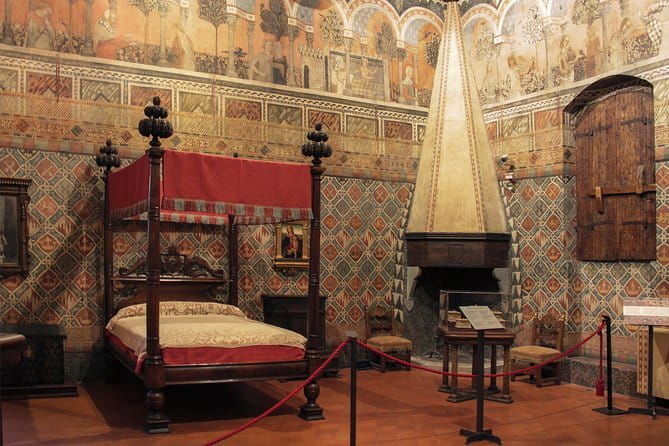
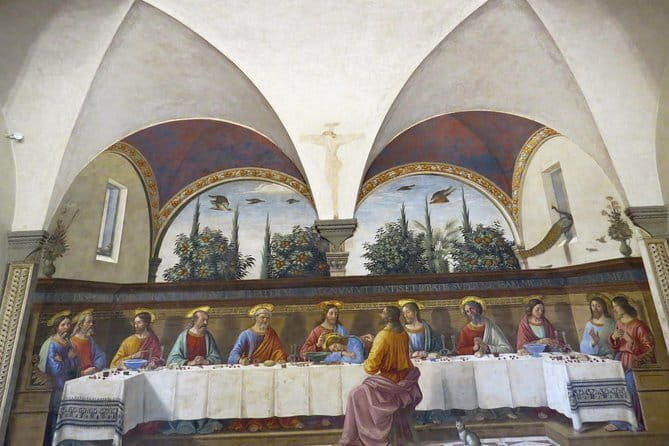
The Small Refectory is a highlight for a lot of people, and it’s easy to see why. Here you get a preserved fresco of the Last Supper by Domenico Ghirlandaio.
Last Supper frescoes can sometimes feel like a universal cliché in Italy, but the setting changes everything. In San Marco, you’re seeing it as part of a Dominican context—connected to the religious function of meals and communal living. That makes the imagery land with more meaning than it would in a neutral gallery.
This is also one of those rooms where questions pay off. If you care about composition, symbolism, or why this theme shows up where it does, your guide can point out how to look without turning it into a textbook.
Monks’ cells: Beato Angelico’s showpiece experience
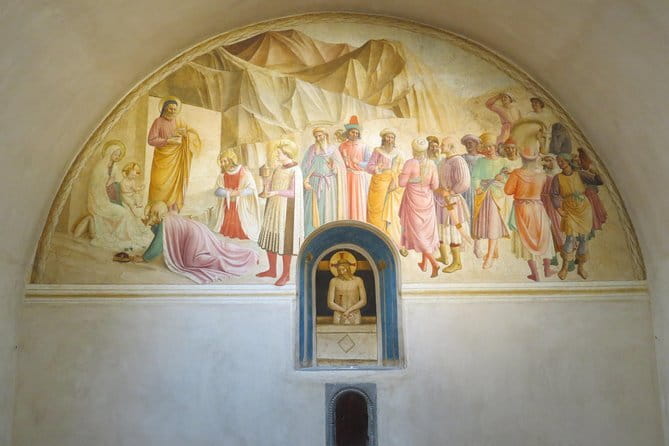
Then comes what I’d call the museum’s emotional center: the monks’ cells, reached upstairs. This is where you see the showpiece cycle of frescoes created by Beato Angelico for his fellow monks.
The reason this stop hits is simple: you’re not looking at art from across a crowd. You’re in spaces that were meant for solitude and daily contemplation. The fresco cycle is designed for the people who lived there, and that makes the paintings feel less like museum objects and more like companion works for a particular life.
You’ll likely move through the rooms at a steady pace with time to ask questions, which is crucial. In a self-guided visit, people often rush the cells because they assume they know what they’ll see. A guided approach helps you notice what you’re actually looking at.
Girolamo Savonarola’s cell and the 1498 story
After the Beato Angelico fresco cycle, you’ll visit the cell once used by Girolamo Savonarola. Savonarola is described as a Dominican friar and a Renaissance firebrand who was burnt at the stake in 1498 in Piazza della Signoria.
This part adds weight to the museum. San Marco isn’t only beautiful; it’s also tied to power, conflict, and consequence. When you hear the story in the place where he lived, it’s harder to reduce him to a footnote in a Florence timeline.
If you’re the kind of person who likes to connect art to real people and real stakes, this stop is a strong match. And if politics-heavy history isn’t your thing, the setting still helps: you get the basics without losing the focus on the art.
The Library and Medici manuscripts
The tour ends in the library area, described as home to priceless manuscripts owned by the Medici family. Even if you don’t spend hours reading, the library stop helps you understand what elite patronage looked like here: wealth, knowledge, and religious community connected in the same physical footprint.
This final museum segment is also where the tour pacing feels right. After the refectories and cells, the library gives you a softer landing—one last context layer before you step back into the outside world.
San Marco and Santissima Annunziata: the quick neighborhood add-on
After the museum portion, you get a short exterior-guided look at nearby squares: Piazza San Marco and Piazza della Santissima Annunziata. It’s only about 15 minutes, but it’s worth it because it places San Marco on the map of central Florence life instead of leaving it as a standalone visit.
You’ll stroll toward Santissima Annunziata, including the Santissima Annunziata church and the nearby Spedale degli Innocenti, described as Europe’s oldest orphanage. Your guide points out buildings of interest and helps you read the urban layout around the convent.
This is the kind of add-on that’s easy to skip if you’re optimizing time, but it’s a nice way to connect your museum visit to what you can actually see outside the walls.
Practical value: price, duration, and what you’re buying
At $175.80 per person and about 2 hours total, you’re paying for three things:
1) a guided route through a complex building layout,
2) skip-the-line museum entry,
3) a private format that lets you ask questions without crowd pressure.
If you were to self-guide San Marco, you’d save money—but you’d also lose the “why this room, why this sequence” experience, especially around Beato Angelico and the Savonarola context. For me, this tour is strongest when you care about more than just taking photos. It’s for people who want the art explained in the spaces it was made for.
If your party is larger, you may also benefit from earphones provided for groups of more than 7 participants, which can make conversations and listening smoother. And since it’s offered in English, it’s a solid choice if you want interpretation without language hurdles.
A note on timing: the start time is 9:00 am. A morning slot usually helps you avoid the busiest waves of visitors, and it gives you better light and more relaxed walking energy in the city.
Who should book this private San Marco tour
This experience is a great fit if you:
- want the real San Marco feel as a convent setting, not just a checklist museum visit
- care about religious art with specific names attached—Beato Angelico, Fra Bartolomeo, Ghirlandaio, and Savonarola
- like the idea of a private pace where you can ask questions while you’re standing in the right room
- would rather spend time looking than waiting at the entrance
It may not be ideal if:
- you expect a long, slow museum marathon
- you need to move at a very independent pace from start to finish without any guided structure
Booking checklist and small details that matter
A few practical rules can affect entry. Each traveler needs to show a valid passport or ID matching the name used at booking for successful entry. The booking requires full traveler names, and if names don’t match, entry could be denied at the attraction.
You’ll also want to plan for the meeting point: the tour starts at Museo di San Marco, Piazza San Marco, 3. It ends back at the meeting point, so you’re not left figuring out how to connect to the next leg of your day.
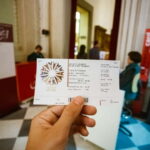
The tour includes a mobile ticket, which is handy, but always make sure your details are correct before you arrive.
Should you book this private San Marco Museum tour?
Yes, if you want a guided visit that matches the building’s spiritual and artistic purpose. The combination of skip-the-line access, a structured walkthrough of key convent spaces, and story-driven context around major artists makes this one of the easier “high value” choices for Florence.
Book it especially if you’re coming for Beato Angelico and want to understand why these frescoes work in this specific setting—not just that they’re famous. If you’re short on time in Florence, the 2-hour format is also friendly. You’ll see the core, get context, and still have energy left for the rest of the day.
FAQ
How long is the private San Marco Museum tour?
It lasts about 2 hours total, with around 1 hour 45 minutes inside the museum and additional time for the nearby exterior visit.
Where do I meet the guide?
You meet at Museo di San Marco, Piazza San Marco, 3, 50121 Firenze FI, Italy, and the tour ends back at the same meeting point.
Is skip-the-line entry included?
Yes. The tour includes San Marco Museum skip-the-line tickets, so you can bypass the main entrance lines.
What will I see inside San Marco Museum?
You’ll visit the convent spaces including the Cloister of St. Anthony, Great Refectory, Small Refectory with the Last Supper by Domenico Ghirlandaio, the monks’ cells with frescoes by Beato Angelico, the cell used by Girolamo Savonarola, and the museum’s library area.
Is the tour private?
Yes. It’s listed as a private tour/activity, meaning only your group participates.
What do I need to enter the museum?
Each traveler needs a valid passport or ID matching the name provided at booking. You must provide the full names of all travelers, or entry may be denied.
You Might Also Enjoy

More Private Tours in Florence

More Tours in Florence
- The Best tour in Florence: Renaissance & Medici Tales – guided by a STORYTELLER
★ 5.0 · 12,316 reviews



More Tour Reviews in Florence
- Tuscany Day Trip from Florence: Siena, San Gimignano, Pisa and Lunch at a Winery
★ 5.0 · 21,634 reviews - The Best tour in Florence: Renaissance & Medici Tales – guided by a STORYTELLER
★ 5.0 · 12,316 reviews