REVIEW · FLORENCE
Pitti Palace & Boboli gardens tour with a Local Guide
Book on Viator →Operated by Slow Tour Tuscany · Bookable on Viator
Medici power plays, all in one walk. This tour strings together Palazzo Pitti and Boboli Gardens with a guide who turns rooms and artworks into a story, not a checklist. I like how you get both court-level art and palace-adjacent surprises, plus a ticket bundle that covers multiple museum floors. One heads-up: the palace and garden route includes a lot of stair climbing, so plan comfortable shoes.
You’ll move with a small group (up to 9) and use earphones, which helps when you’re surrounded by crowds and echoes. The guiding style is a big part of the value here, with names like Tina, Ellena, and Alissa showing up in past experiences for their focus and clear explanations.
For $234.80 per person, you’re paying for access, interpretation, and time-saved logistics more than for transportation. If you’re the type who hates standing in lines or you want long, slow self-guided wandering, this pace might feel a bit tight.
In This Review
- Key highlights worth planning around
- Palazzo Pitti: walking in the Medici-Lorraine-Savoy storyline
- Galleria Palatina: paintings arranged for visual harmony
- Tesoro dei Granduchi: silver, jewels, and court “summer apartment” rooms
- Galleria d’Arte Moderna: Italian modern art inside royal rooms
- Museum of Fashion and Costume: style as history, not just clothing
- Boboli Gardens: Renaissance planning with real-world views
- How the 2.5 hours actually feels: pace, stairs, and smart sequencing
- Group size and guide impact: why the names matter
- Price and value: what you’re really paying for
- Who should book this Palazzo Pitti and Boboli tour
- Should you book?
- FAQ
- Is the tour offered in English?
- How long is the Palazzo Pitti and Boboli tour?
- What’s included in the ticket price?
- Are refreshments included?
- What’s the group size limit?
- Can I cancel for a full refund?
Key highlights worth planning around
- Galleria Palatina uses the 17th-century gallery layout, so the art hangs for harmony and drama, not strict dates.
- Treasury of the Grand Dukes on the ground floor adds Medici-and-Lorraine luxury, from jewels to silver and rock crystal objects.
- Three different palace floors, three different moods: Renaissance/Baroque masterpieces, Italian modern art, then costume history.
- Boboli Gardens feel like an open-air court stage, with fountains, statues, grottos, and classic terrace viewpoints.
- Earphones matter here, especially in rooms where noise and crowds make it hard to hear a guide.
- Be ready for stairs inside Palazzo Pitti and while moving through the garden’s changing elevations.
Palazzo Pitti: walking in the Medici-Lorraine-Savoy storyline
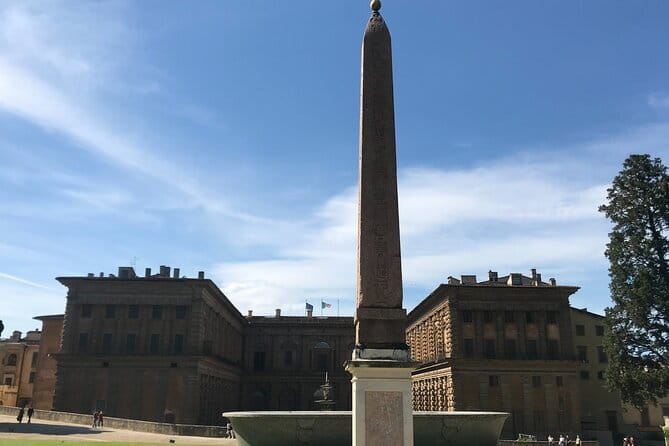
Palazzo Pitti is one of those Florence places where the building itself is part of the act. Your guide starts by placing you in the long power chain—Medici first, then Lorraine, and later the Savoy family—so the art choices in each room make more sense.
This tour is also smart about “thickening” the experience. You don’t just see one museum room and call it a day. You hit a major painting gallery, then jump to decorative court treasures, then go forward in time again with modern art and fashion history. That time-juggling is exactly why the experience feels fuller than a simple single-site visit.
You can also read our reviews of more guided tours in Florence
- The Best tour in Florence: Renaissance & Medici Tales – guided by a STORYTELLER
★ 5.0 · 12,316 reviews


Galleria Palatina: paintings arranged for visual harmony
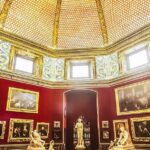
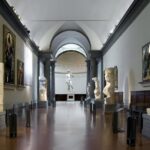
The Galleria Palatina is where Palazzo Pitti most clearly shows its courtly muscle. The paintings live in the opulent state rooms, which were residences for the Medici, then the Lorraine, and later the Savoy families. It’s art in settings built for authority.
One detail I really like: the gallery is arranged in the 17th-century “gallery style.” That means you won’t find everything neatly chronological. Instead, you’ll see works grouped for visual balance and decorative beauty—so the experience feels like a curated backdrop to elite life rather than a textbook.
Expect to encounter major names such as Raphael, Titian, Rubens, Caravaggio, Andrea del Sarto, Pietro da Cortona (especially famous for ceiling frescoes), and more. The point isn’t only spotting famous paintings. It’s understanding why certain works belong together in this room-to-room flow, and how patrons used art to signal taste and power.
Practical note: this is still a museum, so you’ll spend time looking across distances and adjusting to indoor lighting. If you’re sensitive to bright glare, bring sunglasses for outdoor-to-indoor transitions, and give your eyes a minute when you step into deeper rooms.
Tesoro dei Granduchi: silver, jewels, and court “summer apartment” rooms
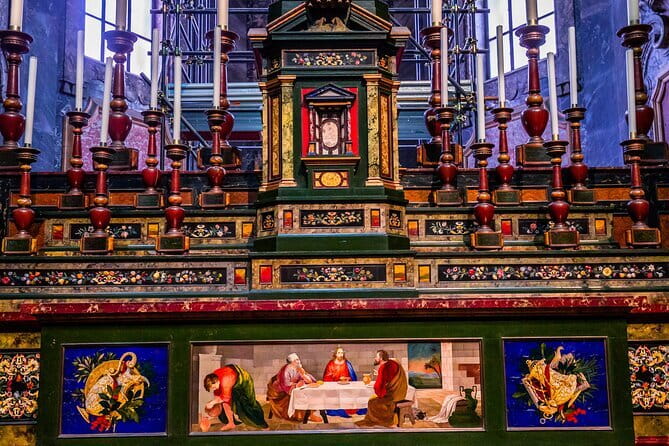
Next you drop into the Treasury of the Grand Dukes, called the Museum of Silverware in the past. This stop is short, but it has punch. You’re on the ground floor, and the focus shifts from paintings to objects designed to dazzle—jewels, silverware, vases in semi-precious stones, rock crystal pieces, and other refined works.
What makes this stop valuable is the context. These weren’t random collectibles. They were linked to Medici and Lorraine luxury and refined taste. Even the rooms matter: they date from the 17th century and connect to Medici “Summer Apartments,” which helps you understand why the display feels both festive and carefully controlled.
For art lovers, this treasury stop can be a great breathing moment. You’re not asked to memorize painting details. You’re asked to look at craftsmanship—polished surfaces, stone textures, and the way luxury objects were meant to catch light and status.
Galleria d’Arte Moderna: Italian modern art inside royal rooms

Then you go up to the Gallery of Modern Art on the top floor. The big trick here is that the setting still feels royal, even as the art moves closer to the modern era.
The collection traces Italian art from Neoclassicism to the early 20th century. You’ll see paintings and sculptures in rooms that used to serve as royal apartments for the Lorraine family and later the Savoy dynasty. So you’re still in the same palace world—but the artistic “mood” changes with the timeline.
Artists you may encounter include Canova, Hayez, Fattori, Signorini, and figures tied to the Macchiaioli movement, a Florentine precursor to Impressionism. In plain terms: you start seeing lighter brushwork tendencies and more emphasis on how light shapes form, not just idealized storytelling.
If you’re worried this will feel like a detour from the Medici, don’t be. This stop helps you see how Florence kept reinventing itself—using the same grand spaces to host changing artistic styles.
Museum of Fashion and Costume: style as history, not just clothing

The Museum of Fashion and Costume is located in the Palazzina della Meridiana, and it’s the only museum in Italy devoted entirely to dress history. That uniqueness alone makes it worth the detour.
You’ll view garments, accessories, and theatrical costumes from the 18th century to the present. What I like about this kind of museum in a place like Palazzo Pitti is that clothing stops being “stuff in a case.” In a palace context, dress becomes evidence of how people wanted to be seen—through rank, taste, and even performance.
The collection can include pieces associated with Medici holdings, plus creations by Italian and international contemporary designers. Exhibitions are periodically updated, so you’re not just staring at the same static selection forever.
Timing-wise, this is a shorter stop, so don’t treat it as a museum you’d do twice. Instead, focus on details: fabric weight, construction, how costumes were designed to read from a distance, and how fashion changes can still echo court tradition.
- The Best tour in Florence: Renaissance & Medici Tales – guided by a STORYTELLER
★ 5.0 · 12,316 reviews





Boboli Gardens: Renaissance planning with real-world views
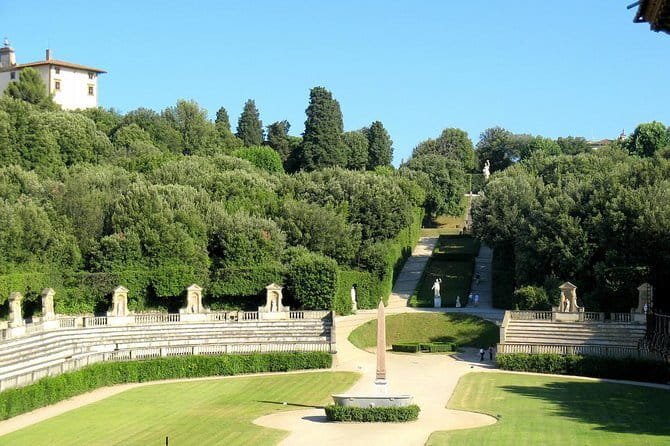
Now for the shift outdoors. Boboli Gardens sit behind Palazzo Pitti and are considered one of the most important historic Renaissance gardens in Europe. They’re also known for influencing later garden design—so yes, there’s a connection people make to Versailles.
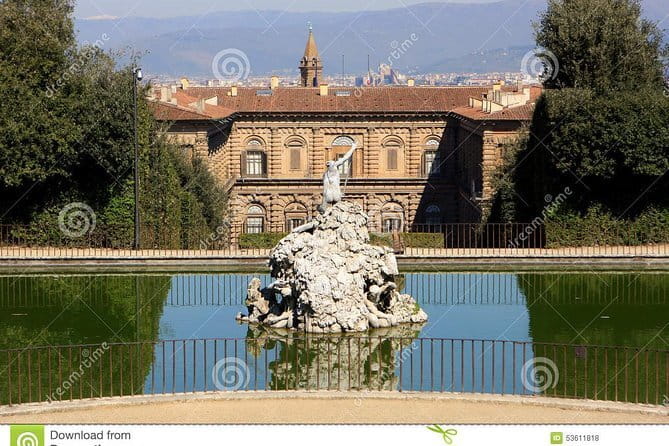
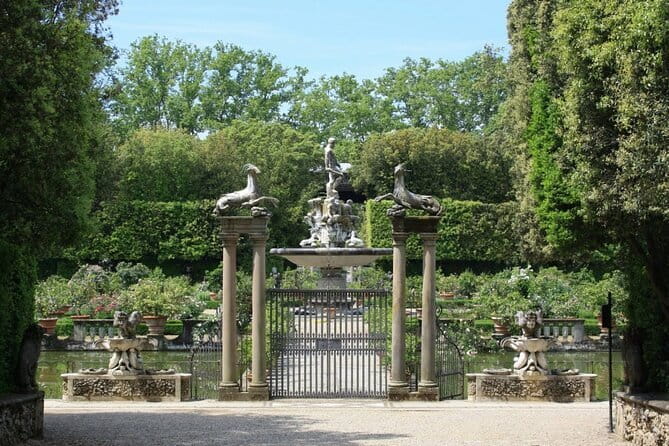
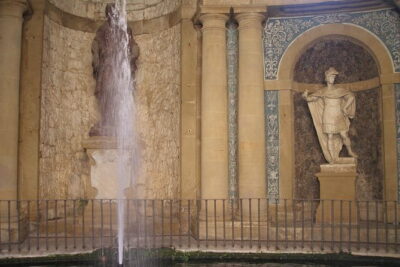
This part feels like an open-air museum built for strolling, but it’s also structured like a performance. You’ll pass tree-lined avenues, fountains, statues, grottos, and panoramic terraces overlooking Florence. The aim is to guide your body through changing “scenes,” so the garden becomes a sequence, not a single viewpoint.
Expect highlights such as the Amphitheatre, the Fountain of Neptune, and the Buontalenti Grotto. Boboli isn’t just pretty. It’s a physical map of Medici garden ambition, blending art and nature into a layout that turns sightseeing into a walk through design ideas.
One practical tip: if the day is hot, this is where you’ll feel it. There are fountains and shaded spots, but this is still a garden walk with sun and changing elevation. Wear breathable layers and plan to pause when your guide encourages breaks.
How the 2.5 hours actually feels: pace, stairs, and smart sequencing
On paper, the tour is about 2 hours 30 minutes. In reality, it feels like a “high concentration” visit. You’ll be moving room to room inside Palazzo Pitti, then stepping out to cover major garden features.
The biggest consideration is the number of steps. One past experience noted a lot of stair climbing, and that’s consistent with how Palazzo Pitti is laid out. If stairs wipe you out, you’ll want to take this tour only if you’re comfortable with moderate walking and uphill movement.
The good news is the route is well sequenced. You start with the heavy-hitting painting stop, then add the treasury and modern art on separate floors, and finish with the garden experience. That keeps your energy from being drained all at once by only outdoor time or only indoor time.
You also get earphones, which helps you stay oriented when you’re stepping away from the group for a quick look at a ceiling, sculpture, or a vista through an opening.
Group size and guide impact: why the names matter
This tour runs with a maximum of 9 people, which is a sweet spot. It’s not so large that you’re stuck watching the guide from afar, and it’s not so small that you miss the shared energy of a group.
Guide quality comes through in the details. Past experiences highlighted guides such as Tina for tying art and artifact context together, Ellena for art history explanations, and Alissa for stepping in and still providing a strong experience when plans got scrambled. Even when service changes happen, the goal is consistent: help you see what you’d otherwise rush past.
If you’re choosing between tours, pick this one if you like clear storytelling. If you prefer to read quietly alone and wander without interaction, you might find you want more time per stop.
Price and value: what you’re really paying for
At $234.80 per person, this is not a budget “one museum” ticket. But look at what’s bundled:
- Entry to Palazzo Pitti
- Guided access to the Palatine Gallery
- Entry to the Treasury of the Grand Dukes (Tesoro dei Granduchi)
- Entry to the Gallery of Modern Art
- Entry to the Museum of Fashion and Costume
- A guided visit to Boboli Gardens
- Earphones for clear guide audio
- English-language format
- Refreshments are not included
So your money buys three things that matter in Florence: access, time efficiency, and interpretation across multiple palace zones. If you were doing these stops on your own, you’d spend time juggling tickets and working out which rooms connect best—especially with a site as big and multi-floor as Palazzo Pitti.
The trade-off is pace. You’re getting a curated sweep, not a leisurely deep study of one gallery. Think of it as the best way to get your bearings fast, then decide what you want to return to later.
Who should book this Palazzo Pitti and Boboli tour
This is a strong match if you:
- Want Medici-era Florence in a single outing, with art plus objects plus gardens
- Like guided context more than “just show me the famous works”
- Enjoy variety: paintings, silver treasures, modern art, fashion history, then outdoor design
- Prefer small-group movement with earphones
I’d think twice if you:
- Hate stairs or have limited mobility
- Want lots of free time inside each museum room
- Plan to spend hours photographing every ceiling detail and don’t want a timed route
Should you book?
Yes, if you want one high-value afternoon that connects the palace and the garden into a coherent story. The guided setup makes Palazzo Pitti easier to navigate and more rewarding, and Boboli gives you the classic Florence garden payoff tied to Renaissance design.
Book it especially if you’re a first-time visitor or if this is your one chance to see the palace as a whole. If you’re already obsessed with one single museum floor, you may want a more focused outing instead—but for most people, this route is a smart use of limited time.
FAQ
Is the tour offered in English?
Yes. The experience is offered in English.
How long is the Palazzo Pitti and Boboli tour?
The tour runs about 2 hours 30 minutes (approximately).
What’s included in the ticket price?
Included are entrance tickets to Palazzo Pitti and the listed museums (Treasury of the Grand Dukes, Gallery of Modern Art, and Museum of Fashion and Costume), plus guided tours for the Palatine Gallery and Boboli Gardens. You also get earphones to follow your guide.
Are refreshments included?
No. Refreshments are not included.
What’s the group size limit?
The tour has a maximum of 9 travelers.
Can I cancel for a full refund?
Yes. You can cancel up to 24 hours in advance for a full refund. If you cancel less than 24 hours before the experience’s start time, the amount paid will not be refunded.
You Might Also Enjoy

More Guided Tours in Florence
- The Best tour in Florence: Renaissance & Medici Tales – guided by a STORYTELLER
★ 5.0 · 12,316 reviews


More Tours in Florence
- The Best tour in Florence: Renaissance & Medici Tales – guided by a STORYTELLER
★ 5.0 · 12,316 reviews



More Tour Reviews in Florence
- Tuscany Day Trip from Florence: Siena, San Gimignano, Pisa and Lunch at a Winery
★ 5.0 · 21,634 reviews - The Best tour in Florence: Renaissance & Medici Tales – guided by a STORYTELLER
★ 5.0 · 12,316 reviews