REVIEW · FLORENCE
Florence by night with aperitivo
Book on Viator →Operated by Italy on a Budget tours · Bookable on Viator
Florence at night hits different. This small-group evening walk turns the Duomo area, Ponte Vecchio, and Santa Croce into a story you can actually follow, then caps it off with aperitivo time and a proper Italian buffet. You start at 6:45 pm with a local guide in a purple logo T-shirt, and you end back in the Santa Croce area, ready to keep exploring if you want.
I like two things a lot about this tour: the pace feels relaxed because the max group size is only 10, and you get history told in a way that fits how Florence looks after dark. The main consideration is simple: the aperitivo includes one drink and tasty snacks, but extra drinks are on you if you want to keep the night going.
In This Review
- Key highlights worth your attention
- Why Florence by night feels easier than daytime tours
- Meeting point at Santa Maria Novella: get your bearings fast
- Santa Maria Novella facade: a pretty start with real context
- The Duomo walk: wine windows that were for survival, not decoration
- Cathedral of Santa Maria del Fiore: the UNESCO trio you can’t miss
- Cupola del Brunelleschi: dome views and square energy
- Piazza della Repubblica: an old city plan with layers
- Fontana del Porcellino: the nose-touch and coin-toss tradition
- Piazza della Signoria: statues, politics, and Renaissance originals
- Ponte Vecchio at night: why this bridge has always mattered
- Piazza Santa Croce: the final square has big-name ghosts
- Aperitivo in Florence: what you get, and why it’s more than snacks
- Price and value: why $60.08 can work if you want a full evening
- Who this tour is best for
- Should you book Florence by night with aperitivo?
- FAQ
- How long is the Florence by night with aperitivo tour?
- What time does the tour start, and where do I meet?
- Where does the tour end?
- What’s included with the aperitivo?
- Is the tour only for adults?
- What group size should I expect?
- Is the tour offered in English?
- Are admissions included for the sights you visit?
- Can I cancel for a full refund?
- Does the tour run in bad weather?
Key highlights worth your attention
- A max of 10 people means you can hear the guide and ask questions
- Purple T-shirt meet-up makes it easy to spot your guide right by the obelisk
- Wine windows on the way to the Duomo: preserved pieces from Cosimo de Medici’s tax-free wine system
- Brunelleschi’s dome views from the square without the daytime pressure feeling
- Il Porcellino ritual (touch the nose, toss a coin) right in the flow of the walk
- Included aperitivo: one drink plus Italian snacks at a top-rated bar stop
Why Florence by night feels easier than daytime tours
This tour is built for the evening crowd-thinning effect. You’re walking key sights that most people visit in daylight chaos, but you’re doing it when streets feel calmer and the lighting makes stone buildings look softer. That matters in Florence, where even short distances can feel like a lot once you’re packed in.
The timing also helps you plan your night. You meet at 6:45 pm and finish after the aperitivo around the Santa Croce area. In real-life terms, that means you’re not starting too late, and you’re not leaving Florence too early either.
A big part of the value is how the guide stitches the stops together. You’re not just seeing monuments; you’re learning why certain things ended up where they are. If you get a guide like Francesca or Anastasiia (both names come up in past reviews), you’ll likely find the tone upbeat and the explanations practical, not just a recital of dates.
You can also read our reviews of more evening experiences in Florence
Meeting point at Santa Maria Novella: get your bearings fast
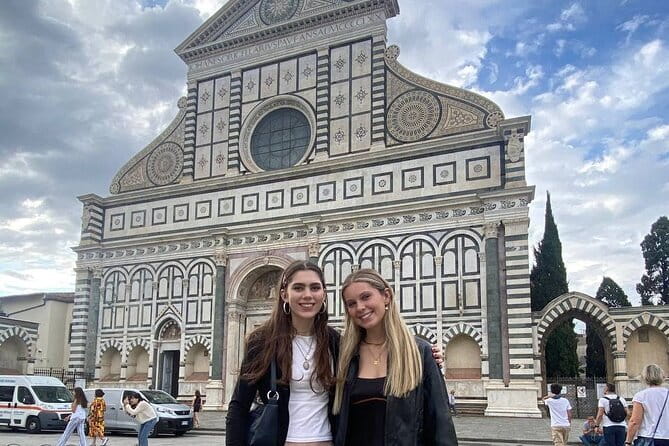
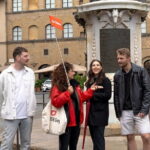
You start at Piazza di Santa Maria Novella, 22, right in front of the Basilica Santa Maria Novella. The instructions are clear: meet in the late afternoon, next to the obelisk in the square, and look for your guide in a purple T-shirt with the tour logo.
This first step is more than a formality. Santa Maria Novella is a natural launching pad for a night walk, and being early in the process helps you get oriented before you drift toward the Duomo complex. Plus, the first stop is only 15 minutes and marked as free for admission, so you’re not stuck for long before the tour really gets moving.
Santa Maria Novella facade: a pretty start with real context
Santa Maria Novella is the kind of place that can look like a backdrop if you only glance and walk on. With a guide, you’ll slow down just enough to notice the facade details and understand why it’s a good opening act.
At this point you’re also setting the expectation for the tour: short stops, city facts that connect, and enough time to enjoy where you are. The guide’s job here is to get you comfortable with the route so you’re not spending the entire evening watching your feet and hunting for the next landmark.
The Duomo walk: wine windows that were for survival, not decoration
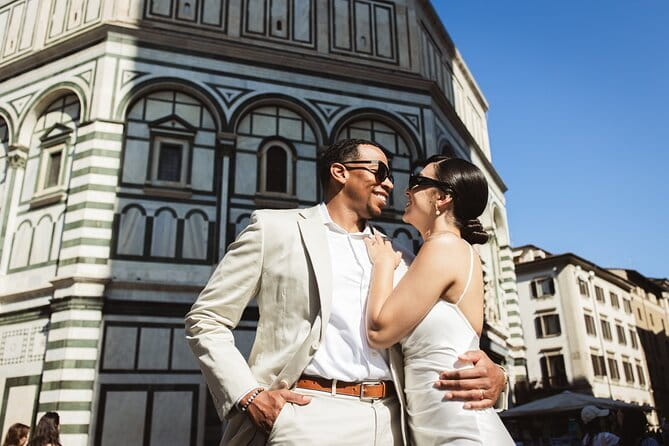
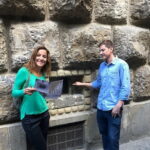
One of my favorite sections on this route is the lead-in to the Cathedral of Santa Maria del Fiore. As you wander cobblestone streets, you’ll spot the so-called wine windows—created in the 16th century by Cosimo de Medici to enable tax-free wine sales.
Here’s the detail that makes it stick: these windows were especially important during the 1600s plague for safer transactions. Think of it like pre-modern social distancing for commerce. You’re also told that 285 preserved windows remain, and some are still active. That’s the sort of fact that transforms a street corner into something you can picture.
There’s no paid admission at this stop (it’s listed as free for ticketing), and the time on site is about 15 minutes. You’ll use that time to connect the dots between Florence’s government, public life, and how even illness shaped everyday systems.
Cathedral of Santa Maria del Fiore: the UNESCO trio you can’t miss
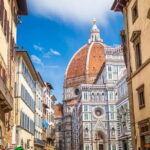
Next you reach the Cathedral complex in Piazza del Duomo. The tour frames it correctly: this is the Cattedrale di Santa Maria del Fiore area, plus the Baptistery and Giotto’s Campanile. Together they form the historic center UNESCO World Heritage Site, and they’re major draws for Tuscany.
You get a 15-minute stop, and again it’s marked as free for admission. That’s important if you’re trying to keep the evening moving without turning the Duomo into an hours-long ticket line situation. What you gain here is the big-picture view: you see how the parts fit together and why people get emotional about this place even without climbing every tower.
- The Best tour in Florence: Renaissance & Medici Tales – guided by a STORYTELLER
★ 5.0 · 12,316 reviews

Cupola del Brunelleschi: dome views and square energy
After the main cathedral area, you shift to Cupola del Brunelleschi. You’ll admire the dome, which the tour notes as the third largest in the world after St. Peter’s in Rome and St. Paul’s in London. You’ll also take in the Baptistery and the beauty of the surrounding square.
The stop is short—about 15 minutes. That’s not a flaw. It’s an evening walk strategy. You’re not trying to turn this into a museum marathon. You’re trying to see the dome as part of Florence’s night rhythm, then move on while you still have energy.
A practical note: squares can get breezy at night in Florence. If it’s cool where you are, bring a light layer, and wear shoes with real grip.
Piazza della Repubblica: an old city plan with layers

Piazza della Repubblica might seem like just another central square, but the tour gives you enough background to read it like a page. You learn that in Roman times it had bathhouses, temples, forums, and markets. After 1000 it became a market area, then in the 1600s Cosimo I established a Jewish ghetto there.
Then you get the modern twist. The square you see today was designed between 1865 and 1871, during the period when Florence was the capital of Italy. During the redevelopment called Il Risanamento, the area was demolished and redesigned into the rectangular square with the iconic carousel.
This is one of those stops where a guide’s framing is the entire point. Without it, you might walk through looking for the next bigger landmark. With it, you start noticing how the city changes roles over centuries, and you connect today’s surface to older urban life.
Fontana del Porcellino: the nose-touch and coin-toss tradition

Then you hit Fontana del Porcellino. This is where Florence gets playful. The statue of the wild boar is known for its shiny nose from countless touches—there’s a legend that touching it helps ensure you’ll return.
And yes, there’s also the coin ritual. You’re told to toss a coin into the grid between its legs in one fluid motion.
This stop is listed for 15 minutes and marked as free for admission. It’s a good break in the route too: short, local, and memorable. It also works well if your group has a mix of interests, because almost everyone enjoys a harmless tradition in the middle of a historical walk.
Piazza della Signoria: statues, politics, and Renaissance originals
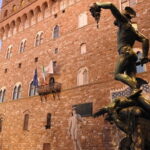
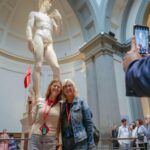
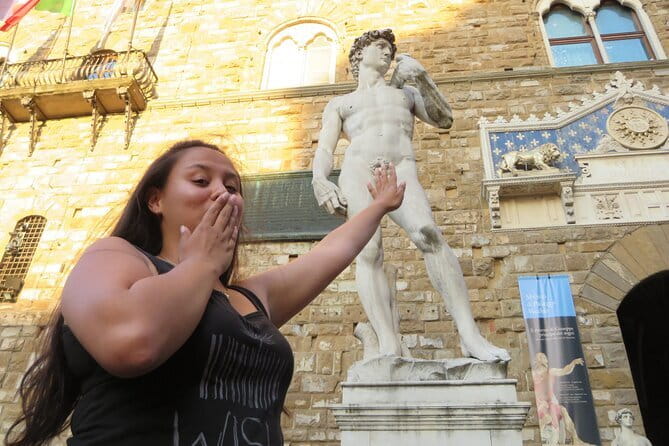
Piazza della Signoria is next, and it’s a quick five-minute stop. The tour explains the origin: the square dates back to the early 1330s as a meeting place for the city council. Today, Palazzo Vecchio anchors the area, and it still represents government power in physical form.
What makes it interesting isn’t only the buildings. The square functions like an open-air museum, displaying many original statues from the Italian Renaissance. Even a brief visit can feel like a concentration of art and authority squeezed into one public space.
If you’re the kind of traveler who likes to understand how cities work—who makes decisions and where you can see it—this stop delivers.
Ponte Vecchio at night: why this bridge has always mattered
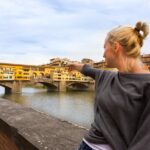
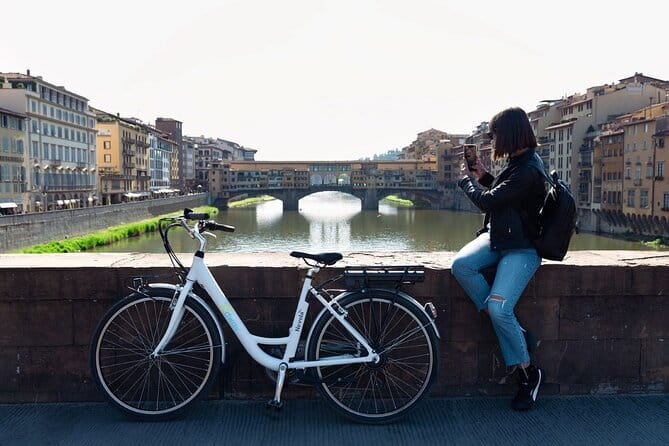
If Florence has a postcard bridge, it’s Ponte Vecchio—and it’s a highlight for a reason. The tour spends about five minutes here, but it’s the kind of five minutes that can change how you see the structure.
You get a real sense of continuity: Ponte Vecchio has tracked the city’s evolution across centuries. The guide also shares specifics that make it feel human, not just scenic. For example, jewelry shops appeared on Ponte Vecchio in 1593–94 at the request of Ferdinando I de’ Medici. Before that, the bridge was occupied by butcher shops, which were required to operate away from city-center buildings and were allowed to discard waste directly into the river.
That contrast is startling. And it’s useful, because it tells you Ponte Vecchio wasn’t designed for charm. It was adapted, regulated, and reshaped by power and practicality—then later turned into the version of itself that still draws crowds.
Piazza Santa Croce: the final square has big-name ghosts
The tour ends in the Santa Croce area, starting with Piazza Santa Croce. This is one of the biggest Franciscan church areas in Italy and is tied to a basilica of the same name.
You’ll learn the basilica houses frescoes by Giotto and sculptures by Benedetto da Maiano, Desiderio da Settignano, and Canova. It’s also described as the final resting place for notable figures including Galilei, Foscolo, Michelangelo, and Machiavelli. That set of names gives the square a weight that doesn’t need a museum ticket to feel real.
The tour also notes that the basilica symbolized the homeland, and that this idea predates Italy’s unification. Even if you don’t memorize every detail, the guide’s framing helps you understand why Italians treat Santa Croce like a living reference point, not just a stop on a checklist.
Aperitivo in Florence: what you get, and why it’s more than snacks
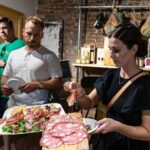
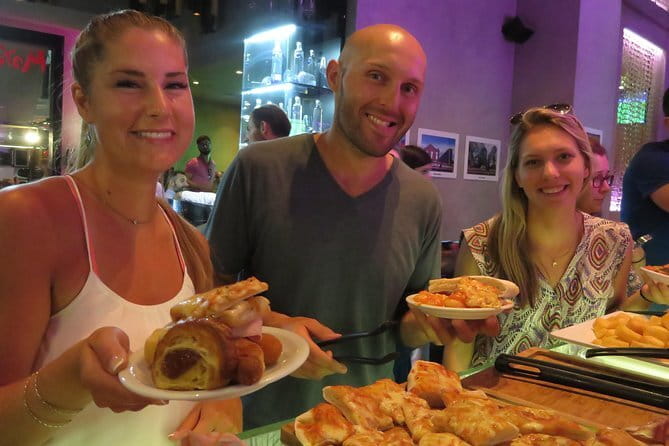
The last part of the experience is the aperitivo. The guide takes you to a bar with one of the best-rated aperitivos in town, then you spend about an hour there.
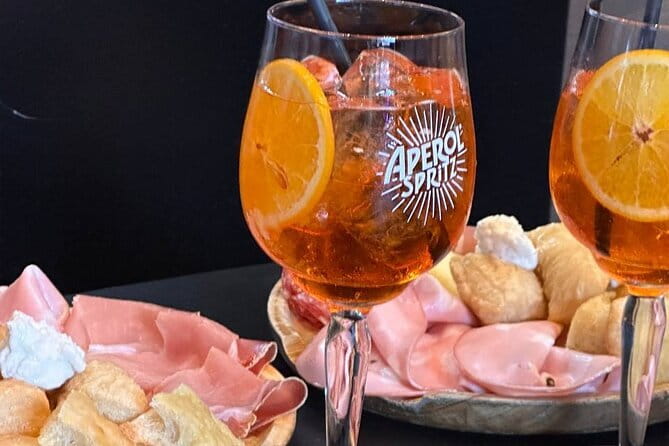
This is where the tour earns its casual vibe. Aperitivo is described as an essential evening event shared between friends. It usually means wine or craft cocktails plus food from a hearty buffet. The point isn’t only eating—it’s the social rhythm. You sit down, talk with the group, and get a taste of how locals reset after the workday.
What’s included here is clear: one drink + tasty Italian snacks. That’s a real plus for value, because it turns the tour from sightseeing-only into a complete evening. But it also connects back to the one drawback I mentioned earlier: extra drinks are not included, so if you want multiple rounds, plan to pay on site.
Practically, this is a great time to ask the guide what to do next. You’ll be positioned near a lively area (the tour ends in the Santa Croce area), so you can transition into dinner or a late walk without feeling like you’re starting from zero.
Price and value: why $60.08 can work if you want a full evening
At $60.08 per person, this isn’t a bargain flight deal—it’s a guided evening with included food and a drink. The value comes from three areas:
First, the group is capped at 10. That usually means you’re not stuck in a crowd where you can’t hear. Second, most of the major stops are listed as admission free on this route, so you’re not paying extra to participate. Third, aperitivo time includes a drink and snacks, which would cost you money anyway if you did it on your own.
Also, it’s booked on average about 63 days in advance. That suggests it’s not an end-of-trip gamble. If you’re traveling in high season or on a popular date, book ahead so you’re not stuck with whatever’s left.
Who this tour is best for
This fits well if you want a guided night walk that doesn’t drag. It’s a strong choice for:
- First-time visitors who want a smart outline of Florence in the evening
- Travelers who like history explained at street level (not inside ticket halls all night)
- People who prefer smaller groups for better conversation
- Anyone who wants aperitivo as part of the experience, not an afterthought
It may be less ideal if you hate walking or long standing. The tour asks for moderate physical fitness, and you’ll be moving through cobblestone streets and squares.
Should you book Florence by night with aperitivo?
I’d book it if you want an efficient, guided night in Florence that ends with a real local ritual. The combination of short, well-chosen stops (Duomo area highlights, Ponte Vecchio, Santa Croce) plus an included aperitivo hour is a practical way to turn a weekday or first evening into a memorable night.
Skip it only if you’re set on a museum-heavy, ticket-heavy plan or you don’t care about aperitivo culture. Otherwise, this is the kind of tour that helps you see Florence from a different angle—literally and socially—and then gives you a smooth handoff into the rest of your evening.
FAQ
How long is the Florence by night with aperitivo tour?
It’s about 3 hours total, including the walking and the aperitivo stop.
What time does the tour start, and where do I meet?
The tour starts at 6:45 pm. You meet at P.za di Santa Maria Novella, 22, 50123 Firenze FI, Italy.
Where does the tour end?
The tour ends at Piazza di Santa Croce, 50122 Firenze FI, Italy.
What’s included with the aperitivo?
Aperitivo time includes one drink and tasty Italian snacks.
Is the tour only for adults?
The minimum age is 15 years.
What group size should I expect?
The tour has a maximum of 10 travelers.
Is the tour offered in English?
Yes, it’s offered in English.
Are admissions included for the sights you visit?
The stops listed for sightseeing on this route show admission ticket free.
Can I cancel for a full refund?
Yes. You can cancel up to 24 hours in advance for a full refund.
Does the tour run in bad weather?
It operates in all weather conditions, so dress appropriately for the evening forecast.
You Might Also Enjoy
More Evening Experiences in Florence


More Tour Reviews in Florence
- Tuscany Day Trip from Florence: Siena, San Gimignano, Pisa and Lunch at a Winery
★ 5.0 · 21,634 reviews - The Best tour in Florence: Renaissance & Medici Tales – guided by a STORYTELLER
★ 5.0 · 12,316 reviews