REVIEW · FLORENCE
Museums special: Accademia & Uffizi combo tour – monolingual small group tour
Book on Viator →Operated by Ciao Florence Tours Srl · Bookable on Viator
Florence hands you its best Renaissance hits fast. This combo tour connects the Accademia and the Uffizi in one smooth half day, with skip-the-line entry and guide talk that helps you read what you’re seeing. I especially liked how the Accademia focus zeroes in on Michelangelo’s big moments, and how the Uffizi route moves in a way that makes the paintings feel linked, not random. One thing to consider: if you pick a hot or midday slot, crowds can still slow the museum entrance, even with reservations.
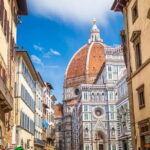
You also get a short walk for context—plazas, plus a view of the Duomo area—so you’re not stuck staring at walls from start to finish. The group stays small (max 15), earphones are included for bigger moments, and you can choose to remain in the Uffizi after the tour ends. The main trade-off is time: it’s a highlights-style sprint, so if you want to cover every major room slowly, you’ll likely want more museum hours after the tour.
In This Review
- Key things that make this tour worth your attention
- Why the Accademia + Uffizi combo works so well
- Price and what $130.97 actually buys you
- Meeting point and the timing reality (plan for a little walking)
- Accademia Gallery: from the Hall of Prisoners to David
- The Hall of Prisoners and the non-finito idea
- David: scale, youth, and why it matters
- What to watch for at Accademia
- The Uffizi route: how a timed tour still teaches you to see
- Gothic to early Renaissance: start with Madonna and the shift in space
- Botticelli at the center of the famous stuff
- Leonardo and Michelangelo: not just posters, but rooms of context
- International Gothic, then experiments in 3D space
- The big Uffizi question: what you might miss in a 90-minute-style slice
- Guide style and group size: what small means in real life
- Practical tips to make the day smoother
- Who this tour suits best (and who should look elsewhere)
- Should you book the Accademia & Uffizi combo tour?
- FAQ
- How long is the Accademia and Uffizi combo tour?
- Is this tour offered in English?
- How big is the group?
- Are tickets to Accademia and the Uffizi included?
- Does the tour include skip-the-line entry?
- Where do I meet the guide, and where does the tour end?
- Do I need to bring ID for the Uffizi?
- Can I stay in the Uffizi after the guided portion ends?
- What if museums are crowded on the day I go?
Key things that make this tour worth your attention
- Small group cap (15 max) with an English-only guide that keeps the pace manageable
- Reserved, skip-the-line entry for both museums, which matters in peak Florence seasons
- Accademia’s Hall of Prisoners and David explained with the non-finito idea
- Uffizi in chronological order, so Botticelli and Renaissance transitions feel connected
- You can stay longer at the Uffizi after the guided portion ends
Why the Accademia + Uffizi combo works so well
If you’re trying to see Florence’s Renaissance powerhouses in one day, this pairing makes sense. The Accademia gives you the “why everyone comes here” moment first—Michelangelo’s sculptures—then the Uffizi shifts you into painting, styles, and timelines.
In practice, the value is efficiency with context. Instead of bouncing between two separate tickets on your own, you’re walking from guided stop to guided stop, with someone steering you toward the pieces that help you understand the bigger story. Even if you’re not an art-history person, the guide framing makes it easier to notice details you’d otherwise miss.
And because the tour ends in the Uffizi (not back at your hotel), you get a natural finish line. You’re done when you’re done—short tour energy, then optional museum time.
You can also read our reviews of more museum experiences in Florence

Price and what $130.97 actually buys you
The price is listed at $130.97 per person for about four hours. On paper, that might sound steep—until you line up what’s included.
You’re paying for:
- a professional guide
- Accademia Gallery ticket + reservation
- Uffizi Gallery ticket + reservation
- earphones (for clearer listening in a small group context when needed)
- a monolingual small group format (max 15)
The Uffizi entrance is listed as €29, and this tour includes Uffizi entry with reservation. That means a good chunk of your cost is already tied to getting inside efficiently, not just listening to someone talk outside.
The best way to think about the value: this tour saves you the “lost time” money. In Florence, tickets and queues are part of the deal. A guided, reserved combo is often worth it when your schedule is tight.
Meeting point and the timing reality (plan for a little walking)
You meet at Via Camillo Cavour area (the meeting point is listed as Via Camillo Cavour, 18, 50122 Firenze FI), and you end at the Uffizi Galleries at Piazzale degli Uffizi, 6. Directions matter here. One recurring frustration is simply finding the office in time—especially if you’re arriving on foot with streets looking the same and signage moving. If you can, open the map before you leave and arrive a few minutes early.
Comfortable shoes are suggested for a reason. The tour includes a short walking tour and movement between major stops. That’s not a problem if you’re prepared—but it can feel harder on wet or hot days. One unhappy experience mentioned that weather made the walking between places difficult and that changes weren’t very flexible. Translation: pack for Florence weather, but also don’t assume the schedule will melt around you.
Also note: on the busiest days, entry into the museums can include short delays, even with reserved group tickets. This is worth factoring in when you’re planning the rest of your day.
Accademia Gallery: from the Hall of Prisoners to David
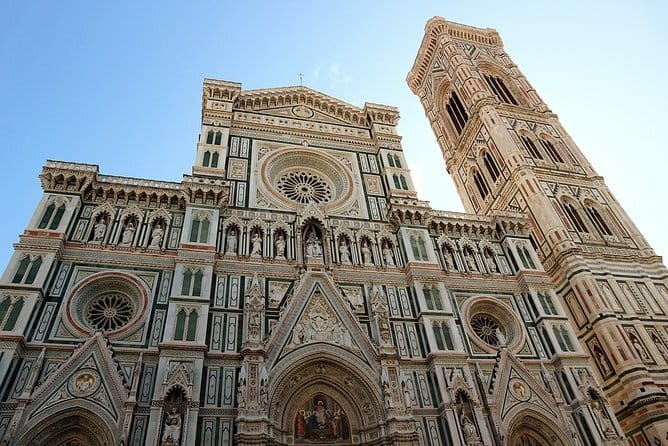
The Accademia portion is the heart of the “holy wow” experience. After you start near Via Camillo Cavour, you walk a short distance to the gallery entrance. From there, the goal is simple: get you past the long line and into the work.
The Hall of Prisoners and the non-finito idea
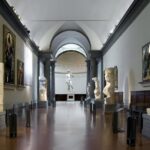
Your guide brings you to the famous Hall of Prisoners first. This is where you learn to look at marble like it’s telling emotion. The sculptures are unfinished, and that unfinished quality has a name tied to the technique: non-finito. Instead of treating it as incomplete, the guide explanation helps you read it as a concept—characters trapped in stone, suspended between idea and form.
It helps that this room sets a mood. You’re surrounded by figures that feel like they’re straining toward freedom. The guide points out the exact spots where Michelangelo worked, which turns your viewing from passive looking into active noticing.
- The Best tour in Florence: Renaissance & Medici Tales – guided by a STORYTELLER
★ 5.0 · 12,316 reviews



David: scale, youth, and why it matters
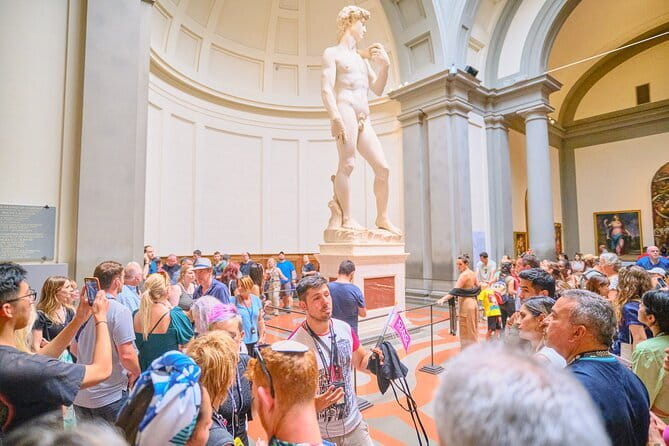
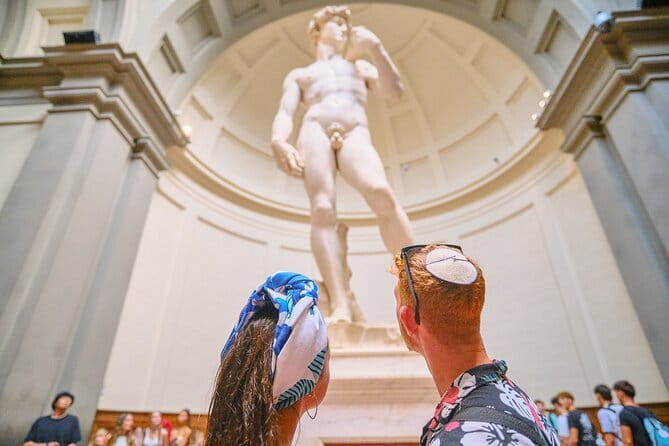
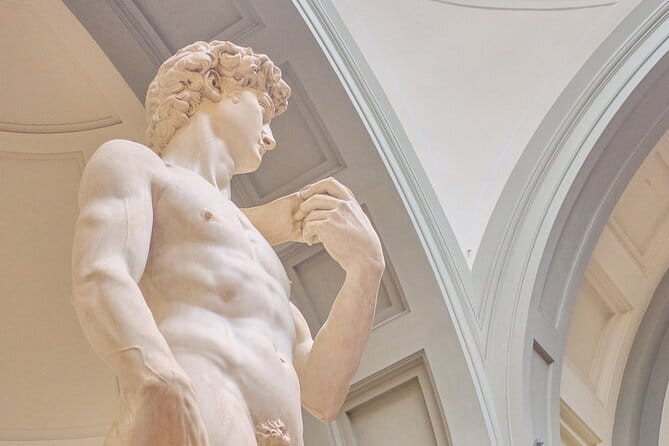
Then comes David, the moment you came for. You’ll get the basic impact quickly: it’s towering, massive, and hard to process at first glance because your body is a few steps away but your brain keeps reacting like it’s “supposed” to be smaller.
The guide shares practical context—how it’s about more than size. The tour description highlights that David is over 12,000 pounds and about 17 feet tall, and that Michelangelo was only 26 when he finished it. That detail changes how you interpret the sculpture. It’s not just genius; it’s young genius with a deadline and a plan.
You’ll also get a chance to move through other key Accademia works after David. The tour includes pieces like Rape of the Sabines by Giambologna, plus works by Renaissance masters such as Sandro Botticelli, Jacopo di Cione, and Pacino di Buonaguida. Even in a time-limited visit, these names are useful because they give you “next search terms” for later if you want to keep studying after the tour.
What to watch for at Accademia
Accademia is smaller than many people expect, and that’s part of why it fits so well into a four-hour combo day. The guide tone matters too: one review praised the Accademia guide for giving enough information without turning it into a lecture. That’s the sweet spot. You should leave feeling informed, not overloaded.
The Uffizi route: how a timed tour still teaches you to see

The Uffizi portion starts after the Accademia. You’re entering one of the big names in world art museums, so the pressure is real: can you do justice to it in one short guided block?
This tour tackles that by structuring the visit in a chronological sweep. The Uffizi route begins at the 13th century and walks forward through the Renaissance into later centuries. The guide spends more time on famous works, but the point is not only to show highlights—it’s to show how styles changed.
Gothic to early Renaissance: start with Madonna and the shift in space
Early rooms focus on Gothic artwork, including gold-covered imagery of Madonna and child. Then you get the style pivot the tour description calls out: Giotto and the move toward more three-dimensional elements.
If you’ve ever thought painting styles were just random aesthetic choices, this part helps you see cause-and-effect. You’re basically watching artists figure out how to make figures feel solid.
Botticelli at the center of the famous stuff
Next is the section you’d expect at the Uffizi: Botticelli. The tour explicitly calls out time for The Birth of Venus and Primavera. This is the classic pairing—my advice is to slow down and actually look for how the figures and symbols play together. In a fast tour, your guide can’t control your attention, so this is where you decide whether you want to “get the photo” or “get the meaning.”
Leonardo and Michelangelo: not just posters, but rooms of context
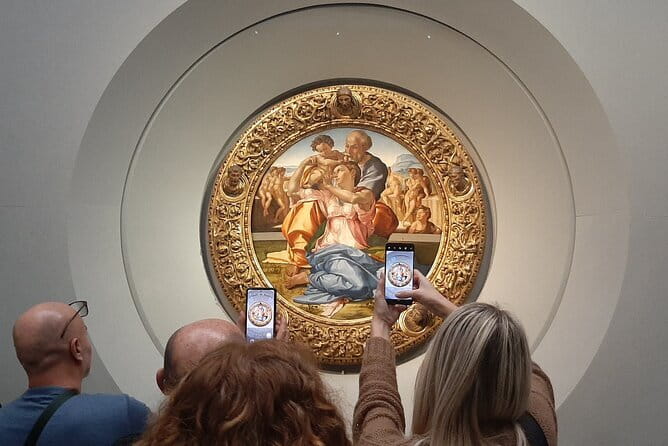
You’ll also see works tied to big names even if they aren’t the only masterpieces you might’ve heard about. The tour description includes Leonardo da Vinci pieces like Baptism of Christ and The Annunciation. Michelangelo shows up through Tondo Doni.
Here’s a key value: even if you’ve seen reproductions before, seeing the original paintings inches away is a different experience. Brushwork, color behavior, and the sheer scale of faces change how you interpret them. A timed tour can’t do everything, but it can do that “close enough to care” moment.
International Gothic, then experiments in 3D space
Later in the Uffizi route, you hit International Gothic works such as Adoration of the Magi by Gentile da Fabriano. Then it moves to the 1400s, when artists started experimenting with space in a more three-dimensional way.
The tour includes Battle of San Romano by Paolo Uccello as a concrete example. You’re also pointed to Madonna with Child and Two Angels by Filippo Lippi and Dukes of Urbino by Piero della Francesca.
This is the point where the tour helps you connect dots. You begin to notice how later Renaissance painters inherit and reshape earlier approaches to idealized features and spatial realism.
The big Uffizi question: what you might miss in a 90-minute-style slice
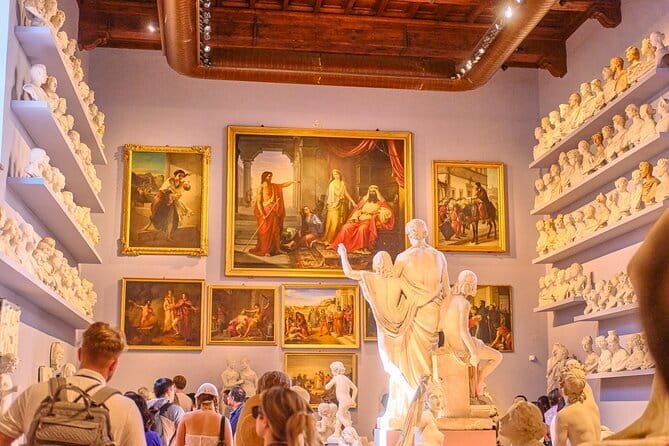
The tour moves through the Uffizi with set segments and time blocks. That’s efficient, but it has a drawback: it’s easy for a timed tour to feel like you only touched the surface.
At least one experience described a problem with the Uffizi focus—like it became a highlights tour, not an art-history tour, and that a full floor was missed. Another note suggested the guide’s suggestion to switch to a private tour if you wanted more depth.
I take that as practical advice for you. If your goal is to see the Uffizi like a scholar—room by room, theme by theme—this won’t get you all the way there. But if your goal is to understand key movements, see the famous paintings that define the museum, and then keep exploring with your own choices, this combo can be a great start.
Also remember: the tour order can change depending on the day. That’s normal in museums, but it means you should be flexible about which exact rooms feel most “central” on your schedule.
Guide style and group size: what small means in real life
This tour caps at 15 travelers, and it’s monolingual in English. A small group matters for two reasons.
First, you can hear the guide. Earphones are provided, and that reduces the “lost meaning” problem when people cluster and sound carries weirdly in galleries.
Second, your guide can correct your attention. In art museums, the difference between a 4/5 and a 5/5 experience is often whether someone helps you look at the right things at the right time. Reviews praised the Accademia guide for being personable and for giving the right amount of information. They also praised the overall guide team for being helpful when people got turned around near the meeting spot.
Still, you should expect a set pace. This is not a slow stroll. The guide is there to move you through a plan inside limited time, and sometimes that plan can feel more like highlights than deep art lecture.
Practical tips to make the day smoother
Here’s how I’d set you up for success based on what can go wrong and what actually works.
Pick a less crowded time if you can. One clear lesson from experience is that mid-day museum traffic can erase some of the benefit of reserved tickets. If you have schedule flexibility, consider earlier slots.
Arrive early and get your bearings. If you’re even slightly unsure about the meeting point address on Via Camillo Cavour, don’t wait until the last minute. Use the listed meeting location and give yourself margin to find it.
Wear shoes you can stand in. Between museum lines, floors, and walking segments, comfortable footwear isn’t optional.
Bring your ID. You must present a passport or ID document that matches the name used at booking for Uffizi entry.
Decide your post-tour plan. The tour ends at the Uffizi and you’re allowed to remain inside after it finishes. If you want more paintings than the guided route covers, use this time to choose 2–4 rooms and linger.
Who this tour suits best (and who should look elsewhere)
This combo tour fits best if you:
- want a guided, high-impact Florence art day in about four hours
- like the idea of seeing Michelangelo’s David and major Botticelli works with explanations
- enjoy chronological structure that helps you connect style changes
- want a small group without dealing with the full chaos of self-planning tickets back-to-back
You might want a different option if you:
- need a slow, room-by-room museum experience
- expect the kind of in-depth lecture where you cover everything in a floor (this tour is time-limited)
- have low tolerance for crowded entrances on peak days
- aren’t comfortable with walking between key stops in variable weather
Should you book the Accademia & Uffizi combo tour?
Book it if you want the best use of a limited schedule and you like the idea of skip-the-line access plus guided context. The price is easier to justify when you remember you’re not just paying for entry—you’re paying for reserved entry to two top museums, a guide to help you see, and a plan that gets you from marble to painting without wasting half your day figuring things out.
Don’t book it if your priority is exhaustive Uffizi coverage or if you know you’ll be disappointed when a tour can’t see every room. In that case, you’ll likely be happier with a longer museum-focused experience after you’ve gotten your bearings.
If you do book this one, give yourself a little buffer for finding the meeting point and for crowded entries. Then do what works: take the guided route for structure, and use your extra time in the Uffizi to follow your own curiosity.
FAQ
How long is the Accademia and Uffizi combo tour?
The tour duration is about 4 hours (approx.).
Is this tour offered in English?
Yes, it is offered in English.
How big is the group?
The tour has a maximum of 15 travelers.
Are tickets to Accademia and the Uffizi included?
Yes. Accademia Gallery and Uffizi Gallery tickets and reservations are included.
Does the tour include skip-the-line entry?
Yes. You get skip-the-line passes for both museums.
Where do I meet the guide, and where does the tour end?
The start meeting point is listed as Via Camillo Cavour, 18, 50122 Firenze FI, Italy. The tour ends at the Uffizi Galleries, Piazzale degli Uffizi, 6, 50122 Firenze FI, Italy.
Do I need to bring ID for the Uffizi?
Yes. Each traveler must present a valid passport or ID document that matches the name provided at booking for Uffizi entry.
Can I stay in the Uffizi after the guided portion ends?
Yes. You have the option to remain inside the Uffizi for as long as you would like after the tour ends.
What if museums are crowded on the day I go?
The entrance into the museums may experience some short delays on the busiest days, even with reservations.
You Might Also Enjoy


More Museum Experiences in Florence
More Tours in Florence
- The Best tour in Florence: Renaissance & Medici Tales – guided by a STORYTELLER
★ 5.0 · 12,316 reviews


More Tour Reviews in Florence
- Tuscany Day Trip from Florence: Siena, San Gimignano, Pisa and Lunch at a Winery
★ 5.0 · 21,634 reviews - The Best tour in Florence: Renaissance & Medici Tales – guided by a STORYTELLER
★ 5.0 · 12,316 reviews