REVIEW · FLORENCE
Florence: Uffizi Gallery Tickets with Optional Audio Guide
Book on GetYourGuide →Operated by CAF Tour & Travel · Bookable on GetYourGuide
One museum, zero time wasted. With a skip-the-line timed entry, the Uffizi visit gets right to the paintings you came for. I like that the entry is paired with an optional audio guide, so you can move at your pace without turning art appreciation into a marathon.
Two big wins: you’re not stuck fighting the ticket-office line, and the audio guide adds art-history context while you’re standing in front of the work. The one catch to plan around is that you’ll need to carry an audio device, and it comes with a passport/EU ID deposit you must return to avoid a fee.
In This Review
- Key Points Before You Go
- Skip-Line Ticket: Meeting Point and Getting In Smoothly
- The Uffizi Building Itself: Why This Place Feels Special
- Inside the Galleries: How to Spend Your 2–3 Hours
- Botticelli and the Renaissance Icons: What to Target First
- Michelangelo, Leonardo, Raffaello: Getting More From the Same Rooms
- The Optional Audio Guide: Worth It, and How to Handle the Deposit
- Two Extra Entries Included: Make Your Ticket Do More Work
- Rules and Real-World Tips That Save Time
- Who Should Book This Uffizi Experience?
- Should You Book? My Practical Take
Key Points Before You Go
- Timed entry + skip-the-line means less waiting and more museum time
- Optional audio guide (English plus several other languages) for self-guided explanations
- Uffizi icons you should target: Botticelli’s Primavera and Birth of Venus
- Two extra museum entries included: National Archaeological Museum and Opificio delle Pietre Dure
- Strict Uffizi rules on liquids (meds and baby bottles are the exception)
- Your 2–3 hours can stretch if you linger on the same floor or hit every major room
Skip-Line Ticket: Meeting Point and Getting In Smoothly
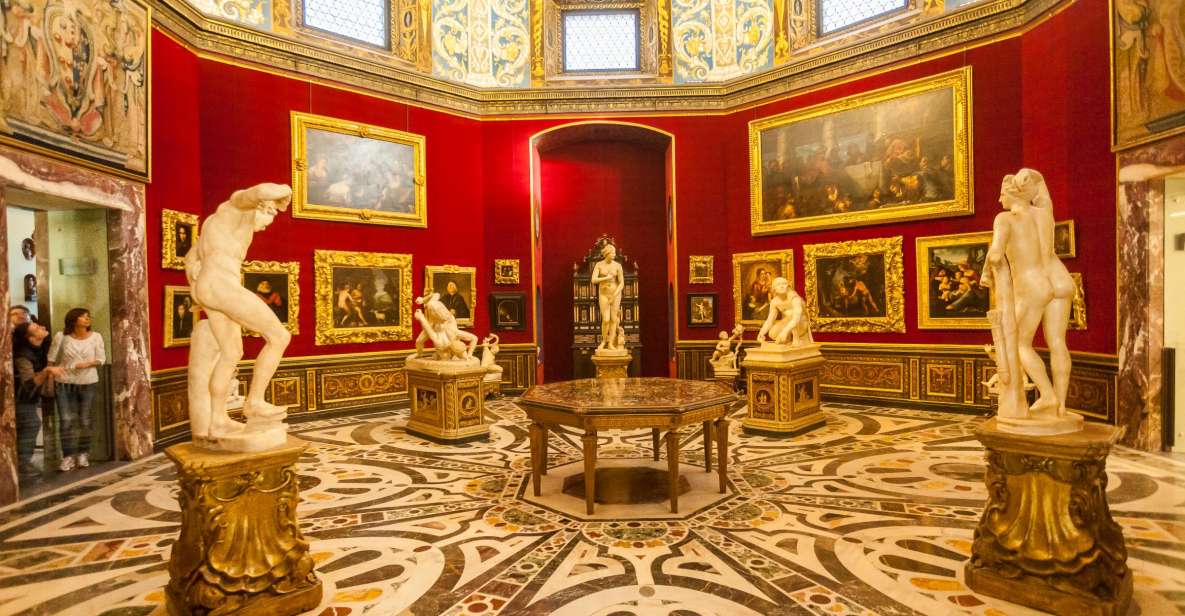
This experience is built around one practical goal: getting you into the Uffizi without the long, slow line at the ticket counter. Your visit starts at a meeting point (it can vary by option), where an English-speaking greeter helps you get sorted for entry. From there, you go through the museum’s usual checks and then step into the galleries on your timed slot.
Here’s the first thing I’d plan for: the time you’re given is the time that matters. You must arrive at the meeting point by the check-in time, or you may not be able to join and you won’t get a refund or reschedule.
Once you’re inside the setup area, you’ll likely deal with a couple of steps before you actually start sightseeing: the audio guide handoff (if you chose it), any coat check, and the security flow. Some people find that sorting out pick-up lines can feel confusing because multiple lines funnel into the same small space. A simple way to reduce stress is to keep your eye on what you’re holding and where you’re headed—don’t overthink it when the crowd gets channeled.
Also, bring comfortable shoes. The Uffizi is not one of those walk-through-and-done places. Even with a plan, it’s a lot of floor space, and your feet will notice.
You can also read our reviews of more tours and experiences in Florence


The Uffizi Building Itself: Why This Place Feels Special
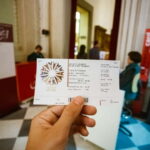
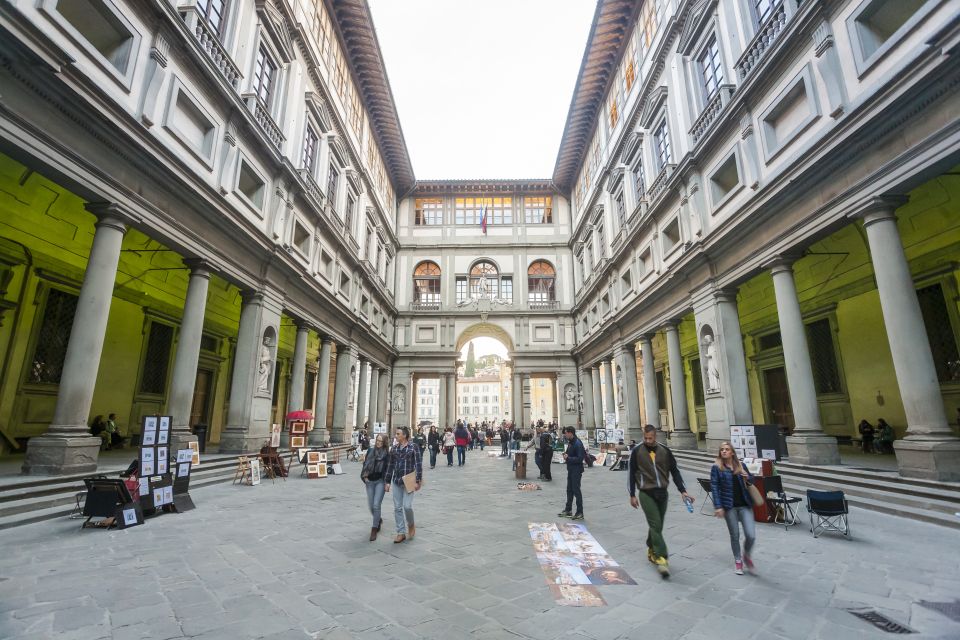
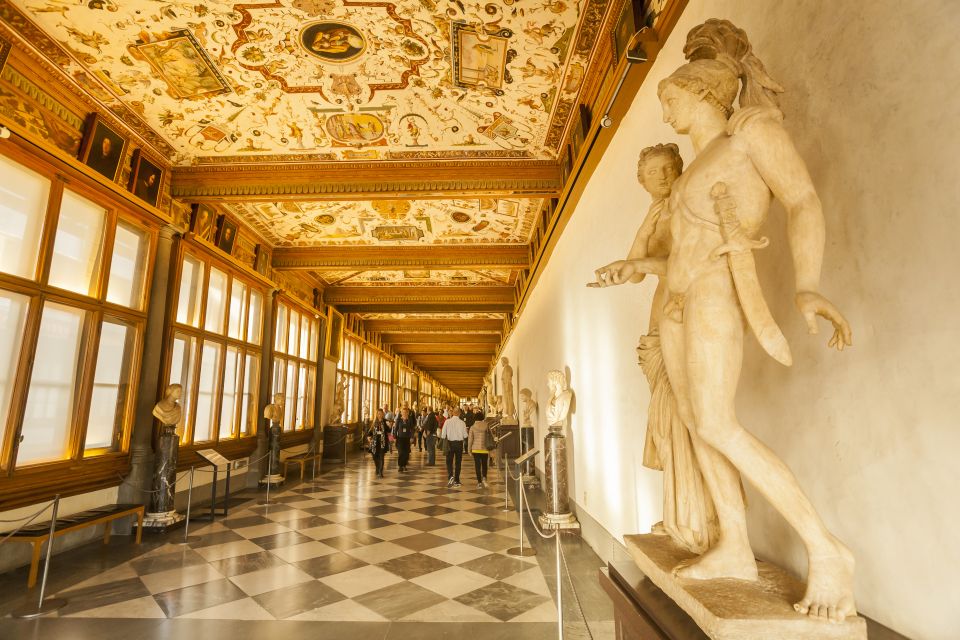
Even before you reach the famous rooms, the Uffizi setting does some work for you. The museum lives in a handsome 16th-century building designed by Giorgio Vasari, close to the banks of the Arno. The name Uffizi literally means offices, because the building originally housed the offices for Florentine magistrates. Now it’s where that old structure holds some of the world’s best-known Renaissance art.
That matters because the Uffizi doesn’t feel like a sterile, modern box. You’re moving through older corridors and rooms that were never meant for a one-hour theme park style visit. The building’s scale is part of the experience: it supports that slow-looking rhythm you want when you’re staring at Botticelli or trying to make sense of a Michelangelo composition.
Inside the Galleries: How to Spend Your 2–3 Hours
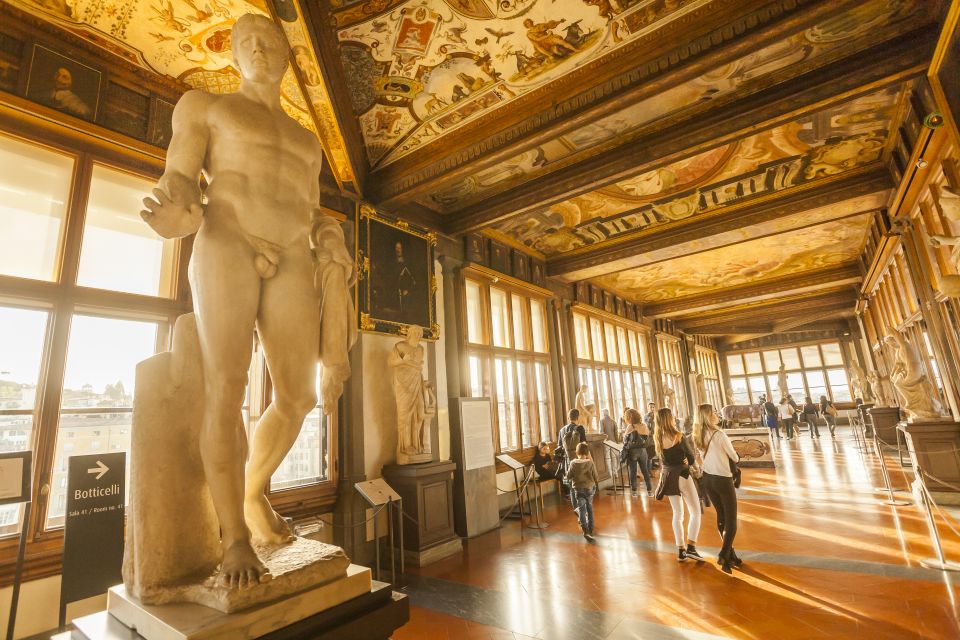
The total visit time is listed as 2 to 3 hours. In practice, that range is mostly about two things: which rooms you prioritize and whether you stop to read the audio explanations as you go. One useful hint for your planning is that if you concentrate heavily on the major areas on the upper floors, the visit can drift toward the 3-hour mark.
The Uffizi tends to overwhelm people in a simple way: there are just too many famous works in one place. So your best strategy is to pick a route that guarantees you see the big-name highlights, then let yourself wander a bit afterward.
A solid approach looks like this:
- Start with the works you consider non-negotiable
- Then choose one or two artists to lean into rather than trying to hit everything
- Build in short breaks so you can refocus (standing still for too long can make the next room blur)
Also, aim for an early start if your schedule allows. Once the morning crowd thickens, getting room-to-room can feel slower and more stop-and-go.
Botticelli and the Renaissance Icons: What to Target First
If your ticket is giving you one main advantage, it’s that you can spend your time in front of the masterpieces instead of burning it outside. For many first-timers, the highest-payoff works are Botticelli.
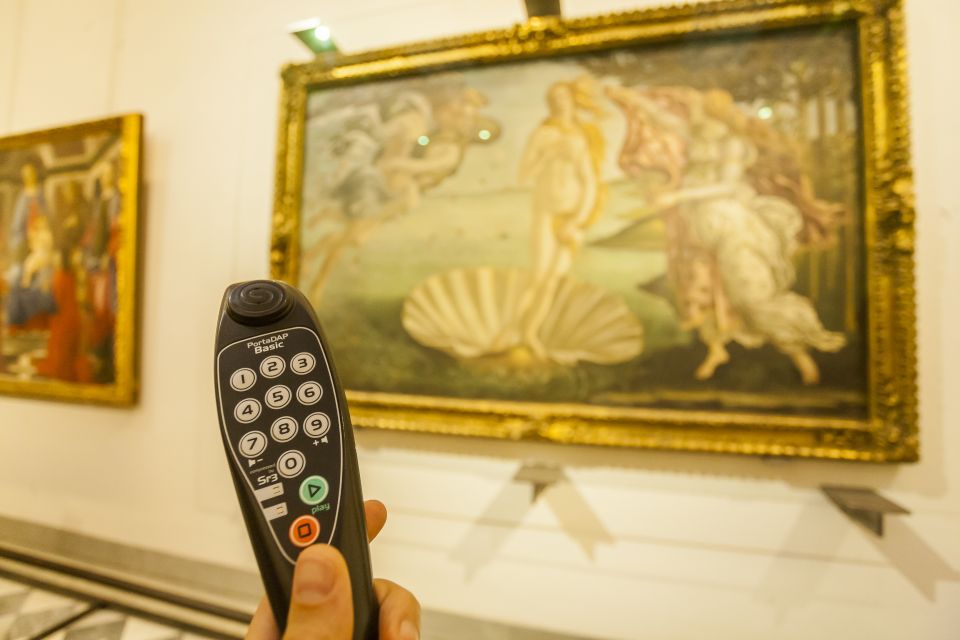
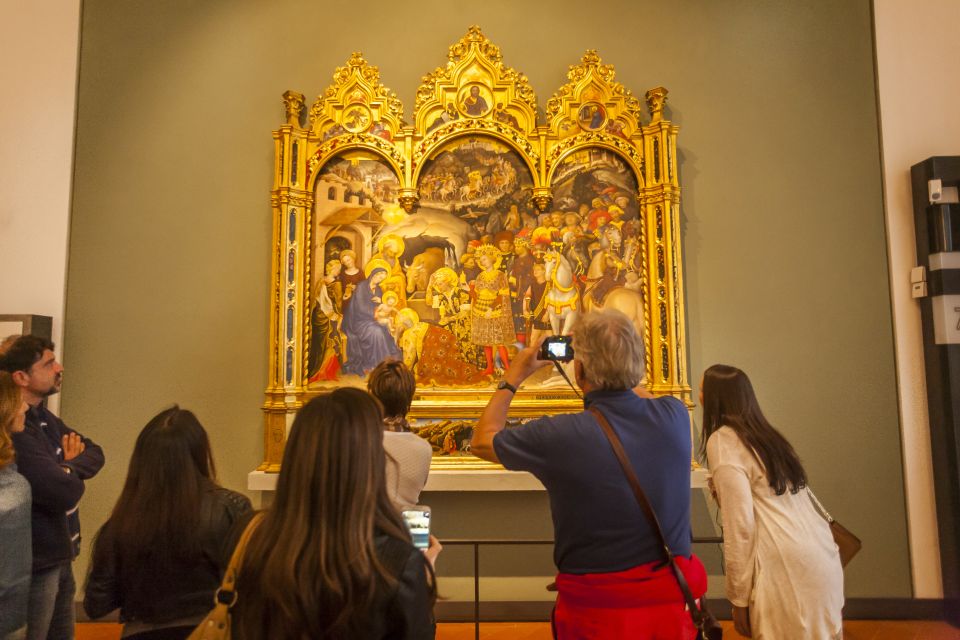
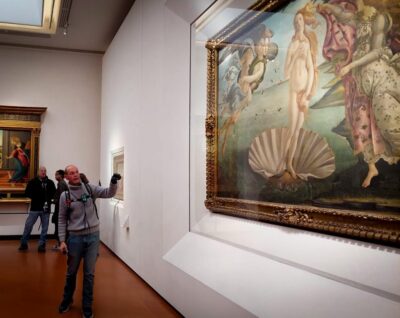
Make space for Botticelli’s Primavera and The Birth of Venus. These aren’t just famous titles you’ve seen in reproductions. In person, they’re about symbolism, posture, and composition details that you’ll miss if you glance and move on.
The Birth of Venus is especially important here because it’s described as the museum’s icon and a national treasure. It’s also a strong anchor for understanding the Renaissance idea of beauty and spiritual purity—so even if you don’t consider yourself an art expert, this is the painting that gives you the easiest on-ramp.
My advice: don’t just stand there for ten seconds trying to take it all in. Give yourself a little time to see how your eye moves across the figures and how the scene is staged.
Michelangelo, Leonardo, Raffaello: Getting More From the Same Rooms
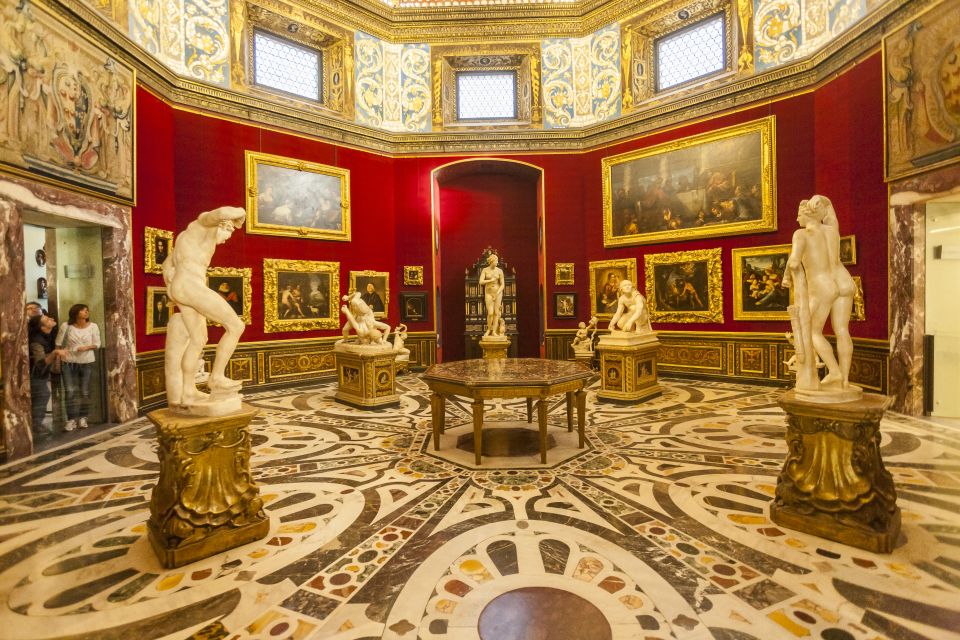
After Botticelli, the Uffizi’s reputation comes into focus through the big names. You’ll find masterpieces credited to Michelangelo, Leonardo da Vinci, and Raffaello, plus works attributed to or associated with artists like Giotto, Cimabue, and Masaccio.
If you want this to feel meaningful (not just a checklist), treat each room like a chance to compare how different artists solve similar problems—anatomy, light, emotion, and storytelling. The Uffizi is famous enough that you can be forgiven if you don’t have a detailed knowledge base. The audio guide helps, but you can also just ask yourself one question per room: what is the artist trying to make you notice first?
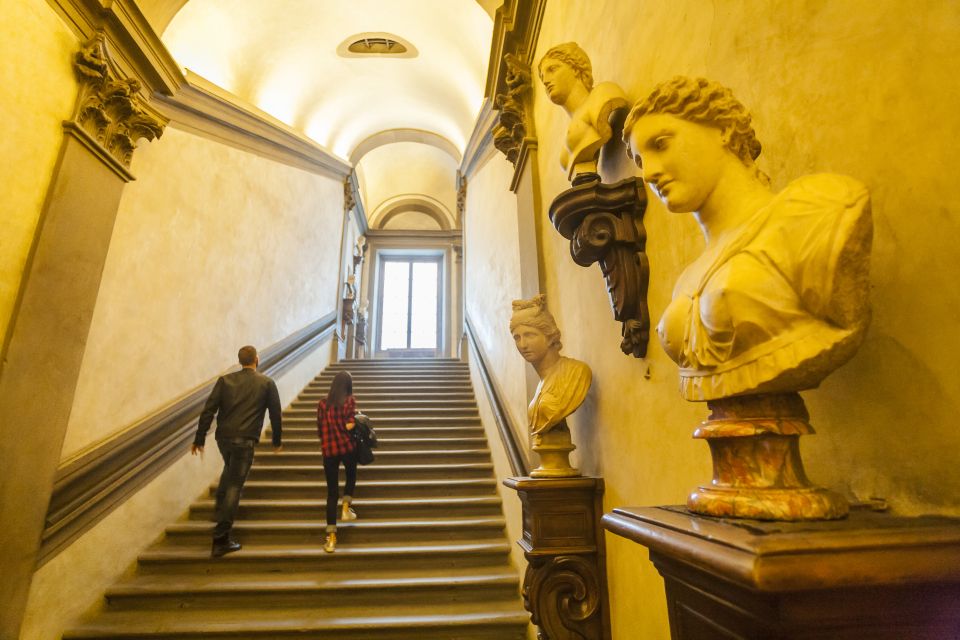
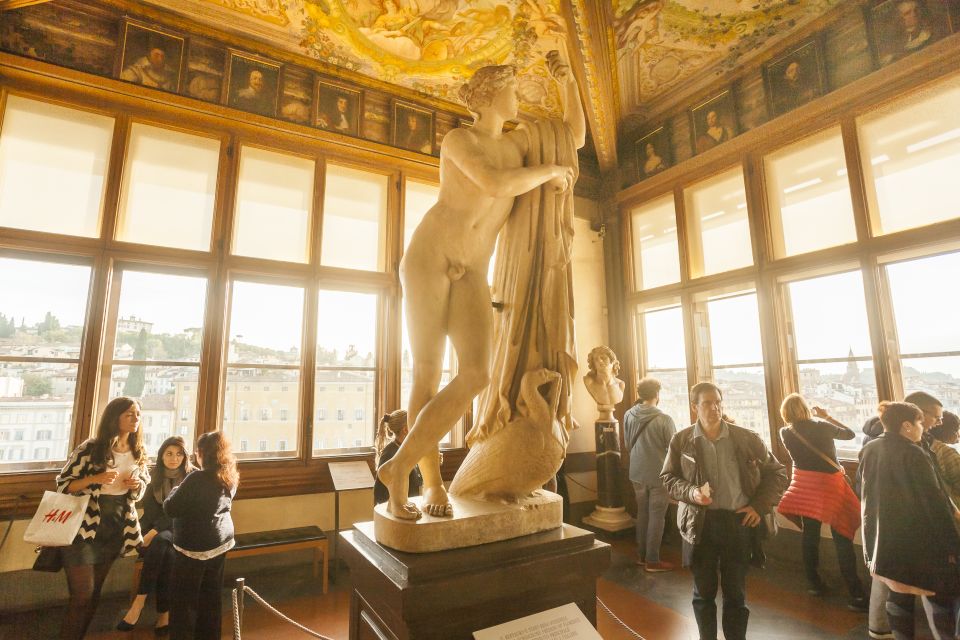
You’ll also likely notice a common reaction: after seeing a lot of carved busts and similar Renaissance themes, the art can start to feel same-y if you rush. That’s not because the Uffizi isn’t worth it—it’s because the pace gets too fast for your brain to make distinctions. Slow down on the pieces that grab you. Skip the urge to see every single framed work in the same emotional intensity.
You can also read our reviews of more guided tours in Florence
- The Best tour in Florence: Renaissance & Medici Tales – guided by a STORYTELLER
★ 5.0 · 12,316 reviews






The Optional Audio Guide: Worth It, and How to Handle the Deposit
This is where you can personalize the whole experience.
The audio guide is optional. If you select it, you’ll get explanations in Spanish, English, French, German, Italian, Japanese, Russian (while the host/greeter is English). The device is designed to add art history context from an expert, which is the difference between seeing art and understanding what you’re seeing.
But here’s the practical side you shouldn’t ignore:
- You must present your EU identity card or passport as a deposit to receive the audio guide
- If you don’t return the audio guide, there’s a fee of €250 per unit
- The device requires carrying it around, which can feel like a small nuisance if you’re already juggling a phone, water bottle rules, and bags
If you’re the kind of person who likes explanations but hates feeling herded, the audio guide is a great compromise. If you’d rather read at your own speed and don’t like carrying extra gear, you might find you can still have a strong visit without it—especially since the skip-the-line timed entry is the real foundation of the experience.
Two Extra Entries Included: Make Your Ticket Do More Work
This ticket doesn’t stop at the Uffizi. It includes entry to the National Archaeological Museum of Florence and entry to the Opificio delle Pietre Dure.
That’s a value boost for two reasons:
- You can stretch your Florence day beyond one museum
- You’re not paying extra for another ticket once you’re already in the city’s museum zone
Just keep expectations realistic. The Uffizi is the headline. The additional entries are the kind of add-ons that make your overall time in Florence feel more efficient, not a second headline act that replaces the Uffizi.
If your schedule is tight, you can also treat these as flexible. Use your energy level as the decision-maker: when you leave the Uffizi, you’ll know whether you want more art today or prefer a lighter stop.
Rules and Real-World Tips That Save Time
A few details matter because they affect what you can bring and how smoothly you move:
- The Uffizi won’t let you bring liquids, except medicines and baby bottles
- Plan for comfortable shoes because you’re on your feet a lot
- You’re dealing with an area where multiple lines can converge, so keep your transfers calm and simple
- If you’re using the audio guide option, be ready to show your passport/EU ID deposit quickly
Also, think about your energy level. The museum can be a long, sustained visit even if you’re efficient. If you’re visiting with kids or you’re short on time, a focused route to Botticelli first can prevent the classic problem: getting too tired to enjoy the highlights.
Who Should Book This Uffizi Experience?
I’d book this if you want:
- A stress-reduced Uffizi entry with timed entry and less line time
- The freedom of self-paced museum wandering
- Optional audio guidance to add context in front of the art
- A ticket that also helps you visit two additional Florence sites
I might skip it if you strongly prefer a live, human guide and structured commentary through every major room. This experience explicitly includes audio and not a live guide. That doesn’t make it worse—it just means you’re in charge of pacing and interpretation.
If you’re a first-timer, this format is a smart bridge: you can see the icons confidently, and the audio helps you connect the dots without needing someone beside you telling you where to stand.
Should You Book? My Practical Take
Yes, book it if your top priority is getting into the Uffizi fast and using your time effectively. The value feels strongest when you’ll actually use the timed entry benefit and the audio guide option.
Before you buy, make two quick checks:
1) Are you comfortable carrying an audio device and handling the passport/ID deposit process?
2) Will you likely spend the full 2–3 hours or you might bail early? (If you rush, you’ll lose what makes the Uffizi special.)
If you can answer yes to both, this is a very solid way to experience Florence’s most famous Renaissance art without turning your day into a queue management exercise.
You Might Also Enjoy


More Guided Tours in Florence
- The Best tour in Florence: Renaissance & Medici Tales – guided by a STORYTELLER
★ 5.0 · 12,316 reviews

More Tickets in Florence



More Tour Reviews in Florence
- Tuscany Day Trip from Florence: Siena, San Gimignano, Pisa and Lunch at a Winery
★ 5.0 · 21,634 reviews - The Best tour in Florence: Renaissance & Medici Tales – guided by a STORYTELLER
★ 5.0 · 12,316 reviews