REVIEW · FLORENCE
Florence: Uffizi Gallery Master Class Skip-the-Line Tour
Book on GetYourGuide →Operated by Keys of Italy · Bookable on GetYourGuide
Uffizi time goes faster with the right guide. I love the skip-the-line access and the small-group feel that keeps the conversation going as you move through the collection. One thing to consider: the Uffizi is huge, so in a 2.5-hour tour you’ll focus on major works and the story around them, not every room and painting.
I also like how strongly the teaching comes through in feedback—guides such as Gianna and Martina are described as kind, organized, and attentive to what people want to understand. You’ll meet at a clear landmark (Door 1 by the Petrarca statue), which helps you get your bearings fast.
In This Review
- Key highlights you’ll feel right away
- Skip-the-line start at Door 1 by the Petrarca statue
- What a 2.5-hour Uffizi master class really covers
- Florence and the Medici story: why the Uffizi feels like a world
- The paintings that anchor the lesson: Botticelli, da Vinci, Giotto
- Small-group perks: better listening, more questions, less chaos
- Crowd reality: how skip-the-line helps without pretending it’s empty
- Price and value: is $121.21 worth it?
- Who should book this tour (and who might not)
- Plan for the first Sunday free-entry twist
- Should you book this Florence Uffizi master class?
- FAQ
- How long is the Florence Uffizi Gallery Master Class skip-the-line tour?
- Where do I meet for the tour?
- How big is the group?
- Do I need to speak Italian?
- Is skip-the-line admission included?
- Is there an audio guide?
- What famous artworks will I see on this tour?
- Is the tour wheelchair accessible?
- Is admission free on the first Sunday of the month?
- What’s the cancellation policy?
Key highlights you’ll feel right away
- Skip-the-line entry so you spend more time looking, less time waiting
- Small-group size (max 9) for a more personal pace and questions
- Renaissance context tying Florence and the Medici family to the art
- Big-name masterpieces discussed with plain explanations (Botticelli, da Vinci, Giotto)
- Live English guide with an optional audio guide for larger groups
- Uffizi reset button: you leave with a clearer map of what you just saw
Skip-the-line start at Door 1 by the Petrarca statue

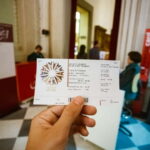
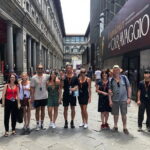
This tour is built around one practical idea: don’t lose your prime Uffizi minutes standing in a ticket line. The meeting point is straightforward—in front of Door 1 at the Uffizi Gallery, next to the Petrarca statue—and the tour ends back there. That matters, because the Uffizi area can feel like you’re forever finding your way to the next doorway.
Once you’re inside, the biggest payoff is not just access. It’s momentum. You’re guided immediately into the flow of what makes the Uffizi special: the way Renaissance art connects to politics, patronage, and the ideas Florence was arguing about at the time.
If you’re the type who likes to understand why a painting exists (not just what it looks like), this format helps. You don’t wander as long without a plan—you get a plan.
You can also read our reviews of more museum experiences in Florence


What a 2.5-hour Uffizi master class really covers
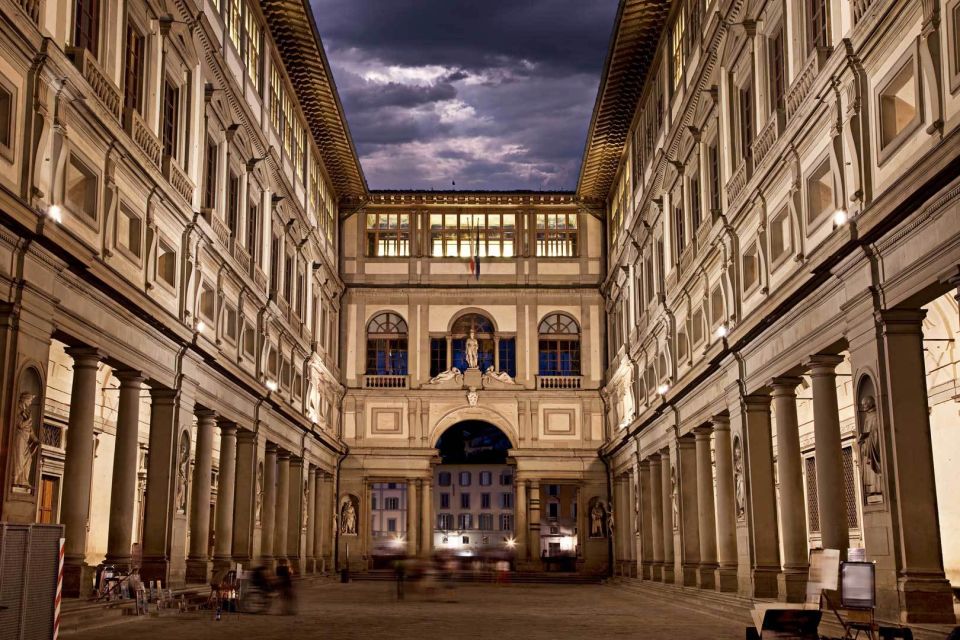
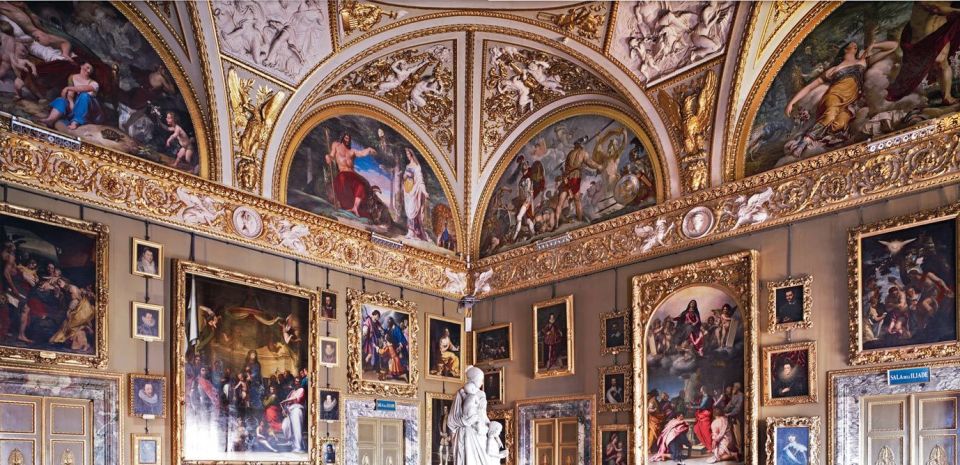
The tour runs about 2.5 hours, which is a sweet spot for an art lesson without turning your day into a full museum marathon. The structure is an extended guided visit with the feel of a master class: Florence’s rise in art and humanism, the Medici family’s role, and then the artworks that best show those themes.
You’re also in a small group (maximum of 9). The point isn’t luxury for its own sake. Smaller groups make it easier for the guide to slow down when someone has a question, and it’s easier for you to actually hear explanations in a busy gallery.
The “watch and read” part matters too. The Uffizi can overwhelm you fast because there are so many masterpieces. Here, you get an organizing thread. You’ll walk out with clearer cause-and-effect: why certain artists mattered, what patrons wanted, and what the works were saying to viewers at the time.
Florence and the Medici story: why the Uffizi feels like a world
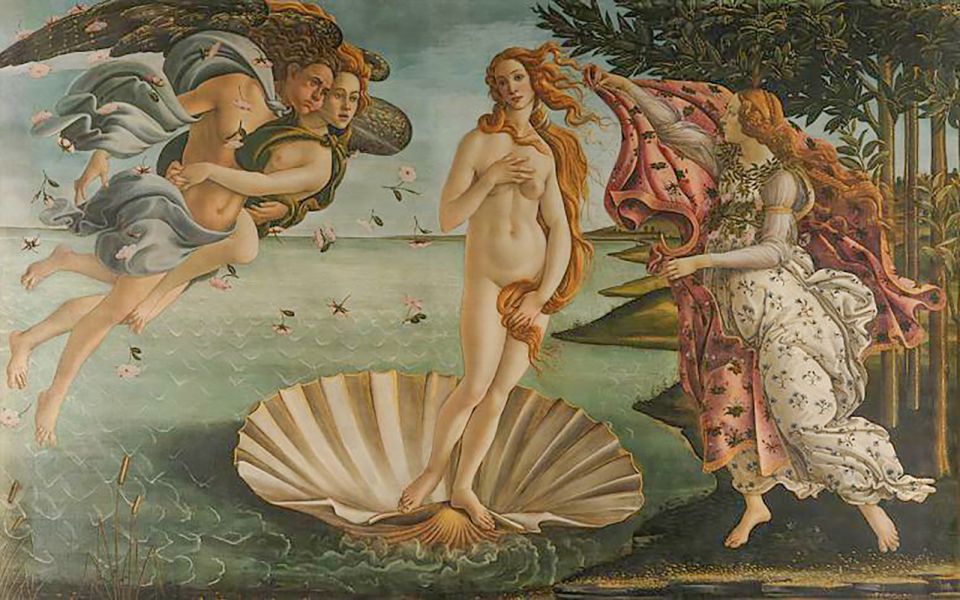
The big theme of this tour is that Florence didn’t just produce great painters by accident. The Renaissance happened because people invested money and ideas into art, and the Medici family sat right in the center of that orbit.
Your guide leads you through how Florence became the cradle of the Renaissance—an artistic and humanistic revolution—and how the Medici family’s relationship with the arts shaped what you see in the gallery today. That includes how patronage worked in practice: who supported artists, what kinds of projects got funded, and how artworks communicated status and beliefs.
This is where the master class format shines. Without context, the Uffizi can feel like a highlight reel of famous names. With context, it becomes a story you can follow—like you’re watching a city negotiate power and values through paint.
You’ll also get time for questions and discussion in the small group setting, which is one of the reasons this kind of tour works better than audio-only museum wandering.
The paintings that anchor the lesson: Botticelli, da Vinci, Giotto
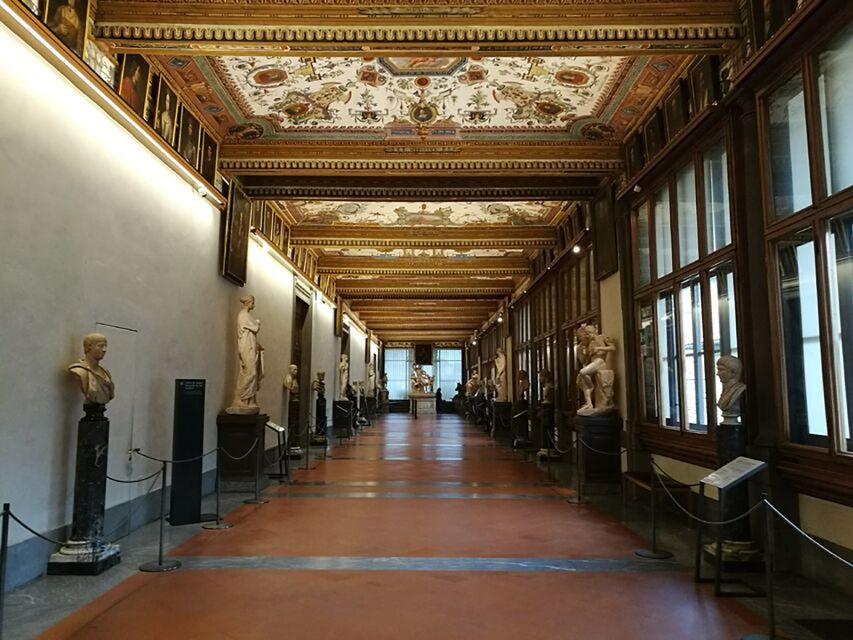
This tour doesn’t try to cover everything. Instead, it builds your understanding around standout works—so you start seeing patterns.
Here are the anchor works you’ll spend time with:
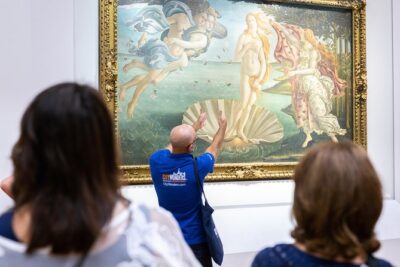
- Botticelli’s The Birth of Venus
- Leonardo da Vinci’s Adoration of the Magi
- Giotto’s Ognissanti Madonna
Why these? Because they make it easy to talk about shifts in style and meaning across the Renaissance. You’re not just hearing that these artists are important—you’re learning what made them important to Florence’s artistic world.
For example, The Birth of Venus is a perfect centerpiece for humanistic thinking—ideas about mythology, beauty, and how classical themes got reinterpreted in Renaissance culture. Adoration of the Magi is a great place to connect artistic skill with storytelling and emotion, and to see how da Vinci’s approach stands apart. And Ognissanti Madonna helps you feel the continuity of religious art—still central to Renaissance commissions—while also recognizing the way different artists shaped devotional images.
Even if you’re not an art-history superfan, this approach works because it gives you a “minimum vocabulary” before you start looking closely. And when you walk past other works later, you’ll likely notice more than you would on your own.
Small-group perks: better listening, more questions, less chaos
The tour limits the group to 9 participants maximum. In a museum this crowded, that size decision is not a minor detail. Smaller groups mean:
- The guide can pace the tour for actual attention, not just speed.
- You’re less likely to end up stuck behind tall people or school groups.
- Questions don’t feel like an interruption—they’re part of the lesson.
The guide is a live, professional professional tour guide delivering English instruction. If your group size is more than 6, you’ll have an audio guide for the group. That’s a nice practical touch because it helps you hear the guide clearly even when the room gets busy.
This is also where the feedback you’ll see on this tour becomes meaningful. There’s strong praise for guides staying warm and patient, including cases where visits had to be cut short and the guide handled it with understanding. That kind of flexibility is rare, and it matters if your schedule is tight.
You can also read our reviews of more tours and experiences in Florence
- Cooking Class and Lunch at a Tuscan Farmhouse with Local Market Tour from Florence
★ 5.0 · 4,831 reviews






Crowd reality: how skip-the-line helps without pretending it’s empty
Let’s be honest: the Uffizi is popular. Skip-the-line means you avoid the worst bottleneck, but it doesn’t turn the museum into a quiet library.
What this tour does well is help you use your time inside. Instead of losing energy on logistics, you’re guided through a set of stops tied to the Renaissance story. You also get help interpreting what you’re seeing—especially the kinds of nuances that are hard to pick up when you’re rushing or when you’re trying to read labels while moving.
One practical tip: wear comfortable shoes and keep your plan flexible. Even with a guided pace, you’ll still be in a public museum with crowds. The benefit is that you’ll know what you’re looking at, why it matters, and how the pieces fit together.
Price and value: is $121.21 worth it?
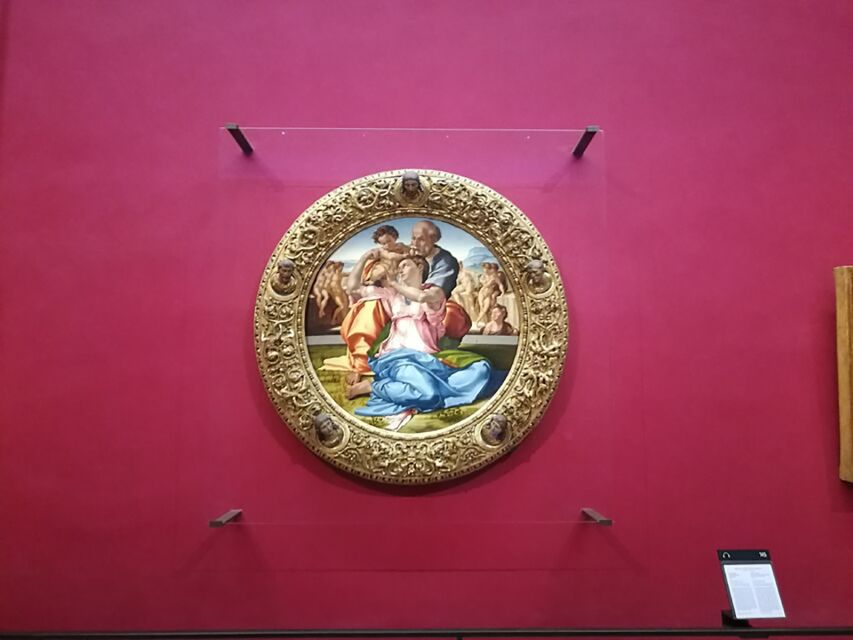
At $121.21 per person for about 2.5 hours, you’re paying for three things at once:
1) Skip-the-line entry, which saves time (and stress)
2) A live expert guide, which turns art viewing into real understanding
3) A small-group experience, so you’re not lost in a sea of people
If you plan to visit the Uffizi on your own, you can save money—but you also lose the story thread. The Uffizi’s top works can look similar at first glance if you don’t have context (time period, patronage, artistic goals). This tour is designed to give you that context fast.
To me, the value comes from whether you want more than photos. If you want to leave with a mental map and a clearer sense of how Florence shaped the Renaissance, the guide time is the main bargain. If you’re happy with a self-guided “greatest hits” browse and you don’t care about explanations, you might not feel the same value.
Who should book this tour (and who might not)
This is a strong fit if:
- You love Renaissance art and want the story behind the masterpieces
- You prefer a guided structure over wandering
- You want time for questions in a small group
- You’re visiting with someone who’s less art-focused and you want the guide to make it click
It might not be the best match if:
- You want to see every painting in the Uffizi, room by room
- You dislike group pace or you’re trying to keep the visit ultra-flexible
- You’re only after quick photos and don’t want context
Think of this tour as a focused lesson using the Uffizi’s strongest chapters. It’s not trying to be the whole book.
Plan for the first Sunday free-entry twist
One important heads-up: on the first Sunday of each month, entrance is free of charge. But because tickets can’t be reserved ahead of time, entry isn’t guaranteed. If you’re traveling on that day, plan extra buffer time and don’t assume you’ll get in just because the day is free.
If you’re not traveling on the first Sunday, the skip-the-line plan is a cleaner way to reduce uncertainty.
Should you book this Florence Uffizi master class?
I’d book it if you want the Uffizi to make sense. The mix of skip-the-line access, a live English guide, and a small group size is exactly what turns a crowded museum into a learning experience. The emphasis on Florence’s Renaissance rise and the Medici connection gives you the why behind the art, not just the what.
Skip this tour if your goal is speed and you don’t want guided interpretation. The Uffizi is big, and no 2.5-hour visit can turn into seeing everything.
If you’re torn, my practical suggestion is simple: ask yourself whether you’ll enjoy reading labels and figuring it out solo. If you want help connecting the dots, this is the way to do it.
FAQ
How long is the Florence Uffizi Gallery Master Class skip-the-line tour?
It lasts about 2.5 hours, with the exact start time depending on availability.
Where do I meet for the tour?
Meet in front of Door 1 at the Uffizi Gallery, next to the Petrarca statue.
How big is the group?
The tour is a small group with a maximum of 9 participants.
Do I need to speak Italian?
No. The live tour guide provides English instruction.
Is skip-the-line admission included?
Yes. Skip-the-line entrance to the Uffizi Gallery is included.
Is there an audio guide?
An audio guide is included for groups of more than 6 people, alongside the live guide.
What famous artworks will I see on this tour?
You’ll focus on major works such as Botticelli’s The Birth of Venus, Leonardo da Vinci’s Adoration of the Magi, and Giotto’s Ognissanti Madonna.
Is the tour wheelchair accessible?
Yes, wheelchair access is listed as available.
Is admission free on the first Sunday of the month?
Entrance is free on the first Sunday of each month, but tickets can’t be reserved ahead of time, so entry is not guaranteed.
What’s the cancellation policy?
You can cancel up to 24 hours in advance for a full refund.
If you tell me your travel month and whether you’re visiting on the first Sunday, I can help you decide if this is the smart move for your dates.
You Might Also Enjoy

More Museum Experiences in Florence
More Tours in Florence
- The Best tour in Florence: Renaissance & Medici Tales – guided by a STORYTELLER
★ 5.0 · 12,316 reviews



More Tour Reviews in Florence
- Tuscany Day Trip from Florence: Siena, San Gimignano, Pisa and Lunch at a Winery
★ 5.0 · 21,634 reviews - The Best tour in Florence: Renaissance & Medici Tales – guided by a STORYTELLER
★ 5.0 · 12,316 reviews