REVIEW · FLORENCE
Florence: Renaissance City Walking Tour
Book on GetYourGuide →Operated by SLOW TOUR TUSCANY · Bookable on GetYourGuide
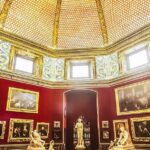
Florence changes fast when you walk it, not when you hop in a bus. This 1.5-hour Renaissance city tour strings together the art, politics, and streets that made the city feel like an open-air textbook. I like that it starts right at the Uffizi courtyard and quickly moves you into the big civic-sculpture zone around Piazza della Signoria.
Two things I really like about this experience are the story-first guiding and the smart use of an audio headset. You also get a clear thread through Renaissance names like Dante Alighieri, Michelangelo, and Leonardo da Vinci, plus the Medici influence that still lingers in the buildings and squares.
One consideration: it’s a fair amount of walking in just 1.5 hours, so comfortable shoes matter. If your legs need frequent breaks, you’ll want to plan extra time to rest.
In This Review
- Key takeaways before you go
- A 90-minute walking tour that feels like a Renaissance storyboard
- Starting at the Uffizi courtyard and Piazza della Signoria
- Palazzo Vecchio, Medici power, and reading Florence like a map
- The sprint through narrow alleys to Santa Croce
- The exterior Vasari Corridor route to Ponte Vecchio
- Oltrarno, S. Frediano, and Santo Spirito: artisan Florence away from the lines
- Ponte Santa Trinita to Via Tornabuoni: the city opens up
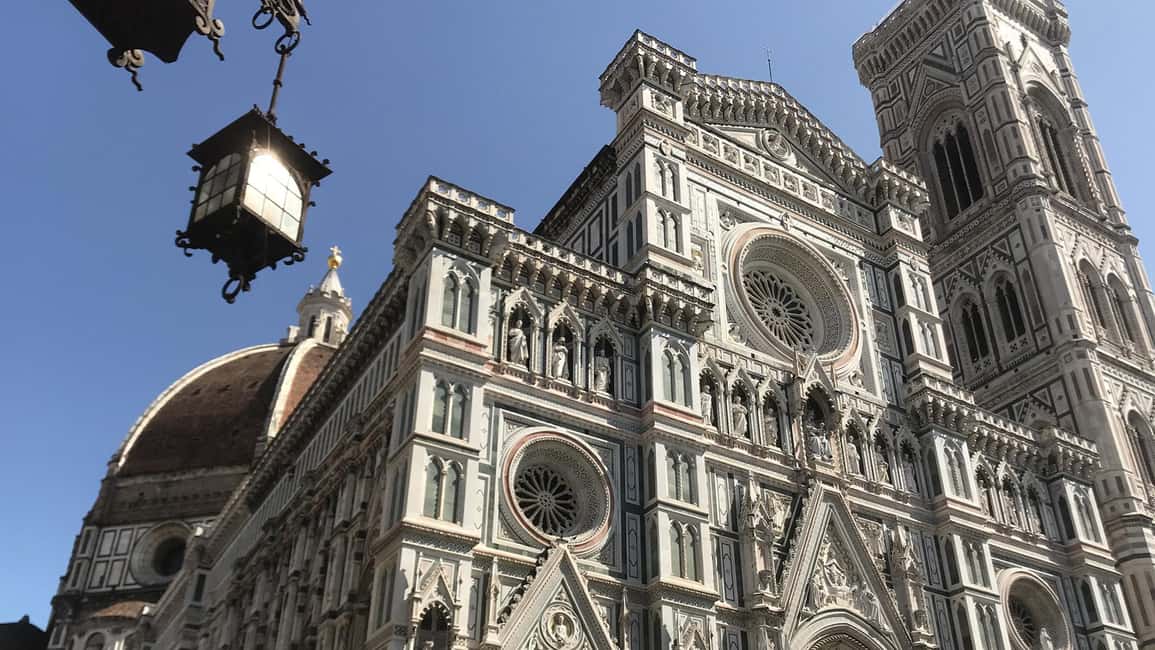
- Coming face to face with Santa Maria del Fiore
- The guide, the audio headset, and how to get value fast
- Price: $40 for a guided orientation to Florence’s core Renaissance sites
- Who this walking tour suits best
- Should you book this Florence Renaissance city walking tour?
- FAQ
- How long is the Florence Renaissance City Walking Tour?
- How much does the tour cost?
- What language is the live guide?
- Where does the tour start?
- What’s included in the price?
- Are refreshments included?
- Is it wheelchair accessible?
- Is there a lot of walking?
- Can I bring luggage or large bags?
- When should I book?
Key takeaways before you go
- Uffizi courtyard start sets a museum-at-street-level tone from the first minute
- Piazza della Signoria and Loggia dei Lanzi help you read sculpture like it belongs to the city
- Santa Croce stop connects the Renaissance to real tombs, including Dante Alighieri and Michelangelo
- External Vasari Corridor route gives you the feel of this famous passage without needing special access
- Ponte Vecchio goldsmith shops turn a bridge crossing into a snapshot of Florence’s trade and taste
- Oltrarno (S. Frediano and Santo Spirito) shows artisan Florence with tower houses and local rhythm
A 90-minute walking tour that feels like a Renaissance storyboard
Florence can overwhelm you. It’s too much art, too many churches, too many statues, too little time. This tour helps by giving you a walking route with a narrative spine—so the streets make sense instead of just stacking up.
You’ll move through neighborhoods and landmark squares tied to how the Renaissance was funded, displayed, and protected. And because it’s an expert-led walk with an audio headset, you’re not forced to strain your ears in busy piazzas and narrow alleys.
The format also matters for your decision-making. At about 1.5 hours, you get a strong orientation to major sights without needing a full day just to get your bearings.
You can also read our reviews of more walking tours in Florence
Starting at the Uffizi courtyard and Piazza della Signoria
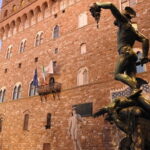
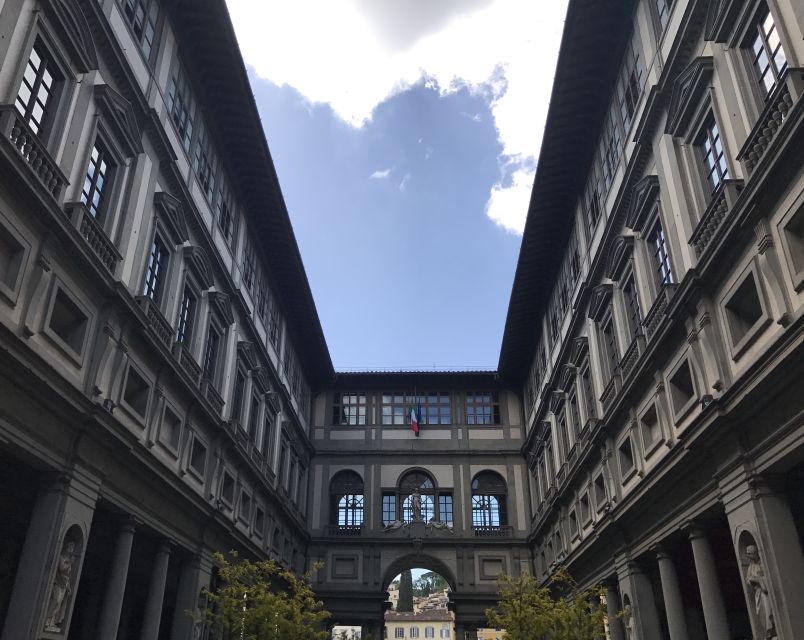
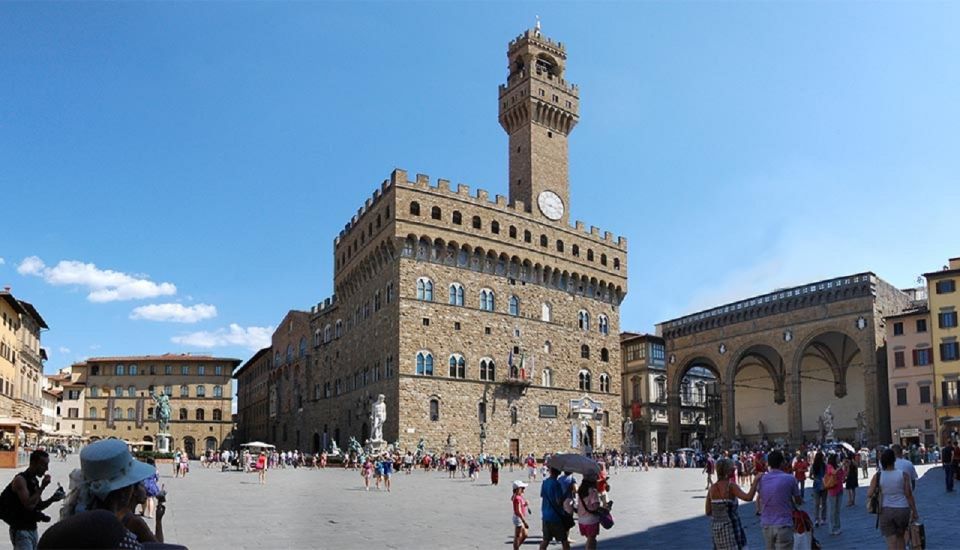
The walk begins in the courtyard of the Uffizi Gallery, in the same general orbit as one of Florence’s most powerful public squares. From there, you step into Piazza della Signoria, where the city’s art and civic identity sit side by side.
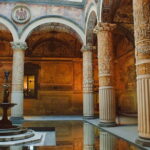
This is a great start point because you’re not just seeing famous names. You’re also learning how Florence used public spaces to project ideas—who mattered, what was celebrated, and why certain art landed exactly where it did. The tour also heads toward Palazzo Vecchio and looks up at the Loggia dei Lanzi, which is basically a rooftop viewing platform for major sculpture.
Practical note: this part is often where you’ll do the most quick visual reading. If you like architecture details and sculpture you can actually compare, you’ll be in your element early.
Palazzo Vecchio, Medici power, and reading Florence like a map
If you want the Renaissance to feel less like trivia, pay attention to the Medici angle. The tour is designed to show how the Medici family shaped Florence’s culture and reputation, and you’ll see that idea reflected in the civic spaces you pass.
Even without going into deep museum-style galleries, you can still get a lot. Standing in and around Palazzo Vecchio’s orbit lets you connect power to place. You learn why certain landmarks matter beyond their postcard value.
This also sets you up for the next stops. Once you understand that Florence used art and architecture as political language, the rest of the route becomes easier to follow—especially when you reach religious and commemorative spaces later.
The sprint through narrow alleys to Santa Croce
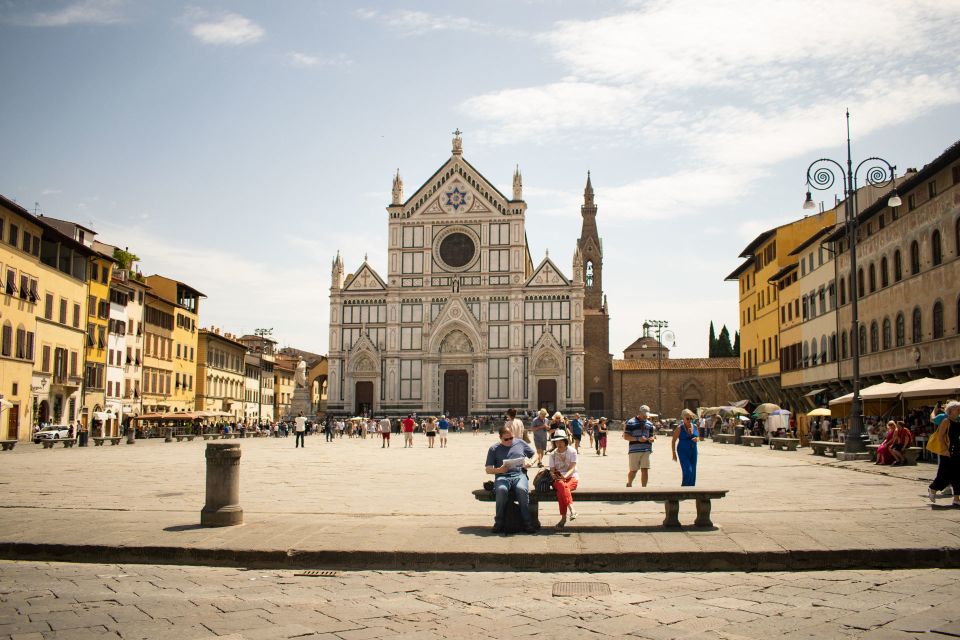
After the civic core, the route slips into narrower streets and pushes toward Santa Croce, one of Florence’s most emotionally charged squares. The tour frames this area as a step into the Renaissance’s human stories, not just another church facade.
When you arrive, the church context is front and center: it’s described as a smaller version of Florence’s iconic Duomo, which helps you understand the scale and stylistic relationship in your head. Then comes the part that makes Santa Croce different—its role as a final resting place.
The tour highlights that Dante Alighieri and Michelangelo are among the notable figures connected with Santa Croce. That kind of detail changes how you look at the church. It’s not only a sight; it’s a physical link to the people whose names you’ve heard in art and literature.
Drawback to keep in mind: if you want silence and time for independent exploration inside the church, a walking tour format can feel a bit tight. Plan to treat this as the orientation and storytelling portion, and save extra time for your own lingering afterward.
The exterior Vasari Corridor route to Ponte Vecchio
Next, you’ll follow the outside route connected to the Vasari Corridor and head toward Ponte Vecchio. Even if you can’t go inside on this tour, the exterior perspective is still valuable because it explains how Florence’s elites moved through the city and how architecture served practical purposes.
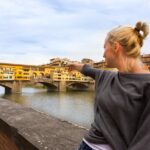
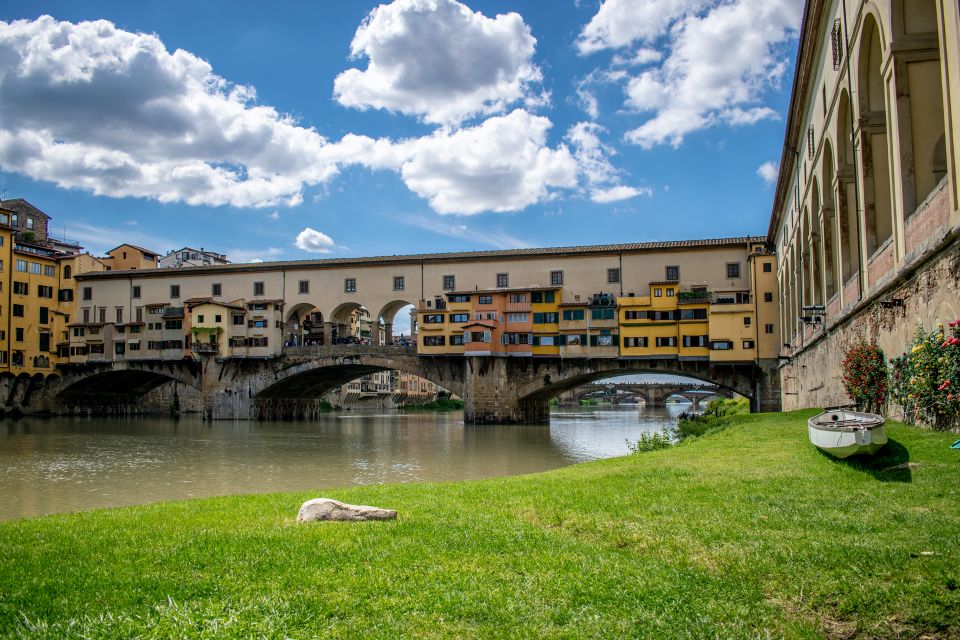
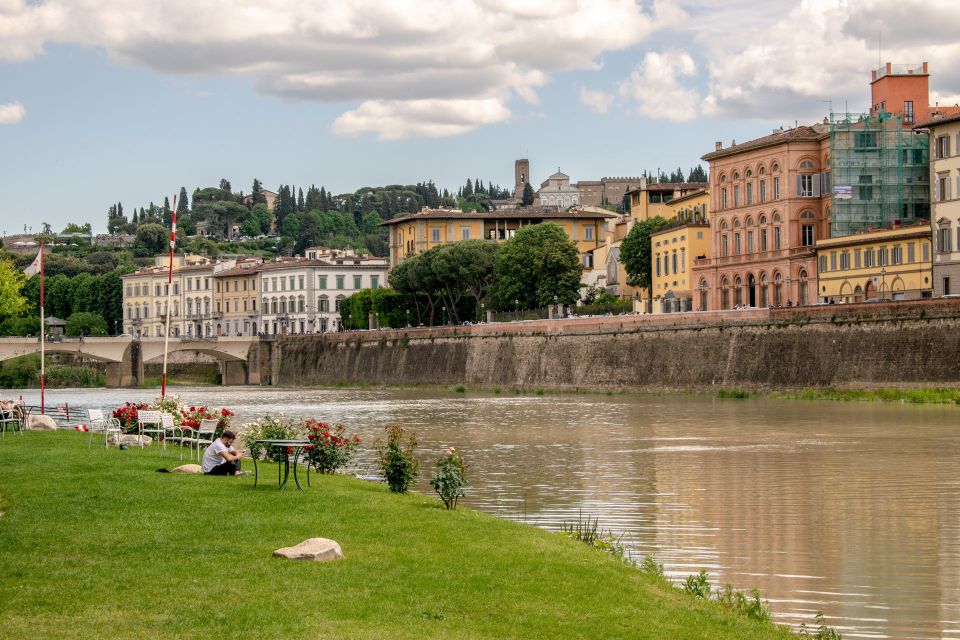
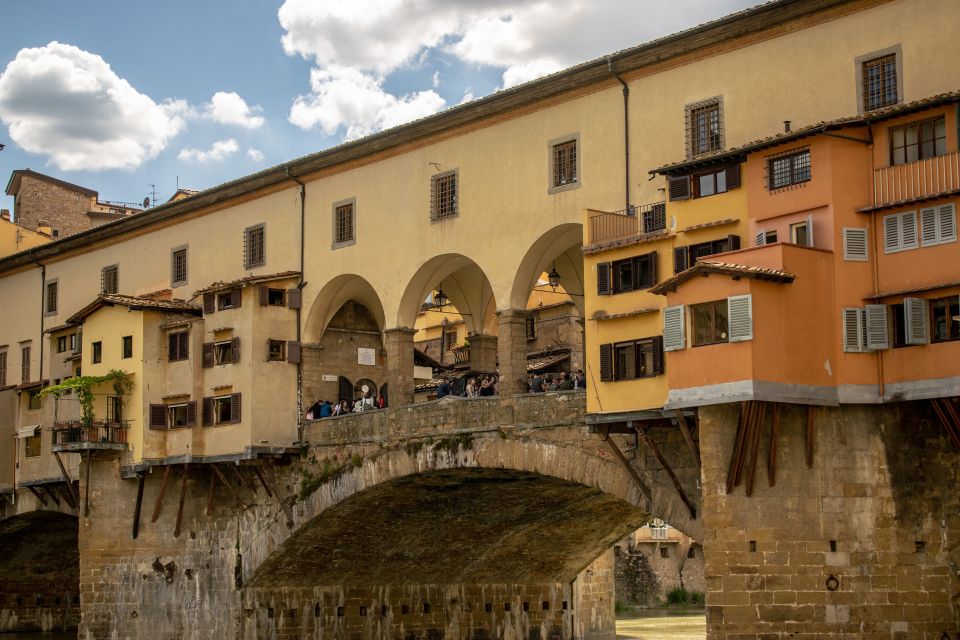
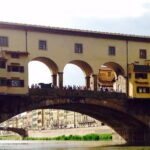
Then you arrive at the signature bridge moment: Ponte Vecchio, famous for its charm and for the goldsmith shops lined along it. This stop is a good example of why walking works here. You don’t just look at the bridge—you see how the shops and the river edge create a street-like experience in a place that could be purely scenic.
If you’re a photo person, this is one of your easiest wins. Take a moment, pause, and let the guide’s stories settle. Ponte Vecchio is the kind of place where context turns background into meaning.
You can also read our reviews of more city tours in Florence


Oltrarno, S. Frediano, and Santo Spirito: artisan Florence away from the lines
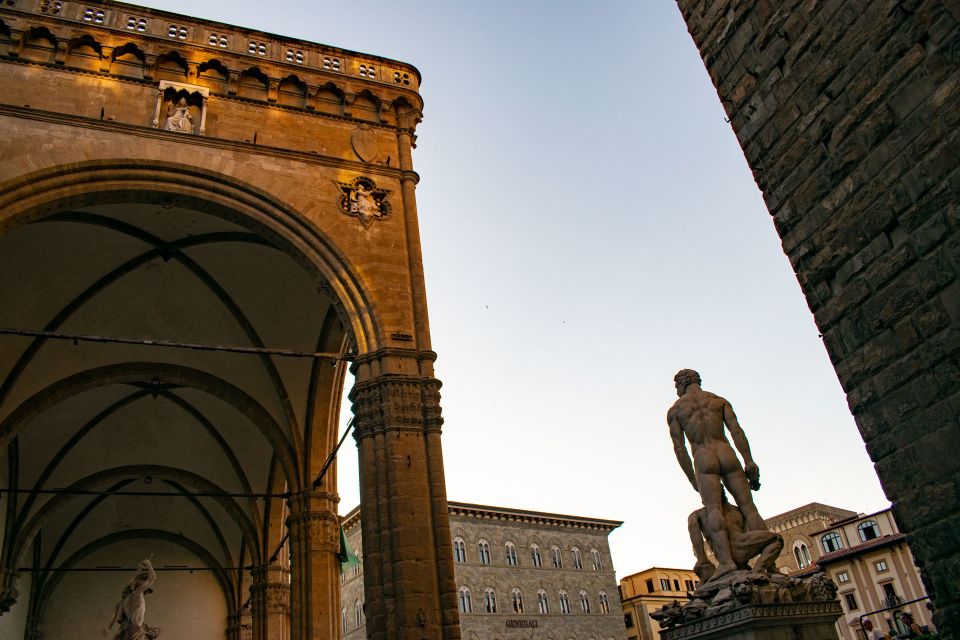
After crossing the river area, you shift into the Oltrarno district and into neighborhoods like S. Frediano and Santo Spirito. This is where the tour changes texture: less big-square spectacle, more everyday city life.
The tour sets expectations clearly by describing these areas as places with artisan shops and ancient tower houses, plus an international flair mixed with local traditions. That blend matters. It means you get a Florence that still feels like it’s working, not only performing.
You can also use this section to reset your pace. Walking through these streets helps break up the intensity of the monument-heavy portions. And if you like the idea of shopping for small, craft-focused items, this neighborhood focus gives you the right direction—even though the tour itself doesn’t frame it as a shopping spree.
One more practical reality: narrow streets can be uneven, and stone sidewalks can be tiring. If you’re carrying anything you can’t lift easily, this is where light travel becomes more than a convenience.
Ponte Santa Trinita to Via Tornabuoni: the city opens up
From Ponte Santa Trinita, the route moves you toward Via Tornabuoni and then the Piazza della Repubblica area. This stretch is useful because it transitions you from craft and local streets into a more refined urban rhythm.
Via Tornabuoni is the kind of place where Florence’s elegance becomes visible through building lines and street scale. It’s a good moment to compare what you’ve seen so far: civic power in Piazza della Signoria, sacred memory at Santa Croce, commerce and passage at Ponte Vecchio, and then the more polished city face in this corridor.
Then you hit Piazza della Repubblica, another central pause point. It’s a natural place to stop and refocus before the tour’s big finish toward the cathedral.
Coming face to face with Santa Maria del Fiore
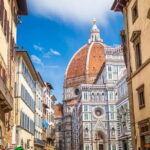
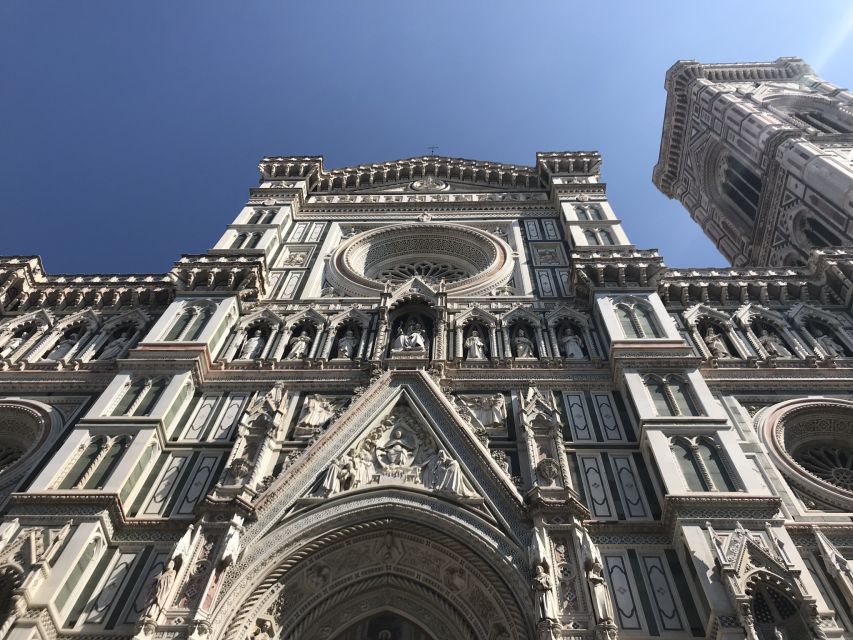
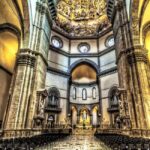
The tour ends by leading you to Santa Maria del Fiore, Florence’s iconic cathedral. This is where your mental model of the city locks in.
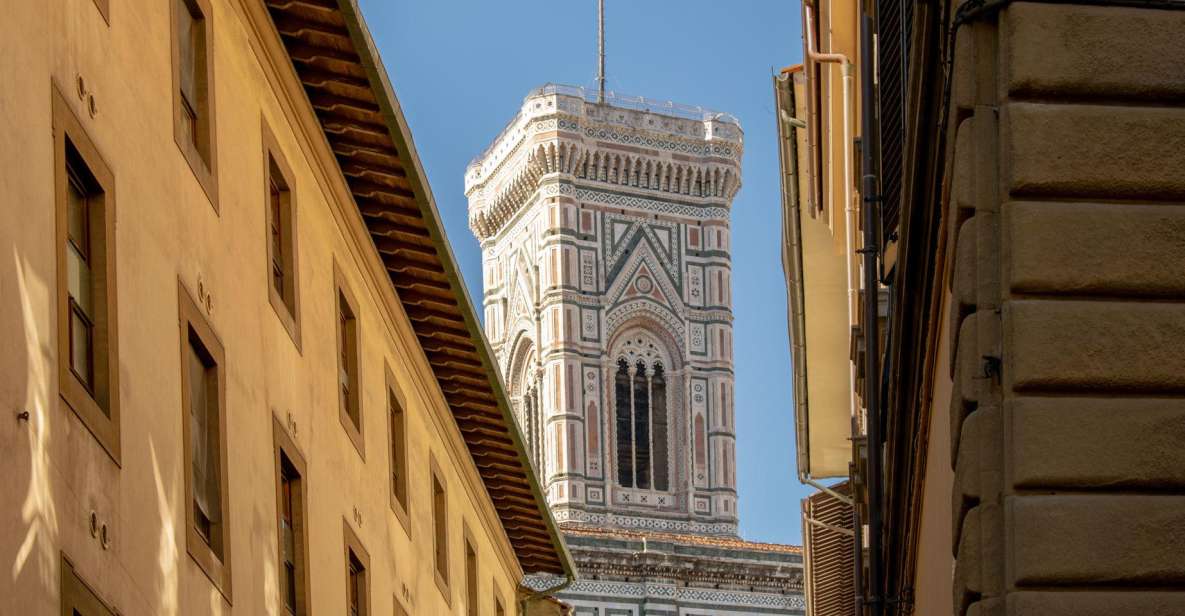
After you’ve learned the stories around major names and the political-cultural influence shaping Florence, the cathedral stops being just a landmark. It becomes the culmination of the Renaissance ambition you’ve been following the whole time: building something visible at scale, meant to be seen from far away, and meant to last.
Even if you’ve seen photos, you’ll likely notice that the cathedral’s dominance feels different when you reach it as the result of a route. Walking there from the surrounding neighborhoods changes how the structure reads in your brain.
The guide, the audio headset, and how to get value fast
This tour is led by a live English guide, and the experience includes an audio headset. That combo is a big deal in Florence, where street noise can bury the good stuff: names, dates, and the why-behind-the-what.
The guide weaved in real storytelling and answers, especially when people had questions. A guide who can explain the Medici influence and connect Renaissance figures to places makes the walking route feel less like a checklist and more like a coherent city lesson.
Length also matters. In 90 minutes, you can’t afford long pauses. The headset and guiding structure help you stay on track without feeling like you missed the point.
Also, you can bring a practical mindset: keep your eyes up for architecture and your ears open for connections between stops. If you do both, the tour gives you something you can use all day long.
Price: $40 for a guided orientation to Florence’s core Renaissance sites
At $40 per person, this is positioned as a value-focused, guided “orientation plus stories” tour. You’re not paying for transportation or museum entry details in the info provided. What you are paying for is an expert guide plus an audio headset to help you move efficiently and understand what you’re seeing.
It’s also a smart use of time. If you’re only in Florence briefly, a guided route that covers Uffizi-area landmarks, Santa Croce, Ponte Vecchio, Oltrarno streets, and the cathedral-area view is a fast way to build a base map for future wandering.
Not included: refreshments. That means you should plan a snack or water before you start, especially if you’re the type who gets hungry quickly during walking tours.
Who this walking tour suits best
I think this tour fits best if you:
- Want a structured route through major Renaissance landmarks without getting lost
- Care about the stories behind names like Dante Alighieri, Michelangelo, and Leonardo da Vinci
- Like city walking where neighborhoods shift from formal monuments to local craft streets
You might consider another option if you:
- Strongly dislike walking in general or need frequent long breaks
- Are planning to carry luggage or large bags, since these aren’t allowed
Good to know: it’s listed as wheelchair accessible, but it still involves a fair amount of walking, so comfort and route fit matter.
Should you book this Florence Renaissance city walking tour?
Book it if you want Florence to make sense fast. This is the kind of tour that helps you connect art, architecture, and power across a compact route, and it uses an English guide plus audio headset to keep the experience clear and manageable.
Hold off if your day is built around long museum time or if you want a low-walking pace. At 1.5 hours, it’s meant for orientation and stories, not for deep standalone exploring.
If you’re choosing between a self-guided stroll and a guided route, I’d lean guided here. The landmarks are famous, but the connections—Medici influence, Renaissance figures, and why each place matters—are the value you’re buying.
FAQ
How long is the Florence Renaissance City Walking Tour?
The tour lasts 1.5 hours.
How much does the tour cost?
It costs $40 per person.
What language is the live guide?
The live tour guide speaks English.
Where does the tour start?
It starts in the courtyard of the Uffizi Gallery and the Piazza della Signoria area.
What’s included in the price?
You get a walking tour, an expert guide, and an audio headset.
Are refreshments included?
No. Refreshments are not included.
Is it wheelchair accessible?
Yes, the tour is listed as wheelchair accessible.
Is there a lot of walking?
Yes. It involves a fair amount of walking, so wear comfortable shoes.
Can I bring luggage or large bags?
No. Luggage or large bags are not allowed.
When should I book?
Starting times vary, so check availability. You can also reserve now and pay later, and cancel up to 24 hours in advance for a full refund.
You Might Also Enjoy


More Walking Tours in Florence
More Tours in Florence
- The Best tour in Florence: Renaissance & Medici Tales – guided by a STORYTELLER
★ 5.0 · 12,316 reviews



More Tour Reviews in Florence
- Tuscany Day Trip from Florence: Siena, San Gimignano, Pisa and Lunch at a Winery
★ 5.0 · 21,634 reviews - The Best tour in Florence: Renaissance & Medici Tales – guided by a STORYTELLER
★ 5.0 · 12,316 reviews