REVIEW · FLORENCE
Florence: Private Guided Walking Tour
Book on GetYourGuide →Operated by Ciaoflorence Tours & Travel · Bookable on GetYourGuide
You can get Florence’s big ideas in just three hours. This private walking tour links major sights like the Uffizi, Dante’s House, and Duomo Square into one clear story.
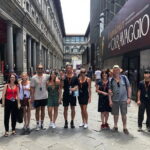
I especially like the private-guide flexibility—for example, guide Larla made room for gelato and extra photo stops when the group wanted a detour. I also love how the route pairs famous monuments with smart context, from Loggia dei Lanzi statues to the Vasari Corridor connection.
One thing to watch: entrances to churches and museums aren’t included. So you’ll spend your time seeing buildings from the outside and in key public areas, not doing full ticketed interiors.
In This Review
- Key highlights you’ll care about
- What this 3-hour private walk covers (and why it works)
- Ponte Vecchio and the art of crossing Florence’s oldest bridge
- Piazza della Signoria and Loggia dei Lanzi: Florence’s open-air power room
- Uffizi colonnade to Vasari Corridor: the architecture story behind the photos
- Pitti, the city’s palace world, and why the route keeps moving
- Dante’s House and the Medieval District: where literature meets street stone
- Duomo Square: the Cathedral complex explained in plain language
- Your guide really changes the experience (Larla, Constansa, Andrea)
- Price and value: $341 per group (up to 8) for a private story
- Timing, pace, and what you should be ready for
- Who this tour is best for (and who might choose differently)
- Should you book this Florence private walking tour?
- FAQ
- What’s the duration of this Florence private guided walking tour?
- How much does it cost, and how many people are included?
- Is this a private tour or a shared group?
- Will I need museum or church tickets as part of this tour?
- Which sights are featured during the walk?
- Are entrances included for places like the Uffizi or the Cathedral complex?
- How does pickup work?
- What languages are offered?
- Is the tour wheelchair accessible?
Key highlights you’ll care about
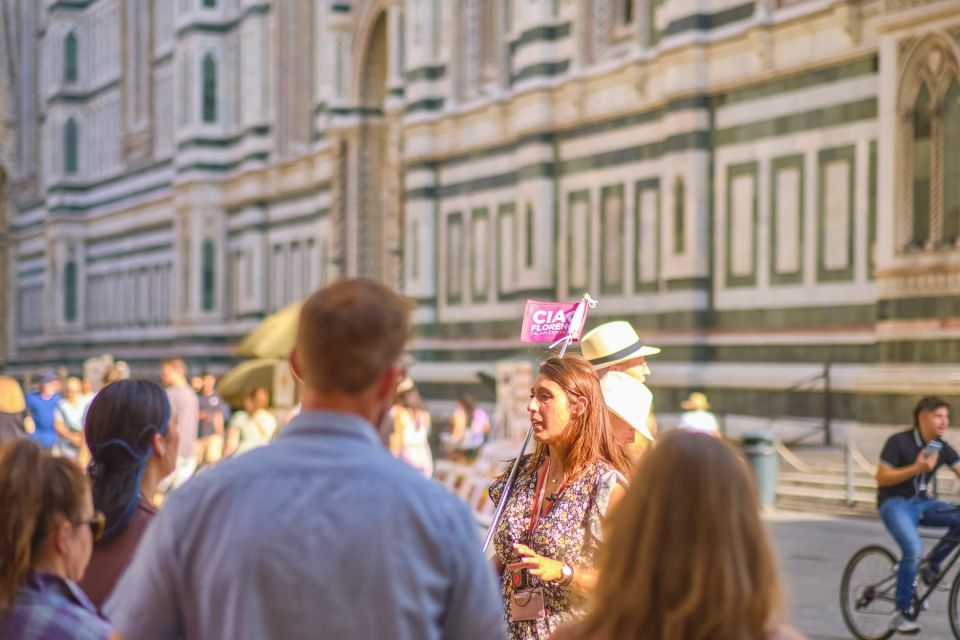
- Private group up to 8: more questions, more pacing control, less “follow-the-pack” stress
- Medieval District + Duomo Square: learn the Cathedral complex story while you’re actually standing there
- Ponte Vecchio and the riverfront vibe: cross the oldest bridge as your guide explains why it mattered
- Loggia dei Lanzi statues: see where major sculpture by artists like Cellini and Giambologna belongs in the city’s power map
- Dante’s House stop: connect Florence to the Divine Comedy through the site linked with his writing
What this 3-hour private walk covers (and why it works)
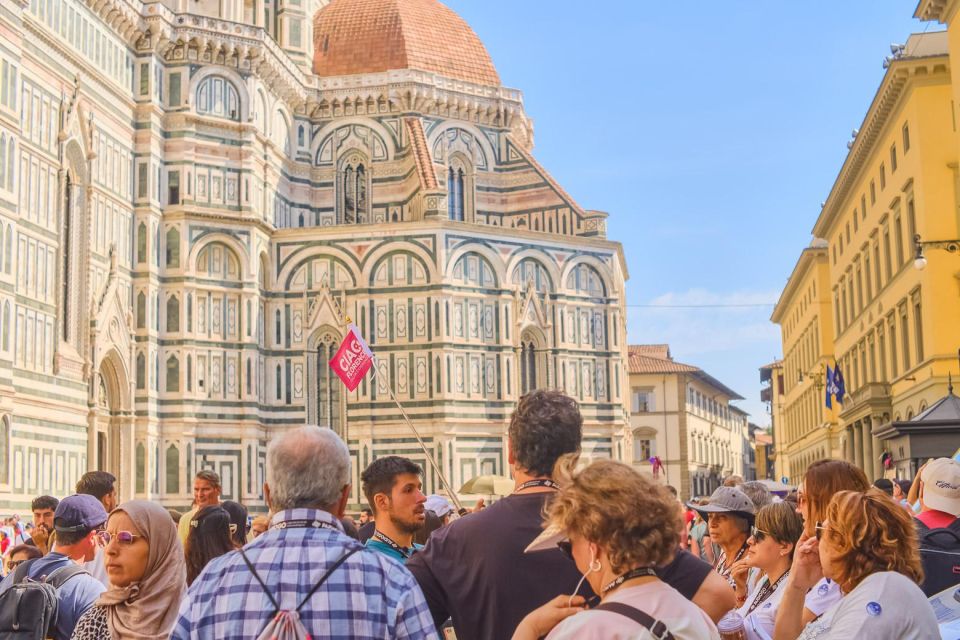
This is a focused, guided “greatest-hits with meaning” walk. In about three hours, you move through Florence’s Renaissance core, with stops that connect art, politics, and literature instead of treating landmarks as isolated photos.
If you want Duomo Square, Ponte Vecchio, and key public spaces—without spending half a day buying tickets and fighting entry lines—this format makes a lot of sense. The route is built for getting your bearings fast and walking away with a storyline you can remember.
The group stays private (up to 8), and pickup is included on foot from your hotel or apartment’s main entrance. That’s a real time-saver when Florence streets are doing their usual trick of looking like a maze.
You can also read our reviews of more walking tours in Florence
Ponte Vecchio and the art of crossing Florence’s oldest bridge
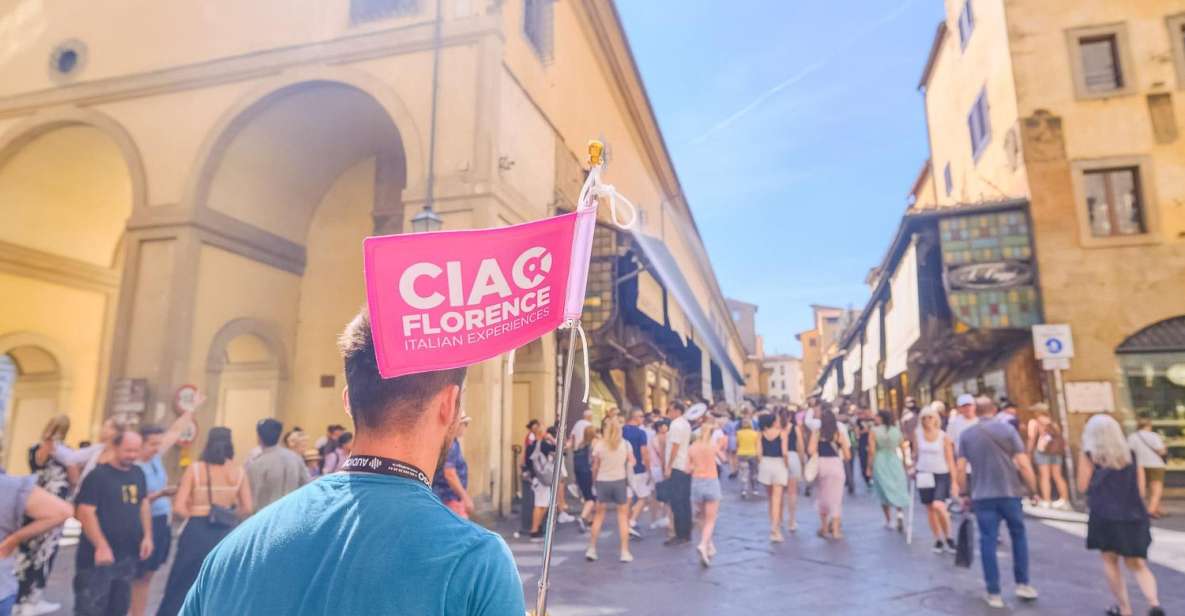
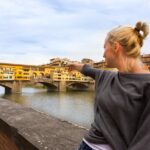
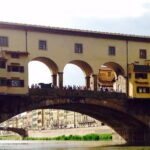
Your tour starts building atmosphere early. You’ll cross Ponte Vecchio, the city’s oldest bridge, and your guide uses the river views to explain why this crossing became such a signature part of Florence.
What I like about this stop is how it sets the tone for the rest of the day. Ponte Vecchio isn’t just a pretty postcard—your guide ties it to how Florence organized power, commerce, and prestige along the Arno.
Photo time is built in, but it’s not random. You’ll understand what you’re photographing before you raise your phone. That small shift makes your pictures feel more “yours” and less like screenshots.
Practical note: bridges mean crowds, especially in daylight hours. Keep your pace steady, and let your guide position you for the best viewpoints.
Piazza della Signoria and Loggia dei Lanzi: Florence’s open-air power room
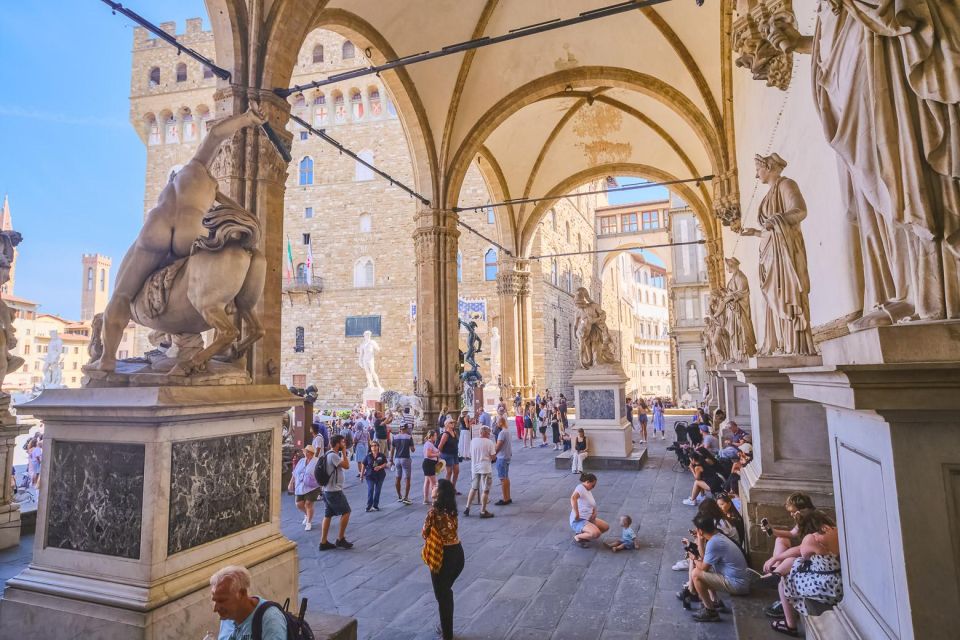
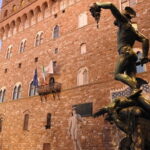
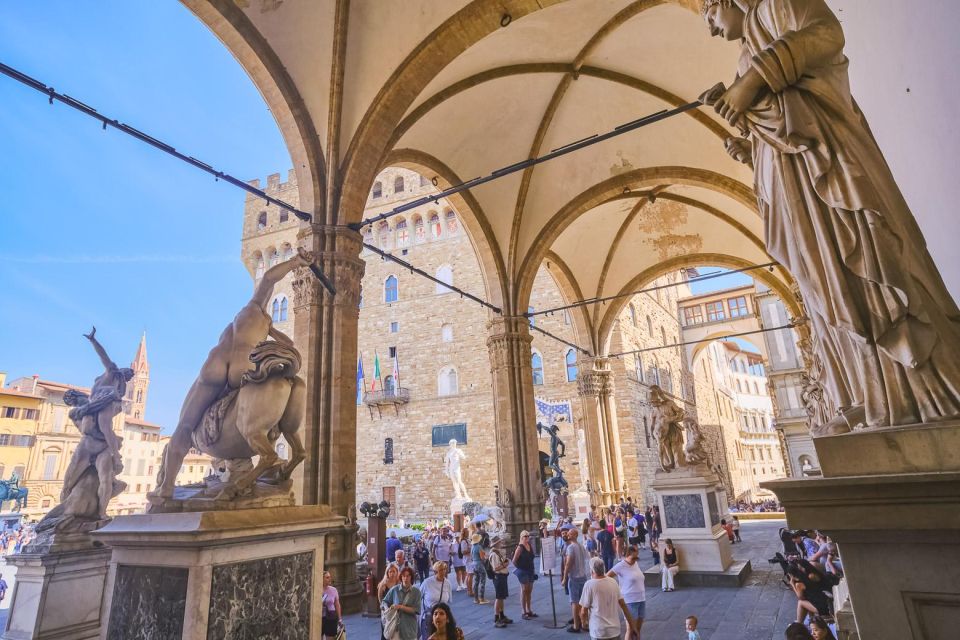
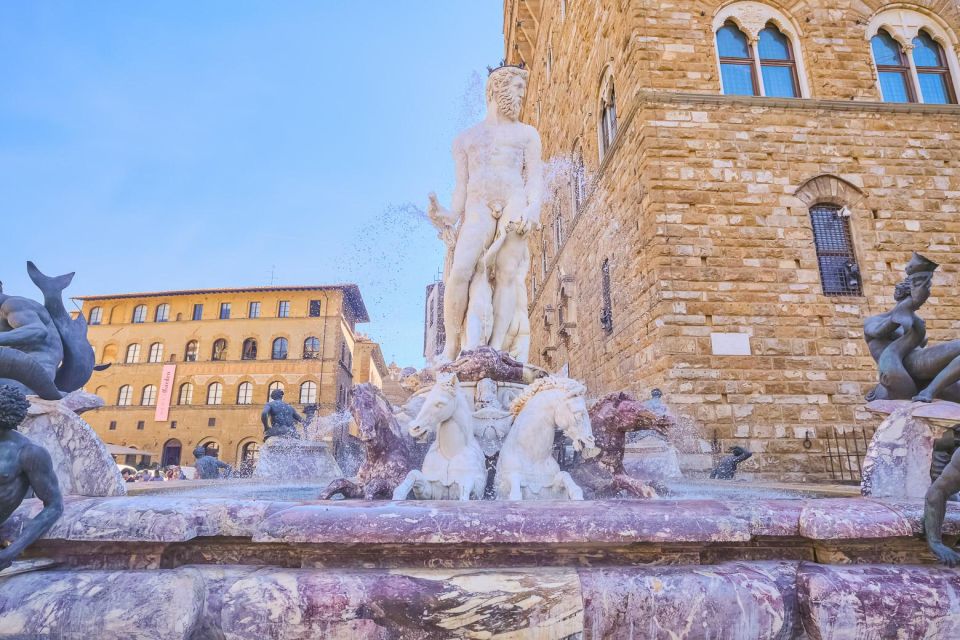
Next comes the big square energy: Piazza della Signoria. This area works like an outdoor museum because everything around it is tied to civic authority, patronage, and the city’s artistic identity.
Right in the same zone you’ll visit the Loggia dei Lanzi, where you can see original statues by major artists including Cellini and Giambologna. Standing close to sculpture like this changes how you think about “Renaissance art.” It’s not only for private galleries. It’s used to project status in public.
The value here is your guide’s historical anecdotes. You’re not just looking at figures. You’re hearing why these works belong where they do, and how Florence presented itself to visitors and citizens.
If you’re sensitive to crowds, plan to pause and breathe. Squares are open. That means you can regroup quickly if the group needs a moment.
Uffizi colonnade to Vasari Corridor: the architecture story behind the photos
You’ll pass by the Uffizi area without doing a full museum entry, with time to walk through the colonnade of the Uffizi Gallery. That’s a clever choice. You get the visual rhythm of the architecture and the sense of where the Uffizi sits in the city plan.
Then comes one of Florence’s best “wait, how is that possible?” stories: the Vasari Corridor. Your guide explains it as the twisty passage that connects Palazzo Vecchio to Pitti Palace.
This is where your tour feels extra satisfying even if you’re not a hardcore architecture fan. The corridor is famous partly because it’s a hidden-in-plain-sight concept. Knowing it links the political center to the palace world makes the city feel less random when you walk.
You’ll also get Pitti Palace in your path. Even without stepping inside, seeing how these structures line up gives you the city’s geography in one clean mental map.
Pitti, the city’s palace world, and why the route keeps moving
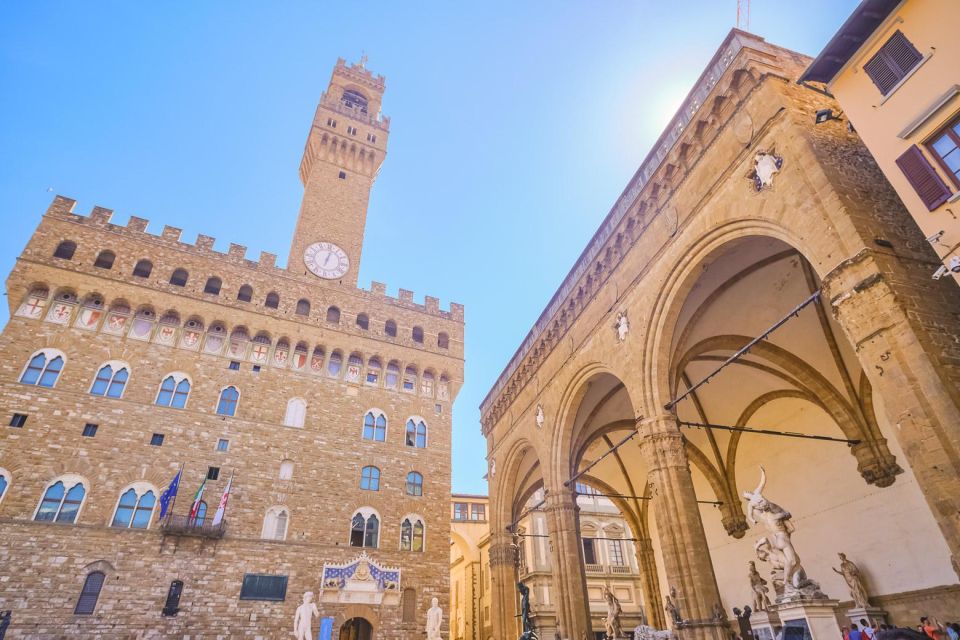
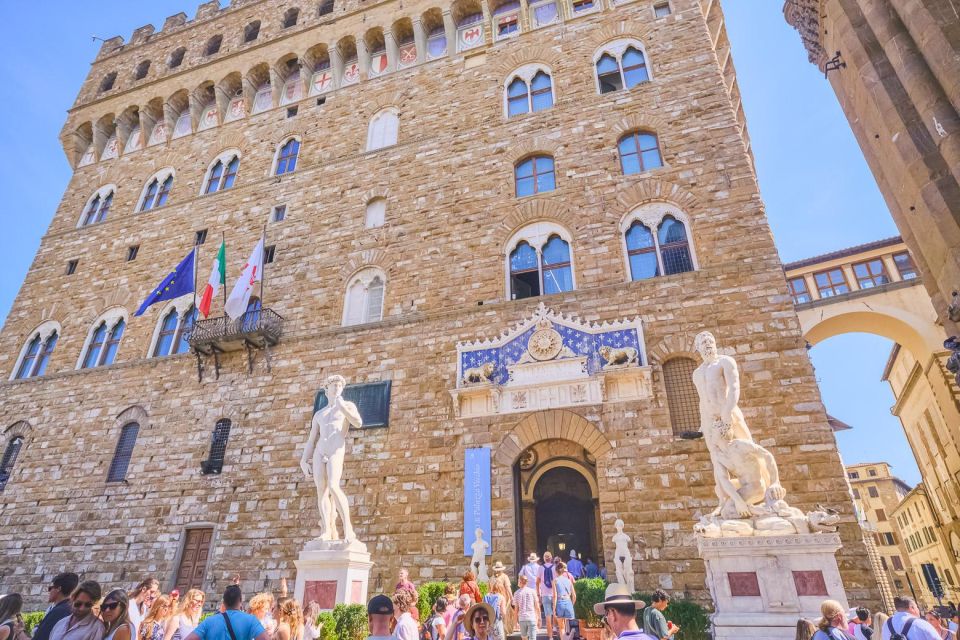
Florence’s palace story isn’t confined to one building. This walk keeps moving so the connections stay clear—Palazzo Vecchio shows civic power, Pitti represents the palace world, and the corridor ties the two worlds together.
That’s why I like this route for first-time visitors. You don’t leave with five separate monuments. You leave with a sense of how neighborhoods and institutions “talk” to each other.
You’ll also cross key central streets where the city’s medieval-to-Renaissance shift becomes obvious. The buildings don’t look like a single time period, and that’s the point. Florence grew by layering ambition over earlier foundations.
You can also read our reviews of more guided tours in Florence
- The Best tour in Florence: Renaissance & Medici Tales – guided by a STORYTELLER
★ 5.0 · 12,316 reviews
Dante’s House and the Medieval District: where literature meets street stone
One of the most memorable stops is the House of Dante, where your guide shows the site linked to where Dante wrote the Divine Comedy. Even if you’ve read only a few lines or you’re here because of the name, the connection hits differently when you’re standing near the location history anchors to.
Right after that, you’ll walk through the Medieval District. That section of the tour adds texture. Florence isn’t only Renaissance perfection—it’s also the older street fabric that shaped how later artists and patrons built their image.
This part of the day also feels more human because the focus shifts from formal sculpture and palaces to the idea of a city where writers, thinkers, and power centers share the same streets.
Keep an eye on small details your guide points out. In older districts, the meaning can hide in doorways, street turns, and the way buildings face the road.
Duomo Square: the Cathedral complex explained in plain language
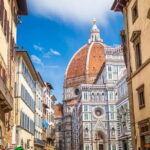
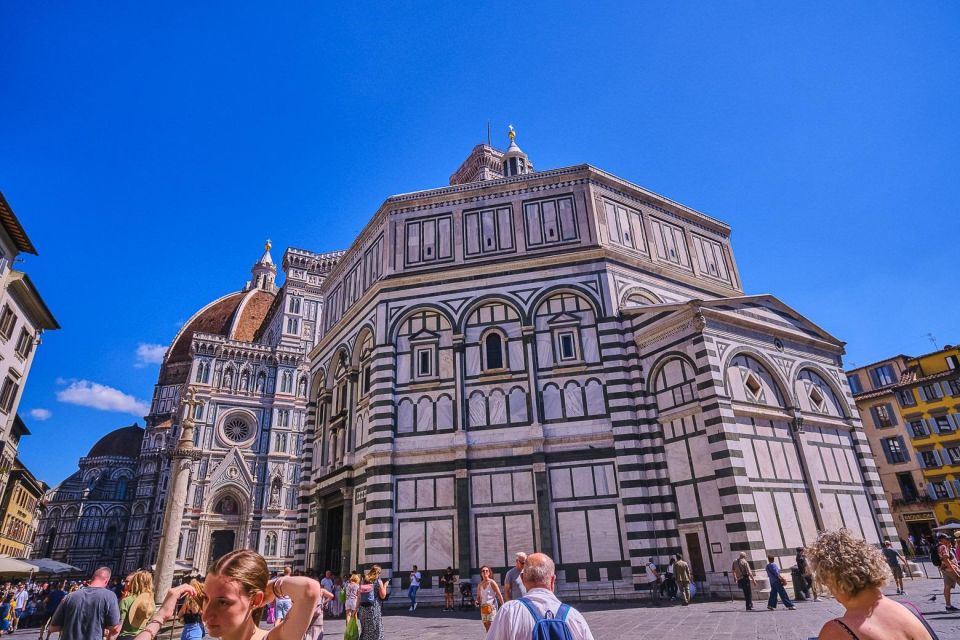
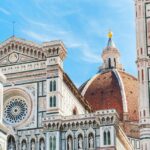
Then you land at the emotional center: Duomo Square. Walking into this space feels like entering a giant stone blueprint. Your guide helps you make sense of the parts—how the Cathedral, Baptistery, Giotto’s Bell Tower, and Brunelleschi’s Cupola relate to each other.
Even without entering churches, this stop is worth it because you’re guided through construction context and the logic behind the visual design. The Cathedral complex can look like one enormous artwork, but your guide breaks it into components so you can actually see the system.
Giotto’s Bell Tower and Brunelleschi’s Cupola are the kind of landmarks that always draw your eyes. With a guide explaining what you’re seeing, you stop treating them like random icons and start understanding why Florence wanted them in the first place.
Plan for photos, but also plan for standing time. This stop is a “look up and slow down” moment.
Your guide really changes the experience (Larla, Constansa, Andrea)
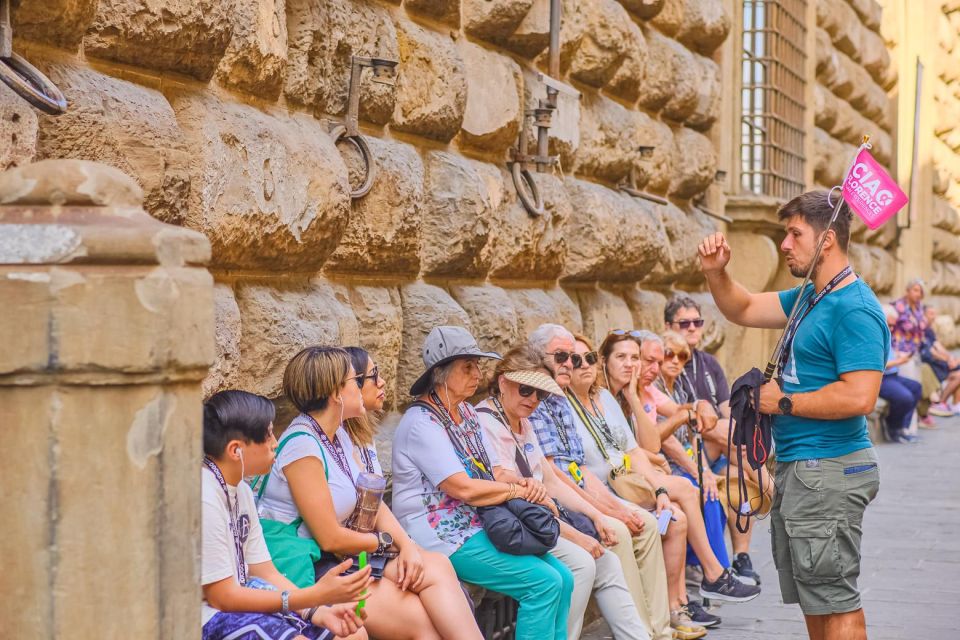
This tour is private, so your guide becomes the heartbeat of the day. And the guides named in past tours—Larla, Constansa, and Andrea—fit the same pattern: patient pacing, clear explanations, and lots of room for questions.
Larla, for example, is noted for being accommodating and letting the route bend so the group could include gelato and extra photo opportunities. That matters because Florence days rarely go exactly to plan. A good guide helps you steer the experience without losing the point.
Constansa and Andrea are described as professional and sharply informed, with answers that go beyond a basic overview. The best part of a guided walk isn’t just facts—it’s how easily the facts connect. If your guide can do that, you’ll feel like the city is speaking to you.
If you’re the type who likes to ask why something looks the way it does, this is a strong match. If you prefer silent wandering, just tell your guide early and they can keep explanations lighter.
Price and value: $341 per group (up to 8) for a private story
At $341 per group up to 8, the value depends on how many people you book with.
- If you fill the group with several people, the per-person cost drops fast.
- If it’s just 2 of you, you’ll feel the “private premium” more, but you still get a tailored route and pickup included.
Is it worth it? For most people, yes—if your priority is a guided walk that connects top sights in one coherent narrative. For a family or a small group of friends, it’s especially efficient because you get a private experience at a price that can compete with multiple ticketed activities plus separate guiding.
Also note what’s not included: entrances to churches or museums, lunch, and drinks. You’re paying for the guiding and the walking route. If you want full indoor museum time, you’ll need to plan that separately.
Timing, pace, and what you should be ready for
This lasts 3 hours, which is long enough to connect several neighborhoods, but short enough to keep energy up. Still, it’s a walking tour, and you should expect time on your feet, looking up, and pausing for photos.
The listing includes a note that it’s wheelchair accessible, but it also states it’s not suitable for people with mobility impairments. Because those statements conflict, I’d recommend confirming your needs with the provider before booking if mobility support is part of your plan.
Language options are good: Italian, Spanish, English, and French. That’s helpful because you’ll get the best experience when you can comfortably follow the historical anecdotes as you walk.
Who this tour is best for (and who might choose differently)
This private guided walk is ideal if you want Florence with structure. It’s a smart fit for:
- first-timers who need context fast
- couples or small groups who want privacy and flexibility
- visitors who like art, architecture, and literary history tied to real places
It may not be your top choice if you want to spend most of your time inside major museums, because entrance to churches and museums isn’t included. You’ll see key exteriors and public-space highlights, like colonnades, squares, and outdoor sculpture areas.
Should you book this Florence private walking tour?
I’d book it if you want your Florence day to feel like a story, not a checklist. The combination of Duomo Square, Ponte Vecchio, Piazza della Signoria, Loggia dei Lanzi, and the Dante connection gives you a strong sweep of Renaissance thinking in a manageable time window.
Also, the fact that guides like Larla are willing to accommodate small detours for gelato and photo ops tells me this isn’t a rigid script. That kind of flexibility is exactly what makes private walking tours worth paying for.
If you’re prepared to view major landmarks from public spaces and add museum or church entry separately, you’ll likely find this one of the best “first walking day” options in Florence.
One more practical tip: use the three hours to learn what you’re looking at. After that, you’ll be better equipped to wander on your own the rest of your trip.
FAQ
What’s the duration of this Florence private guided walking tour?
The tour lasts 3 hours.
How much does it cost, and how many people are included?
It costs $341 per group, and the group size can be up to 8 people.
Is this a private tour or a shared group?
It’s a private group tour.
Will I need museum or church tickets as part of this tour?
No. Entrance to churches or museums is not included.
Which sights are featured during the walk?
You’ll see highlights such as Duomo Square, Ponte Vecchio, the Uffizi Gallery colonnade area, Piazza della Signoria, the Loggia dei Lanzi, the House of Dante, and connections involving the Vasari Corridor, Palazzo Vecchio, and Pitti Palace.
Are entrances included for places like the Uffizi or the Cathedral complex?
No entrance fees are included for churches or museums, so the tour focuses on key exterior/public areas.
How does pickup work?
Pickup is included, and your private guide will meet you on foot at your hotel or apartment’s main entrance.
What languages are offered?
The tour guide is available in Italian, Spanish, English, and French.
Is the tour wheelchair accessible?
The information provided lists wheelchair accessible, but it also says it’s not suitable for people with mobility impairments. If you have specific mobility needs, it’s smart to confirm details with the provider before booking.
You Might Also Enjoy

More Walking Tours in Florence
More Tours in Florence
- The Best tour in Florence: Renaissance & Medici Tales – guided by a STORYTELLER
★ 5.0 · 12,316 reviews




More Tour Reviews in Florence
- Tuscany Day Trip from Florence: Siena, San Gimignano, Pisa and Lunch at a Winery
★ 5.0 · 21,634 reviews - The Best tour in Florence: Renaissance & Medici Tales – guided by a STORYTELLER
★ 5.0 · 12,316 reviews