REVIEW · FLORENCE
Florence: Private Astronomical Tour of the Museo Galileo
Book on GetYourGuide →Operated by Inside Out Italy · Bookable on GetYourGuide
You walk in expecting astronomy. You leave with Galileo’s tools and the bigger Florence story. This private tour turns the Museo Galileo into a guided lesson on how space was measured and why it mattered in 16th- and 17th-century Italy.
I really like two things about this experience: you get to see original instruments linked to Galileo himself, and the guide connects objects to the cultural world around them, not just the dates on display. You also move at a comfortable pace with headsets, which helps a lot inside a museum where voices can vanish.
One drawback to keep in mind: if you’re hoping for lots of hands-on, step-by-step science on how each device works, the tour can feel more historical and explanatory than technical. A helpful fix is pairing the guided visit with the museum app’s scientific video support, especially if science details are your main goal.
In This Review
- Key highlights worth your time
- Inside the Museo Galileo: what this private tour really is
- Entering the museum and getting your bearings quickly
- Galileo’s original telescopes: the wow factor (with a reality check)
- Astrolabes and celestial globes: mapping the sky like it was work
- Time, temperature, and space: the instruments that made measurement real
- The standout objects: Nocturnal (1568) and the armillary sphere (1593)
- Optics and electrostatics: when science becomes a story you can follow
- Museums + kids: a private tour that can work for families
- Price and value: is $159 per person worth it?
- Who this private astronomical tour suits best
- Should you book this private tour?
- FAQ
- How long is the Florence private astronomical tour at the Museo Galileo?
- What is the price per person?
- What is included in the tour?
- What languages are available for the live guide?
- Where do we meet the guide?
- Do I need to exchange a voucher before the tour starts?
- Can I take photos in the museum?
- What should I wear or bring for the tour?
- Is it suitable for people with mobility needs?
Key highlights worth your time
- Original telescopes and instruments linked to Galileo you can actually stand close to
- Astrolabes and celestial globes that show how astronomers mapped the sky
- Timekeeping and measurement tools like antique clocks and thermometers
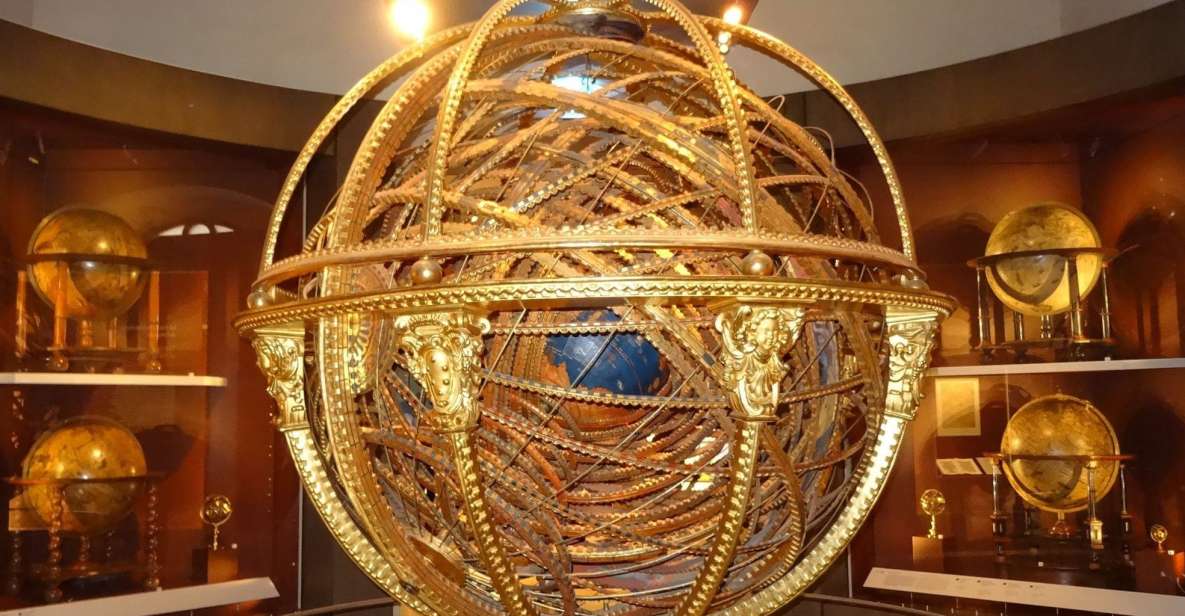
- Girolamo della Volpaia’s Nocturnal (1568) and Santucci’s Armillary Sphere (1593)
- Headsets so you hear the guide clearly in busy galleries
- A guide story that blends Galileo’s life, Florence’s Medici court, and the rise of scientific study
Inside the Museo Galileo: what this private tour really is
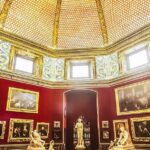
The Museo Galileo in Florence is not a space-themed attraction with a few old gadgets. It’s a serious science museum, and this tour uses that strength well. In 1.5 hours, you’re guided through the museum’s most teachable objects, with an emphasis on how people measured the universe and themselves.
You also get context fast. The Galileo Galilei museum is tied to the Florentine mathematician and philosopher, and the collection traces back to the Medici era. Cosimo I de’ Medici started building the scientific collection in the 16th century, then successors kept it going. A big milestone came in 1657, when the scientific Academy of Assay was founded. Later, Grand Duke Leopoldo continued the collection through the Lorena family line. That chain of stewardship matters, because it’s why you’re looking at instruments that reflect a whole era’s curiosity, not a single inventor’s hobby.
This tour is private, so you can ask questions without feeling rushed into a crowd rhythm. And because it includes headsets, you’re less likely to miss key points while you’re trying to read labels and look closely at glass cases. If you’re the type who likes to connect objects to meaning, the format fits.
You can also read our reviews of more private tours in Florence



Entering the museum and getting your bearings quickly
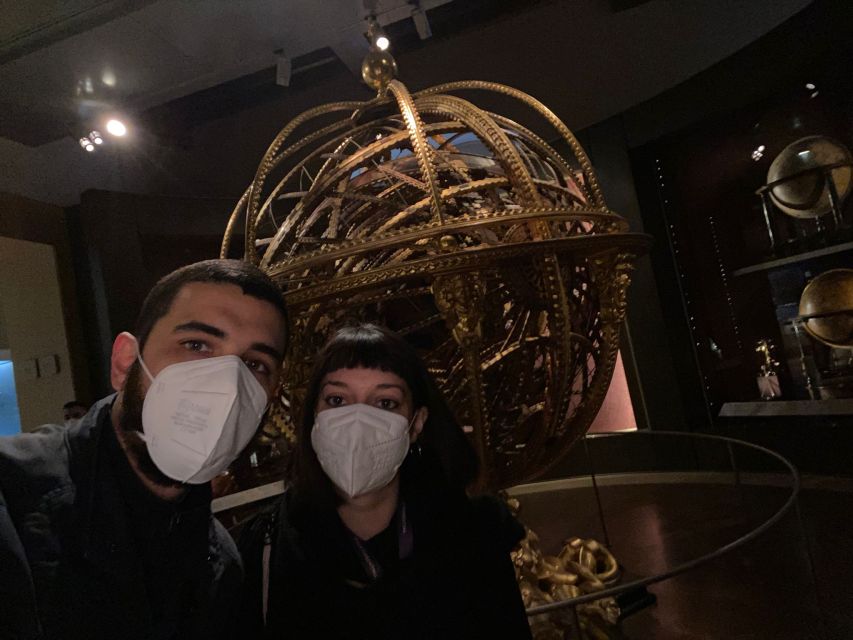
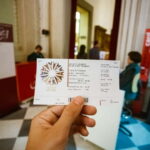
The meeting setup is simple, but it’s worth being organized so you don’t lose minutes. You’ll meet the guide inside the City Florence Tours office, and you should arrive 15 minutes early. Before the tour begins, you exchange your voucher at the ticket office.
This part matters more than it sounds. The museum experience is visual and label-driven. If you show up late, you’ll be catching up right when you’d rather be focused on the first set of instruments. Also, the activity includes fast-track entrance tickets and an express security check, which helps you spend your time inside the galleries instead of watching security lines.
Once you’re in, wear comfortable walking shoes. The museum is totally manageable at a museum pace, but you will move between rooms. Large bags and backpacks may need to be stored in the cloakroom, so if you can travel light, you’ll feel better during the tour.
Galileo’s original telescopes: the wow factor (with a reality check)
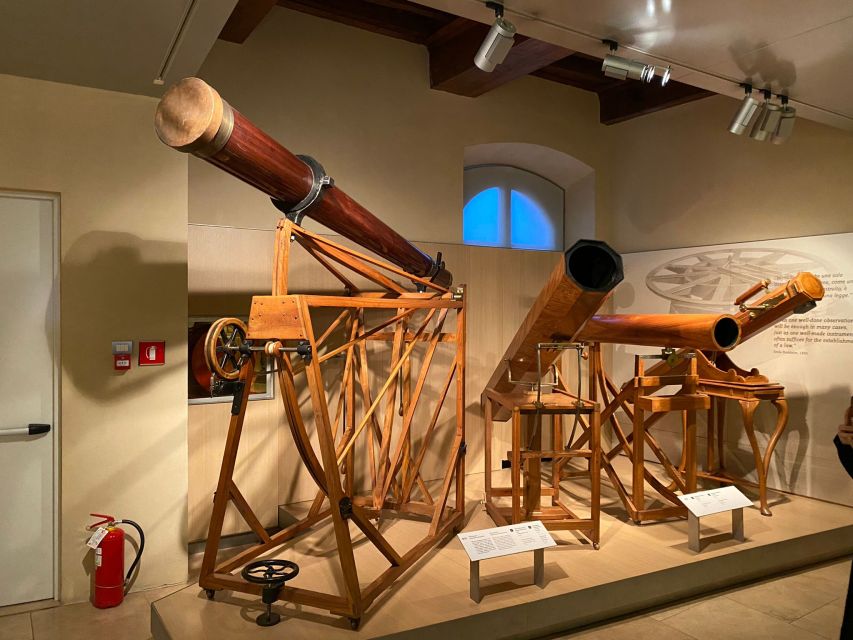
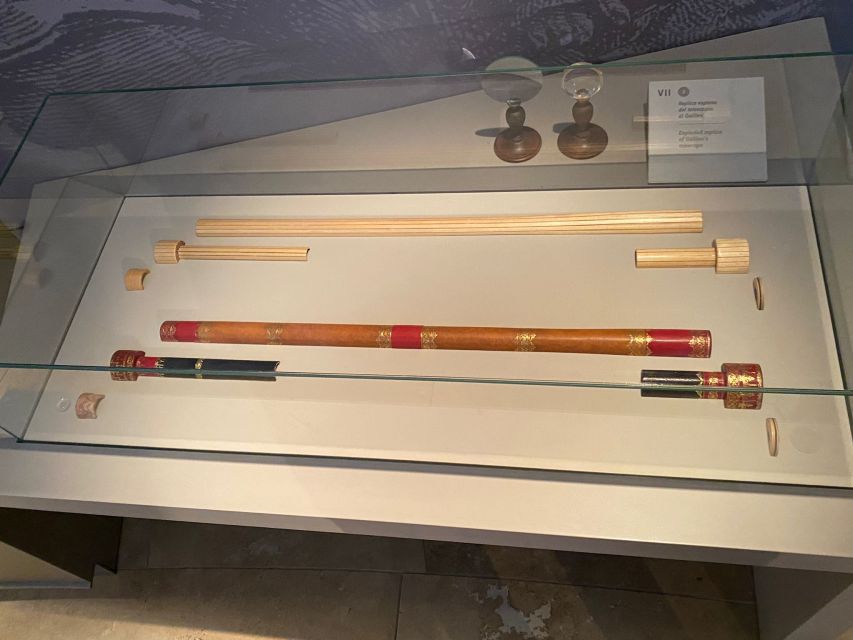
The main reason to book this Florence private astronomical tour is the chance to see Galileo-linked instruments up close. During your guided visit, you’ll look at one of the museum’s standout items: Galileo Galilei’s original telescope (used for his astronomical and scientific studies).
Even if you know Galileo’s story in broad strokes, there’s something different about seeing the device that helped shape what people believed about the sky. It turns the usual “Galileo discovered X” summary into a more grounded question: what did he actually use, and how did the tool change what he could observe?
Here’s the reality check: this tour can feel more focused on historical context than deep technical explanations. One helpful way to think of it is this: the guide is there to explain what you’re looking at and why it matters historically, while the museum’s media (including its app) can provide the extra how-it-works science detail.
So if you’re science-first, plan for a two-part approach: do the guided tour for context, then use the app to strengthen the technical understanding for the objects that grabbed you. If you’re history-first, you’re already in the right lane.
Astrolabes and celestial globes: mapping the sky like it was work
After the early Galileo-linked instruments, the tour shifts to the measurement tools that made astronomy practical. This is where you’ll see a collection heavy on astrolabes and celestial globes—objects designed to help people calculate positions and make sense of the sky.
Astrolabes aren’t just “old instruments.” They represent a way of turning the heavens into something usable. They’re part math, part engineering, part craft, and part instrument for daily decision-making. A good guide helps you see past the complexity and understand the purpose: these were tools for measuring, predicting, and navigating knowledge.
You’ll also learn how astronomy evolved alongside physics and timekeeping. That thread is useful because it explains why these instruments show up together in one museum: they weren’t separate hobbies. The same mindset that measured angles and positions also influenced ideas about motion, optics, and what it meant to have accurate observations.
Time, temperature, and space: the instruments that made measurement real
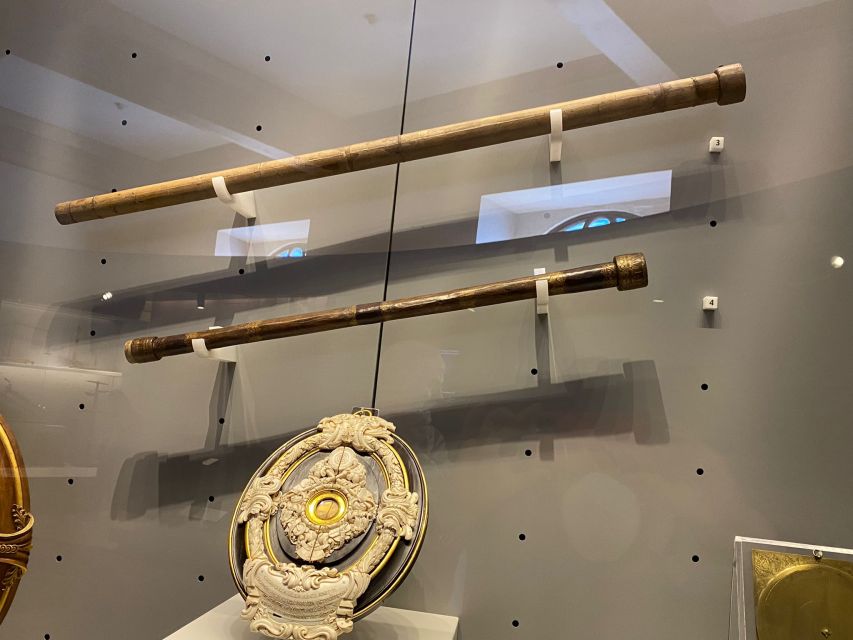
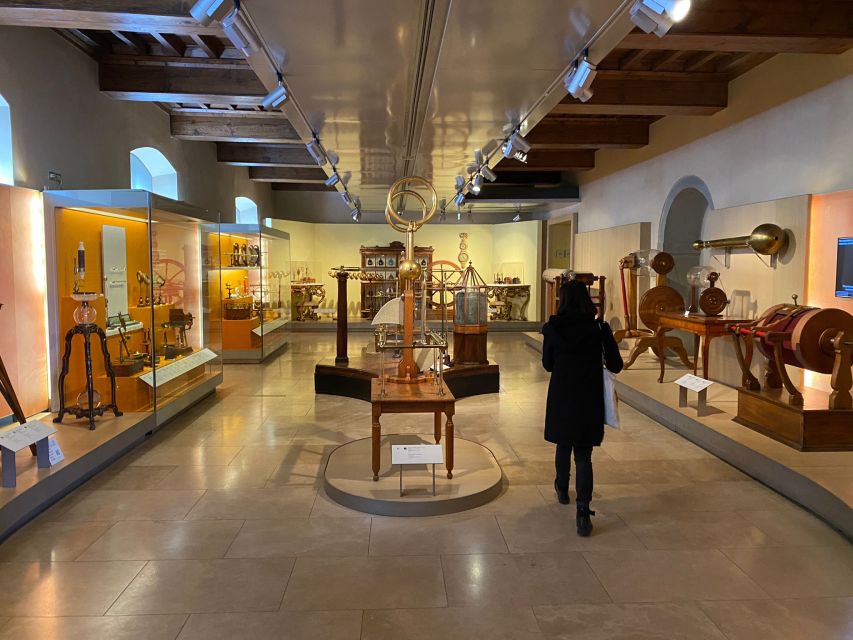
One of the most interesting parts of this tour is how it treats measurement as a full-time obsession. You’ll look at tools connected to time, space, and temperature—the physical questions people had to answer before modern instruments existed.
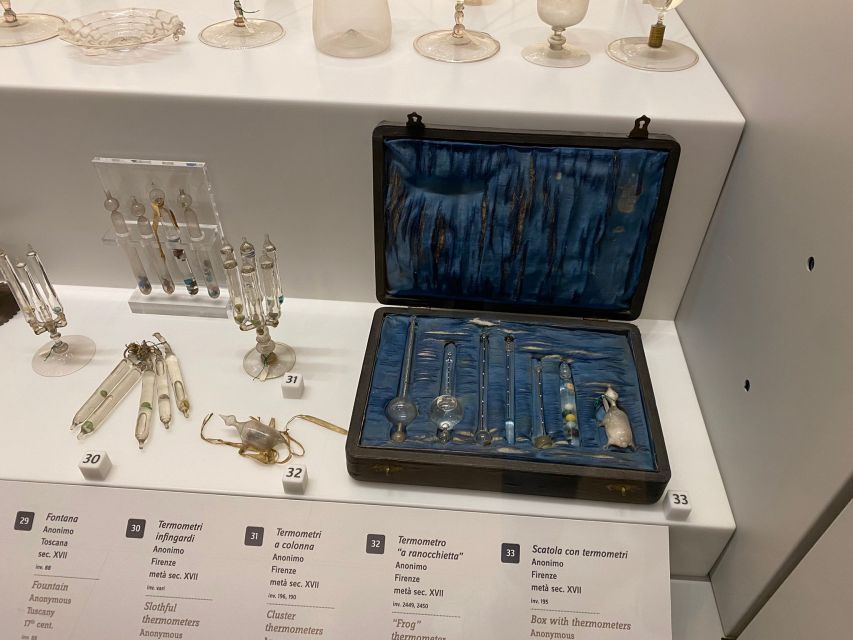
Expect to see antique clocks, globes and maps, and thermometers. Even without a lab background, you can appreciate the logic: if you can measure time reliably, you can improve schedules, navigation, and scientific experiments. If you can measure temperature, you can better interpret weather, physical effects, and repeat observations.
This is also where the guide’s historical framing really helps. In Galileo’s time, rulers and institutions invested in knowledge partly because it fed power. Galileo’s work also connected to the Medici court setting; he exercised his functions during the reign of Cosimo II de’ Medici at the court of the Grand Dukes of Florence. When you understand the environment, the instruments stop feeling like museum curiosities and start feeling like working technology.
- The Best tour in Florence: Renaissance & Medici Tales – guided by a STORYTELLER
★ 5.0 · 12,316 reviews



The standout objects: Nocturnal (1568) and the armillary sphere (1593)
Two named objects tend to anchor the tour in a memorable way.
First is Girolamo della Volpaia’s Nocturnal (1568). A nocturnal is an instrument for telling time at night, which gives you a sense of how measurement needs shaped astronomy and clockwork thinking. Seeing something like this helps you understand that timekeeping wasn’t just about personal schedules. It was tied to observation and the ability to work when you couldn’t rely on daylight.
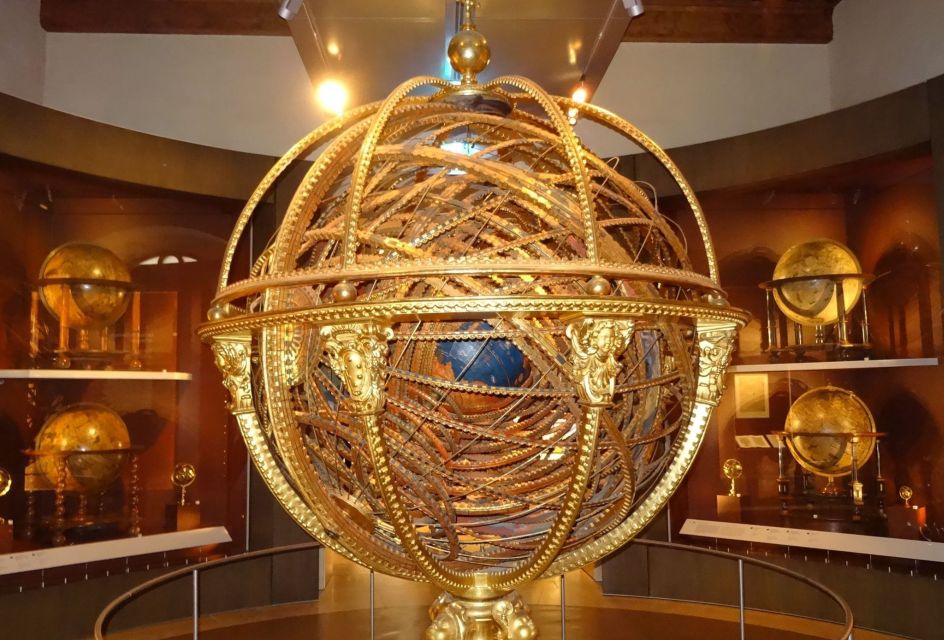
Second is Santucci’s Armillary Sphere (1593). Armillary spheres visualize celestial coordinates through a structured set of rings. It’s both an educational device and a demonstration tool, and it fits perfectly in a tour like this because it turns abstract sky mapping into something you can understand by looking at how the model is built.
For me, these are the objects that make the tour worth it even if you’re not a hardcore astronomy fan. They help you see how people translated the sky into measurements you could actually use.
Optics and electrostatics: when science becomes a story you can follow
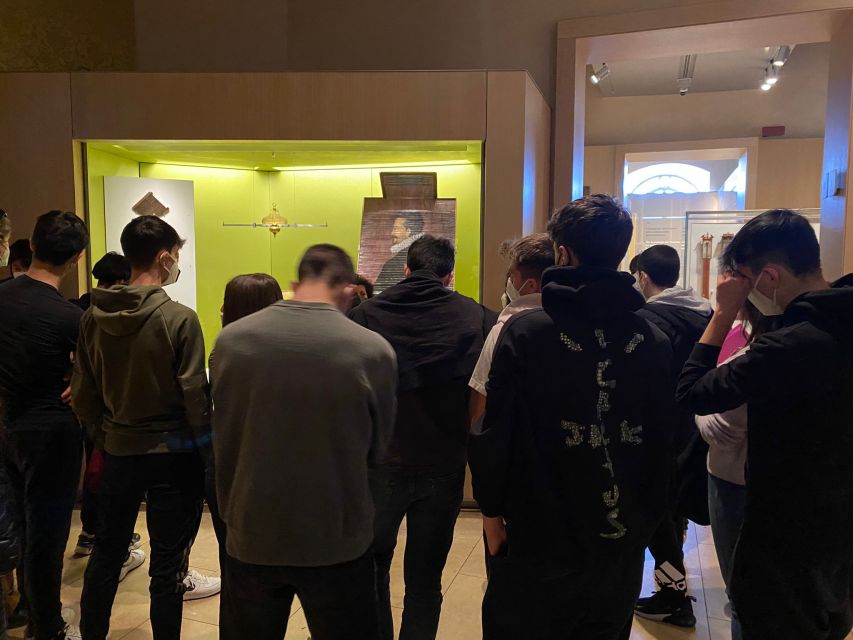
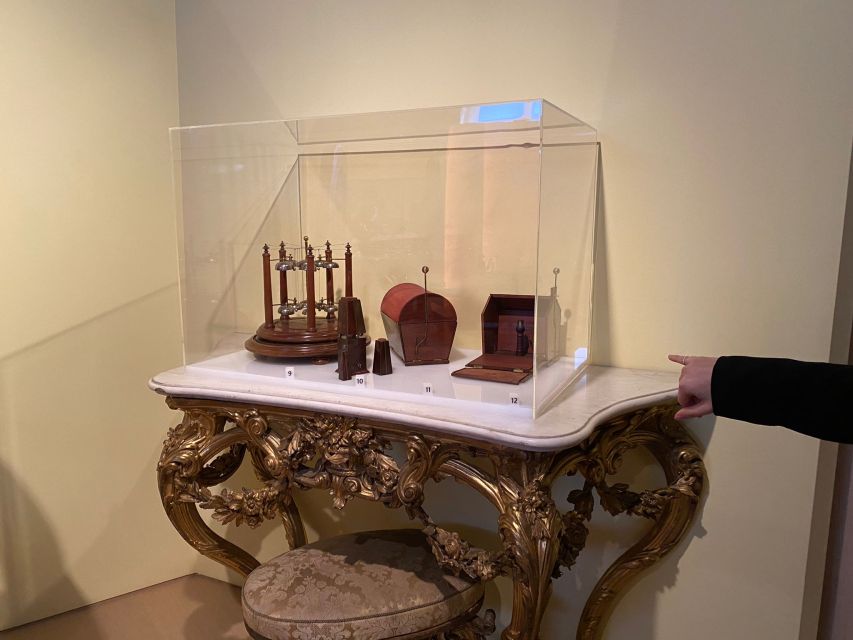
The tour doesn’t stop at astronomy. You’ll also learn about optics and electrostatics—two areas that helped shape how Europeans thought about light, observation, and physical forces.
This matters because it broadens the museum beyond telescopes and celestial maps. A telescope is a tool for seeing farther, but optics is what makes sight work in the first place. Electrostatics pushes you toward understanding how forces act even when you can’t see them directly. If your guide explains the connections clearly, it can feel like the museum is teaching one big idea: measurement is the bridge between theory and the real world.
It also ties back to the museum collection’s origin story. Since the collection grew across generations, it naturally includes multiple disciplines. You’re seeing a snapshot of an era that treated science like a unified system—different instruments, one common goal.
Museums + kids: a private tour that can work for families
This experience is listed as suitable for children, and it’s a good fit for families who want education without turning it into a slog. The tour includes an element of play: you’ll discover games of the past, and the experience is described as fun for both adults and children.
In a family setting, the private format helps. Kids often struggle with long stretches of standing quietly. A good guide can adjust pace and emphasis, and headsets make it easier to keep attention. Also, seeing real instruments—especially ones tied to Galileo—gives kids something concrete to talk about later, not just a list of facts.
Price and value: is $159 per person worth it?
At $159 per person for a 1.5-hour private tour, value depends on what kind of learner you are.
If you’re the type who likes guided explanations and wants someone to interpret the collection for you, the price can make sense. You’re getting fast-track entrance, a professional guide, and headsets included. Private tours also help when you want to move at your own pace and ask questions as you go.
If you’re purely self-guided and your favorite part is studying displays at your own speed, you might feel the time limit quickly. This is where the tour’s main tradeoff shows up: it’s 90 minutes, so you’ll focus on highlights, not every single instrument. In that case, consider a do-this-then-that plan. Use the guided tour for context and object selection, then use the museum app to go deeper after you’ve learned what to look for.
Who this private astronomical tour suits best
You’ll likely love this tour if:
- You want a guided interpretation of Galileo’s instruments and the Medici-era science world
- You enjoy history connected to objects, not just timelines
- You’re interested in timekeeping and measurement as much as astronomy
- You’re traveling with kids and want an educational visit that still feels lively
You might want a different approach if:
- You’re seeking lots of technical, how-it-works science explanation in every room
- You prefer long, self-paced wandering with minimal structure
- Your goal is to cover every exhibit, not just the best ones with the strongest stories
Should you book this private tour?
Book it if you want a focused, guided way to experience the Museo Galileo and you value context as much as objects. The price is easier to justify when you’re getting fast entry, headsets, and a guide who connects items to Galileo’s world and the rise of measurement science.
Skip or supplement it if you’re purely science-technical and expect deep device mechanics on the spot. The best move there is smart planning: use the guided time for the historical map, then lean on the museum’s scientific video tools on your own for the details that need extra explanation.
If that sounds like you, this is a strong choice for Florence—especially if you want Galileo’s telescopes, the night-time timekeeping ideas, and the sky-mapping instruments tied together in one clear story.
FAQ
How long is the Florence private astronomical tour at the Museo Galileo?
It lasts about 1.5 hours.
What is the price per person?
The price is listed as $159 per person.
What is included in the tour?
Included are fast-track entrance tickets, reservation fees, a professional tour guide, and headsets.
What languages are available for the live guide?
The guide is offered in English, Spanish, German, Italian, and French.
Where do we meet the guide?
Meet inside the City Florence Tours office. You should arrive 15 minutes early.
Do I need to exchange a voucher before the tour starts?
Yes. You must exchange your voucher at the ticket office before the tour begins.
Can I take photos in the museum?
Yes, photography is allowed, but without flash to protect the artifacts.
What should I wear or bring for the tour?
Comfortable walking shoes are recommended. Large bags and backpacks may need to be stored in the cloakroom.
Is it suitable for people with mobility needs?
The museum is listed as wheelchair accessible, but the activity is also labeled not suitable for people with mobility impairments, so it’s important to check your specific needs before booking.
You Might Also Enjoy


More Private Tours in Florence


More Tours in Florence
- The Best tour in Florence: Renaissance & Medici Tales – guided by a STORYTELLER
★ 5.0 · 12,316 reviews


More Tour Reviews in Florence
- Tuscany Day Trip from Florence: Siena, San Gimignano, Pisa and Lunch at a Winery
★ 5.0 · 21,634 reviews - The Best tour in Florence: Renaissance & Medici Tales – guided by a STORYTELLER
★ 5.0 · 12,316 reviews