REVIEW · FLORENCE
Florence Highlights Walking Tour By Night with Expert Guide
Book on Viator →Operated by My Green Tour · Bookable on Viator
Florence looks different after dark. This evening stroll is built for fast orientation: you’ll see Medici landmarks and photo-ready historic squares once the day crowds loosen up. The main trade-off is that it stays light and efficient, so several major sites are quick stops and don’t include entry tickets.
I like the pacing here because it’s short enough to fit your first evening, but structured enough that you come away with names, stories, and a sense of how the city connects. You’ll meet at Via de’ Martelli, 33R and end in the Piazza de’ Pitti area, with a maximum group size of 20 and a mobile ticket in English.
If you care about smooth communication, pick this tour with that in mind. One experience can hinge on the guide’s English clarity, so it helps to arrive ready to ask questions and keep your expectations realistic for a walking tour.
In This Review
- Highlights you will actually feel on the ground
- A 5pm Twilight Route Through Florence’s Best Names
- Where You Start at Via de’ Martelli and Finish Near Palazzo Pitti
- Palazzo Medici Riccardi: Medici Power in a Renaissance Palace
- Basilica di San Lorenzo: Medici Burials Without the Long Lines
- Santa Maria del Fiore (Duomo Area): How to See the Cathedral Without Getting Stuck
- Piazza della Repubblica and Orsanmichele: Layers Underfoot
- Mercato del Porcellino: The Bronze Boar Moment
- Piazza della Signoria and Palazzo Vecchio Area: Florence’s Political Heart
- Ponte Vecchio: The Arno’s Most Photographed Walkway
- Arriving Near Palazzo Pitti: Ending With a Logical Next Stop
- What to Bring and How to Make the Most of the Evening Pace
- Price and Value: Is $70.89 Worth 1 Hour 40 in Florence?
- Who This Tour Fits Best (and Who Should Rethink It)
- Should You Book This Florence by Night Walk?
- FAQ
- How long is the Florence Highlights Walking Tour by Night?
- What time does the tour start?
- Where do I meet the guide, and where does the tour end?
- What language is the tour offered in?
- What is the group size?
- Are admission tickets included for the stops?
- Is a mobile ticket provided?
- Are service animals allowed?
- Can I get a full refund if I cancel?
Highlights you will actually feel on the ground
- Twilight timing: big sights, softer light, and more room to breathe in the center
- Small group (max 20): easier questions and less milling around at each stop
- Medici-to-modern Florence route: palaces, church burials, and civic power in one flow
- Real photo stops: Signoria, Ponte Vecchio, and the lit-center vibe
- A guided “what matters” filter: you leave with a map of priorities, not just snapshots
A 5pm Twilight Route Through Florence’s Best Names
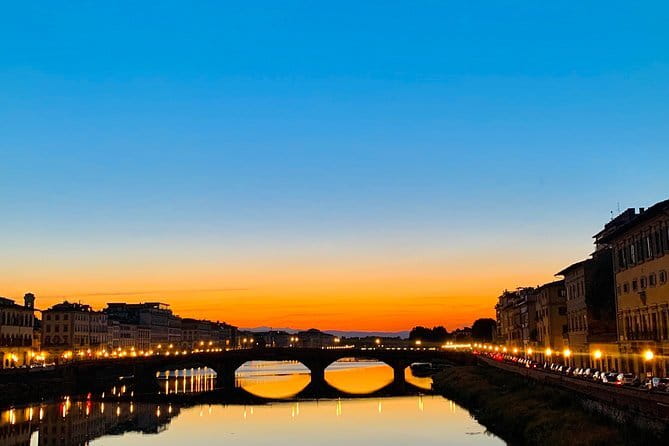
This walk starts at 5:00 pm, which is a smart time window in Florence. You get the romance of evening light without feeling like you’re wandering the city blind. And because it’s designed as an after-hours highlights circuit, you’re not competing with the biggest day-tour rush for every single viewpoint.
The best part is the way the guide frames what you’re seeing. Florence can feel like it’s all monuments at once, but a good evening guide turns that chaos into a clear thread. You’ll get the why behind the famous buildings: Medici influence, church power, civic rule, and the Arno as the city’s main stage.
It’s also an easy win if you like to plan your next steps fast. After 1 hour 40 minutes, you should know where you want to return for a longer visit—especially around the Duomo area, the political heart in Piazza della Signoria, and the riverfront at Ponte Vecchio.
You can also read our reviews of more walking tours in Florence
Where You Start at Via de’ Martelli and Finish Near Palazzo Pitti
Meet at Via de’ Martelli, 33R, 50129 Firenze FI, Italy. That’s in the historic center, and it sets you up well for walking west-to-south across the older core. You finish at Palazzo Pitti, Piazza de’ Pitti, 1, 50125 Firenze FI, Italy, which is perfect if you want to tack on dinner nearby or continue into the Pitti-side streets.
The route length is about 1 hour 40 minutes, so think of this as an orientation tour more than a slow museum day. You’ll have multiple short stops—enough time for key explanations and quick photos, not enough time to linger for long inside-ticket visits.
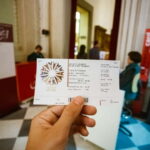
A mobile ticket keeps things simple. You’re not hunting for paper vouchers, and the “small group” setup helps you stay together as you move through tighter lanes.
Palazzo Medici Riccardi: Medici Power in a Renaissance Palace
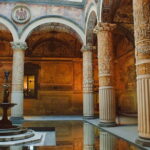
Your first stop is Palazzo Medici Riccardi, a Renaissance palace that ties directly to the Medici legacy. Even if you only take in the exterior and nearby views, this is one of those buildings that instantly signals Florence’s power structure: the city wasn’t just producing art, it was running politics through elite families and their real-estate muscle.
Because admission isn’t included here, I treat this as a “get the context, then decide if you want more” moment. If Palazzo Medici Riccardi is on your list, this stop is the kind that makes you want to come back with time and tickets later.
If the guide has a playful streak, this is also a good place to start. The Medici story is dramatic—part patronage, part control—and a strong guide sets the tone early so later stops feel connected rather than random.
What to watch for: the architectural confidence. This is Renaissance Florence talking in stone. Take a few minutes to look at the facade details before you move on, because later you’ll spot the same Medici fingerprints in other parts of the center.
Basilica di San Lorenzo: Medici Burials Without the Long Lines
Next up is Basilica di San Lorenzo, located in the main market district area of Florence. This stop matters for one big reason: it’s the burial place of principal Medici family members, from Cosimo il Vecchio through Cosimo III. That’s not trivia. It’s the kind of detail that changes how you understand Florence’s “art city” label—this place is where power is remembered.
Again, admission ticket is not included, so don’t expect a long interior visit on this walk. I see it as a focused introduction that helps you decide whether you want to later return specifically for the basilica itself.
The timing helps too. An evening pace lets you observe how a major church sits inside everyday city life—shops, movement, and the constant flow of people that keeps Florence from becoming a theme park.
Practical photo tip: if you can, grab your shots from slightly back and angled. Church facades and adjacent streets can get tight, and evening light can look better at a small distance than right up against walls.
Santa Maria del Fiore (Duomo Area): How to See the Cathedral Without Getting Stuck
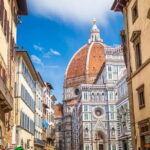
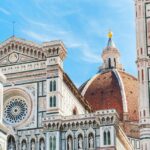
You’ll stop near the Cathedral of Santa Maria del Fiore, Florence’s most famous church. Even when the plan is brief here, it’s still worth it because the Duomo area is where first-time Florence can feel the most overwhelming.
This tour’s approach is to help you place the cathedral in the city’s map. You get the monument name, the key significance, and enough orientation to understand why the Duomo area is the anchor point for so many later detours.
Admission isn’t included at this stop, so keep your expectations aligned: you’re getting the guided overview rather than a ticketed cathedral deep visit. If you want to go inside or climb for views, you’ll likely plan that as a separate priority later.
In the evening, the cathedral area can also be calmer to move through. You’ll still be in a popular zone, but the twilight feel makes a big difference, especially for anyone who’s tired of midday crowds.
You can also read our reviews of more guided tours in Florence
- The Best tour in Florence: Renaissance & Medici Tales – guided by a STORYTELLER
★ 5.0 · 12,316 reviews
Piazza della Repubblica and Orsanmichele: Layers Underfoot
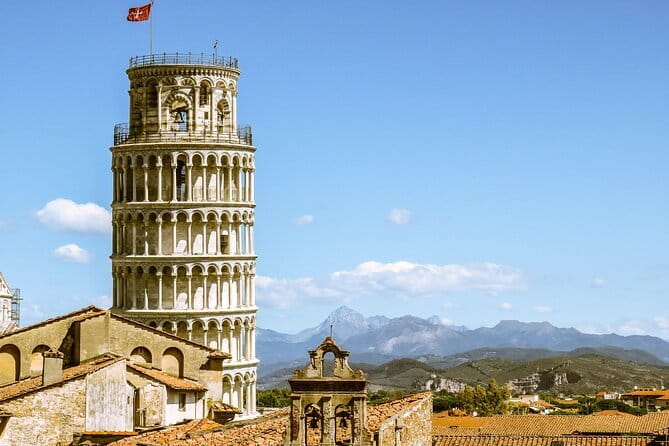
Piazza della Repubblica is more than a pretty square. It used to be the site of the city’s forum, later became an old ghetto area, and then changed during modernization works tied to the Risanamento—an era connected to Florence’s moment as part of a reunited Italy. That’s the kind of context that makes the same street look like a different city depending on what you know.
This tour treats that layering as a short but meaningful stop, which I appreciate. You’re not just looking at buildings—you’re learning how Florence reshaped itself, and why the city’s center carries traces of different eras.
Then you’ll move to Orsanmichele, a church built on the site of the monastery’s kitchen garden of San Michele. The name even points to that origin, and the building’s story gives you a sense of how religious, civic, and practical life overlapped in Florence over time.
If you want one takeaway from these two stops, it’s that Florence never replaced everything at once. It built on top of itself, and that’s why the center feels so dense with meaning.
Mercato del Porcellino: The Bronze Boar Moment
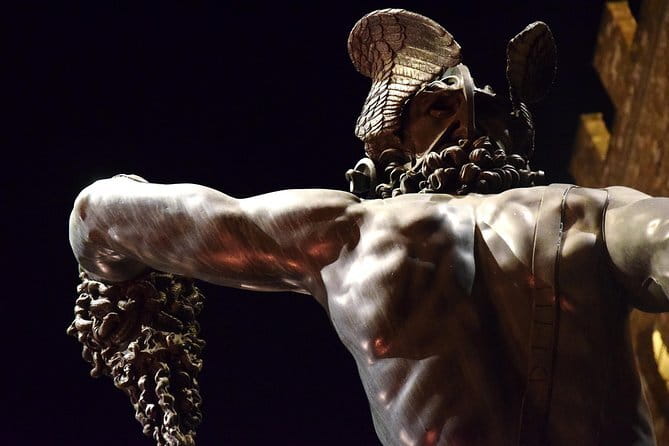
From Orsanmichele you head toward Mercato del Porcellino and the fountain known by the local nickname Il Porcellino, the bronze boar. This stop is simple on paper—about 10 minutes and a free public viewpoint—but it’s a classic reason to fall for Florence.
Here’s what makes it more than a cute photo spot: the boar figure was sculpted and cast by Pietro Tacca shortly before 1634, and it was created following an earlier marble Italian copy of a Hellenistic marble original. The story connects three time periods—ancient Greece, Renaissance copying, and Baroque casting—right into one small public corner.
I like that the guide can connect it to the larger art culture of Florence without turning it into a lecture. It gives you a concrete example of how Florence treated artworks as living material: copy, adapt, and display.
If you’re the type who likes rituals, this fountain is the kind of stop where people often do quick superstitious gestures. Even if you don’t buy into rituals, it’s still a useful landmark. You can remember it as the place your walking route hits the lively market side of the city.
Piazza della Signoria and Palazzo Vecchio Area: Florence’s Political Heart
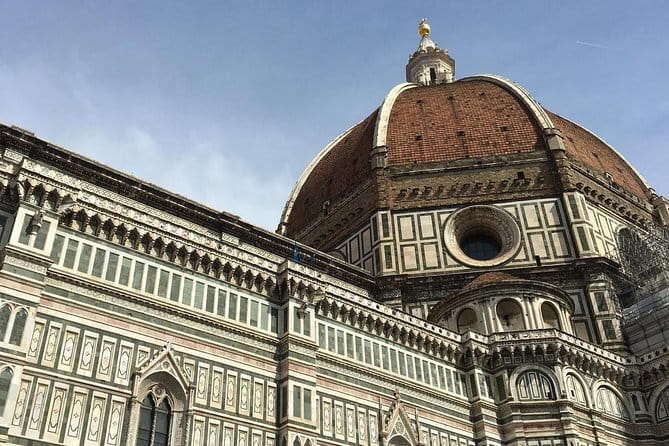
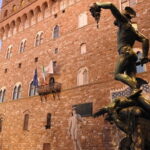
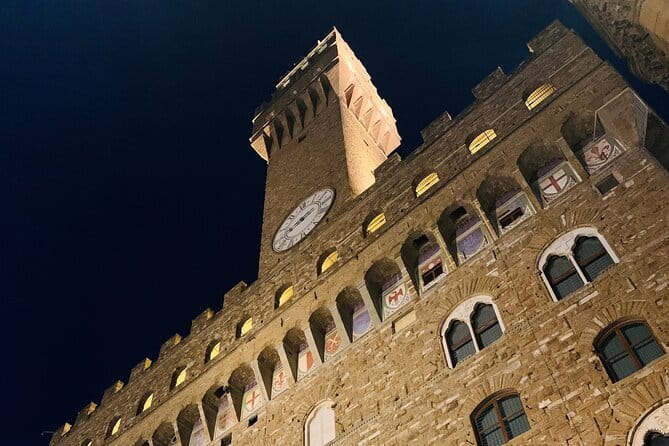
Piazza della Signoria sits in front of Palazzo Vecchio and acts like the civic center of Florence’s history. The square’s name comes from the Palazzo della Signoria, also called Palazzo Vecchio, and the area remains the political focus of the city. It’s where Florentines gathered, and it’s also where modern visitors naturally cluster—because the visual “power” of the place pulls you in.
This is one of the best zones for evening atmosphere. The square’s scale and architecture make it feel grand even when you’re just stopping for a few minutes. And because the tour keeps it efficient, you can get the key points without getting trapped in a long queue.
If you want a smart photo plan, this is where you should spend your camera time. The angles across the square can look dramatic at dusk, and you’re close to the Palazzo Vecchio and the general route that leads toward the Duomo and Uffizi area.
Admission is free for this stop, which helps. You don’t need ticket decisions to enjoy it. You just need time to look up and let the square explain itself.
Ponte Vecchio: The Arno’s Most Photographed Walkway
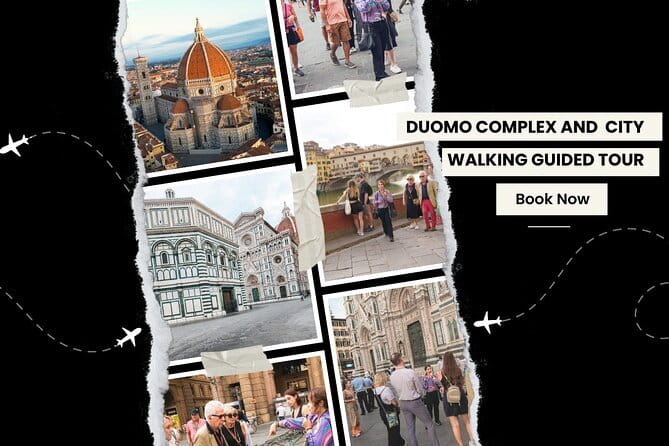
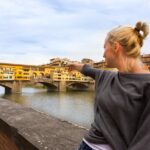
Then you reach Ponte Vecchio, the medieval stone bridge over the Arno. It’s still lined with shops, which is part of its long survival story. The original shop occupants were butchers, but today you’ll find jewelers, art dealers, and souvenir sellers—so the bridge has kept its commercial role even as the trade shifted.
A useful detail: it’s a segmental arch bridge with closed spandrels, and the guide can help you see the structure as well as the spectacle. That’s what separates a “look and walk” stop from a “learn and remember” stop.
This is also a practical timing win. Even if Ponte Vecchio is always popular, evening light can make the riverfront feel calmer and more romantic than midday. It’s one of the few places in Florence where the city reads like a movie set while still feeling unmistakably real.
When you’re on the bridge, do one slow pass and one paused photo moment. The first pass helps you understand flow. The pause helps you capture the river and shop lines the way they look in twilight.
Arriving Near Palazzo Pitti: Ending With a Logical Next Stop
Your tour ends at the Palazzo Pitti area, on the south side of the Arno. Palazzo Pitti is a vast, mostly Renaissance palace, and it’s exactly the kind of destination you’ll want to explore more if the Medici thread made sense for you.
Finishing here is smart because it gives you choices. If you want museums, you can keep going. If you want dinner, you’re placed well for heading into the quieter side streets compared with the most central Duomo-leaning routes.
Think of this ending as the payoff to the story you’ve been building. You start with Medici power, you move through Florence’s religious and civic identity, and you finish at one of the city’s grand seats. Even in a short walk, that arc sticks.
What to Bring and How to Make the Most of the Evening Pace
You’re walking for about 1 hour 40 minutes, with multiple short stops. That means comfortable shoes matter more than anything else. Florence sidewalks can be uneven, and twilight lighting doesn’t fix that.
I also recommend wearing layers if you’re out in June or shoulder season. Evening air can cool down fast near the river, and you’ll be standing in semi-public areas for photos.
If you’re sensitive to language clarity, this is your only real “watch-out.” One negative experience came down to understanding the guide’s English, so I’d plan to ask one clear question early and see how quickly the guide responds.
Finally, bring the right mindset: this is a highlight walk. If you go in expecting a ticketed museum day, you’ll feel shortchanged. If you go in expecting a guided story and a route you can build from, you’ll feel like your first evening in Florence got properly organized.
Price and Value: Is $70.89 Worth 1 Hour 40 in Florence?
At $70.89 per person for roughly 1 hour 40 minutes, this is a premium-feeling price compared to a self-guided walk. But value in Florence is rarely just the route. It’s the way someone interprets the city for you so you don’t waste your limited time.
Here’s where the math tends to work for people who book: you’re paying for an expert guide to connect Medici sites, Duomo-area meaning, and the civic center in one tight loop. You’re also paying for the “after the tourists leave” timing advantage, which can save you time and frustration.
Also notice what’s not included: admission tickets are specifically marked as not included at several major stops like Palazzo Medici Riccardi, Basilica di San Lorenzo, and the Cathedral of Santa Maria del Fiore. If you want to go inside multiple buildings, you’ll add those costs separately.
So I’d treat it like this: pay for the guidance now, then decide what you want to enter later. For first-time Florence, that often becomes the best use of money because it protects your schedule.
Who This Tour Fits Best (and Who Should Rethink It)
This walk is a great fit if you want:
- a guided Florence orientation on your first evening
- a smart way to connect Medici history to what you see in the streets
- an efficient route that doesn’t steal your whole afternoon
It’s also a good option for people who prefer small groups. With a maximum of 20, you’re less likely to get swallowed by the crowd.
Rethink it if you need long indoor time at major sites. This experience is designed for short stops and photo moments, not extended museum wandering. It’s also best if you’re comfortable with walking in a compact historic center, since the path is built around the older streets.
Should You Book This Florence by Night Walk?
I think you should book if you’re arriving in Florence and want your bearings fast. This tour hits the big names—Medici, the church-and-city heart, Piazza della Signoria, and the Arno at Ponte Vecchio—then ends at Palazzo Pitti so your next move feels obvious.
Skip it if your top priority is ticketed interior time, not storytelling and orientation. Also consider language-fit: if you strongly depend on very clear English, it’s worth checking you’re comfortable with that before you pay.
If you want a first-night plan that feels like Florence rather than just checking boxes, this one has the right structure, timing, and stop selection to earn its place in your schedule.
FAQ
How long is the Florence Highlights Walking Tour by Night?
It runs for about 1 hour 40 minutes.
What time does the tour start?
The start time is 5:00 pm.
Where do I meet the guide, and where does the tour end?
You meet at Via de’ Martelli, 33R, 50129 Firenze FI, Italy, and the tour ends at Palazzo Pitti, Piazza de’ Pitti, 1, 50125 Firenze FI, Italy.
What language is the tour offered in?
The tour is offered in English.
What is the group size?
The tour has a maximum of 20 travelers.
Are admission tickets included for the stops?
Admission tickets are not included for some locations listed in the route, while certain stops are free public areas.
Is a mobile ticket provided?
Yes, it uses a mobile ticket.
Are service animals allowed?
Yes, service animals are allowed.
Can I get a full refund if I cancel?
You can cancel up to 24 hours in advance for a full refund.
You Might Also Enjoy

More Walking Tours in Florence
More Tours in Florence
- The Best tour in Florence: Renaissance & Medici Tales – guided by a STORYTELLER
★ 5.0 · 12,316 reviews


More Tour Reviews in Florence
- Tuscany Day Trip from Florence: Siena, San Gimignano, Pisa and Lunch at a Winery
★ 5.0 · 21,634 reviews - The Best tour in Florence: Renaissance & Medici Tales – guided by a STORYTELLER
★ 5.0 · 12,316 reviews