REVIEW · FLORENCE
Florence: Fast Track Uffizi Gallery Guided Tour
Book on GetYourGuide →Operated by Enjoy Rome · Bookable on GetYourGuide
Renaissance art, minus the line stress. This fast-track, small-group tour gets you into the Uffizi with a live guide, so you spend your time on the paintings and stories instead of the queue. I especially like how the guide helps you connect the dots across the collection, and I like the small group size that keeps the experience focused and easy to follow. One drawback: with only 1.5 hours, you can’t expect a slow, room-by-room museum day.
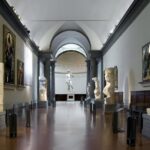
The museum itself is part of the show. You’ll move through the former 16th-century palace that became a museum in 1865, and you’ll get context for why the building and layout matter as much as the art. You’ll also have radio headsets to hear your guide clearly. Do keep in mind: even with the priority entrance, high season can still mean a short wait.
In This Review
- Key highlights worth planning around
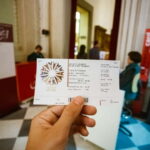
- Fast-track at the Uffizi: what you save and what you don’t
- Meeting point logistics: Leonardo da Vinci statue and the white flag
- Inside the Vasari palace: why the building is part of the art
- The 1.5-hour game plan: what the guide actually helps you see
- Courtyards, sight lines, and the Arno-facing views you’ll remember
- Your hearing matters: radio headsets in a crowded palace
- Botticelli and friends: how to get value from big-ticket masterpieces
- Price and value: is $91.91 worth it for 90 minutes?
- Who this tour fits best (and who should think twice)
- After the guide: using your leftover time wisely
- Should you book the Florence Fast Track Uffizi Guided Tour?
Key highlights worth planning around
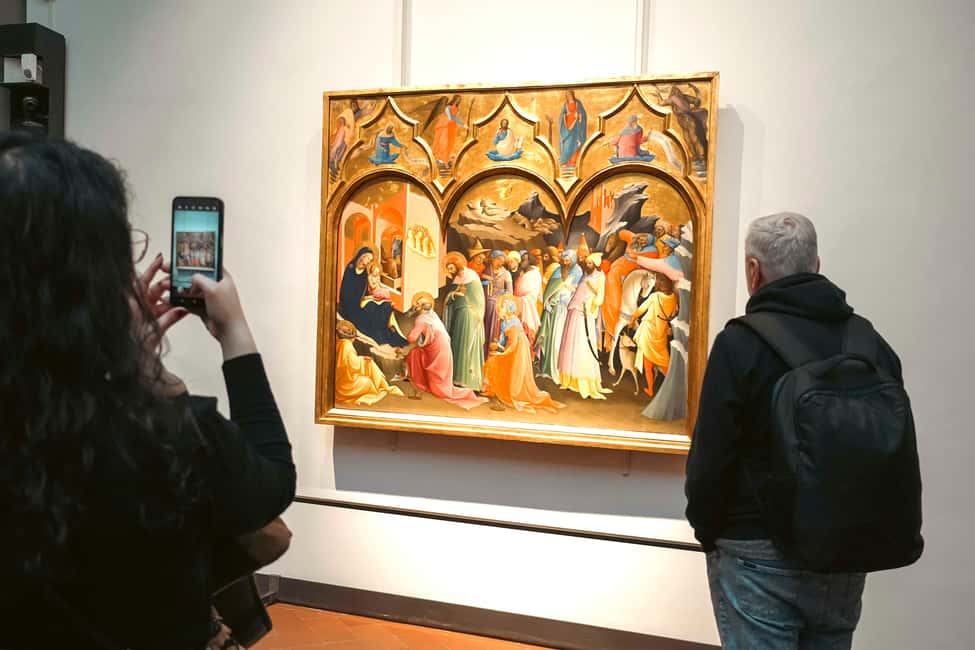
- Fast-track entry through a separate priority line (still possible to wait briefly in peak season)
- Small group capped at 9 people for a more readable, less chaotic visit
- Live guide with radio headsets so you don’t lose the story at the back of a crowd
- Iconic Renaissance stops, including Botticelli’s Birth of Venus and major works by Michelangelo and others
- Architectural storytelling in Giorgio Vasari’s design, including the courtyard overlooking the Arno
- Then go at your own pace after the guided portion ends back at the meeting point
Fast-track at the Uffizi: what you save and what you don’t
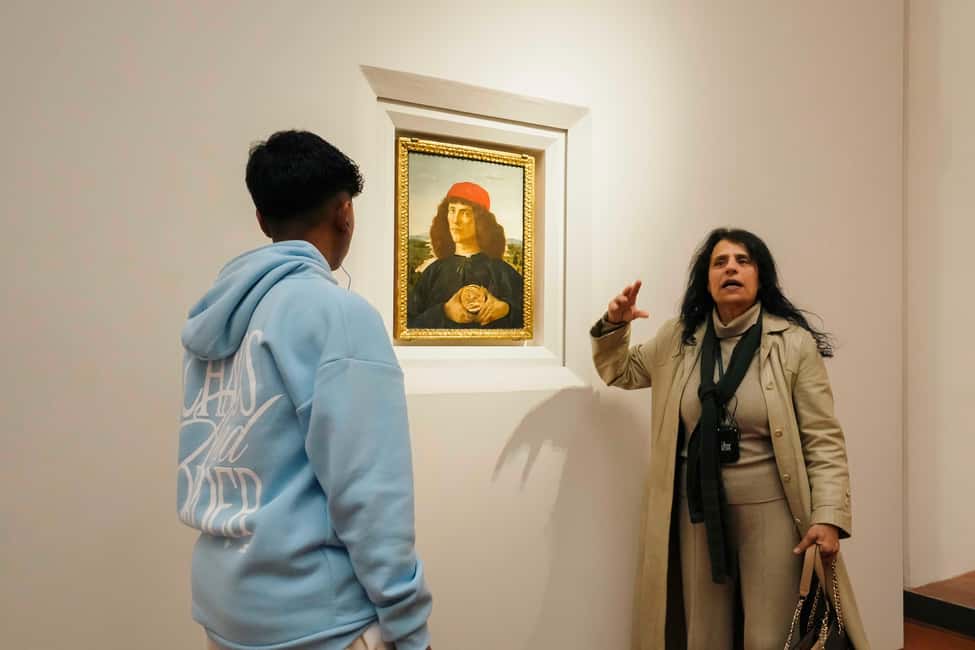
The Uffizi is famous for a reason. It’s one of those places where the collections feel like they’re talking to each other—early artists push forward, later masters respond, and suddenly you see how Renaissance ideas spread through Florence. The real challenge is that the building is huge and the lines can be brutal.
That’s why I like this tour’s fast-track setup. You’re using a separate entrance and a priority line, which means you’re spending less time stalled at the start and more time in front of the works. For 90 minutes, that time trade is everything. A self-guided visit can work if you’re staying flexible and okay with missed details. This tour helps you stay on message and see more of what matters most.
Still, the tour isn’t magic. The operator notes that in high season you may experience a short wait even with priority entry. Translation: plan for some friction, but expect it to be shorter than the standard entry chaos.
You can also read our reviews of more guided tours in Florence
- The Best tour in Florence: Renaissance & Medici Tales – guided by a STORYTELLER
★ 5.0 · 12,316 reviews
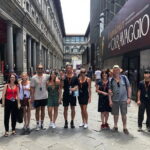
Meeting point logistics: Leonardo da Vinci statue and the white flag
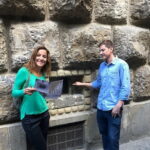
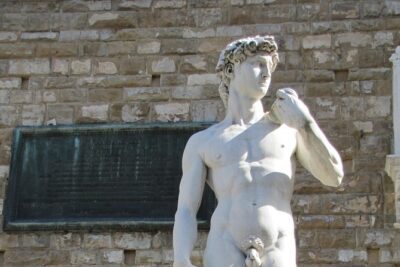
Getting started in Florence can be tricky, especially when streets are crowded and directions can be fuzzy. Here, the meeting point is clear and easy to recognize: meet your guide in front of Leonardo Da Vinci’s statue, and look for someone holding a white flag with Enjoy Rome written on it.
The tour ends back at the meeting point, so you’re not sent off across town. That’s useful if you’re pairing the Uffizi with other Florence plans on the same day. It also means you’ll likely feel more in control of your schedule after the guide portion is done.
One practical note from real-world pacing: this is a short, guided block. That’s great for focus, but if you’ve scheduled something tight right after (like another timed ticket), give yourself a cushion. The Uffizi crowd energy can run long, and you’ll want time to walk, reset, and breathe before your next stop.
Inside the Vasari palace: why the building is part of the art
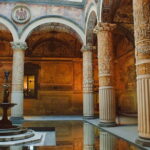
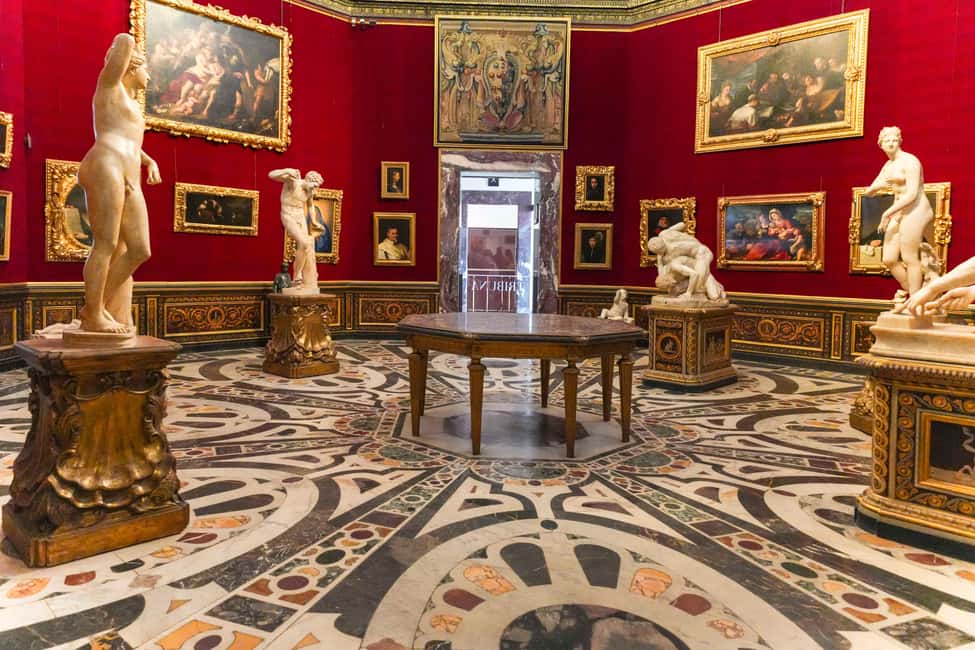
The Uffizi isn’t just where art is stored. It’s a former 16th-century palace transformed into a museum in 1865, gifted to Florence by the Medici family. Construction ran from 1560 to 1581, and the structure includes a long courtyard that overlooks the Arno River.
On this guided visit, you’ll get the building’s logic explained while you’re moving through it. That matters because the Uffizi can feel maze-like if you’re only looking at paintings. Knowing how the architecture was designed for display helps you understand why certain views and corridors feel the way they do.
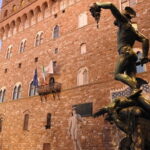
You’ll also hear about the museum’s connection to the city. There’s a semi-enclosed courtyard decorated with sculptures of renowned artists from the 19th century, and this courtyard helps link the galleries to Piazza della Signoria. Even if you don’t memorize every architectural detail, having this context makes the walk feel purposeful instead of random.
The 1.5-hour game plan: what the guide actually helps you see
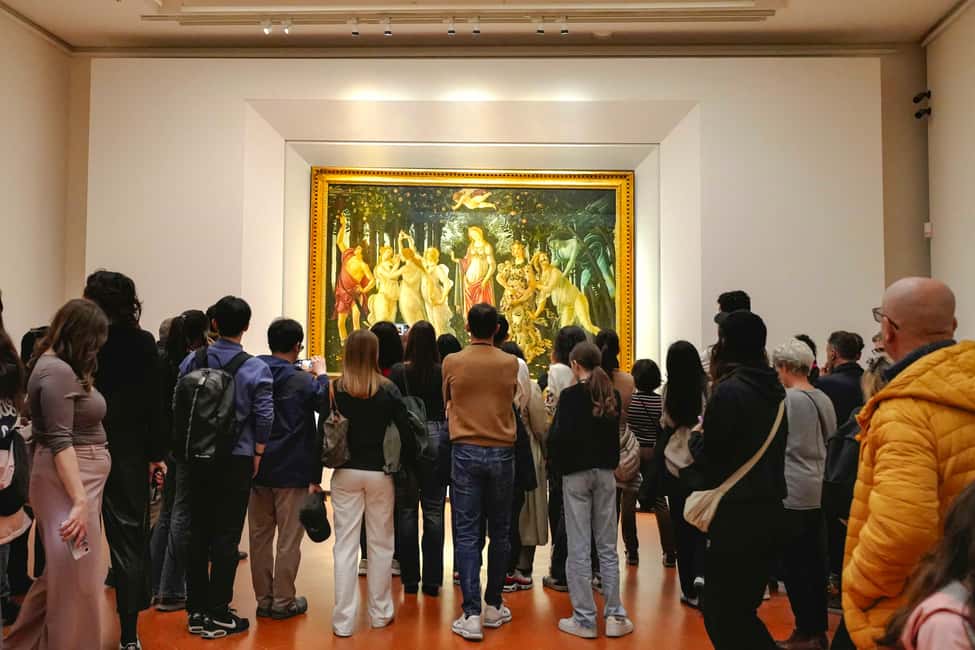
With only 1.5 hours, the difference between a good guided tour and a long one is focus. This tour is built around helping you see big-name works while still making sense of the collection.
You’ll encounter standout Renaissance art, including Botticelli’s Birth of Venus, plus works by celebrated artists such as Michelangelo, Giotto, Cimabue, and others like Leonardo da Vinci and Raffaello (among the broader collection). The key isn’t just star power. The guide’s job is to connect how styles and ideas evolve in Florence.
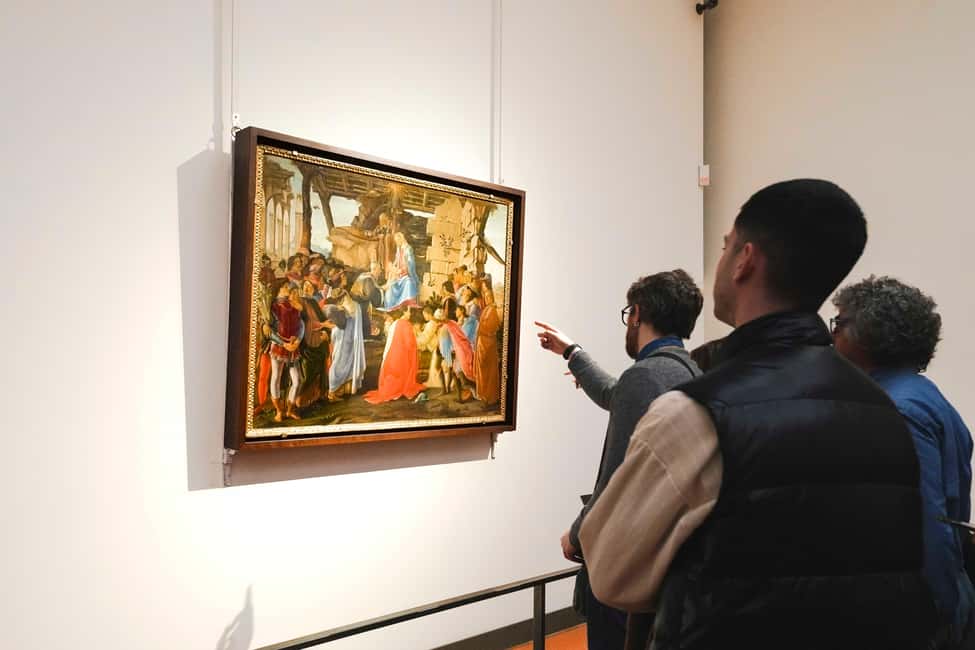
This is where a strong guide makes a noticeable difference. Past groups praised guides like Christian for being energetic and for leading directly to the pieces that tell the story of Florence’s artistic development. Others also highlighted Anastasia for clear, informative explanations. Even if you don’t get the same guide each time, the format is designed so you’re not wandering past major works without context.
A good mental model: think of the tour as a fast, guided storyboard. You’re not meant to read every label. You’re meant to understand what you’re looking at and why it fits into the Renaissance bigger picture.
Courtyards, sight lines, and the Arno-facing views you’ll remember
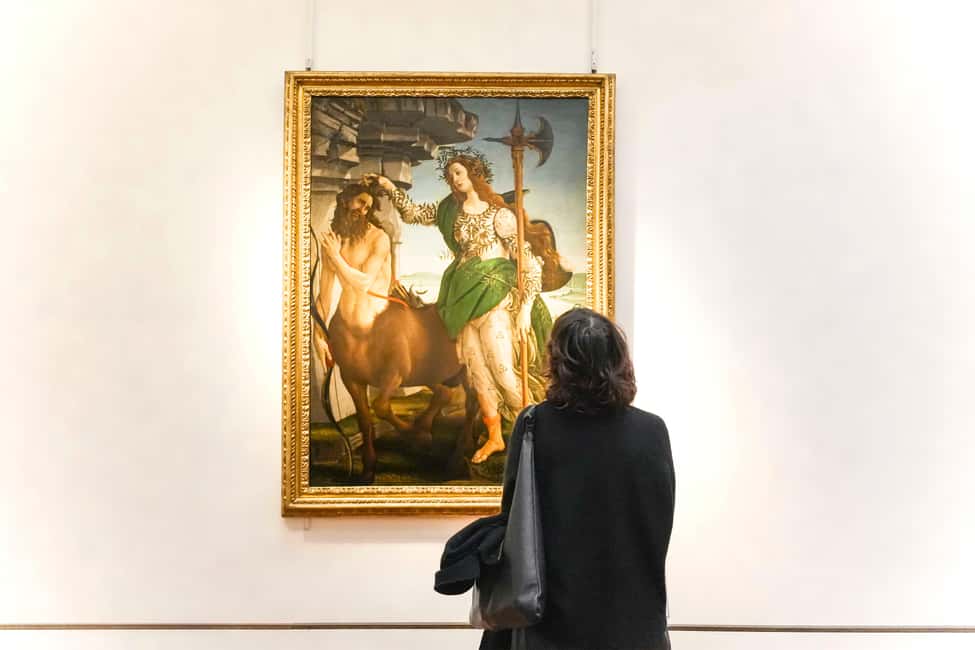
The Uffizi has moments where the architecture suddenly feels like an extra gallery. One of the standout features you’ll hear about is the long courtyard overlooking the Arno. That sight line is part of how the palace was designed, and knowing it exists changes how you perceive the museum spaces.
The semi-enclosed courtyard with 19th-century sculptures is another “you’ll remember this” stop. It links the galleries to Piazza della Signoria, so you’re not just experiencing a locked-in museum box. You’re seeing the museum’s relationship to the surrounding city.
Even though your time is limited, these architectural stops are worth it because they help you anchor the art. Without that framework, the Uffizi can feel like a checklist of famous painting titles. With it, you start to recognize patterns in the way the museum guides your movement.
You can also read our reviews of more museum experiences in Florence


Your hearing matters: radio headsets in a crowded palace
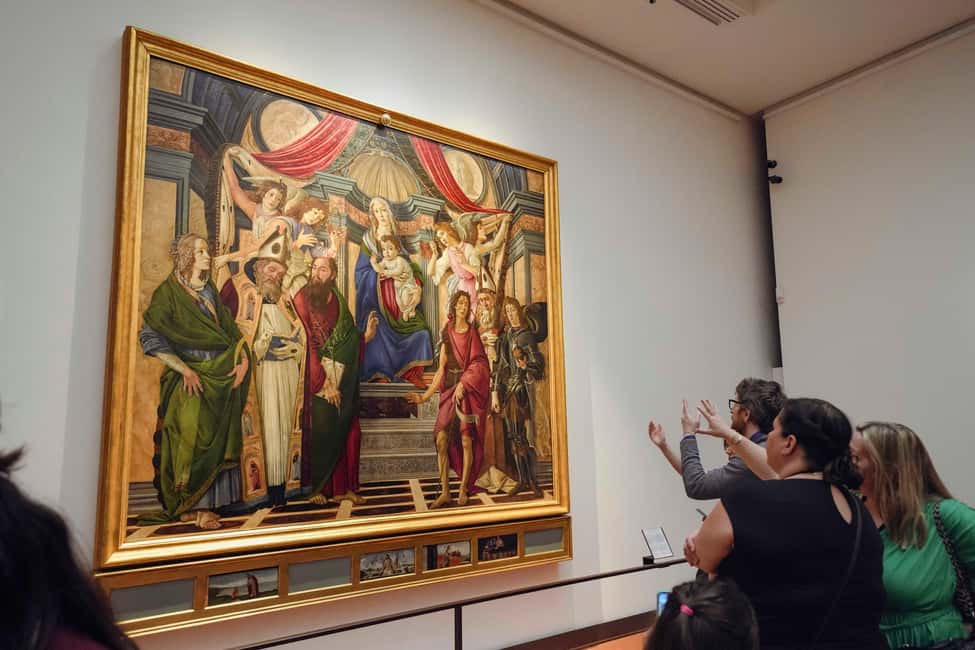
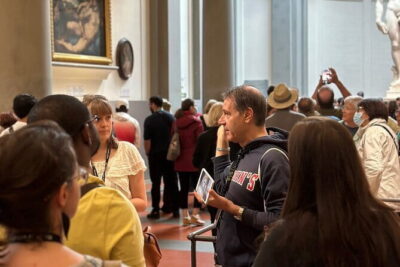
Anyone who’s tried to tour the Uffizi without assistance knows the problem: crowds muffle sound, and the best view is often not the easiest listening position. This tour includes radio headsets, so you can usually hear your guide even while you’re shifting to get a better sight line.
That’s a big deal with a museum like this. You want to stay focused on the art, not constantly straining for audio. And because the group is capped at 9 participants, it’s easier for the guide to keep control of the pace and still keep you close to the key works.
Language options are also practical: the live guide is offered in Spanish, French, or English. If you’re traveling with mixed-language needs, you can usually choose what fits your comfort level.
Botticelli and friends: how to get value from big-ticket masterpieces
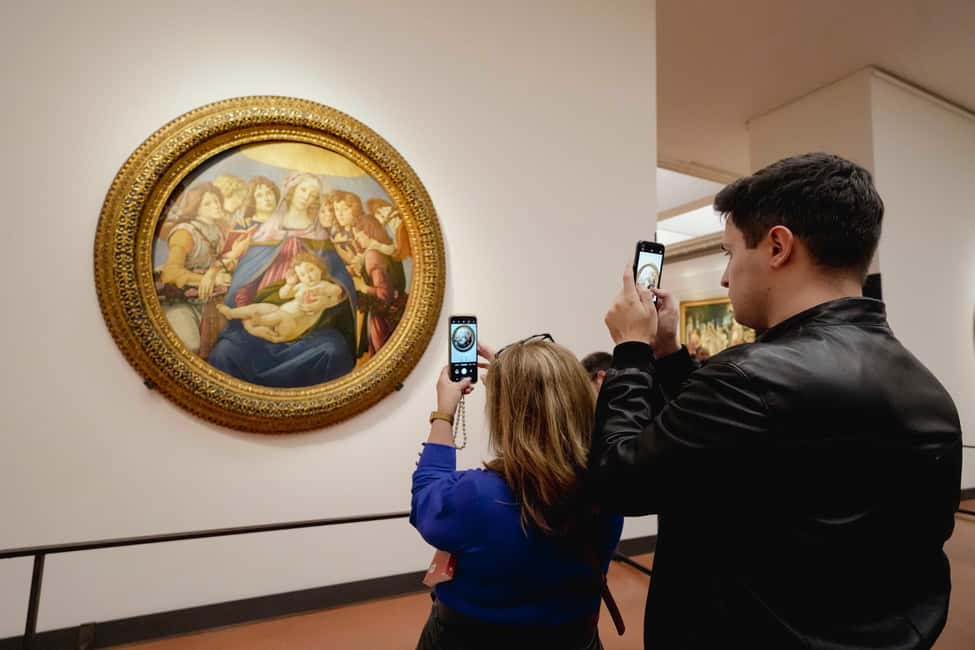
It’s easy to assume that seeing big names is the whole point. But the Uffizi is more satisfying when you understand how the masterpieces relate to each other.
This tour explicitly focuses on Renaissance masterpieces and pairs them with stories behind the works. That approach helps you avoid the common trap of feeling like you just saw a few famous paintings without understanding the artistic logic.
Here’s what I think makes this approach worth the ticket:
- You don’t waste your limited 1.5 hours hunting for the right rooms.
- You see at least a few headline masterpieces, like Botticelli’s Birth of Venus, without losing the narrative thread.
- You learn how Florence’s art evolves over time, instead of treating each painting like a standalone moment.
And one more practical point: in a place this crowded, “close” matters. People often don’t realize how quickly viewing distance changes. A guided push toward the most important stops helps you position yourself better at the works that draw the most attention.
Price and value: is $91.91 worth it for 90 minutes?
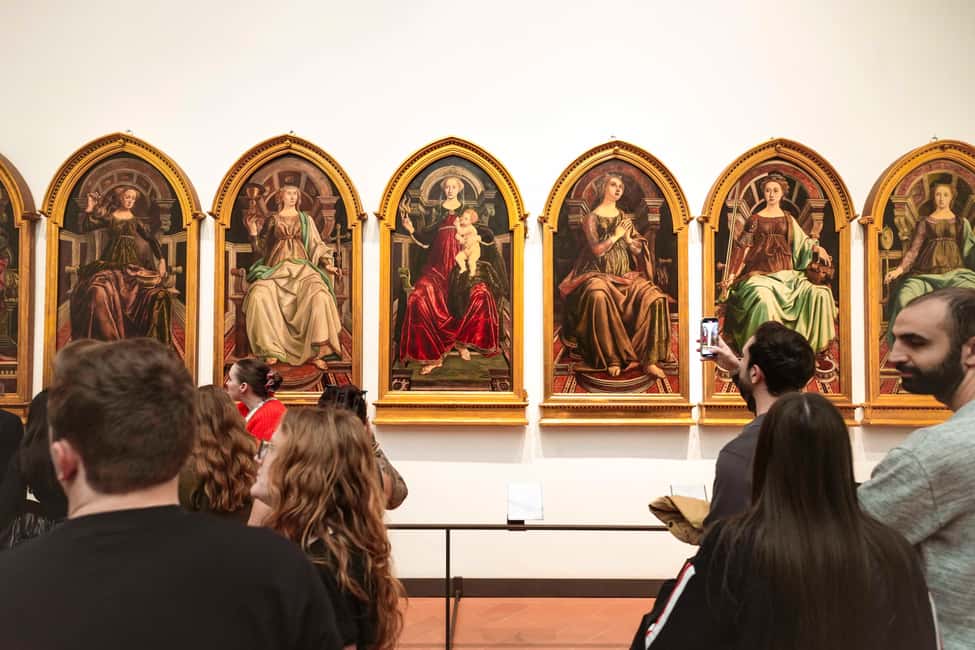
At $91.91 per person, this isn’t a bargain, but it can be good value if you’re prioritizing time and clarity.
Here’s what you’re paying for, based on what’s included:
- Uffizi fast-track entry tickets (skip-the-line via separate priority entrance)
- Tour guide
- Reservation fees
- Radio headsets to hear clearly
For most people, the biggest “cost” in the Uffizi is not money—it’s lost minutes from lines and wasted motion from not knowing where to go. A fast-track guided visit turns your time into a curated route.
When the price feels less worth it: if you’re the type who enjoys long, self-paced wandering and you don’t mind lines or confusion. Also, if your group plans to focus on reading labels at every stop, 1.5 hours may feel too short.
So I’d frame it like this: you’re buying structure. If you want structure, it’s a solid spend. If you want total freedom, you might do better with a self-guided strategy.
Who this tour fits best (and who should think twice)
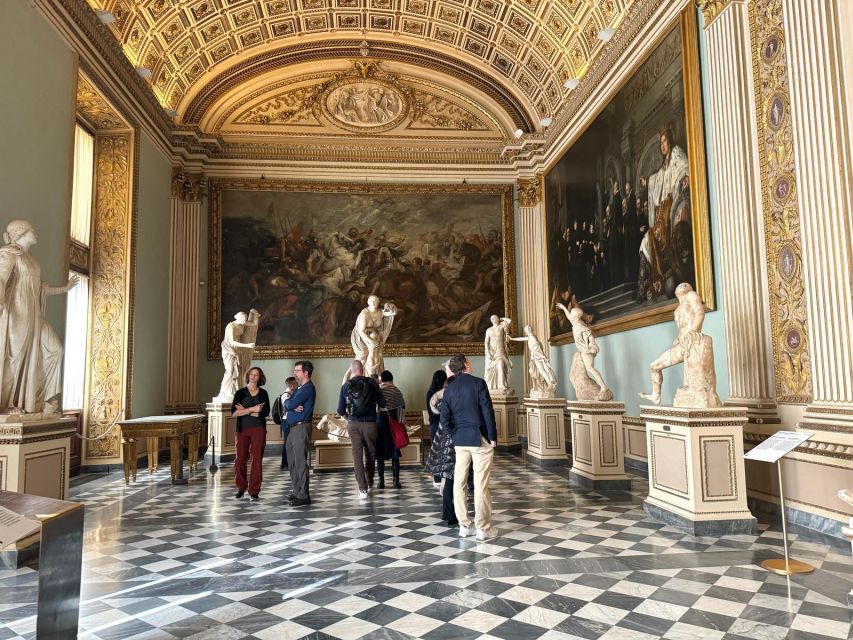
This is a strong fit if you:
- Have limited time in Florence and want Uffizi highlights done right
- Prefer small groups (max 9 participants) and easier crowd navigation
- Want a guide to explain what you’re seeing rather than relying on reading labels alone
- Like the idea of guided time now, then independent wandering after
It may not be the best fit if you:
- Hate tight schedules. This is 1.5 hours. You’ll be grateful for the pace, but you won’t finish with a slow, complete museum experience.
- Have mobility limitations you need the museum to accommodate closely. The information you’ll get lists wheelchair accessible, but it also says it’s not suitable for people with mobility impairments. If that applies to you, check directly before booking so expectations match reality.
- Need to bring items like bottles or liquids. The rules say not to carry any bottles or liquid, and backpacks must be left in the cloakroom.
After the guide: using your leftover time wisely
One of the smartest parts of this format is what happens after the tour ends. Once your guided route finishes, you can explore at your own pace.
That’s where you can tweak your experience. If the guide made you curious about a specific artist, you can return to those rooms. If you want more time near the works that grabbed you, you can decide then. If you wanted to focus on the architecture and courtyard connections, you can take a second look with your new context.
Since you return to the meeting area at the end, you can also plan your next move without guessing. This is handy when you’re juggling lunch, a timed ticket elsewhere, or just trying to avoid the stress of one more reservation.
Should you book the Florence Fast Track Uffizi Guided Tour?
If you’re in Florence for a short stay and want to make the Uffizi hit hard, I’d book it. The mix of fast-track entry, a small group up to 9, and radio headsets is exactly what helps you see more without feeling rushed into silence.
The main reason not to: you’re trying to do too much in one day, or you want a long, label-reading, slow museum experience. In that case, the 1.5-hour structure may feel limiting.
If you go for it, do it with a little scheduling slack and keep your bag rules in mind: no bottles or liquids, and plan for your backpack to be left in the cloakroom. And yes, if your plans are flexible, free cancellation up to 24 hours ahead can reduce stress.
You Might Also Enjoy


More Guided Tours in Florence
- The Best tour in Florence: Renaissance & Medici Tales – guided by a STORYTELLER
★ 5.0 · 12,316 reviews

More Tours in Florence
- The Best tour in Florence: Renaissance & Medici Tales – guided by a STORYTELLER
★ 5.0 · 12,316 reviews



More Tour Reviews in Florence
- Tuscany Day Trip from Florence: Siena, San Gimignano, Pisa and Lunch at a Winery
★ 5.0 · 21,634 reviews - The Best tour in Florence: Renaissance & Medici Tales – guided by a STORYTELLER
★ 5.0 · 12,316 reviews