REVIEW · FLORENCE
Florence: Santa Croce Church Tour with Entry Ticket
Book on GetYourGuide →Operated by StarFlorence · Bookable on GetYourGuide
Florence hides big art power in one church. Santa Croce is the kind of place where you walk in for a building visit and walk out with names, scenes, and stories glued to your brain, helped by a radio system so you don’t miss a word.
I especially love the burials of Italian giants—the basilica is a who’s-who wall of Florence and Italy, including Michelangelo, Machiavelli, Galileo Galilei, and more. You also get the guide’s connective tissue that turns a list of names into a real map of why these figures mattered to Florence.
The main thing to watch: dress code is strict. No shorts or sleeveless tops means knees and shoulders must be covered, and if you’re refused entry, your tour won’t be rescheduled or refunded.
In This Review
- Key things you’ll notice right away
- Santa Croce: why this basilica feels like a Florence shortcut
- Meeting at Dante’s square and getting the lay of the land
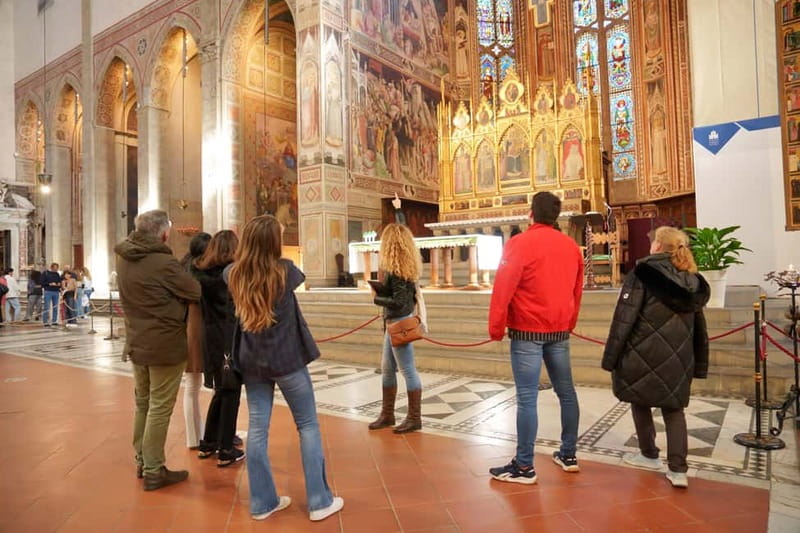
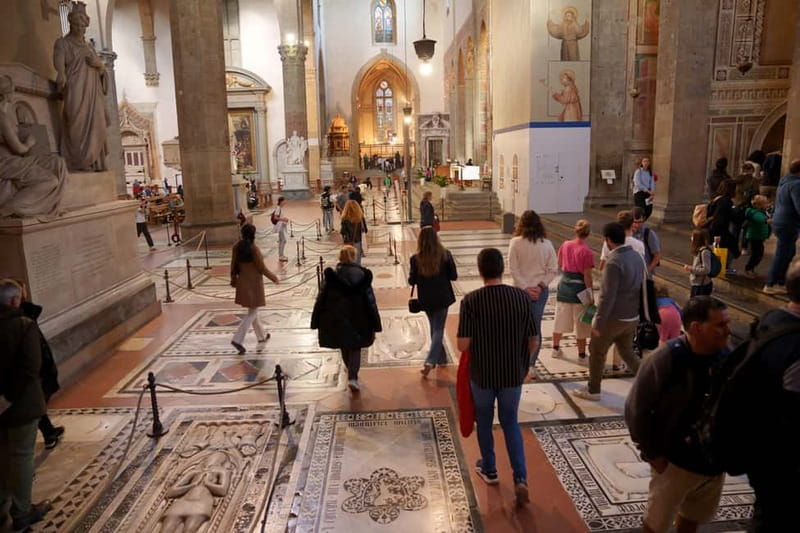
- Inside Santa Croce: chapels, frescoes, and the stories behind the paint
- Cappella Maggiore and the fresco narrative
- Giotto’s frescoes in the Bardi and Peruzzi chapels
- Donatello and the crucifix
- Brunelleschi’s Chapel of Fools and architectural thinking
- The Niccolini memorial and how Florence reuses ideas
- The monumental cemetery, the 1966 flood, and restored art
- Exterior time: polychrome marble and more than one angle
- How long it really takes (and why the pace works)
- Price and value: what you’re paying for at $54.66
- Who this tour suits best
- The guide makes a difference: names you may recognize
- Practical tips so you don’t get derailed
- Should you book the Santa Croce church tour with entry ticket?
- FAQ
- How long is the Santa Croce Church tour?
- What is included in the ticket price?
- Where does the tour start?
- What languages are available for the tour?
- Is there a dress code for entering Santa Croce?
- Is the tour wheelchair and stroller accessible?
- Are pets or large bags allowed?
Key things you’ll notice right away
- Tomb-focused Florence storytelling: Michelangelo, Machiavelli, Galileo, and other major burials
- Fresco stops that matter: Giotto and other standout chapel paintings, plus Cappella Maggiore frescoes
- A Donatello crucifix and a Brunelleschi design: art you can’t really appreciate without context
- Santa Croce’s 1966 flood scars and repairs: damaged works later restored
- Exterior details you might miss alone: polychrome marble façade plus bell tower/crypt views
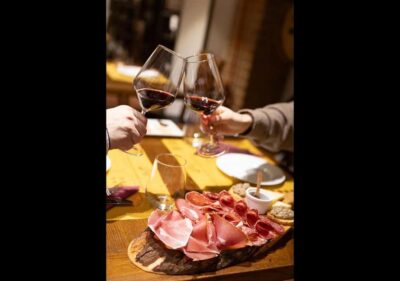
- Optional wine tasting upgrade: Tuscan wines paired with Tuscan appetizers
Santa Croce: why this basilica feels like a Florence shortcut
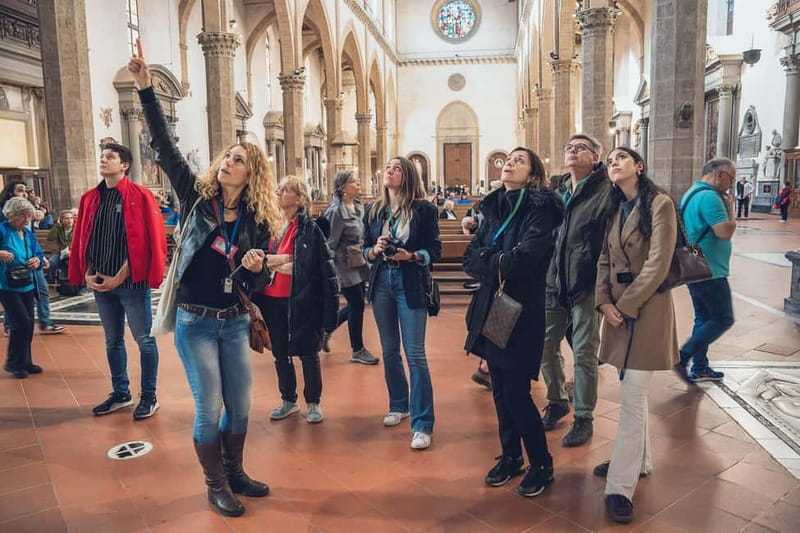
Santa Croce can feel like Florence condensed. One church gives you major art names, political thinkers, scientific legends, and religious artwork—plus the “how do I see it well” benefit of a good guide. You’re not just looking at objects; you’re learning how Florence used art and architecture to claim identity.
Even if you’ve visited other big churches in Italy, Santa Croce has a different vibe. It’s Franciscan, yes. But it also plays the role of a grand monument for famous Italians. That’s why the burial section hits so hard: the basilica doesn’t just house history; it honors people who shaped culture.
You can also read our reviews of more tours and experiences in Florence
Meeting at Dante’s square and getting the lay of the land
Your tour starts at Largo Piero Bargellini, 1, at the area tied to the Monument to Dante Alighieri (the exact meeting point may vary by option). This is a smart first step: the guide uses the surrounding square setting to orient you before you step into the basilica’s “inside world.”
One neat local detail you’ll hear as part of that orientation is how this area connects to Calcio Storico Florentino, the famous medieval-costume soccer game held every year in June. Even if you’re not traveling in June, it’s a good reminder that Florence’s tradition isn’t stuck in museums—it still spills into the streets.
Inside Santa Croce: chapels, frescoes, and the stories behind the paint
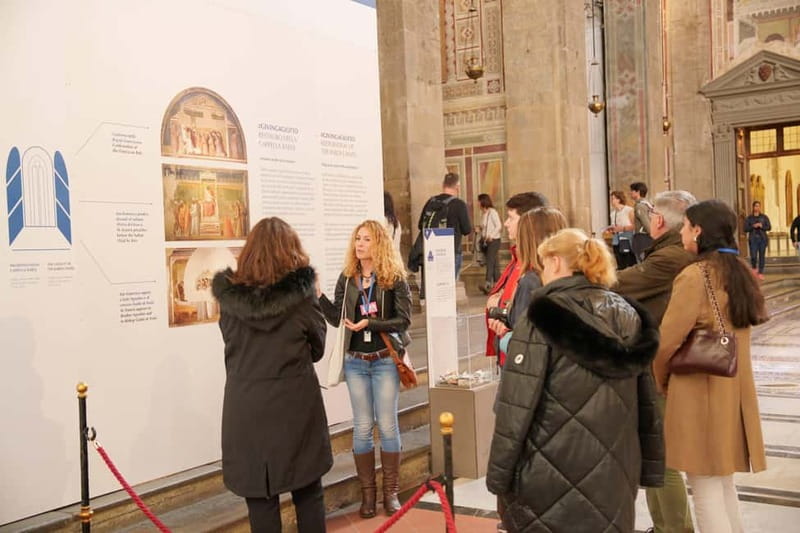
The core of the experience happens inside the basilica, where the guide leads you through the kind of highlights most people can’t structure on their own. Santa Croce is huge, and without a route, it’s easy to spend time drifting instead of seeing the best art.
Here are the stops that tend to click fastest.
Cappella Maggiore and the fresco narrative
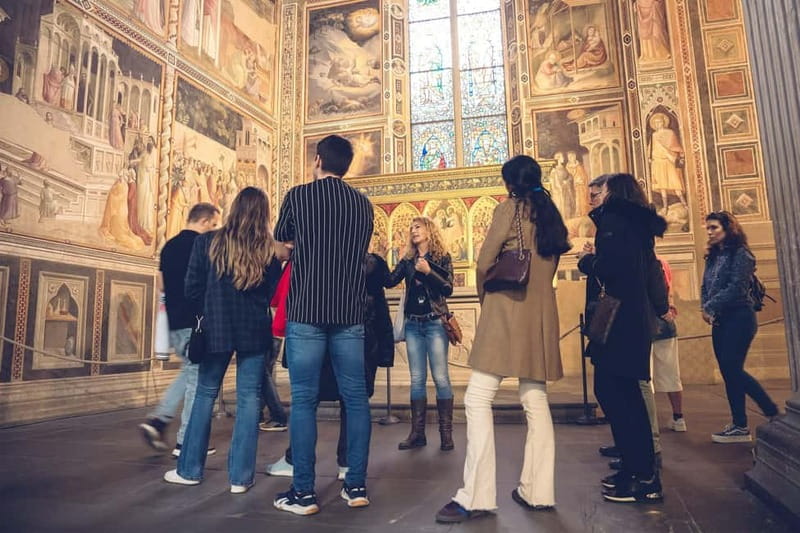
The guide points out frescoes in the Cappella Maggiore that tell the story of Santa Croce (the provided details specify frescoes by Gaddi, and you’ll hear how the story is organized in the chapel space). What I like about this kind of stop is that it teaches you how to read chapel art: not as random decoration, but as a visual script.
Giotto’s frescoes in the Bardi and Peruzzi chapels
Giotto’s fresco work shows up in the Bardi and Peruzzi Chapels, with scenes from the life of St. Francis and St. John the Evangelist. If you’ve seen Giotto reproductions before, this is where scale and placement matter. Frescoes weren’t made to sit quietly behind glass; they were built to be part of the space you move through.
A guided approach helps here because the guide can point to the key scenes and explain why those moments were chosen. You’ll get more out of a glance when you know what to look for.
- The Best tour in Florence: Renaissance & Medici Tales – guided by a STORYTELLER
★ 5.0 · 12,316 reviews



Donatello and the crucifix
Santa Croce isn’t only fresco-driven. The tour also brings you to art associated with Donatello, including his crucifix. This is a good moment to slow down. Donatello’s Renaissance style can look different depending on where you stand and how the light hits, so having someone show you what to notice is a real advantage.
Brunelleschi’s Chapel of Fools and architectural thinking
One of the more memorable junctions in this visit is the Chapel of Fools connected to Brunelleschi. Even if you’re not an architecture person, the guide frames it as architectural harmony you can feel. You stop thinking of the building as a backdrop and start seeing it as a designed experience—space as meaning.
The Niccolini memorial and how Florence reuses ideas
Before you go deeper, the guide also shows you a memorial to Giovanni Battista Niccolini built as inspiration for the Statue of Liberty. It’s a small detour in the flow of the basilica, but it’s the kind of connection that makes your visit stick.
This is one reason I like taking a guided route through Santa Croce: you’re not only learning Italian art; you’re learning how Italian ideas traveled. You come away with a sense of cultural export, not just local sightseeing.
The monumental cemetery, the 1966 flood, and restored art
Santa Croce’s cemetery area isn’t just a set of tombs—it’s a major emotional section of the visit. The tour moves through the monumental cemetery and also addresses the 1966 flood, when some paintings were destroyed and then subsequently restored.
That flood detail matters because it changes how you look at what’s still there. Instead of thinking of the art as untouched museum relics, you realize it went through real damage—and careful work to bring it back. The guide’s explanation makes the restoration story part of the artwork’s meaning.
Exterior time: polychrome marble and more than one angle
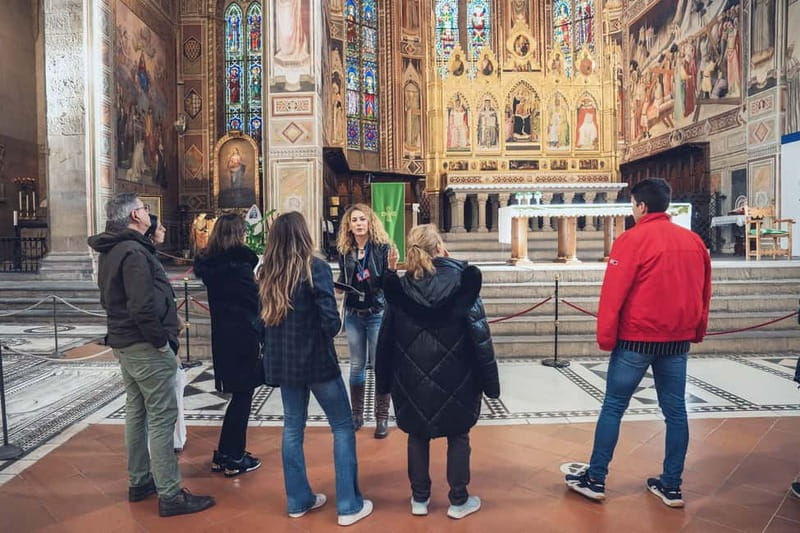
After the interior, you shift to the basilica’s outside. The polychrome marble façade is part of what the guide highlights, and it’s one of those details that can be hard to appreciate if you rush or only glance from one spot.
You also tour the Bell Tower area, the Crypt, and 16 chapels. That’s a lot of ground for a church visit, which is why the radio system helps—so you can keep your attention on the guide’s points while still moving through spaces with other distractions nearby.
How long it really takes (and why the pace works)
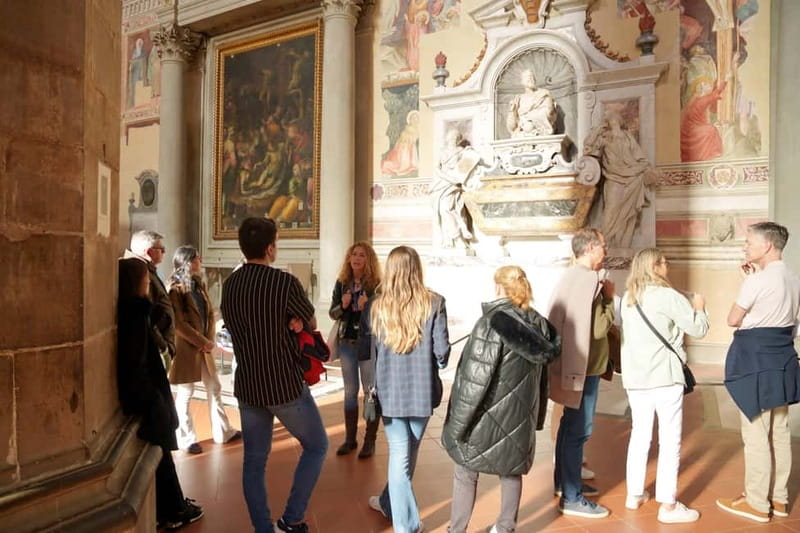
The tour is listed as about 1 to 2.5 hours, and you’ll often feel it’s designed to be efficient rather than exhausting. The guide tours you around the key points—interior and exterior—then gives you time to go back to anything you want to see again once the structured part ends.
In practice, this means:
- You get orientation and major highlights first.
- You’re left with a short list of what to revisit on your own.
- You don’t lose an entire day to trying to plan Santa Croce solo.
If you’re the type who wants to linger in every chapel without a plan, you might choose extra time afterward. But for most people, this is a strong format.
Price and value: what you’re paying for at $54.66
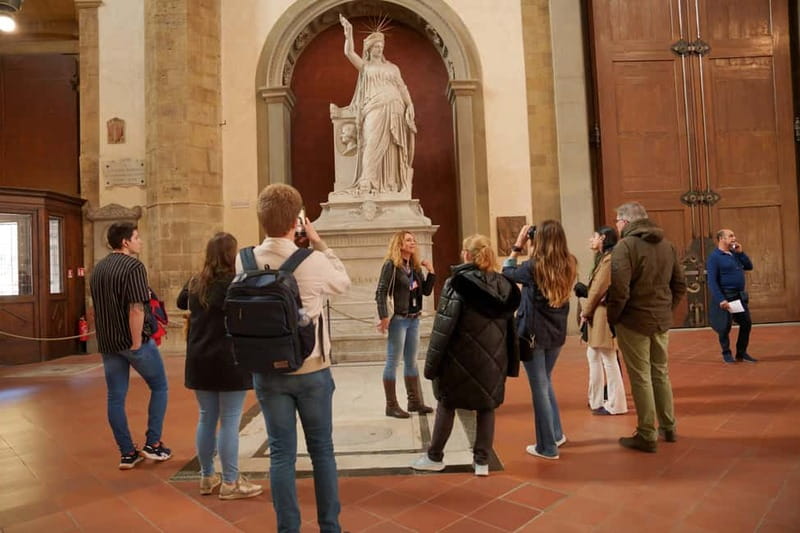
At $54.66 per person, the biggest value isn’t the entrance ticket alone. You’re paying for three things that make Santa Croce easier and more rewarding:
- A certified guide who connects tombs, chapels, and artworks into one story
- Entrance tickets with reservations, which reduces friction on busy days
- A radio system, so your visit doesn’t turn into “guess what the guide said” in crowded rooms
If you add the optional upgrade, you also get a wine tasting with a wine expert plus a platter of Tuscan appetizers. That can make the overall experience feel more like a full Florence afternoon rather than just a quick church stop.
It’s not a cheap ticket. But Santa Croce is also the kind of place where the difference between self-guided and guided is huge—especially for frescoes, chapels, and tomb symbolism.
Who this tour suits best
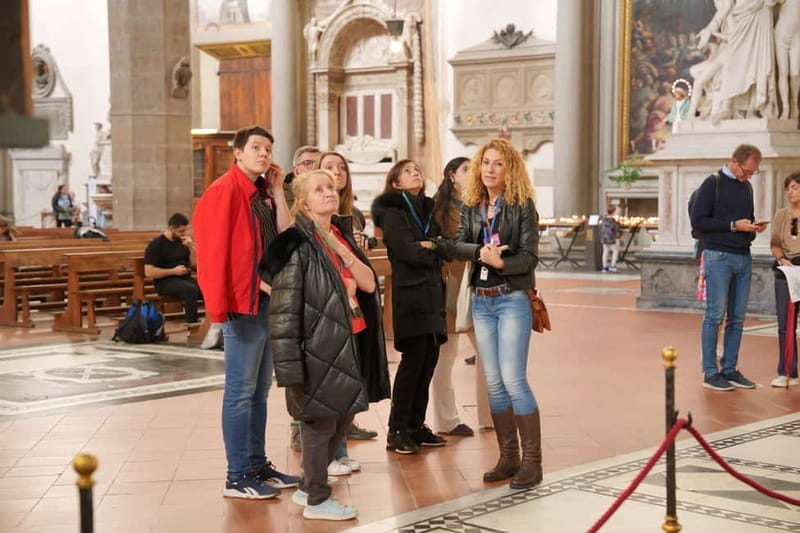
This tour is a great fit if you want:
- A high-impact Florence stop in a limited time window
- To see the major names like Michelangelo, Machiavelli, and Galileo without getting lost
- A guided route through chapels where stories and symbols matter
- Clear explanations delivered in multiple languages (English, Spanish, French, German, Italian)
It also works well if you’re traveling with mixed interests—art lovers get Giotto and Donatello, history-minded folks get tombs and political thinkers, and architecture fans get Brunelleschi’s chapel and exterior work.
The guide makes a difference: names you may recognize
This experience is powered by the guide, and the quality level looks consistently high. You might run into guides such as Lara, Marcello, Viviana, Marie, Guido, and Ilaria, with many guests praising guides who keep the tour detailed, engaging, and easy to follow.
One theme in the feedback is how guides handle both big picture context and small spot-on details—pointing out what you should focus on in each room, then connecting it back to Florence’s story. That’s the difference between seeing Santa Croce and understanding it.
Practical tips so you don’t get derailed
- Dress for entry: knees and shoulders covered; no shorts or sleeveless tops. If you’re refused entry, you won’t get a rescheduled or refunded tour.
- Wear comfortable shoes: you’ll be walking inside and around the church complex.
- Travel light: pets aren’t allowed, and luggage or large bags aren’t allowed.
- Bring ID: the tour notes passport or ID card.
- Plan for all weather: the tour operates in all weather conditions, so bring clothing that matches what Florence is doing that day.
Should you book the Santa Croce church tour with entry ticket?
I’d book this if you care about art and want your time in Santa Croce to feel organized and meaningful. The mix of tombs, fresco chapels, Donatello, Brunelleschi, and the restoration story from the 1966 flood gives you both emotional weight and real visual variety.
Skip it only if you already have a strong personal plan for Santa Croce and you’re fine reading it like a self-guided museum route. Without a guide, it’s still beautiful—but you’ll likely miss connections that make the place hit harder.
If you want a single “best use of time” Florence church experience, this one is a solid call—especially if you can squeeze in the wine tasting option for a warmer, slower ending.
FAQ
How long is the Santa Croce Church tour?
It lasts about 1 to 2.5 hours, depending on the starting time and how the tour runs that day.
What is included in the ticket price?
You get a certified live guide, a radio system to hear the guide clearly, and entrance tickets with reservations. If you select the wine tasting option, wine tasting and Tuscan appetizers are included.
Where does the tour start?
The start is at Largo Piero Bargellini, 1 near the Monument to Dante Alighieri, though the exact meeting point may vary depending on the option booked.
What languages are available for the tour?
The live guide is available in English, Spanish, French, German, and Italian.
Is there a dress code for entering Santa Croce?
Yes. Shorts and sleeveless tops are forbidden. Knees and shoulders must be fully covered for both men and women.
Is the tour wheelchair and stroller accessible?
Yes. Wheelchair and stroller access is listed as available.
Are pets or large bags allowed?
No pets are allowed, and luggage or large bags are not allowed.
You Might Also Enjoy
More Tickets in Florence

More Tours in Florence
- The Best tour in Florence: Renaissance & Medici Tales – guided by a STORYTELLER
★ 5.0 · 12,316 reviews

More Tour Reviews in Florence
- Tuscany Day Trip from Florence: Siena, San Gimignano, Pisa and Lunch at a Winery
★ 5.0 · 21,634 reviews - The Best tour in Florence: Renaissance & Medici Tales – guided by a STORYTELLER
★ 5.0 · 12,316 reviews