REVIEW · FLORENCE
Florence: Dante and The Jubilee Guided Tour
Book on GetYourGuide →Operated by Itinerantour · Bookable on GetYourGuide
Dante’s story comes to life on foot. This Florence: Dante and The Jubilee Guided Tour connects Pope Boniface VIII’s Jubilee tradition with Dante’s hope for salvation, using a walk through medieval streets you can still recognize. I especially liked how the guide explains the why behind the sites, not just the names, and how the Jubilee theme turns familiar landmarks into part of one larger story.
I also liked the pace and format: you get a live Italian guide plus radio and earphones, so you can actually follow the talk without straining your voice or losing your spot. One consideration: it’s an outdoor walking tour, so if you hate being on your feet in crowds or in shifting weather, plan accordingly.
In This Review
- Key highlights you’ll feel right away
- Why Dante + the Jubilee makes this Florence walk different
- Starting at Santa Maria del Fiore: where the story begins
- The House of Dante stop: short time, big meaning
- Santa Croce: connecting Dante to a still-standing civic world
- Piazza della Signoria: power, politics, and the medieval mindset
- Orsanmichele: a quick stop with atmosphere
- Outdoor walking reality: what to plan for
- The guide factor: why Emanuela’s style matters
- Price and value: what you’re really paying for
- Who this tour is best for
- A balanced look: what could disappoint you
- Should you book the Florence Dante and Jubilee tour?
- FAQ
- How long is the Florence: Dante and The Jubilee Guided Tour?
- What is the starting meeting point?
- Where does the tour end?
- What language is the live guide?
- Is the tour wheelchair accessible?
- What’s included in the price?
- What’s the cancellation policy?
Key highlights you’ll feel right away
- Jubilee context with Dante’s lens: You learn why the Jubilee and Dante’s Divine Comedy belong together.
- Medieval Florence walk: You move from major landmarks into the neighborhood connected to Dante’s early life.
- Short guided stop schedule: Each site is timed, so you keep momentum instead of getting stuck waiting around.
- Practical audio help: Radio and earphones keep the narration clear.
- Attentive, enthusiastic guide: The tours led by Emanuela bring energy and steady explanations.
- Designed for accessibility: The activity is wheelchair accessible.
Why Dante + the Jubilee makes this Florence walk different
Florence has plenty of Dante connections, but most tours treat him like a museum topic. This one treats Dante like a person living inside a belief system—one shaped by the medieval Church, fear, hope, and a very physical idea of pilgrimage.
The thread starts with Pope Boniface VIII in the 1300s. He issued a tradition that still shows up today: the Jubilee. In the guide’s telling, it’s not just a church date on a calendar. It carries a biblical message of liberation, plus the spiritual meaning of walking toward redemption with hope for a new world.
Then the story makes its point: Dante wanted his own journey of salvation and redemption to mirror that pilgrimage energy. You’re not just seeing where Dante might have walked—you’re seeing Florence through the mental world that could produce The Divine Comedy in the first place.
You can also read our reviews of more guided tours in Florence
- The Best tour in Florence: Renaissance & Medici Tales – guided by a STORYTELLER
★ 5.0 · 12,316 reviews
Starting at Santa Maria del Fiore: where the story begins
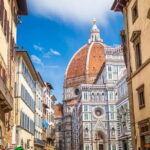
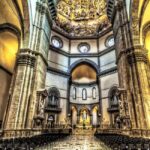
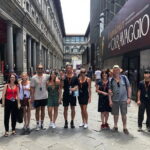
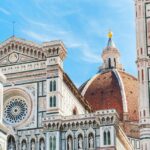
Your walk kicks off at the Cattedrale di Santa Maria del Fiore area, with the meeting point at Campanile di Giotto (baptistery side). If you arrive early, it’s a good chance to get your bearings. You’ll be standing in one of Florence’s loudest “power” zones, where faith, art, and civic pride all overlap.
From there, the guide sets the stage: Dante’s worst enemy is mentioned in the framing—Pope Boniface VIII—and suddenly the Jubilee isn’t abstract. It’s political, spiritual, and deeply emotional. That matters because Dante wrote from inside conflict, not from a quiet desk with neutral opinions.
At this first stop you’ll also get the basic tour map: you’ll move from big public buildings into the areas linked to Dante’s youth, then onto major squares and churches that help explain medieval Florence as a lived environment.
The House of Dante stop: short time, big meaning
Next comes the House of Dante, with a brief 10-minute guided visit. This isn’t the type of stop where you stare at one object for ages. Instead, you’ll use it as a bridge—an anchor for understanding where inspiration could come from.
What I liked here is how the stop works as an idea, not just a location. Even if you’re not a hardcore Dante scholar, this kind of visit helps you understand him as someone shaped by place: the neighborhood where he grew up, not just the later fame.
Because the visit is timed, you won’t lose the thread. The guide keeps the narrative moving toward the next Florence site, so the story stays cohesive.
Santa Croce: connecting Dante to a still-standing civic world
You then reach Basilica of Santa Croce, guided for about 15 minutes. Santa Croce is one of those Florence churches that can feel like a “stop for photos.” Here, it works better because the tour uses it as part of the medieval mental landscape.
In a Jubilee + Dante tour, churches like this become more than architecture. They’re places where public identity and private belief overlap—exactly the kind of environment that feeds a poet writing about salvation, sin, fear, and hope.
The value of this stop isn’t that you learn a single fact and move on. You learn how different parts of Florence fit the same worldview: the spiritual urgency that turns walking into a kind of moral action.
Piazza della Signoria: power, politics, and the medieval mindset
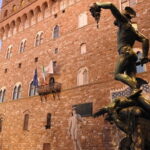
Your tour continues at Piazza della Signoria for about 15 minutes. This square is central to Florence’s civic life, and in a Dante-themed walk that matters. Dante didn’t write in a vacuum; his world was structured by politics, authority, and public symbols.
Here’s where the tour’s “medieval mentality” promise becomes real. You’re walking through spaces that once carried public meaning—places where power was visible and where beliefs weren’t only personal. The Jubilee frame helps you connect the dots between spiritual liberation and the reality of who had influence.
If you like history that feels practical—who had control, how authority played out in daily life—this stop should hit. If you only want quiet masterpieces, you might find the square a bit more hectic, but the guide’s narrative helps you read the environment instead of just passing through it.
- The Best tour in Florence: Renaissance & Medici Tales – guided by a STORYTELLER
★ 5.0 · 12,316 reviews




Orsanmichele: a quick stop with atmosphere
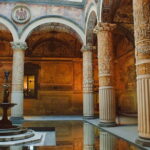
The last named stop is Orsanmichele, with about 5 minutes of guided time. Short stops can feel rushed on some tours, but in this case the stop functions like punctuation.
Orsanmichele is in the “stillness-between-stops” category. It gives you a change of scene—one more piece of Florence’s medieval identity—before you circle back.
Because it’s brief, it also helps you maintain energy for the final return to the starting area near the cathedral region. You’ll keep the tour from turning into one long blur of monuments.
Outdoor walking reality: what to plan for
This is an outdoor walking tour, which means you’ll want basic comfort planning:
- Wear shoes you trust. Even a “short” medieval-streets walk adds up.
- Bring layers. Florence weather can shift, and churches and squares don’t always protect you from wind or sudden sun.
- If you’re sensitive to crowds, go in with patience. You’ll be in major central sights.
That’s the trade-off for a tour like this: you get living context, not a seated lecture. And given the theme—Jubilee pilgrimage and medieval city movement—being outside isn’t a gimmick. It’s the point.
The guide factor: why Emanuela’s style matters
The reviews give a clear sense of what separates this tour from a basic “photo guide.” The narration is led by Emanuela, and both the Italian and English feedback highlights how she combines competence with passion.
What you want from a tour about Dante and medieval faith is a guide who can translate dense ideas into something you can follow in real time. The praise here fits that need: the historical, architectural, cultural threads tied to Dante and his family are explained in a way that increases your interest as the walk goes on.
Also, having radio and earphones means you can actually catch those details even when street noise rises. It’s a small thing, but it changes how much you remember.
Price and value: what you’re really paying for
The price is $51.24 per person for a tour that lasts about 1.5 hours. That sounds short, but in Florence, a well-timed walking tour can save you more than it costs—especially if it’s organized around a strong theme instead of scattered stops.
Here’s the value math I’d use:
- You’re paying for a live guide who connects multiple sites into one story about Dante and the Jubilee.
- You get radio and earphones, which helps you benefit from the narration (not just the scenery).
- You also get structure: the stop sequence is built around a clear arc from the cathedral area through Dante-linked Florence and back.
If you’d otherwise wander the area on your own, you’d likely see similar landmarks. What you might miss is the explanation that ties the Jubilee tradition to Dante’s writing and mindset. That’s the reason this tour feels like more than “a nice walk.”
Who this tour is best for
This experience fits best if you like:
- Dante and want context beyond famous lines
- medieval Florence as a way of thinking, not only buildings
- guided storytelling that connects multiple landmarks into one coherent theme
- a manageable walking commitment (about 1.5 hours)
It’s also a good choice for first-time visitors who want a deeper “read” of central Florence. The route hits key places, but the focus stays on the meaning behind them.
If you’re the type who prefers a slow, self-paced museum day, you might prefer a longer independent plan. But if you want understanding in a short window, this tour is set up to deliver.
A balanced look: what could disappoint you
The biggest potential drawback is time. With only about 1.5 hours, each stop gets a guided chunk—10 minutes, 15 minutes, and so on. If you were hoping for a deep dive into each site’s art or architecture, you’ll likely want more than this tour provides.
Another consideration: the narration is in Italian, so your enjoyment will depend on your comfort level. If you don’t speak Italian well, radio/earphones help with clarity, but they don’t translate the language.
Should you book the Florence Dante and Jubilee tour?
I’d book it if you want Florence to make emotional sense. This tour gives you a framework—Jubilee pilgrimage and Dante’s salvation theme—that turns stops like Santa Croce and Piazza della Signoria into more than Instagram backgrounds.
Book it especially if:
- you like guided storytelling that connects ideas across locations
- you want a short, organized route that doesn’t waste time
- you appreciate practical extras like radio and earphones
- you’re curious about medieval mentality and how it shaped Dante’s world
Skip it if:
- you want long, detailed on-site time for each landmark
- you need the tour in a language other than Italian
- outdoor walking is a deal-breaker for you
If those boxes fit, this is one of those tours where the city feels like it’s speaking back—using Dante, the Jubilee, and the medieval streets of Florence to do it.
FAQ
How long is the Florence: Dante and The Jubilee Guided Tour?
The tour lasts about 1.5 hours.
What is the starting meeting point?
Meet at Campanile di Giotto (baptistery side) and look for the guide with an Itinerantour sign.
Where does the tour end?
It ends back at the meeting point, in the same Santa Maria del Fiore area.
What language is the live guide?
The live guided tour is in Italian.
Is the tour wheelchair accessible?
Yes, the activity is wheelchair accessible.
What’s included in the price?
You get a tour guide plus radio and earphones.
What’s the cancellation policy?
Free cancellation is available up to 24 hours in advance for a full refund.
You Might Also Enjoy


More Guided Tours in Florence
- The Best tour in Florence: Renaissance & Medici Tales – guided by a STORYTELLER
★ 5.0 · 12,316 reviews
More Tours in Florence
- The Best tour in Florence: Renaissance & Medici Tales – guided by a STORYTELLER
★ 5.0 · 12,316 reviews


More Tour Reviews in Florence
- Tuscany Day Trip from Florence: Siena, San Gimignano, Pisa and Lunch at a Winery
★ 5.0 · 21,634 reviews - The Best tour in Florence: Renaissance & Medici Tales – guided by a STORYTELLER
★ 5.0 · 12,316 reviews