REVIEW · FLORENCE
Florence: Best Of – with Tour Leader & Multilingual Audio Guide
Book on Viator →Operated by ACCORD Italy Smart Tours & Experiences · Bookable on Viator
Florence can overwhelm on day one. This small-group walk gives you a smart orientation through the top streets and squares, with a professional guide and audio support so you can keep up. I like the earphones—they make the history clearer even when the square is loud.
You’ll also get lunch included, plus stops that blend big-name landmarks with the real city feel. One possible drawback: this is a city walk with no entry tickets, so most of the major places are seen from the outside. If you want museum time, plan that separately.
In This Review
- Key Points to Know Before You Go
- How the Tour Fits Together in 2.5 Hours
- Starting at Piazza di Madonna degli Aldobrandini: Why It Matters
- Uffizi Square First: The Arno View and the “Gateway” Feeling
- Piazza della Repubblica: A Central Breather
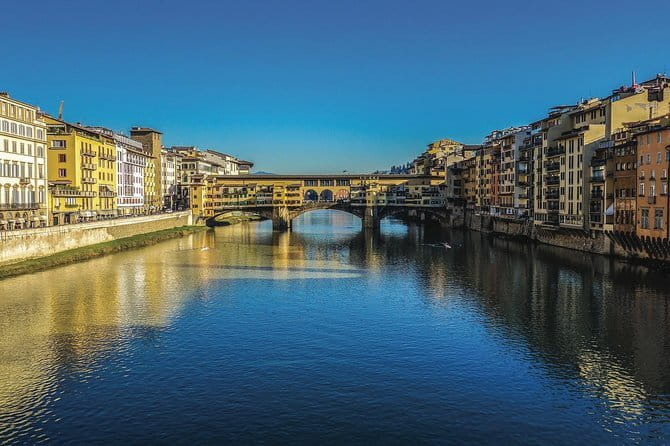
- Ponte Vecchio: Shops, History, and River Views
- Palazzo Vecchio Exterior: The Political Center in Plain Sight
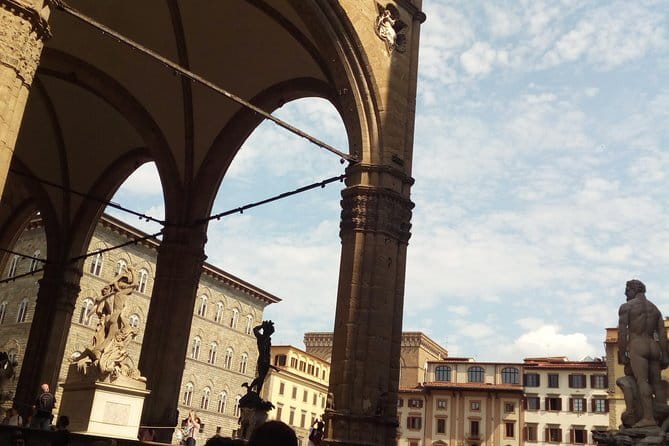
- Piazza della Signoria and the Sculptures You’ll Recognize
- Cathedral Area: What to Notice Without Buying Duomo Tickets Yet
- Santa Croce: Tombs, Frescoes, and a Church That’s Also a Timeline
- Museo del Bargello: Sculpture Lovers, Start Planning Here
- Via de’ Tornabuoni: Florence’s Living Room and Fashion Street Energy
- Palazzo Pitti: Big Palace Energy and the Gardens Mention
- How the Earphones and Multilingual Audio Guide Work
- Price and Value: What $17.54 Actually Buys
- Who Should Book This Florence Best Of Walk
- Should You Book This Tour?
Key Points to Know Before You Go
- Max 15 people means less crowd pressure and more chance to hear details
- Earphones + multilingual audio (created by an art historian) help you follow the story
- Mostly exterior sightseeing keeps the tour moving and keeps costs down, but you’ll still need tickets for interiors
- Lunch is included with options like Florentine schiacciata or a charcuterie board
- Family friendly pace makes it easier to bring kids and still enjoy the sights
- A route that connects major landmarks without feeling like a rigid checklist
How the Tour Fits Together in 2.5 Hours
This is the kind of tour that works when you’re short on time but don’t want to wander cluelessly. You cover a loop through central Florence, moving from one landmark zone to the next, with short stops where your guide points out what matters and what to notice when you go back later on your own.
Expect a fairly quick rhythm. Most of the stops are timed at about 10 minutes, which is great for getting your bearings fast. Just don’t come expecting a slow museum-style experience. This walk is built for orientation, story, and momentum—then you decide what deserves your next hour (or next day).
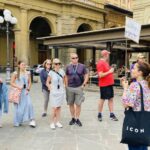
Also, this tour is capped at 15 people, and that matters in Florence. Narrow lanes, busy squares, and sudden crowds can turn a big-group tour into a shuffle. A smaller group makes it more realistic to stay together and actually hear the guide.
You can also read our reviews of more guided tours in Florence
- The Best tour in Florence: Renaissance & Medici Tales – guided by a STORYTELLER
★ 5.0 · 12,316 reviews
Starting at Piazza di Madonna degli Aldobrandini: Why It Matters
The meeting point is Piazza di Madonna degli Aldobrandini, 8 (50123 Firenze FI). The tour ends at Piazza del Mercato Nuovo near the Fontana del Porcellino.
Arrive 15 minutes early. In Florence, even that extra time is smart because you can spot where the group gathers and get situated before the walk starts. With a guided route that ends near a famous landmark fountain, you’ll also find it easier to navigate afterward—less guessing, more street time.
Uffizi Square First: The Arno View and the “Gateway” Feeling
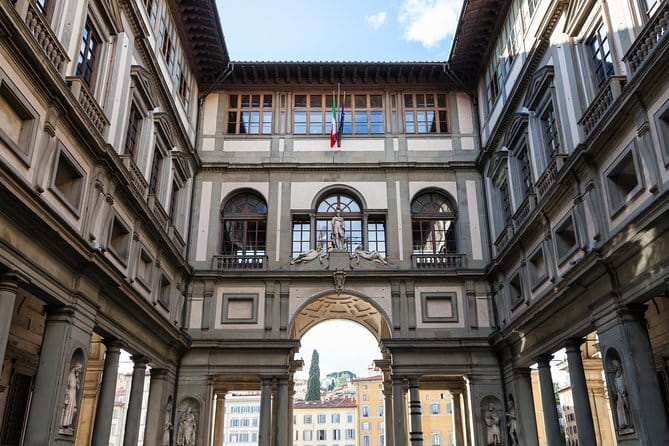
The walk begins with Le Gallerie degli Uffizi and the area in front—Piazzale degli Uffizi. Even if you’re not going inside the Uffizi on this tour, this stop works because it sets the stage. From this area, you get that classic Florence geometry: the Arno in view, the historic center stretching out, and the sense that you’re right where the city’s art world lives.
This stop is also a useful reality check. Your guide is essentially saying: here’s the landmark people come for, and here’s the neighborhood logic around it. If you later buy tickets to see art inside, you’ll understand why these streets feel like a corridor between eras.
What to do here: look across the river and trace how the streets pull you back toward the center. If you’ve got the energy, snap photos from slightly different angles—Florence looks different every time you shift your position.
One practical note: Uffizi admission isn’t included, so treat this as a preview and orientation, not a ticketed gallery visit.
Piazza della Repubblica: A Central Breather
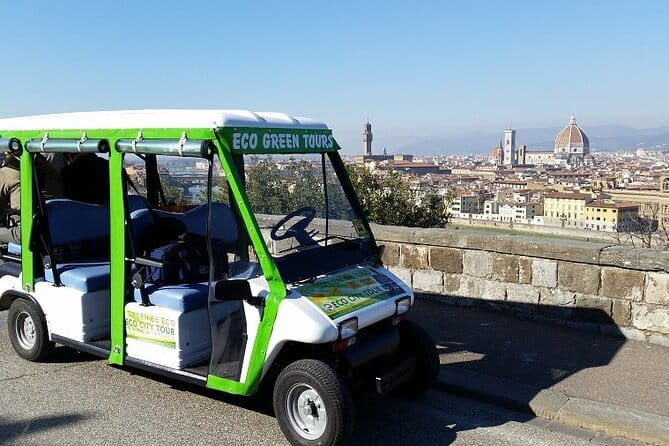
Next comes Piazza della Repubblica, one of the heart-squares where Florentines and visitors both funnel through. This stop is a “pause and reset” in the middle of your walk. You get cafes and shops, elegant arches, and a livelier street vibe than the quieter edges of the route.
Why this matters: Florence isn’t just monuments. It’s daily life around them. A square like this gives your legs a short break while your guide connects the area to the larger city story—Medici-era power, Renaissance planning, and later urban changes that still shape how people move today.
Admission here is free, so you’re just paying with your time and your attention.
Ponte Vecchio: Shops, History, and River Views
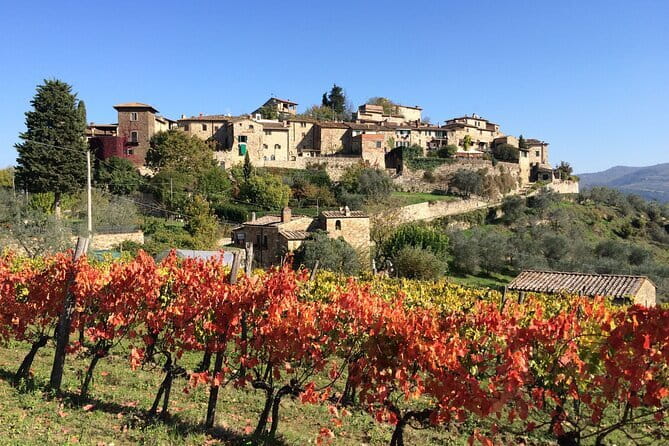
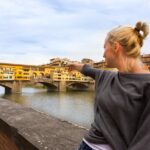
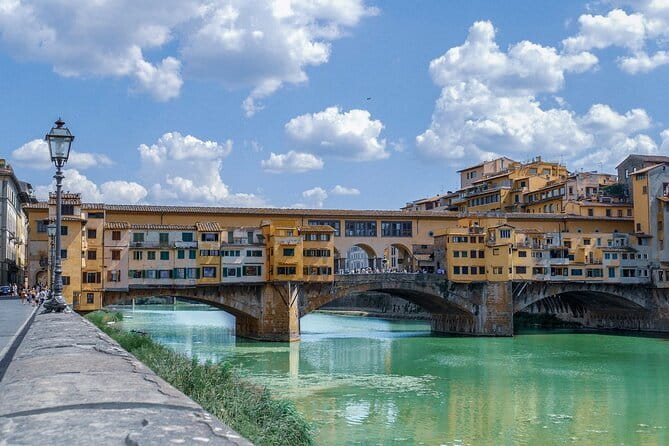
Then you cross into one of the most photographed stretches in Europe: Ponte Vecchio. Even if you think you’ve “seen” it online, you’ll notice how the bridge operates as a street. Shops line the sides, and the stone structure forces a slower walk as people line up for views.
What makes Ponte Vecchio especially satisfying on a walking tour is the explanation angle. Your guide doesn’t just say what it is; they point out why it survived, how the bridge functioned over centuries, and how craftspeople changed what lined it—from older market functions to the jewelry-focused storefronts you see today.
Where to stand for photos: don’t stay in one place. Walk a few steps one way and then the other, and you’ll catch different river angles and building alignments.
You can also read our reviews of more tours and experiences in Florence



Palazzo Vecchio Exterior: The Political Center in Plain Sight
Palazzo Vecchio is next, and this tour keeps it outside-focused. That’s not a deal-breaker. The building’s big medieval presence and the commanding clock make it impossible to ignore, even from the outside.
From the surrounding square, you can see why this palace mattered: it was the city’s authority made stone. If you’ve only seen palaces as pretty backdrops before, this stop helps you see them as power infrastructure—who decided things here, and why this square became a gathering point.
Again, no entry ticket on this walk, so treat this like a “face-to-face” version of the first chapter. If Palazzo Vecchio is on your must-see list inside, you’ll know what you’re looking for when you go back.
Piazza della Signoria and the Sculptures You’ll Recognize
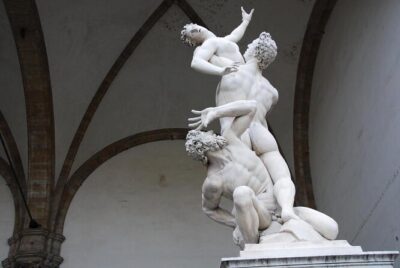
Nearby is Piazza della Signoria, Florence’s outdoor stage for politics and art. This is where your guide can point out the details that make the square feel like a museum without glass walls: statuary, the Loggia dei Lanzi area, and familiar references like a David replica.
If you’re the kind of person who usually walks past sculpture and just takes a photo, slow down here. Look up and around. The plaza isn’t only about one monument—it’s the way objects, buildings, and open space work together.
Free to visit, and perfect for asking your guide what’s worth prioritizing if you’re short on time later.
Cathedral Area: What to Notice Without Buying Duomo Tickets Yet
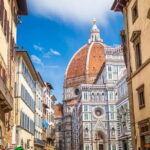
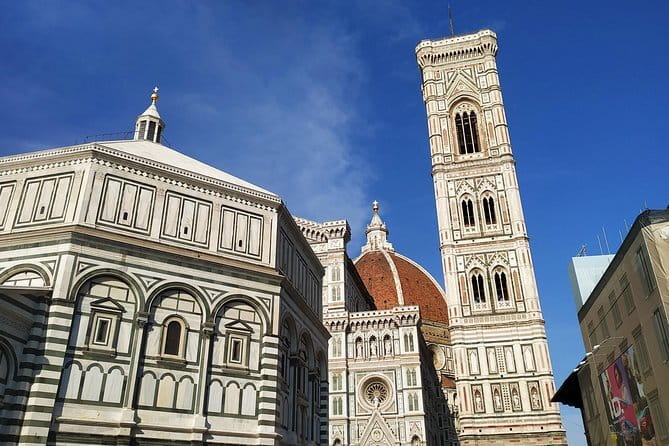
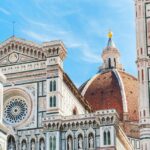
Next, you reach the Cathedral of Santa Maria del Fiore area—domes, bell tower, and the classic postcard skyline made from real stone and real angles.
This stop is framed around the exterior view of the cathedral complex. Brunelleschi’s dome is the star, but the surrounding architecture is the supporting cast: the Baptistery of St. John and Giotto’s Campanile. Even from outside, you’ll start to understand why Florence is so obsessed with proportion and design.
If you want inside-the-cathedral time, you’ll still need tickets on your own. On this tour, the value is that you’ll leave with a “map in your head.” When you’re standing in the Duomo square later, you’ll know what you’re seeing and why it looks the way it does.
Practical tip: the square gets crowded fast. If the group moves on, don’t panic. Take a moment, look for the dome line, and then follow your guide.
Santa Croce: Tombs, Frescoes, and a Church That’s Also a Timeline
One of the highlights of the route is Basilica di Santa Croce. This is the stop where the tour can feel more emotional and human. You’re in a Franciscan church known for Gothic architecture and famous for housing tombs of major figures—including Michelangelo, Galileo, and Machiavelli.
Santa Croce also gives you the art-and-culture angle that Florence does so well. The basilica features fresco work associated with big names like Giotto, plus an impressive marble façade.
This is another “no ticket on the tour” situation, so what you get depends on what you can access in the moment. Still, even a focused exterior-and-area stop here helps you understand why people make Santa Croce a priority.
If you like places where history is layered and you can feel the passage of time through the stones, this is where you’ll perk up.
Museo del Bargello: Sculpture Lovers, Start Planning Here
After Santa Croce, you head toward Museo del Bargello, an art museum housed in a former medieval palace that once served as town hall and prison. On this walk, it’s positioned as a quick but meaningful stop.
The Bargello’s big pull is Renaissance sculpture—work connected with artists like Donatello, Michelangelo, and Verrocchio—plus decorative arts such as ceramics, textiles, and weapons.
Even if you don’t enter today, your guide’s pointing makes the museum easier to love later. You’ll know what type of art you’re looking for and why the building itself fits the story.
Via de’ Tornabuoni: Florence’s Living Room and Fashion Street Energy
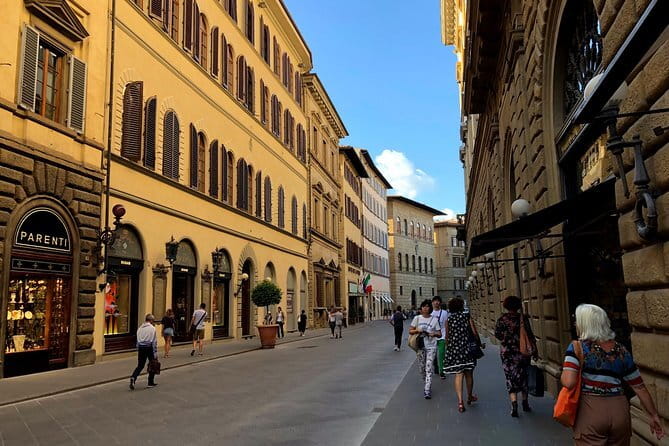
Then comes Via de’ Tornabuoni, an elegant street that connects major points in the center. This is where the tour gets real about how Florence evolved: noble palaces along the route, plus the modern twist of high-fashion and jewelry storefronts.
The street is often called the city’s living room, and the vibe backs it up. It’s a good contrast stop after the heavier stone of palaces and churches. You’ll notice historic architecture, then immediately see how luxury commerce now fills the space.
Even if shopping isn’t your thing, it’s worth walking slowly down this street once, just to see how Florence’s layers overlap.
Palazzo Pitti: Big Palace Energy and the Gardens Mention
Finally, you reach Palazzo Pitti, originally built for the wealthy Pitti family and later used as the residence of Tuscany’s ruling power and then the Italian royal family.
Even on a walking tour, Pitti gives you a “scale lesson.” It’s not a small patrician building—it’s a statement. Your guide also connects it to the museums and Boboli Gardens you may want to visit on a separate trip. Since entry tickets aren’t part of this tour, you’ll mostly get the exterior feel and the practical direction on where to go if you want to expand.
How the Earphones and Multilingual Audio Guide Work
This experience uses two layers of storytelling support: your professional tour leader in real time, plus multilingual audio contents created by an art historian. Earphones are provided, so even when you’re standing in a noisy square, you should still catch the key points.
If you’re sensitive to accents or speed, do this: put your earphones in right away and confirm you can hear at a comfortable volume before the walk gets going. Florence’s crowds can make it easy to drift. If you feel yourself losing the thread, it’s usually because you’re missing the timing and the audio moment—not because the story is wrong.
Also, the tour may be operated by a multi-lingual guide, depending on the group. The tour info says English is offered, but the actual delivery can vary—so it’s smart to be ready for a mix of language settings.
Price and Value: What $17.54 Actually Buys
At $17.54 per person, this tour is priced like a value-first option, and the inclusions support that. You’re getting:
- a professional tour leader
- earphones to hear the guide well
- multilingual audio created by an art historian
- lunch, with options like Florentine schiacciata or a charcuterie board (depending on what’s offered)
What you’re not paying for here is museum or church entry. That’s how the price stays low. In exchange, you get a fast, organized orientation through the center.
So the value depends on your goals:
- If you want a guided overview and then choose your own ticketed visits later, this price is a strong match.
- If you want to spend most of the time inside major museums today, you’ll likely still need to buy separate admissions.
Who Should Book This Florence Best Of Walk
I’d point you toward this tour if:
- you’re new to Florence and want a practical first pass
- you want a small-group experience with earphones
- you like your sightseeing organized, but not stuck in one single museum
- you need lunch handled for you while you keep moving
I’d suggest you skip it (or pair it with more targeted visits) if:
- you want long interior time at major sites on this exact day
- you prefer slow, stop-and-stare pacing with fewer locations
- you get easily frustrated by crowds and fast walking
If you’re bringing kids, the tour being described as family friendly is a real plus. Still, wear good shoes. Florence cobblestones have opinions.
Should You Book This Tour?
Yes, if you want a smart, price-friendly way to get your bearings and learn what’s worth prioritizing next. The combination of small-group size, earphones, and art historian audio makes it easier to follow the story without fighting the crowd noise.
Book it especially early in your trip. This kind of walk helps you return later with clearer questions and better instincts—so your paid museum time feels more rewarding, not more random. Just remember the tradeoff: many of the big names are seen from the outside, and you’ll need separate tickets for the interiors you truly want to experience.
You Might Also Enjoy



More Guided Tours in Florence
- The Best tour in Florence: Renaissance & Medici Tales – guided by a STORYTELLER
★ 5.0 · 12,316 reviews
More Tours in Florence
- The Best tour in Florence: Renaissance & Medici Tales – guided by a STORYTELLER
★ 5.0 · 12,316 reviews




More Tour Reviews in Florence
- Tuscany Day Trip from Florence: Siena, San Gimignano, Pisa and Lunch at a Winery
★ 5.0 · 21,634 reviews - The Best tour in Florence: Renaissance & Medici Tales – guided by a STORYTELLER
★ 5.0 · 12,316 reviews