REVIEW · FLORENCE
Florence: Artisanal Crafts and Workshops Guided Tour
Book on GetYourGuide →Operated by Martina Cappello · Bookable on GetYourGuide
Florence has a craft side most people miss. This 3-hour guided tour pulls you through working workshops for goldsmithing, leather, book arts, and perfume—plus iconic Florentine stops like Santa Maria Novella. The guide leading it, Martina Cappello, also keeps things personal, working with what you want to see as you go.
I especially like the way you connect the dots between materials and everyday culture: semi-precious stones and Florentine stone setting, leatherwork inside the Santa Croce complex, and perfume traditions tied to the Medici court. Another highlight for me is the mix of hands-on artistry with a real “you’re standing in the place where it happens” feel—no distant museum glass. The main drawback is practical: there’s a moderate amount of walking, and the workshop locations aren’t suitable for wheelchair users or people with mobility impairments.
In This Review
- Key Highlights You’ll Actually Care About
- Why This Craft Tour Feels Different Than Museum Florence
- Getting There: Piazza Repubblica and the 3-Hour Timing
- Stop 1: Goldsmithing and Semi-Precious Stones in Florence
- Stop 2: Leatherwork at Scuola del Cuoio (Inside Santa Croce)
- Stop 3: Santa Maria Novella, the Oldest Pharmacy Story
- Stop 4: Bookbinding and Perfumery Traditions in Florence
- Stop 5: Carving at Bottega d’Arte Maselli (Frames with Big Names)
- The Guide Factor: Why Martina Cappello’s Style Improves the Day
- What It Costs (And Why It’s Not Just Paying for Walking)
- Practical Tips So Your Visit Stays Pleasant
- Who Should Book This Tour
- Should You Book This Craft Tour?
- FAQ
- FAQ
- How long is the Florence Artisanal Crafts and Workshops Guided Tour?
- Where is the meeting point?
- What languages is the live guide available in?
- Is this a private group tour?
- What is included in the price?
- Are food and drinks allowed during the workshop visits?
- Is the tour suitable for wheelchair users or people with mobility impairments?
- Is photography allowed?
- Can I cancel for a full refund, and is pay later available?
Key Highlights You’ll Actually Care About
- Working Florentine workshops for goldsmithing, leather craft, bookbinding, and more—seeing artisans at work
- Santa Maria Novella pharmacy (founded in 1221) and the perfume story tied to Renato Bianco and Catherine de’ Medici
- Scuola del Cuoio in the Santa Croce complex for top-tier leatherwork
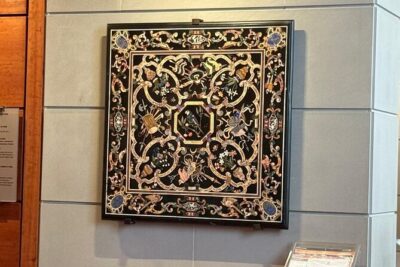
- Lastrucci family workshop and the Florentine commesso technique—a method only a small number of artisans worldwide still make
- Bottega d’Arte Maselli for carving and picture-frame craftsmanship connected to major Renaissance artists
- A smart, flexible guide approach led by Martina Cappello, with a comfortable pace
Why This Craft Tour Feels Different Than Museum Florence
Florence can be heavy on art viewing: paintings, sculptures, church ceilings, repeat. This tour flips the angle. You spend the time watching craftspeople make objects with the same patient hands that have shaped Florentine style for generations.
That matters because you notice different things when you’re close to the process. You start paying attention to materials (gold, stones, leather), tools, and how craft traditions survive through training and repetition. If you care about how something is made—not just how it looks—this kind of tour is a perfect match.
It also helps that it’s structured around a set of famous workshop names, not vague “local art stores.” You’ll see specific places tied to gold and gems, leather at Scuola del Cuoio, the historic Santa Maria Novella pharmacy, and Bottega d’Arte Maselli for carving.
You can also read our reviews of more guided tours in Florence
- The Best tour in Florence: Renaissance & Medici Tales – guided by a STORYTELLER
★ 5.0 · 12,316 reviews
Getting There: Piazza Repubblica and the 3-Hour Timing
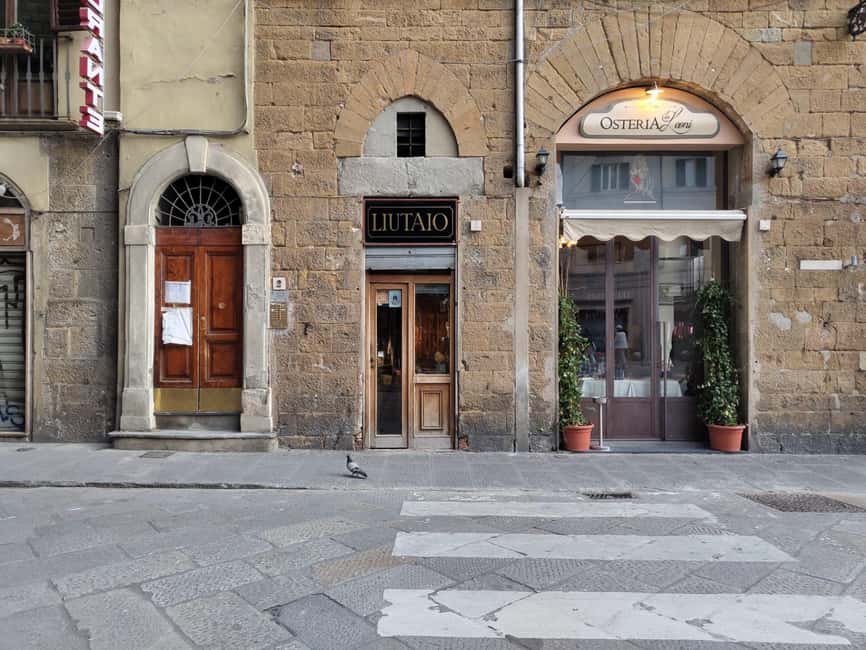
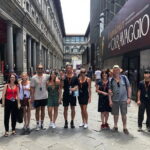
The meeting point is Piazza Repubblica, next to the obelisk. If you’re staying centrally, you’ll also have the convenience of hotel pickup and drop-off included.
The tour runs 3 hours, which is a sweet spot for Florence. It’s long enough to visit multiple specialized stops, but short enough that you won’t feel dragged across the city all day. The flip side: workshop time can involve waiting moments (people move between rooms, artisans keep working), so you’ll want to keep your expectations realistic. This is about seeing and learning, not sprinting for a checklist photo.
One more practical note: you’ll cover a moderate amount of walking, and the workshop locations are not set up for wheelchair access. If you have mobility limits, you’ll likely want a different style of tour.
Stop 1: Goldsmithing and Semi-Precious Stones in Florence
The tour kicks off with Florentine metalwork and gem craft, including visits tied to Arlo Haisek’s small workshop and the Lastrucci family workshop inside the ancient Spedale di San Francesco.
What you’re looking for here is the craft mindset. Goldsmithing in Florence isn’t just decorative; it has always been part of how power, wealth, and identity show up in objects—think jewelry, stone settings, and the kind of Renaissance elegance that turned materials into status.
A key detail is the Lastrucci connection to the Florentine commesso technique. The tour highlights that this is one of the very few places in the world where works are made using that method. Seeing a workshop that still practices a specialized technique helps you understand why Florence’s craft reputation survived so long: it wasn’t just one fancy style. It was repeatable skill, passed along and protected.
Tip for your viewing time: ask the guide what to watch for. For example, pay attention to how artisans handle stones and metal together. Even if you don’t speak Italian, you’ll usually catch the logic behind the steps when you’re watching the work process.
Stop 2: Leatherwork at Scuola del Cuoio (Inside Santa Croce)
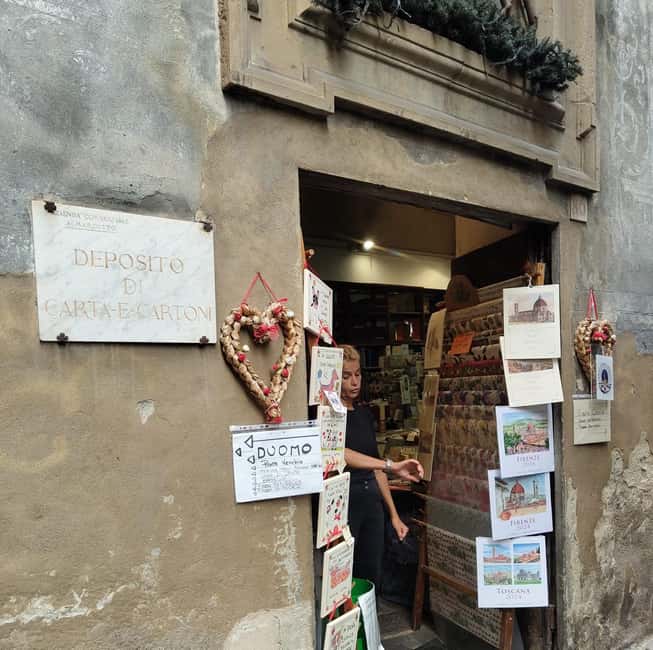
Next up is the Scuola del Cuoio inside the Santa Croce complex. Leatherwork is a Florence signature, and this is one of the best chances you’ll get to see it where it’s taught and made.
This stop is valuable for two reasons. First, leather craft is visual and tactile even from a distance, so you can actually follow what’s going on. Second, Scuola del Cuoio’s location ties the art to the Santa Croce setting—Florence’s workshop world is never far from its monumental sights.
The tour framing also points you toward related leather spaces like Il Bisonte and Stefano Bemer, so you can compare styles and branding without making it a shopping mission. Just know this: workshop rules apply, and food and drinks are not allowed inside the workshops. If you need a snack plan, build it around the outside streets and not the interior spaces.
Also, photography usually is allowed, but always follow the guide’s cues when someone is working with fine materials.
Stop 3: Santa Maria Novella, the Oldest Pharmacy Story
Then you shift from hands-on object craft into the world of scents and formulation at Santa Maria Novella, described as the oldest pharmacy in the world, founded in 1221 by Dominican friars.
This is one of those stops that’s more than just a “pretty place to look.” The tour connects the pharmacy to the birth of an apothecary tradition, and it adds a specific perfume detail: master perfumer Renato Bianco left from here for the French court with the fragrance Aqua della Regina, made as a nod to the elegance of Florence.
If you’re the kind of person who thinks perfume is all marketing, this stop gives you a reality check. You see how craft and reputation were built around ingredients, technique, and training. It’s old-world knowledge with modern purchasing power.
After the pharmacy visit, the tour includes time at Aquaflor, where you can purchase room fragrances. That’s a smart souvenir choice because it’s tied to the place you just learned about, and it’s not another generic trinket.
You can also read our reviews of more tours and experiences in Florence
- Cooking Class and Lunch at a Tuscan Farmhouse with Local Market Tour from Florence
★ 5.0 · 4,831 reviews



Stop 4: Bookbinding and Perfumery Traditions in Florence
Between the major anchor sites, the tour also focuses on bookbinding and perfumery as living arts in Florence. The practical value of this is that it rounds out the craft theme beyond objects you can immediately name as art.
Bookbinding matters because it’s part of how knowledge traveled: pages are only useful if they’re built to last. Perfumery matters because it’s craft built on repeated skill, not just a one-off invention. When you watch artisans in multiple disciplines during one 3-hour window, you start to see a common thread: patience, precision, and training passed through generations.
The guide also tends to connect the workshop scenes to everyday Florentine life, which helps you avoid the feeling of being rushed through random rooms. If you like context—why these crafts mattered, and how they still fit modern Florence—this pacing works well.
Stop 5: Carving at Bottega d’Arte Maselli (Frames with Big Names)
Finally, the tour lands on carving craft at Bottega d’Arte Maselli, known for wonderful frames.
This stop hits a different note than the jewelry and leatherwork. Carving is slower and more sculptural, and frames are one of those crafts that sit at the meeting point of utility and beauty. They protect art, but they also shape how art gets seen.
The tour description notes that Maselli’s craftsmen have had the honor of framing works by Da Vinci and Rosso Fiorentino. Even if you’ve never heard of this workshop before, that detail helps you understand the level of trust behind the craft reputation.
If you’re into photography, frames are also great subjects because the craftsmanship shows up in the small surface details. And if you’re shopping, this is where a lot of people start thinking about what a real craft object costs. You might not buy, but it makes you appreciate what you’re seeing.
The Guide Factor: Why Martina Cappello’s Style Improves the Day
One of the most consistently praised parts of this experience is the guide approach. Martina Cappello is described as asking about interests before you meet, then tailoring the explanation as you move workshop to workshop.
That matters because these crafts can be technical. If the guide knows whether you care more about stones, leather, scent history, or carving, you get a better explanation. You also get a more comfortable pace. In the feedback, people appreciated how the tour stayed relaxed while still packing in the stops.
You’ll also like the guide’s balance between history and today’s artisan life. You don’t just hear dates. You learn what craft looks like now—who’s doing the work, what still gets carried forward, and why the tradition remains practical instead of stuck in the past.
What It Costs (And Why It’s Not Just Paying for Walking)
The price is $116 per person for about 3 hours, including hotel pickup and drop-off, a guided tour, and admission for the Scuola del Cuoio and the Lastrucci family workshop, plus a visit to Santa Maria Novella.
For Florence, that’s a fair value when you consider two things:
1) You’re not only visiting sights. You’re getting access to working craft spaces where admission rules and workshop access matter.
2) A good guide saves time and prevents you from wandering into places without context. With crafts, context is the difference between watching something cool and understanding why it’s special.
If you were to self-guide, you’d still be able to hit Santa Maria Novella and browse around town. But you’d likely miss the stitched-together explanation of multiple disciplines in one tight visit.
Practical Tips So Your Visit Stays Pleasant
A few details can make or break a workshop tour like this.
- Wear comfortable walking shoes. Workshop entrances and streets around the route are not the place for blisters.
- Plan for no food or drinks inside workshops. You’ll likely want water outside and eat after.
- Expect a comfortable, guided pace, not a rushed sprint.
- Photography is usually allowed, but follow instructions in the workshop rooms.
And if you’re the kind of person who hates shopping pressure, you can still enjoy this tour. You’re not required to buy anything. The stops are built for learning and viewing, and purchases (like room fragrances) are optional.
Who Should Book This Tour
This is a great fit if you:
- Like craftsmanship and want to see artisans at work
- Want more than museum tickets and church art
- Care about how Florence connects materials—metal, leather, stones, scent, and carving—to daily culture
- Prefer a guided route with a private group feel
It might not be your best choice if you:
- Need wheelchair-friendly access or have significant mobility impairments
- Get worn out by moderate walking and workshop transitions
- Want a food-focused tour (food and drinks aren’t part of the experience inside the workshops)
Should You Book This Craft Tour?
If you’re in Florence for a short stay and you want one experience that feels both authentic and specific, I’d say this tour is an easy yes. The strongest part is the workshop access plus the guide’s ability to explain what you’re seeing across multiple crafts, from stones to leather to fragrance to carved frames.
Book it when you want a break from only-looking at finished art. This day gives you a different kind of souvenir: understanding.
If mobility is a concern for you, pause and reconsider. The tour isn’t designed for wheelchair users, and the workshop locations are historic.
FAQ
FAQ
How long is the Florence Artisanal Crafts and Workshops Guided Tour?
The tour lasts 3 hours.
Where is the meeting point?
Meet at PIAZZA REPUBBLICA – NEXT TO THE OBELISK.
What languages is the live guide available in?
The live tour guide speaks Spanish and English.
Is this a private group tour?
Yes, it’s listed as a private group tour.
What is included in the price?
It includes a guided tour of historic Florentine workshops, admission to the Scuola del Cuoio and Lastrucci family workshop, a visit to Santa Maria Novella, and hotel pickup and drop-off.
Are food and drinks allowed during the workshop visits?
No. Food and drinks are not allowed inside the workshops.
Is the tour suitable for wheelchair users or people with mobility impairments?
No. It is not suitable for wheelchair users or those with mobility impairments due to the historic workshop locations.
Is photography allowed?
Photography usually is allowed.
Can I cancel for a full refund, and is pay later available?
Yes. There is free cancellation up to 24 hours in advance for a full refund, and you can reserve now & pay later.
You Might Also Enjoy
More Guided Tours in Florence
- The Best tour in Florence: Renaissance & Medici Tales – guided by a STORYTELLER
★ 5.0 · 12,316 reviews
More Tours in Florence
- The Best tour in Florence: Renaissance & Medici Tales – guided by a STORYTELLER
★ 5.0 · 12,316 reviews



More Tour Reviews in Florence
- Tuscany Day Trip from Florence: Siena, San Gimignano, Pisa and Lunch at a Winery
★ 5.0 · 21,634 reviews - The Best tour in Florence: Renaissance & Medici Tales – guided by a STORYTELLER
★ 5.0 · 12,316 reviews