REVIEW · FLORENCE
Art and History in Florence: Small Group Walking Tour
Book on Viator →Operated by FLORENCE TOURS - ENJOY BIKING · Bookable on Viator
Florence history moves fast on foot. In about 1 hour 35 minutes, this small-group walking tour strings together the city’s power plays and sacred sights, with an audio system so you don’t miss the storyline.
I especially like the value-packed route—major stops are close enough that you keep momentum instead of spending your day in transit. The one thing to watch: museum and church entrances are mostly not included, so you’ll still need separate tickets if you want to go beyond quick exterior looks.
In This Review
- Key highlights I’d plan around
- How This 1-Hour-35-Minute Walk Gets You Oriented Fast
- Meeting Point and What the Format Means for Your Day
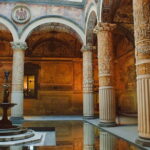
- Walking the Medici Power Trail: Palazzo Medici Riccardi
- San Lorenzo and Piazza Signatures: Churches and Public Space
- The Cathedral Area (Santa Maria del Fiore): Why One Stop Makes the Whole City Click
- Museo Casa di Dante: A Small Stop With Big Cultural Weight
- Palazzo Vecchio and Piazza Signoria: Where Art Meets Governance
- Uffizi Views at Le Gallerie Degli Uffizi: Seeing Without Buying
- Ponte Vecchio: The Icon, With the Backstory
- Palazzo Pitti and Boboli Gardens: The Medici Afterglow
- The Role of the Guide: When Storytelling Makes Stone Speak
- Value Check: What $30.01 Buys in Florence
- What You Should Do Next After the Tour
- Who This Tour Fits Best
- Should You Book This Art and History Walking Tour?
- FAQ
- How long is the Florence art and history walking tour?
- What is the group size?
- What languages are available?
- Are museum and church entrances included?
- Where does the tour meet?
- Can I cancel for a refund?
Key highlights I’d plan around
- Small group (max 50): easier pacing and better chances to hear your guide clearly.
- Audio system included: commentary stays on track even when you’re between stops.
- Medici-to-grand-dukes story: palaces and squares explain how power shaped Florence.
- Classic photo hits, but with context: Ponte Vecchio and Piazza della Signoria make more sense when explained.
- Duomo-area flexibility: your guide may be able to adjust if lines are short.
- Pitti + Boboli stop: you get a strong “next day itinerary” direction for deeper exploring.
How This 1-Hour-35-Minute Walk Gets You Oriented Fast
Florence can feel like it’s trying to outshine you. One minute you’re admiring stonework, the next you’re lost in street names and trying to remember what’s a palace versus a church versus a government building. This tour is built for that exact problem: you get a tight, timed loop of the city’s most recognizable landmarks without pretending you can “do Florence” in a single afternoon.
The small-group size matters more than you’d think. With fewer people, the guide can keep the walk moving and still stop long enough to explain what you’re seeing. I also like that it’s only about 1 hour 35 minutes, which means you can actually keep your day flexible afterward—book a museum visit, grab lunch, or wander toward your own interests while the history is fresh in your head.
You can also read our reviews of more walking tours in Florence
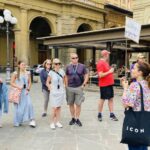
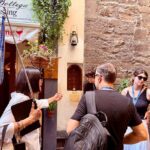
Meeting Point and What the Format Means for Your Day
You meet at Florence Tours Enjoy Biking at Via Camillo Cavour, 21R, 50129 Firenze FI. The tour ends back at the same meeting point, which is handy when you’re figuring out dinner plans or connecting to other tickets later.
A couple of practical points that help you enjoy the walk:
- You’ll get confirmation at booking time, so you can plan around it without waiting.
- It’s near public transportation, which makes it easier if you’re bouncing between sights.
- You’ll use an audioguide system, so your experience doesn’t depend entirely on you being perfectly positioned in front of the group.
Because this is an English-language tour, you’ll get the context in a way that makes the architecture feel readable, not just decorative. And since the itinerary is structured around short stops (most are about 10 minutes), it’s ideal if you like “highlights with meaning,” not hours of museum browsing.
Walking the Medici Power Trail: Palazzo Medici Riccardi
The tour kicks off at Palazzo Medici Riccardi, the kind of place where you can feel the political ambition in the stone. Even if you only see parts from outside or at limited viewpoints, this stop works because it sets the theme: Florence wasn’t just artists and saints—it was families running the show, and they did it through buildings, patronage, and control of public spaces.
Admission is not included here, so don’t plan on a deep interior visit during the scheduled stop. Instead, treat this as your “what to look for” moment. As you move on, you’ll start noticing patterns—where influence is placed, how wealth announces itself, and why certain neighborhoods and institutions rise to the top.
San Lorenzo and Piazza Signatures: Churches and Public Space
Next up is San Lorenzo, a stop marked as free for entry. This is a smart pacing choice: you get a sacred landmark without it turning into another paid ticket fight right away. The guide’s explanation (the centuries-long context) helps you connect why the Medici world and Florence’s religious life were intertwined.
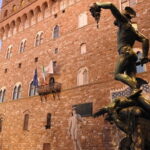
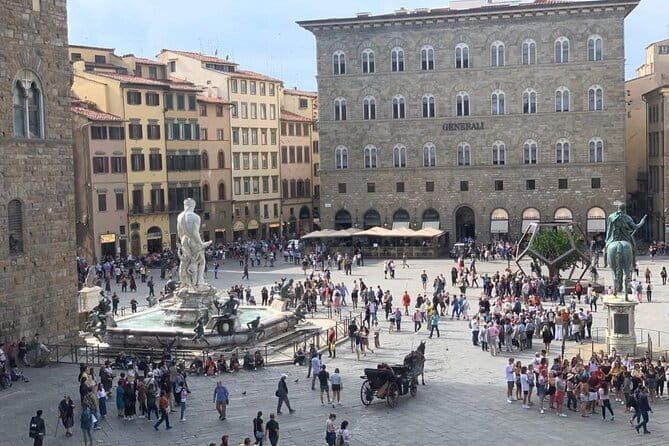
Then you roll into Piazza della Signoria, also free. This square is one of Florence’s greatest open-air storytelling machines. Even if you’re there for photos, the guide helps you see why the architecture and statuary matter—this is the place where “politics becomes visible,” where public art and power share the same frame.
The main consideration here is time. You’re allotted short moments at each location, so you’ll want to pick what you want most:
- Want photos and orientation? Great, you’ll get it.
- Want a slow sit-down in a church? Plan that separately after the tour.
The Cathedral Area (Santa Maria del Fiore): Why One Stop Makes the Whole City Click
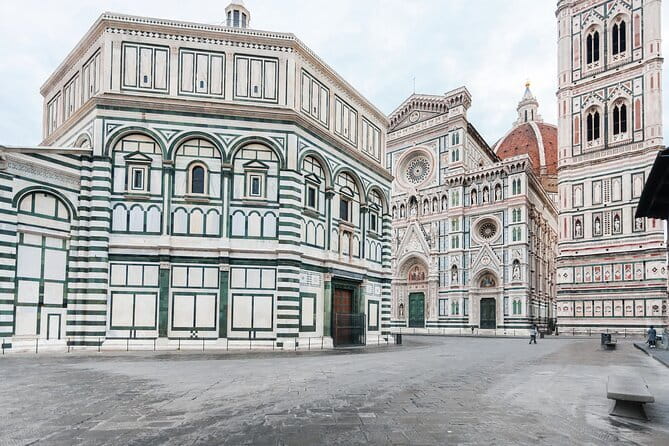
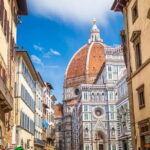
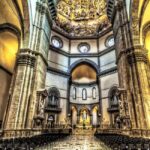
The stop at Cathedral of Santa Maria del Fiore (Duomo area) is not included for admission. That means your scheduled time is best for exterior views and big-picture orientation—plus any possible access your guide can manage if conditions allow.
One of the most helpful things about tours like this is how they prepare you for the city’s biggest landmark. The Duomo doesn’t just dominate Florence visually; it anchors the religious and civic identity of the city. If your guide can help you catch the right moment—like timing around lines or choosing the best viewing angles—you’ll benefit even if you don’t go inside every paid component.
If you’re planning ahead for the cathedral complex, consider doing that as a separate commitment after the tour. The walking route here helps you understand what parts are worth prioritizing once you’re standing there with tickets in hand.
You can also read our reviews of more historical tours in Florence




Museo Casa di Dante: A Small Stop With Big Cultural Weight

Museo Casa di Dante is another not-included admission stop. But even without paying for entry during the tour, this stop can still pay off, because it adds a cultural layer: Florence isn’t only about rulers—it’s also about writers, language, and ideas that shaped Europe.
This is the kind of stop that makes you think differently when you later see Dante references around town. The guide’s centuries-spanning commentary helps you connect the building and the name to Florence’s role as a center of literature and identity.
Because it’s short, don’t expect a full museum experience in that time window. Instead, treat it like a preview. If the subject grabs you, you’ll be able to return with a sharper sense of what you want to focus on.
Palazzo Vecchio and Piazza Signoria: Where Art Meets Governance

Palazzo Vecchio is next, and it’s not included for admission. This is still a strong stop because Palazzo Vecchio is basically Florence’s “politics made architectural” project. It’s the kind of building that helps you understand why the city’s public art and public spaces matter: power didn’t sit behind closed doors. It showed up in the way buildings faced the people.
Right after that comes Piazza della Signoria again as the public stage. The guide’s storytelling is what turns this into more than a postcard stop. With the right explanation, you start noticing how the square works as a symbol: it’s where you can literally trace civic pride and authority through art and stone.
Uffizi Views at Le Gallerie Degli Uffizi: Seeing Without Buying
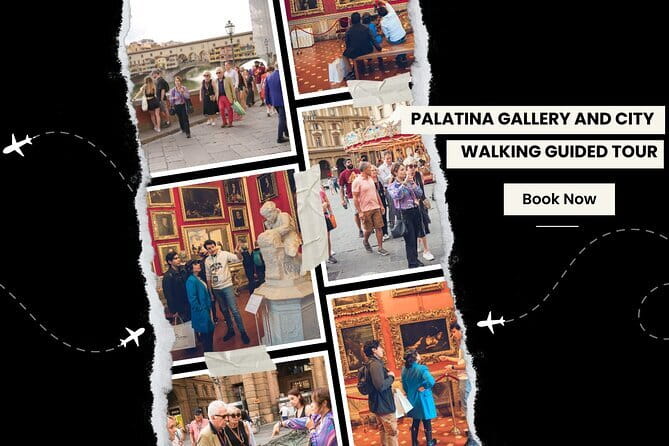
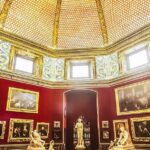
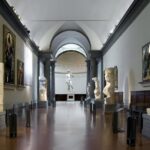
The tour includes Le Gallerie Degli Uffizi, but admission is not included. In other words, you’ll likely get the exterior experience and a sense of where the Uffizi fits into Florence’s art engine, rather than a full gallery visit.
This is actually a useful way to handle the Uffizi if you’re on a time budget. You get the context—why this area matters—without spending your whole day inside. Afterward, you can decide whether you want to commit to an official museum visit when you have the time for slower looking.
The main thing to watch is expectation. If you’re hoping to “do the Uffizi” during this tour, you’ll likely feel shorted because the tour is structured as a walking highlights experience, not a paid gallery entry program.
Ponte Vecchio: The Icon, With the Backstory
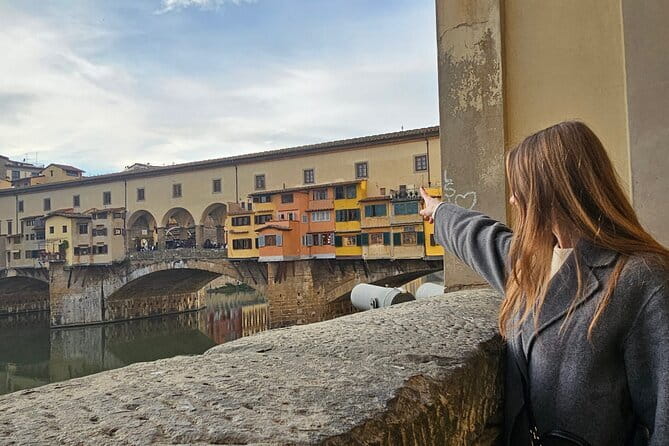
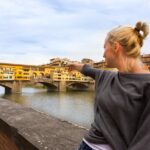
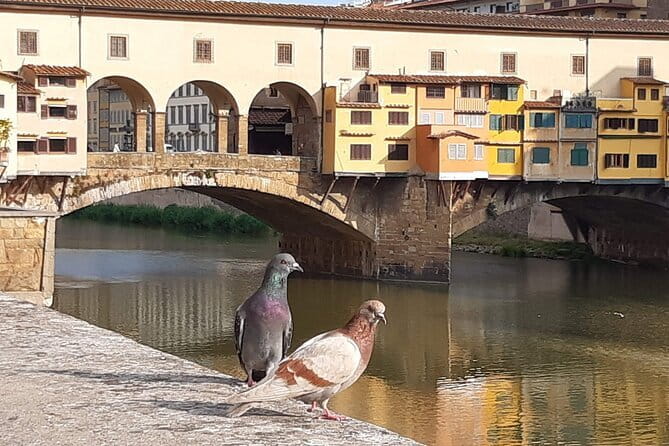
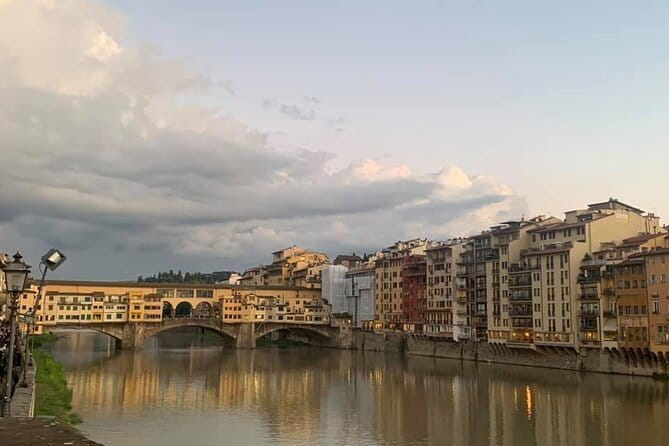
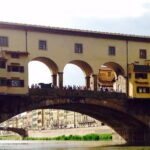
Next comes Ponte Vecchio, marked as free. This is your big scenic payoff: the bridge is instantly recognizable, and it’s one of the best places in Florence to feel how the city is built around beauty and practical life at the same time.
The value here is the guide’s context. Without explanation, Ponte Vecchio is just a pretty bridge. With history, it becomes an example of how commerce, craftsmanship, and power all intersect—especially during the eras when Florence’s ruling families turned cultural identity into something you could walk through.
Palazzo Pitti and Boboli Gardens: The Medici Afterglow
The tour finishes at Palazzo Pitti, with a longer 15-minute stop. Admission is not included. This location is a big deal because it shifts the story from “Medici rise” to “Medici rule.” The palace was built by Luca Pitti as a wealth-and-power statement aimed at rivals. Later, it was bought in 1549 by Eleanor of Toledo, wife of Cosimo I, and the estate’s grandeur expanded further—along with the Boboli Gardens behind it.
This stop also connects the dots on why the Medici became even more dominant. After Cosimo I moved his official seat here, Palazzo Pitti became a central power base of the grand dukes. Even if you don’t go inside during the scheduled visit, you leave with a clear sense of what the palace symbolizes: authority with a showpiece address.
Boboli Gardens are referenced as part of the stop as well. Since admission isn’t included, you won’t be doing the full garden walk under tour time constraints, but you’ll get enough context to understand why people plan a separate half-day there.
The Role of the Guide: When Storytelling Makes Stone Speak
The biggest pattern in the tour’s success is the guides. When the guide is strong, the city stops being a pile of landmarks and becomes a timeline.
Names that stand out from the tour’s history of performances include Francesco, Julia, and Giovanni—and you can feel the difference in style:
- Some guides bring an easy humor plus clear structure, keeping the group moving without losing the story.
- Others add extra flavor from real-world backgrounds. One guide is described with a chef connection, which fits Florence because food, patronage, and culture were never separate topics there.
- A few guides are noted for adjusting the route based on timing, like trying to get into the Duomo when lines are shorter.
A practical tip: during the walk, ask one or two questions early. Good guides know where to steer the conversation, and it often makes the later stops land harder for you.
If you can, it’s worth aiming for a guide with a track record for pacing and clear English. People specifically recommended guides such as Francesco and Giovanni for storytelling and ease of understanding.
Value Check: What $30.01 Buys in Florence
At $30.01 per person for about 1 hour 35 minutes, the pricing makes sense if you treat the tour like an orientation engine, not a substitute for museum tickets. Entrance fees aren’t included for many stops, so you’re paying mainly for the guide, the route planning, and the audio support.
Here’s how it becomes good value:
- You get a dense hit of Florence’s top names in one go. That alone can save you time and confusion.
- The narration adds meaning to buildings you might otherwise treat as scenery.
- The route ends where you started, which makes it easier to pivot to the rest of your day.
If your schedule is tight, you can use the tour to decide what to buy next. If your schedule is relaxed, you can still use it as a “first pass” that makes a later museum visit easier—because you’ll understand what you’re looking at.
What You Should Do Next After the Tour
This is the part people often skip, and it’s where you get your best payoff. Since many admissions are not included, the tour should serve as your planning tool.
After you finish, consider one of these moves:
- Book one or two paid museum/church visits that match what caught your attention most (Duomo-area parts, Uffizi, or a palace interior).
- Use your new orientation to pick a neighborhood to wander without feeling like you’re guessing.
- If you’re into gardens, treat Boboli as your next big destination—the tour gives you the “why,” then you handle the “how long.”
Also: wear comfortable shoes. Florence streets don’t care if you packed light. Even a short walk adds up.
Who This Tour Fits Best
This tour is a great match if you:
- Want a quick orientation to Florence’s main attractions without spending a full day on buses.
- Prefer guided storytelling over reading every plaque on your own.
- Like a structured route but still want time afterward for your own choices.
It’s less ideal if you want a full museum day packed with paid entries at every stop. This is a walking highlights experience, not an all-access museum pass.
Should You Book This Art and History Walking Tour?
I’d book it if you want to get your bearings fast and understand why Florence looks the way it does. The combination of a compact route, audio support, and a guide-led history thread makes the city feel less random and more connected—Medici ambition, civic space, religious power, and art all in one continuous walk.
You should probably skip it only if you already know you want deep, time-consuming interior experiences and you’d rather spend that money and time on museum tickets first.
If you do book, show up ready to walk, ask your guide a question early, and then plan your next visits based on what grabbed you most—especially if you’re tempted by the Uffizi or the palace-and-gardens combo at Pitti.
FAQ
How long is the Florence art and history walking tour?
It lasts about 1 hour 35 minutes.
What is the group size?
This activity has a maximum of 50 travelers.
What languages are available?
The tour is offered in English.
Are museum and church entrances included?
No. Entrance to museums or churches is not included for many stops (some stops are listed as free).
Where does the tour meet?
The meeting point is Florence Tours Enjoy Biking, Via Camillo Cavour, 21R, 50129 Firenze FI, Italy.
Can I cancel for a refund?
Yes. You can cancel up to 24 hours in advance for a full refund.
You Might Also Enjoy

More Walking Tours in Florence
More Tours in Florence
- The Best tour in Florence: Renaissance & Medici Tales – guided by a STORYTELLER
★ 5.0 · 12,316 reviews




More Tour Reviews in Florence
- Tuscany Day Trip from Florence: Siena, San Gimignano, Pisa and Lunch at a Winery
★ 5.0 · 21,634 reviews - The Best tour in Florence: Renaissance & Medici Tales – guided by a STORYTELLER
★ 5.0 · 12,316 reviews