REVIEW · FLORENCE
2-Hour Private Walking Tour with Local Guides in Florence
Book on Viator →Operated by Local Guides Tour - Vanessa Tonarelli · Bookable on Viator
Florence rewards people who slow down. In just 2 hours, this private walk helps you get your bearings fast and see the key places in a way that actually makes sense. I love that the route mixes the big icons with quieter stops, and I also love the pacing: it stays flat and walkable while still feeling like a full introduction to the city. One consideration: it’s a real walking tour (about 2 miles total), so if mobility is an issue you’ll want support.
A huge plus is the guide. Vanessa Tonarelli has the kind of calm, friendly presence that keeps the walk moving and makes the landmarks easier to remember. I also like that you get headsets, so you can hear explanations clearly while you’re walking through busy streets. The one drawback to plan around is time at major sights is brief, so this isn’t a substitute for museum tickets.
You’ll finish in the right area for more wandering. The tour ends near Piazza di San Giovanni, which makes it easy to keep exploring on your own without backtracking. If you want a quick, high-value start to a Florence trip—especially if it’s your first time—this format is hard to beat.
In This Review
- Key things to know before you go
- Getting your bearings fast: how this 2-hour Florence format works
- Piazza della Signoria: Florence’s open-air museum in street level context
- Uffizi area and Vasari Corridor viewpoints: learning the city’s power map
- Ponte Vecchio: the icon bridge and the goldsmith storefronts
- Church of Saint Felicita: an older stop beyond the river
- Palazzo Pitti area: Medici to royal residence, with one key trade-off
- Piazza Santo Spirito and Ponte Santa Trinita: local life plus a Michelangelo photo moment
- Piazza della Repubblica and the Duomo: seeing the religious center from the street
- Headsets, private group, and pacing: where the value really comes from
- Small logistics that matter in Florence
- What you’ll likely love (based on how this walk is structured)
- Who should book this tour, and who should consider another option
- Should you book this Florence private walking tour?
- FAQ
- How long is the Florence private walking tour?
- Where does the tour start and end?
- Is the tour offered in English?
- Is this a private tour?
- What’s included in the price?
- What isn’t included?
- How much walking is involved?
- Is the tour accessible for people with motor problems?
- How does confirmation work after booking?
- What is the cancellation policy?
Key things to know before you go

- Private pace with local guide: only your group, guided by Vanessa Tonarelli in English
- Headsets included: easier listening while moving through streets and squares
- Big icons plus older churches: Ponte Vecchio, Duomo exterior, and Church of Saint Felicita
- Two miles, mostly flat: practical for most people, not ideal for serious mobility limits without support
- Shopping and photo moments: goldsmith storefronts and a planned stop near Ponte Santa Trinita
- No museum-ticket burden: you get views and context, while some admissions aren’t included
Getting your bearings fast: how this 2-hour Florence format works
This tour is built for orientation. Florence has so many “wow” moments that it’s easy to see a lot and remember little. Here, the walk is timed to hit major anchors—then it gives you just enough context to connect them.
The route is also designed to feel logical. You start in the political center at Piazza della Signoria, move across the Arno via Ponte Vecchio, then continue through areas tied to Medici power and everyday Florentine life. By the time you reach the Duomo area, you’ll understand why these places sit where they do and how the city’s story changes from one neighborhood to the next.
Because it’s private, you’re not stuck watching someone else’s slow pace. Your guide can adjust the flow based on what you’re most interested in—whether that’s architecture, family power in Florence, street scenes, or quick photo stops.
You can also read our reviews of more walking tours in Florence
Piazza della Signoria: Florence’s open-air museum in street level context
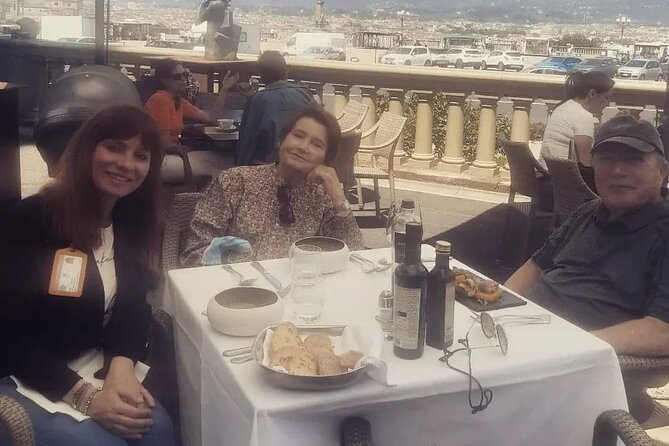
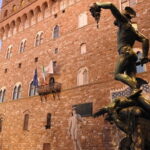
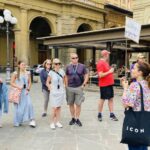
Your walk begins at Piazza della Signoria, the political heart of Florence. This is the kind of square where the buildings and statues don’t feel like “background”—they’re part of the city’s decision-making history, all in one visible layer.
From here, you’re set up to understand what comes next. This area connects to the court of the Uffizi—so even if you’re not entering a museum on this stop, you’ll see how the museum world fits into the broader city layout. It’s also the right start because it’s visually strong and easy to meet at.
A small time note: the stop is short, so think of it as orientation with emphasis on what you should look for next. If you enjoy learning what you’re seeing before you see it, you’ll get a lot out of this first segment.
Uffizi area and Vasari Corridor viewpoints: learning the city’s power map
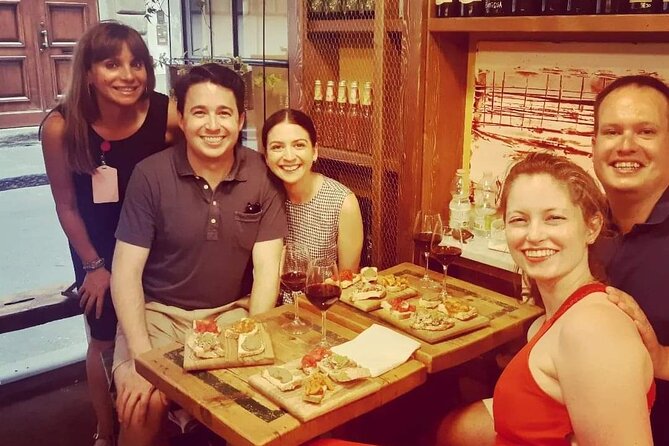
The tour includes passing by the Uffizi Gallery area and the Vasari Corridor connection. Even without museum entry included, these stops matter because they explain Florence’s layout as a system, not random pretty streets.
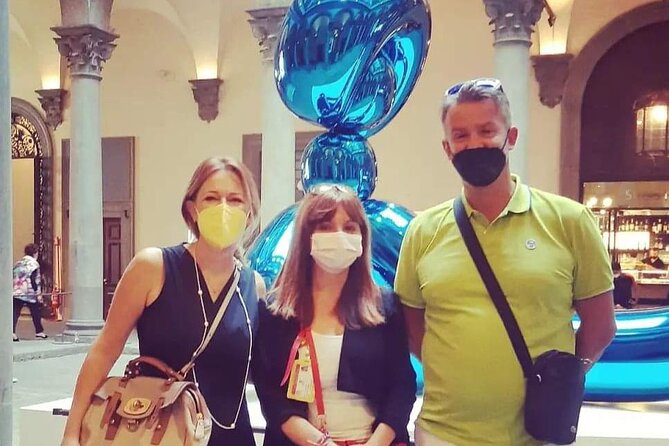
You’ll also pass locations like Strozzi Palace. Those names aren’t just impressive—they signal who mattered, where they lived, and how buildings related to one another across the city. That’s the kind of detail that turns a first-time Florence walk from scenic to memorable.
If you’ve ever felt like Florence is all art and no structure, this segment helps fix that. You start seeing patterns: corridors, palaces, and river crossings as the city’s “infrastructure” for power and movement.
Ponte Vecchio: the icon bridge and the goldsmith storefronts
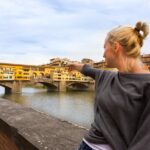
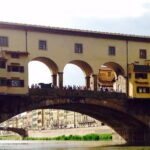
Then you hit Ponte Vecchio, Florence’s icon. The tour focuses on the bridge itself and its famous role as the only bridge in Florence to have withstood World War II. That detail gives you a sense of continuity—something you can feel when you’re standing on the bridge.
Today, Ponte Vecchio is also a shopping zone, home to prestigious goldsmith stores. Even if you don’t plan to buy jewelry, it’s worth walking through the shopfront atmosphere. It’s one of those places where the city’s identity shows up in storefront choices, not just museums.
You’ll also get a sense of the bridge’s position in the city. It’s not only a postcard stop; it’s a crossing point that connects neighborhoods and changes the vibe on the other side of the Arno.
Church of Saint Felicita: an older stop beyond the river
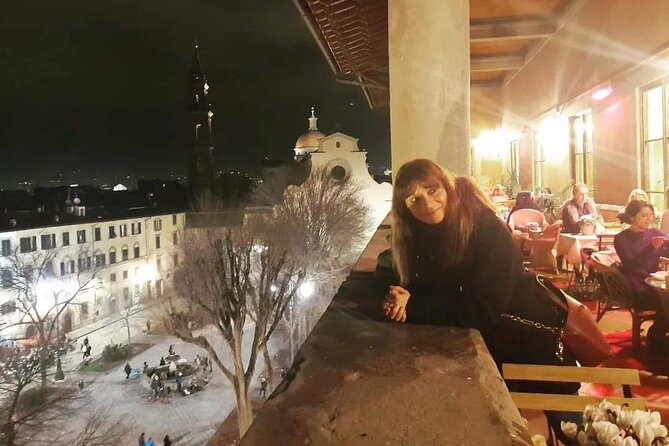
One of the most interesting parts of this tour is the Church of Santa Felicita stop. This church is presented as one of Florence’s oldest in the portion beyond the Arno that’s crossed by the Vasari Corridor.
That location detail matters. It helps you understand why some buildings feel tied to elite movement and why others feel tied to local daily life. The tour’s approach here is smart: it keeps the focus on a specific place with a clear geographic and historical connection, instead of trying to cover everything.
The time is brief, so treat it as a quiet pause with context. If you like churches but don’t want a full church-hopping day, this is a good balance.
You can also read our reviews of more private tours in Florence




Palazzo Pitti area: Medici to royal residence, with one key trade-off
You’ll reach Palazzo Pitti, introduced as the last residence of the Medici family, then of their successors, and later the Italian royal family. That’s a sweeping arc of power, and it explains why Pitti matters so much in Florence.
You’ll stand in the majestic square where Pitti sits and get the viewpoint context that helps you appreciate the building’s scale. But here’s the practical catch: the palace museum admission isn’t included.
That trade-off is worth understanding. If you love museums and want to go inside, you’ll likely need a separate ticket plan. But if you’re using this walk as a “first Florence chapter,” the stop gives you enough to decide later if you want to commit time and money to the museum.
Piazza Santo Spirito and Ponte Santa Trinita: local life plus a Michelangelo photo moment
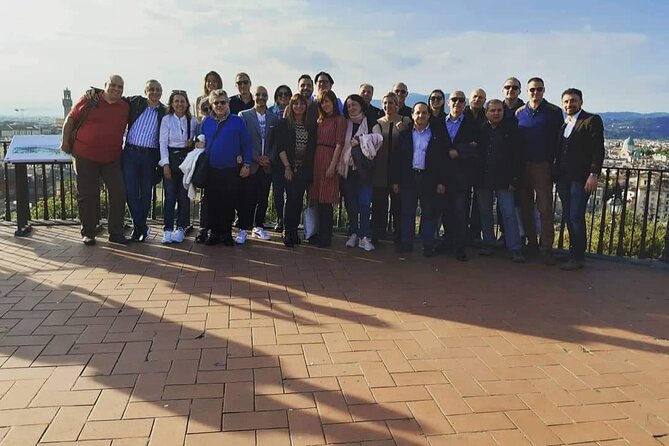
After Pitti, the tour shifts in tone. Piazza Santo Spirito is framed as the heart of Florentine city life, and it’s an ideal place to notice daily habits.
You get a little breathing space here. The tour explicitly notes time to grab a drink or ice cream if you want. I like this kind of pause on a city orientation walk because it breaks up the architecture focus. You’ll also see that Florence is not only art and monuments—it’s people living and meeting in public squares.
Then you move to Ponte Santa Trinita, described as the bridge designed by Michelangelo. This stop is short and heavily photo-friendly. It works like a second “visual anchor” after Ponte Vecchio, so you compare river crossings and their different vibes in a matter of minutes.
Piazza della Repubblica and the Duomo: seeing the religious center from the street
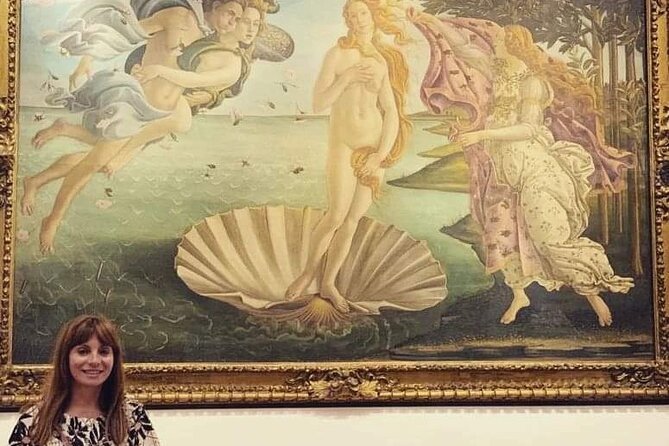
Next is Piazza della Repubblica, centered since 59 B.C. That “since” detail is useful because it pushes you to think beyond Renaissance Florence. This square sits in the longer timeline of the city.
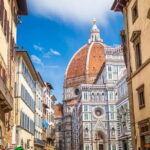
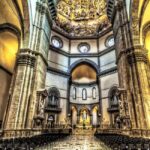
From there, the tour heads to the Duomo area for an external visit to the Cattedrale di Santa Maria del Fiore, the religious heart of Florence and a masterpiece of humanity. Even without going inside, the cathedral’s exterior dominates your senses, and having the walk’s pacing means you’re not rushing into it blindly.
This is also a smart ending sequence. You’re finishing near Piazza di San Giovanni, which is a convenient launch point for additional exploring. If your goal is to feel oriented before you spend time choosing specific churches or museums later, this is exactly when you want to be here.
Headsets, private group, and pacing: where the value really comes from
At $130.37 per person for a 2-hour private walking tour, the value is less about ticking boxes and more about what you get in return: time saved and clarity gained.
A big part of that clarity is the included headsets. In a city like Florence, you’re often surrounded by noise and constant movement. Headsets mean you can listen without stepping aside every time your guide speaks. It makes a difference when the guide is explaining connections—like why a church sits where it sits, or how a bridge ties neighborhoods together.
The private format also changes the experience. Since only your group participates, your guide can keep the route smooth and focus on your interests rather than a fixed group tempo. If you’re traveling with friends or family and want everyone to stay together, this helps.
One more value point: the tour is offered in English, and your guide is identified as Vanessa Tonarelli. Having a single named local guide also makes it feel less like a generic audio route and more like a real conversation.
Small logistics that matter in Florence
This tour is designed to be practical. It’s a flat walk of about 2 miles, and it’s described as most travelers can participate. That’s important because Florence can be a mix of gorgeous streets and occasional uneven patches, so a “flat” walking promise reduces uncertainty.
It’s also noted that the tour is near public transportation, which helps if you’re building the rest of your day around transit.
Two more planning notes:
- Food and drinks aren’t included, though there’s a natural pause in Piazza Santo Spirito where you can grab something if you want.
- Tips aren’t included, so budget a little extra if you plan to tip your guide.
If you care about smooth listening, bring your best patience for crowds in the center. Headsets help, but the city itself is busy—and that’s part of the charm.
What you’ll likely love (based on how this walk is structured)
This tour is very good at helping you connect dots. You don’t just pass famous places; you get short, targeted context that turns “I saw it” into “I understand it.”
Vanessa Tonarelli’s role shows up in how the tour flows: people describe her as fantastic and praise both her demeanor and her ability to make the walk feel enjoyable. That matches what you’ll feel in practice—you’re walking, but you’re also being guided toward what to notice.
Also, the guide provides options for dinner and afternoon activities. That’s a surprisingly helpful benefit because Florence can feel like too many choices. If you want suggestions that fit the areas you’ve just seen, a guide-based recommendation is a win.
Who should book this tour, and who should consider another option
This is a great pick if:
- It’s your first time in Florence and you want a fast, high-impact overview
- You prefer a guided storyline over aimless wandering
- You’d rather spend limited time walking than booking multiple museum visits on day one
- You like photo stops and want smart places to pause
It may not be the best fit if:
- You have mobility limitations and you don’t have support for a walking distance of about 2 miles
- You’re hoping for extended museum time, because some major sites like Palazzo Pitti are presented from the outside and admission isn’t included
If your priority is interior-only sightseeing, you’ll probably want a different day plan with museum tickets. But if your priority is orientation plus a few big-name landmarks, this tour hits a sweet spot.
Should you book this Florence private walking tour?
I’d book this if you want a confident start. You’ll see the most iconic Florence stops—Ponte Vecchio, the Duomo exterior, and the major squares—while also getting older, quieter context like the Church of Santa Felicita. The private format plus headsets makes it feel smoother than a standard group walk.
You should also book it if you value a named local guide and want practical suggestions for what to do next. Spending 2 hours here can save you hours later because you’ll know where you are and what to prioritize.
Just go in with the right expectation: it’s a walking introduction, not a full museum day. If that matches your travel style, this is a strong value way to begin Florence.
FAQ
How long is the Florence private walking tour?
It’s about 2 hours.
Where does the tour start and end?
The meeting point is P.za della Signoria, 1, 50122 Firenze FI, Italy. The tour ends at Piazza di San Giovanni, 30, 50123 Firenze FI, Italy.
Is the tour offered in English?
Yes, it’s offered in English.
Is this a private tour?
Yes. Only your group will participate.
What’s included in the price?
Headsets are included.
What isn’t included?
Food or drinks aren’t included, and tips aren’t included. Also, admission to Palazzo Pitti is not included.
How much walking is involved?
The walk is described as about 2 miles and flat.
Is the tour accessible for people with motor problems?
It’s not recommended for people with motor problems without support.
How does confirmation work after booking?
Confirmation is received at the time of booking.
What is the cancellation policy?
Free cancellation is available up to 24 hours in advance for a full refund. If you cancel less than 24 hours before the start time, the amount paid isn’t refunded.
You Might Also Enjoy




More Walking Tours in Florence
More Tours in Florence
- The Best tour in Florence: Renaissance & Medici Tales – guided by a STORYTELLER
★ 5.0 · 12,316 reviews



More Tour Reviews in Florence
- Tuscany Day Trip from Florence: Siena, San Gimignano, Pisa and Lunch at a Winery
★ 5.0 · 21,634 reviews - The Best tour in Florence: Renaissance & Medici Tales – guided by a STORYTELLER
★ 5.0 · 12,316 reviews