REVIEW · FLORENCE
The Medici Family in Florence: a history of money, power and gossip!
Book on Viator →Operated by FLOE Florence Local Experts · Bookable on Viator
Medici Florence has a way of feeling close. This 2-hour route ties money and politics to real street corners, palaces, and squares you can still see today.
What I like most is the tight story arc, moving from the Medici’s early home base to Florence’s religious and political centers, then ending at Palazzo Pitti. I also like that guides can field serious questions on the spot, including the bigger Italy-and-world-history angles. One possible drawback: several stops are outside views, and indoor entries (where available) are not included.
In This Review
- A guided loop you can actually use
- Key things I’d bet on before you go
- Why the Medici story still works when you walk it
- Route logic: how each stop adds a new layer
- Piazza della Santissima Annunziata: Renaissance frontage to set the tone
- Palazzo Medici Riccardi: the first Medici statement in Florence
- Basilica di San Lorenzo exterior: Filippo Brunelleschi’s signature
- Piazza San Giovanni: Florence’s religious center and public meaning
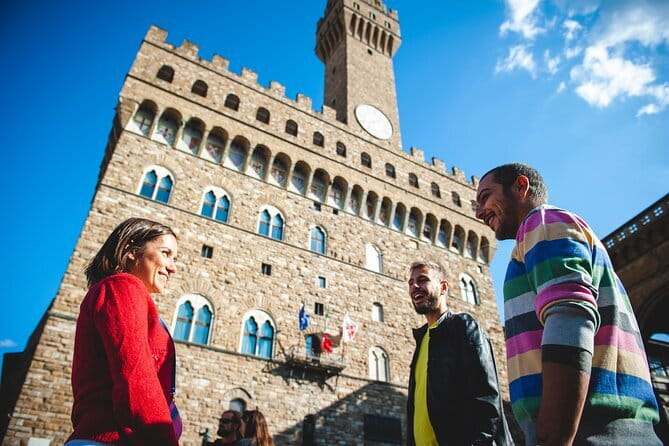
- Piazza della Signoria: the open-air political center
- Palazzo Pitti: the grand finish at the end of the story
- English guidance, private group, and why value matters here
- The best part: guides who can answer your side-quests
- Who should book this Medici Family tour
- Should you book it?
- FAQ
- Where does the tour start and end?
- How long is the tour?
- Is the tour private?
- What language is it offered in?
- Are admission tickets included?
- Can I bring a service animal or a dog?
A guided loop you can actually use
You’re not just collecting landmarks. You’re getting a way to read Florence like a headline: who had power, how they showed it, and why the city kept talking. With a private group experience, English-speaking guidance, and options like pickup, it’s a format that works well if you want answers, not a rushed checklist.
Key things I’d bet on before you go
- A focused 2-hour timeline that covers the Medici core and the city’s power zones without dragging.
- Start at Piazza della SS. Annunziata and end at Piazza de’ Pitti, so you walk a logical line across central Florence.
- Outside views of Medici landmarks let you enjoy architecture without being stuck in lines (but indoor tickets cost extra).
- Palazzo stops you can frame with context like a family strategy, not just a building.
- Questions are welcome, and the tone stays friendly and conversational, not lecture-only.
You can also read our reviews of more historical tours in Florence



Why the Medici story still works when you walk it
Florence makes it easy to understand why money and image mattered. Even if you know the Medici name, seeing where their influence sat in the city changes the picture fast. You start in a Renaissance architectural setting, then move through the palaces and squares that shaped everyday life and public power.
This tour is built around the idea behind its title: money, power, and gossip. The “gossip” part matters more than you might think. In a city where major families were constantly on display, talk traveled with people and prestige. So the tour’s best trick is showing you the physical stage for that social drama.
And the time commitment is realistic. Two hours sounds short until you realize you’re not trying to do Florence from scratch. You’re doing the Medici-centered spine of central Florence, with enough stops to build a storyline and enough walking to keep it lively.
Route logic: how each stop adds a new layer
The itinerary reads like a series of connected arguments. First you visit a Renaissance-strong starting square. Then you pivot to the first Medici palace in Florence, which helps you understand the family’s early “this is where we live and project power” move.
After that, the tour shifts into the two big Florentine magnets: church life and civic life. The Basilica di San Lorenzo area is tied to Filippo Brunelleschi, so you’re looking at how high-level design supported religious status. Then you hit Piazza San Giovanni, the religious center, where the cathedral and baptistery sit as clear symbols.
Finally, Piazza della Signoria is the political heart, the open-air center where decisions and reputations lived. The tour closes at Palazzo Pitti, which leaves you with a strong last impression of scale and ambition, even if you’re mostly viewing the exterior.
If you like history you can place in your mental map, this route does that.
Piazza della Santissima Annunziata: Renaissance frontage to set the tone
You meet in Piazza della SS. Annunziata (by the listed address on the tour page) and begin right where Renaissance architecture is doing heavy lifting. This is a good opening choice because it sets the vibe before the Medici palaces and civic squares.
This stop is short, about 10 minutes, and admission is free. Think of it as a warm-up for your eyes. You’re not chasing an exhibit here. You’re getting oriented in the neighborhood and adjusting your attention to how architecture signals taste and authority.
Practical tip: wear shoes you can walk in comfortably right away. Your first square stop is quick, and then you move into dense central-city streets where stopping again and again can break the flow.
If your goal is to learn how Florence communicates through stone, this first pause matters.
Palazzo Medici Riccardi: the first Medici statement in Florence
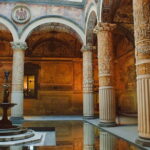
Next comes Palazzo Medici Riccardi, described as the first Medici palace in Florence. Even with only around 10 minutes allocated, this stop gives you a “starting point” landmark that anchors the whole Medici story.
The palace admission is not included, which is your cue to treat this stop as a viewing and framing moment. That can be a plus. You get the external impression without being forced into extra ticket timing. And for a power-and-image story, the outside still speaks.
What I’d focus on here is the feeling of established presence. This is where a family says, in architectural terms, that it belongs at the center. The tour’s strength is that it connects that message to what comes next: the Medici family’s broader footprint in Florence and the spaces where influence becomes public.
If you want indoor time, plan to check on-site options separately. The tour itself keeps a tight schedule.
- The Best tour in Florence: Renaissance & Medici Tales – guided by a STORYTELLER
★ 5.0 · 12,316 reviews



Basilica di San Lorenzo exterior: Filippo Brunelleschi’s signature
Then you move to the outside of the Medici family’s church area at Basilica di San Lorenzo. The tour highlights the design and building by Filippo Brunelleschi, which is a key detail because it links faith, prestige, and top-tier craftsmanship.
Admission is not included here, and your time is around 10 minutes. That’s typical for a tour shaped by walking time and city logistics. The value is that you get the association without turning the experience into a ticket-and-line marathon.
Why this stop matters: religious spaces were not separate from politics in Florence. They were part of status. Even seeing the exterior with context helps you connect devotion to reputation.
Practical tip: if you have an interest in Renaissance figures like Brunelleschi, this is the moment to ask questions. In past experiences with this operator, the guides have been ready to expand beyond the basics and explain connections to wider Italy and world history.
Piazza San Giovanni: Florence’s religious center and public meaning
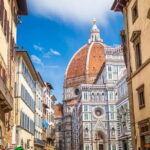
Piazza San Giovanni is next, and it’s bigger in scope: around 30 minutes. This is the religious center of Florence, with the Cathedral and the Baptistery as the headline features.
Admission is not included on this stop, so again, think of it as a context stop. You’re learning how this space worked as a symbolic core. When you know that the city’s major family story intertwines with church life, the square stops feeling like scenery. It starts feeling like the stage for public legitimacy.
One consideration: because this is a longer stop, it can feel like “open square time” if you’re not paying attention. Use the extra minutes well. Look up, follow your guide’s prompts, and ask how the Medici’s public image would have made sense in this setting.
This stop is a good place to slow down and let the city’s layout do its job.
Piazza della Signoria: the open-air political center

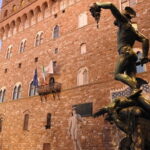
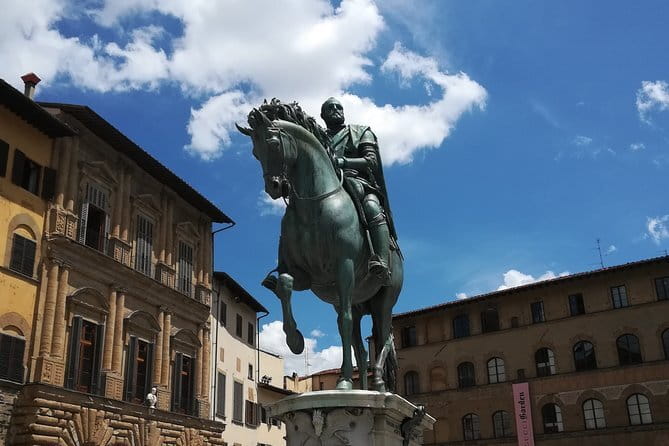
Now you arrive at Piazza della Signoria, described as the political center of Florence and an open-air museum. Admission is free and the stop is around 30 minutes, which gives you time to really absorb the civic setting.
This is where the Medici money-and-power theme starts clicking. Civic squares are where power becomes visible. People gather. Decisions echo. Reputation is earned, performed, and defended in public.
If you like learning through contrast, this is the pivot point. You went from religious symbolism to the civic arena. With a guide who ties it together, you’ll start seeing how different types of authority fed each other.
Practical tip: bring a phone camera and use it, but don’t let it steal your attention. The best learning happens when you’re looking at the details while your guide is talking.
Palazzo Pitti: the grand finish at the end of the story
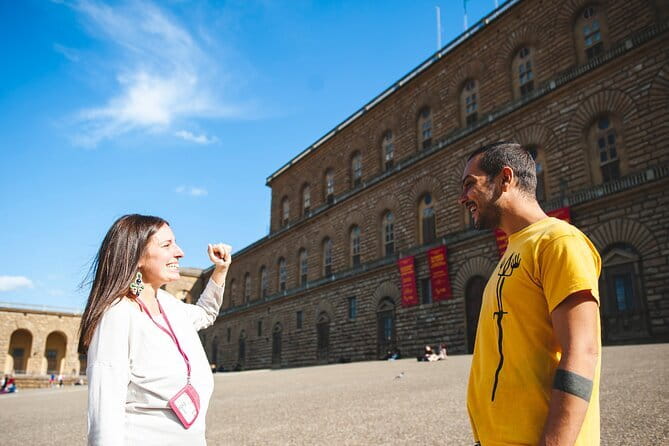
The tour ends at Piazza de’ Pitti at Palazzo Pitti. The stop is about 20 minutes, and admission is not included.
Even without going inside, ending here works because Palazzo Pitti carries the feeling of scale and ambition. It’s the kind of landmark that leaves you thinking about how families tried to shape perception through size, presence, and location.
If you’re hungry for one last thread, this is where you can connect the route’s storyline into a single idea: the Medici weren’t only patrons and household names. They were players in Florence’s ongoing power game, and they used the city as their visual argument.
Practical tip: plan your next meal nearby, because central Florence can mean short distances but slower walking and crowds at the end of a tour.
English guidance, private group, and why value matters here
At about $131.06 per person for roughly 2 hours, this tour sits in a mid-range price bracket for Florence. The value comes less from “tickets included” (they’re not) and more from interpretation: connecting multiple sites into one Medici-centered storyline.
You also get a private tour/activity, meaning it’s only your group. That matters because Medici history is deep enough that a rigid group pace can flatten the experience. In a private format, it’s easier to ask follow-up questions and steer the conversation toward what you care about.
Pickup is offered, and that’s another real value lever. In a city where you can lose time walking between hotspots, transportation support can protect your two-hour window.
Also, this is booked an average of 24 days in advance, which usually signals that people find the schedule convenient and the topic in demand.
Just know the trade-off: several stops are exterior-focused and indoor access is not part of the included price. If you want full museum entry time at every location, you may need a separate plan.
The best part: guides who can answer your side-quests
One of the most praised aspects here is the guide experience. In one situation caused by a precipitously announced rail strike, the operator handled a date change and still delivered a high-quality experience. The guide named in that story, Antonio Bencista, is described as stellar—detailed with the Medici background and very willing to answer questions that went beyond the basics.
That tells you something important about this tour’s style. It’s not just a script. It’s a conversation about power in Florence and how it fits into larger historical patterns. If you like asking why something mattered, or how a family’s image played out in different spaces, you’re likely to enjoy this format.
If you prefer a strictly silent, head-down walk with no Q&A, this might feel slightly more talk-heavy than you want. But if you like clarity and context, this is exactly the sweet spot.
Who should book this Medici Family tour
This is a strong fit if:
- You want a Florence intro that’s focused on one theme rather than everything at once
- You like history tied to architecture and real city geography
- You want time to ask questions, not a rushed monologue
- You’re traveling in a group that benefits from a private format
It might not be the best match if:
- You expect lots of interior museum time included in the ticket price
- You’re allergic to walking in central Florence crowds, even for short stretches
Should you book it?
I’d book it if your goal is to understand how the Medici story connects to Florence’s built environment—where their early presence shows up, how religious and civic spaces shape status, and why the city feels like it’s always talking about power.
With English guidance, a logical route from Piazza della SS. Annunziata to Palazzo Pitti, and a private setup, you’re getting a useful two-hour structure. Add in the fact that guides have handled real-world schedule disruptions without turning the experience into a mess, and the odds of a smooth, satisfying walk are pretty good.
If you also plan to purchase separate entry tickets for the places you care most about, you can turn this into a perfect “route first, museums second” strategy.
FAQ
Where does the tour start and end?
It starts at P.za della SS. Annunziata, 3488, 50122 Firenze FI, Italy, and ends at Piazza de’ Pitti, 50125 Firenze FI, Italy.
How long is the tour?
The tour is about 2 hours.
Is the tour private?
Yes. It is a private tour/activity, so only your group participates.
What language is it offered in?
The tour is offered in English.
Are admission tickets included?
Some stops are free, while others have admission not included. In other words, indoor access or paid entries may require separate tickets.
Can I bring a service animal or a dog?
Service animals are allowed, and dogs are admitted.
You Might Also Enjoy


More Historical Tours in Florence
More Tour Reviews in Florence
- Tuscany Day Trip from Florence: Siena, San Gimignano, Pisa and Lunch at a Winery
★ 5.0 · 21,634 reviews - The Best tour in Florence: Renaissance & Medici Tales – guided by a STORYTELLER
★ 5.0 · 12,316 reviews