REVIEW · FLORENCE
Renaissance Explained Tour in Florence
Book on Viator →Operated by La Bussola Tours · Bookable on Viator
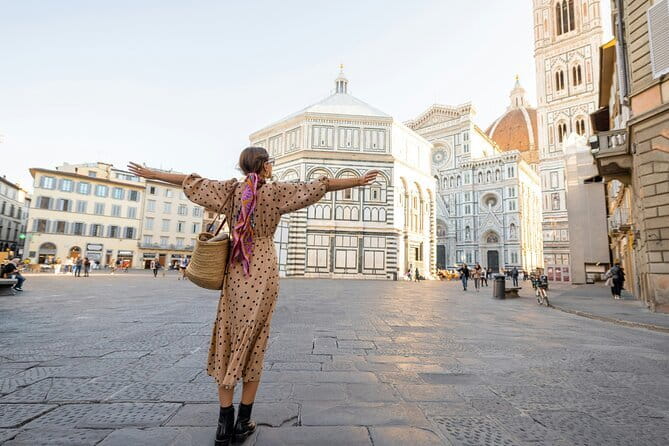
Florence turns into a timeline. This tour strings together the Renaissance from start to finish with cohesive storytelling that makes famous buildings feel connected, not random. I especially like the linear perspective experiment in Piazza Del Duomo, which turns a tough geometry idea into something you can see with your own eyes. You’ll also hit Leonardo moments, plus Renaissance squares that help you understand why Florence changed how the world looked.
You get a friendly guide who keeps the pace moving, and the best part is how it all clicks as a narrative from Middle Ages into Rebirth, then toward Baroque. One possible drawback: it’s many quick stops (often 5–20 minutes), so it’s not for people who want long, slow museum time or deep studying in one place.
The format is simple and efficient: private tour for your group, English-speaking guide, and a mobile ticket you can show on your phone. You start at Piazza degli Strozzi at 2:30 pm and end near the SS. Annunziata area, about a five-minute walk from the Duomo.
In This Review
- Key highlights you’ll actually feel during the walk
- Pace, private group, and the 2:30 pm flow
- From Piazza degli Strozzi to Leonardo at Go Giunti Odeon
- Orsanmichele and Florence’s leather market: art meets everyday craft
- Santa Maria del Fiore and the Piazza Del Duomo linear perspective experiment
- Baptistero di San Giovanni’s Paradise Gates overview
- Gelato at Edoardo il Gelato Biologico, then Museo Leonardo for Vitruvian context
- Piazza Santissima Annunziata and the Innocenti: Renaissance planning in public space
- Inside Santa Maria della Scala: the Renaissance-to-Baroque shift
- What makes the guide feel different (and why it matters)
- Who this tour suits best (and who might want something else)
- Should you book the Renaissance Explained Tour in Florence?
- FAQ
- Where does the tour start?
- Where does the tour end?
- What time does the tour begin?
- How long is the Renaissance Explained tour?
- What language is the tour offered in?
- Is this tour private?
- Are admission tickets included?
- Do I get a mobile ticket?
- What is the cancellation policy?
Key highlights you’ll actually feel during the walk
- A Renaissance-to-Baroque storyline that links buildings instead of treating them like separate postcards
- A hands-on linear perspective experiment in Piazza Del Duomo you can reproduce in seconds
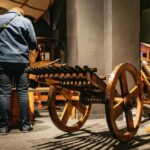
- Leonardo touches in more than one place, including a dedicated cinema experience and Museo Leonardo da Vinci
- Short, well-chosen exterior moments like Orsanmichele and the Baptistero overview that teach you what to notice
- A practical gelato break at Edoardo il Gelato Biologico right by the Duomo area
Pace, private group, and the 2:30 pm flow
At $93.62 per person for about 2 hours 30 minutes, you’re paying for storytelling plus convenience. This is not a slow sightseeing stroll where you drift; it’s an organized walk with a beginning, middle, and ending, and the stops are timed so the “why” behind Florence’s Renaissance stays coherent.
It’s private, so only your group participates. That matters because you can ask questions without competing with a crowd, and the guide can keep the conversation tuned to what you’re seeing. The tour is offered in English, starts at 2:30 pm, and uses a mobile ticket, which keeps you from hunting for paper.
This is also a “many places, short moments” tour. The upsides are energy and context. The catch is that some stops are intentionally brief—think 2 minutes, 5 minutes, or 8 minutes—so you won’t get hours inside every building you pass. If you want long lines, long reading, and deep museum time, you’d plan separate visits. If you want fast understanding, you’ll likely love this format.
You can also read our reviews of more tours and experiences in Florence.
- Tuscany Day Trip from Florence: Siena, San Gimignano, Pisa and Lunch at a Winery
★ 5.0 · 21,634 reviews
From Piazza degli Strozzi to Leonardo at Go Giunti Odeon
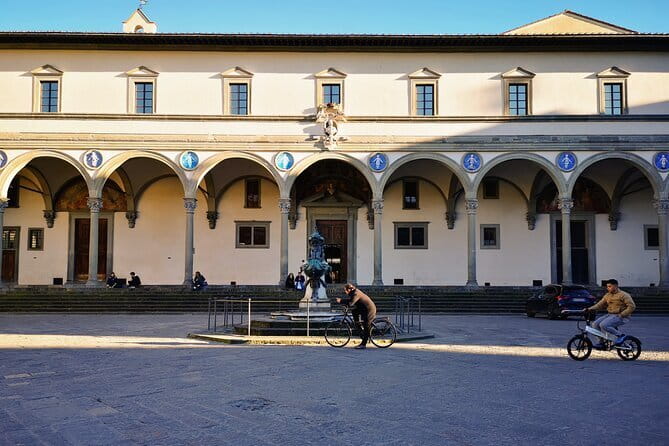
The tour begins at Piazza degli Strozzi. Even before you reach the big cathedral zone, that starting point helps you get oriented—Florence’s center is compact, and your guide uses that to build the route like a guided argument: here’s what changed, then here’s where you can see the change.
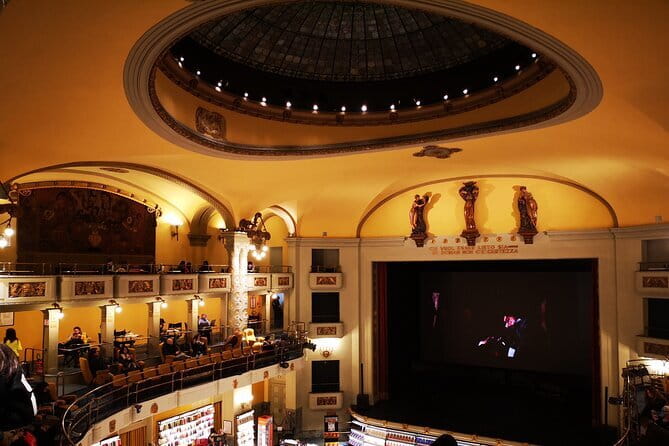
Stop 1 is Go Giunti Odeon Liberia e Cinema, with an internal visit to a Leonardo da Vinci–dedicated cinema space. You spend about 20 minutes here, and that’s a smart move. It gives you a mental warm-up before you jump into architecture. Leonardo isn’t treated as a single genius moment; he’s part of the Renaissance way of thinking—observing, measuring, and explaining.
Why I like this stop for your planning: it’s inside, which can help on hot afternoons or when the weather turns. And even if you’re not a “Leonardo person,” the museum-cinema format is designed to bring you up to speed quickly, so you don’t feel lost when the tour shifts back outdoors.
Orsanmichele and Florence’s leather market: art meets everyday craft
Stop 2 brings you to Orsanmichele: you get an exterior look, plus a specific moment to understand the first Renaissance statue theme. The time is around 15 minutes, and the focus is on what you can see from the outside and how it signals the Renaissance arriving in public space.
Right after that, the route includes one of Florence’s two main leather markets. That’s more than a shopping detour. It’s a reminder that Renaissance art and architecture didn’t grow in a vacuum. People needed materials, trades needed skill, and civic life depended on real products—leather included.
This stop is also a nice change of pace. The cathedral and baptistery are monumental, but Orsanmichele and the market area help you see Florence as a working city. It’s easier to grasp the Renaissance as a social shift when the tour includes places where ordinary commerce still lived in the same streets.
If you’re the kind of person who gets impatient near crowds, keep in mind that markets and popular landmarks can get busy. The good news is that the tour is structured, so you’re not stuck there forever—each moment is short on purpose.
Santa Maria del Fiore and the Piazza Del Duomo linear perspective experiment
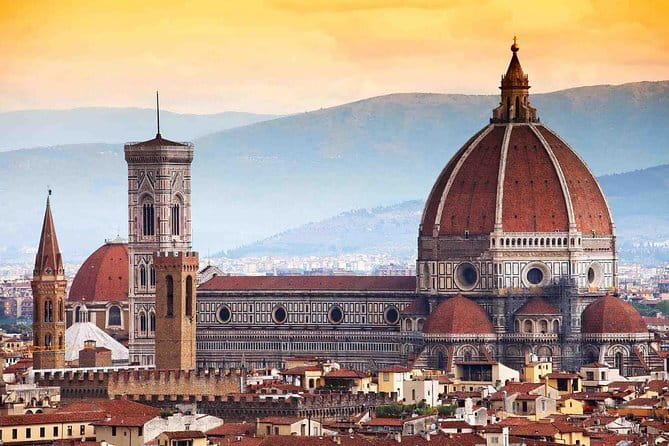
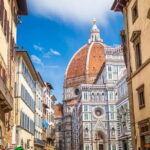
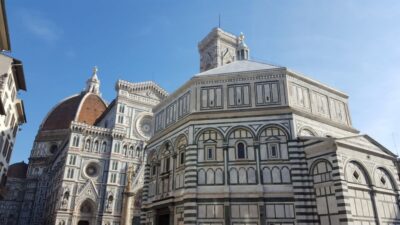
Stops 3 and 4 are the heart of the experience for many people. You’ll spend around 10 minutes at the Cathedral of Santa Maria del Fiore with an outdoor visit that includes an entertaining story about how the cathedral was built. Even without stepping inside for a long visit, you get the “how” and “why” behind the construction, and your guide explains it in a way that makes the building feel less intimidating.
Then you move to Piazza Del Duomo, where you’ll replicate an experiment that brought linear perspective to life. This is the standout for understanding. Linear perspective is one of those Renaissance breakthroughs that sounds abstract until you physically try it. When you recreate the setup the guide describes, you start to see how artists made space feel believable—how buildings and scenes could line up in a human way.
This is why the tour is priced the way it is. You’re not just getting photos. You’re getting a practical lesson tied to the exact location where the idea makes sense. If you’ve ever wondered why Renaissance art looks “real” in a way that medieval art often doesn’t, this is your answer in a couple of minutes.
Practical note: the pacing here is quick, so wear shoes that handle uneven stone and plan to look up often. You’ll get the most out of this stop if you keep your eyes moving between the guide’s instructions and the geometry of the square.
Baptistero di San Giovanni’s Paradise Gates overview
Next is the Baptistero di San Giovanni, with an exterior overview of the famous Paradise Gates. The timing is brief—about 8 minutes—but the goal is clear: you learn what you’re looking at and why it matters, without turning your afternoon into a long museum debate.
This stop works well because it’s a contrast. The cathedral teaches construction and space. The baptistery’s exterior focus on the gates teaches symbolism and artistic achievement. Renaissance Florence didn’t just improve buildings; it also designed surfaces to carry meaning.
Since you’re viewing from outside, you don’t need to worry about ticket logistics for a longer interior experience. You just need your attention—this is one of those “look carefully” moments, and the guide’s framing helps you spot what you might otherwise miss.
- The Best tour in Florence: Renaissance & Medici Tales – guided by a STORYTELLER
★ 5.0 · 12,316 reviews


Gelato at Edoardo il Gelato Biologico, then Museo Leonardo for Vitruvian context
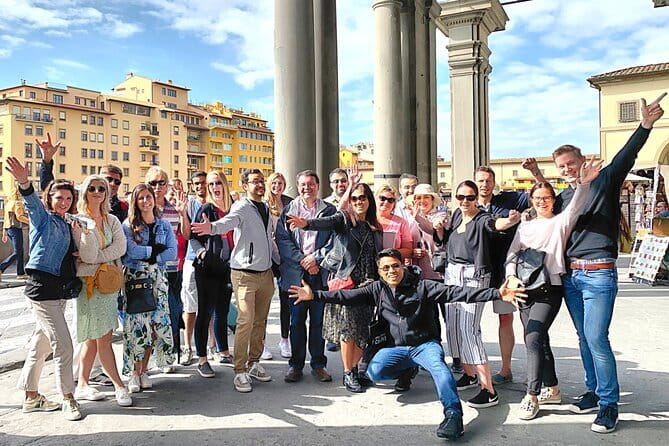
Stop 6 is a gelato break at Edoardo il Gelato Biologico, Gelateria Piazza Duomo. You get about 20 minutes, and the practical advantage here is timing. By this point, your legs and brain are working. A planned pause keeps the tour enjoyable instead of turning into a sprint.
This place is famous for hazelnut flavor, but it also has a wide selection of ice cream and affogato. That’s helpful because not everyone likes the same intensity in gelato, and affogato is a nice reset if you want something coffee-adjacent without committing to a full café stop.
After gelato, Stop 7 is the Museo Leonardo da Vinci, where you get a Vitruvian Man explanation in about 5 minutes. This is short, but it’s not random. It gives you the key idea so the famous figure makes sense as a Renaissance symbol of proportion and human measurement.
If you’re the kind of person who likes to know a concept before you see it, you’ll appreciate this structure. It’s designed so you walk away with enough understanding to recognize what you’re seeing later on your own.
Piazza Santissima Annunziata and the Innocenti: Renaissance planning in public space
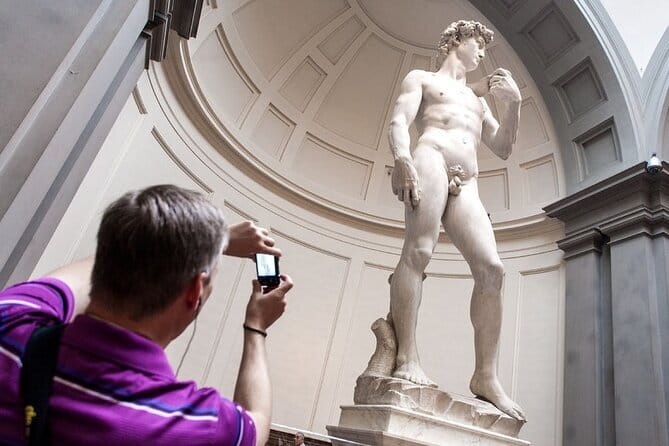
Stop 8 is Piazza Della Santissima Annunziata, described as the first Renaissance square, and it lasts about 2 minutes. That sounds too short, but it’s actually a smart tactic: it’s a quick orientation point. Your guide sets the stage so you understand why this square matters before you move on.
Then Stop 9 is Museo degli Innocenti, around 5 minutes, dedicated to understanding Renaissance architecture next to the First Renaissance building. The timing here tells you the tour’s priorities: you’re learning how Renaissance design thinking shows up in layout, proportions, and civic building style—not spending the whole day in one institution.
Why this matters to you as a visitor: when Florence’s story is explained as architecture + planning + art, the city becomes easier to navigate mentally. You start recognizing patterns: where squares are placed, why buildings face the street in certain ways, and how Renaissance principles show up outside of big-ticket museums.
If you only do major landmarks on your own, you might miss this “city-as-a-plan” view. This tour makes sure you don’t.
Inside Santa Maria della Scala: the Renaissance-to-Baroque shift
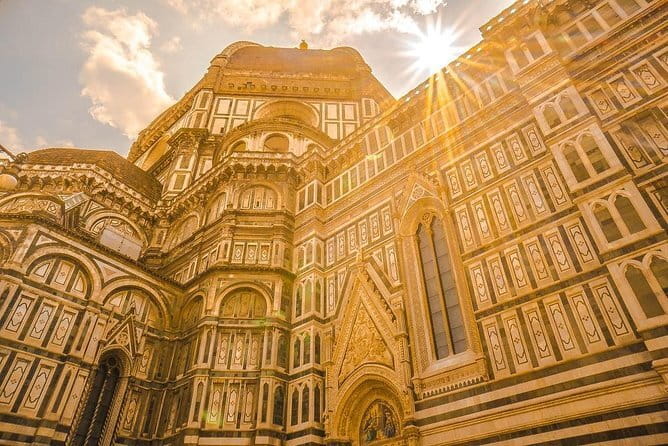
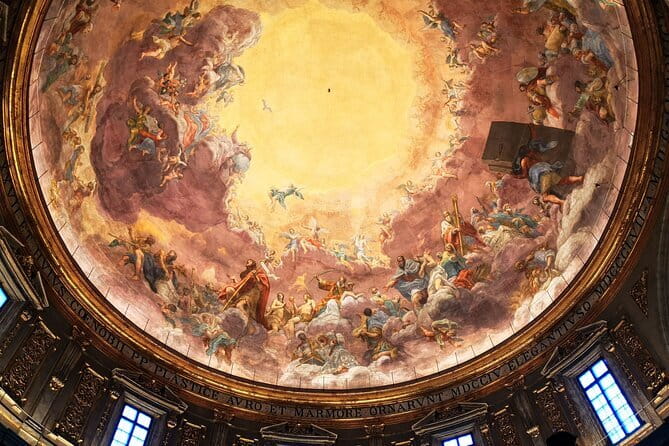
Stop 10 finishes at the Basilica della Santissima Annunziata, specifically the Chiesa di Santa Maria della Scala. This is an interior visit with an explanation of the passage between Renaissance to Baroque, lasting about 20 minutes.
This is also the stop many people remember because the guide points out how the style changes in the transition period. Renaissance often focuses on proportion and clarity. Baroque tends to push emotion and movement. You don’t just hear the labels—you understand them as a shift you can feel inside a church environment.
The tour notes this is the most beautiful church in the city, and whether you agree with that exact claim or not, the intent is clear: this is a strong ending point. It makes the whole tour feel like it has closure, from the early Renaissance markers up through the style change you can notice as the tour reaches its final interior.
If you’re sensitive to tight indoor spaces or want more time for photos, keep expectations realistic. The visit is timed, and it’s more about understanding the relationship between styles than producing a perfect photo set.
What makes the guide feel different (and why it matters)
A big reason this tour earns a strong rating is the guide’s energy and organization. In one standout example, the guide Aida shared a real passion for the Renaissance, including a personal focus on Felipe Brunelleschi, and she walked the group through the Middle Ages into The Rebirth, ending with a peek at Baroque.
That kind of storytelling isn’t just entertaining. It’s practical. When the guide links periods and explains what to notice at each stop, you leave with a mental map that keeps working after the tour ends. Instead of thinking you saw a series of famous spots, you understand how Florentine influence spread through world culture.
Even if you’re not a hardcore architecture person, this helps because it turns “big buildings” into a timeline you can repeat.
Who this tour suits best (and who might want something else)
This tour is a great match if you like architecture, art, and the way ideas show up in stone. It’s also ideal if you enjoy short lessons tied to real places—Duomo perspective, Leonardo references, and Renaissance squares.
It’s less ideal if you prefer deep time in one museum or you want long interior visits at each stop. The tour is built for understanding through variety, not for lingering. You’ll get lots of context, but you won’t finish the day feeling like you studied every site for hours.
If you’re traveling with kids who get restless quickly, the pacing might work because stops vary between exterior and interior moments, plus there’s a planned gelato break. But if your group demands quiet, lengthy viewing, you might find the timing a bit brisk.
Should you book the Renaissance Explained Tour in Florence?
Yes—if your goal is to understand Renaissance Florence in one afternoon. The value comes from the way it links places through a storyline, not just the number of stops. The linear perspective experiment in Piazza Del Duomo is the kind of thing you remember, because you physically reproduce the idea instead of just hearing it.
I’d book this if you care about how Florence changed the way the world thinks about space, proportion, and art. And if you’re the type who likes a guide who can make the sequence from Middle Ages to Rebirth feel logical, this fits.
I’d hesitate if you’re only interested in one or two major interiors and you plan to spend the rest of your day exploring on your own. In that case, a different plan with longer time at fewer sites might suit you better.
FAQ
Where does the tour start?
The tour starts at Piazza degli Strozzi (Piazza Strozzi), 50123 Firenze FI, Italy.
Where does the tour end?
The tour ends at the SS. Annunziata di Firenze (P.za della SS. Annunziata), 50122 Firenze FI, Italy, about a five-minute walk from the Cathedral.
What time does the tour begin?
The start time is 2:30 pm.
How long is the Renaissance Explained tour?
It runs for about 2 hours 30 minutes.
What language is the tour offered in?
The tour is offered in English.
Is this tour private?
Yes. It’s a private tour/activity, so only your group participates.
Are admission tickets included?
The stops listed include admission tickets marked as free.
Do I get a mobile ticket?
Yes. The tour includes a mobile ticket.
What is the cancellation policy?
You can cancel for free up to 24 hours in advance for a full refund.
You Might Also Enjoy
More Tours in Florence
- The Best tour in Florence: Renaissance & Medici Tales – guided by a STORYTELLER
★ 5.0 · 12,316 reviews

More Tour Reviews in Florence
- Tuscany Day Trip from Florence: Siena, San Gimignano, Pisa and Lunch at a Winery
★ 5.0 · 21,634 reviews - The Best tour in Florence: Renaissance & Medici Tales – guided by a STORYTELLER
★ 5.0 · 12,316 reviews