REVIEW · FLORENCE
Pick Vegetables at the farm & Cook pasta
Book on GetYourGuide →Operated by Opera in the Kitchen di Lucrezia Cannito · Bookable on GetYourGuide
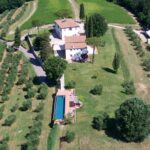
A 1600s villa kitchen changes everything. In the Chianti Classico area, this hands-on class blends vineyard walking with cooking your own traditional meal, all in a small group setting run by Opera in the Kitchen di Lucrezia Cannito.
I love that you start outdoors, picking fresh vegetables and aromatic herbs, then move straight into the old-barn kitchen to cook a full menu. I also like the way the tasting fits the food, especially the extra virgin olive oil and homemade wine from the property.
One thing to consider: vegetable picking depends on the season. From November to April, it may not be guaranteed, though herbs are still on the list and you can still visit the property (weather permitting).
In This Review
- Key Highlights You’ll Actually Care About
- First Steps at a Chianti Classico Villa (Moka Coffee Included)
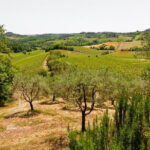
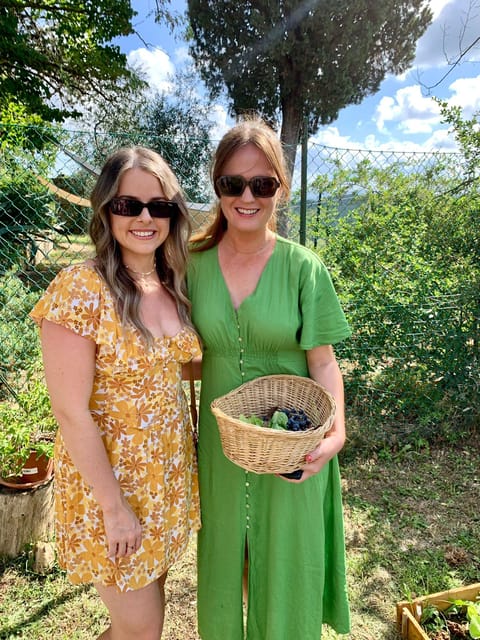
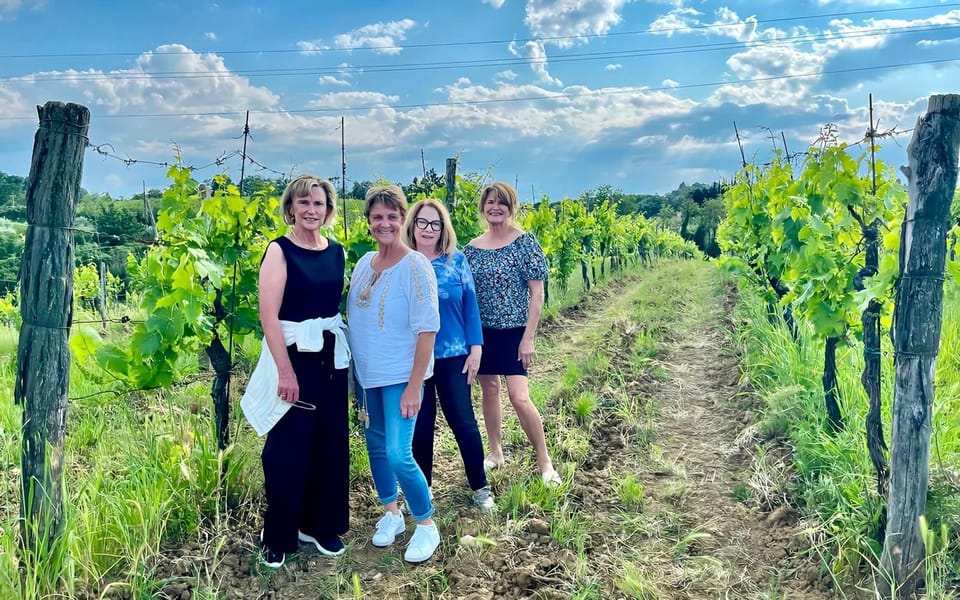
- Vineyard Walk + Veggie Garden Picking: Where Your Ingredients Start
- Olive Oil and Wine Tastings That Actually Connect to the Meal
- The Hands-On Cooking Class: Four Courses, Real Participation
- Eating the Fruits of Your Labor: Meal with a View
- Price and Value: Is $158.60 Worth It?
- Timing, Transfers, and What 25 Minutes from Florence Means
- Who This Fits Best (And Who Might Want Another Option)
- Should You Book Pick Vegetables at the Farm & Cook Pasta?
- FAQ
- How long is the cooking class?
- What’s included in the price?
- Do you pick vegetables year-round?
- Is the experience taught in English?
- How large is the group?
- Is transportation available from Florence?
Key Highlights You’ll Actually Care About
- Small group (max 10): more time with the instructor and less waiting while dough gets made.
- Veggie garden + vineyard walk: you taste and learn where your ingredients come from before you cook.
- Homemade pasta for everyone: not a demo—each person helps make the meal.
- 4-course traditional menu: you eat what you cook, paired with local tastes.
- Extra virgin olive oil tasting: includes details on their production history and Coratina olives.
- Cozy, hands-on atmosphere: the class is set up for relaxed, personal participation.
First Steps at a Chianti Classico Villa (Moka Coffee Included)
This is one of those Tuscan experiences where the setting isn’t decoration. You arrive in the countryside near Florence, then settle in with a cup of Italian-style moka coffee. It’s a small moment, but it sets the pace: you’re not just paying to watch someone cook. You’re being pulled into how the place works.
The cooking happens in a villa connected to life in the hills—specifically, the class is hosted in an old-barn style kitchen. You’ll see the space, including the old stone tools like the trough area used for prep. That matters because it makes the meal feel grounded. When you’re kneading pasta dough in a real working-style kitchen, your hands learn faster and you pay more attention to what the instructor is explaining.
The host team (Opera in the Kitchen di Lucrezia Cannito) also walks you through the property early on. This isn’t just a “look over there” tour. You’ll get context about their villa and what they produce: wine and extra virgin olive oil. You don’t need a history degree here. The point is to connect the flavors on your plate to the land you’re standing on.
If you like experiences with a calmer rhythm—less hurry, more conversation and cooking—this style fits well. The class size (limited to 10) helps keep it cozy instead of chaotic.
You can also read our reviews of more tours and experiences in Florence


Vineyard Walk + Veggie Garden Picking: Where Your Ingredients Start
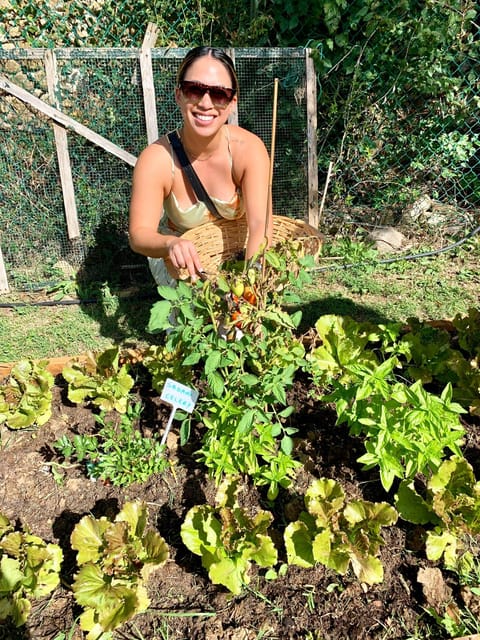
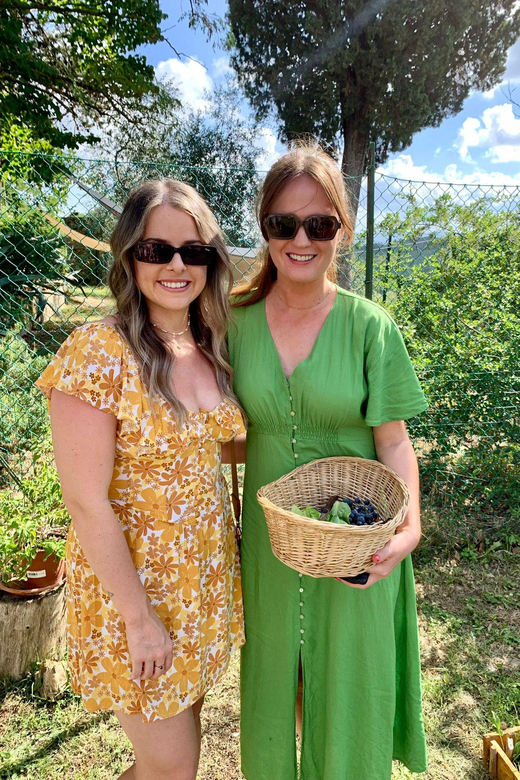
Before you touch a pot, you walk. You’ll explore the vineyard and then head into the vegetable garden area for picking.
What I like about this approach is that it changes your relationship to dinner. After you’ve picked vegetables and herbs yourself, you don’t treat the menu like a generic pasta meal. You start paying attention to textures, aromas, and how the herbs show up in the cooking.
You’ll be guided through the property, then helped pick fresh vegetables and aromatic herbs. Herbs are always available to pick, and vegetable picking follows seasonal reality. That’s an important detail because Tuscany isn’t a supermarket all year long. In November through April, vegetable picking may not be guaranteed, but you’ll still get the garden time and the rest of the experience continues. Even in winter, you can often visit the vineyards and property depending on weather.
Practical tip: wear shoes you don’t mind getting a little countryside-sturdy. You’ll be walking around the farm areas, and comfort makes a difference when you’re later kneading, chopping, and standing at the workstations.
You’ll also learn how their production works—how they grow and make wine, and how their extra virgin olive oil is produced. The goal isn’t to turn you into an agronomist. It’s to help you understand why certain ingredients taste the way they do when they’re fresh from the same place.
Olive Oil and Wine Tastings That Actually Connect to the Meal
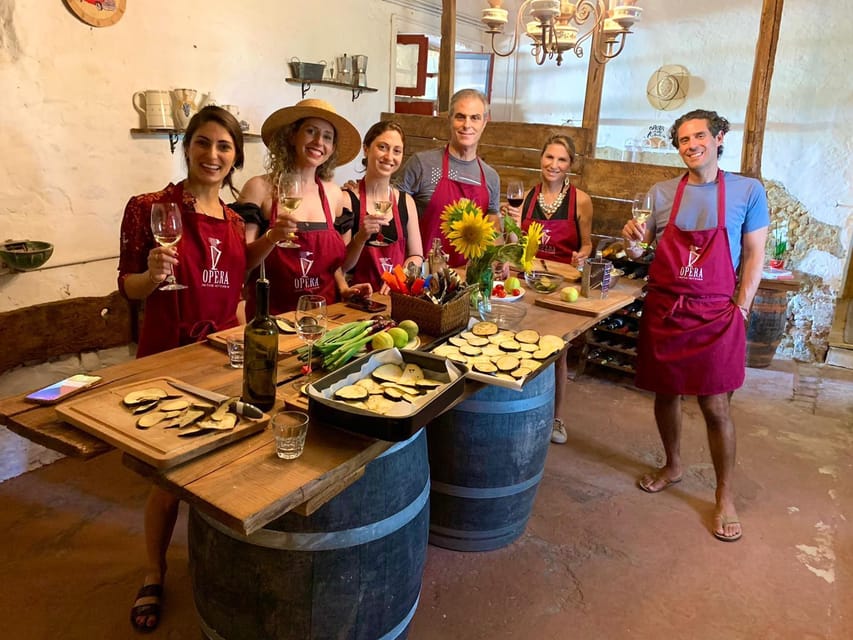
A lot of cooking classes toss in a token tasting. This one builds tastings into the story of the meal.
First up: extra virgin olive oil. You’ll taste their olive oil, including details about its production history—made by the family for three generations. You’ll also learn that it comes from 100% Coratina olives from Apulia. That’s a specific detail, and it’s worth paying attention to because it explains flavor. Olive oil isn’t all the same, even within Italy.
Then there’s the wine from their property. You’ll have homemade wine during the experience, and later you’ll enjoy it at the meal. Since the lunch/dinner part happens with the view and the food you cooked, the tasting feels earned. You’re not sipping something detached from what you just made.
A simple way to think about it: the tastings are there to sharpen your palate while you’re learning cooking techniques. If you’re the kind of person who likes to understand why food tastes good, this part gives you context without turning it into a lecture.
The Hands-On Cooking Class: Four Courses, Real Participation
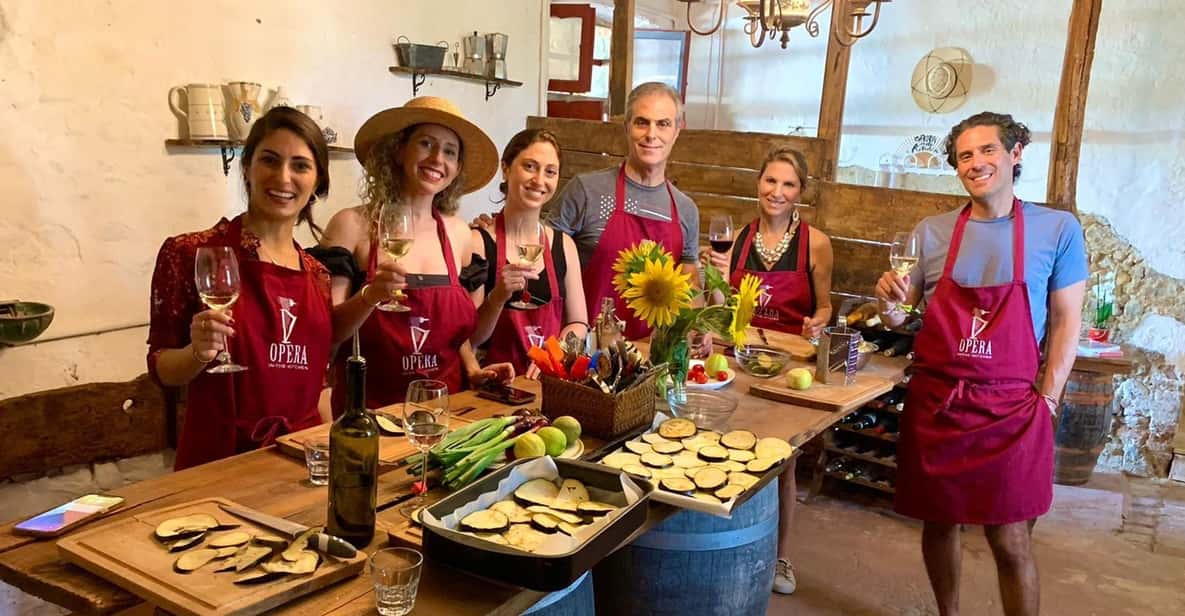
Now for the fun part: you cook.
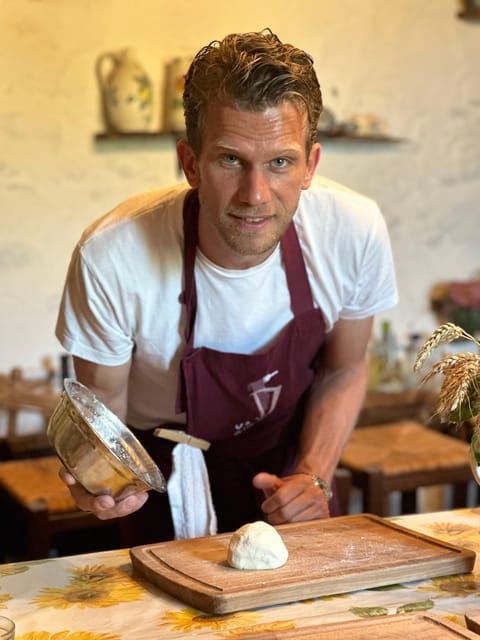
You’ll wash up, put on a cotton apron, and get to work in the old-barn kitchen setup. This isn’t a “watch and snack” style class. Everyone prepares their own meal. That includes making homemade pasta as part of the menu.
The pasta is made using recipes shared from Lulu’s grandmother—so you’re cooking from a family tradition, not a modern “fusion” template. Even if you’re a confident home cook, you’ll probably notice the difference in technique and pacing when recipes are taught the way families teach them: with habits, not just instructions.
The menu runs as a full 4-course experience. While the specific dishes can vary with how the day’s menu is planned, the structure is consistent: you’ll work through courses, cooking with guidance, then you’ll sit down and eat what you made. This format is ideal because you’re never wondering whether your time investment will pay off. You cook, you taste, you eat.
What makes the cooking portion especially valuable is the “hands-on” focus. You don’t just taste Tuscan food—you learn how it’s assembled. Even basic skills like timing, rolling pasta, and building flavor with herbs become clearer when you do them with a guide nearby.
And since the instruction is in English (with Italian also used), you’re unlikely to get lost in translation. If you’ve ever taken a class where you understand half the words and guess the rest, you’ll appreciate this structure more than you expect.
Eating the Fruits of Your Labor: Meal with a View
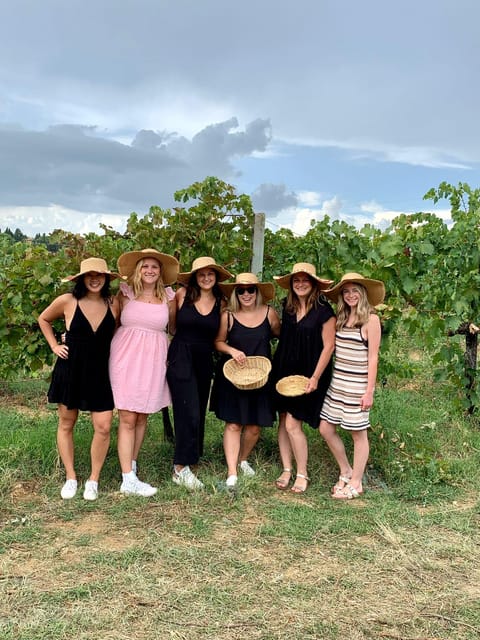
Once the cooking is done, you sit down to enjoy the fruits of your work with a meal that comes with the view of the countryside. This is one of those practical pleasures: you don’t have to pack up and rush off to find lunch somewhere else.
You’ll taste what you cooked alongside the olive oil and homemade wine. Water is provided with ice, which sounds basic, but it’s genuinely helpful when you’ve been active outdoors and then cooking.
This “eat at the end” part matters more than it sounds. When a meal follows your cooking directly, it reinforces what you learned. You can connect the aroma you picked earlier in the garden to what you taste later in your sauce. You can notice how the olive oil shows up in texture and finish. If you’re curious about cooking, it sticks.
Also, you get a small surprise gift at the end. The experience also includes access to an online recipe book. That combination is useful. Many classes give you a generic recipe card. Here, you get the chance to cook again later with the same guidance.
- The Best tour in Florence: Renaissance & Medici Tales – guided by a STORYTELLER
★ 5.0 · 12,316 reviews

Price and Value: Is $158.60 Worth It?
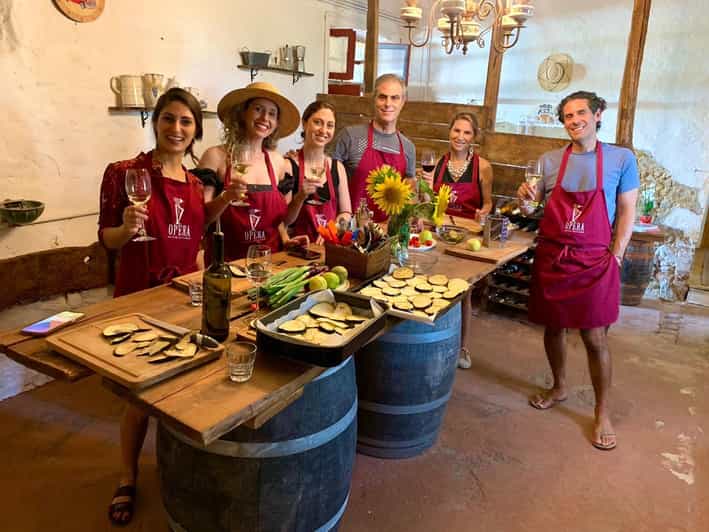
At $158.60 per person, this class isn’t a “grab-and-go” activity. But it also isn’t priced like a luxury tasting event with no participation. The value comes from the mix of experiences you get in 3.5 hours:
- You tour the property (vineyard and veggie garden) before cooking.
- You pick ingredients you later cook (depending on season).
- You cook a full 4-course menu, including homemade pasta.
- You taste their extra virgin olive oil and homemade wine.
- You leave with an online recipe book and a surprise gift.
So yes, you’re paying for food, guidance, and the setting. But you’re also paying for a small-group format limited to 10. That matters because it affects how much time you get to actually cook and how quickly you can ask questions.
If you compare it to doing all of this separately—say, a countryside tour plus a cooking class plus tastings—the bundle starts to make sense. For many people, the best part is simply that the class stays practical. You’re not just consuming; you’re learning a meal you can recreate.
If you’re on a strict budget, you might decide it’s too much. But if you want a hands-on Tuscan day that feels authentic and structured, the price is easier to justify.
Timing, Transfers, and What 25 Minutes from Florence Means
The activity is set in the countryside about 25 minutes from Florence. You’ll receive the address after reservation. If you don’t want to handle transportation, transfers are available on request, but you have to ask at least 48 hours before the event.
This is a big deal in Tuscany because the countryside doesn’t always play nice with quick ride planning. If you’re already in Florence and want an easy day that doesn’t require renting a car, this “on request” transfer is worth considering.
The duration is 3.5 hours, so it’s long enough to feel like a real experience, but short enough that you can still plan other activities the same day.
Who This Fits Best (And Who Might Want Another Option)
This class is a great match if you:
- enjoy cooking and want to do more than watch
- like farm-to-table experiences but want them explained without heavy jargon
- want a smaller group experience where you’re not squeezed in around strangers
- care about local ingredients—especially herbs, olive oil, and wine
It may be less ideal if you:
- are traveling during November to April and strongly want guaranteed vegetable picking (it’s season-dependent, though herbs are still picked)
- don’t like physical activity that involves walking and standing during cooking
- expect a class built around a specific dish beyond homemade pasta (the menu follows a traditional 4-course structure, but the garden picks follow seasons)
Should You Book Pick Vegetables at the Farm & Cook Pasta?
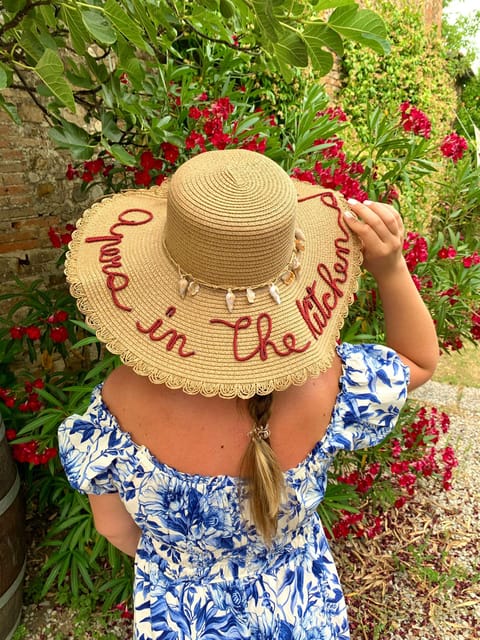
Book it if you want a real Tuscan cooking experience with a farm connection: you walk vineyards, pick herbs (and sometimes vegetables depending on season), then make homemade pasta as part of a full 4-course menu. You also get tastings of extra virgin olive oil and homemade wine that connect to the story of the property.
Skip or reconsider if you’re set on vegetable picking every month. From November to April, vegetable picking isn’t guaranteed, even though aromatic herbs are still part of the experience. In that season, focus your expectations on the garden visit, vineyard access (weather dependent), and the cooking you’ll do.
Bottom line: this is a well-built, small-group activity that turns Tuscany into food you can taste and recreate.
FAQ
How long is the cooking class?
The experience lasts about 3.5 hours.
What’s included in the price?
You get welcome coffee, a walk around the property (including vineyard and veggie garden), picking aromatic herbs, aprons for the class, a hands-on cooking experience with a 4-course menu, extra virgin olive oil tasting, homemade wine, water with ice, free Wi-Fi, a surprise gift, and access to an online recipe book.
Do you pick vegetables year-round?
Vegetable picking depends on seasonality and isn’t guaranteed from November to April. Aromatic herbs are always available to pick.
Is the experience taught in English?
Yes. The experience is offered in English, and the instructor also speaks Italian.
How large is the group?
It’s a small group limited to 10 participants.
Is transportation available from Florence?
Transfers are available on request. You need to ask at least 48 hours before the event.
If you want, tell me your travel month and whether you’ll need a transfer from Florence—I can help you think through the seasonal veggie-picking expectations and plan the timing of your day.
You Might Also Enjoy


More Farms in Florence

More Tour Reviews in Florence
- Tuscany Day Trip from Florence: Siena, San Gimignano, Pisa and Lunch at a Winery
★ 5.0 · 21,634 reviews - The Best tour in Florence: Renaissance & Medici Tales – guided by a STORYTELLER
★ 5.0 · 12,316 reviews