REVIEW · FLORENCE
Museo di San Marco in Florence: Beato Angelico, Savonarola and the Medicis
Book on Viator →Operated by Florence Tours by Made of Tuscany · Bookable on Viator
Florence has a quiet side, and San Marco is it. This private 2-hour visit takes you through the church and cloisters of a Medici-era complex designed in part by Michelozzo, while a guide explains why Fra Angelico and later figures like Savonarola mattered so much. I love that you get pre-booked entry (less time stuck at the door) and that the pace feels relaxed enough to actually look. One thing to consider: you have to make your own way to Piazza San Marco to meet the guide.
What I like most is the way the tour connects art to the building itself. You also hear the names that shaped the place—Cosimo de’ Medici, Fra Angelico, and Girolamo Savonarola—so the visit stops being a checklist and starts feeling like a timeline you can walk through. The only drawback I’d flag is that the experience depends on your guide’s clarity; one guide named Katherine made Fra Angelico’s works feel vivid, while another experience noted English comprehension was less ideal.
This is a strong fit if you want something most people skip while racing from one headline church to the next. You’ll leave with a better sense of how faith, politics, and patronage all lived inside the same walls.
In This Review
- Key highlights worth your attention
- Why San Marco is different from the usual Florence museum stop
- Meet at Piazza San Marco and get your bearings fast
- Entering the church and hearing the Medici story in the room
- The convent spaces where you see why Fra Angelico’s art fits here
- The first cloister: calm geometry and storytelling
- Second cloister and facade: where history becomes visible
- Savonarola’s cells and Pope Leo X: when ideas leave marks
- How the private guide changes everything
- Price and value: what you get for $189.18
- Practical tips to make your visit smoother
- Should you book this Museo di San Marco private tour?
- FAQ
- How long is the Museo di San Marco tour?
- What is included in the price?
- Is hotel pickup included?
- Where do we meet for the tour?
- What language is the tour offered in?
- Is it a group tour or private?
- Are tickets included, and will I need to wait in line?
- Can I access the tour using a mobile ticket?
- What is the cancellation policy?
Key highlights worth your attention
- Private tour, just your group: easier questions, less waiting, and a slower rhythm for looking at details
- Pre-booked ticket included: you avoid the long entrance line hassle
- Fra Angelico in context: you don’t just see paintings; you learn what the convent setting adds
- Savonarola’s presence: you visit the cells tied to Girolamo Savonarola and his role in 15th-century Florence
- Medici + Michelozzo architecture: commissioned by Cosimo de’ Medici, designed in part by Michelozzo
- Renaissance Library of Pope Leo X: a standout stop for anyone who likes ideas as much as decoration
Why San Marco is different from the usual Florence museum stop
San Marco is one of those places where the building and the art are inseparable. Florence has plenty of big-name churches and famous galleries, but here you’re walking through a working convent complex tied to major Renaissance power players. That means the visit feels less like sightseeing and more like stepping into a world that shaped how people thought.
You’ll move through five main parts of the complex you can actually access on this tour: the church, the convent, the facade, and the first and second cloister. The best part is that the guide doesn’t treat them like separate rooms. Instead, you learn what changed, what stayed the same, and why Fra Angelico’s work is often best understood when you see the quiet spaces around it.
And yes, most tourists tend to skip this. If you like art that rewards patience—frescoes, small-scale rooms, and the feel of thick walls that hold centuries—this is an easy choice.
You can also read our reviews of more tours and experiences in Florence.
- Tuscany Day Trip from Florence: Siena, San Gimignano, Pisa and Lunch at a Winery
★ 5.0 · 21,634 reviews
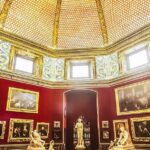

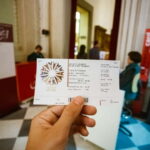
Meet at Piazza San Marco and get your bearings fast
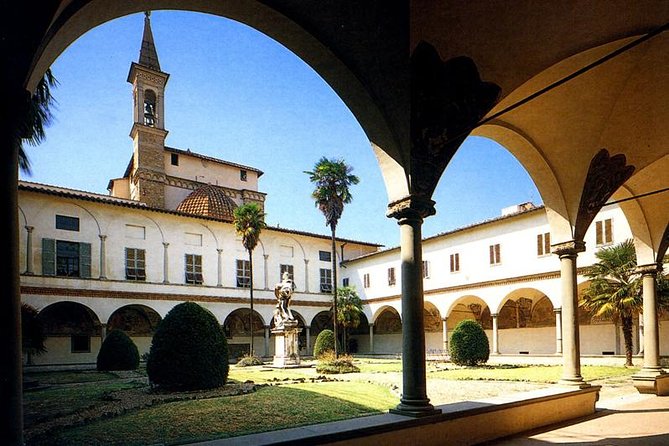
Your tour starts at Piazza San Marco, Firenze FI, Italy. That’s helpful because it puts you right in the right zone for the San Marco complex, without complicated transfers or hotel pickup drama.
Plan on about 2 hours on site. That time window matters: it’s long enough for the guide to explain the story, but short enough that you won’t feel stuck in a museum marathon. You’ll also end back at the meeting point, which makes it simple to plan your next stop.
No hotel pickup and drop-off is included, so you’ll want to map the route and arrive a few minutes early. If you’re doing this on a busy sightseeing day, give yourself buffer time. Florence sidewalks can be slow, and you don’t want to rush the one place you’re paying for a calmer pace.
Entering the church and hearing the Medici story in the room
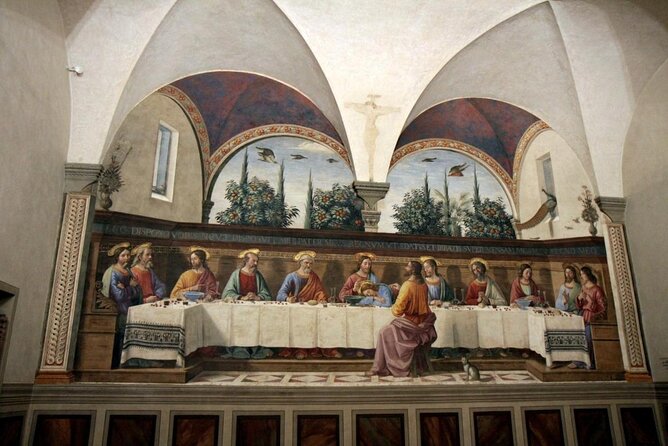
The tour begins in the church area, and this is where the larger theme clicks: this place wasn’t made by accident, and it wasn’t made for tourists. It was commissioned by Cosimo de’ Medici and shaped by architect Michelozzo in part, so the design has a purpose.
A good guide helps you understand how patronage worked back then. Instead of thinking only about individual artists, you start thinking about institutions—who funded what, who controlled the environment, and how religious life and political influence overlapped. When the guide explains the architecture as you stand in it, you start noticing how the space directs your attention.
This is also where you’ll feel the pace shift. Many museum tours rush you forward with headsets and camera commands. Here, your guide has room to slow down because your route is focused and the tour is private.
The convent spaces where you see why Fra Angelico’s art fits here
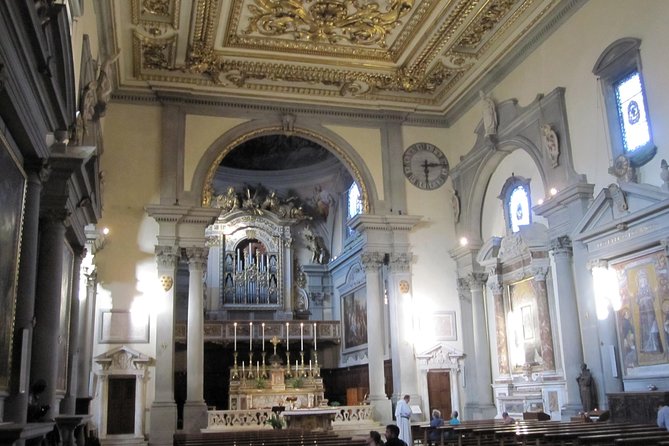
Next comes the convent and the areas linked to the friars. This is the part that most affects how you experience Fra Angelico’s work. The tour’s core promise is not just seeing paintings, but learning about the convent setting that made the artworks meaningful.
You’ll learn about Fra Angelico, and you’ll also see the friars’ cells. That’s a big deal for context. Standing near spaces designed for daily spiritual routine changes how you read the art. Instead of treating frescoes like decorative museum items, you start seeing them as part of a life lived at a steady pace.
In one experience, the guide Katherine was described as making Fra Angelico come alive with clear, engaging explanations. That matches what you want from a tour like this: you’re in a quiet environment, so the guide’s communication matters. If your English is strong or you like asking questions, a private format makes it easier to get answers right away.
The first cloister: calm geometry and storytelling
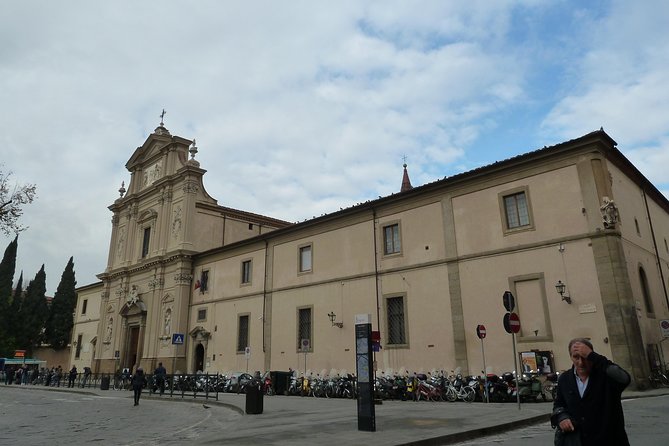
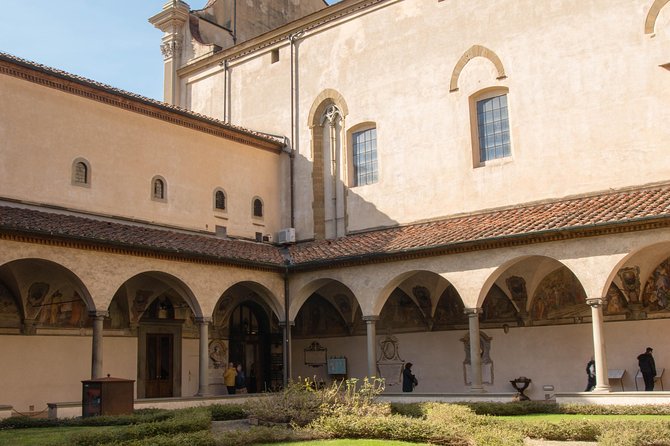
The first cloister is where you see how architecture supports contemplation. Cloisters are designed for movement and reflection at the same time, and the guide’s job is to help you notice that. You’ll connect what you saw in the church and convent spaces to the outdoor-like rhythm of the cloister.
This stop is also a reminder that Florence isn’t only about dramatic facades and grand staircases. Sometimes the power is in balance and quiet proportion. If you like Renaissance design beyond the headline names, this section will feel satisfying.
One practical tip: keep your eyes up and scan the surfaces before you lock into one artwork. The tour flow often moves from one key idea to the next, and the cloister architecture gives you “frames” that make the art easier to interpret.
- The Best tour in Florence: Renaissance & Medici Tales – guided by a STORYTELLER
★ 5.0 · 12,316 reviews





Second cloister and facade: where history becomes visible
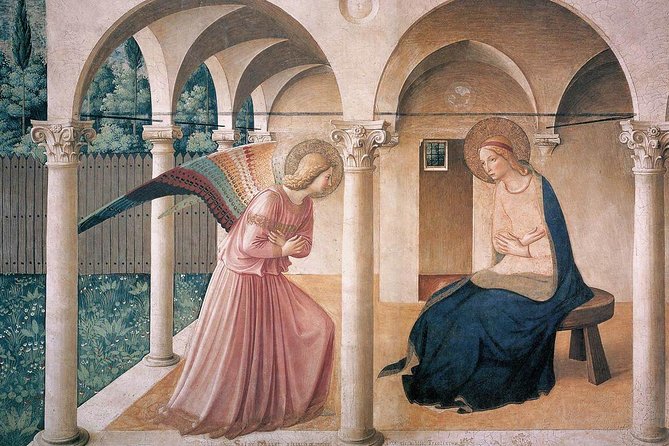
The second cloister continues the pattern, but it tends to feel like a deeper layer. By the time you reach this point, you’ve already got the Medici-convent context, so the guide can point out how themes carry through the complex.
Then there’s the facade component. Even if you’re mainly inside for art and cells, the facade helps you understand how the complex presented itself to the world. That matters because Renaissance architecture always worked on more than one level: it shaped daily life while also signaling identity.
If you’re the type who likes to understand what you’re looking at, this is the part where things start clicking. You’ll realize the tour isn’t random; it’s built as a walkthrough of the complex’s identity.
Savonarola’s cells and Pope Leo X: when ideas leave marks
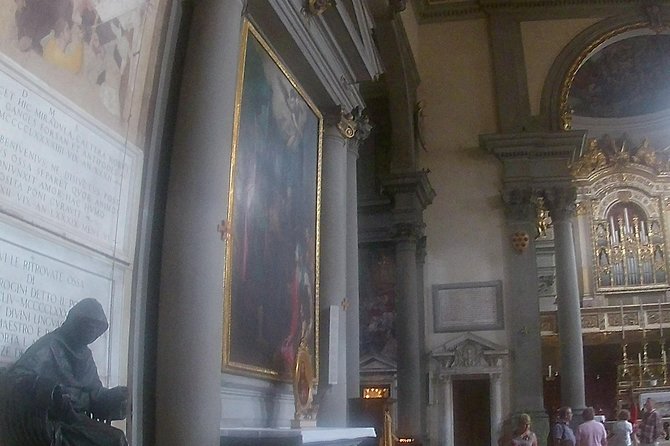
Two names can shift the emotional tone of San Marco: Girolamo Savonarola and Pope Leo X.
You’ll visit the cells linked to Savonarola. Seeing the space tied to a reformer like him is powerful because it puts you close to how history becomes personal. Instead of reading about him as a distant figure, you’re standing near the physical environment connected to his life there.
Then comes the Renaissance Library of Pope Leo X. Libraries in this era weren’t neutral storage rooms. They signaled authority, learning, and how institutions wanted knowledge to be organized and remembered. If you like the intellectual side of the Renaissance, this library stop can be a standout because it turns the tour from art appreciation into an ideas conversation.
In other words, this tour gives you more than aesthetics. It gives you the logic behind why certain spaces existed and who benefited from that setup.
How the private guide changes everything
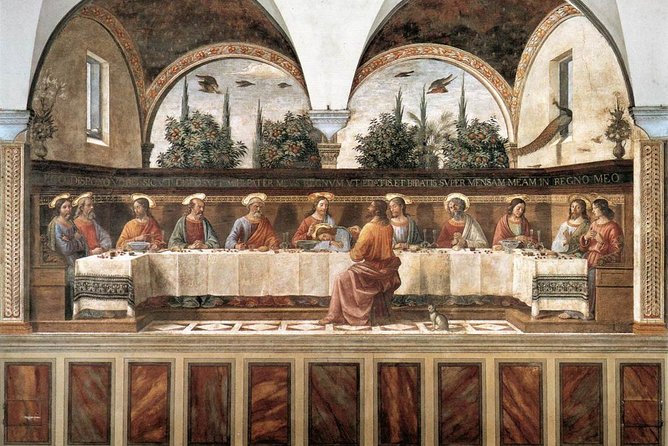
This is a private tour, so you’re not sharing the guide’s attention with strangers. That sounds like a small detail, but it changes the whole experience in a quiet building.
You can ask follow-up questions as you go. You can linger when something grabs your eye—like a specific fresco or a doorway into a cell area—without the pressure of a group getting ahead. And you’re less likely to feel rushed through transitions between church, convent, cloisters, facade, and the library.
From the experiences tied to named guides, Katherine stood out for turning Fra Angelico into a living story. Another guide, Suzanna, was noted for being very interesting and pleasant, with guests learning a lot during the visit. The consistent theme: when your guide explains clearly, San Marco becomes much more than a room full of famous artwork.
Price and value: what you get for $189.18
At $189.18 per person, this isn’t the cheapest thing you can book in Florence. But it also isn’t trying to be. The value here is the mix of:
- Private guide time (not a packed group experience)
- Entrance ticket included, so you’re not scrambling last minute
- A focused route through key parts of the complex you’d likely miss or misunderstand without context
If you’re comparing to standard group tours, the private format is the economic logic. You’re paying for fewer people under one roof with one guide, which usually translates into better explanations and more time to look.
Also, pre-booked entry can save your sanity. When you’re dealing with famous museum spaces, time costs energy, and energy costs enjoyment. Here, that friction is reduced.
Practical tips to make your visit smoother
Here’s how to get the most from your 2 hours:
- Arrive a few minutes early at Piazza San Marco so you can start without stress.
- Wear comfortable shoes. Even though this is only 2 hours, you’ll be moving through multiple parts of the complex.
- If your art focus is specific (Fra Angelico, Savonarola, Medici patronage), tell the guide at the start. In a private tour, you can steer the emphasis.
- Bring a phone or camera if you like, but also keep time for looking without screens. San Marco rewards slower attention.
One more thought: San Marco is a quieter choice. If your day also includes big crowds and loud landmarks, you’ll enjoy this even more because it gives your brain a break.
Should you book this Museo di San Marco private tour?
Book it if:
- You want Fra Angelico with real context, not just postcard labels
- You care about the human story behind Florence art—Medici, Savonarola, and institutional life
- You prefer a calmer, private pace where you can ask questions
- You’d rather spend 2 hours well than burn time in lines and guesswork
Skip it (or look for alternatives) if:
- You strongly want a highly flexible itinerary with lots of stops beyond San Marco (this is purpose-built for this complex)
- You’re planning to do it as a rushed add-on between far-away attractions
If your goal is a meaningful Florence art experience that most people pass by, this is a very sensible pick.
FAQ
How long is the Museo di San Marco tour?
It runs for about 2 hours.
What is included in the price?
The tour includes a professional guide, a private tour format, and the entrance ticket to Museo San Marco.
Is hotel pickup included?
No. You make your own way to the meeting point.
Where do we meet for the tour?
The meeting point is Piazza San Marco, Firenze FI, Italy.
What language is the tour offered in?
The tour is offered in English.
Is it a group tour or private?
It is a private tour/activity, meaning only your group participates.
Are tickets included, and will I need to wait in line?
A pre-booked entrance ticket is included, which helps avoid a long line at the entrance.
Can I access the tour using a mobile ticket?
Yes. A mobile ticket is included.
What is the cancellation policy?
You can cancel for a full refund up to 24 hours in advance. If you cancel less than 24 hours before the start time, the amount paid is not refunded.
You Might Also Enjoy

More Tour Reviews in Florence
- Tuscany Day Trip from Florence: Siena, San Gimignano, Pisa and Lunch at a Winery
★ 5.0 · 21,634 reviews - The Best tour in Florence: Renaissance & Medici Tales – guided by a STORYTELLER
★ 5.0 · 12,316 reviews