REVIEW · FLORENCE
Florence tour of the historic center. Stories, legends and gossip
Book on Viator →Operated by In Toscana Con Elena · Bookable on Viator
Florence gossip beats museum facts. This 3-hour historic-center stroll with a licensed guide mixes big monuments with legends and local gossip, so the city feels like a living place, not a checklist. With a max group size of 10, you actually get time to ask questions as you walk.
I especially like two things: the route gives you quick orientation as it threads through the classic core, and it also slows down for the smells and stories of Officina Santa Maria Novella. You’ll pause for the workshop visit (plus a multimedia room) and learn how Florence became famous for perfumes, not just stone and paintings.
One thing to consider: the Duomo and Battistery entrances aren’t included in the tour price, and you cover a lot in about three hours, so you’ll want good shoes and patience for crowds.
In This Review
- Key highlights you’ll feel on this walk
- A 3-hour route that gives you Florence bearings fast
- Santa Maria Novella: where Florence’s name and early story begin
- Officina Santa Maria Novella: perfumes, a workshop, and a multimedia room
- Palazzo Antinori: Renaissance architecture seen from street level
- Duomo square: Brunelleschi’s dome and facade details that stick
- Battistero di San Giovanni: porphyry columns and the entrance story
- Piazza della Signoria: Medici power, love, and art gossip
- Ponte Vecchio: wartime survival and photo-ready details
- Mercato del Porcellino: an ancient legend in the market mood
- Piazza della Repubblica: Roman roots to street-art present day
- Price of $45.28: what the money buys (and what it doesn’t)
- Who should book this Florence legends walk
- Quick practical tips before you go
- Should you book it?
- FAQ
- How long is the Florence historic center walking tour?
- What is the group size limit?
- Where does the tour start and end?
- Are tickets included for the Duomo and Battistero?
- Does the tour use a mobile ticket?
- Is the tour suitable for most travelers?
- Does the tour require good weather?
- Are service animals allowed?
- Can I get a full refund if I cancel?
Key highlights you’ll feel on this walk
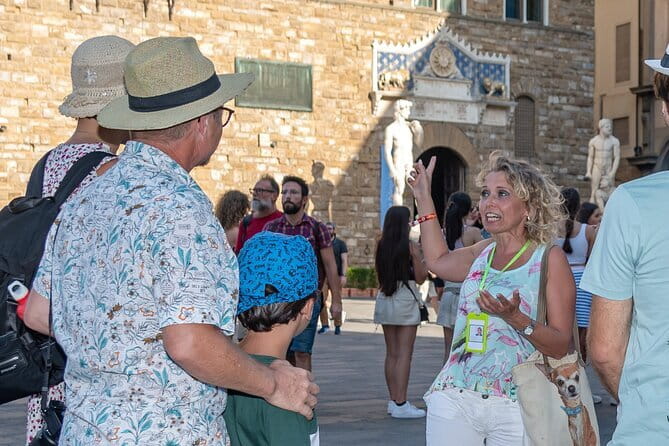
- Small group, max 10 people keeps the vibe relaxed and helps the guide answer questions along the way.
- Officina Santa Maria Novella workshop stop turns a famous name into a real, hands-on story with perfumes and a multimedia room.
- Duomo + Baptistery square details go beyond the obvious, with specific notes you can spot right on the facade and entrance.
- Piazza della Signoria Medici stories add bite to the open-air museum feel, including art and power gossip.
- Ponte Vecchio and the Vasari Corridor angle explains why this bridge area looks the way it does today, and where to aim your camera.
A 3-hour route that gives you Florence bearings fast
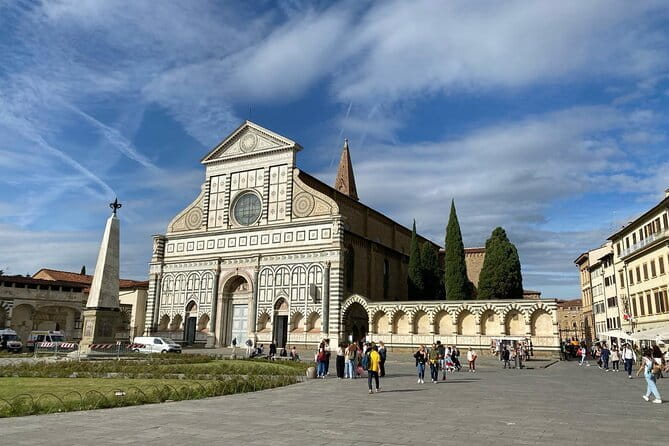
Florence can feel like a maze. This tour helps you get your bearings by moving in a clear line from one landmark square to the next, without wasting your time circling back. Starting at Piazza Santa Maria Novella and ending at Piazza della Repubblica is a smart flow, because those are both central and easy to connect to afterward.
The timing is built for a short stay. You’re walking the historic center with planned pauses, and the guide stitches everything together with stories, legends, and the kind of funny details people remember long after they’ve left the city. The format also matters: it’s group travel capped at 10 people, so it won’t turn into a stampede.
You should also know what you’re signing up for: this is not a long sit-down lecture. It’s more like a guided conversation on the move—architecture, origins, and local traditions, with a few quick “wait, what?” moments. That approach works especially well if you want to see the main sights but hate feeling bored by them.
You can also read our reviews of more historical tours in Florence



Santa Maria Novella: where Florence’s name and early story begin
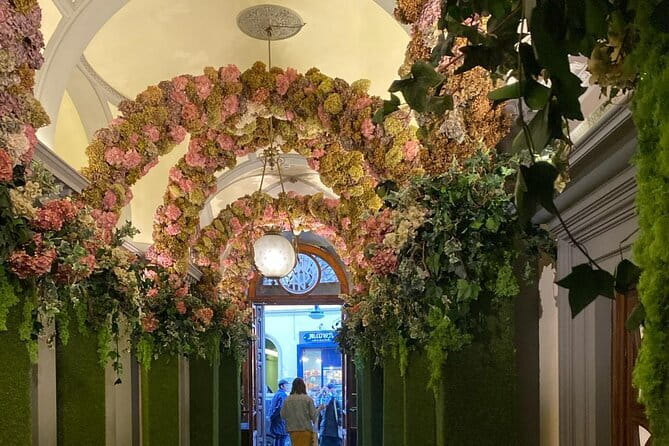
You start at Piazza Santa Maria Novella, and that first stop sets the tone. Instead of jumping straight into the Duomo area, you get early context about the city’s past—and even why Florence is called Florence. That simple start helps everything else click later, because you’re not just seeing monuments, you’re connecting them to a timeline.
From there, the walk threads through the old streets of the historic center. You’re not rushed from one photo spot to the next; you’re guided along streets, monuments, and viewpoints where small details matter. The guide also uses this stage of the tour to build curiosity for what comes later—so the next big squares feel less random.
This is a good moment to settle into the walking pace. If you’re traveling with kids, older relatives, or anyone who gets impatient waiting in lines, this tour’s early rhythm is gentle: short stops, lots of movement, and information that’s meant to be heard while you walk.
Officina Santa Maria Novella: perfumes, a workshop, and a multimedia room
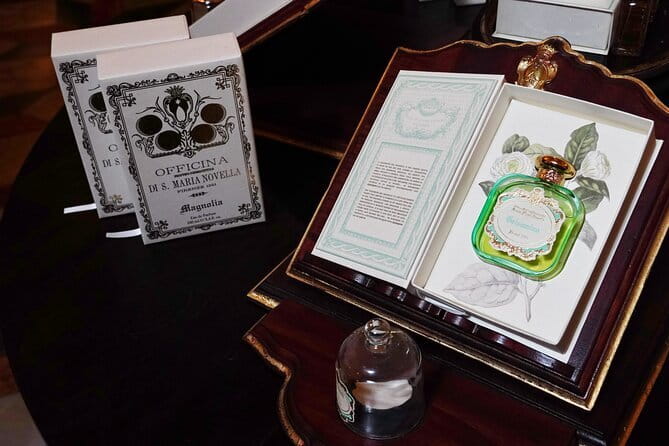
This is the stop that often feels different from the typical Florence “marble-only” tour. You visit Officina Profumo Farmaceutica di Santa Maria Novella, and you’re not just outside looking in. The workshop visit includes time to learn its story and then you experience the fragrances of the perfumes as part of the visit.
What I like about this kind of stop is the way it humanizes Florence. Perfume production is tied to daily life, trade, and changing tastes—not just to royal portraits. You also discover two historical perfumes and where they came from, which gives the stop meaning beyond the smell.
There’s also an endcap: the multimedia exhibition room. Even if you don’t love exhibits, it’s useful because it turns the sensory part into a clearer timeline, so you understand why this brand is tied to Florence’s identity.
If you’re buying something later, the workshop stop helps. You’ll know what questions to ask and what details are worth noticing, instead of grabbing a pretty bottle with zero context.
Palazzo Antinori: Renaissance architecture seen from street level
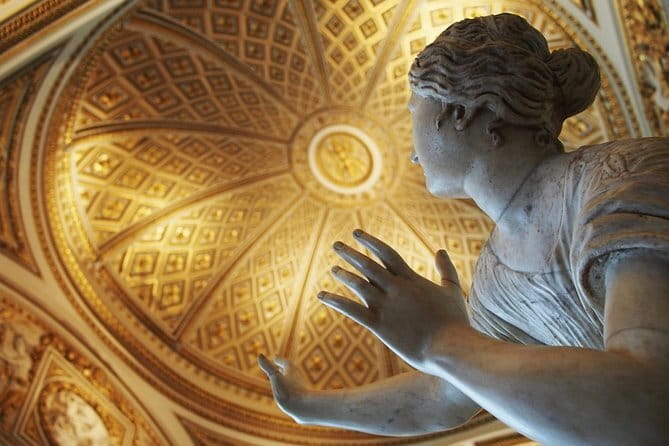
Next comes Palazzo Antinori. You look at it mainly from the outside, which can sound limiting—until you remember Florence is about reading buildings in context. From street level, you can see how Renaissance architecture signals status, order, and the power of prominent families.
The guide also points out how certain typical products were sold. That’s the practical angle: palaces weren’t just showpieces. They were part of how commerce and influence worked in the city. You walk by and suddenly the building feels less like a facade and more like a stage where real business happened.
This is a short stop (about 10 minutes), so don’t expect a deep interior visit here. But it’s a valuable connector between the sensory perfume world and the larger political art and power stories you’ll hit in the Medici-heavy squares.
Duomo square: Brunelleschi’s dome and facade details that stick
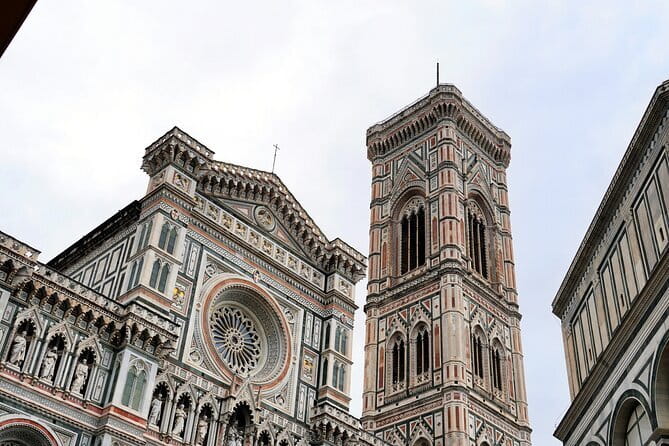
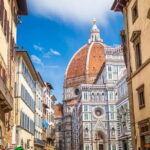
When you reach Duomo – Cattedrale di Santa Maria del Fiore, the tone shifts. The guide shares the cathedral’s history and points out interesting details on the facade that most people miss while staring at the biggest feature: Brunelleschi’s dome.
You get a few minutes of admiring time while the anecdotes land. That matters because the dome is impressive, but without guidance it can turn into just another big sight. With the right background, it becomes a story about engineering, ambition, and the kind of civic pride Florence kept building.
Important practical note: the Duomo entrance ticket is not included. So if you want to go inside, plan for the extra ticket step on the day. Also, if you arrive during peak time, don’t assume you’ll always walk straight in. Build a little flexibility into your schedule.
If you hate long lines, this tour still works because you’re guided through key exterior moments too. You’ll still get the “why this matters” explanation, even if you choose to skip the interior.
- The Best tour in Florence: Renaissance & Medici Tales – guided by a STORYTELLER
★ 5.0 · 12,316 reviews




Battistero di San Giovanni: porphyry columns and the entrance story
From the cathedral area, you cross into the Battistero di San Giovanni space. Here, the focus is on specific visual details—especially the dark porphyry columns at the entrance.
The guide explains how those columns ended up there. That kind of detail is small, but it’s exactly what makes a guided stop worth it. You’re not just hearing facts; you’re being told what to look for when you’re standing right in front of the doorway.
Just like the Duomo, the Battistery entrance ticket is not included. If you want to see the inside, that’s a separate add-on you’ll handle on your own.
This stop is about 15 minutes, so it doesn’t drag. It’s well suited for people who want standout moments without getting stuck in one place too long.
Piazza della Signoria: Medici power, love, and art gossip
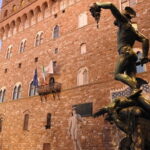
Now you enter Piazza della Signoria, and the vibe changes again. The square feels like an open-air museum, but the guide steers it toward stories that connect monuments to people—especially the Medici family.
You’ll see major monuments and buildings, and the guide talks about Medici power and loves, not just titles and dates. That’s where Florence becomes more than architecture. You start seeing how artistic patronage and political influence move together.
You’ll also hear fun, specific prompts the guide uses as you walk: Where is the portrait of Cellini in Piazza della Signoria? And what about stories like the Piggy Rite and Berta’s curse? These aren’t random trivia. They’re the kind of local legend crumbs that make the square feel like it has a pulse—like the city is telling you secrets through its art.
This stop lasts about 20 minutes. It’s long enough to notice key parts of the square, but short enough that the tour keeps moving. If you love reading statuary and symbols, you’ll get plenty to think about after you leave.
Ponte Vecchio: wartime survival and photo-ready details

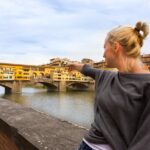
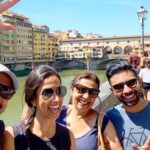
Next comes Ponte Vecchio, one of the most photogenic places in Florence. The guide also brings in the Vasari Corridor, explaining why this area is so visually striking and how it survived the Second World War bombings.
That survival detail changes how you look at the bridge. Instead of seeing only a pretty view, you notice it as a survivor—part of a city that rebuilt itself and kept certain treasures in place.
The tour gives a brief stop (about 10 minutes), which is perfect for photos without wasting time. If you want a great shot, come ready to move a little fast. Crowds can form quickly, and your best angle is often just a step away.
Ponte Vecchio is also where the “legends and gossip” style works. Even if you don’t go deep into history here, the guide keeps the energy going with stories tied to how the bridge became what it is today.
Mercato del Porcellino: an ancient legend in the market mood
After Ponte Vecchio, you swing back toward the city center via the market area around Mercato del Porcellino. This is the spot people associate with the Porcellino and that charming, old-world feel of Florence’s daily rhythm.
The guide walks you through the area and shares an ancient medieval legend connected to it. The market stops are great because they add real texture. You’re not only learning about famous families and grand buildings; you’re stepping into the kind of place where everyday locals would have wandered, bargained, and chatted.
This stop is about 15 minutes, so it’s more of a legend-and-feeling moment than a long market tour. Still, it’s an important balance in the day. It keeps the experience from becoming only monuments and fine art.
If you like people-watching, this is a good place to do it. The market energy and the guide’s story make it easy to switch from “what is that building?” to “what would life here feel like?”
Piazza della Repubblica: Roman roots to street-art present day
The tour ends at Piazza della Repubblica, and the guide frames it from long ago to now. This is described as the oldest square in Florence, with history stretching from Roman times to the present day, complete with cafes and street artists.
That “then and now” approach is a smart way to close. You finish with a feeling of continuity: Florence’s core keeps reinventing itself without losing its identity. It’s also a practical ending point. Piazza della Repubblica is easy to use as a base for your next stop, whether you’re heading to museums, dinner, or a slow wander back through side streets.
This final segment is about 10 minutes. It’s short, but it lands the big picture and gives you a place to regroup—especially if you’re meeting other people or planning your next day’s route.
Price of $45.28: what the money buys (and what it doesn’t)
At $45.28 per person for roughly three hours, the value comes from three areas:
1) A real, licensed guide who doesn’t just name sights, but explains why they matter and tells the stories behind them.
2) A focused route through the historic center, designed to be efficient in a limited time window.
3) A meaningful included stop at Officina Santa Maria Novella, where you get both workshop storytelling and access to the multimedia room—plus the fragrance experience.
What’s not included is also important. The Duomo and Battistery tickets are not included, so you should budget extra if you plan to enter both. The rest of the listed stops have admission free according to the tour setup, so you won’t feel like you’re paying for everything on top.
Given the group size cap (max 10), you’re also buying a pace that’s easier to manage than large-bus tours. If you hate waiting for crowds to move as one unit, this smaller group is usually where the value really shows.
Who should book this Florence legends walk
This tour fits best if you:
- Want the highlights without spending your whole day in one monument line
- Like architecture but also enjoy stories, legends, and funny local details
- Prefer small groups so your questions don’t get lost
- Need a guided way to connect Florence’s landmarks into one clear picture
It also works for mixed ages. One family experience described adults and kids (including ages 8 and 12) finding it both educational and fun. The key is the guide’s style: short explanations, quick pauses, and humor that doesn’t depend on being an expert.
If you’re the type who needs long time inside each church or museum room, you may find three hours tight. This is about seeing and understanding the core, not about lingering for hours at a time.
And if you’re sensitive to walking distance, wear comfortable shoes. The tour is walking-first, by design.
Quick practical tips before you go
- Wear shoes you trust. You’re moving through cobblestones and busy squares.
- Bring a little extra cash for the Duomo and Battistery tickets since those aren’t included.
- If you get thirsty, bring water. The tour description doesn’t state that water is provided.
- Plan your duomo plans with crowd reality in mind, especially in peak seasons.
Should you book it?
Yes, if you want a fast, guided Florence that mixes landmark clarity with real local storytelling. This is a strong choice for first-timers because it gives you the main sights in a smart line and explains them in a way that sticks. It’s also a good choice if you’ve been to Florence before and you’d like the city to feel less familiar and more alive through legends like the Piggy Rite, Berta’s curse, and the Cellini portrait detail in Piazza della Signoria.
Book it if your priority is “see, understand, laugh a bit, and move on.” Skip it (or pair it with longer independent time) if your priority is hours of quiet interior time.
If you’re ready for Florence with personality, this one delivers.
FAQ
How long is the Florence historic center walking tour?
The tour runs for about 3 hours.
What is the group size limit?
The tour is for groups of a maximum of 10 travelers.
Where does the tour start and end?
It starts at P.za di Santa Maria Novella, 4n, 50123 Firenze FI, Italy and ends at Piazza della Repubblica, 50123 Firenze FI, Italy.
Are tickets included for the Duomo and Battistero?
No. The Duomo (Cattedrale di Santa Maria del Fiore) and the Battistero di San Giovanni list admission as not included.
Does the tour use a mobile ticket?
Yes, the experience includes a mobile ticket.
Is the tour suitable for most travelers?
Yes. Most travelers can participate.
Does the tour require good weather?
Yes. The experience requires good weather. If canceled due to poor weather, you’ll be offered a different date or a full refund.
Are service animals allowed?
Yes, service animals are allowed.
Can I get a full refund if I cancel?
You can cancel up to 24 hours in advance for a full refund. Within 24 hours, the amount paid is not refunded.
You Might Also Enjoy

More Historical Tours in Florence

More Tours in Florence
- The Best tour in Florence: Renaissance & Medici Tales – guided by a STORYTELLER
★ 5.0 · 12,316 reviews


More Tour Reviews in Florence
- Tuscany Day Trip from Florence: Siena, San Gimignano, Pisa and Lunch at a Winery
★ 5.0 · 21,634 reviews - The Best tour in Florence: Renaissance & Medici Tales – guided by a STORYTELLER
★ 5.0 · 12,316 reviews