REVIEW · FLORENCE
Florence Private Walking Tour
Book on Viator →Operated by Travelling Italy · Bookable on Viator
Florence is best when you know where to look. This private walking tour strings together the city’s most recognizable sights with room to pause, ask questions, and take photos without rushing. You’ll get a guided sense of how Florence fits together, from one of the Dominican church giants to the political center and the Arno’s iconic bridge.
I especially like the private pace. You’re not trapped with a big group timeline, so you can slow down for viewpoints or speed through a square when you feel like it. I also like the mix of landmarks that teach different sides of Florence: religion (Santa Maria Novella and the Duomo complex), power (Republic Square and Piazza della Signoria), and daily life (Ponte Vecchio shops).
One thing to consider: a few stops are from the outside, and entry tickets are not included for Santa Maria Novella and Palazzo Vecchio. If you’re hoping to go inside museums or churches, you’ll likely need separate tickets and extra time.
In This Review
- Key things to know before you go
- Private Florence route that starts strong: Santa Maria Novella to Ponte Vecchio
- Santa Maria Novella facade: the quick lesson you’ll remember
- Piazza Santa Maria Novella and the Duomo area: where Florence turns monumental
- Republic Square and Piazza della Signoria: power, politics, and the city’s pulse
- Palazzo Vecchio from the outside: town hall energy without the museum time
- Uffizi exteriors: art legends before you ever buy tickets
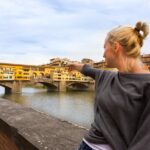
- Ponte Vecchio: the bridge that survived, and the shops that define it
- Guides and pacing: Matteo, Michele, and Anna set the tone
- Price and value: $162.03 per person for a private 3-hour hit of Florence
- Should you book this Florence private walking tour?
- FAQ
- How long is the Florence Private Walking Tour?
- Is the tour private or shared?
- What language is the tour offered in?
- Where does the tour start and end?
- Are admission tickets included for all stops?
- Do you visit the Uffizi inside the museum?
- Does the tour include a mobile ticket?
- Are service animals allowed?
- What’s the cancellation policy?
Key things to know before you go
- Private group only: just your party, with time to ask questions and adjust the pace
- Smart route: you’ll connect Santa Maria Novella, the Duomo area, Signoria, Uffizi exteriors, and Ponte Vecchio in one walk
- Outside viewing for key icons: Santa Maria Novella, Duomo area, Palazzo Vecchio, and Uffizi are presented mainly from the street
- Photo-friendly stops: multiple squares and piazzas built for picture-taking and quick sightseeing breaks
- Guides matter: names like Matteo, Michele, and Anna came up with praise for pace, stories, and helpful recommendations
- Value depends on your ticket goals: some entry is not included, but many outside stops are straightforward
Private Florence route that starts strong: Santa Maria Novella to Ponte Vecchio
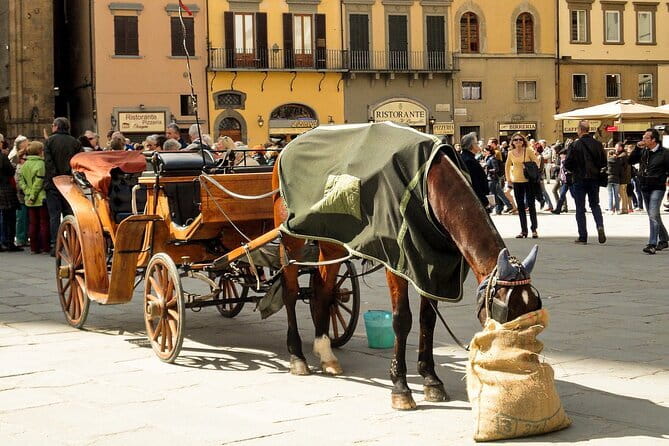
This tour runs about 3 hours and is built as a steady walk from central Florence to the river. It starts at Basilica of Santa Maria Novella (P.za di Santa Maria Novella, 18) and ends at Ponte Vecchio (50125 Firenze FI). That start matters because Santa Maria Novella sits right where you can connect with the city’s main hub area, and it sets the tone fast.
You’ll hit major landmarks in a way that feels logical, not chaotic. The timing is also tidy: the whole thing adds up cleanly across stops of roughly 15 to 30 minutes each. For your feet, that’s a good balance. Florence can turn into a long day if you stack too much. Here, you’re likely to come away with good bearings rather than just a list of names.
Because it’s private, you also get a practical benefit: if the crowds are thick, you can ask for a slight adjustment in where you stop for photos and explanations. And if you’re traveling solo, the private format tends to work like a guided brain-dump of the city’s big ideas—then you can go do the rest on your own.
You can also read our reviews of more walking tours in Florence
Santa Maria Novella facade: the quick lesson you’ll remember
Your first stop is Basilica of Santa Maria Novella, mostly as an outside introduction. You spend about 20 minutes here, and the ticket for entry isn’t included. That sounds limiting until you realize what the guide is doing: giving you the historical and architectural frame before you ever look for details on your own.
The big hook is that Santa Maria Novella is described as the city’s principal Dominican church, and it’s treated as the first major basilica in Florence chronologically. There’s also a specific design story tied to the facade: it was completed by Leon Battista Alberti in 1470. Even if you don’t memorize the year, knowing that the facade has a documented finishing moment helps you look at it like more than a pretty wall.
Why this outside approach works: Florence has a way of overwhelming your first hour. Seeing the most famous structures up close, with context, helps you understand what you’re looking at while you walk. You can take photos without planning an entry, and you still get the meaning.
Piazza Santa Maria Novella and the Duomo area: where Florence turns monumental
Next comes Piazza Santa Maria Novella, about 15 minutes, set between the central station area and Piazza del Duomo. This stop is short but strategic. It helps you transition from a church landmark into the civic and artistic core of town without feeling like you’ve jumped continents.
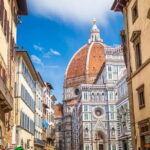
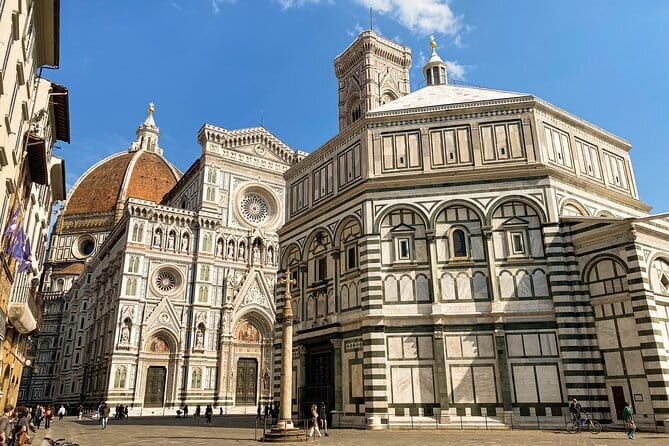
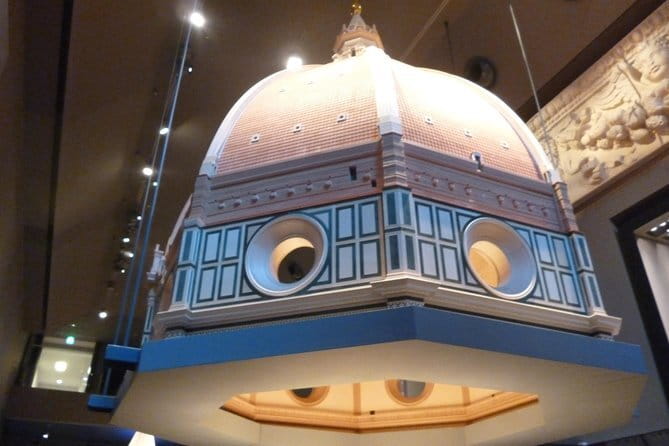
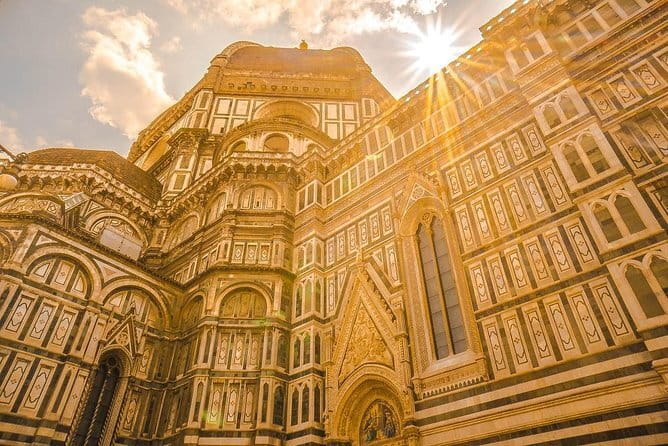
Then you move into the Duomo area for about 30 minutes. Here you’re looking at the Cathedral of Santa Maria del Fiore and the surrounding ensemble—the Baptistery and Giotto’s Campanile—again mainly from the outside. Entry tickets are listed as free, which fits the street-level viewing focus.
What to watch for (practical advice):
- Take a moment to view the whole complex at once before you focus on one piece.
- Look for how the buildings relate to the square—Florence’s piazzas are basically stages, and the Duomo complex is designed to work that way.
This stop is a huge reason the tour is worth doing even if you plan to see everything again later. You’ll leave knowing how the main structures sit together, so your later visits feel less like guessing and more like recognizing.
Republic Square and Piazza della Signoria: power, politics, and the city’s pulse
After the Duomo, you’ll head to Piazza della Repubblica for about 15 minutes. The story here is more than sightseeing. It’s described as having started as the city’s forum, later becoming the site of the old ghetto, which was swept away during improvement works called Risanamento. That brief historical context matters, because it turns a pretty square into a reminder that Florence’s growth has always had a human cost.
Then comes a longer anchor: Piazza della Signoria for about 30 minutes. It’s described as a w-shaped square in front of Palazzo Vecchio, named for the Palazzo della Signoria (also called Palazzo Vecchio). This area is treated as the political focus of the city, tied to the origin and history of the Florentine Republic. It’s also framed as a meeting place—part public stage, part crossroads for anyone heading toward major sights.
One practical detail that really helps: Piazza della Signoria is near both Palazzo Vecchio and Piazza del Duomo, and it’s positioned as a kind of gateway toward the Uffizi Gallery. So even if you’re not entering the museum today, you’re placing yourself correctly on the mental map.
Tip for your photo plan: don’t only shoot from one angle. Take two or three frames from slightly different positions. In this part of Florence, the view changes fast as you move because the architecture and statues pull your eye.
Palazzo Vecchio from the outside: town hall energy without the museum time
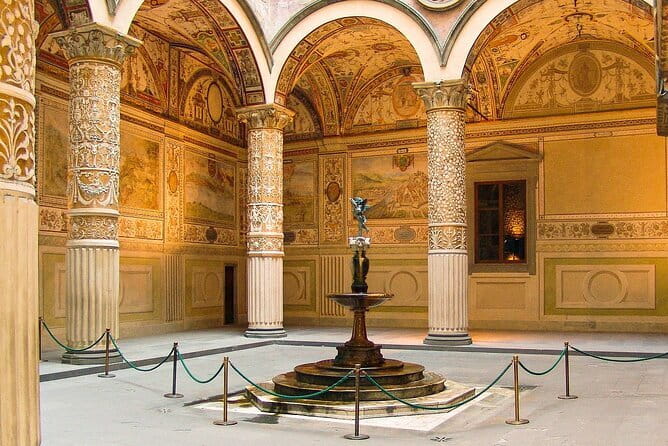
You then spend about 30 minutes at Palazzo Vecchio, with outside commentary. Entry tickets aren’t included here, so think of this as a history-and-architecture stop, not a deep inside visit.
The guide explains it as Florence’s town hall and points out how it overlooks Piazza della Signoria. This matters because the building and the square act like a pair. When you understand that relationship, Palazzo Vecchio stops being just another Renaissance facade and starts reading like a political machine built to project authority.
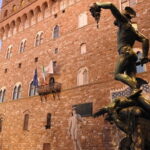
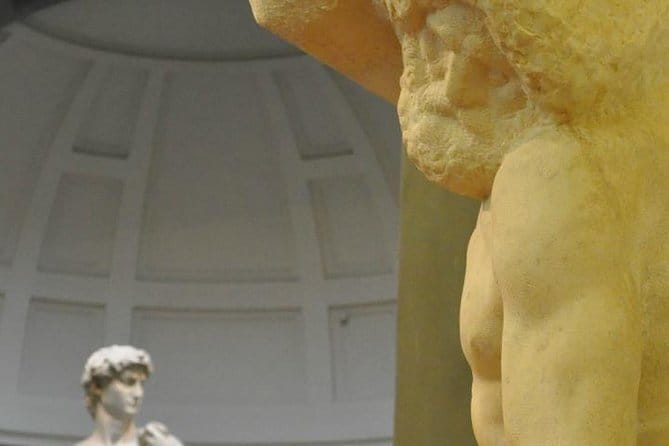
Also, the tour context connects the area to art and sculpture: there’s mention that the square holds a copy of Michelangelo’s David, and there’s a statue gallery nearby in the Loggia dei Lanzi. Even if you’re not going into that specific area, it helps you see why people hang around here. This is one of the spots where Florence feels most like a living civic center.
If you do want to go inside Palazzo Vecchio, you’ll need to plan that separately. But outside-only can still be a win if your goal is city orientation and story time rather than a full ticketed attraction day.
You can also read our reviews of more private tours in Florence





Uffizi exteriors: art legends before you ever buy tickets
Next is Uffizi, where you’ll view the attraction from the outside for about 20 minutes. Entry is listed as free, which lines up with the idea that you’re not doing a museum visit on this walk.
Still, this stop is useful. The guide frames the Uffizi Gallery as being known for works by major Italian artists like Botticelli, Giotto, Cimabue, Michelangelo, Leonardo da Vinci, and Raffaello. Even if you already know the names, hearing them set in context helps you decide what to prioritize later if you book the museum.
This is also a smart way to manage expectations. The Uffizi is a big-ticket experience, and it can swallow an entire day. By handling the exterior and the big picture during your walking tour, you get the excitement without the queue time eating your schedule.
Ponte Vecchio: the bridge that survived, and the shops that define it
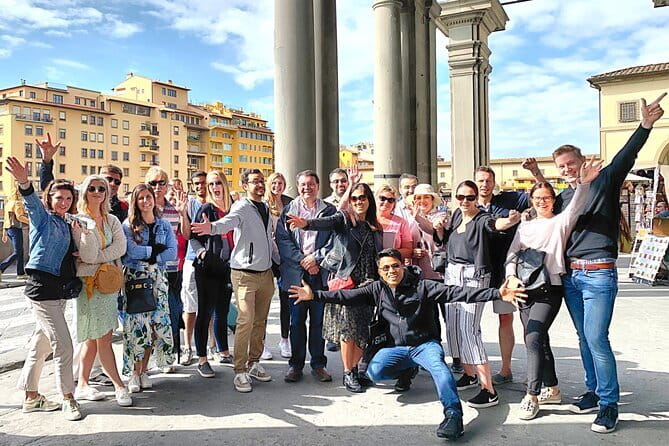
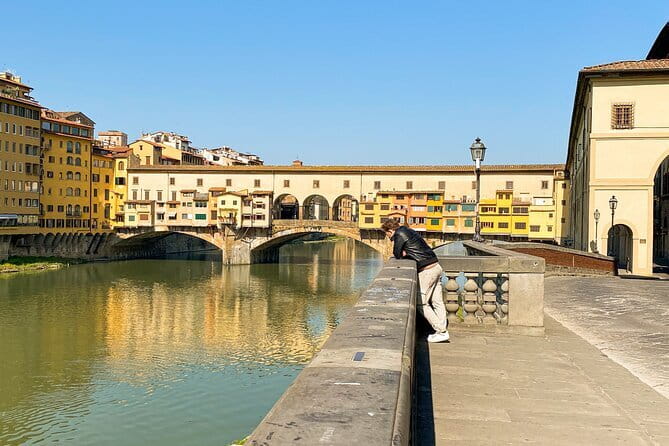
Your final landmark is Ponte Vecchio, about 20 minutes. It’s described as a medieval stone arch bridge over the Arno and noted as the only Florence bridge spared from destruction during World War II. That survival story adds weight to what can otherwise be treated like just a postcard bridge.
The real-life vibe here comes from the shops built along the bridge. The history goes through the old trades—butchers, tanners, and farmers—before explaining that the current tenants are jewellers, art dealers, and souvenir sellers. That evolution is part of why this bridge feels different from many other historic bridges: it’s still functioning as a commercial street.
How to enjoy Ponte Vecchio without getting annoyed:
- Plan to take photos quickly, then step aside to let the flow move.
- If you’re tired, this is a good place to pause and soak it in. The bridge’s lines do a lot of the work for you.
Because you finish here, you also get an easy transition into the next part of your day. You can keep walking along the river or head toward nearby central areas without needing a new transfer.
Guides and pacing: Matteo, Michele, and Anna set the tone
The strongest thread across the praised experiences is the guide’s ability to combine stories with an easy pace. Names that came up include Matteo, Michele, and Anna. People specifically highlighted that the guide listened, adjusted to what they wanted next, and kept the walk moving at a comfortable rhythm.
That pacing part is underrated. Florence’s main sights are famous, which means they attract massive attention from all directions. A good guide doesn’t just recite facts. They help you slow down enough to notice details, then keep you moving before you get stuck in decision fatigue.
Guides also bring the practical payoff: you’ll take away local tips and recommendations for the rest of your trip. That’s the kind of value that doesn’t show up on a checklist. After the walk, you’re not just carrying photos—you’re carrying a usable strategy for where to go next.
Price and value: $162.03 per person for a private 3-hour hit of Florence
At $162.03 per person for about 3 hours, this is not a budget activity. But it isn’t priced like a long museum day either. The key value is the private format: only your group participates, and you can set your pace. For families, couples, or solo visitors who hate rigid schedules, that alone can feel like a fair trade.
Also, several stops are presented in a way that doesn’t require spending time or money at each site. Some locations are marked with free admission in the context of viewing, and others are clearly outside-focused. The tour still covers the big-name landmarks, so you’re buying time, context, and guidance rather than only access.
Where the price can feel pricey is if you want deep entry experiences at Santa Maria Novella or Palazzo Vecchio. Tickets there aren’t included for entry, according to the tour info. If you’re the kind of person who wants to go inside every stop, you may end up spending extra money anyway, and the walk may feel like it ends right when the fun really starts.
Best match: you want the highlights, you like learning while you walk, and you prefer to spend your energy on a guided route rather than building one from scratch.
Should you book this Florence private walking tour?
If you want Florence in a tight, human-scaled package—this is a strong yes. It’s a smart way to get oriented fast, see the city’s headline sights, and leave with a clearer sense of what matters and why.
I’d especially book it if:
- you’re going to be in Florence for a short window and want the major sights connected
- you like questions and photo breaks more than you like rushing from place to place
- you want a guide’s recommendations for what to do after the tour ends
I might skip it if:
- you already have a detailed plan to enter many sites and you’d rather spend that time queued inside instead of walking and viewing from the street
- you’re traveling on a strict budget, since private tours typically cost more than group formats
FAQ
How long is the Florence Private Walking Tour?
It lasts about 3 hours.
Is the tour private or shared?
It’s a private tour. Only your group participates.
What language is the tour offered in?
The tour is offered in English.
Where does the tour start and end?
It starts at Basilica of Santa Maria Novella (P.za di Santa Maria Novella, 18) and ends at Ponte Vecchio (50125 Firenze FI).
Are admission tickets included for all stops?
Not all stops include admission. Santa Maria Novella and Palazzo Vecchio are listed as admission ticket not included, while other stops are listed as free in the tour info.
Do you visit the Uffizi inside the museum?
The Uffizi stop is described as attraction from the outside.
Does the tour include a mobile ticket?
Yes, it includes a mobile ticket.
Are service animals allowed?
Yes, service animals are allowed.
What’s the cancellation policy?
Free cancellation is available up to 24 hours in advance for a full refund.
You Might Also Enjoy

More Walking Tours in Florence
More Tours in Florence
- The Best tour in Florence: Renaissance & Medici Tales – guided by a STORYTELLER
★ 5.0 · 12,316 reviews




More Tour Reviews in Florence
- Tuscany Day Trip from Florence: Siena, San Gimignano, Pisa and Lunch at a Winery
★ 5.0 · 21,634 reviews - The Best tour in Florence: Renaissance & Medici Tales – guided by a STORYTELLER
★ 5.0 · 12,316 reviews