REVIEW · FLORENCE
Florence: Pasta Class with Wine, Limoncello and Dessert
Book on GetYourGuide →Operated by Experience in Florence · Bookable on GetYourGuide
Fresh pasta class in Florence never feels like a chore. You’ll knead, roll, and shape ravioli, tortelli, and fettuccine in a historic palace steps from Ponte Vecchio, then sit down to the meal you just made with wine, limoncello, and dessert. I love the hands-on pace (you’re doing the work, not just watching), and I like that the evening turns into a proper shared table meal with sauces timed for what you’re learning. One consideration: it’s a cooking session with hands-on work, so it’s not a fit if you need mobility-friendly options, and dietary rules are strict for certain needs.
The atmosphere is where this one really scores. You get a quick, cinematic-style intro and then jump straight into shaping pasta, with instructors (people mention teachers like Camilla, Alessandra, Lucrezia, Giacomo, and Sarno) guiding every step. The biggest drawback for some is that you can’t count on substitutions for vegan, gluten intolerance, or lactose intolerance, even though the listing says dietary options are available—so you’ll want to confirm before you book.
In This Review
- Key highlights worth planning around
- Getting to the kitchen: Florence location and what that means for your day
- What you actually make: ravioli, tortelli, and fettuccine (and why that sequence helps)
- The historic intro and the switch to action
- Pasta dough: eggs, flour, and getting the texture right
- Filling and shaping ravioli and tortelli
- Rolling fettuccine: where your dough skills pay off
- Cooking together and eating like a real Italian home
- Wine, limoncello, and dessert: the close that makes it feel like a night out
- Dietary needs and who should skip (important, not dramatic)
- Comfort, group vibe, and how instructors keep you on track
- Price and value: what you’re really paying for
- Should you book Pasta Class with Wine, Limoncello and Dessert?
- FAQ
- How long is the Florence pasta class?
- Where is the meeting point?
- What pasta do we make?
- Is wine and limoncello included?
- What dietary options are available?
- Do I need to arrive early?
Key highlights worth planning around
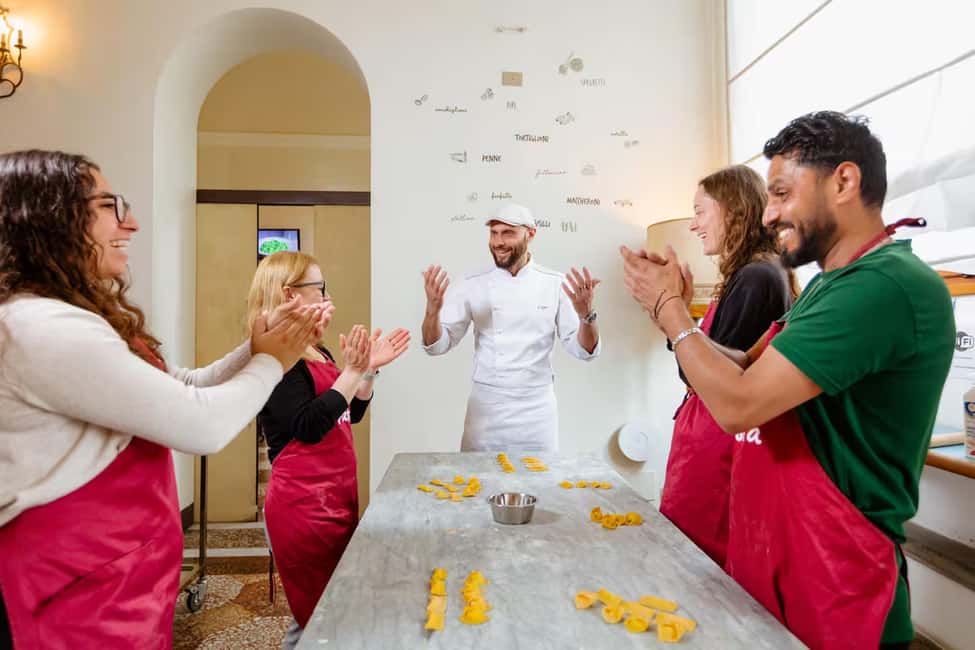
- Historic setting near Ponte Vecchio: you’re in a palace-like space, not a random kitchen room.
- You make three pasta types: ravioli, tortelli, and fettuccine, each handled differently.
- Live sauce timing: a tomato sauce simmers for hours, while butter-and-sage sauce is prepared right before serving.
- Shared “home style” meal: everyone cooks in the same pot and then eats together.
- Wine + limoncello finale: organic Tuscan wine, a limoncello shot, and dessert at the end.
- Small-group feel: many sessions seem intimate, with instructors frequently keeping everyone engaged.
Getting to the kitchen: Florence location and what that means for your day
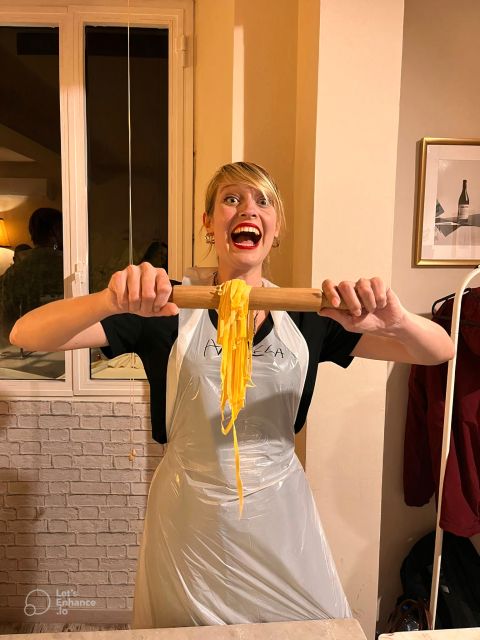
This pasta class happens at Lungarno Guicciardini, 17r (near Ponte Vecchio). That matters because it saves you from logistical headaches. If you’re already walking around the center of Florence, you can treat this as a main event that plugs cleanly into a day of sights.
Plan to arrive about 5 minutes early for check-in. That quick buffer helps you get settled, pick up your gear, and start when the session begins. Since the class is only 3 hours, you don’t want to spend half of it finding the doorway.
The class is taught in English, and the experience is built for all sorts of groups: couples, friends, families, students, and even corporate teams. People frequently mention a friendly, relaxed vibe—partly because the activity is naturally social (you’re working side-by-side, then eating at one big table). If you’re visiting Florence and want something more engaging than a museum stop, this is one of the better bets.
One more practical note: smoking isn’t allowed during the experience.
You can also read our reviews of more cooking classes in Florence

What you actually make: ravioli, tortelli, and fettuccine (and why that sequence helps)
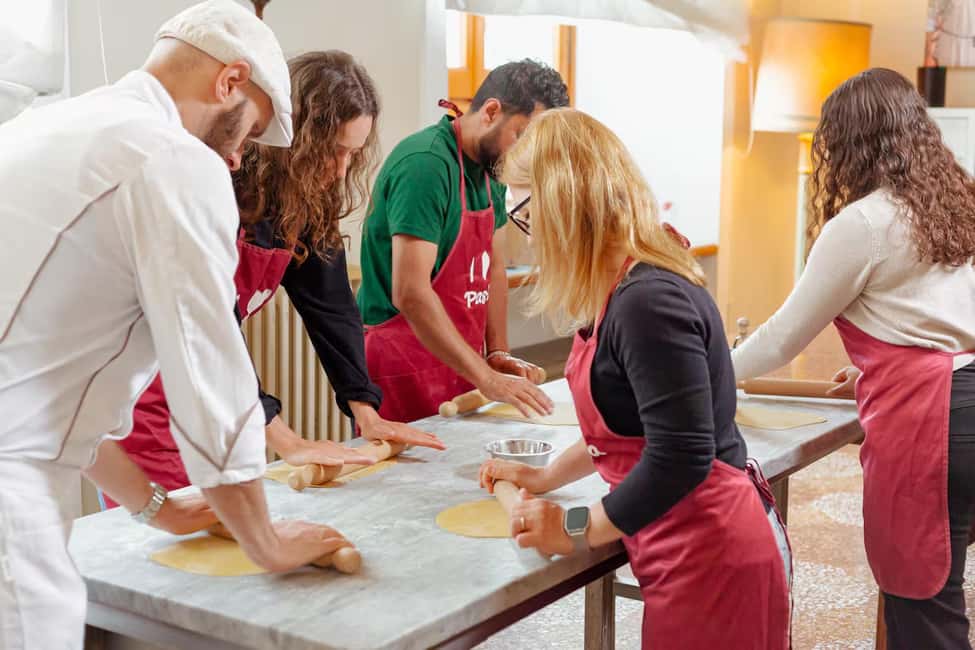
The core of the class is hands-on pasta-making, and the menu is smart. You don’t learn one technique in isolation; you learn how different shapes change the process.
You’ll make:
- Ravioli
- Tortelli
- Fettuccine
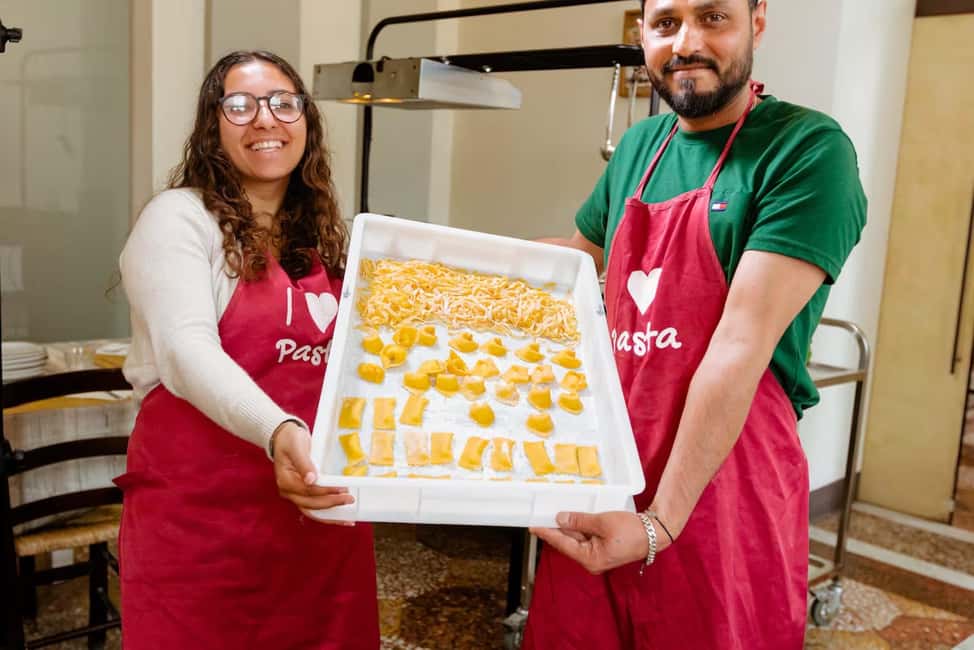
Each one asks for a different skill. Ravioli and tortelli involve filling and shaping (more hand confidence, more attention to seams or edges). Fettuccine is more about rolling and cutting thin, even strips. You’re basically training your pasta muscles in stages.
The class also follows a rhythm that makes sense. You start with kneading and rolling using eggs and flour. Then you shift into shaping tasks (ravioli/tortelli), while you’re building familiarity with dough handling. By the time you’re doing fettuccine, you’ve already developed a feel for thickness and texture.
And yes, you’ll be doing it yourself. You’re the protagonist here: kneading, rolling, and shaping with guided help. That’s one reason it’s fun for beginners. Instructors keep you moving, but they also go around to correct grip, thickness, and shaping details so you’re not stuck.
The historic intro and the switch to action
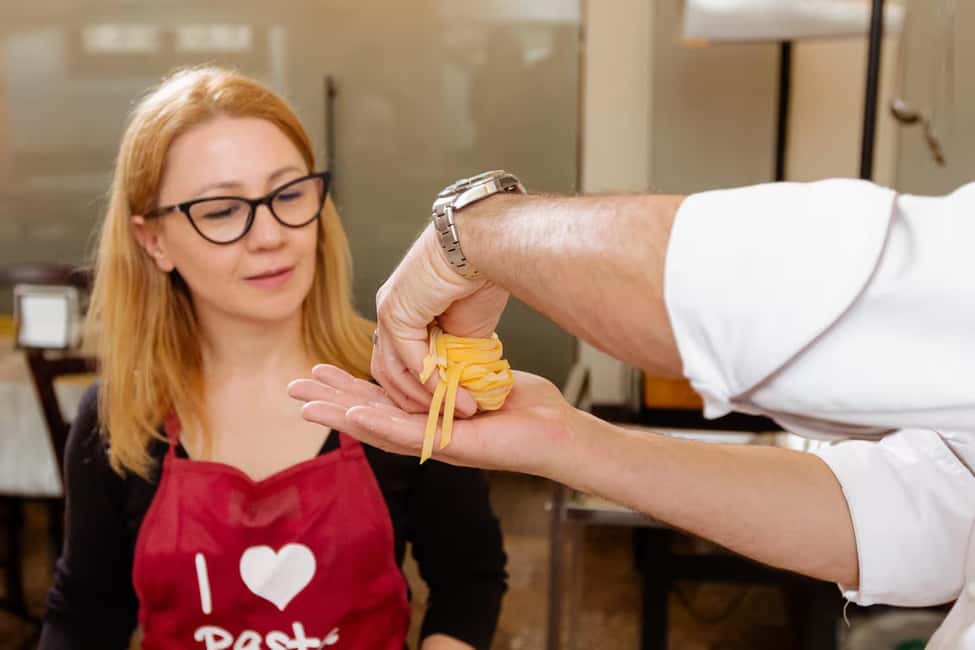
You begin with an introduction that people describe as cinematic in style. It’s a short setup that gives context about what you’re making and why Italian pasta is more than flour and eggs. Then you get right into the kitchen work.
I like this approach because it reduces that early-trip overwhelm. Instead of wandering around, you immediately have something concrete to do: dough, rolling pins, and a station set up for you. It also helps the group settle quickly. Even if you arrive hungry, you’re busy enough that time moves fast.
Pasta dough: eggs, flour, and getting the texture right
This part is the foundation. The highlights are clear: put on your apron, get your rolling pin, and make pasta with eggs and flour. In plain terms, you’re learning how to:
- build dough that’s workable (not too dry, not too sticky)
- knead until it becomes smooth enough to roll
- manage flour so your dough doesn’t fight you
What you’ll notice is that good pasta dough isn’t just about following steps—it’s about feel. The instructor’s job is to teach you what the dough should look like and how it should behave under your hands. That’s where having a real professional matters. Multiple reviews mention teachers being funny, engaging, and very hands-on, including keeping everyone involved rather than letting a few confident cooks take over.
If you’re worried about being a non-cook, don’t. The class is set up for you to succeed even if it’s your first time. And if you already cook, you’ll still get useful technique corrections, especially around thickness and how to handle dough without tearing.
Wear comfortable clothes you don’t mind getting a little flour on. The kitchen work is real.
Filling and shaping ravioli and tortelli
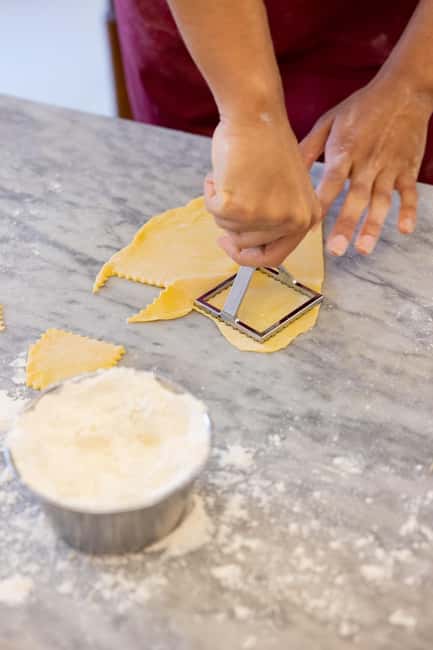
Once the dough is ready, the class moves into the shaping portion. Ravioli and tortelli both start with filling, but they’re handled differently enough that you can feel the contrast.
A helpful logistics note: some reviews mention that certain components may be premade for timing and consistency. Even with that, the shaping is still yours. You’re still learning the hands-on technique—rolling, portioning, sealing, and making it ready for cooking. That’s the part you’ll want to remember at home.
Instructors often emphasize traditional methods and family know-how. Reviews specifically point out teaching that comes from grandmothers and passed-down technique, which gives the class a sense of continuity rather than a factory feel.
If you want the best results, slow down your hands once the dough is out. Fresh dough behaves better when you work efficiently but calmly. Your instructor will likely guide you on what to do if dough gets too soft or you need a quick fix.
You can also read our reviews of more wine tours in Florence
- Tuscany Day Trip from Florence: Siena, San Gimignano, Pisa and Lunch at a Winery
★ 5.0 · 21,634 reviews
Rolling fettuccine: where your dough skills pay off
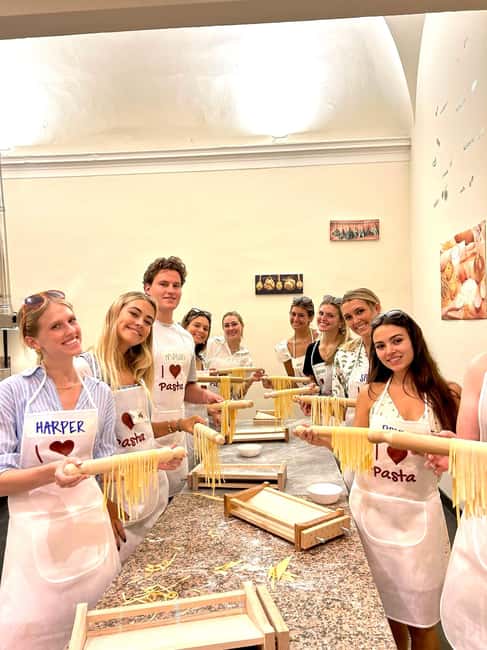
Fettuccine is the payoff for everything you did earlier. After you’ve worked the dough for ravioli/tortelli, rolling becomes more intuitive.
You’re aiming for strips that are even. That may sound basic, but it’s exactly the skill that makes homemade pasta feel different from store-bought. If your strips are uneven, you’ll taste it in the bite. If they’re too thick, the pasta can feel heavy. Too thin, and it can get fragile.
The class structure keeps this from feeling intimidating: you already know what dough should feel like. Now you get to apply that knowledge to cutting and portioning.
Cooking together and eating like a real Italian home
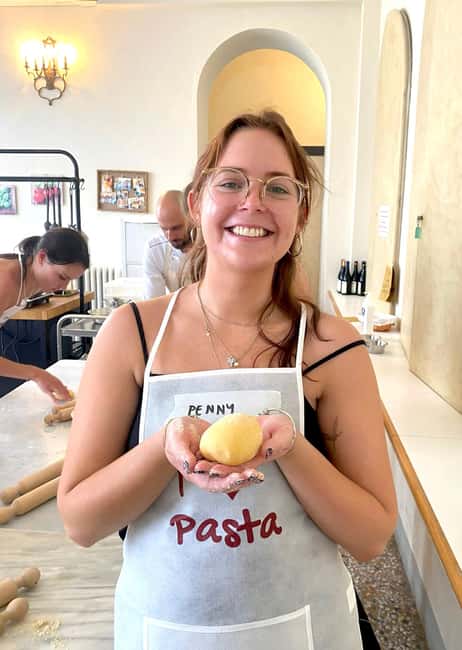
Here’s one of the most satisfying parts: you create the pasta, and then the group cooks it together in the same pot. That shared pot isn’t just for convenience—it’s part of the communal vibe. You’re learning and then immediately transitioning into the meal.
Sauce timing is built into the menu:
- A signature tomato sauce simmers for hours in advance (so it’s ready and flavorful when you sit down).
- For ravioli and tortelli, your instructor prepares a butter and sage sauce right before serving.
That last-minute prep matters. Sage and butter taste better when they’re fresh and hot, not reheated. It also makes the cooking moment feel alive, like you’re watching the last step of a family recipe happen at the stove.
Then you gather around a large convivial table and eat what you made. Reviews repeatedly mention laughter, mingling, and a relaxed atmosphere where everyone feels included—whether you’re a family group with kids or a couple on a romantic trip.
If you want a Florence experience that feeds you for real (not just a small tasting), this is one of the better options. You’re eating a meal, not snacking through a lesson.
Wine, limoncello, and dessert: the close that makes it feel like a night out
This class is more than pasta. You’ll have organic Tuscan wine from Dalle Nostre Mani, and alcohol is served only to participants of legal drinking age. After that, you get a limoncello shot plus dessert.
This is a fun pairing because it matches the emotional arc of the experience:
1) you work hard shaping pasta
2) you eat it while the room is warm and social
3) you finish with something bright, sweet, and celebratory
Dessert and limoncello aren’t just extras. They make the class feel complete, like a small Tuscan celebration rather than a single cooking task.
Some reviews also mention that there may be extra time for wine tasting around the overall experience. The listing specifically includes tasting of organic wine, so treat any extra pours as bonus rather than a guarantee.
Dietary needs and who should skip (important, not dramatic)
You’ll want to take the dietary notes seriously. The listing says dietary options may be available (including vegetarian, vegan, lactose intolerant and other diets supported), but it also states they cannot accommodate vegan, gluten-sensitivity, and lactose intolerance.
Also, it’s not suitable for:
- people with mobility impairments
- people with nut allergies
- people with gluten intolerance
- people with lactose intolerance
- vegans
So here’s the practical way to handle it: if you fall into one of those categories, don’t assume you can swap ingredients. Message the provider before booking and ask for a clear yes/no.
For many people, vegetarian is likely the easiest route, since vegetarian is explicitly mentioned as available. But you still should confirm.
Comfort, group vibe, and how instructors keep you on track
This is where the reviews really point. Instructors are frequently described as funny and energetic, and they keep everyone involved rather than letting a couple of strong cooks dominate. Names that come up again and again include Camilla, Alessandra, Lucrezia, Giacomo, Sarno, Ezgi, Jessica, and Catarina—each cited as welcoming and attentive.
The class setup also seems to encourage conversation. People mention mingling across nationalities and laughing together once the meal arrives. If you’re traveling solo, this kind of structure helps you meet others without awkward icebreakers.
Since you’re working with dough, you don’t need to be athletic, but you do need to be comfortable standing at a station and using your hands. Wear sleeves that won’t bother you when you’re leaning in, and bring a calm attitude. Dough always looks better after a little practice, even if your first raviolo isn’t museum-worthy.
Price and value: what you’re really paying for
No price is given here, so I can’t tell you if it’s cheap or expensive. But I can tell you what the value is made of.
You’re paying for four things that are hard to replicate on your own:
- guided technique (so you don’t waste time guessing)
- ingredients and tools (so you’re not buying a kitchen setup)
- a full meal outcome (wine, pasta you made, dessert, limoncello)
- a setting that’s part of the experience (historic palace, near Ponte Vecchio)
If you’re the type who likes learning one real craft on vacation, this is usually worth it. You’re leaving with a skill, plus the immediate reward of eating it. And if you’re traveling with others, the shared table format can feel like the most social meal of your trip.
Some reviews also mention you may get a take-home recipe book, which increases the value because it helps you recreate the pasta later instead of forgetting everything by the next morning.
Should you book Pasta Class with Wine, Limoncello and Dessert?
Book it if you want a hands-on Florence experience tied directly to Italian food culture. This one works especially well for:
- couples who want something more memorable than sightseeing
- families who want a structured activity with a payoff meal
- groups of friends who like shared experiences
- anyone who wants to learn real pasta technique and eat it right away
Skip it (or at least confirm carefully) if:
- you have gluten intolerance, lactose intolerance, nut allergies, mobility needs, or you’re vegan
- you’re looking for a passive tour with minimal kitchen time
- you want something very short (this is a full 3-hour class and meal)
If you’re on the fence, my advice is simple: if you can eat the included menu and you’re okay getting your hands a little floury, this pasta class is one of the most satisfying ways to spend an afternoon in Florence.
FAQ
How long is the Florence pasta class?
The experience lasts 3 hours.
Where is the meeting point?
Meet at Lungarno Guicciardini, 17r, 50125 Firenze FI, Italy. You come directly to the cooking school.
What pasta do we make?
You’ll make ravioli, tortelli, and fettuccine by hand.
Is wine and limoncello included?
Yes. The class includes tasting organic Tuscan wine, and it also includes a limoncello shot. Wine is served only to participants of legal drinking age.
What dietary options are available?
Dietary options may be supported if you inform the provider in advance, including vegetarian options. However, the activity states they cannot accommodate vegan, gluten-sensitivity, and lactose intolerance, and it is also not suitable for nut allergies.
Do I need to arrive early?
Yes. Arrive about 5 minutes early for check-in.
You Might Also Enjoy

More Wine Tours in Florence
- Tuscany Day Trip from Florence: Siena, San Gimignano, Pisa and Lunch at a Winery
★ 5.0 · 21,634 reviews
More Cooking Classes in Florence
- Cooking Class and Lunch at a Tuscan Farmhouse with Local Market Tour from Florence
★ 5.0 · 4,831 reviews

More Tour Reviews in Florence
- Tuscany Day Trip from Florence: Siena, San Gimignano, Pisa and Lunch at a Winery
★ 5.0 · 21,634 reviews - The Best tour in Florence: Renaissance & Medici Tales – guided by a STORYTELLER
★ 5.0 · 12,316 reviews