REVIEW · FLORENCE
Florence: Accademia Gallery Timed Entry Ticket
Book on GetYourGuide →Operated by See Florence Italy · Bookable on GetYourGuide
David in your face, minus the long lines. A timed entry ticket gets you past the bottleneck and straight into the Accademia Gallery, where I like the fact you can spend your time on the art instead of the queue. I also love how quickly you’re rewarded with Michelangelo’s David in the main hall, plus other Renaissance works right after.
One catch: this ticket is very time-based, and the key moment is the meeting-point handoff. You’ll exchange your voucher for a physical ticket at Ricasoli 45 with the assistant at the door, not at the office—miss the spot and your start time can feel smaller than you planned.
In This Review
- Key things I’d plan around
- Timed Entry at Accademia: why the separate entrance matters
- Meeting point reality: Ricasoli 45 door details you must get right
- David in the main hall: how to see it without feeling rushed
- Michelangelo’s unfinished chisel marks: the most interesting surprise
- Gipsoteca and plaster models: how artists practiced at full scale
- Medici musical instruments and original Stradivarius pieces
- Painting galleries and the top floor: medieval altarpieces that feel huge
- Using the PDF guide and audio app in your one-hour plan
- Price and value: is $50 worth it for one hour?
- Who should book this timed entry?
- A balanced bottom line: what to watch before you go
- Should you book the Florence Accademia Gallery timed entry?
- FAQ
- How much does the Florence Accademia Gallery timed entry ticket cost?
- How long is the Accademia Gallery visit?
- What is included with the ticket?
- Is a guided tour included?
- Where do I meet to exchange my voucher for a physical ticket?
- What items are not allowed inside the museum?
- Is the audio guide headset included?
- What identification do I need to bring?
- Can I cancel for a refund?
Key things I’d plan around
- Separate entrance for timed entry: less waiting, more gallery time.
- David first, then the supporting cast: unfinished works, plaster models, and instruments follow fast.
- Unfinished Michelangelo works: you’ll notice chisel marks where you’d expect only perfection.
- Medici-era musical instruments: original instruments, including Stradivarius pieces tied to the Medici.
- Painting galleries go big on scale: medieval altarpieces on the top floor are worth the climb.
- You’re not getting a full guided tour: you’ll rely on the audio app and a PDF guide for context.
Timed Entry at Accademia: why the separate entrance matters
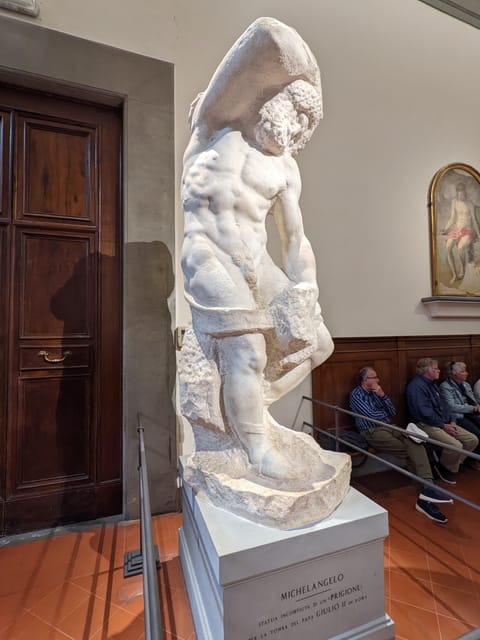
The big reason to book Accademia timed entry is simple: Florence has a way of turning museum lines into an all-day hobby. This ticket is built to help you skip the ticket office line and enter via a separate entrance, using your reserved time slot to control the flow.
You’re spending about one hour inside, so every minute counts. If you show up and waste time figuring out where to exchange your voucher, you can end up doing a rushed version of the museum when you really wanted a calm look at David, the unfinished sculptures, and the painting rooms.
The included “assistance on meeting point” matters here. Still, I’d treat it like this: you should arrive with enough buffer to find the right door before your time starts. The meeting-point instructions are very specific.
You can also read our reviews of more tours and experiences in Florence
Meeting point reality: Ricasoli 45 door details you must get right
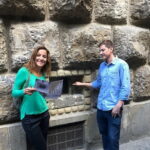
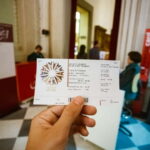
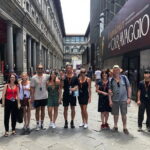
This isn’t one of those meet-your-guide-in-a-plaza situations. You’re told to exchange your voucher for a physical ticket at the meeting point via Ricasoli 45 (blue area), close to the entrance door and near the red point. You should meet the See Florence Italy assistant there, and the assistant is not at the ticket office.
A few practical things to do so you don’t lose time:
- Go straight to Ricasoli 45 and look for the blue-marked area and the red point.
- Stay in front of the door area where the instructions tell you to wait.
- Don’t ring any bell. The instructions say to wait for the assistant rather than alerting the building.
If something goes off script—wrong door, wrong number, you’re standing across the street—you can end up waiting without making progress. That’s the main operational risk with timed entry: the time slot is real, but the meeting-point handoff can be easy to misread if you’re moving fast.
David in the main hall: how to see it without feeling rushed
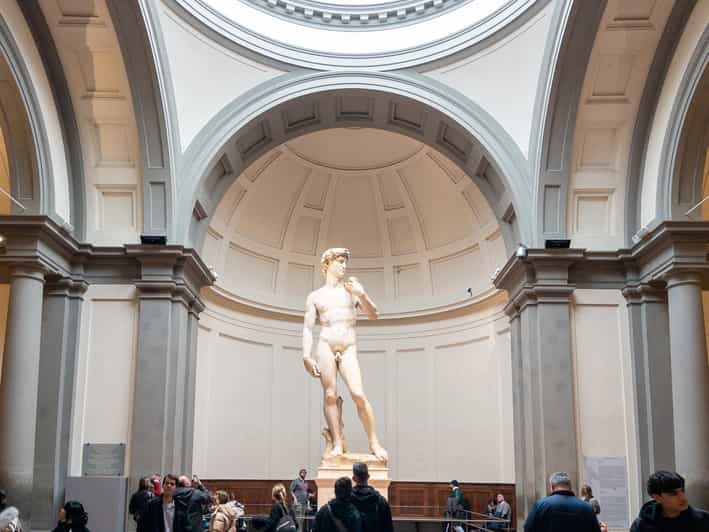
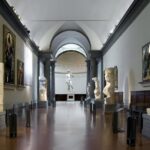
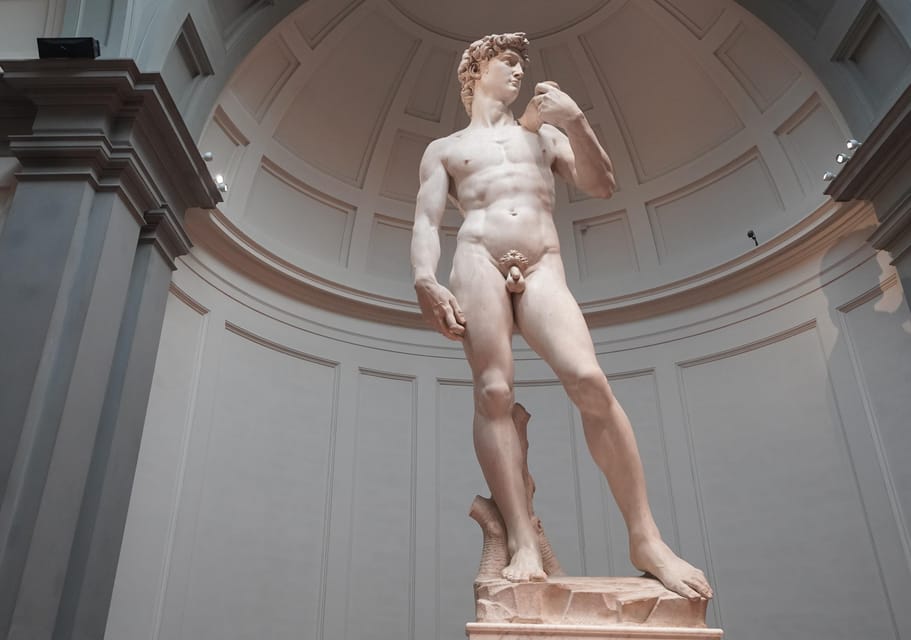
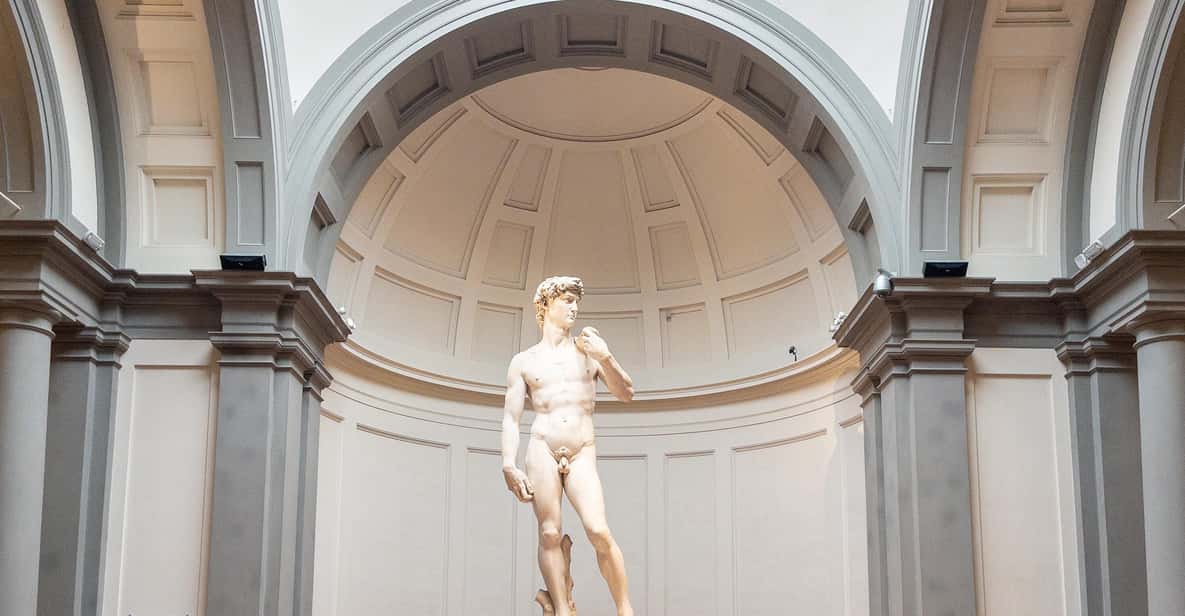
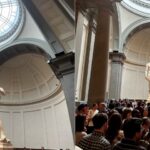
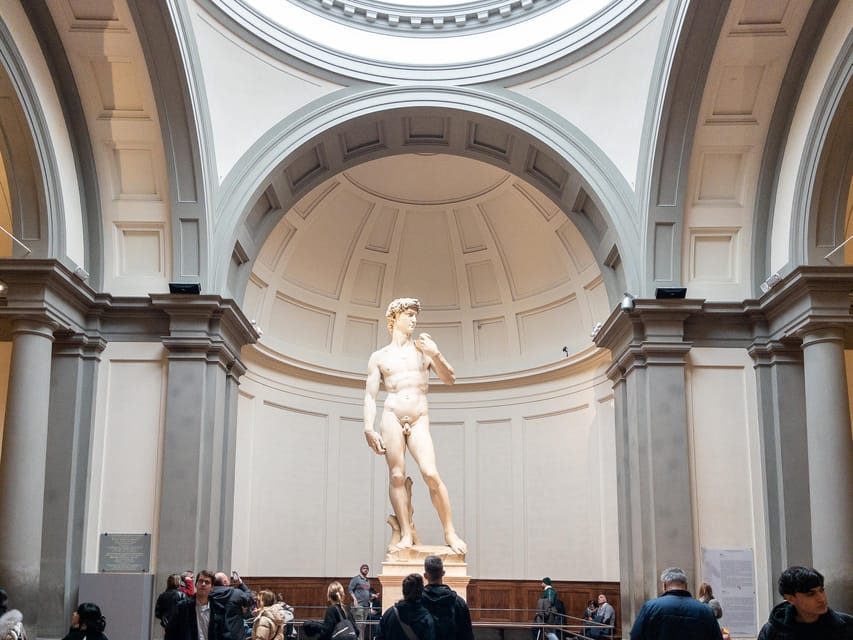
Once you’re inside, the museum sets you up with a direct hit: the main hall is where you’ll see Michelangelo’s David. The timed entry is meant to get you into the David moment quickly, and that’s exactly how you should use your first minutes.
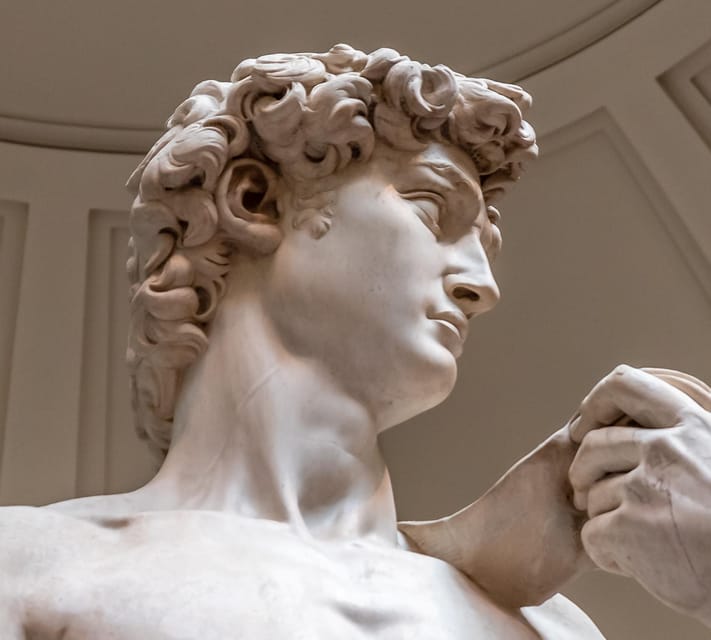
My suggestion is to let your eyes adjust before you hover for long photos. Look first at proportions and stance. Then shift your attention to the face and details in the hands. David is famous for a reason, but up close you’ll notice how the sculpture’s calm intensity is built through form, not just size.
Since you’ve only got about an hour, the “smart path” is usually:
- David
- The nearby unfinished pieces
- The rooms that show how this art was made and studied (plaster models and instruments)
- The painting galleries and top-floor altarpieces
If you spend 30 minutes only on David, the rest of what makes Accademia special starts disappearing from your schedule.
Michelangelo’s unfinished chisel marks: the most interesting surprise
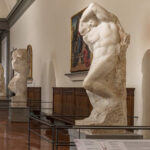
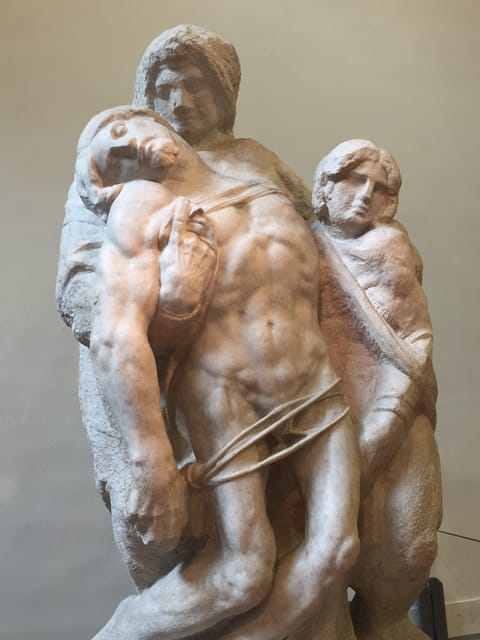
David is the headline, but the museum also shows you something more human: unfinished Michelangelo works with chisel marks still visible. This is the part that helps you understand what Renaissance sculpting actually looked like in progress.
Seeing unfinished work changes how you interpret the finished masterpieces. Instead of only admiring final polish, you can connect the dots: tool movement, planning, and the way sculptors shaped stone by working in stages.
Don’t rush these pieces. Give yourself a couple of minutes to notice edges and transitions. If you’re used to finished museum objects under perfect lighting, unfinished works can feel different at first. Then they start clicking into place as documents of process.
Gipsoteca and plaster models: how artists practiced at full scale
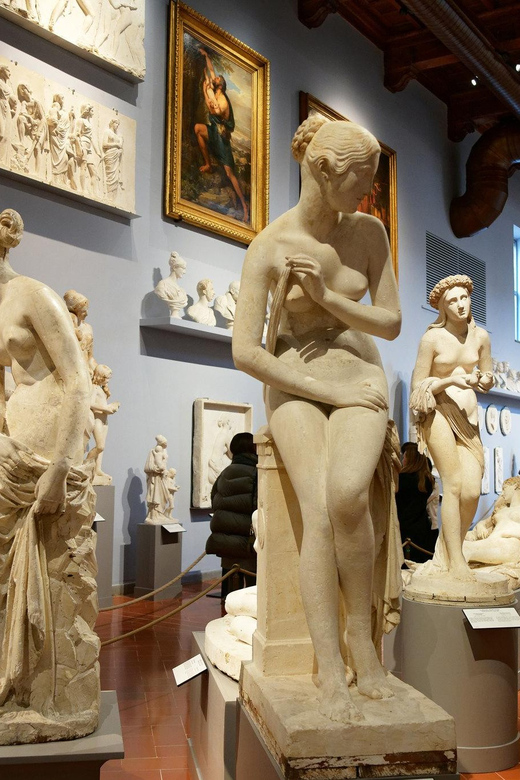
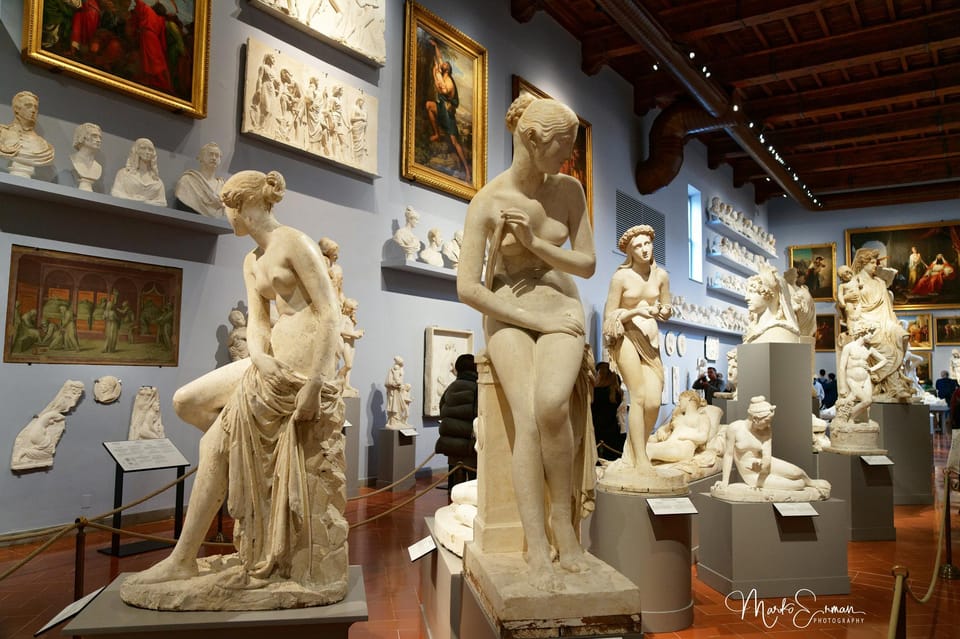
After the sculptural highlights, you’ll find the Gipsoteca, which houses plaster models made by 19th-century Florentine sculptors. Even if you’re not a sculpture nerd (no judgment), this room helps you slow down and think about technique.
Plaster models are useful because they show form in a more “study-friendly” way than carved marble or bronze. You can understand composition and structure without needing to imagine every detail carved into stone. It’s also a reminder that art history isn’t just the finished objects you see in books—it’s study, repetition, and learning by copying and measuring.
If you like science-y ways of looking at art, this room will satisfy you. If you want action and only the biggest names, give this space a short, focused stop. It’s still worth it.
You can also read our reviews of more museum experiences in Florence

Medici musical instruments and original Stradivarius pieces
One of the most distinctive parts of this visit is the museum’s musical instrument display. You’ll be able to see original instruments belonging to the Medici, including three made by Stradivarius.
This is not the kind of detail you expect to find right next to David, and that’s why it’s such a strong value add. Instruments connect art to daily life and court culture. You’re seeing master craftsmanship in another medium, tied to the same Florentine power center that supported Renaissance artists.
If you’re into music, you’ll probably linger a bit more here. If you’re not, aim for a quick but attentive look—read the information and notice materials and workmanship. It’s one of those rooms where even a brief stop gives you an extra layer of understanding about why Florence had so many arts all moving together.
Painting galleries and the top floor: medieval altarpieces that feel huge
After sculpture, the painting galleries take over. Expect works by medieval and Renaissance painters, not just one style or era. This sequencing is helpful because it broadens what you think you came for.
On the top floor, you’ll see huge medieval altarpieces. This is a practical tip: plan a little extra time here compared to what you’d spend in a smaller room. Big scale takes time to read. From a quick glance you’ll register color and figures, but the deeper effect happens when you step back and start following scenes.
If you’re short on time, don’t try to see every single painting equally. Pick a few you’re curious about, then do a “scan and savor” for the rest—otherwise you’ll run out of energy before the biggest panels.
Using the PDF guide and audio app in your one-hour plan
You’re not getting a guided tour with a group leader in this experience. Instead, you’ll have an audio guide mobile application and a helpful guide in PDF format.
That actually works well for a one-hour ticket—self-paced, but with enough context to make the art less mysterious. I’d treat the PDF guide as your map and the audio app as your moments. Start with David, then use audio for the unfinished works and the rooms where technique matters. Skip audio where you only want quick visual time.
One small practical note: a headset is not included. So if the audio app requires one (and in many places it does), bring your own or make sure your phone setup is ready.
Price and value: is $50 worth it for one hour?
At $50 per person for about one hour, this isn’t a budget ticket. The value comes from what you’re buying: saved time and reduced uncertainty.
If you’re coming during peak hours, the cost can be worth it because your biggest risk in Florence isn’t just price—it’s waiting too long to start and then feeling rushed inside. A skip-the-line ticket to one of the city’s most demanded museums helps you protect your schedule.
You also get:
- A timed entry reservation
- A reservation/skip-line fee
- Exchange of voucher for physical ticket via the meeting-point process
- Audio guide mobile app
- Assistance meeting point and from the office
What you might not get (and this matters for expectations) is a full, step-by-step guided explanation throughout. If you want a lecturer’s pace, choose something else. If you want control over your route and lighting and still want solid interpretation support, the price can make sense.
Who should book this timed entry?
This ticket fits best if you:
- Want David and the core Accademia highlights without spending your vacation time in lines
- Prefer a self-paced visit, using an audio app and PDF guide
- Are visiting with limited time and want a controlled museum visit of about one hour
- Like seeing process and not only perfection, especially through the unfinished sculptural works and study models
It may not be ideal if you:
- Want a live guide walking you room to room
- Need lots of time to read every label and artwork in depth (the one-hour duration can be tight)
A balanced bottom line: what to watch before you go
Accademia can feel magical when you land inside at the right moment. This ticket is designed for that by reducing waiting and giving you a reserved entry window.
But your experience hinges on logistics at the front end. The meeting point is specific—Ricasoli 45, with the assistant near a blue point and red marker, and you’re not waiting inside the office. Show up ready to find the right door and you’ll start the museum smoothly.
Once you’re in, the museum does what it’s famous for: David, Michelangelo’s unfinished work with visible chisel marks, the Gipsoteca plaster models, and Medici-linked instruments including Stradivarius. Then you get variety with the painting galleries and top-floor medieval altarpieces.
Should you book the Florence Accademia Gallery timed entry?
I’d book it if you value time and want the highest-demand part of the museum—David—with the least hassle possible. For $50, you’re paying mainly to protect your schedule and avoid the ticket office scramble, and that’s a fair trade if you only have one hour to make it happen.
Skip booking it if you’re the type who enjoys slow wandering with lots of flexibility and you don’t mind waiting. Also consider choosing a different format if you strongly want a live guided tour rather than using the audio app and PDF.
If you’re trying to make Florence work with a tight plan, this is one of those tickets that can turn a stressful hour into a memorable one—especially when David is the first stop.
FAQ
How much does the Florence Accademia Gallery timed entry ticket cost?
The price is $50 per person.
How long is the Accademia Gallery visit?
The duration is listed as 1 hour.
What is included with the ticket?
Included features are a timed entry ticket to the Accademia Gallery, a skip-the-line ticket, a reservation fee, assistance on meeting point and from office, and an audio guide mobile application.
Is a guided tour included?
No. The ticket includes timed entry and self-guided support (PDF guide and audio app), not a guided tour.
Where do I meet to exchange my voucher for a physical ticket?
You exchange your voucher for a physical ticket at the meeting point via Ricasoli 45 (blue) close to the entrance door and red point. You should meet the See Florence Italy assistant there, not at the office.
What items are not allowed inside the museum?
Pets are not allowed. Weapons or sharp objects are not allowed. Flash photography is not allowed. Alcohol and drugs are not allowed.
Is the audio guide headset included?
Headset is not included.
What identification do I need to bring?
You should bring a passport or ID card. Children also need passport or ID card. A copy is accepted.
Can I cancel for a refund?
Yes. You can cancel up to 24 hours in advance for a full refund.
You Might Also Enjoy


More Museum Experiences in Florence
More Tickets in Florence


More Tour Reviews in Florence
- Tuscany Day Trip from Florence: Siena, San Gimignano, Pisa and Lunch at a Winery
★ 5.0 · 21,634 reviews - The Best tour in Florence: Renaissance & Medici Tales – guided by a STORYTELLER
★ 5.0 · 12,316 reviews