REVIEW · FLORENCE
Renaissance Florence & the rivalry of Michelangelo and Leonardo
Book on Viator →Operated by Senza Meta - La Dublino dei Dublinesi Tour in Italiano/inside Dublin walking tour · Bookable on Viator
This tour turns Florence art history into a rivalry. You’ll walk the key Renaissance setting for Michelangelo and Leonardo—their different personalities, their working methods, and the political pressure that helped art level up. I especially like how it connects famous artworks to the people, institutions, and arguments that shaped them, instead of treating art like museum wallpaper.
I also love the payoff stop at Basilica di Santo Spirito, where you’ll see Michelangelo’s early wooden crucifix, Il Crocifisso Ligneo, tied to the story of anatomy study. One possible drawback: a few headline sites on the route are mainly exterior views (and tickets for Palazzo Vecchio and the Duomo aren’t included), so this isn’t the best choice if you want maximum interior time.
In This Review
- Key Things I Think You’ll Notice (Fast)
- Where the Rivalry Story Really Starts: Piazza della Signoria
- Palazzo Vecchio Exterior: Florence’s Political Backdrop
- Piazza della Signoria: Sculpture, Politics, and a David Replica
- Duomo Exterior Route: Brunelleschi and Giotto, Up Close
- San Lorenzo: Medici Power, Michelangelo Design, and the Market Surroundings
- Piazza Santa Trinita to Ponte Vecchio: A Break with Real Florence Views
- Basilica di Santo Spirito: Santo Spirito’s Calm and Michelangelo at 17
- How Antonio’s Style Changes the Way You See Florence
- Price and Value: Paying for Context Plus a Ticket
- Who This Tour Suits Best
- Should You Book This Michelangelo vs Leonardo Tour?
- FAQ
- How long is the tour?
- Where does the tour start and end?
- What’s included in the price?
- Are tickets for Palazzo Vecchio and the Duomo included?
- What will I see at Basilica di Santo Spirito?
- How big is the group?
- Is cancellation flexible?
- Is it suitable for most travelers?
Key Things I Think You’ll Notice (Fast)
- Michelangelo and Leonardo framing: the tour explains why their rivalry mattered, not just what they made
- Santo Spirito’s Michelangelo crucifix: a young Michelangelo piece connected to anatomy study and a specific moment in his life
- Scenery with context: Piazza della Signoria as a political hub, not just a photo stop
- Real Florence rhythm: short stops through squares, church landmarks, and the Arno views
- Small group size (max 16): easier pacing for questions and explanations as you move
Where the Rivalry Story Really Starts: Piazza della Signoria
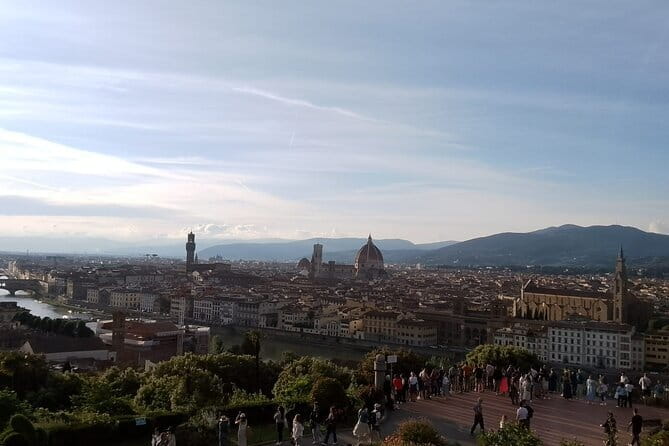
I like starting in Piazza della Signoria because the square explains the Renaissance in one glance: art wasn’t hanging on walls for fun. It was part of power. Florence used public space like a megaphone, and the political story is right there under your feet.
From the start, you’re set up for the Michelangelo vs Leonardo theme. You’ll hear how their competition fed a fast-moving culture of innovation. The guide’s job is to make that competition feel human—less like a history lecture, more like understanding how two different minds attacked the same era with different tools.
This is also where you get a quick dose of Florence’s “open-air museum” feel. You’ll spot the famous statuary around the square and learn how these works functioned as public statements.
You can also read our reviews of more tours and experiences in Florence.
- Tuscany Day Trip from Florence: Siena, San Gimignano, Pisa and Lunch at a Winery
★ 5.0 · 21,634 reviews
Palazzo Vecchio Exterior: Florence’s Political Backdrop
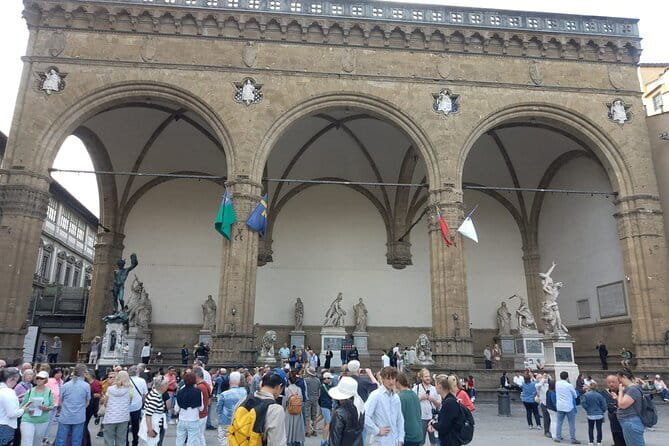
Your first major landmark is Palazzo Vecchio, known for being a monumental presence that still shapes how the area feels. Even when you’re only seeing the exterior, it matters—this building helped define who was in charge, and that context is what makes the Renaissance story click.
In practical terms, this is an efficient beginning. You don’t burn time hunting entrances. You get the big-picture orientation, then you move into the square where the city’s art and politics collide.
If you’re the type who hates “outside-only” stops, flag this early: the tour focuses on the front yard and exterior rather than indoor museum time. You can still leave with clarity, but don’t expect this to replace a full Palazzo Vecchio visit.
Piazza della Signoria: Sculpture, Politics, and a David Replica
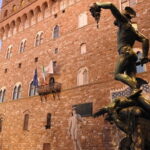
After Palazzo Vecchio, the tour moves right into the heart of it all: Piazza della Signoria. This is the place where you can feel why Renaissance art became public and persuasive. The square has been a political hub since the Middle Ages, and it’s basically a timeline you can walk through.
A big highlight is the Loggia dei Lanzi area next to the palace. Here you’ll see major works such as:
- Benvenuto Cellini’s Perseus with the Head of Medusa
- Giambologna’s The Rape of the Sabine Women
And yes, you’ll also get the famous replica of Michelangelo’s David in the square. Even as a replica, it’s useful because it lets the guide talk about David as an idea: civic identity, moral messaging, and the body-as-statue obsession that both Michelangelo and his era kept chasing.
There’s also the Fountain of Neptune nearby, which gives you another angle on how Florence used bold public commissions to project authority.
Expect this segment to be part explanation, part wandering—short and punchy, with enough time to actually look at what you’re standing next to.
Duomo Exterior Route: Brunelleschi and Giotto, Up Close

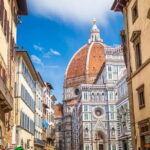
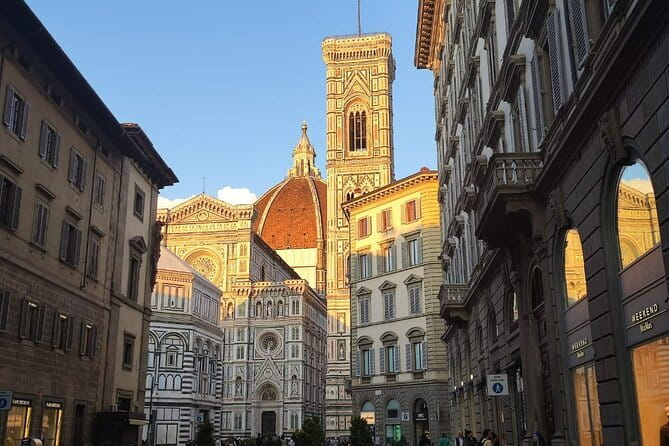
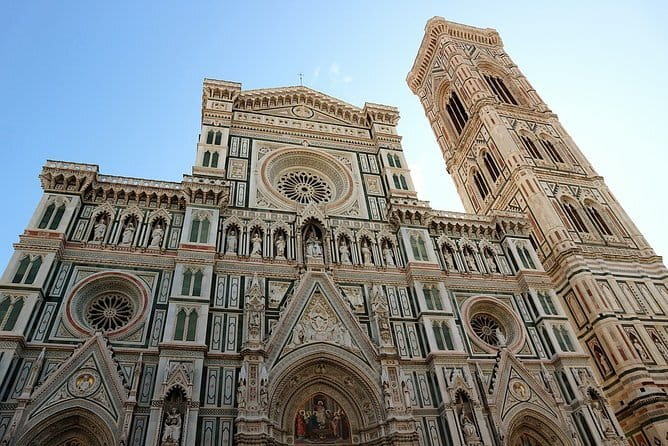
Next, you go to the Duomo complex area for exterior views of Santa Maria del Fiore, Giotto’s Bell Tower, and the Baptistery of St. John. If you want the inside of the dome or baptistery, this tour won’t cover that because admission for the Duomo isn’t included. Still, the exterior walk is a strong use of time.
Here’s what you’ll learn that makes the architecture feel less abstract:
- Brunelleschi’s dome is described as a major Renaissance achievement: a double-shell design using a herringbone brick pattern for stability.
- Giotto’s bell tower was designed by Giotto, but he didn’t live to see the full build. Andrea Pisano and Francesco Talenti completed later work.
This matters because it turns the Duomo from a “big building” into a story about invention under pressure. The Renaissance loved problems. Great architecture here becomes a symbol of technical daring, and the tour uses that to support the bigger Michelangelo-and-Leonardo theme: innovation wasn’t optional.
Practical tip: wear shoes that can handle uneven stone, because the pace is steady and you’ll likely spend more time on your feet than you think.
San Lorenzo: Medici Power, Michelangelo Design, and the Market Surroundings
San Lorenzo is one of my favorite Florence areas because it’s layered. You get grand religion, political influence, and creative genius rubbing shoulders in a small zone.
You’ll focus on Basilica di San Lorenzo and connect it to the Medici family, since it served as their parish church. Then the tour shifts to the Medici Chapels and highlights Michelangelo’s involvement, including the New Sacristy (noted as designed by Michelangelo).
The stop also brings in Laurentian Library, where Michelangelo is credited with designing both the building and its distinctive staircase. Even if you’re only seeing parts of the complex rather than deep interior time, the guide’s explanation helps you understand why those spaces were built to impress and instruct at the same time.
One more thing you’ll notice: the area around San Lorenzo includes San Lorenzo Market, so you’re not walking through a dead historical display. It feels like a working neighborhood with history built into the daily flow.
If you want a museum-only afternoon, you might find the pace here brisk. But if you like context—why buildings exist and who wanted them—that’s exactly what this stop is for.
- The Best tour in Florence: Renaissance & Medici Tales – guided by a STORYTELLER
★ 5.0 · 12,316 reviews


Piazza Santa Trinita to Ponte Vecchio: A Break with Real Florence Views
After heavier landmarks, the tour lightens into shorter stops: Piazza Santa Trinita and Ponte Vecchio.
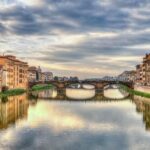
Piazza Santa Trinita sits along Via de’ Tornabuoni, an elegant street known for historical buildings and luxury shops. The square itself is smaller, but it’s a useful pause. You get a change of texture: less “grand statement,” more everyday Florence elegance.
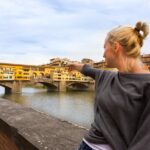
Then comes Ponte Vecchio. This bridge over the Arno is iconic for its architecture and history. Even with just a short viewing window, you get the classic Florence moment: water, stone, and that sense that the city keeps reusing the same idea—beauty where people pass through.
This segment is also a good time to reset mentally. The tour’s theme can be intense—artists, politics, rivalry—and Ponte Vecchio gives you space to absorb what you’ve just learned.
Basilica di Santo Spirito: Santo Spirito’s Calm and Michelangelo at 17
The tour’s emotional and intellectual highlight is Basilica di Santo Spirito in the Oltrarno district. Oltrarno is often quieter than the main crush, and that calm helps your visit feel more like a real church experience than a choreographed attraction.
You’ll specifically get to see Michelangelo’s wooden crucifix, listed as Il Crocifisso Ligneo—an early masterpiece created when Michelangelo was only 17 years old.
What makes this stop special is the story attached to the object:
- it was created to thank the Prior for allowing him to study anatomy
- that anatomy study is presented as the stepping stone to Michelangelo’s later, advanced understanding of the human form
That’s the kind of connection I love because it explains technique through life. You’re not just learning art history—you’re hearing how opportunity, mentorship, and curiosity shaped what Michelangelo could later do with the body.
Because the tour includes the Michelangelo wood cross ticket, you’re not left guessing how to access it. It’s one of those rare moments where the tour’s price feels directly tied to an actual experience, not only storytelling.
If you’re a Michelangelo fan, don’t skim this part. Even if you’ve seen plenty of his work, this early piece connected to anatomy is the “new angle” that makes the whole day feel different.
How Antonio’s Style Changes the Way You See Florence
One of the smartest parts of this tour is that the guide doesn’t just talk. You get Antonio’s code, described as key books of Florence plus the best venues for food, music, drinks, and museum time.
That matters because it changes what you do after the tour. Florence is huge and specific—each neighborhood has its own tempo. A good guide helps you pick where to spend your limited vacation energy.
The guide also keeps the Renaissance rivalry grounded in contrast. You’ll hear about contrasting personalities and personal techniques between Michelangelo and Leonardo, then see how the political and cultural backdrop supported the era’s innovation and artistic fervor.
This is where the small group size (max 16) helps. You’re not lost in a sea of earbuds. You can actually ask quick questions or follow the chain of reasoning without falling behind.
Price and Value: Paying for Context Plus a Ticket
At $31.35 per person for about 3 hours, this tour sits in the “short walk, big payoff” category—especially because it includes:
- a professional English guide
- Michelangelo wooden crucifix ticket
- Antonio’s code with suggested books and local favorites
Not included are admission tickets for Palazzo Vecchio and the Duomo complex, and the tour also focuses on exterior viewing for those stops. So if your dream day is all-inside, all-the-time, you may end up buying extra tickets later.
But if you want a focused introduction that places Renaissance art inside Florence’s power map, the value is strong. You’re paying mainly for interpretation plus a specific ticketed moment at Santo Spirito—two things that are hard to replicate if you try to DIY this day without getting lost in “where do I go next.”
Also, note the tour often gets booked far ahead (average booking time is listed at 122 days), which is a hint that slots go quickly. If your dates are firm, plan early.
Who This Tour Suits Best
This experience works especially well if:
- you’ve seen big-ticket Florence sights already (or you’ve got them scheduled) and want something smarter in between
- you like art history stories that explain why people made choices, not only what they produced
- you want a manageable walking plan with a maximum group of 16 and a clear endpoint near Santa Croce
It’s less ideal if you want long interior museum time at major sites like Palazzo Vecchio or the Duomo, since those admissions aren’t included here and the focus is mostly on exterior views.
Should You Book This Michelangelo vs Leonardo Tour?
I’d book it if you want a Renaissance Florence day that feels like a guided narrative—Michelangelo and Leonardo as the driving characters, and Florence as the stage where their competitive energy took shape. The Santo Spirito stop, with Il Crocifisso Ligneo at age 17 and the anatomy-studies backstory, is the kind of detail that makes you remember the tour after you leave the city.
I would skip or supplement it if your top priority is getting deep inside Palazzo Vecchio and the Duomo. In that case, plan those as separate ticketed visits and treat this tour as the context-builder and story engine.
FAQ
How long is the tour?
The tour is about 3 hours long.
Where does the tour start and end?
It starts at Piazza della Signoria (P.za della Signoria, 50122 Firenze FI) and finishes in front of Santa Croce Church.
What’s included in the price?
Included are a professional local tour guide, a professional English tour guide, Antonio’s code (recommended books and best places for food, music, drinks, and museums), and the Michelangelo wooden crucifix ticket.
Are tickets for Palazzo Vecchio and the Duomo included?
No. Admission tickets for Palazzo Vecchio and the Duomo (Cattedrale di Santa Maria del Fiore) are not included.
What will I see at Basilica di Santo Spirito?
You’ll see Michelangelo’s wooden crucifix, Il Crocifisso Ligneo, and the tour connects it to the Prior who allowed Michelangelo to study anatomy.
How big is the group?
The tour has a maximum of 16 travelers.
Is cancellation flexible?
Yes. You can cancel for a full refund if you cancel at least 24 hours before the start time. It’s also noted that the experience requires good weather, and if canceled due to poor weather, you’ll be offered a different date or a full refund.
Is it suitable for most travelers?
Most travelers can participate, and service animals are allowed.
You Might Also Enjoy

More Tour Reviews in Florence
- Tuscany Day Trip from Florence: Siena, San Gimignano, Pisa and Lunch at a Winery
★ 5.0 · 21,634 reviews - The Best tour in Florence: Renaissance & Medici Tales – guided by a STORYTELLER
★ 5.0 · 12,316 reviews