REVIEW · FLORENCE
Private Florence Highlights Electric Tour
Book on Viator →Operated by Eco Florence Tour · Bookable on Viator
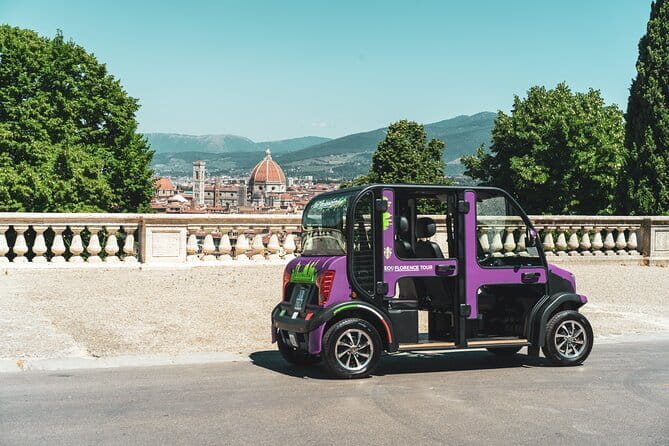
Florence in 90 minutes, with wheels to spare. This private electric highlights tour helps you cover big sights fast, with English audio narration and short stops where you can hop out for photos. It’s a practical way to get oriented in a city that loves hills, crowds, and detours.
I especially like the way the route builds toward views. You’ll reach the hill-church zone at San Miniato al Monte and then get your big “balcony over Florence” moment at Piazzale Michelangelo.
One thing to consider: this is set up more like an audio guide experience than a constantly speaking, live guide tour. If you want a person talking step-by-step the whole time, read that expectation carefully.
In This Review
- Key Things That Make This Tour Work in Florence
- Electric Carts Make Florence Feel Shorter
- Start Point: San Lorenzo Area, Then Straight Into the Classics
- Santa Croce’s Two-Part Moment: Square First, Then Basilica Again
- Biblioteca Nazionale Centrale: Architecture Without the Museum Plan
- San Miniato al Monte: The Church-and-View Combo
- Piazzale Michelangelo: Your Big “Look Down at Florence” Pause
- Oltrarno and Santo Spirito: South of the Arno Flavor
- Bridges in Motion: Ponte alla Carraia, Santa Trinita, and Vecchio
- Medici Power Without the Full Walking Tour
- Santa Maria Novella and Ognissanti: More Florence, Less Crowd Crush
- Palazzo Pitti and the South Bank Finish
- Guides, Audio, and the Real Talk About What You’ll Hear
- Price and Value: Does $83.45 Make Sense?
- Timing, Group Size, and Why It Sometimes Isn’t One Vehicle
- Who Should Book This Electric Florence Highlights Tour
- Should You Book This Tour?
- FAQ
- How long is the Private Florence Highlights Electric Tour?
- Where does the tour start and end?
- Is the tour offered in English?
- Is WiFi included?
- Are attraction entry tickets included?
- Which stop has free admission listed?
- Is this a private experience?
- Are service animals allowed?
- What happens if the weather is poor?
- Can I get a full refund if I cancel?
Key Things That Make This Tour Work in Florence
- A fast, low-effort way to see the top highlights in about 90 minutes, without packing your day with museum lines.
- Great viewpoint payoff, including San Miniato al Monte and Piazzale Michelangelo (you won’t just drive past them).
- Medici-era sites in one sweep, from Palazzo Medici Riccardi to San Lorenzo and the Medici Chapels area.
- Bridge-and-river drama in a short route, including Ponte Santa Trinita and Ponte Vecchio.
- WiFi on board helps with mapping, translations, and planning what to do next.
- Entry tickets aren’t included, so expect lots of exterior viewing unless you add tickets yourself.
Electric Carts Make Florence Feel Shorter
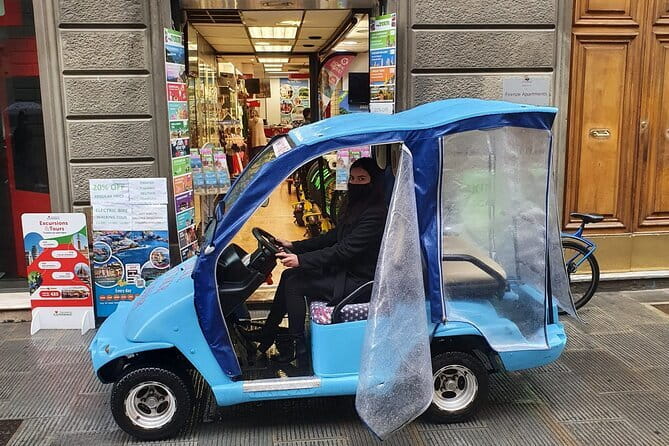
Florence is gorgeous, but it can also feel like it was built specifically to test your calves. This tour uses an electric vehicle to cut out a lot of the “power walking” you’d otherwise do between distant points.
The big value here is the rhythm: you get brief stops at the major landmarks, then you’re rolling again. That matters because Florence’s best sights are spread out. A 1 hour 30 minute window disappears fast if you’re doing it all on foot.
Also, it’s private. That means you’re not stuck in a big group shuffle, and you can generally move at a pace that fits your timing for photos. Some people even choose this on their first day to get their bearings fast before committing to longer plans later.
You can also read our reviews of more private tours in Florence

Start Point: San Lorenzo Area, Then Straight Into the Classics
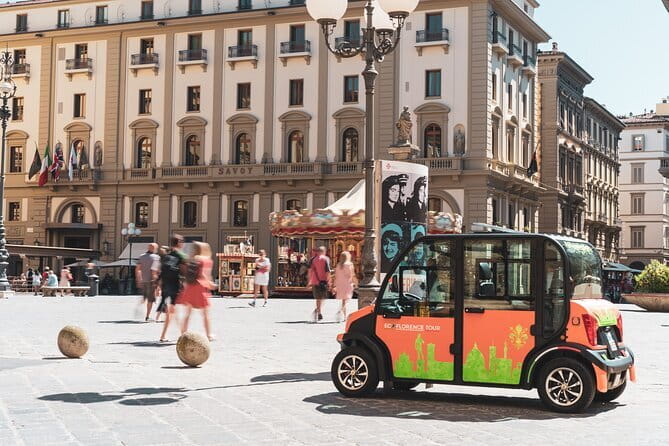
You begin at Trattoria Sergio Gozzi on Piazza di San Lorenzo (Piazza di San Lorenzo, 8R). This is a smart start because you’re in the historic center, close to multiple “big name” places. You’re not starting out in the middle of nowhere, then trying to earn your sightseeing with a long walk.
From there, the tour’s first stops aim you toward two signature Florence modes: church-and-square Florence, and architecture Florence. You’ll spend time around Piazza Santa Croce and the Basilica di Santa Croce area. Santa Croce is one of those places where the building matters, but the square energy matters too. It’s a great opener because it gives you an immediate sense of scale and style.
A practical tip: since entries are not included, decide early what you want to do on the day. If you only want exteriors and photo breaks, you’re set. If you want to go inside multiple churches, you’ll probably need extra tickets and a little flexibility.
Santa Croce’s Two-Part Moment: Square First, Then Basilica Again
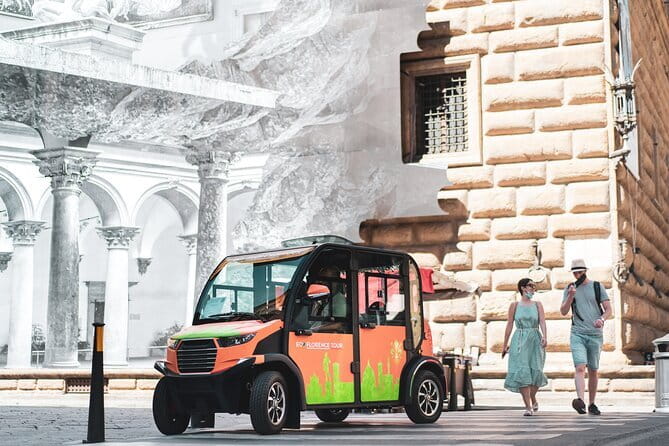
Santa Croce shows up as more than one stop. The route gives you time at the square and then later returns again. That’s not wasted time—it’s a chance to appreciate the place from different angles.
Here’s what makes Santa Croce worth your attention even if you don’t plan a deep interior visit: it sits in a lively pocket of the city, and its architecture reads well from street level. You get that “Florence at human scale” feeling—stone, proportion, and the sense that this is a living neighborhood rather than a theme park.
If you do plan to enter, remember: entry is not included. You’ll need to add whatever ticketing is required for the specific site you choose.
Biblioteca Nazionale Centrale: Architecture Without the Museum Plan
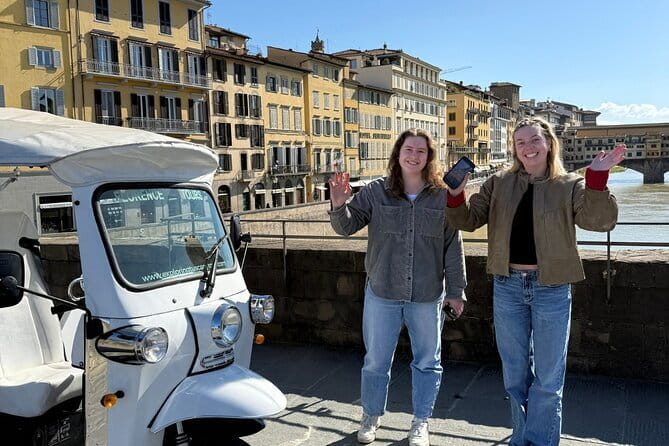
Next you’ll head to the Biblioteca Nazionale Centrale. This is the kind of stop that works even if you’re not chasing art museums. The building is described as being constructed in the 1930s with Pietraforte stone, and it blends medieval and Renaissance architectural elements.
The takeaway for you: you’ll see a Florence that isn’t only “15th century masterpiece” mode. It’s a Florence that keeps building and adapting. This stop is short, but it adds texture to the day—especially if you feel like you’re repeating the same visual theme everywhere else.
San Miniato al Monte: The Church-and-View Combo
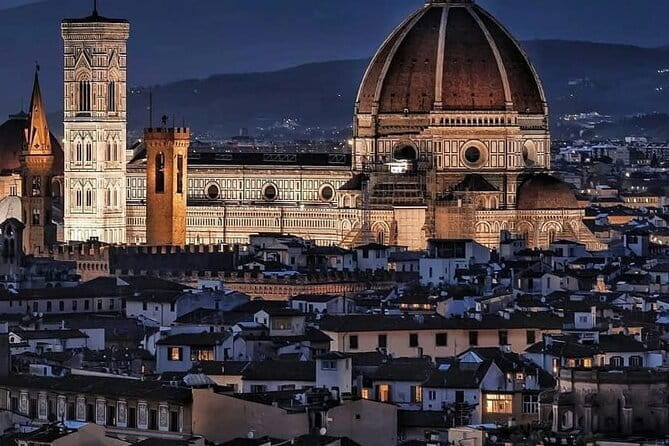
Then comes Basilica San Miniato al Monte. Even if you’re not a church interior person, this is a smart stop because the views do a lot of the heavy lifting. San Miniato is one of Florence’s favorites, and it sits in a higher position with a strong panorama over the city.
It’s also tied to Florentine Romanesque architecture, plus you get the backdrop of the “Mons Florentinus” hill where early Christian communities had catacombs. That sort of context makes a quick photo stop feel less like a postcard moment and more like a real place with layers.
A quick consideration: most time at this kind of hill church is limited. If you want more than a look from outside, you should be ready to move efficiently and commit to one or two interior moments total.
- The Best tour in Florence: Renaissance & Medici Tales – guided by a STORYTELLER
★ 5.0 · 12,316 reviews

Piazzale Michelangelo: Your Big “Look Down at Florence” Pause
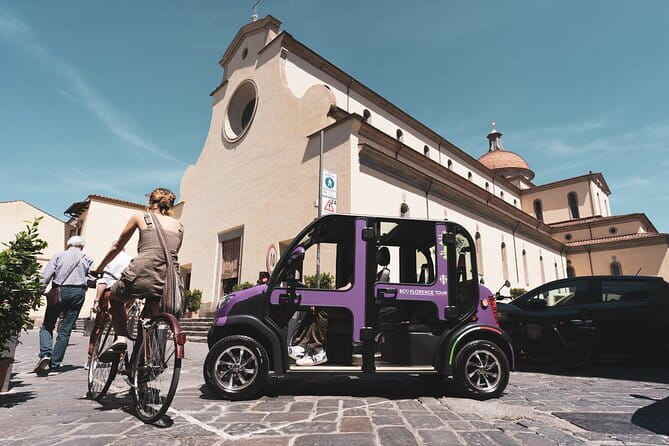
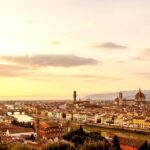
Piazzale Michelangelo is the tour’s iconic viewpoint stop. It’s described as Florence’s first major panoramic viewpoint in this “modern” layout, created between 1865 and 1875 by Giuseppe Poggi.
This is the payoff stop. You’ll look over Florence, take photos, and get that “oh, this is why people fall in love with this city” feeling. And the good news: admission is free for this stop.
If you’re aiming for the best photos, go a little slow even though the stop is timed. Sun direction matters, and so does the crowd level. You can catch great angles at different moments without changing locations much.
Oltrarno and Santo Spirito: South of the Arno Flavor
After the viewpoint moment, the route shifts toward Oltrarno, literally beyond the Arno. Oltrarno has a different personality from the center: it grew from countryside arrivals and later expanded with major influence from the Medici court at Palazzo Pitti.
You’ll also see the Basilica of Santo Spirito area. Even if you don’t go inside, this part of the route helps you understand that Florence isn’t one single “center.” It’s several neighborhoods with their own rhythms.
This is a nice time to take in street life too. Small details in Oltrarno—shopfronts, quieter streets, the sense of daily living—make the city feel more like a place you could actually live in, not just visit.
Bridges in Motion: Ponte alla Carraia, Santa Trinita, and Vecchio
Now you start hitting Florence’s river drama.
First, there’s Ponte alla Carraia, a bridge built in 1218, named because it was used to transport goods on carts. It’s a reminder that these crossings weren’t just pretty—they helped move the city’s economy.
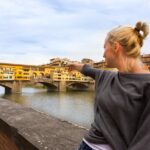
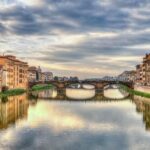
Then comes Ponte Santa Trinita. It’s described as the beloved bridge for Florentines, originally built in 1252, destroyed by an Arno flood in 1557, and later rebuilt based on a design by Bartolomeo Ammannati (a pupil of Michelangelo). That story matters because floods shaped Florence’s riverfront again and again.
And then: Ponte Vecchio. Ponte Vecchio dates back to Roman times and has survived the city’s biggest flood history, including the devastating 1966 flood. You’ll also hear about the Vasari Corridor, an elevated private passage built in 1565 in just five months to connect Palazzo Vecchio and the Medici court at Palazzo Pitti.
Practical advice: Ponte Vecchio is crowded. This tour’s advantage is that you can reach it quickly and still grab photos without turning your day into a slow grind.
Medici Power Without the Full Walking Tour
The route spends serious time in the Medici zone, which is one of the best ways to understand why Florence looks the way it does.
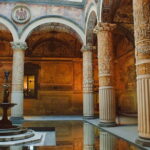
You’ll visit Palazzo Medici Riccardi, commissioned around 1445 by Cosimo the Elder and designed by Michelozzo. This is a great stop for understanding Medici ambition. They didn’t just want wealth. They wanted visibility.
Then you’ll pass by Basilica di San Lorenzo. It was rebuilt starting in 1419 at the will of Giovanni di Bicci (father of Cosimo the Elder) with Filippo Brunelleschi as the architect. This is where Florence’s “ideas” show up in stone: new design on older sacred ground.
Finally, you’ll reach the Cappelle Medicee (Medici Chapels), described as a mausoleum of the ruling Medici family. This is one of those areas where you may want to go inside—but entry tickets aren’t included, so plan accordingly.
If you’re the type who likes to learn fast and then choose deeper visits later, this route gives you the names you’ll want to follow up with on your own.
Santa Maria Novella and Ognissanti: More Florence, Less Crowd Crush
The tour also includes Basilica and Piazza of Santa Maria Novella. It’s a major Dominican church, and the square outside is described as welcoming worshippers drawn by the friars’ sermons. It expanded over time and became one of the city’s largest squares.
This stop is useful because Santa Maria Novella anchors you in the “religious power” geography of Florence, not only the Medici political side. It broadens your mental map.
Then there’s Chiesa di San Salvatore in Ognissanti in the Ognissanti district, associated with the Umiliati friars and their wool craftsmanship supported by the nearby river. This is another quick-stop that adds an economic thread to the city story.
If you like tours that explain why people gathered, built, and worked in certain areas, these stops help.
Palazzo Pitti and the South Bank Finish
Near the end, you’ll reach Palazzo Pitti and Piazza Pitti. The palace dominates the space and was commissioned by Luca Pitti around 1440 and designed by Filippo Brunelleschi.
What I like about finishing here is that Pitti connects the Medici story to the physical expansion of power. The palace was ambitious in size, meant to outshine major rivals. It’s a strong visual capstone after you’ve already seen Medici Riccardi and the San Lorenzo complex.
From a practical standpoint, finishing near this zone can also help you plan dinner nearby. You’re closer to the southern side of the city where you might find a different vibe than the busiest center streets.
Guides, Audio, and the Real Talk About What You’ll Hear
Here’s the honest setup: this experience is based on English narration via audio on board. Some drivers do add their own commentary, and they can be friendly and helpful. Names that came up in experience feedback include Tommaso, Ruben, Tommy, Marcello, Michael, Federico, Jacomo, Giacomo, Mattia, Grazia, and Orietta.
But you should go in knowing the core format is not a full-time, live guide in every situation. A few people were disappointed because they expected something more like a traditional guided tour, not a pre-recorded track. On the flip side, many others described the drivers as informative and enthusiastic, and some even helped tailor the experience to what the group wanted—like turning off audio when possible.
My practical advice: if audio may annoy you, message or ask ahead of time about whether a driver can explain more or turn narration down. If audio is fine, you’ll likely love the efficiency.
Also, remember: WiFi is included. If your phone has enough signal, you can use it to look up any stop you care about while you’re nearby—then decide later what’s worth buying tickets for.
Price and Value: Does $83.45 Make Sense?
At $83.45 per person for about 1 hour 30 minutes, you’re paying for speed, comfort, and a guided route that hits major points without a long walk. This price isn’t for museum depth. It’s for transportation plus orientation plus landmark stops.
Here’s where it feels like good value:
- You cover a lot of ground in a short time.
- You get to viewpoint locations and bridges without spending half your day in transit.
- You don’t have to choose between priorities too early. This tour helps you decide what deserves a second visit.
Here’s where it might feel pricey:
- Entry to attractions is not included, so if you plan to go inside multiple sites, the total cost rises.
- If you want live, detailed talking at every stop, an audio-based format might not match your expectations.
If your goal is to see the highlights and then build your own deeper plan afterward, this can be a smart spend.
Timing, Group Size, and Why It Sometimes Isn’t One Vehicle
Because it’s private, your group goes together—but vehicle size can affect how many carts are used. In experience feedback, groups of four or five sometimes used two vehicles. That’s not a deal breaker, but it’s something to keep in mind if you hate splitting up.
Also, traffic and street closures happen in Florence. More than one driver was praised for staying flexible even with heavy traffic or road changes. Still, keep your mindset flexible. You’re in a living city, not a theme park route.
One rare hiccup can happen too. In at least one case, police stopped the tour vehicle early due to permits, and the tour ended abruptly. It’s not something you can plan for, but it’s a reminder that operations depend on local rules.
Who Should Book This Electric Florence Highlights Tour
You’ll probably be happiest if you:
- Have limited time and want the biggest sights in a single outing.
- Prefer minimal walking and faster transit between neighborhoods.
- Want an orientation loop that helps you plan a second day.
You might consider alternatives if you:
- Want a fully live guide experience with long explanations at each stop.
- Plan to enter many ticketed interiors during this same 90 minutes.
- Need lots of spoken interaction in very specific detail throughout the day.
Good weather matters here. The tour is described as requiring good weather, and if it’s canceled due to poor weather you’ll be offered a different date or a full refund.
Should You Book This Tour?
If your priority is to get Florence’s layout and key landmarks under your feet without burning your energy, I’d book it. The combination of Santa Croce, Medici-side architecture, the river bridges, and the two viewpoint anchors (San Miniato al Monte and Piazzale Michelangelo) makes it a strong first-pass plan.
Just go in with one clear expectation: expect audio narration as the core format. If you’re comfortable with that, it’s a great way to see a lot fast and then decide what you want to return to for a ticketed visit later.
If you want, tell me your travel dates and whether you plan to go inside churches/museums. I can help you build a smart follow-up day using the stops that matter most to you.
FAQ
How long is the Private Florence Highlights Electric Tour?
It runs about 1 hour 30 minutes.
Where does the tour start and end?
It starts and ends at Trattoria Sergio Gozzi, Piazza di San Lorenzo, 8R, 50123 Firenze FI, Italy. The tour can end at any point within the tour route upon request.
Is the tour offered in English?
Yes. The tour is offered in English.
Is WiFi included?
Yes, WiFi on board is included.
Are attraction entry tickets included?
No. Entry to attractions is not included.
Which stop has free admission listed?
Piazzale Michelangelo is listed with admission ticket free.
Is this a private experience?
Yes. It’s a private tour/activity, meaning only your group participates.
Are service animals allowed?
Yes, service animals are allowed.
What happens if the weather is poor?
The experience requires good weather. If it’s canceled due to poor weather, you’ll be offered a different date or a full refund.
Can I get a full refund if I cancel?
Yes, free cancellation is available up to 24 hours in advance for a full refund.
You Might Also Enjoy

More Private Tours in Florence

More Tours in Florence
- The Best tour in Florence: Renaissance & Medici Tales – guided by a STORYTELLER
★ 5.0 · 12,316 reviews

More Tour Reviews in Florence
- Tuscany Day Trip from Florence: Siena, San Gimignano, Pisa and Lunch at a Winery
★ 5.0 · 21,634 reviews - The Best tour in Florence: Renaissance & Medici Tales – guided by a STORYTELLER
★ 5.0 · 12,316 reviews