REVIEW · FLORENCE
Palazzo Vecchio Tales – into Medici’s secrets and mythology simbols
Book on Viator →Operated by Florence Tour-Tale · Bookable on Viator
Medici mythology lives in Palazzo Vecchio. I love how the tour explains the Austrian landscapes in Michelozzo’s 1500s frescoes, and I’m especially into seeing Niccolò Macchiavelli’s personal office in its original setting. You’ll move through rooms where portraits, allegories, and political ideas sit right beside famous artworks—so Florence feels like one connected story, not separate museum stops.
This is also a very listen-friendly visit thanks to the headphones/radios, which matters in big rooms where guides are telling a lot at once. One consideration: the palace can feel cold in winter, and there aren’t many chances to sit while the guide talks to the group, so plan for standing time (and layering).
In This Review
- Key highlights
- Palazzo Vecchio Tales and why Medici symbols matter
- Price and what you actually get for $150.19
- Starting at Piazza della Signoria: the right mood-setter
- Michelozzo’s courtyard frescoes: the Austrian landscapes puzzle
- Salone del Cinquecento: how one room can change meanings
- Medici family rooms: portraits, history scenes, and myth allegories
- Donatello’s Giuditta and Oloferne: symbolism you can see, not just hear
- Macchiavelli’s personal office: where political thought becomes physical
- How the guide approach affects your whole visit
- Timing: 1 hour 45 minutes is short, but the pacing works
- Comfort tips for winter (and for standing time)
- Who this tour suits best
- Quick value check: is it worth it?
- Should you book Palazzo Vecchio Tales?
- FAQ
- FAQ
- Where does the tour start and end?
- How long is the Palazzo Vecchio Tales tour?
- What language is the tour offered in?
- What’s included in the price?
- Do I have to buy the museum ticket?
- What’s the meeting point address?
- Is it a private tour?
- How soon will I get confirmation after booking?
- Is the tour accessible by public transportation?
- Can I bring a service animal?
- Is free cancellation available?
Key highlights
- A Michelozzo courtyard full of 1500s frescoes, including the odd detail of Austrian landscapes
- Salone del Cinquecento, explained as a room with multiple transformations
- Medici family rooms with portraits, historical references, and allegories of mythological gods
- Donatello’s Giuditta and Oloferne, presented as a meaningful “anchor” artwork, not just a stop
- Machiavelli’s personal office, tied to the story of European political thought
- Licensed guide + radios/headphones, so you can actually hear the symbolism and connections
Palazzo Vecchio Tales and why Medici symbols matter
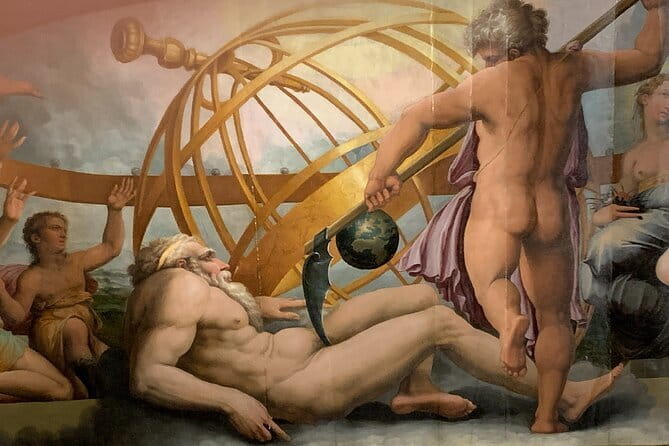
Palazzo Vecchio can feel like “big building, big art, big crowd.” This tour helps you make sense of it fast. It’s designed around the idea that the Medici didn’t just collect art—they used images, gods, and carefully chosen symbols to communicate power and legitimacy.
The best part is that you’re not stuck with random explanations. You’re walked through a logic: courtyard frescoes lead to visual messages, those messages connect to Medici-era rooms, and then the story turns toward politics and philosophy. By the time you’re looking at the more famous masterpieces, you already know what kind of meaning you’re supposed to look for.
If you enjoy Florence when it’s explained like a living puzzle—rather than a checklist—this fits.
You can also read our reviews of more tours and experiences in Florence.
- Tuscany Day Trip from Florence: Siena, San Gimignano, Pisa and Lunch at a Winery
★ 5.0 · 21,634 reviews
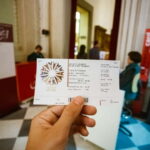
Price and what you actually get for $150.19
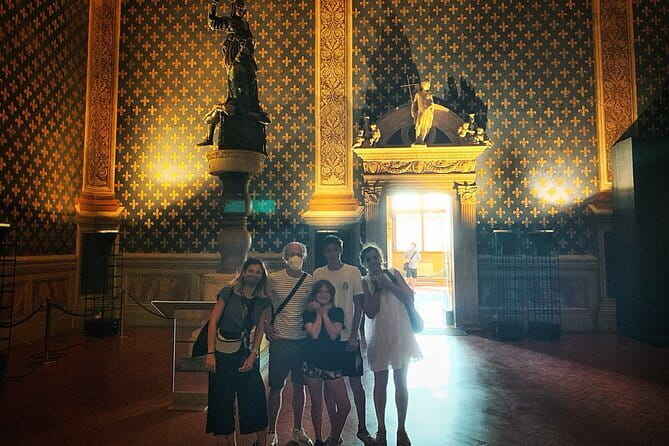
At $150.19 per person for about 1 hour 45 minutes, you’re paying for three things that add real value in a major museum:
1) A licensed local guide who can connect rooms to a single narrative (Medici secrets, mythology symbols, and political thought).
2) Radios and headphones, which lets the guide speak at “real tour volume” without you craning or competing with other groups.
3) Skip-the-line reservation at a concrete date and time, so you’re not spending your limited time trapped in the pre-museum bottleneck.
Also, it’s listed as private for your group, which usually means the pacing tends to be more controlled. Group discounts are available, so if you’re booking with friends, your per-person cost can improve.
Is it “cheap”? No. But for Palazzo Vecchio—where time is the enemy and symbolism is the point—you’re buying a guided reading of the place. And at 1h45, you’re not stuck inside for half a day either.
Starting at Piazza della Signoria: the right mood-setter
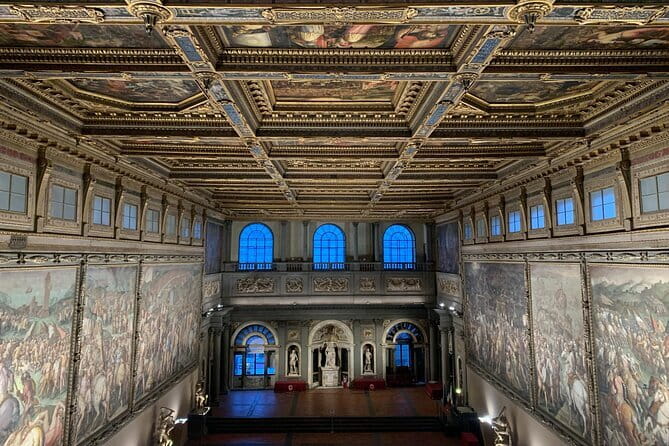
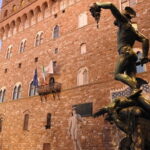
You begin where Florence’s politics look the most public: Piazza della Signoria. That matters because Palazzo Vecchio wasn’t designed to be quiet or private. It’s the kind of building that came with an audience.
Even before you enter the museum spaces, you’re in the zone where Medici power and civic identity overlap. It’s an easy win for your mindset. You’re not walking in cold; you’re walking in with the square already framing the story.
Michelozzo’s courtyard frescoes: the Austrian landscapes puzzle

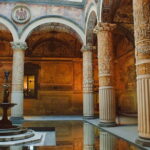
The first major stop is Michelozzo’s courtyard, decorated with 1500s frescoes. The tour’s hook is a very specific detail: you’ll discover why those frescoes include Austrian landscapes.
That’s the kind of thing I love in a museum guide. It’s not just “look at the pretty painting.” It’s “why would they put this here?” And when you have a reason, the imagery becomes a message. The courtyard becomes a page where Florence-era visitors could read status, reach, and relationships through visual cues.
Practical note: because this is a courtyard and the tour can be continuous, you’ll want to dress for the conditions. If you’re visiting in winter, expect that standing time is part of the experience. One caution from past guests is that the museum isn’t well heated in winter, and there aren’t many sitting spots while the guide is talking. So bring warm layers, and consider comfortable shoes over anything fashionable.
Salone del Cinquecento: how one room can change meanings
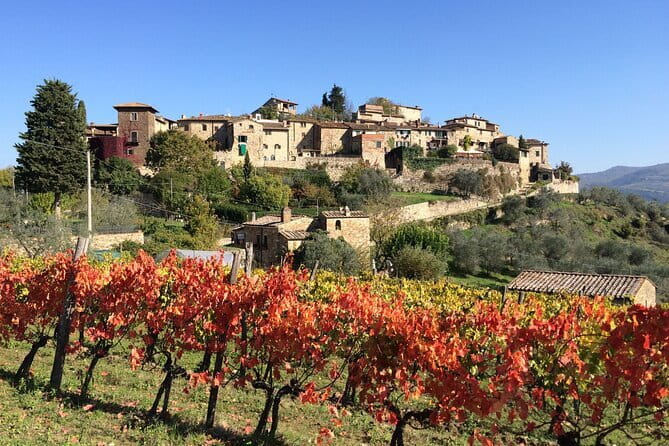
Next comes the Salone del Cinquecento—the grand hall people recognize, but that most first-time visitors don’t fully “read.” The tour explains the room’s several transformations, which is key to understanding what you’re looking at.
A big hall like this can feel like one fixed monument. But when you understand that it changed over time—how it was adapted, repurposed, or re-framed—you start seeing the architecture and decoration as flexible political tools. It stops being just impressive background and becomes part of the Medici story engine.
And because the tour keeps connecting the symbolism across rooms, this hall feels less like a standalone wow moment and more like a hub: you get the sense that power was staged here, not just held.
- The Best tour in Florence: Renaissance & Medici Tales – guided by a STORYTELLER
★ 5.0 · 12,316 reviews


Medici family rooms: portraits, history scenes, and myth allegories
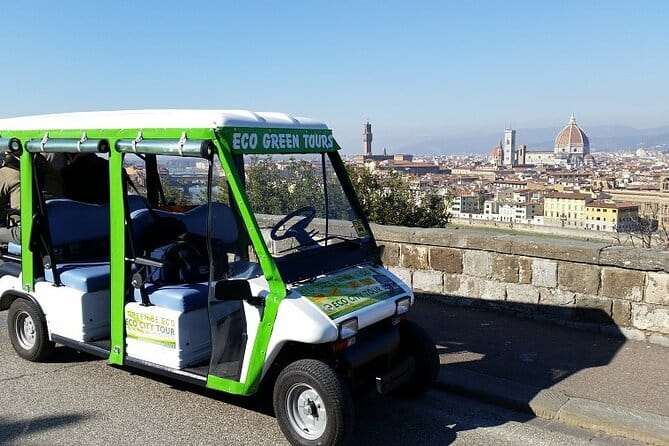
After the big hall, the tour shifts into a more intimate mode: the family rooms, decorated with portraits, representations of historical events, and allegories of mythological gods.
This is where Palazzo Vecchio can either click or confuse you. The Medici used imagery to do multiple jobs at once:
- portray legitimacy (who they were and why they mattered)
- reference events (what they wanted remembered)
- borrow from mythology (a shared visual language of virtue, fate, and divine approval)
When your guide ties the rooms together like this, you stop treating each painting as “one more thing.” Instead, you start understanding why those myth references weren’t random. They were political communication with a classic face.
Look around at how the rooms are arranged—faces and stories are often placed so you can compare messages. The guided approach helps you notice those patterns instead of drifting.
Donatello’s Giuditta and Oloferne: symbolism you can see, not just hear
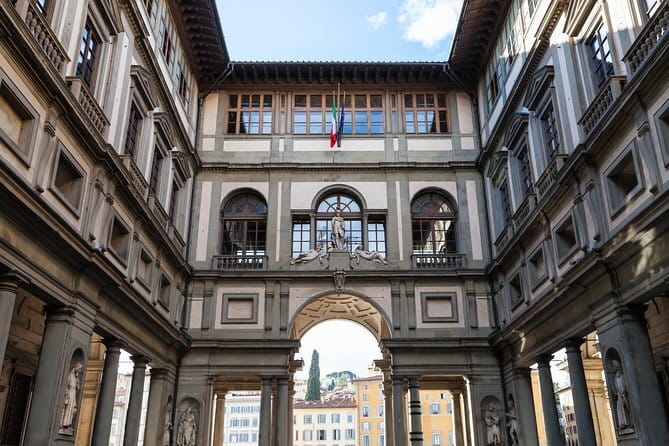
The tour highlights a highly significant artwork: Donatello’s Giuditta and Oloferne (the original is included in the experience described).
This is one of those stops that can turn into either:
- a quick “there it is” photo moment, or
- a real “oh, that’s what it’s doing here” experience
With the tour’s symbolic focus, you’re more likely to get the second version. You’re learning to read the choice of subject, not just its fame. And when you’ve already been talking about myth allegories and Medici messaging, Donatello’s work lands with more meaning than it would on a standard visit.
If you like art that carries more than one layer—moral message, political idea, and aesthetic power—this is a good time to slow down (within the group flow).
Macchiavelli’s personal office: where political thought becomes physical
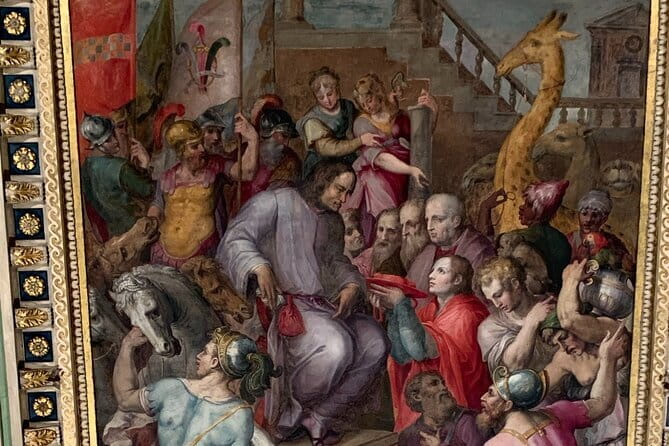
One of the most memorable parts of this tour is the room tied to Niccolò Macchiavelli’s personal office, presented as part of the history of European political thought.
This is a standout because it connects two things most museum visits keep separate:
- “art and decoration”
- “ideas and governance”
Seeing a political thinker’s space inside a palace built for power helps your brain make a concrete link. It’s not abstract history anymore. It’s a place where thinking, authority, and influence share the same walls.
And it’s also a nice payoff after the mythology and portrait rooms. You’ve been trained to look for messages. Now you’re getting the real-life human behind the messages—someone whose work shaped how rulers thought.
How the guide approach affects your whole visit
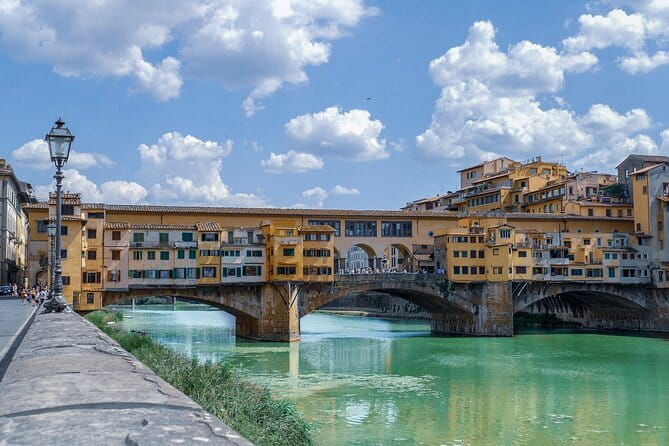
A key reason this tour gets such strong marks is the guide’s storytelling style. One guide named Daniele has been specifically praised for acting like an interpreter between you and the Medici era—answering questions with detail and keeping the timeline and symbolism understandable.
You don’t need to be a Florence expert to benefit. But you do need someone to help you connect the dots. That’s what a good storyteller guide does: it turns a palace full of images into an argument you can follow.
Since you’ll also get radios and headphones, you can stay focused on what the guide is saying instead of constantly moving your attention from signage to sound.
Timing: 1 hour 45 minutes is short, but the pacing works
At about 1 hour 45 minutes, you’re not getting the entire museum. You’re getting the “message route”—courtyard, hall, family rooms, and the key artworks/idea rooms described.
That’s the right trade for Palazzo Vecchio, honestly. If you try to self-tour everything, you’ll either:
- rush the meaningful parts, or
- get stuck reading plaques that don’t connect to each other
This tour’s length pushes you toward the symbolic highlights and prevents analysis paralysis. You’ll still have to keep up with group movement, but you’ll finish with a stronger understanding than you’d likely have after twice as long browsing alone.
Comfort tips for winter (and for standing time)
The most practical drawback is comfort. In winter, the museum can feel unheated, and there aren’t many opportunities to sit during the talk. That doesn’t mean you should avoid it—it just means you should prepare.
I recommend:
- wear layers you can peel off in warmer rooms
- bring shoes you can stand in for the full session
- if you’re sensitive to cold, consider a warmer outer layer than you’d normally pack
If you hate standing tours, this is the one part to think through before booking.
Who this tour suits best
This works especially well if you:
- like Florence explained through symbolism, not just dates
- want a guided route that includes both art and political ideas
- appreciate museum visits where you can hear every sentence clearly (headphones help a lot)
- are interested in the Medici in a deeper, more interpretive way—secrets, myth references, and how images functioned
It may not be ideal if you:
- need frequent seating breaks
- dislike group pacing even with a private-group setup
- want a purely casual stroll with minimal explanation
Quick value check: is it worth it?
For my money, the value is in the way the tour turns Palazzo Vecchio into a coherent story.
You’re paying for:
- skip-the-line reservation
- a licensed local guide
- headphones/radios
- a route that links myth symbols to Medici messaging and then to political thought
If you’re the type of visitor who enjoys “why did they do that?” this is a smart spend. If you’re mostly there for famous art names and you don’t care about interpretation, you might feel the time is too focused.
Should you book Palazzo Vecchio Tales?
I’d book it if you want a guided, high-signal introduction to Palazzo Vecchio’s Medici-era thinking—especially the courtyard fresco clues, the myth allegory rooms, Donatello’s Giuditta and Oloferne, and the connection to Machiavelli’s political ideas.
I wouldn’t book it if cold rooms and standing without many seats are a deal-breaker for you. Otherwise, this is the kind of tour that leaves you looking at the building differently—less like a collection, more like a message system the Medici built to be read.
FAQ
FAQ
Where does the tour start and end?
It starts at Piazza della Signoria in Florence and ends back at the same meeting point.
How long is the Palazzo Vecchio Tales tour?
The duration is about 1 hour 45 minutes.
What language is the tour offered in?
The tour is offered in English.
What’s included in the price?
Included are a guided visit with a licensed local guide, radios and headphones to listen better inside the museum, and a skip-the-line reservation for a concrete date and time.
Do I have to buy the museum ticket?
Yes. The museum ticket is paid by you directly to the museum on the same date of the tour.
What’s the meeting point address?
The meeting point is listed as Piazza della Signoria, 50122 Firenze FI, Italy.
Is it a private tour?
It’s described as a private tour/activity, meaning only your group participates.
How soon will I get confirmation after booking?
You should receive confirmation within 48 hours of booking, subject to availability.
Is the tour accessible by public transportation?
Yes. It’s listed as near public transportation.
Can I bring a service animal?
Yes. Service animals are allowed.
Is free cancellation available?
Yes, free cancellation is available. You can cancel up to 24 hours in advance for a full refund.
You Might Also Enjoy

More Tour Reviews in Florence
- Tuscany Day Trip from Florence: Siena, San Gimignano, Pisa and Lunch at a Winery
★ 5.0 · 21,634 reviews - The Best tour in Florence: Renaissance & Medici Tales – guided by a STORYTELLER
★ 5.0 · 12,316 reviews