
REVIEW · FLORENCE
Museum of illusions Florence Entrance Ticket
Book on Viator →Operated by Museum Of Illusions · Bookable on Viator
Florence’s Museum of Illusions turns normal sight into a puzzle you can play with. I love how interactive exhibits keep you moving, and I really like the hands-on guidance that helps you get the right angle for the best photos. My only caution: the experience can feel a bit pricey for families if you’re hoping for a bigger, longer museum.
Guides are on site to nudge you through the tricks—one guest singled out Deborah for being friendly and helpful. The exhibits are surprising enough for adults, but they also work well for kids who want to try things, not just look. The main drawback I’d watch for is staff capacity: if lots of people are trying the same moments at once, you might not get as much attention as you’d like.
In This Review
- Key highlights to plan for
- Museum of Illusions Florence: what you’re walking into
- Your time inside: how the 1–1.5 hour experience plays out
- Ticket value: is $25.34 worth it?
- The exhibit experience: mind games, mirrors, and quick learning
- Guides and getting the best shots (including Deborah’s kind help)
- Stop 1: inside the Museum of Illusions Florence
- Families and social media: why this museum works for both
- Price, crowds, and the main trade-offs to watch
- Getting there and planning your day in Florence
- Should you book the Museum of Illusions Florence?
- FAQ
- How long does the Museum of Illusions Florence experience take?
- What’s included with the ticket?
- Is the experience offered in English?
- Do I need a print ticket?
- Are service animals allowed?
- Is there free cancellation?
Key highlights to plan for
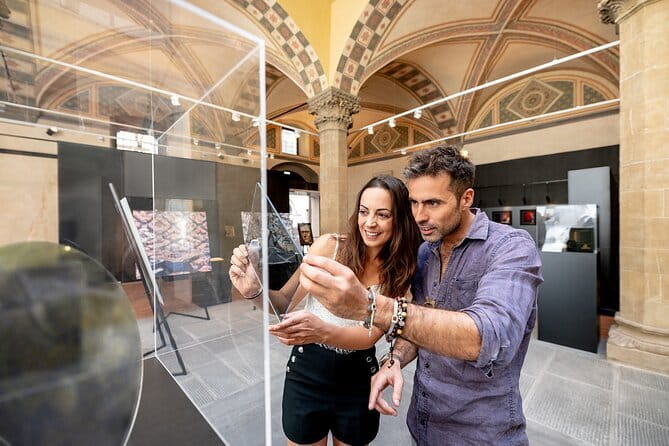
- Photo-first exhibit design: many displays are built around reflections, angles, and quick “try-it-now” moments
- Guides help with the trick: you’re not left guessing how the illusion works
- Clear timed entry windows: slot times are precise to within about 20 minutes
- Short visit, big fun: plan roughly 1 to 1.5 hours and you’ll likely finish without rushing
- Works for families and adults: kids get hands-on play; grown-ups get perception-bending questions
- No-fuss entry with a mobile ticket: you’ll have what you need ready on your phone
Museum of Illusions Florence: what you’re walking into
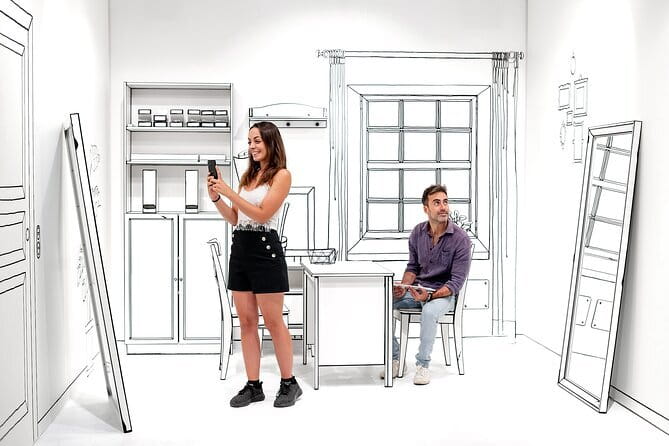
The Museum of Illusions in Florence is built for participation. Instead of rooms of quiet art or long explanations, you step into a sequence of visual challenges that ask a simple question: can you trust what you see? Expect bright effects, clever optical tricks, and plenty of moments where your first instinct is wrong.
I like that it doesn’t pretend to be something it isn’t. This is not a giant museum day. It’s an hour-or-so experience that hits fast, gives you repeat chances to experiment, and lets you leave with photos that make friends ask how you did it.
You’ll also get a sense of atmosphere in the way the displays are arranged. Many exhibits feel like little “stations” rather than a single long corridor of viewing. That matters because you can keep the pace at your speed—slow down to read, then sprint ahead when you’re chasing the next photo moment.
You can also read our reviews of more tours and experiences in Florence


Your time inside: how the 1–1.5 hour experience plays out

Most people don’t come here to spend half a day. They come to have fun, learn a little about perception, and get a pile of pictures they’ll actually share. The typical duration is about 1 hour to 1 hour 30 minutes, and that’s realistic if you’re willing to try each exhibit once or twice.
A good way to think about the flow is this:
- You start with displays that are easy to “get” quickly.
- Then you move into the mind-bending stuff that takes a second to interpret.
- Near the end, you’ll often return to your favorite illusions because they’re fun the second time around.
One of the best hints from experience shared by visitors: this museum isn’t huge, so the temptation is to rush. Don’t. If you take a little time to read what each trick is testing, the whole thing becomes more satisfying—like you’re playing a game where the rules are about how brains process color, shape, and size.
Ticket value: is $25.34 worth it?

At $25.34 per person, you’re paying for a short, high-energy attraction. That price can sound steep if you’re comparing it to big museums or churches with hours of depth. On the other hand, if you want an hour of interactive entertainment with lots of photo payoff, this can feel fair.
Here’s the value equation I’d use for you:
- If you love hands-on museums, want family-friendly activities, or care about social-media photos, the cost usually lands better.
- If you’re expecting a long, expansive museum with lots of content per euro or dollar, you may feel disappointed.
There’s also evidence that online timing helps the day. One guest said they could walk in with no wait, and using a timed ticket can reduce friction when you’re on a schedule in Florence. Even if you still have a short line, the visit is short enough that waiting often doesn’t ruin your whole plan.
So my honest take: treat it as a fun add-on day activity. It’s not a replacement for Florence’s major sights, but it can be a highlight, especially for families and anyone who likes turning “look again” into a playful habit.
The exhibit experience: mind games, mirrors, and quick learning

This museum’s biggest strength is how it turns perception into a set of puzzles. You’ll see illusions that depend on reflections, angles, and how your brain tries to “correct” what you’re seeing. Many exhibits are interactive enough that you’ll want to step into the right spot, pose, and then try the same trick from a new angle.
Mirrors are a recurring favorite in the experience people describe. If mirrors are part of what you enjoy—double images, distorted viewpoints, silly-looking poses—this place will likely give you the kind of photos you can’t get anywhere else.
You’ll also learn while you play. Several visitors emphasized that the museum helps explain how the mind processes visual information. For example, it can be a great teaching tool for an 8-year-old—showing that what you see isn’t always what’s there, especially with color and proportions.
And yes, the fun is visual first, but it can lead to real curiosity. If you like questions like “why does that look different when I move?” this museum delivers.
One extra detail that popped up in feedback: a guide named Deborah was mentioned in connection with a perfume-making-style moment. That suggests the museum experience may include more playful, hands-on add-ons in some form. If that’s your interest, it’s worth paying attention to whatever stations are operating during your visit.
Guides and getting the best shots (including Deborah’s kind help)

A big reason people rate this museum highly is human support. Guides are on hand to help you interact with the exhibits and figure out how to get the best results. That’s not a small thing. Most illusions work only under specific viewing conditions—positioning, distance, and sometimes timing.
If you’re the kind of person who hates standing around confused, guides make the experience smoother. They can show you what to do so you don’t waste time trying random angles. They also help you turn an experiment into a photo you’ll actually like.
Deborah comes up by name in one positive note, with praise for being friendly and helpful. While staff experiences can vary by day, the overall pattern is clear: the museum isn’t just self-guided screens and walls. It feels like a place where someone can correct you quickly so you get to the fun part sooner.
The other side of the coin is staffing load. One review noted that staff felt numerically insufficient at certain moments when multiple visitors were trying to use the same interactive setups. That doesn’t ruin the visit, but it’s a real consideration at peak times. If you’re going as a group and want lots of personalized guidance, build in a bit of patience.
You can also read our reviews of more museum experiences in Florence





Stop 1: inside the Museum of Illusions Florence

This is a single-stop attraction, so you’ll spend your time entirely in the Museum of Illusions Florence, Museo Delle Illusioni Firenze. Entry includes the ticket, and guide service is available in the exhibit area.
When you arrive, plan to do the following:
- Keep your phone ready for photos, but also take a few seconds to read what an exhibit is asking you to test.
- Expect the “wow” moments to be repeatable—if you shift position, the illusion changes.
- Move in a way that lets you try, step back, then try again.
You can also plan for a photo-heavy visit without making it chaotic. Many exhibits look great because they’re designed for posing—especially things involving reflections and forced perspective. If you want creative shots, the museum is built for that goal.
At the same time, don’t treat it like a photo factory only. When you slow down for a minute, the exhibit becomes more than a trick. It becomes a small explanation of how perception works, which is part of why families and adults both enjoy it.
Families and social media: why this museum works for both

This place is unusually good at serving mixed groups. If you’re traveling with kids, the museum gives them permission to touch, pose, and try. If you’re traveling with teens or adults, the same exhibits become a playful debate about what’s real and what isn’t.
That balance shows up in how people describe their experience: a shared family activity where kids are excited and adults can still get genuine surprise. It’s also a solid choice if you want a low-stress activity in Florence—something you can do without committing to a full morning or afternoon.
For social media fans, the museum makes it easy to capture funny, creative images. You’re not stuck with one “meh” angle; you’ll likely find several setups that reward experimenting. That’s why it’s a hit for photo-focused travelers.
The main family caution is simple: bring patience if you have little ones who want to linger at the same stations. The museum is compact, but that also means popular exhibits can get busy. A guided setup might move more slowly if multiple kids are lined up at the same moment.
Price, crowds, and the main trade-offs to watch

The museum is compact, and that’s a trade-off. The short length is great for people on tight schedules, but it also means you’re paying for a tight window of time. That’s why you’ll see people say it’s worth it—and also why you’ll see others question the cost.
Crowding can affect how smooth it feels. One review mentioned that guides were friendly and helpful, but there weren’t enough staff numbers to keep up everywhere when visitor volumes rose. In practice, that means you might wait a few moments to fully participate in certain exhibits.
My practical advice:
- If you’re sensitive to crowds, choose a time slot where you can relax.
- If you’re flexible, expect the museum to be easiest right after doors open or during quieter windows.
- If you go with a big group, decide ahead of time how you’ll split up for photos so everyone doesn’t block each other.
Also, keep your expectations aligned. If you want hours of varied galleries, this won’t be that. If you want an engaging hour, lots of interaction, and a chance to test your eyes, it’s strong.
Getting there and planning your day in Florence
The museum is near public transportation, which matters in a city where walking time can add up. You don’t want your fun afternoon eaten by transit confusion, so this location helps.
It’s also a place where the timing flexibility can work in your favor. Ticket time slots are offered with precision up to about 20 minutes, which helps you build a day plan without guessing.
If you’re juggling Florence’s big sights, think of this as a bright break. It’s indoors, it’s short, and it’s a different kind of Florence experience than churches, markets, or galleries. Even if you’re only doing one extra activity besides the main highlights, this can add variety.
Should you book the Museum of Illusions Florence?
I’d recommend booking if you fit one of these profiles:
- You’re traveling with kids and want an activity that doesn’t require long attention spans.
- You love hands-on museums where you try the exhibits, not just read labels.
- You care about photos that look creative and funny without heavy editing.
- You want a short indoor plan that fits between Florence’s bigger sights.
I’d think twice if:
- You want a long museum day.
- You’re very price-sensitive and compare everything to larger, longer attractions.
- You dislike any chance of waiting at popular interactive stations.
If your goal is a guaranteed dose of “how is that possible?” for about an hour to 1.5 hours, this museum delivers. And with helpful guides available in the exhibit area, you’re more likely to get the full payoff than if you were just wandering through tricks on your own.
FAQ
How long does the Museum of Illusions Florence experience take?
Plan for about 1 hour to 1 hour 30 minutes.
What’s included with the ticket?
Your ticket includes admission to the Museum of Illusions, and guide service is provided in the exhibit area.
Is the experience offered in English?
Yes, it’s offered in English.
Do I need a print ticket?
No. You can use a mobile ticket.
Are service animals allowed?
Yes, service animals are allowed.
Is there free cancellation?
Yes. You can cancel up to 24 hours in advance for a full refund. Cancellation cut-off is based on local time.
You Might Also Enjoy




More Museum Experiences in Florence
More Tickets in Florence


More Tour Reviews in Florence
- Tuscany Day Trip from Florence: Siena, San Gimignano, Pisa and Lunch at a Winery
★ 5.0 · 21,634 reviews - The Best tour in Florence: Renaissance & Medici Tales – guided by a STORYTELLER
★ 5.0 · 12,316 reviews